12 Quotes From “JumpStart Your Growth”

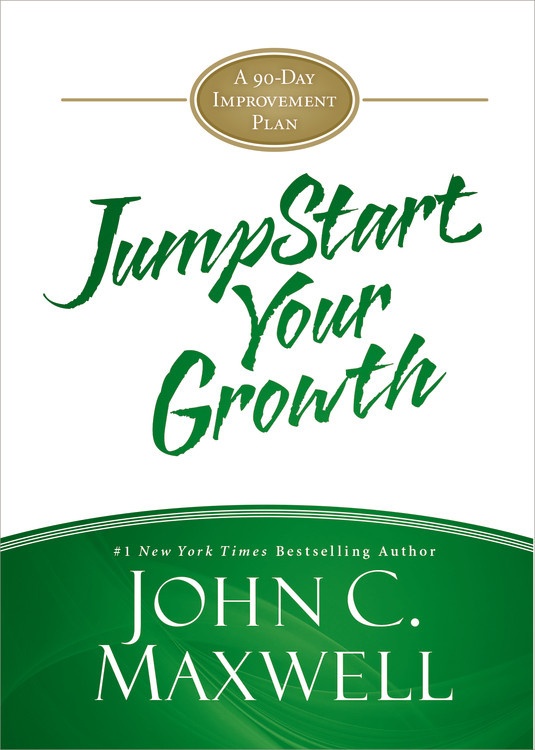
JumpStart Your GrowthJumpStart Your Growth is a companion book to The 15 Invaluable Laws Of Growth by John Maxwell. Check out my review of both of these books by clicking here. These are some of the quotes I appreciated from JumpStart.

“The time comes when you need to stop waiting for the man you want to become and start being the man you want to be.” —Bruce Springsteen

“Growing involves admitting you don’t have the answers, and it requires that you get over any fear you may have of making mistakes or looking foolish. And I found that I had to get started if I wanted to find the best way. That is the price of admission if you want to improve.” —John Maxwell

“If you want to get from where you are to where you want to be, you have to start by becoming aware of the choices that lead you away from your desired destination.” —Darren Hardy

“No factor is more important in people’s psychological development and motivation than the value judgments they make about themselves. Every aspect of their lives is impacted by the way they see themselves.” —Nathaniel Branden

“You need to learn to become your own encourager. Every time you do a good job, don’t just let it pass; give yourself a compliment. Every time you choose discipline over indulgence, don’t tell yourself that you should have anyway; recognize how much you are helping yourself. Every time you make a mistake, don’t bring up everything that’s wrong with yourself; tell yourself that you’re paying the price for growth and that you will learn to do better next time. Every positive thing you can say to yourself will help.” —John Maxwell 

“Act as if what you do makes a difference. It does.” —William James

“If there is an area in your life that seems overwhelming to you—health, work, family, or something else—try chipping away at it a little bit every day instead of trying to tackle it all at once. … Discipline is a morale builder. Boost yours by taking small steps that will take you in a positive direction.” —John Maxwell 

“At the end of each day, you should play back the tapes of your performance. The results should either applaud you or prod you.” —Jim Rohn

“There are two primary choices in life: to accept conditions as they exist, or to accept the responsibility for changing them.” —Denis Waitley 

“Rarely does a haphazard approach to anything succeed, and if it does, it’s not repeatable.” —John Maxwell

“Train yourself to fight for positive changes. Remember that your choices will lead to either the pain of self-discipline or the pain of regret.” —John Maxwell

“You can’t improve and avoid change at the same time.” —John Maxwell

Links & Quotes

link quote

Calling all Christian men: “If men begin praying together, God promises to stay His hand of judgment and restore the blessings of His people. If men will pray. If they will pray together” —T.M. Moore. Fellas, please check out this short call to prayer that T.M. has written, and then let’s start praying!

Board member overlapThis is fascinating! R.J. Andrews wrote, “The CEO of Disney is on the board of Apple, whose CEO is on the board of Nike, which has a board member on Disney… which all got me thinking: how many powerful companies are connected via their board of directors?” So click the picture or here to read more and see this infographic in a larger size.

Despite the rhetoric Planned Parenthood trumpets, there are painful psychological consequences for women who have an abortion. Choose life!

Married couples, check this out: How to fight fairly with your spouse.

Dr. Tim Elmore has another good post showing us the importance of our family history for our kids. Your history with them starts now.

Links & Quotes

link quote

“I try to live in such a way that if God sought one person on earth for a special assignment, He would select me.” —Jonathan Edwards

“If God has work for me to do, I cannot die.” —Henry Martyn

“There is, hidden or flaunted, a sword between the sexes till an entire marriage reconciles them. It is arrogance in us to call frankness, fairness, and chivalry ‘masculine’ when we see them in a woman; it is arrogance in them to describe a man’s sensitiveness or tact or tenderness as ‘feminine.’ But also what poor, warped fragments of humanity most mere men and mere women must be to make the implications of that arrogance plausible. Marriage heals this. Jointly the two become fully human. ‘In the image of God created He them.’ Thus, by a paradox, this carnival of sexuality leads us out beyond our sexes.” —C.S. Lewis

Pornography is NOT just something private. Porn affects everyone around you: My husband has chosen porn over me for 16 years.

Not only is pornography destructive to your personal relationships, but porn fuels the human sex trafficking industry. “Ultimately, the problem isn’t human trafficking—the problem is brokenness. As finite and flawed humans, we’re broken in just about every way. And it’s because of the brokenness in ourselves and our communities that exploitation can thrive.” Read more about the deeper problems behind human trafficking.

Ever been here: I Forgave, But It Doesn’t Feel Like It? Check out what this psychologist says about the healing that can come through forgiveness.

Keep an eye for these 7 subtle symptoms of pride.


Links & Quotes

link quote

“Criticism serves to make you harsh, vindictive, and cruel, and leaves you with the soothing and flattering idea that you are somehow superior to others. You must constantly beware of anything that causes you to think of yourself as a superior person. Criticism is one of the ordinary activities of people, but nothing is accomplished by it.” —Oswald Chambers

“The problem of reconciling human suffering with the existence of a God who loves, is only insoluble so long as we attach a trivial meaning to the word ‘love,’ and look on things as if man were the center of them. Man is not the center. God does not exist for the sake of man. Man does not exist for his own sake. ‘Thou hast created all things, and for thy pleasure they are and were created’ [Revelation 4:11]. We were made not primarily that we may love God (though we were made for that too) but that God may love us, that we may become objects in which the Divine love may rest ‘well pleased.’ To ask that God’s love should be content with us as we are is to ask that God should cease to be God: because He is what He is, His love must, in the nature of things, be impeded and repelled, by certain stains in our present character, and because He already loves us He must labor to make us lovable.” —C.S. Lewis

J. Warner Wallace asks a great question in light of us considering the truthfulness of the Gospels: Can a witness be trusted if he can’t be cross-examined?

A John Hopkins psychiatrist flatly denies that sex change is possible.

11 Quotes From “Going To Pot”

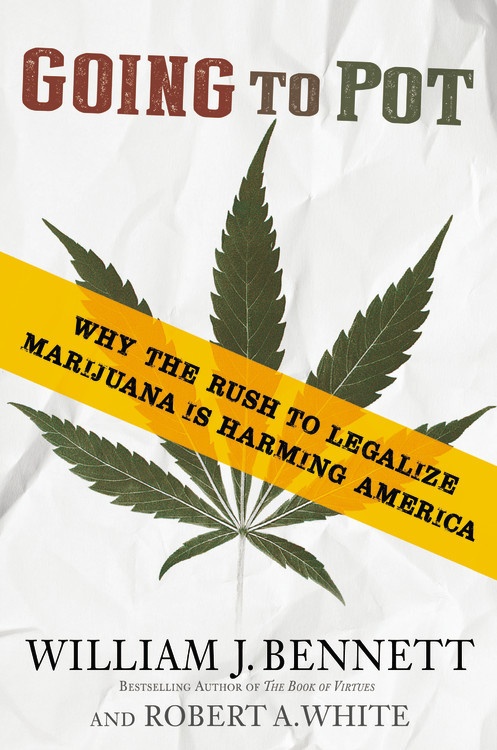
Going To PotWilliam Bennett and Robert White have given us an important book, especially during this time when so many are rushing to legalize marijuana in our country. You can read my full book review by clicking here, and below are some of the quotes and statistics I found quite interesting.

“Today’s marijuana THC levels are in the double digits―we’ve gone from about 3 to 5 percent THC in yesteryear’s marijuana to just above 13% THC―but common strains are available that go much higher, into the 20 percents and beyond. The difference between 3 to 5 percent THC and 13 to 30 percent THC is very significant. It is like comparing a 1twelve-ounce glass of beer with a 1twelve-ounce glass of 80 proof vodka.”

“No scientific studies documented the safety or efficacy of marijuana for patients with cancer, HIV, multiple sclerosis, or glaucoma.”

“Marijuana stays in the brain for a long time so that the brain is still experiencing the effects from pot smoking days after the drug use as stopped, in contrast to alcohol use…. Unlike cocaine, which often brings users to their knees, marijuana claims its victims in a slower and more cruel fashion. It robs many of them of their desire to grow and improve, often making heavy users settle for what is left over in life…. Marijuana makes its users lose their purpose and their will, as well as their memory and motivation.” ―Robert Dupont, psychiatrist 

“Frequent marijuana smokers can have many of the same respiratory problems experienced by tobacco smokers. … There are 33 cancer-causing chemicals contained in marijuana. … When equal amounts of marijuana and tobacco are smoked, marijuana deposits four times as much tar into the lungs.”

“Teenagers who use marijuana regularly are at greater risk for long-term brain damage and declines in both IQ and cognitive functioning years later.” ―Psychology Today

“Most drug users, over 90 percent of them, including marijuana users, started using drugs in their adolescent years. In fact, if one abstains from substance abuse up to the age of twenty-one, the chances one will ever have a substance abuse problem are next to zero.”

“Marijuana also raises heart rate by 20-100 percent shortly after smoking; this effect can last up to 3 hours. In one study, it was estimated that marijuana users have a 4.8-fold increase in the risk of heart attack in the first hour after smoking the drug.” 

“Nationwide, over 70 percent of teens admitted to a substance abuse treatment program claim marijuana as their primary drug of abuse. Neither alcohol, tobacco, nor prescription drugs are responsible for over 70 percent of teen substance abuse problems. It is marijuana that has that dubious distinction.”

“Accidents would increase, healthcare costs would rise and productivity would suffer. Legal alcohol serves as a good example: The $8 billion dollars in tax revenue generated from that widely used drug does little to offset the nearly $200 billion in social costs attributed to its use.” ―Kevin Sabet, a former adviser to President Barack Obama

“In constant dollars, the money spent by Americans on marijuana went up from $21.6 billion in 2000 to $40.8 billion in 2010. That is more than Americans spend each year on pornography, Halloween, and video games combined.”

“Sixty-two percent of the adults who first tried marijuana before they were 15 are likely to go on to use cocaine.” 

16 Quotes On Christian Living From “The Moral Foundations Of Life”

The Moral Foundations Of LifeOswald Chambers was a brilliant, God-inspired man! In his book The Moral Foundations Of Life (you can read my book review by clicking here), he combines two of his favorite topics: Christianity and psychology. I shared some of his quotes in this book on the topic of thinking (you can read those by clicking here). Below are some additional quotes on the Christian life.

“You can never argue anyone into the Kingdom of Heaven, you cannot argue anyone anywhere. The only result of arguing is to prove to your own mind that you are right and the other fellow wrong. You cannot argue for truth; but immediately Incarnate Truth is presented, a want awakens in the soul which only God can meet.”

“When I see Jesus Christ I simply want to be what He wants me to be.”

“To tell a man who is down and out to get up and do the right thing can never help him; but when once Jesus Christ is presented to him there is a reflected wish to be what Jesus wants him to be.”

“Only a spiritually ignorant person tries to be a Christian. Study the life of Jesus Christ and see what Christianity means, and you will find you cannot be a Christian by trying; you must be born into the life before you can live it. There are a great many people trying to be Christians; they pray and long and fast and consecrate, but it is nothing but imitation, it has no life in it.”

“We are only free when the Son sets us free; but we are free to choose whether or not we will be made free.”

“The life of a saint reveals a quietness at the heart of things, there is something firm and dependable, because the Lord is the strength of the life.”

“The characteristic of a Christian is that he has the right not to insist on his rights.”

“The Holy Spirit does not become our spirit; He invades our spirit and lifts our personality into a right relationship with God, and that means we can begin now to work out what God has worked in. … Absolute almighty ability is packed into our spirit, and to say ‘can’t,’ if we have received the Holy Spirit, is unconscious blasphemy.”

“Salvation is sudden, but the working out of salvation in our life is never sudden. It is moment by moment, here are a little and there a little. The Holy Spirit educates us down to the scruple.”

“Our conduct with men is measured by the way God has dealt with us, not by what men think of us.”

“The majority of us waste time and want to encroach on eternity. … An hour, or half an hour, of daily attention to and meditation on our own spiritual life is the secret of progress.”

“‘But my difficulties are so enormous.’ Thank God they are! The bigger the difficulty, the more amazing is your profit to Jesus Christ as you draw on His supernatural grace.”

“Watch human nature; we are so built that if we do not get thrilled in the right way, we will get thrilled in the wrong. If we are without the thrill of communion with God, we will try to get thrilled by the devil, or by some concoction of human ingenuity.”

“Take any of the teaching of the Sermon on the Mount and you will find it is never put on the ground that because a man is right with me, therefore I will be the same to him, but always on the ground of a right relationship to Jesus Christ first, and then the showing of that same relationship to others.”

“When our eyes are fixed on Jesus Christ we begin to see qualities blossoming in the lives of others that we never saw there before.”

“We are not here to be specimens of what God can do, but to have our life so he hid with Christ in God that our Lord’s words will be true of us, that men beholding our good works will glorify our Father in Heaven. There was no ‘show business’ in the life of the Son of God, and there is to be no ‘show business’ in the life of the saint.”

Links & Quotes

link quote

Some good reading from today…

“As much as half of the water in Earth’s oceans could be older than the Sun, a study has found.” This report is more evidence of the accuracy of the account of Creation in the Bible. Of course the water has been around longer than the sun: Genesis says that God created water in Day 2, but the sun wasn’t created until Day 4.

“I have little fear that any nation or combination of nations could bring down the United States and Canada by military action from without. But this I do fear—we sin and sin and do nothing about it. There is so little sense of the need of repentance—so little burden for the will of God to be wrought in our national life. I fear that the voice of blood will become so eloquent that God Almighty will have no choice but to speak the word that will bring us down. I do pray often: ‘Oh God, send a revival of repentance and the fear of God that will sweep through the continent that we may be spared and that we may honor Thee!’” —A.W. Tozer

Max Lucado challenges us to invite God in.

Sarah Rainer, a PhD in psychology, shows how Christianity and psychology should be integrated.

It is unconscionable to me how my tax dollars are being diverted by a so-called “health care” program to destroy life. Read how Obamacare funds Planned Parenthood’s heinous, murderous activities.

Links & Quotes

link quote

Some good reading & watching from today…

[VIDEO] John Maxwell on the importance of follow-through.

Tim Dilena’s post—Pay For The Salsa & Chips—is a great reminder of the power of honesty.

Quite intriguing: Are We Evolving Stupidity?

Another reason to stand-up and speak out for the true definition of marriage—Incest: Another Disordered Image Of Worship.

Soul love is the soul of all love. To pet and pamper and indulge your child, as if this world was all he had to look forward to, and this life the only season for happiness—to do this is not true love, but cruelty. It is treating him like some beast of the earth, which has but only one world to look to, and nothing after death. It is hiding from him that grand truth, which he ought to be made to learn from his very infancy,—that the chief end of his life is the salvation of his soul.” Read more from J.C. Ryle in True Love For The Child’s Soul.

Charles Spurgeon: No One Can Believe For Me.

“Pain is terrible, but surely you need not have fear as well? Can you not see death as the friend and deliverer? It means stripping off that body which is tormenting you: like taking off a hair-shirt or getting out of a dungeon. What is there to be afraid of? You have long attempted (and none of us does more) a Christian life. Your sins are confessed and absolved. Has this world been so kind to you that you should leave it with regret? There are better things ahead than any we leave behind. Remember, though we struggle against things because we are afraid of them, it is often the other way round—we get afraid because we struggle. Are you struggling, resisting? Don’t you think Our Lord says to you ‘Peace, child, peace. Relax. Let go. Underneath are the everlasting arms. Let go, I will catch you. Do you trust Me so little?’” —C.S. Lewis

[VIDEO] Sesame Street parodies Star Wars to teach us about self-control.

15 Quotes From “Finding The Love Of Your Life”

Finding The Love Of Your LifeFinding The Love Of Your Life by Dr. Neil Clark Warren is a wonderful resource for anyone contemplating marriage, or for parents to help prepare their children for marriage. You can rad my full book review by clicking here. Below are some of the quotes I found especially interesting in this book.

“The person you can become is far more important than the person you are today. … When you start with who you are today and commit yourself to moving steadily toward goals, the progress you experience will not only make you feel genuinely proud, but it will also make you significantly more attractive to members of the opposite sex. … This kind of emotional growth is best achieved when you start with a deep understanding that you are totally lovable just the way you are. If your pursuit of excellence grows out of an appreciation for the way you have been created, you’ll grow by leaps and bounds.”

“The crucial thing is not to seek after someone whose personality is like your father’s or mother’s, but to search for that person whose personality would make you genuinely happy through the years.”

“Research has consistently shown that religious commitment and marital success are highly related.” 

“Research findings are highly consistent: the most stable marriages are those involving two people with many similarities. … For couples, similarities are like money in the bank, and differences are like debts they owe. Suppose you received two bank statements in the mail today, one showing the amount of money in your savings account, the other showing the amount you owe on your credit card. If you have a large savings account and little debt, you’re in a position of strength and you can weather economic storms. If a financial crisis arises, you have the means to handle it. You can make decisions and purchases without scrambling to figure out how you’ll manage. But the reverse is also true. With big debts and little savings, you’re on shaky financial ground. You have to work a lot harder to cover the bills, and you worry about job security and making ends meet. … If you want to make a marriage work with someone who is very different from you, you had better have a large number of similarities as permanent equity in your account. If you don’t, your relationship could be bankrupt at a frighteningly early stage. Why is this the case? Because every difference you have requires negotiation and adaptation. One of you has to give a lot, or both of you have to give some, and in either case there is the need for plenty of change.”

“If the qualities that attracted you to someone are different from your own, be cautious.” 

“A great marriage requires two healthy people, and the time to get healthy is before you get married. … What I am particularly concerned about here is the emotional and mental health of the two people considering a lifelong partnership.”

“When we marry, it will be ideal if in relation to our parents (1) we are essentially free from them—emotionally independent individuals—so we do not have to make decisions and live our lives to please them; (2) we are clear about what is particularly true of our relationship with our mother and father, and what is true in relation to our spouse. When we confuse these relationships, we leave our spouse feeling violated and helpless; and (3) we have established a relationship with our parents in which they will not intrude in our marriage, will not dictate to us in any authoritative ways, and yet we can still maintain a closeness and connectedness to them.”

“The desire to touch, hold hands and hug is critical for long-term satisfaction. I agree. Building a great marriage is virtually impossible without the attraction and excitement that comes with passionate love. … I am deeply convinced that any two people who choose to marry need to maintain clear minds until the moment they say ‘I do.’ Because of this, I believe in sexual abstinence prior to marriage. Sexual intercourse before marriage is a clear act of commitment! Once you have become sexually involved with a potential mate, your ability to think clearly and objectively becomes impossible. … In one impulsive moment, two people cut short the process of ‘choosing’ one another, and they rob themselves of their own wisdom. Once they are sexually involved, they forfeit their combined ability to make a wise, unhindered decision.”

“(1) Passionate love between two people is a crucial ingredient if they are to have a long and satisfying relationship. (2) Passionate love always involves strong physical attraction. (3) Physical involvement must be managed with extreme care. (4) Every progression of physical activity establishes a new plateau—and it is extremely difficult to retreat once it has been reached. (5) When sexual expression is not kept in check, the emotional, cognitive and spiritual aspects of the relationship become slaves to the physical desires.”

“Too many failed marriages involve fantasy triumphing over fact.”

“When you are intimate with the person you love, you create unlimited possibilities for the growth of your relationship. Intimacy has the potential for lifting the two of you out of the lonely world of separateness and into the stratosphere of emotional oneness. Conversely, the number one enemy of any marriage is the lack of intimacy. If two people do not know each other deeply, they can never become what the Bible calls ‘one flesh.’” 

“You have to know yourself if you’re going to be intimate with someone else.”

“When two people discover that they have a spiritual hunger or spiritual awareness in common, they are strongly drawn to one another. In fact, I have found that a lack of mutually held spiritual beliefs often signals an intimacy deficit that leaves couples dangerously unconnected. In fact, one research study showed that spirituality ranked among the six most common characteristics of strong families. The strongest families in this study reported experiencing ‘a sense of power and a purpose’ greater than themselves—a spiritual orientation.”

“The fatal flaw of our society is that the principles of business have increasingly infiltrated our intimate relationships. That’s why society has found it necessary to trivialize wedding vows, to pretend they are no longer binding or relevant. Marriage makes very little sense when viewed from a business perspective. Let me explain: Two fundamental principles in business are: (1) What you pay for something is based on what you get in return; (2) When a business arrangement is no longer a ‘good deal,’ you either alter the arrangement or terminate it. But marriage is radically different! It depends on unconditional commitment. When you get married, you pledge to love, honor and cherish another person for a lifetime. If your mate changes over time, you are not released from your pledge. … Relationships that are conditional allow almost no room for trust and intimacy.”

“There is only one time to think about commitment-—before you make it!

14 Quotes From “Beyond IQ”

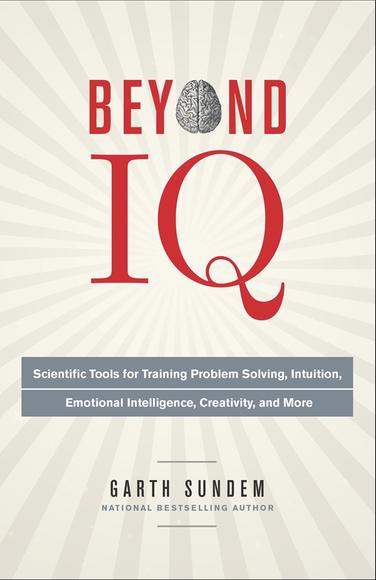
Beyond IQI found Beyond IQ by Garth Sundem to be engaging because of both the research he presents, and the engaging exercises he incorporates to make the research applicable to us. You can read my full book review by clicking here. Here are some of the quotes I especially appreciated.

“First, here’s why insight can be difficult: it requires a paradoxical mix of experience with openness. Usually, experience leads to set-in-stone ways of doing things. Typically, openness is only present when you’re forced by inexperience to remain available in your search for solutions. Experience mixed with openness is a rare cocktail. … Rather than opening your mind to insight, [John] Kounios and [Mark] Jung-Beeman show that if you want insight, the best thing you can do is to close it. A closed mind shows up on an fMRI as activation of the anterior cingulate cortex, your brain’s home of inhibiting distraction. It’s as if your ACC is a pair of noise-canceling headphones, and with these headphones in place you’re more able to hear your brain’s quiet, insightful whispers.” 

“Science has known that during sleep the brain’s hippocampus—the structure responsible for encoding new memories—replays the day’s experiences from short-term storage and filters them into the neocortex, where experiences are integrated into… ‘pre-existing knowledge representations.’ Insight is the novel connection of knowledge, and sleep knocks knowledge into new configurations.”

“[Robert] Sternberg and his frequent collaborator, Richard Wagner, showed that situational judgment tests…designed to measure practical intelligence are a much better predictor then IQ of job performance in business managers, bank managers, and graduate students. IQ doesn’t lead to success. Practical intelligence does.” 

“The language of problem-solving is: initial state, constraints, operations, and goal state. … [Richard] Mayer says that the most striking feature of people who successfully solve real-world problems is the time they spend studying the initial state and the constraints—the extra time they spend clarifying the problem.”

“University of California-San Bernardino researcher James Kaufman knows the recipe for creativity. It’s equal parts intrinsic motivation, experience, and something he calls low personal inhibition. Intrinsic motivation is pretty self-explanatory, but beware of the danger of ‘replacing intrinsic motivation and a natural curiosity with external rewards,’ says Kaufman. If a parent wants a child to become a creative pianist, the parent should encourage interest in the piano but not incentivize this interest with ice cream. Creativity blooms in fields you’re drawn to, not in fields into which you’re pushed. … Kaufman’s research has shown that creative people are hard workers with background knowledge and expertise in their creative domains. ‘It’s the “learn the rules so you can break them” approach,’ he says.” 

“Dean Keith Simonton of UC Davis found that the nineteenth-century scientists who wrote the most-cited papers also wrote the least-cited papers. … The more scientific papers or sonatas or sonnets a person writes, the greater chance that one or more will be especially creative.”

“In any kind of cognitive activity you have two kinds of things going on. You have intelligence, but there’s also learning and skill and knowledge based on practice. The more the second develops, the less important the first becomes. … Even more importantly, we’ve shown that with enough practice and hard work, you can actually change the neurophysiology of the brain. For example, practice can encourage the brain to grow greater myelin coating on neurons. Thus our behaviors become literally hard-wired. Developing expertise literally makes certain thought patterns more efficient than others.” —Paul Feltovich 

“Florida State researcher K. Anders Ericcson shows that it’s not only experience that creates expertise but a step-by-step method of sculpting experience that he calls deliberate practice. To Ericsson, famous for his theory that 10,000 hours of practice creates expertise in any field, the four-step path to expertise includes performing your skill, monitoring your performance, evaluating your success, and figuring out how to do it better next time. Completing only the first step—performing the skill itself—leads to automated, low-level, rote performance in which you perform the skill the same way every time. Monitoring, evaluating, and adjusting your skill allows you to modify it after every pass, helping skill evolved toward expertise.”

“The more you use your brain, the longer you’ll be able to use it. … People with ‘cognitively protected’ brains were those who challenge themselves through a lifestyle that included reading, writing, attending lectures, and doing word puzzles—in other words, they followed a self-imposed regimen of cognitive involvement. … Cognitive involvement is only one tine of a three-pronged approach to brain health in later life. The second tine is a healthy body. … In fact, your cardiovascular health in middle age is even more important for your later brain health than the same risk factors in old age itself. … The third tine: social interaction. … Nothing forces the brain to work like interacting with other brains.” 

“Moral reasoning and wisdom are linked. Specifically (and this is kind of cool albeit technical), for those who possess strong moral reasoning, wisdom increases with age. If you have lower moral reasoning, you gain no wisdom as you get older. So if you want wisdom later, train your moral reasoning now.”

“Wisdom requires thought and action without yourself in mind, and sociologist Monika Ardelt of the University of Florida shows that selflessness is also the best predictor of successful aging. In fact, the wisdom born of selflessness beats out physical health, income, socioeconomic status, physical environment, and even social relationships in predicting life satisfaction in old age.”

“Pressure…sits like a lead weight in your working memory, claiming space that could otherwise hold useful information. And because working memory is a mainline to general intelligence, space claimed by pressure makes you measurably dumber. … Pressure flips a mental switch from implicit to explicit thought, making you apply a layer of analysis to things that should be automatic. … Chronic pressure can make you chronically prioritize the quick rewards of drugs and alcohol while discounting their long-term risk. … So beware. Stress plugs your working memory, analysis paralysis forces you to try to use it anyway, and your dopamine circuits cry for a quick, risky solution.”

“Students with high emotional intelligence (EI) have lower rates of drug use and teachers with high EI get more support from their principals. Employees with high EI have higher job performance, especially when their IQ is low (implying that emotional intelligence can help compensate for low general intelligence—and also that these skills are distinct). EI is even implicated in resilience—the more EI you have, the higher your chances of bouncing back after trauma or negative life events.” 

“If IQ is the strength of the bulb in your lighthouse, willpower is the lens that focuses it into a beam.”