Shortcut To Second Mile

Tim Elmore is always suggesting ways to help those who work with students—parents, teachers, coaches, youth workers—to more effectively interact with young people.

Many of us (adults and students) struggle with wanting things to happen NOW! As a result, we tend to look for shortcuts. Dr. Elmore suggests that a “second mile” mindset will serve us all better. Check this out:

“In order to move from the ‘shortcut’ mindset to the ‘second mile’ mindset, let me suggest these shifts:

Stop Asking Shortcut Questions…

  1. What can I get by with?
  2. What meets ‘expectations’?
  3. How little can I study and still pass?
  4. What can I get out of this job?
  5. Is my behavior justifiable?
  6. Is there an easier way to do this?

Start Asking Second Mile Questions…

  1. What would surprise my supervisor?
  2. What would ‘excellent’ look like?
  3. How much can I study to improve?
  4. What can I give to this job?
  5. Is my behavior helpful to others?
  6. Is there a better way to reach the goal?”

If you are leading students today, I would highly recommend you check out Dr. Elmore’s latest book Marching Off The Map.

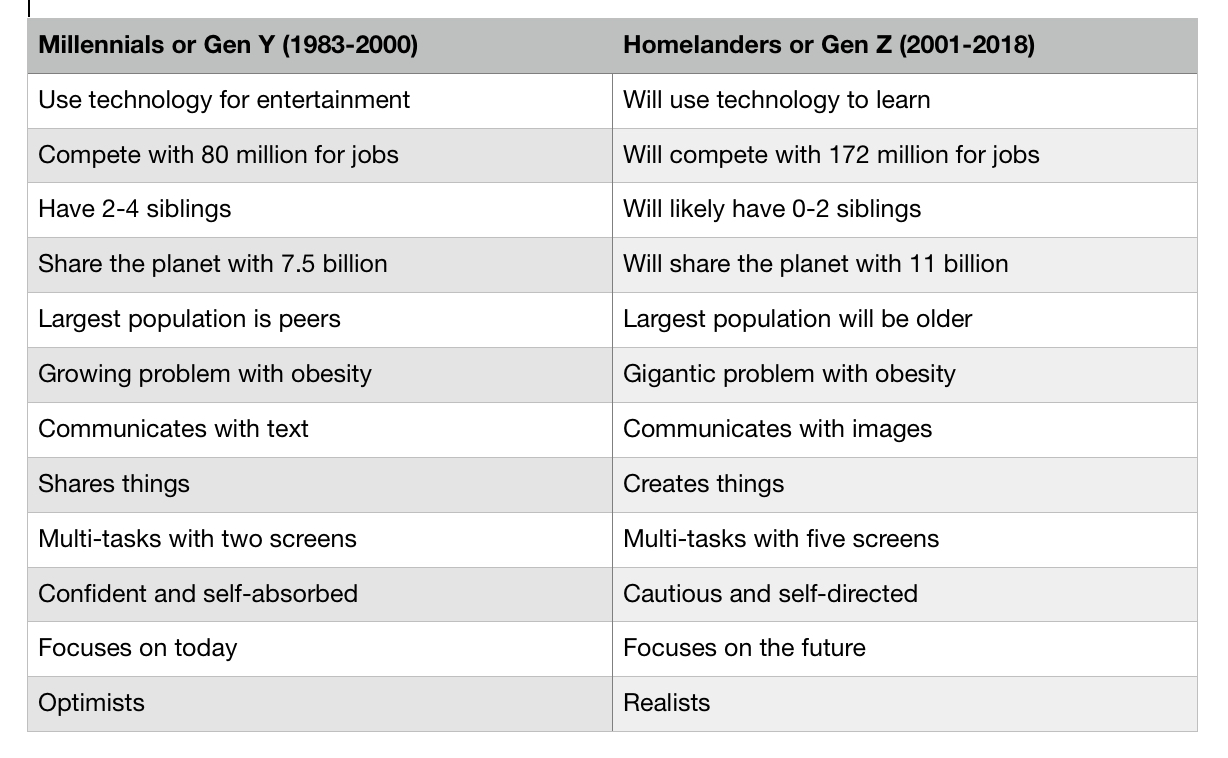
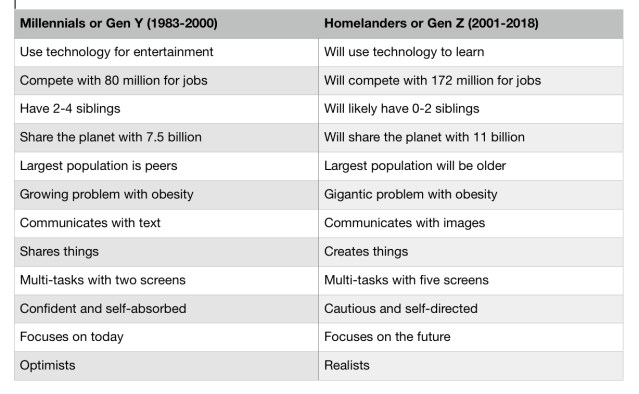
7 Quotes + 1 Infographic From “Marching Off The Map”

Once again, Tim Elmore has given us invaluable insight into the emerging youth culture. If you have kids or work with kids, you must read Marching Off The Map. You can check out my full book review by clicking here. Below is the first set of quotes I want to share with you, but there will be plenty more coming in the future, so stay tuned!

“Thanks to technology, information streams into their lives 24/7 and often has no filter on it, even for young children. When we determined not to censor content in the media, we had no idea (understandably) how it would affect our kids. We’re removing the opportunity for them to experience innocence and wonder. However, because they’re still maturing emotionally, socially, cognitively and biologically in their first 25 years, we have now begun to witness a strange paradox in our young: the extinction of childlikeness and the extension of childishness. …

“Since they are exposed to so much adult information, so early in their lives, they can prematurely lose (1) their sense of innocence, (2) their sense of wonder and (3) their sense of trust …

“Biologically, the graduate is an adult. Emotionally, the graduate may be unprepared for the adult world.” 

“If you think our kids are pitifully impulsive on social media—just look at the adult population. … If you think teens are addicted to Facebook, just study the hours their mothers spend on it. If you think young athletes on the Little League baseball field act childish, just look at their dads. The behavior of adults and children has become more and more similar. Society has baptized ‘youthfulness.’ We want to look young, feel young, dress young, talk young and act young. We argue with our children’s teachers. We push our kid’s coaches to get them special treatment. We are not good at delaying gratification, and we frequently don’t keep commitments we make … very much like children. The result? Adulthood has lost much of its aura and authority.”

“As you stand in front of your classroom or your own children—you are, in a sense, Galileo. You are Magellan. You are Christopher Columbus. You are Lewis and Clark. You are Neil Armstrong. Ready or not, they need you to play this role.

“Our world is both expanding and shrinking. Our past maps and methods are antiquated. Like it or not, we’re moving into unfamiliar territory and many think it’s too difficult to explore. We have fallen in love with our old maps. … 

“For educators, our role must change as we teach a generation of students who don’t need adults to get information.

“For parents, our role must change as we raise kids in a time of terrorism, economic recession, racial unrest, underemployment and ubiquitous technology.

“For coaches, our role must change as we train young athletes who have eight-second attention spans, and may arrive at practice with little resilience or grit.

“For youth workers, our role must change as we mentor students who have few life skills or values because adults either over-functioned or were absent.

“For employers, our role must change as we onboard young employees who may have never had a real job before, and may ask when ‘spring break’ will be.”

“Adults must enable the students to leverage what is new, yet at the same time, hold on to what is ancient, yet valuable. We must be both timeless and timely. So, our job as we serve the next generation is two-fold:

  • To adopt or adapt. We must seize what is new and help kids leverage it well.
  • To explain and equip. We must relate to them the timeless ideals every generation needs.”

“I believe we must cultivate one significant skill set in ourselves: we must be able to either adapt to the new world that’s emerging, or we must explain why a timeless virtue or value is still relevant in our 21st century world.”

“A third of young Americans say they don’t belong to any religion. I’ve found, however, they’ve traded in one God for many gods. They want to ‘feel’ spiritual, so they’ve created a buffet—seeking something to satisfy their soul. I often hear students say, ‘I don’t believe in religion, but I want to be a spiritual person.’ Today—pluralism is expanding across the landscape. It’s easier to say ‘no’ to one and enjoy a mixture of many.”

“A third of young Americans say they don’t belong to any religion. I’ve found, however, they’ve traded in one God for many gods. They want to ‘feel’ spiritual, so they’ve created a buffet—seeking something to satisfy their soul. I often hear students say, ‘I don’t believe in religion, but I want to be a spiritual person.’ Today—pluralism is expanding across the landscape. It’s easier to say ‘no’ to one and enjoy a mixture of many.”

“The Latin root word for ‘educate’ is ‘ducere’ which means to ‘push out.’ … We should not put students in a passive mode as we teach. We must be inspirers of learning. We must help pull ambition out of them, not push information into them.”
I’ll be posting some more quotes from Marching Off The Map next week.

Josh McDowell On Appreciating Our Kids

“Unconditionally accepting your kids tells them that being matters. Expressing your appreciation to them says that their doing matters too. …

“Unless your kids are absolutely convinced that you accept them for who they are, your praise and appreciation can become manipulative. Appreciation without acceptance may prompt your child to relate to you on a performance basis, thinking, ‘If I do a good job … if I get A’s … if I score a goal … then my dad will love me.’ Living on a performance basis will tend to produce feelings of false guilt in your kids. That’s why you need to be sure your kids first feel accepted then appreciated. …

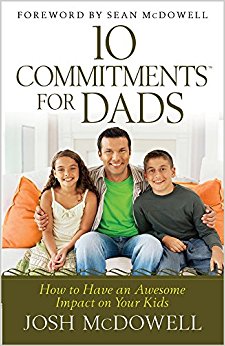
“Appreciate your child’s efforts more than your child’s accomplishments, and appreciate your kid’s worth as God’s creation even more than your kid’s efforts.” —Josh McDowell, in 10 Commitments For Dads

If you are interested in more quotes from 10 Commitments For Dads, you can click here.

8 Quotes From “10 Commitments For Dads”

Dad, your involvement in the life of your kids and grandkids is vital! Please check out my review of 10 Commitments For Dads and then get a copy for yourself.

“Studies show that even until your child reaches 25 years of age, the greatest influence on his or her behavior will be the loving, close relationship with you, the father.”

“What our kids need to see is that our rules are out of a heart of love and are actually good for them, just as the instructions and commands that come from God. We as dads need to learn how to place God’s truth and family rules squarely within the context of our loving relationships. … The truth is, God designed us to follow the rules because of the relationship. There are do’s and don’ts in life, but they are there to provide for our well-being and protect us from harm. That’s what a person within a loving relationship wants to do—protect those they love and provide for their best.”

“God disciplines us with a purpose—it is to lead us to become more like Him. … When we hold our kids accountable for their benefit, not ours, it too fulfills their sense of purpose and reinforces their sense of responsibility.”

“Tell your kids repeatedly that because God’s nature is holy He will never asked them to do anything that would not be right and good for them. It is out of this pure goodness that He wants to protect them from those things that would harm them and provide for their very best. It is from His holy nature of goodness that He gives unselfishly and makes the security, happiness, and welfare of your kids as important as His own.”

“God has uniquely shaped and molded you and your kids to bring honor to Him. It is only proper and right to love what He has done. Teaching your kids to love what He has uniquely designed isn’t being self-centered. We need to be proud of Him for what He has created and humbly celebrate our uniqueness for His glory, ‘For everything comes from Him and exists by His power and is intended for His glory. All glory to Him for ever! Amen’ (Romans 11:36).” 

“What our kids hear and see in today’s culture is rarely a representation of healthy love. Selfish, lustful, and even abusive behavior is passed off as a love relationship. That is why, in a real sense, we must redefine to our kids what such a relationship actually is from a biblical perspective.”

“The best sex education is 30 seconds here, one minute there, 10 seconds here, two minutes in 45 seconds there, and so on, starting as young as possible. When something comes up, step in, addressed it, and step back. Don’t make a big deal out of it.” 

“Because true love’s priority is to protect and provide for the one being loved, God’s kind of love will not do things that are harmful to the security, happiness, and welfare of another person.”

I will be sharing more quotes from 10 Commitments soon. You can subscribe to my blog to be notified as soon as they quotes are shared. You can also follow me on Twitter and Tumblr to see the healthy quotes I share every day.

10 Commitments For Dads (book review)

With Father’s Day just around the corner, I’ve got a great book that every Dad needs to check out. Think of this book from Josh McDowell as a Father’s Day gift you will give to yourself and to your family. The book is called 10 Commitments For Dads.

Whether you are a soon-to-be-Dad, a rookie Dad, a veteran Dad, or a Granddad, there is always more to learn and more to do for our kids. Since God has placed His precious children under our care, it’s wise to seek practical, biblically-sound counsel to help us do the best we can. Right at the outset of this book Josh lists seven objectives Dads need to strive for before our kids leave home:

  1. Form a right relationship with God
  2. Develop healthy relationships with others
  3. Have a healthy self-image
  4. Resist sexual pressure
  5. Be a person of integrity
  6. Develop deep and convictions
  7. Know how to handle success and cope with failure

This requires some diligence on a part, beginning with listening to the wise advice Josh shares in this book.

A commitment is not a guarantee, but it is rooted in a strong passion to do the very best that we can do. As Josh leads us through these 10 commitments, you will learn from some of Josh’s successes and missteps, you will learn what the Bible has to say, and you will learn the “whys” behind the “how-to’s” of fatherhood.

10 Commitments offers no quick-fixes for fatherhood, but it does offer hope for those Dads and Granddads who are willing to let God help them do their very best. I would encourage you to also use this book as a discussion starter. You will need the help of your wife, a friend, or a pastor to be at your very best, and the concepts presented in this book are great starting points for evaluations and conversations with your helpers.

Go get this book for yourself, Dad, and then enjoy many, many happy Father’s Days!

I am a Harvest House book reviewer.

Thursdays With Oswald—Teach Them While They’re Young

Oswald ChambersThis is a weekly series with things I’m reading and pondering from Oswald Chambers. You can read the original seed thought here, or type “Thursdays With Oswald” in the search box to read more entries.

Teach Them While They’re Young

      We need a personal knowledge of God through all our life. The time to discover Him for ourselves is in life’s earliest morning—“that from a child thou hast known the holy Scriptures, which are able to make thee wise unto salvation,” wrote Paul to Timothy (2 Timothy 3:15). “And ye fathers, provoke not your children to wrath: but nurture them in the chastening and admonition of the Lord” (Ephesians 6:4).

     We are so built that in childhood we can more easily come to a knowledge of God in simplicity than in later years. And in those formative years the personal life can be shaped and fitted to God’s standard more surely than later on.

From Shade Of His Hand

At the end of Ecclesiastes, Solomon wrote, “Remember your Creator in the days of your youth, before the days of trouble come” (Ecclesiastes 12:1).

Oswald Chambers notes that parents lay a much stronger foundation for their children’s future spiritual attainment by talking often of the love of God while those children are still young.

Parents—start early, keep at it often, and don’t ever quit telling your children about God’s love. 

These commandments that I give you today are to be on your hearts. Impress them on your children. Talk about them when you sit at home and when you walk along the road, when you lie down and when you get up. Tie them as symbols on your hands and bind them on your foreheads. Write them on the doorframes of your houses and on your gates. (Deuteronomy 6:6-9)

Train up a child in the way he should go: and when he is old, he will not depart from it. (Proverbs 22:6)

[Mom and Dad, be sure to check out Andrew Murray’s exceptional book Raising Your Child To Love God. You can read some quotes from Murray’s book here, and some of his prayers for children here.]

Get Off Facebook, Dad!

This is reprinted from the Axis Culture Translator

the-culture-translatorMiddle-aged Americans (35- to 49-year-olds) are now spending more time on social media (seven hours a week) than their children, with the fastest growing demographic on Facebook being Baby Boomers. I recently asked my daughter’s best friend what she was doing that evening and she responded, “nothing, just going home to watch my parents stare at their phones all night.” Ouch.

There’s nothing inherently good or bad about social media, it just is. Yet, how we use it matters. Is documenting your life online keeping you from actually living it? Maybe the greatest gift we can give our children is presence. Here are five practical ways to model healthy social media habits in your home so you can be fully present and engaged with your family.

1. Practice Faithful Presence: Root your life in the real. Anchoring yourself in the here and now reduces the impulsive need to broadcast your life, which can lead to envy, depression, and FOMO. Instead, embrace JOMO!

2. Resist the Urge to Share: Instead of posting that picture of you and your husband at the beach, keep that moment just between the two of you. Cherish it, and it will become an intimate memory binding you to one another, instead of cheapening the moment by sharing it with the world.

3. Unplug: Our devices tell us there is something more important going on “out there” than what’s going on right here, but that’s not true. Establish tech-free times during the day or tech-free places (dinner table) to encourage deliberate, face-to-face interaction with your family. Or, try giving up social media for Lent this year.

4. Slow Down: Your life’s pace matters. Our friends Matt and Julie Canlis encourage parents to live at “Godspeed”, which means living life intentionally, mindfully, and slowly. Practice it by reading a novel aloud together as a family at night, or play a board game instead of watching a movie. Start small, take 15-minutes every morning just to be with your kids before heading off to work and school. Build a liturgy to your day that encourages you to slow down and subvert the digital culture.

5. Pay Attention: The best way to capture moments isn’t to post them to SnapChat, it’s to simply pay attention. Cultivating an awareness of the world around us is a big part of being fully human. Henry David Thoreau said “Only that day dawns to which we are awake.” Ask yourself from time to time, “Am I paying attention to my life right now?” Otherwise, whole days, even our very life could pass by unnoticed.

Our kids need healthy boundaries around screen time and social media, what better way to provide those boundaries than by modeling them with our own actions and habits.

Parents, please sign up for the weekly email from Axis. You can do so by clicking here.

Book Reviews From 2016

Encouragement For The Parent Of A Prodigal

There is perhaps nothing more heart-wrenching for a Christian parent than to see their son or daughter living a life differently than how they were raised.

One biblical promise these parents can claim in prayer is—Train up a child in the way he should go: and when he is old, he will not depart from it (Proverbs 22:6).

But perhaps an historical example might be helpful as well—

He was born in 354 in a North African town set among the woods near the Mediterranean. His father was a pagan, but his mother, Monica, was of devout Christian stock. 

Augustine was an undisciplined child, idle and truant despite frequent beatings. He loved sports and pranks and soon discovered a host of adolescent pleasures. … Augustine was also brilliant, and he soon moved to Carthage to further both his studies and his fun. Monica warned him against fornication, but ‘I ran headlong with blindness.’ 

At about 18 he found himself the father of a son. At the same time he joined a cult. Years passed, and Monica, praying ceaselessly, heard that Augustine was planning to leave Africa for Rome. She begged him not to go. When he refused, she determined to go with him. Using deception, he left her praying in a chapel and sailed without her; but she took a later boat and intercepted him. They traveled to Milan where she persuaded him to listen to the great Bishop Ambrose. The bishop’s razor-sharp sermons penetrated Augustine’s head, if not yet his heart. Monica continued praying, confiding her struggles to Ambrose. He told her not to worry: ‘It isn’t possible for the son of such prayers to be lost.’ 

One day as Augustine sat in a friend’s garden he heard a child singing, ‘Take up and read!’ He opened the Bible near him and read from Romans 13: ‘Don’t go to wild parties or get drunk or be vulgar or indecent.… Let the Lord Jesus Christ be as near to you as the clothes you wear.’ By the time he finished the sentence, he later said, he was converted. On the eve of Easter, April 24, 387, Augustine and his son Adeodatus were baptized by Ambrose as Monica watched. Her lifetime of prayer was answered, and a church father was born.

Years later as Augustine shared about his conversion in his book Confessions, he wrote out this prayer to God: “My mother, Your faithful servant, wept to You for me, shedding more tears for my spiritual death than others shed for the bodily death of a son. You heard her.

So, Christian Mom and Dad, don’t EVER stop praying for your wayward child! God hears those prayers, and is moving on behalf of your child.

On This Day (book review)

on-this-dayI truly believe George Santayana’s maxim about learning from history so that we don’t have to repeat its painful lessons. On This Day: 365 Amazing and Inspiring Stories about Saints, Martyrs and Heroes by Robert Morgan not only helped me learn history, but see that history through a biblical lens.

Each day of the year Robert Morgan will introduce you to someone who played a key part in church history. Some of the names will be well-known to you, and some of them will be brand new; some of the stories will make you smile, and some will break your heart. But all of the stories reinforced two major themes for me—(1) All of history is God’s story, and (2) God uses ordinary people to accomplish His extraordinary purpose.

Each day’s entry is short enough that you can easily add it to your daily schedule. If you are a teacher or a parent, these stories would be a great way to talk about current events in light of what God has already done in past history. Either by yourself or with others, you will gain a greater appreciation for God and the gifts He gives to men and women.