The Despised Pastor

The Despised PastorSurveys reveal that people in the United States do not have a highly favorable view of evangelical Christians, nor of pastors of evangelical Christian churches.

I agree with John Maxwell’s maxim that everything rises and falls on leadership, so this unfavorable view of evangelical Christians must be addressed first in the pastorate. The 2400-year-old words from the prophet Malachi still ring true today—

“The words of a priest’s lips should preserve knowledge of God, and people should go to him for instruction, for the priest is the messenger of the Lord of Heaven’s Armies. But you priests have left God’s paths. Your instructions have caused many to stumble into sin. You have corrupted the covenant I made with the Levites,” says the Lord of Heaven’s Armies. “So I have made you despised and humiliated in the eyes of all the people. For you have not obeyed me but have shown favoritism in the way you carry out my instructions.” (Malachi 2:7-9)

Uh oh!

Is it possible, my dear fellow pastor, that if we become men and women of the Word of God that the views of the population might begin to change?

Servanthood

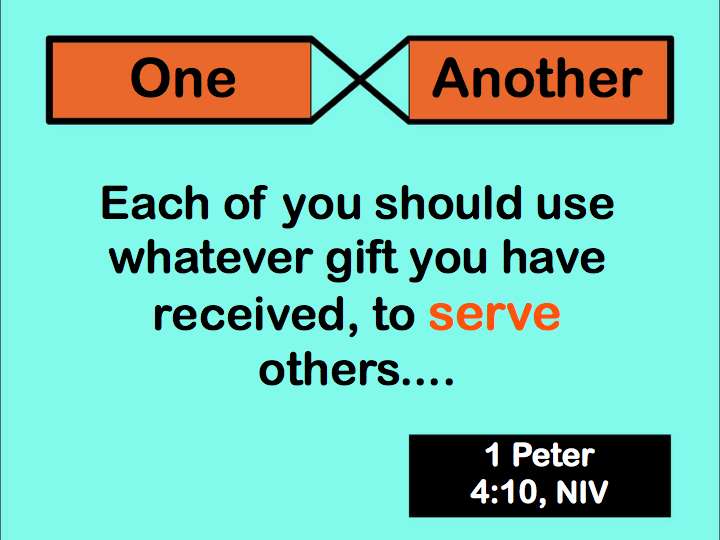
ServanthoodThis morning we wrapped up our series called Life Togetherwhere we looked at the one another phrases in the New Testament that related to the Church—with the thought of serving one another.

I think this 1-minute video from John Maxwell captures this thought about servanthood well…

From The Personalized Promise Bible we looked at this prayer that comes from the servanthood example of Jesus in John 13:13-17

Jesus is my Mentor and the Lord of my life. He has left me an example of the greatest servitude the world has ever known. I will do as he did and wash the feet of my brothers and sisters in Christ. I will see the real good and benefit of others through humble service. With a tender heart of compassion, I will take the time to do good to those around me. Through this generosity of service and willingness to give of myself to others, no matter how humbling the service may be, I store up for myself favor upon favor, and blessing upon blessing.

23 Quotes From “The 5 Levels Of Leadership”

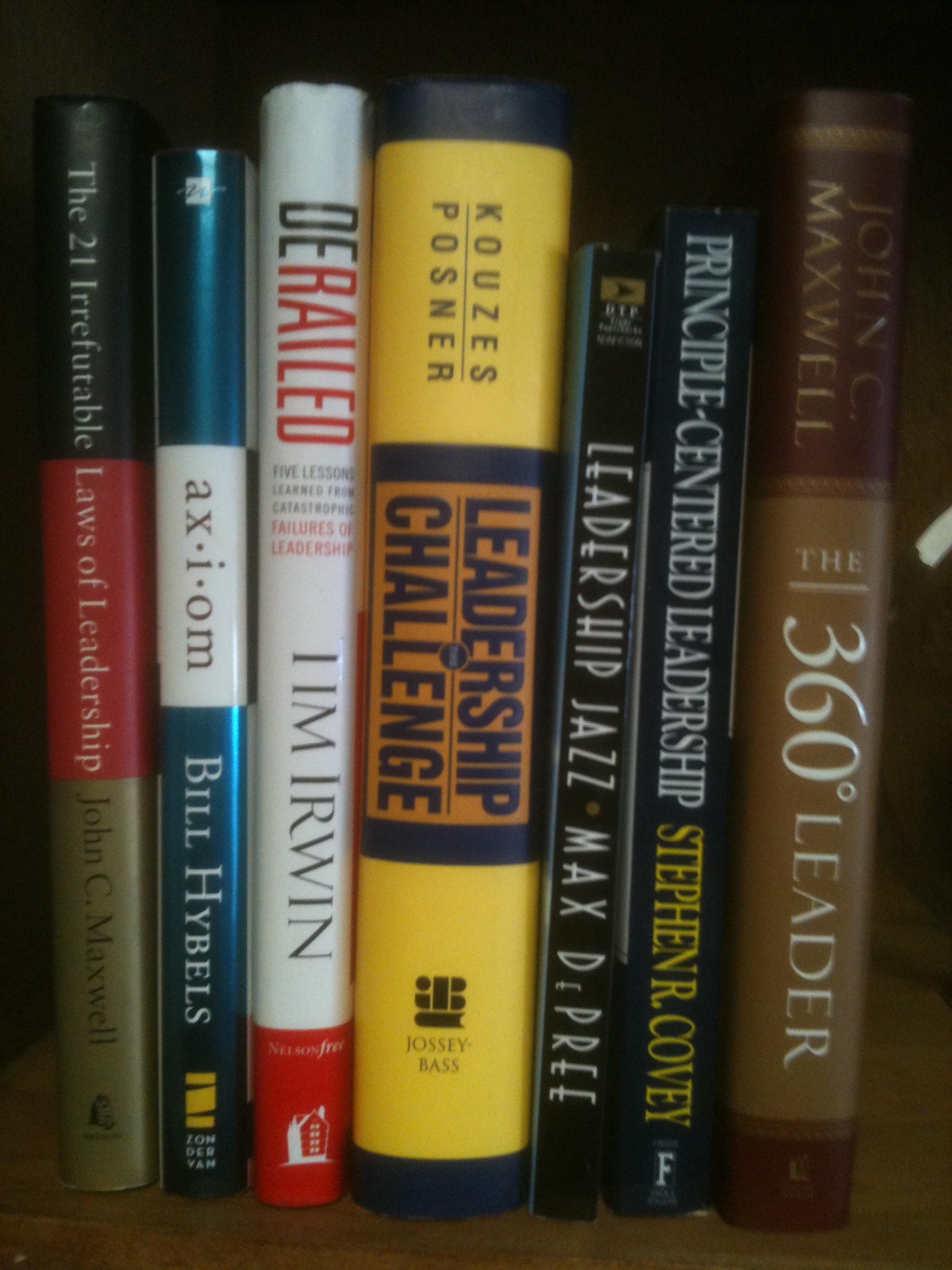
5 Levels of LeadershipThere is always so much rich content in a John Maxwell book, and The 5 Levels Of Leadership is no exception. You can read my full book review by clicking here. These are a few of the quotes that especially caught my attention. Unless otherwise noted, these quotes are from John Maxwell.

“At any level, a leader doesn’t automatically stay at that level. You must earn your level of leadership with each person, and that level can go up or down at any time.” 

“You have no control over how much talent you possess. You control only what you do with it.”

“Leadership is accepting people where they are, then taking them somewhere.” —C.W. Perry 

“Often to make themselves look better or to keep people from rising up and threatening them, positional leaders make other people feel small. How?

  • By not having a genuine belief in them.
  • By assuming people can’t instead of assuming they can.
  • By assuming people won’t rather than believing they will.
  • By seeing their problems more readily than their potential.
  • By viewing them as liabilities instead of assets.”

“Anytime you think you’ve arrived—whether your position is the lowest or the highest in the organization—you’ve lowered your expectations for yourself, sold your leadership short, and fallen into a no-growth mind-set.”  

“Above all else, good leaders are open. They go up, down, and around their organizations to reach people. They don’t stick to established channels. They’re informal. They’re straight with people. They make a religion out of being accessible.” —JackWelch

“You see, when there is danger, a good leader takes the front line. But when there is celebration, a good leader stays in the back room. If you want the cooperation of human beings around you, make them feel that they are important. And you do that by being humble.” —Nelson Mandela 

“People will not get ahead with others unless they are willing to work behind others.”

“[Good leaders] have more than an open-door policy—they know the door swings both ways. They go through it and get out among their people to connect.” 

“If you want to be successful on Level 2, you must think less in terms of systems and more in terms of people’s emotions. You must think more in terms of human capacity and less in terms of regulations. You must think more in terms of buy-in and less in terms of procedures. In other words, you must think of people before you try to achieve progress.”

“Care without candor creates dysfunctional relationships. Candor without care creates distant relationships. But care balanced with candor creates developing relationships. …Caring values the person while candor values the person’s potential. …Caring establishes the relationship while candor expands the relationship. … Caring defines the relationship while candor directs the relationship.” 

“Before having a candid conversation, make sure you can answer yes to the following questions:

  • Have I invested enough in the relationship to be candid with them?
  • Do I truly value them as people?
  • Am I sure this is their issue and not mine?
  • Am I sure I’m not speaking up because I feel threatened?
  • Is the issue more important than the relationships?
  • Does this conversation clearly serve their interests and not just mine?
  • Am I willing to invest time and energy to help them change?
  • Am I willing to show them how to do something, not just say what’s wrong?
  • Am I willing and able to set clear, specific expectations?”

“If achieving the vision is worth building the team, it is also worth risking the relationship. Building relationships and then risking them to advance the team creates tension for the leader. That tension will force you to make a choice: to shrink the vision or to stretch the people to reach it. If you want to do big things, you need to take people out of their comfort zones. They might fail. They might implode. They might relieve their own tension by fighting you or quitting. Risk always changes relationships. If you risk and win, then your people gain confidence. You have shared history that makes the relationship stronger. Trust increases. And the team is ready to take on even more difficult challenges. However, if you risk and fail, you lose relational credibility with your people and you will have to rebuild the relationships. Risk is always present in leadership. Anytime you try to move forward, there is risk. Even if you’re doing the right things, your risk isn’t reduced. But there is no progress without risk, so you need to get used to it.” 

“You can issue all the memos and give all the motivational speeches you want, but if the rest of the people in your organization don’t see you putting forth your very best effort every single day, they won’t either.” —Colin Powell

“The job of a leader is to build a complementary team, where every strength is made effective and each weakness is made irrelevant.” —Stephen Covey

“If you want to be an effective leader, you must move from perfectionist to pragmatist.”

“Since you can’t prevent mistakes, why not adopt and attitude in which you and your team learn from them?” 

“The individual leads in order that those who are led can develop their potential as human beings and thereby prosper.” —Socrates

“The highest goal of leadership is to develop leaders, not gain followers or do work.”

“Leadership is an opportunity to serve.” —J. Donald Walters

“No matter where you are in your leadership journey, never forget that what got you to where you are won’t get you to the next level.” 

“The reality is that no one is indispensable. Worse, allowing others to become dependent does little more that satisfy a leader’s ego. It is a very limiting leadership style that has a very short life span. The first step in developing leaders is to have a desire to develop people so that they can succeed without you. …If you want to develop people, you must help them discover and build upon their strengths. That’s where people have the most potential to grow. Helping to develop their strengths is the only way to help leaders become world-class.”

“What you do daily, over time, becomes your legacy.”

The Five Levels Of Leadership (book review)

5 Levels of LeadershipI was introduced to the wisdom and leadership prowess of John C. Maxwell when I stepped into my first real leadership position. In some of the earliest Maxwell books I devoured, he talk briefly about the five levels of leadership. Now in The Five Levels Of Leadership Dr. Maxwell has given us the in-depth training to these invaluable lessons in growing as a leader.

Leadership is an upward climb. But it’s not just about gaining skills, adding accomplishments to a resume, or even getting a bigger office. True leadership is about investing in more people more deeply. That’s what this book helps leaders do.

People who are content with merely a title, or a new bullet point on their resume, will hate this book because right from the outset Dr. Maxwell bluntly points out the short-sightedness of that pursuit. Instead, the title is just the invitation to Level 1, and the start of a journey that focuses on doing the best good for the most people possible.

For those who have read other Maxwell leadership books, you will hear the echoes of those books woven through these pages. In reality, all of the leadership principles Maxwell has written about—from developing yourself, to building a team, to planning for the future, to communicating with greater clarity—are all built into Levels 1 through 5 of this book.

I appreciated the assessment at the beginning of the book to give me an idea of which Level was going to require my greatest attention. Likewise, the list of needed qualities at the end of each Level’s teaching gave me a handy “To Do” list for my leadership growth plans.

For anyone in any type of leadership position, this book deserves your full attention.

Check out a whole bunch of quotes I share from The Five Levels of Leadership.

Going Up, Please

I’m leading a fun discussion at the En Gedi Youth Center with a bunch of excited 6th graders. Our class is called “An Elevation, A Mirror, And A Guy Called Bob” which is based on John Maxwell’s book Winning With People.

In Winning With People, Dr. Maxwell shares 25 principles for improving our interpersonal skills. In my class at the youth center, we’ve already covered the lens principle and the elevator principle.

The elevator principle basically says that we can only take people up or take them down in our interactions with them. There are no “neutral” interactions. I’m encouraging our students to always take people up.

One way we do that is by pausing to T.H.I.N.K before we speak. Before speaking, ask yourself, “Is what I’m about to say…

  • True
  • Helpful
  • Inspiring
  • Necessary
  • Kind?”

This isn’t just good advice for 6th graders. We all would do well to remember to T.H.I.N.K. As Winston Churchill said,

“By swallowing evil words unsaid, no one has ever harmed his stomach.”

Book Reviews From 2011

Here is the complete list of books I read in 2011. Click on each title to be taken to my review…

7 Habits Of Highly Effective Teens

A Collection Of Wednesdays

A Treasury Of A.W. Tozer

Abandon The Ordinary

Average Joe

Be A People Person

Be The People

Biblical Ethics

Biblical Psychology

Bonhoeffer: Pastor, Martyr, Prophet, Spy

Bringing Sons Unto Glory

Chazown

City On Our Knees

Costly Grace

Doing Virtuous Business

Elite Prayer Warriors

Enemies Of The Heart

Experiencing The Spirit

Fasting

For Men Only

From The Library Of A.W. Tozer

Galileo

Generation iY

George Washington Carver

Get Off Your Knees And Pray

Go For Gold

God Is The Gospel

Has God Spoken?

Home And Away

How The Mighty Fall

How To Read The Bible

How To Win Friends And Influence People

I Knew Jesus Before He Was A Christian

In Visible Fellowship

Leadership Gold

Leadership Is Dead

Leadership Prayers

Lee: A Life Of Virtue

Letters From Leaders

MacArthur: America’s General

Max On Life

Me, Myself & Bob

Never Surrender

Night

On The Verge

Peach

Plugged-In Parenting

Radical Together

Remember Why You Play

Say It With Love

Secure Daughters, Confident Sons

Sherman: The Ruthless Victor

Smith Wigglesworth On Faith

Soul Work

Soulprint

Stuff Christians Life

Sun Stand Still

The Blessing Of Adversity

The Church In Exile

The Heart Of A Great Pastor

The Hour That Matters Most

The Next Christians

The Seed

Toxic Committees & Venomous Boards

untamed

Upside

Wandering In The Wilderness

We Shall See God

Whale Done

What The Bible Says About The Holy Spirit

Why God Won’t Go Away

Why Great Men Fall

You Were Born For This

Looking forward to sharing more great reads with you in 2012! Let me know if there are any books you would like me to review.

Be A People Person (book review)

John Maxwell’s insights into leading people perpetually astound me. He always finds such simple ways to explain what I know I should already be doing. In one of his earliest books, Be A People Person, I (re)discovered some more great people principles.

Be A People Person perfectly describes this book: It’s all about being a person who is trusted and accepted by other people. This, in turn, puts this people-person in a place to be an effective leader. So Dr. Maxwell talks about confidence, motivation, encouragement, empathy, trustworthiness, mentorship, and so many other people principles.

Because this was one of his earlier books, I see many of the seed thoughts that have become books in their own right later on. But that still didn’t take away from the refreshing insights that I uncovered.

Unless you are a solitary hermit, there is so much to discover in this book to help you grow stronger and more effective relationships with family members, coworkers, and friends.

Leadership Gold (book review)

I thoroughly enjoy John Maxwell’s books, as they have opened my eyes to leadership principles more than any other author. And the “duet” of Leadership Gold and Go For Gold easily fit into the category of extremely helpful.

As I pondered it, I think what I appreciate most about Dr. Maxwell’s books is his level of affirmation. He challenges me to get better as a leader by showing me how I can do it. He encourages me to build on what I already know, and keep on growing. He helps me see what I can become and can accomplish as a God-fearing leader.

Leadership Gold is made up of 26 leadership lessons that Dr. Maxwell has learned over decades of leading. Each lesson comes with his personal example — sometimes failures, sometimes successes — along with actionable steps the reader can take. At the end of each lesson there are both application and mentoring exercises. To dig deeper into each lesson, the companion Go For Gold is a short reading for each day of the week that corresponds with the lesson in Leadership Gold. Combined, these books are a powerful one-two punch!

If you are in a leadership position, or if you aspire to be an effective leader, I can highly recommend these two books to you.

Leadership Tension

Along time ago I was studying the virtues that the Greek philosophers taught. To the Greeks, the virtue was considered the “golden mean” between two opposite extremes. It was the ability to balance the tensions that produced the virtue.

In areas where I have leadership responsibilities, I try to find the virtue of leadership as the balance between these two tensions:

  • Here is a trustworthy saying: Whoever aspires to be an overseer desires a noble task. (1 Timothy 3:1)
  • Should you then seek great things for yourself? Do not seek them. (Jeremiah 45:5)

On the one side: desire leadership. On the other side: don’t desire leadership. Do your best at it, but be ready to give it up.

I love this statement on leadership from John Maxwell—

Leadership is the willingness to put oneself at risk.
Leadership is the passion to make a difference with others.
Leadership is being dissatisfied with the current reality.
Leadership is taking responsibility while others are making excuses.
Leadership is seeing the possibilities while others are seeing the limitations.
Leadership is the readiness to stand out in a crowd.
Leadership is an open mind and an open heart.
Leadership is the ability to submerge your ego for the sake of what is best.
Leadership is evoking in other the capacity to dream.
Leadership is inspiring others with a vision of what they can contribute.
Leadership is the power of one harnessing the power of many.
Leadership is your heart speaking to the hearts of others.
Leadership is the integration of heart, head, and soul.
Leadership is the capacity to care, and in caring, to liberate the ideas, energy and capacity of others.
Leadership is the dream made reality.
Leadership is, above all, courageous.

I am trying to balance the pulls of leadership, but while I do I’m loving the leadership tension!

UPDATE: This idea of leadership tension became one of the key seed thoughts for my book Shepherd Leadership: The Metrics That Really Matter

Winner Or Whiner?

This morning on John Maxwell’s “Minute With Maxwell” he said: “Winners know they have to do the right thing and then they’ll feel good. Whiners want to feel good before they do the right thing.

I have learned this is true in my life. If I wait until I feel like do something, I’ll make all kinds of excuses to avoid doing it. But if I do what I know I’m supposed to do I’ll feel good that I did it.

Good feelings follow good actions.

Winners do right to feel good.

Whiners wait to feel right before they do anything.

Behavioral psychologist William James wrote: “Action seems to follow feeling, but really action and feeling go together; and by regulating the action, which is under the more direct control of the will, we can indirectly regulate the feeling, which is not. Thus the sovereign voluntary path to cheerfulness, if our cheerfulness be lost, is to sit up cheerfully and to act and speak as if cheerfulness were already there.” (emphasis mine)

So let me ask you: Are you going to be a winner or a whiner today?