Intimate Prayer Requests

“When you bring Me prayer requests, lay out your concerns before Me. Speak to Me candidly; pour out your heart. Then thank Me for the answers that I have set into motion long before you can discern results. When your requests come to mind again, continue to thank Me for the answers that are on the way. If you keep on stating your concerns to Me, you will live in a state of tension. When you thank Me for how I am answering your prayers, your mind-set becomes more positive. Thankful prayers keep your focus on My presence and My promise.” —Jesus (in Sarah Young’s 40 Days With Jesus)

Favorable Influence

Listen to the podcast of this post by clicking on the player below, and you can also subscribe on AppleSpotify, or Audible. 

Twice the 80th psalm declares—Restore us, O Lord God Almighty; make Your face shine upon us, that we may be saved (Psalm 80:19). 

But if we are already a Christian that has been saved from the penalty of our sin and saved to an eternal reward, then that also means that God’s face IS already shining on us, He HAS already restored us, and He HAS already given us His favor. 

I like how the Amplified Bible renders this verse: Restore us, O Lord God of hosts; cause Your face to shine in pleasure, approval, and favor on us, and we shall be saved! 

What we have received is too wonderful for us to keep to ourselves, so we must let His pleasure, approval, and favor now shine out of us! 

“If the result of our experience of God does not compel and propel us into global mission, it is doubtful whether we have really encountered the God of the Bible.” —Dick Brogden 

Jesus stated His mission simply and then sent us out on the exact same mission (Luke 4:18-19; John 20:21). We do this best by living closely among people so they can also see us shine with God’s favor.

Paul called us to shine as well: Live clean, innocent lives as children of God, shining like bright lights in a world full of crooked and perverse people (Philippians 2:15). I believe this is a perfect definition of the word influence. The origin of the word meant the supposed flowing of ethereal fluid from the stars thought to affect the actions of men. Christians that let their good deeds shine in the darkness can influence the entire culture around them!

“Radical Christianity is not going on a missions trip or a big conference. Radical Christianity is staying steady for decades.” —Mike Bickle 

Being a person that shines with favorable influence requires staying involved for the long haul so that you can build trustworthiness. It’s being in visible places not to get glory, but to let people see God’s glory. When they see His glory shine on you and out of you, they will want what you have too!

Solomon said, By the blessing of the influence of the upright and God’s favor—because of them the city is exalted (Proverbs 11:11). So, my fellow Christian, let me ask you: 

  • Has God shined on you?
  • Are you letting Him shine out of you? 
  • Are you living a noteworthy, trustworthy, visible life in your dark community? 

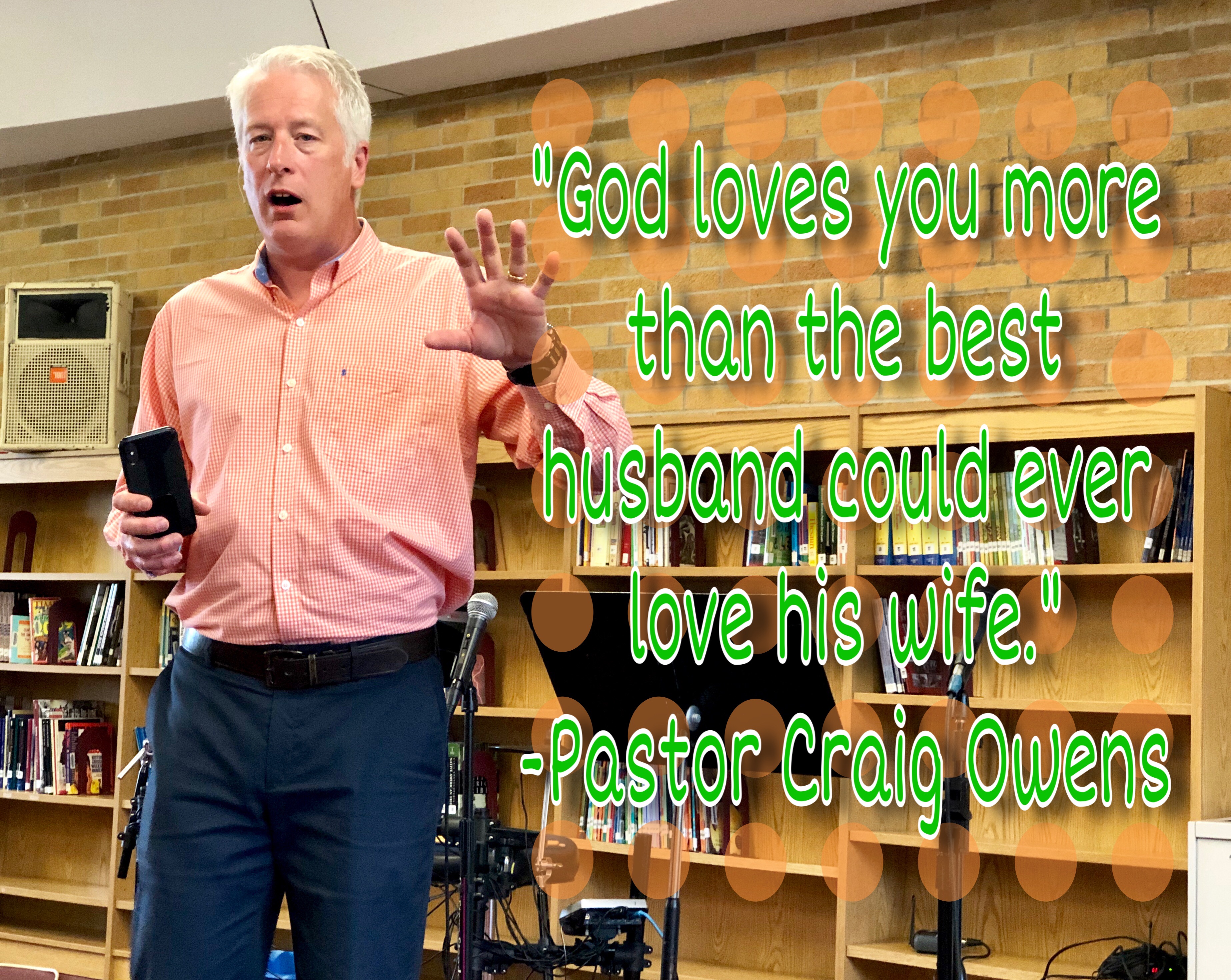
“It’s your choice: You can be a part of your city’s elevation or its deterioration.”

—Craig T. Owens

►► Would you please prayerfully consider supporting this ministry? My Patreon supporters get behind-the-scenes access to exclusive materials. ◀︎◀︎

The Personal Element

It is the personal element that Christian discipleship needs to emphasize. ‘The gift without the Giver is bare.’ The call of this age is a call for a new discipleship, a new following of Jesus, more like the early, simple, apostolic Christianity when the disciples left all and literally followed the Master. Nothing but a discipleship of this kind can face the destructive selfishness of the age, with any hope of overcoming it. … But if our definition of being a Christian is simply to enjoy the privileges of worship, be generous at no expense to ourselves, have a good, easy time surrounded by pleasant friends and by comfortable things, live respectably, and at the same time avoid the world’s great stress of sin and trouble because it is too painful—if this is our definition of Christianity, then surely we are a long way from following the steps of Him who trod the way with tears of anguish for a lost humanity.” —Rev. Maxwell in Charles Sheldon’s In His Steps (emphasis mine)

A Life Worthy Of The Gospel

Only let your conduct be worthy of the gospel of Christ… (Philippians 1:27).

The apostle Paul wanted the Philippians’ living to be their preaching. Much like Francis of Assisi said years later: “Preach always; if necessary, use words.”

The big question is—what does conduct “worthy of the gospel of Christ” look like? I believe Paul identifies at least 15 characteristics in just the next 20 or so verses

  1. It is not a people-pleasing lifestyle. It is a God-honoring, Spirit-lead, Christ-glorifying lifestyle.
  2. It is steadfast, which means it perseveres even through the trials and difficulties.
  3. It is a heart and mind unified with other Christians.
  4. It is bold—“without being frightened in any way by those who oppose you.” 
  5. It is strengthened in Christ and it is in constant fellowship with the Holy Spirit. 
  6. It overflows with loving comfort, affection, and mercy to those around it.
  7. It humbly serves others while confidently refreshing itself in Christ.
  8. It strives to live as Jesus did, seeking always for God to be glorified.
  9. It is obedient to the conviction and direction of the Holy Spirit.
  10. It finds pleasure in doing God’s will.
  11. It doesn’t complain.
  12. It is a blameless and harmless life.
  13. It shines a light that attracts others to God’s love.
  14. It holds fast to the Word of life for the long haul.
  15. It is a rejoicing, contented lifestyle.

Heavenly Father, may it always be said of my life that it is one that is worthy of the gospel of Christ. May I always be sensitive to the nudges of the Holy Spirit to keep my life aligned in this way. In Jesus’ name I pray, Amen! 

Rejoicing At The Coming Of The Judge

In Psalm 50, we read the first-of-twelve psalms written by King David’s handpicked worship leader, a man named Asaph. On the day that Asaph first took up his position as worship leader, David gave him a special song, which definitely influenced Asaph’s songwriting.  

Psalm 50 has a pretty easy outline: an introduction in the first six verses, followed by 17 verses of God speaking to His people—speaking to you and me! In between the introduction and God’s speaking is the word selah.

Selah means a time for us to pause and carefully consider. So Asaph is essentially saying, “God is getting ready to speak with us, so we need to selah—pause from what we are doing so that we can pay careful attention to His words!”  

Asaph sets the stage in the first verse, telling us that the Mighty One, God, the Lord speaks. The words that are about to be spoken come from THE I AM—the All-Sufficient One, the Omnipotent, the All-Knowing, All-Powerful Ruler of the Universe. Asaph also reminds us that He is coming as THE Judge.

When you hear that THE All-Powerful, All-Knowing One is THE Judge that has summoned you into His courtroom, it’s quite likely that your heart would skip a beat. Especially when God lists some of the sins you and I are guilty of breaking in verses 16-20. 

It’s also possible that the news that you have to appear before THE Judge could cause you to rejoice. What? How can we rejoice at that?! David taught Asaph this concept in the song he gave him: God’s people should rejoice over God’s judgments. 

You see, in Psalm 50 God says, “I do not rebuke you for your sacrifices, or for all your attempts to follow the rules.” It’s not in the practices of the law that we find salvation.

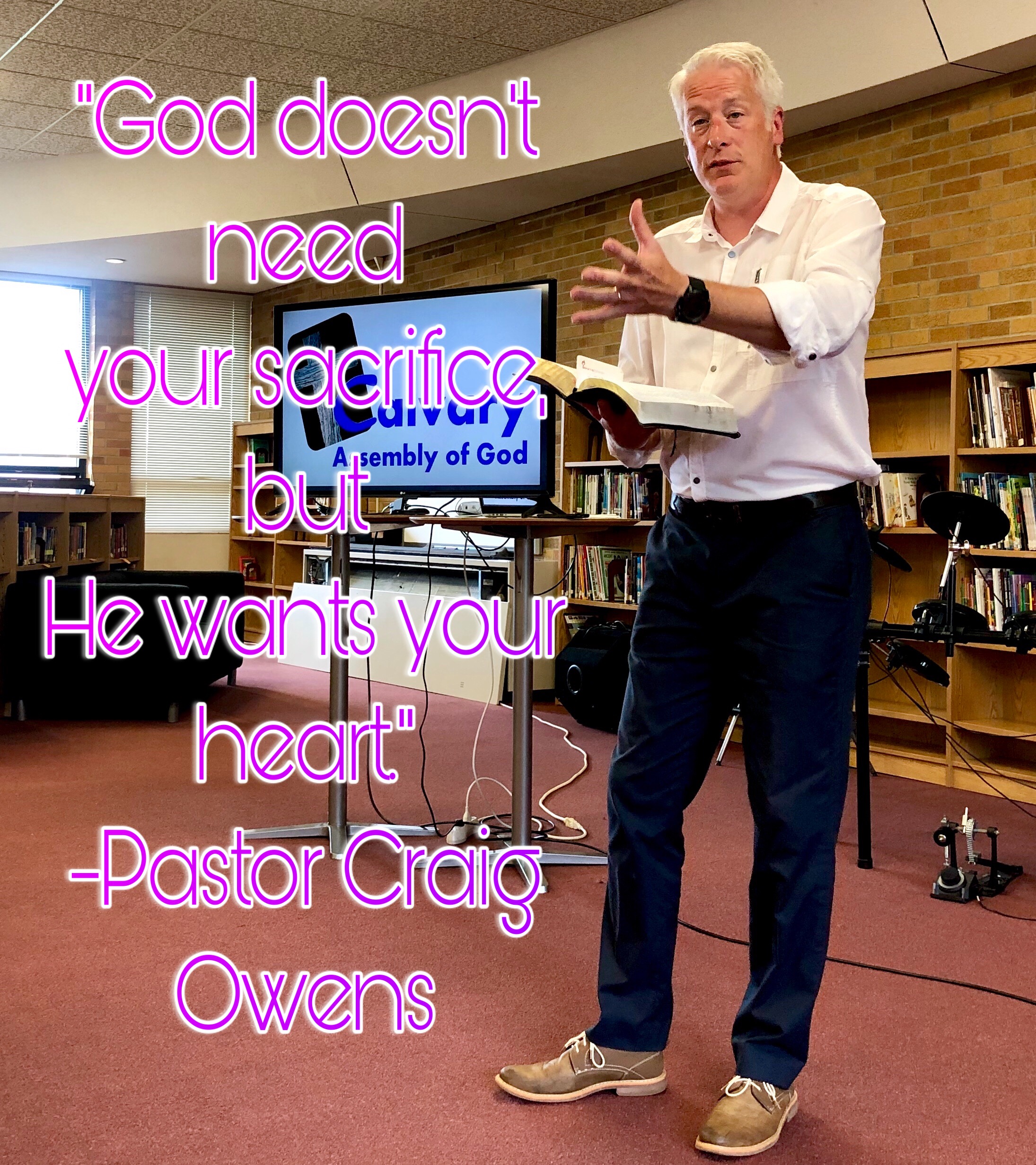
God doesn’t need our sacrifices, but He wants our hearts. 

In order to win our hearts for Himself, THE Judge did something absolutely mind-blowing—THE I AM became flesh like us. And then He became the once-for-all sacrifice for our sins, paying our penalty Himself when He died on the Cross (see Hebrews 2:14-17; 7:17-27). 

This is why we can rejoice when we hear we have to stand before THE Judge. When you have placed your faith in what Jesus did for you on the Cross, when THE Judge opens His perfect record book to your page He will read this inscription written in the crimson red blood of Jesus: PAID IN FULL!

This is why we can rejoice at the thought of seeing THE Judge face to face!

Join me next Sunday as we wrap up this summer looking at the Selahs in the Psalms. We plan to restart this series next summer, unless the Judge calls us home before then!

The Church Needs To Foster Community

“Amid the confusion of Christians mistreating people with gender dysphoria to prop up their sense of self-righteousness, and progressives mistreating them to advance their agenda of autonomy, those with real identity struggles are forgotten. Christ alone understands who we are through and through. And because of that each one of us in our fractured states needs to come to Him. …

“The need of the hour is for biblically faithful compassion. The church needs to open its doors and Christians need to open their hearts so that those struggling to find resolution to their dysphoria—and those who are struggling to find clarity amidst other confusions—can find community and, ultimately, their true identity in Christ. In Christ, they can be understood. …

“God’s original intent is for harmony between one’s soul and one’s body. This is why Christians, of all people, should be compassionately concerned with helping people find mind-body congruence. For the Christian, the mind and the body are both important and were meant to work harmoniously. … This biblical perspective defends our integrity as whole human beings in contradistinction to the secular effort to reduce us to our chemistry and jettison any idea that we have an immaterial mind or soul. …

“That is why the invitation of Christ has come in this order: recognition, repentance, redemption, regeneration. When we recognize our need for the Savior (because of our sins in general, not because of our dysphoria), repentance happens and then we are redeemed. But that redemption works itself out in our lives over time. It is the Holy Spirit who lives and works in us to conform us to Jesus’ likeness. It is not an overnight process, which means the church must do a better job of helping that process along. The church needs to foster community.” —Abdu Murray

Ultimate Wisdom

Last week I posted a quote on some of my social media channels that simply stated: “Our opinions don’t matter if they don’t square with God’s Word on the matter.” This seemed to me to be a fairly uncontroversial statement, but one anonymous reader really took me to task for using the hashtag #objectivetruth. Apparently, he thinks there is no such thing. 

But don’t we all rely on objective, external standards all the time? For instance, a gallon of gasoline is a gallon regardless of where you buy it, or whether you feel like it’s a gallon or not. And when you go to pay for your gasoline, the price isn’t based on how the gas station attendant is feeling at that moment, but on the objective amount posted. 

Psalm 49 is somewhat unusual in that it is a “wisdom psalm.” This psalm feels a lot more like something we would read in Proverbs or Ecclesiastes than it does a prayer or song in the Psalms. 

For instance, the first four verses of this Psalm sound a lot like the opening verses of the Book of Proverbs. And verses 5-13 of the Psalm echo what Solomon wrote in Ecclesiastes 2. 

This psalmist—like Solomon—wants us to understand how important it is to get wisdom. So we are urged to listen intently to those who have hard-won insight, to those who have “been there, done that” so that we don’t have to repeat their folly. 

What is that wisdom? It can be broken down into two profound statements:

(1) Everyone dies. 

That can be a really depressing truth IF your focus is building your own kingdom. If all there is to life is what you can earn and build before you die, only to realize that your “kingdom” ends at your last breath, that can be very depressing. 

However, this realization that everyone dies can be a very liberating truth IF your focus is on the eternal kingdom that is awaiting you in Heaven. When you realize that Jesus is preparing a place for you to experience ultimate joy and unending pleasure forever and ever, then you will live here for what’s coming next! 

(2) Our eternal destination after we die is determined before we die.

If someone told me that he had discovered the secret to immortality, and then he died and came back to this life to tell me that his theory was correct, it would be wise listen to him. 

That’s exactly what Jesus did for us!

He told us that He would die on a Cross and that He would be raised back to life. AND HE DID IT! His hard-won insight, His “been there, done that” wise words to us are this—“Believe in Me. I died to pay the penalty for the sins that will keep you out of Paradise. So place your faith in what I did, and ask my Father to forgive your sins. Then I promise you that you will spend forever and ever with Me in Paradise!” 

THIS objective truth determines everything else about our lives. 

So I’ll repeat it again—

“Our opinions don’t matter if they don’t square with God’s Word on the matter.” —Craig T. Owens

Join me next Sunday as we continue our series looking at the Selahs in the Psalms. 

12 Quotes From “The Autobiography Of Charles Spurgeon”

Charles Spurgeon lived exactly as he preached. What a delight that is! Check out my full book review of his Autobiography by clicking here. Also, be sure to check out my weekly Thursdays With Spurgeon series, where I share longer passages from this Prince of Preachers. 

“My sole hope for heaven lies in the full atonement made upon Calvary’s Cross for the ungodly. On that I firmly rely. I have not the shadow of a hope anywhere else.” 

“While my brief term on earth shall last, I should be the servant of Him who became the Servant of servants for me.” 

“For I am persuaded there are more delights in Christ, yea, more joy in one glimpse of His face than is to be found in all the praises of this harlot-world, and in all the delights that it can yield to us in its sunniest and brightest days.” 

“I have found, in my own spiritual life, that the more rules I lay down for myself, the more sins I commit. The habit of regular morning and evening prayer is one that is indispensable to a believer’s life, but the prescribing of the length of prayer, and the constrained remembrance of so many persons and subjects, may gender unto bondage and strangle prayer rather than assist it.” 

“There is nothing that more tends to strengthen the faith of the young believer than to hear the veteran Christian, covered with scars from the battle, testifying that the service of his Master is a happy service, and that, if he could have served any other master, he would not have done so, for His service is pleasant and His reward everlasting joy.” 

“I went to my chamber and told my little griefs into the ears of Jesus. They were great griefs to me then, though they are nothing now. When on my knees I just whispered them into the ear of Him who had loved me with an everlasting love, oh, it was so sweet! If I had told them to others, they would have told them again, but He, my blessed Confidant, knows all my secrets, and He never tells again.” 

“That God predestined, and yet that man is responsible, are two facts that few can see clearly. They are believed to be inconsistent and contradictory to each other. If, then, I find taught in one part of the Bible that everything is foreordained, that is true; and if I find, in another Scripture, that man is responsible for all his actions, that is true. And it is only my folly that leads me to imagine that these two truths can ever contradict each other.” 

“It was said of an old Greek philosopher that he wrote over his door, ‘None but the learned may enter here.’ But Christ writes over His door, ‘He who is simple, let him turn in hither.’” 

“I used to think, sometimes, that if they had degrees who deserved them, diplomas would often be transferred and given to those who hold the plow handle or work at the carpenter’s bench; for there is often more divinity in the little finger of a plowman than there is in the whole body of some of our modern divines. ‘Don’t they understand divinity?’ someone asks. Yes, in the letter of it, but as to the spirit and life of it, D.D. often means Doubly Destitute.” 😀

“When I came to New Park Street Chapel, it was but a mere handful of people to whom I first preached; yet I can never forget how earnestly they prayed. Sometimes they seemed to plead as though they could really see the Angel of the covenant present with them, and as if they must have a blessing from Him. More than once, we were all so awestruck with the solemnity of the meeting that we sat silent for some moments while the Lord’s power appeared to overshadow us. All I could do on such occasions was to pronounce the benediction and say, ‘Dear friends, we have had the Spirit of God here very manifestly tonight; let us go home and take care not to lose His gracious influences.’ Then down came the blessing; the house was filled with hearers, and many souls were saved. I always give all the glory to God, but I do not forget that He gave me the privilege of ministering from the first to a praying people.” 

“It is the extremity of unwisdom for a young man, fresh from college or from another charge, to suffer himself to be earwigged by a clique, and to be bribed by kindness and flattery to become a partisan, and so to ruin himself with one half of his people.” 

“It is of no use to rise before an assembly and hope to be inspired upon subjects of which one knows nothing. If anyone is so unwise, the result will be that, as he knows nothing, he will probably say it, and the people will not be edified. But I do not see why a man cannot speak extemporaneously upon a subject that he fully understands. Any tradesman, well versed in his line of business, could explain it without needing to retire for meditation, and surely I ought to be equally familiar with the first principles of our holy faith. I ought not to feel at a loss when called upon to speak upon topics that constitute the daily bread of my soul.” 

Serving By Praying

Paul and Timothy, bondservants of Jesus Christ, to all the saints in Christ Jesus who are in Philippi, with the bishops and deacons (Philippians 1:1). 

In just his opening line, Paul lists three types of servant-leaders: bondservants, bishops, deacons. 

The servant-leaders are all called to put the needs of the saints ahead of their own needs. They all serve so the saints can shine! And as the saints shine, they attract others to Jesus Christ. 

Jesus is our example of the Ultimate Servant (Philippians 2:5-8), and we are called to follow His example (John 13:12-17). 

One thing that clearly kept Paul, Timothy, and the other servant-leaders in Philippi in this servant’s posture was prayer. Even the physical posture of kneeling in prayer is a posture of a servant who is actively serving. 

  • Paul prayed for the Philippians frequently—In all my prayers for all of you, I always pray with joy (1:4). 
  • He prayed for them to grow in love and knowledge—I pray that your love will overflow more and more, and that you will keep on growing in knowledge and understanding (1:9). 
  • Paul was grateful for the prayers of the saints—I know that as you pray for me and the Spirit of Jesus Christ helps me, this will lead to my deliverance (1:19). 
  • And he closed his letter with a call for them to continue to pray about everything—Don’t worry about anything; instead, pray about everything. Tell God what you need, and thank Him for all he has done (4:6). 

Here are four powerful lessons for all Christians to live out…

(1) Leaders need to pray for the saints, and leaders need the saints to pray for them. 

(2) Leaders need to be prayerful to keep their posture right as servants. 

(3) Saints need to be prayerful for their leaders so that their leaders can continue to serve them in God-honoring ways. 

(4) We all serve best when we are diligent to keep our prayer life vibrant and healthy. 

Poetry Saturday—An Acrostic

I am a vile polluted lump of earth;
So I’ve continued ever since my birth;
Although Jehovah grace does daily give me,
As sure as this monster satan will deceive me.
Come therefore, Lord, from satan’s claws relieve me.
Wash me in Thy blood, O Christ,
And grace divine impart;
Then search and try the corners of my heart,
That I in all things may be fit to do
Service to Thee, and sing Thy praises too. —Isaac Watts (written at age 7)