Complaining To God

Listen to the podcast of this post by clicking on the player below, and you can also subscribe on AppleSpotify, or Audible.

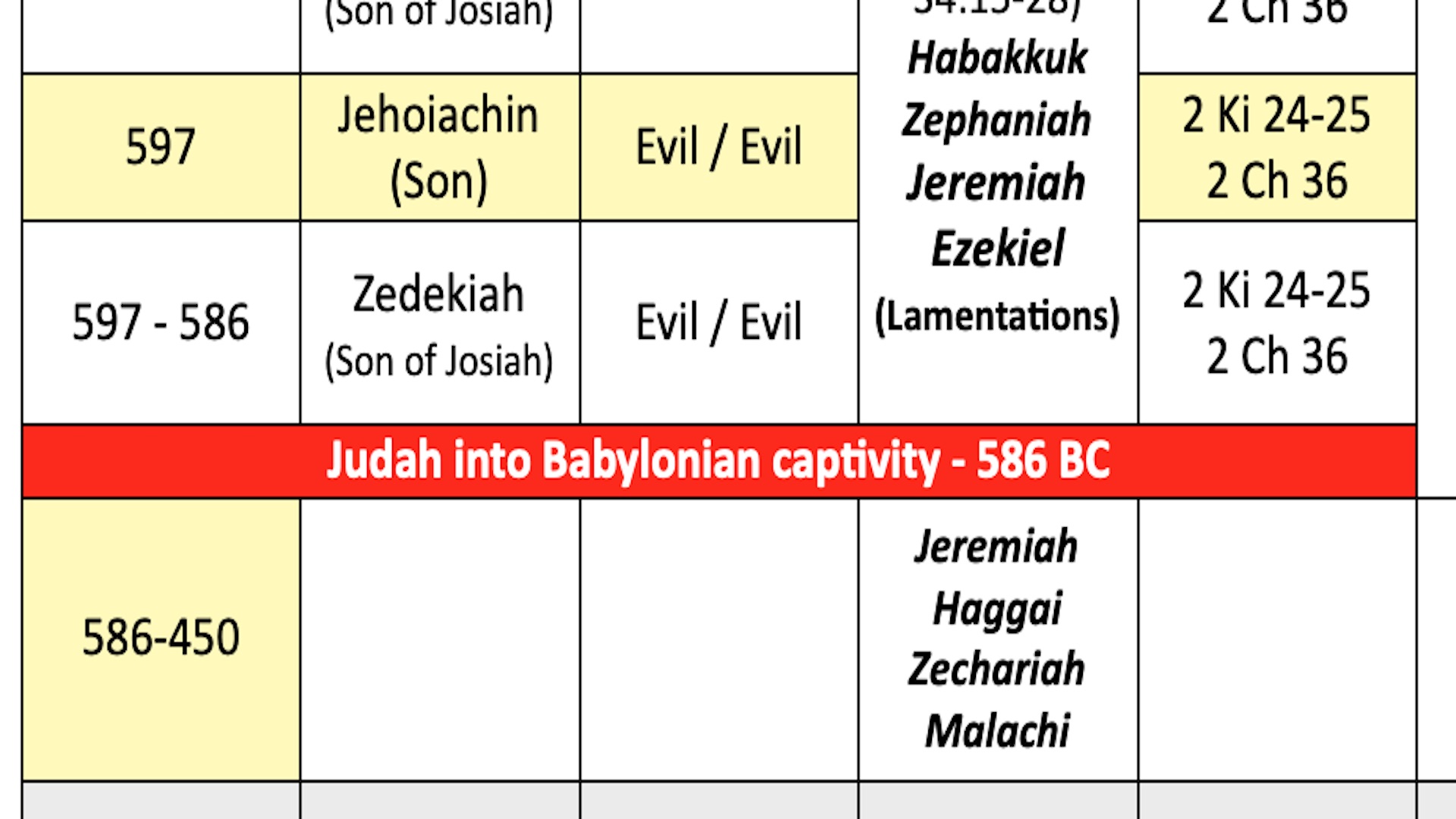
One of the things I love about the minor prophets is the reminder of the historicity of the Bible. Habakkuk, and the other prophets, lived in an actual moment of history. Check out some of the key dates during the ministry of Habakkuk: 

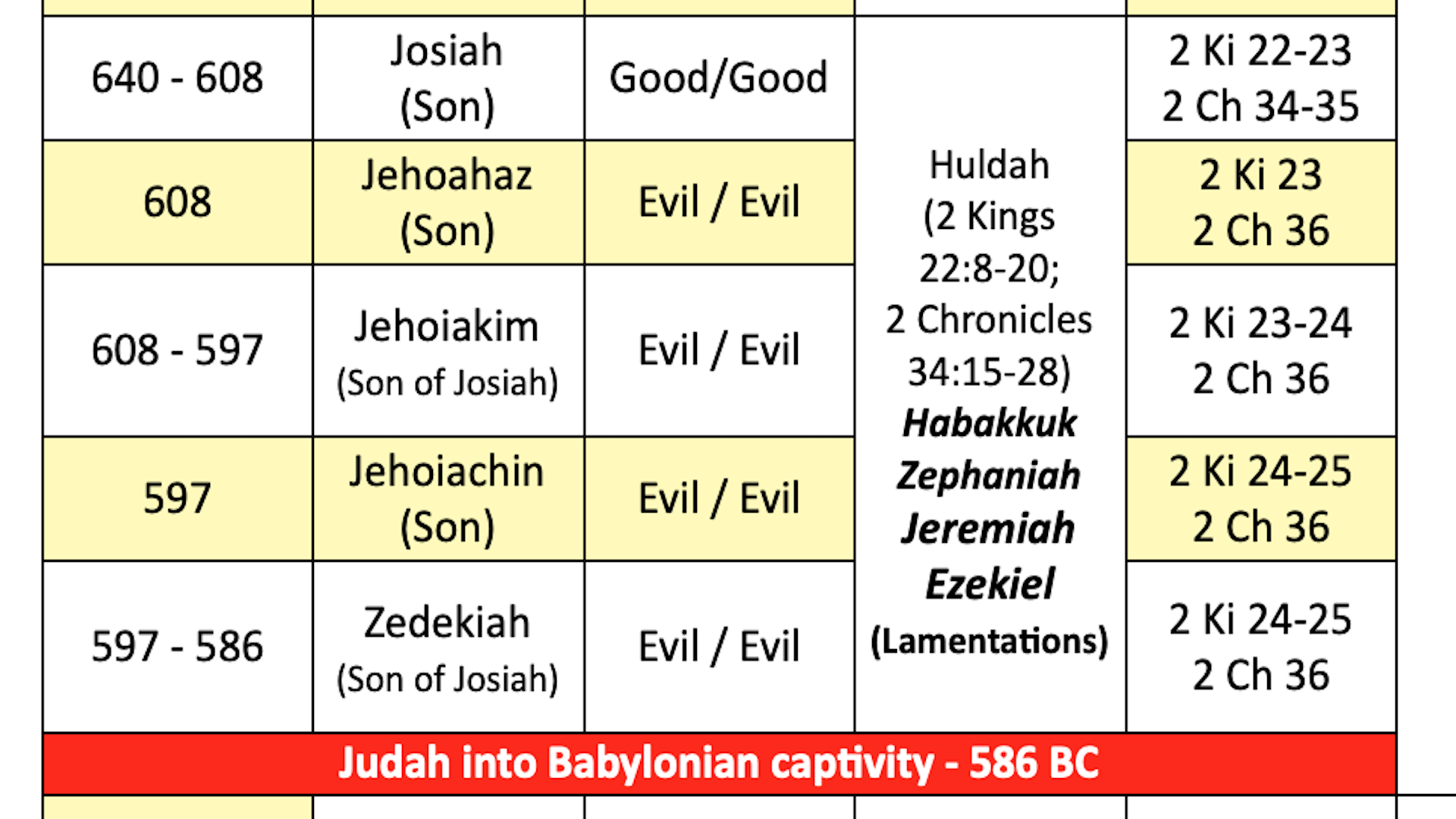
  • 605 BC—Nebuchadnezzar invades Judah and carries off Daniel and his friends 
  • 597 BC—the Babylonians attack Judah again and take 10,000 exiles back to Babylon, including the prophet Ezekiel 
  • 586 BC—Judah is besieged and defeated, and all remaining residents are exiled to Babylon 

Jeremiah, a contemporary of Habakkuk, preached to faithless Israelites, imploring them to return to God, while Habakkuk attempted to encourage faithful Israelites to continue to trust Jehovah. 

Habakkuk recognized that he was delivering a heavy word. When he opens this book by saying this is “the oracle” that he received from God, that word is better translated “burden.” Part of this burden may have been due to the fact that Habakkuk had something on his heart that we often have: a complaint. 

Can we complain to God? 

Habakkuk complained to God—twice!—and God doesn’t reprimand him, so there must be a right way to vent about our frustrations and confusions. Here’s what we can learn from Habakkuk’s two complaints: 

  1. Instead of making accusations, ask questions. Habakkuk asks God eight questions in his two complaints. I think this is an attitude issue. Complaints are saying, “God I disagree with what You’re doing,” while questions seem to be more like, “God, I don’t understand what You’re doing.” 
  2. Desire God’s glory to be seen. At the conclusion of both of Habakkuk’s complaints he uses the word “therefore” (1:4, 16). His conclusion is something along the lines of, “God, if You let this continue, it appears that Your glory is being obscured by the activities of wicked people.” 
  3. After your complaint, close your mouth and open your eyes and ears. After Habakkuk’s first complaint, God tells him to “look” at all He is going to do. And after the second complaint, God tells him to “write down the revelation” God gives him and then “wait for it” to be fulfilled” (2:2, 3). 

Then Habakkuk does something that isn’t seen anywhere else in the Bible outside of the book of Psalms: he calls for us to Selah pause three times! 

Habakkuk shows us that our best response to what God reveals to us should be worship: 

  • Selah (3:3)—pause to consider what God has done 
  • Selah (3:9)—pause to stand in awe of His very present glory 
  • Selah (3:13)—pause in anticipation of His righteous justice and awesome glory that will be revealed 

Key phrases from Habakkuk are quoted in the New Testament, and at least three of them are directly tied to these Selah pauses:

  • The earth WILL be filled with the knowledge of the glory of the Lord” (2:14), is echoed in the way all of humanity will see the glory of the risen Jesus.  
  • The righteous WILL live by his faith” (2:4), is quoted as a Christian’s ongoing interaction with the indwelling Holy Spirit. 
  • I WILL rejoice in the Lord my God … I WILL be joyful in God my Savior” (3:17-18) figures prominently in Mary’s song after she realizes that she is pregnant with the soon-to-be-born Savior. 

(Check out all of the above biblical references: Habakkuk 2:14, 2:4, 3:17-18; Revelation 1:5-8; Romans 1:17; Galatians 3:11; Hebrews 10:37-39; Luke 1:46-47, 54-55) 

Can you air your complaints to God? Yes, but do it the right way. Then silently listen, patiently wait, and then eagerly tell others about the coming judgment that they can avoid by having their sins forgiven through faith in Jesus our Savior. Only then can we also echo the “I will” statements of Habakkuk that are echoed in the New Testament—I will live by faith, I will look forward to the glory of God being fully revealed, I will continue to rejoice in God my Savior every day, and I will tell others how they, too, can live this way themselves! 

If you’ve missed any of the messages in our series looking at the major lessons we find in the minor prophets, you can find the complete list by clicking here. 

►► Would you please prayerfully consider supporting this ministry? ◀︎◀︎

Thursdays With Spurgeon—Useful To The Master

This is a weekly series with things I’m reading and pondering from Charles Spurgeon. You can read the original seed thought here, or type “Thursdays With Spurgeon” in the search box to read more entries.

Listen to the podcast of this post by clicking on the player below, and you can also subscribe on iTunes or Spotify.

Useful To The Master  

In a large house there are articles not only of gold and silver, but also of wood and clay; some are for special purposes and some for common use. Those who cleanse themselves from the latter will be instruments for special purposes, made holy, useful to the Master and prepared to do any good work. (2 Timothy 2:20-21)

     On the vessels of honor, you can see the hallmark. What is the hallmark that denotes the purity of the Lord’s golden vessels? Well, He has only one stamp for everything. When He laid the foundation, what was the seal He put upon it? ‘The Lord knows those who are His, and, everyone who confesses the name of the Lord must turn away from wickedness’ (2 Timothy 2:19). That was God’s seal! That was the impress of the great King upon the foundation stone. Do we find it here? Yes, we do. ‘Those who cleanse themselves from the latter will be instruments for special purposes, made holy, useful to the Master and prepared to do any good work’ (2 Timothy 2:21). Do you see, then, that the man who is the golden or silver vessel departs from all iniquity, and that is the token of his genuine character. …  

     Brethren, I count it an honor to be useful to the meanest child of God, but I confess that the honor lies mainly in the fact that I am thereby serving the Master Himself. Oh, to be used by God! This is to answer the end of our being. If you can feel that God has used you, then you may rejoice indeed! 

     There are some Christians whom the Lord cannot much use because, first of all, they are not cleansed from selfishness. They have an eye to their own honor or aggrandizement. The Lord will not be in complicity with selfish aims! Some men are self-confident—there is too much of the ‘I’ about them, and our Master will not use them. He will have our weakness but not our strength!

From The Great House And The Vessels In It

The Church of Jesus Christ is made up of many members. The Bible uses pictures of a body, a building, and a bride to describe how all of the parts work together to bring strength and vitality to the whole. But Jesus is always the central object: He is the Head of the body, the Chief Cornerstone of the building, the beloved Bridegroom to the bride. 

Everyone in the Church is placed there by God Himself to fulfill a vital role. It is incumbent upon every single Christian to yield themselves to the sanctifying, maturing work of the Holy Spirit so that we can all be “made holy, useful to the Master and prepared to do any good work.” 

Don’t let either the extremes of selfishness of self-abasement limit the good work you were created to do in making the body of Christ, the building of Christ, and the bride of Christ something radiantly God-glorifying!

►► Would you please prayerfully consider supporting this ministry? ◀︎◀︎
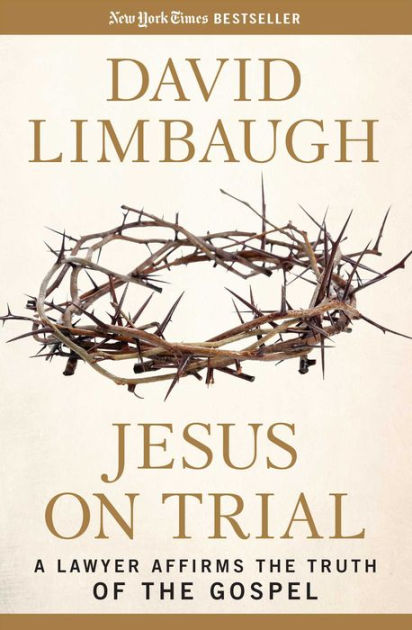
Jesus On Trial (book review)

Listen to the podcast of this post by clicking on the player below, and you can also subscribe on AppleSpotify, or Audible. 

I love studying Christian apologetics and learning how to explain to skeptics and seekers the eternal value in the Bible as it points me to a deeper relationship with Jesus Christ. David Limbaugh has given apologetics a new slant in his book Jesus On Trial.

Mr. Limbaugh uses his personal story from a childhood church attendee, to a skeptic of Christianity, to a reluctant seeker of the truth, and finally to a vibrant, growing relationship with Jesus. But he also lets us see how he examined the evidence for the truth claims of the Bible through the eyes of a trained lawyer. 

Throughout this book you will discover legalese terms like rules of evidence, items of probative value, rules of logic, and expert testimony. Each chapter feels like another witness Mr. Limbaugh has called to testify, or another piece of evidence that needs to be weighed and evaluated, and we the readers are empaneled as the jury deciding the case. As witness after witness takes the stand, as more evidence piles up, and as Mr. Limbaugh delivers his closing argument, the preponderance of evidence seems to make an airtight case of the truth claims in the Bible. 

Whether you are looking for answers or hunting for evidence to use in discussions with your friends, Jesus On Trial is a reference book to which I believe you will repeatedly return. 

►► Would you please prayerfully consider supporting this ministry? ◀︎◀︎
Thursdays With Spurgeon—Present Communion With Jesus

This is a weekly series with things I’m reading and pondering from Charles Spurgeon. You can read the original seed thought here, or type “Thursdays With Spurgeon” in the search box to read more entries.

Listen to the podcast of this post by clicking on the player below, and you can also subscribe on iTunes or Spotify.

Present Communion With Jesus

     The desire of a renewed soul is to find Christ and to be with Him. … Past communion with Christ is very well: ‘Therefore I will remember Thee from the land of Jordan…’ (Psalm 42:6). But these are only stale meats, and a loving soul wants fresh food every day from the table of Christ. … 

     A true loving soul, then, wants present communion with Christ. So the question is, ‘Tell me where You feed. Where do You get Your comfort from, O Jesus? I will go there. … Where do You feed Your flock? In Your house? I will go there, if I may find You there. In private prayer? Then I will not be slack in that. In the Word? Then I will read it night and day. Tell me where You feed; wherever You stand as the Shepherd, there will I be, for I want You. I cannot be satisfied to be apart from You. My soul hungers and thirsts to be with You.’

From The Church’s Love To Her Loving Lord

There are so many pictures in the Bible about our continual reliance on God’s presence—from the manna that was only good for each day, to Jesus teaching us to pray for “our daily bread,” to the vivid example of Christians being as dependent on Jesus as a branch is dependent on the vine (see Exodus 16:4-5, 14-17; Matthew 6:11; John 15:1-8).  

All of these mean that we need to constantly abide with our Savior. 

In my book Shepherd Leadership: The Metrics That Really Matter, I spend two chapters talking to leaders about the need to rest—or sabbath. In fact, I call it sabbathing to give it the emphasis on the ongoing nature of this activity. I wrote—

“Without building in sabbath breaks, we run down emotionally, spiritually, mentally, and physically, which means loving God becomes a chore, not a delight (Mark 12:30). This then means loving your neighbor becomes nearly impossible (Mark 12:31). Ultimately, this means that we aren’t able to be the compassionate, wise, strong shepherds that the sheep under our care need us to be. … 

“The goal of sabbathing is to infuse more vitality into the shepherd leader for the purpose of pasturing the sheep under that leader’s care. You cannot give hope to others unless you are hope-filled; you cannot give health to others unless you are healthy; you cannot consistently speak wisdom to others unless you are growing in wisdom. All of this healthy growth for the shepherd leader takes place while sabbathing….” 

To reiterate what Pastor Spurgeon said: “A true loving soul, then, wants present communion with Christ.” I hope you will always seek that for yourself.

►► Would you please prayerfully consider supporting this ministry? ◀︎◀︎
Thursdays With Spurgeon—Active Love

This is a weekly series with things I’m reading and pondering from Charles Spurgeon. You can read the original seed thought here, or type “Thursdays With Spurgeon” in the search box to read more entries.

Listen to the podcast of this post by clicking on the player below, and you can also subscribe on iTunes or Spotify.

Active Love

     True love next shows itself in obedience. … ‘Tis love that makes our willing feet in swift obedience move.’ We can do anything for those we love, and if we love Jesus, no burden will be heavy, no difficulty will be great. We should rather wish to do more than He asks of us and only desire that He was a little more exacting that we might have a better opportunity of showing forth our affection. …

     The apostle says, ‘Let us not love in word or in tongue, but in deed and in truth’ (1 John 3:18). Actions speak louder than words, and we will always be anxious to tell our love in deeds as well as by our lips. The true disciple asks continually, ‘Lord, what do You want me to do?’ (Acts 9:6). He esteems it his highest honor to serve the Lord. …  

     I believe in an active love that has hands to labor and feet to run as well as a heart to feel, eyes to glance, and ears to listen.

From The Church’s Love To Her Loving Lord

Those who love Jesus obey Him (John 14:15). 

Those who love Jesus serve others out of that love (Matthew 25:31-40). 

Those who love Jesus put action to their faith in Him (James 2:14-18). 

Those who love Jesus continually ask Him, “Lord, what do You want me to do?” 

Love for Jesus isn’t just something we feel, it’s who we are and it’s how we act and speak and serve every single day.

►► Would you please prayerfully consider supporting this ministry? ◀︎◀︎

My Theme Song

Listen to the podcast of this post by clicking on the player below, and you can also subscribe on AppleSpotify, or Audible. 

… my hands … my mouth … my lips … my heart … my head … my words … my eyes … (Psalm 141) 

David’s all-in attitude toward God reminds me of the words of Jesus: Love the Lord your God with all your heart and with all your soul and with all your mind and with all your strength (Mark 12:30). 

Clearly, David wants God to have full access—no part of his life is exempt from God’s lordship:

  • hands lifted in worship
  • mouth and lips free from ungodly words 
  • heart not drawn to unrighteousness 
  • head receptive to godly correction 
  • words always well-spoken and God-pleasing 
  • eyes fixed steadfastly on God 

This is also what the Holy Spirit wants to do for me in the process of sanctification: Bringing me into the place where no part of my life is exempt from His lordship. This reminds me of the words of an old hymn, “All to Jesus I surrender, all to Him I freely give.” 

May this ever be the theme song of my life! 

►► Would you please prayerfully consider supporting this ministry? ◀︎◀︎
Poetry Saturday—The Wond’ring World Inquires To Know

Listen to the podcast of this post by clicking on the player below, and you can also subscribe on AppleSpotify, or Audible.

The wond’ring world inquires to know
Why I should love my Jesus so:
What are His charms,” say they, “above
The objects of a mortal love?”

Yes! my Beloved, to my sight
Shows a sweet mixture, red and white:
All human beauties, all divine,
In my Beloved meet and shine.

White is His soul, from blemish free;
Red with the blood He shed for me;
The fairest of ten thousand fairs;
A sun amongst ten thousand stars.

His head the finest gold excels;
There wisdom in perfection dwells,
And glory like a crown adorns
Those temples once beset with thorns.

Compassions in His heart are found,
Hard by the signals of His wound:
His sacred side no more shall bear
The cruel scourge, the piercing spear.

His hands are fairer to behold
Than diamonds set in rings of gold;
Those heav’nly hands, that on the Tree
Were nailed, and torn, and bled for me!

Though once He bowed His feeble knees,
Loaded with sins and agonies,
Now on the throne of His command
His legs like marble pillars stand.

His eyes are majesty and love,
The eagle tempered with the dove;
No more shall trickling sorrows roll
Through those dear windows of His soul.

His mouth, that poured out long complaints,
Now smiles and cheers His fainting saints
His countenance more graceful is
Than Lebanon with all its trees.

All over glorious is my Lord
Must be beloved, and yet adored;
His worth if all the nations knew,
Sure the whole earth would love Him too. —Isaac Watts

►► Would you please prayerfully consider supporting this ministry? ◀︎◀︎

Thursdays With Spurgeon—Such Love!

This is a weekly series with things I’m reading and pondering from Charles Spurgeon. You can read the original seed thought here, or type “Thursdays With Spurgeon” in the search box to read more entries.

Listen to the podcast of this post by clicking on the player below, and you can also subscribe on iTunes or Spotify.

Such Love!

     Our Savior so loved us that He stripped Himself of His robes of radiance. Listen, you children of God, it is the old story over again, but it is always new to you. He stripped Himself of His bright array. He laid aside His scepter and His crown and became an infant in Bethlehem’s manger among the horned oxen. Thirty years of poverty and shame the King of heaven spent among the sons of men, and all out of love to us. Jesus the heavenly lover, panting to redeem His people, was content to abide here without a place to rest His head that He might rescue us!

     Do you see Him yonder in the garden in His agony? His soul is exceedingly sorrowful even to death! His forehead, no, His head, His hair, and His garments are red with bloody sweat. Do you see Him giving His back to the smiters and His cheeks to them who pluck off His hair? See Him, as He hides not His face from shame and spitting, dumb like a sheep before her shearers and like a lamb that is brought to the slaughter! He opened not His mouth but patiently bore it all on our behalf. See Him with the Cross upon His mangled shoulders, staggering through Jerusalem’s streets, unwept for and unpitied, except by poor feeble women! 

     See Him, you who love Him, and love Him more as He stretches out His hands to the nails and gives His feet to the iron. See Him, as with power to deliver Himself He is made captive. Behold Him as they lift up the Cross with Him upon it and dash it down into its place and dislocate His bones. Hear that cry, ‘I am poured out like water, and all My bones are out of joint’ (Psalm 22:14). Stand, if you can, and view that face so full of grief. Look till a sword will go through your own heart as it went through His mother’s very soul. Oh, see Him as He thirsts and has that thirst mocked with vinegar! 

     Hear Him as He prays and has that prayer parodied, ‘Look, He is calling for Elijah! … Let us see if Elijah will come to take Him down’ (Mark 15:35-36). See Him as they who love Him come and kiss His feet and bathe them with their tears. Will you not love Him who did all that friend could do for a friend? He who gave His life for us?

From The Church’s Love To Her Loving Lord

My friend, if you don’t know Jesus as your personal Lord and Savior, I ask that you would consider this amazing act of love all for you. Jesus went through all of this for you! Won’t you accept His love and invite Him into your heart today? 

If you do have a personal relationship with Jesus, look again at your Beloved Savior. Let this love rekindle your heart to share Christ’s love with everyone around you.

►► Would you please prayerfully consider supporting this ministry? ◀︎◀︎

Poetry Saturday—Love Asserting Herself

Listen to the podcast of this post by clicking on the player below, and you can also subscribe on AppleSpotify, or Audible.

And have I, Christ, no love for Thee,
No passion for Thy charms?
No wish my Saviour’s face to see,
And dwell within His arms?

Is there no spark of gratitude
In this cold heart of mine,
To Him whose generous bosom glow’d
With friendship all divine?

Can I pronounce His charming name,
His acts of kindness tell;
And while I dwell upon the theme,
No sweet emotion feel?

Such base ingratitude as this
What heart but must detest!
Sure Christ deserves the noblest place
In every human breast.

A very wretch, Lord! I should prove,
Had I no love for Thee:
Rather than not my Saviour love,
Oh may I cease to be! —Samuel Stennett

►► Would you please prayerfully consider supporting this ministry? ◀︎◀︎

Thursdays With Spurgeon—The Assurance Of God’s Love

This is a weekly series with things I’m reading and pondering from Charles Spurgeon. You can read the original seed thought here, or type “Thursdays With Spurgeon” in the search box to read more entries.

Listen to the podcast of this post by clicking on the player below, and you can also subscribe on iTunes or Spotify.

The Assurance Of God’s Love

Tell me, O you whom I love, where you feed your flock, where you make it rest at noon. For why should I be as one who veils herself by the flocks of your companions? (Song of Solomon 1:7)

     It is well to be able to call the Lord Jesus Christ by this name without an ‘if’ or a ‘but.’ A very large proportion of Christian people can only say of Christ that they hope they love Him. They trust they love Him, but this is a very poor and shallow experience to be content to stay here. It seems to me that no one ought to give any rest to his spirit till he feels quite sure about a matter of such a vital importance. We are not content to have a hope of the love of our parents, or of our spouse, or of our children! We feel we must be certain there. And we are not to be satisfied with a hope that Christ loves us and with a bare trust that we love Him. … 

     ‘I know whom I have believed,’ says Paul (2 Timothy 1:12). ‘I know that my Redeemer lives,’ says Job (Job 19:25). ‘You whom I love,’ says Solomon in the Song as we have it here. Learn, dear friends, to get that positive knowledge of your love to Jesus, and be not satisfied till you can talk about your interest in Him as a reality that you have made infallibly sure by having received the witness of the Holy Spirit and His seal upon your soul by faith that you are born of God and belong to Christ. …  

     Why do we love Jesus? We have the best of answers: because He first loved us! … Why do we love Him? Because before this round earth was fashioned between the palms of the great Creator, before He had painted the rainbow or hung out the lights of the sun and moon, Christ’s delights were with us. He foresaw us through the glass of His prescience. He knew what we should be….

From The Church’s Love To Her Loving Lord

God wants you to know how much He loves you. He went first because we didn’t have any way to approach Him. But Jesus made it possible for us to come close to God through His substitutionary death on the Cross for our sins. And now the Holy Spirit is speaking clearly to your heart to trust that this is absolutely, irrevocably true: GOD LOVES YOU! 

As Spurgeon said, don’t be content with merely thinking this is true, but ask the Holy Spirit to help you know this is true! 

Listen to these words—This is how God showed His love among us: He sent His one and only Son into the world that we might live through Him. … This is how we know that we live in Him and He in us: He has given us of His Spirit. And we have seen and testify that the Father has sent His Son to be the Savior of the world. … We love because He first loved us. (1 John 4:9, 13-14, 19)

►► Would you please prayerfully consider supporting this ministry? ◀︎◀︎