This is a weekly series with things I’m reading and pondering from Charles Spurgeon. You can read the original seed thought here, or type “Thursdays With Spurgeon” in the search box to read more entries.
Listen to the podcast of this post by clicking on the player below, and you can also subscribe on iTunes or Spotify.
Faultless
To Him who is able to keep you from stumbling and to present you before His glorious presence without fault and with great joy—to the only God our Savior be glory, majesty, power and authority, through Jesus Christ our Lord, before all ages, now and forevermore! Amen. (Jude 24-25)
I would rather turn to the blessings of which Jude speaks. He seems to ascribe in this doxology three blessings, at least, to the power of the Lord Jesus. The first is the ability to keep you from stumbling, and for this, I am sure, the highest praise is due when you consider for a moment the dangerous way. In some respects, the path to heaven is very safe. It is so as God made it. But in other respects, there is no road as dangerous as the road to eternal life. It is beset with difficulties. … One false step (and how easy it is to take that if divine grace is absent), and down we go! …
Only Christ has the power to take us into heaven. … Christ preserves His people though they have offended God and daily provoke His justice. And He does more, for He presents them to the King of kings in the high court of heaven itself! …
We proceed to notice the condition in which the saints are to be when presented—they are to be faultless—for our Lord never stops short of perfection in His work of love. … Our Savior will carry His people through this life, safe from falling, and He will present them, how?—faultless! … The righteousness of Jesus Christ will make the saint who wears it so fair that he will be positively faultless! Yes, perfect in the sight of God!
From Christians Kept In Time And Glorified In Eternity
Reading these stirring words from Charles Spurgeon, I cannot help but recall the equally stirring lyrics of this Edward Mote hymn:
Listen to the podcast of this post by clicking on the player below, and you can also subscribe on Apple, Spotify, or Audible.
My son, do not forget my teaching, but keep my commands in your heart (Proverbs 3:1).
A better translation of this verse would be like this: My son, keep on not forgetting my teaching, but keep on keeping my commands in your heart.
Or, as Jesus said it, “My Father is always working, and so am I” (John 5:17).
Always workING.
It’s a continuous action. We don’t make a one-time commitment and then coast through the rest of our life. To help us with this, in the third chapter of Proverbs, Solomon shows us God’s blessings on an “ING” lifestyle. That is, the blessings on the right kinds of “ING.”
If I am keepING God’s commands, He is prolongING my life and bringING me peace (vv. 1, 2).
If I am bindING love and faithfulness to my heart, I am winnING favor and a good name (vv. 3, 4).
If I am trustING God and leanING on His wisdom, He is directING me onto the best paths (vv. 5, 6).
If I am fearING God and shunnING evil, He is bringING health to me (vv. 7, 8).
If I am honorING God with my firstfruits, He is continually fillING me to overflowing (vv. 9, 10).
If I am not despisING God’s discipline, I am findING wisdom and gainING understanding (vv. 11-18).
If I am preservING sound judgment and discretion, I am walkING in safety, sleepING sweetly, and experiencING no fear (vv. 19-26).
If I am not withholdING good from those in need, not plottING harm against others, not accusING nor envyING my neighbor, then God is blessING my home, showING me favor, and making sure I am inheritING honor (vv. 27-35).
The apostle Paul reminds us, “So let’s not get tired of doING what is good. At just the right time we will reap a harvest of blessing if we don’t give up” (Galatians 6:9).
This is a weekly series with things I’m reading and pondering from Charles Spurgeon. You can read the original seed thought here, or type “Thursdays With Spurgeon” in the search box to read more entries.
Listen to the podcast of this post by clicking on the player below, and you can also subscribe on iTunes or Spotify.
Secure Forever
Our first parent, Adam, lived in the midst of happiness and peace in the garden. Unlike ourselves he had no depravity, no bias toward evil. God made him upright. He was perfectly pure, and it was in his own will whether he should sin or not. The balance hung evenly in his hands.
But have you forgotten how on that sad day he took of the forbidden fruit and ate and thereby cursed himself and all of us! … When you recollect the paradise he left, the happiness and peace that have forever passed away through his sin, do you not hear the voice that says to you, as a depraved and fallen creature, ‘Therefore let him who thinks he stands take heed lest he fall’ (1 Corinthians 10:12)? Conscious of your own weakness as compared with your parent Adam, you are ready to cry out, ‘O my God, how can I stand where Adam falls?’
But here comes the joyous thought that Christ, who has begun with you, will never cease till He has perfected you! Can you help singing with Jude, ‘Now to Him who is able to keep us from stumbling’?”
From Christians Kept In Time And Glorified In Eternity
When the devil says, “Your most recent sin made your salvation iffy,” you remind him what God says: “The strong love of My Son will hold you secure forever!”
To Him who is able to keep you from stumbling and to present you before His glorious presence without fault and with great joy—to the only God our Savior be glory, majesty, power and authority, through Jesus Christ our Lord, before all ages, now and forevermore! Amen. (Jude 1:24-25)
As I mentioned in my book review of David Limbaugh’s Jesus On Trial, he presents the evidence for the validity of the Bible and the historicity of Jesus Christ as if he were presenting a cae before the jury. As a trial begins, a judge will share with the jurors the rules for considering the evidence that is being presented. Here is a fantastic summary from Mr. Limbaugh—
“Applying the rules of evidence. … These rules are the ancient documents rules, the parole evidence rule, the hearsay rule, and the principle of cross-examination.
“The common law ancient documents rule presumes a document is truthful unless it is self-contradictory, inaccurate, or there is internal evidence of text tampering. The one challenging the document generally shoulders the burden of proof. Unsolved problems or lack of clarity in the document don’t necessarily invalidate it as erroneous or unreliable. …
“The parole evidence rule provides that external, oral testimony or tradition will not be admitted into evidence to add to, subtract from, vary, or contradict an executed written instrument such as a will or a contract. This means the document, absent any applicable exceptions, will stand on its own. …
“The hearsay rule precludes a witness from testifying as to what others may have said and, generally speaking, requires the witness to have firsthand knowledge of the matter to which he is testifying. As applied to the New Testament documents, this rule lends credence to New Testament authors who say they were eyewitnesses to the events they recorded.
“The cross-examination principle holds that the more the testimony holds up once it is subjected to rigorous cross examination, the more credible we deem it to be, which, incidentally, is one reason for the hearsay rule, i.e., it excludes testimony from witnesses that can’t be subjected to cross-examination. … Law professor and historian John Warwick Montgomery, who rigorously applied all these evidentiary rules to an examination of the Bible, finds the witnesses who were challenged to confirm having witnessed Jesus’ resurrected body did so ‘in the very teeth of opposition, among hostile cross-examiners who would certainly have destroyed the case of Christianity’ had such accounts been contradicted by the facts.
“Josh McDowell summarizes Montgomery’s approach to New Testament examination as giving the document the benefit of the doubt, which is another way of saying the burden of proof is on the critic or challenger. So, Montgomery writes, ‘One must listen to the claims of the document under analysis, and not assume fraud or error unless the author disqualifies himself by contradiction or known factual inaccuracies.’ Applying this approach and similar ones, McDowell argues that we can’t just assume that what appears to be a difficult passage constitutes a valid argument against it. We must be sure we correctly understand the passage using accepted rules of interpretation.”
Listen to the podcast of this post by clicking on the player below, and you can also subscribe on Apple, Spotify, or Audible.
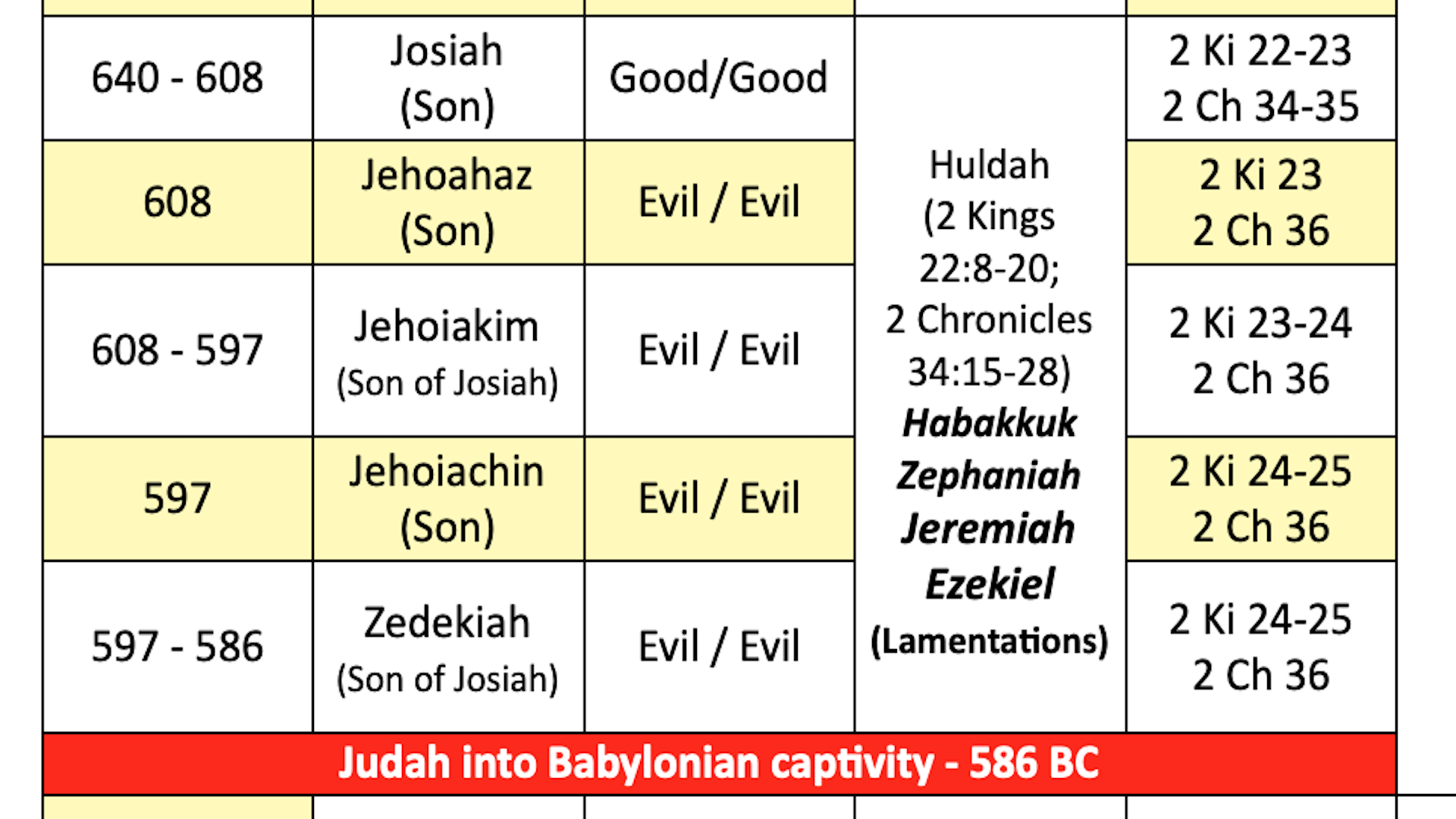
One of the things I love about the minor prophets is the reminder of the historicity of the Bible. Habakkuk, and the other prophets, lived in an actual moment of history. Check out some of the key dates during the ministry of Habakkuk:
605 BC—Nebuchadnezzar invades Judah and carries off Daniel and his friends
597 BC—the Babylonians attack Judah again and take 10,000 exiles back to Babylon, including the prophet Ezekiel
586 BC—Judah is besieged and defeated, and all remaining residents are exiled to Babylon
Jeremiah, a contemporary of Habakkuk, preached to faithless Israelites, imploring them to return to God, while Habakkuk attempted to encourage faithful Israelites to continue to trust Jehovah.
Habakkuk recognized that he was delivering a heavy word. When he opens this book by saying this is “the oracle” that he received from God, that word is better translated “burden.” Part of this burden may have been due to the fact that Habakkuk had something on his heart that we often have: a complaint.
Can we complain to God?
Habakkuk complained to God—twice!—and God doesn’t reprimand him, so there must be a right way to vent about our frustrations and confusions. Here’s what we can learn from Habakkuk’s two complaints:
Instead of making accusations, ask questions. Habakkuk asks God eight questions in his two complaints. I think this is an attitude issue. Complaints are saying, “God I disagree with what You’re doing,” while questions seem to be more like, “God, I don’t understand what You’re doing.”
Desire God’s glory to be seen. At the conclusion of both of Habakkuk’s complaints he uses the word “therefore” (1:4, 16). His conclusion is something along the lines of, “God, if You let this continue, it appears that Your glory is being obscured by the activities of wicked people.”
After your complaint, close your mouth and open your eyes and ears. After Habakkuk’s first complaint, God tells him to “look” at all He is going to do. And after the second complaint, God tells him to “write down the revelation” God gives him and then “wait for it” to be fulfilled” (2:2, 3).
Then Habakkuk does something that isn’t seen anywhere else in the Bible outside of the book of Psalms: he calls for us to Selah pause three times!
Habakkuk shows us that our best response to what God reveals to us should be worship:
Selah (3:3)—pause to consider what God has done
Selah (3:9)—pause to stand in awe of His very present glory
Selah (3:13)—pause in anticipation of His righteous justice and awesome glory that will be revealed
Key phrases from Habakkuk are quoted in the New Testament, and at least three of them are directly tied to these Selah pauses:
“The earth WILL be filled with the knowledge of the glory of the Lord” (2:14), is echoed in the way all of humanity will see the glory of the risen Jesus.
“The righteous WILL live by his faith” (2:4), is quoted as a Christian’s ongoing interaction with the indwelling Holy Spirit.
“I WILL rejoice in the Lord my God … I WILL be joyful in God my Savior” (3:17-18) figures prominently in Mary’s song after she realizes that she is pregnant with the soon-to-be-born Savior.
Can you air your complaints to God? Yes, but do it the right way. Then silently listen, patiently wait, and then eagerly tell others about the coming judgment that they can avoid by having their sins forgiven through faith in Jesus our Savior. Only then can we also echo the “I will” statements of Habakkuk that are echoed in the New Testament—I will live by faith, I will look forward to the glory of God being fully revealed, I will continue to rejoice in God my Savior every day, and I will tell others how they, too, can live this way themselves!
This is a weekly series with things I’m reading and pondering from Charles Spurgeon. You can read the original seed thought here, or type “Thursdays With Spurgeon” in the search box to read more entries.
Listen to the podcast of this post by clicking on the player below, and you can also subscribe on iTunes or Spotify.
Useful To The Master
In a large house there are articles not only of gold and silver, but also of wood and clay; some are for special purposes and some for common use. Those who cleanse themselves from the latter will be instruments for special purposes, made holy, useful to the Master and prepared to do any good work. (2 Timothy 2:20-21)
On the vessels of honor, you can see the hallmark. What is the hallmark that denotes the purity of the Lord’s golden vessels? Well, He has only one stamp for everything. When He laid the foundation, what was the seal He put upon it? ‘The Lord knows those who are His, and, everyone who confesses the name of the Lord must turn away from wickedness’ (2 Timothy 2:19). That was God’s seal! That was the impress of the great King upon the foundation stone. Do we find it here? Yes, we do. ‘Those who cleanse themselves from the latter will be instruments for special purposes, made holy, useful to the Master and prepared to do any good work’ (2 Timothy 2:21). Do you see, then, that the man who is the golden or silver vessel departs from all iniquity, and that is the token of his genuine character. …
Brethren, I count it an honor to be useful to the meanest child of God, but I confess that the honor lies mainly in the fact that I am thereby serving the Master Himself. Oh, to be used by God! This is to answer the end of our being. If you can feel that God has used you, then you may rejoice indeed!
There are some Christians whom the Lord cannot much use because, first of all, they are not cleansed from selfishness. They have an eye to their own honor or aggrandizement. The Lord will not be in complicity with selfish aims! Some men are self-confident—there is too much of the ‘I’ about them, and our Master will not use them. He will have our weakness but not our strength!
From The Great House And The Vessels In It
The Church of Jesus Christ is made up of many members. The Bible uses pictures of a body, a building, and a bride to describe how all of the parts work together to bring strength and vitality to the whole. But Jesus is always the central object: He is the Head of the body, the Chief Cornerstone of the building, the beloved Bridegroom to the bride.
Don’t let either the extremes of selfishness of self-abasement limit the good work you were created to do in making the body of Christ, the building of Christ, and the bride of Christ something radiantly God-glorifying!
Listen to the podcast of this post by clicking on the player below, and you can also subscribe on Apple, Spotify, or Audible.
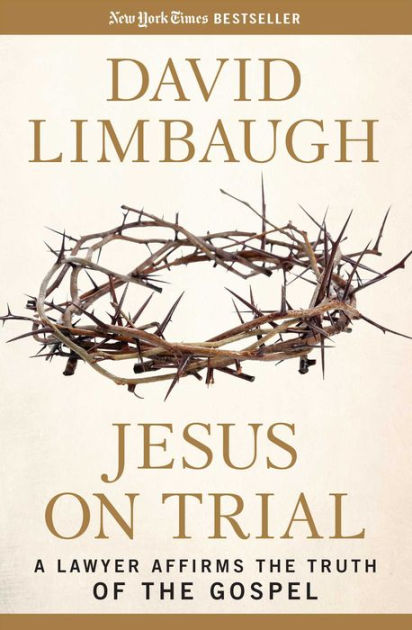
I love studying Christian apologetics and learning how to explain to skeptics and seekers the eternal value in the Bible as it points me to a deeper relationship with Jesus Christ. David Limbaugh has given apologetics a new slant in his book Jesus On Trial.
Mr. Limbaugh uses his personal story from a childhood church attendee, to a skeptic of Christianity, to a reluctant seeker of the truth, and finally to a vibrant, growing relationship with Jesus. But he also lets us see how he examined the evidence for the truth claims of the Bible through the eyes of a trained lawyer.
Throughout this book you will discover legalese terms like rules of evidence, items of probative value, rules of logic, and expert testimony. Each chapter feels like another witness Mr. Limbaugh has called to testify, or another piece of evidence that needs to be weighed and evaluated, and we the readers are empaneled as the jury deciding the case. As witness after witness takes the stand, as more evidence piles up, and as Mr. Limbaugh delivers his closing argument, the preponderance of evidence seems to make an airtight case of the truth claims in the Bible.
Whether you are looking for answers or hunting for evidence to use in discussions with your friends, Jesus On Trial is a reference book to which I believe you will repeatedly return.
This is a weekly series with things I’m reading and pondering from Charles Spurgeon. You can read the original seed thought here, or type “Thursdays With Spurgeon” in the search box to read more entries.
Listen to the podcast of this post by clicking on the player below, and you can also subscribe on iTunes or Spotify.
Present Communion With Jesus
The desire of a renewed soul is to find Christ and to be with Him. … Past communion with Christ is very well: ‘Therefore I will remember Thee from the land of Jordan…’ (Psalm 42:6). But these are only stale meats, and a loving soul wants fresh food every day from the table of Christ. …
A true loving soul, then, wants present communion with Christ. So the question is, ‘Tell me where You feed. Where do You get Your comfort from, O Jesus? I will go there. … Where do You feed Your flock? In Your house? I will go there, if I may find You there. In private prayer? Then I will not be slack in that. In the Word? Then I will read it night and day. Tell me where You feed; wherever You stand as the Shepherd, there will I be, for I want You. I cannot be satisfied to be apart from You. My soul hungers and thirsts to be with You.’
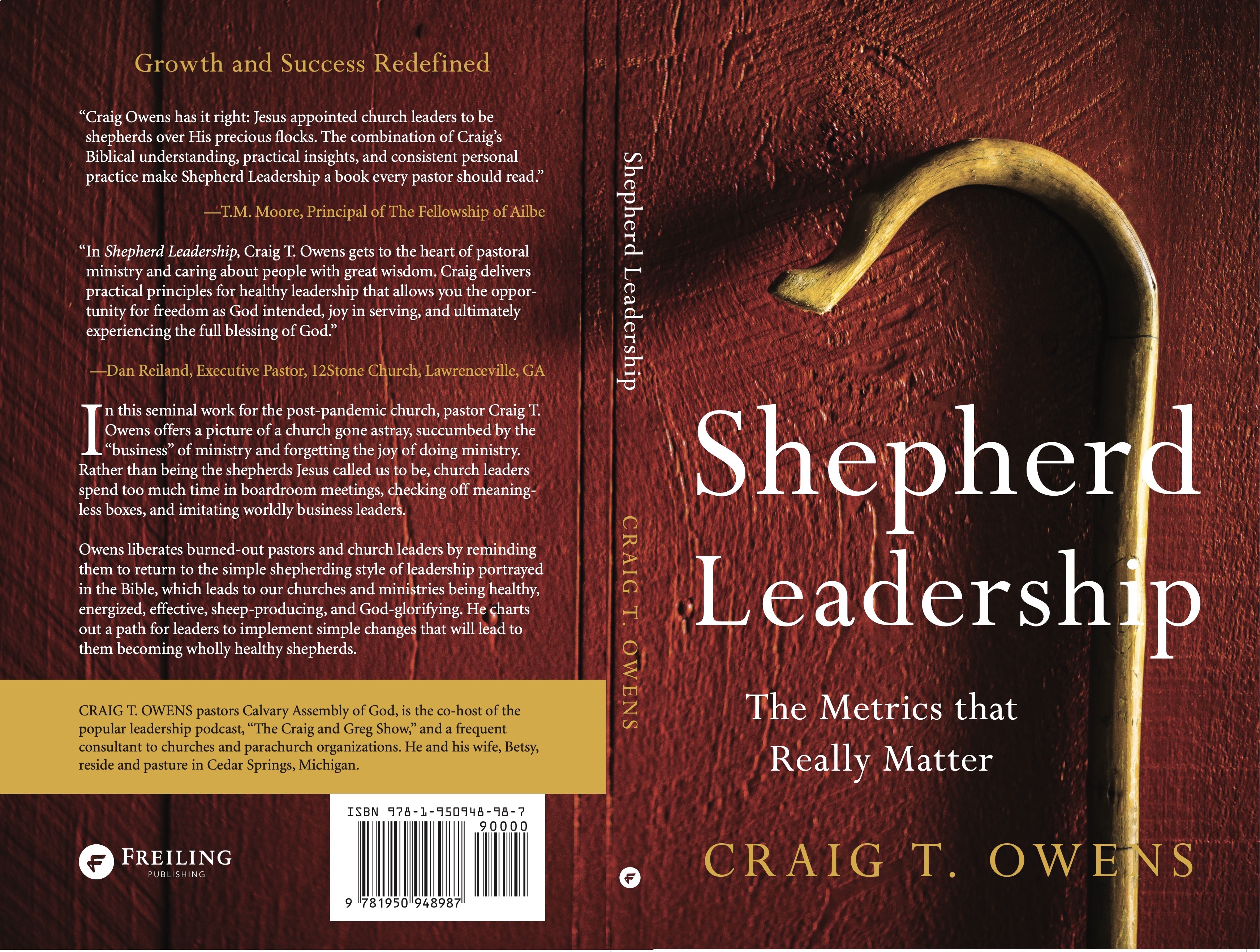
“Without building in sabbath breaks, we run down emotionally, spiritually, mentally, and physically, which means loving God becomes a chore, not a delight (Mark 12:30). This then means loving your neighbor becomes nearly impossible (Mark 12:31). Ultimately, this means that we aren’t able to be the compassionate, wise, strong shepherds that the sheep under our care need us to be. …
“The goal of sabbathing is to infuse more vitality into the shepherd leader for the purpose of pasturing the sheep under that leader’s care. You cannot give hope to others unless you are hope-filled; you cannot give health to others unless you are healthy; you cannot consistently speak wisdom to others unless you are growing in wisdom. All of this healthy growth for the shepherd leader takes place while sabbathing….”
To reiterate what Pastor Spurgeon said: “A true loving soul, then, wants present communion with Christ.” I hope you will always seek that for yourself.



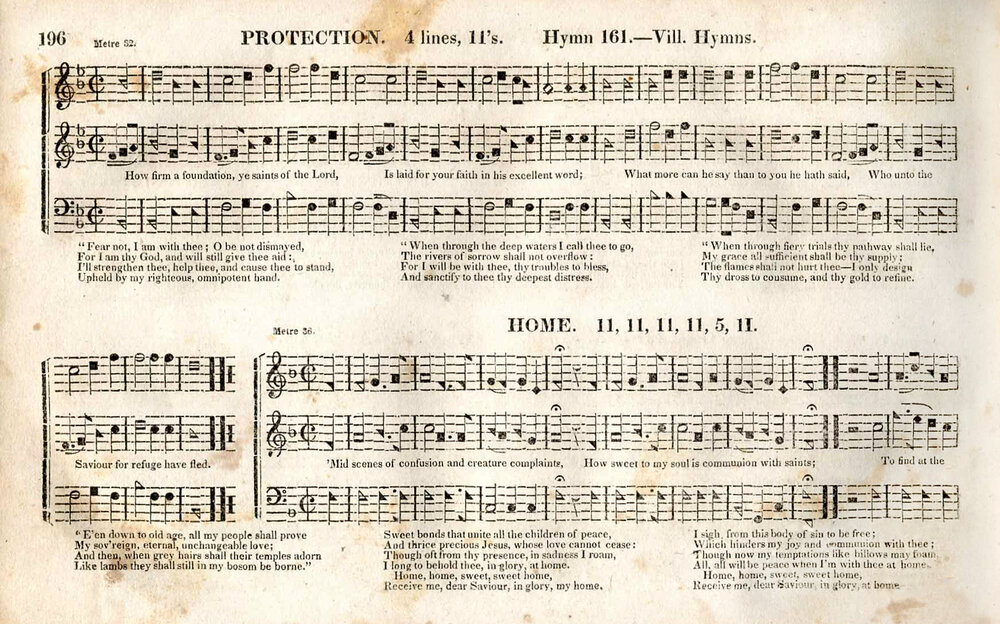 How firm a foundation, ye saints of the Lord,







 Craig T. Owens