Many pastors limit their leadership effectiveness by clinging to either confidence or humility. The better option—and one that Jesus Himself demonstrated for us—is to be both confident and humble.
I unpack this idea in my book Shepherd Leadership: The Metrics That Really Matter. It’s available in print, ebook, and audiobook.
Actually, I want to share with you what others have said about my book:
“If one is searching for an easily understandable road map to biblical leadership, you have an excellent resource in Pastor Craig’s new offering. … Pastor Craig translates deep spiritual truths to simple, attainable processes which will certainly achieve desired results and personal growth.” —Kurt
“Owens has created a concise guide for pastors that will model how Jesus wants them to lead and serve. I highly recommend this book for not only pastors but those attending seminary.” —Anonymous
“After 23 years of Army service, and 17 of those years in a leadership role, I can tell you that this book would have helped me be a better leader back then. It is geared to help the Ministry Leadership; however, after reading it, I believe will help everyone.” —Daniel
“This book is such a good resource, not only for leaders in ministry but any person who wants a refreshing look at leadership relationships in general.” —Anonymous
“This is a great addition to the leadership library and is a must for those in nonprofit, ministry leadership, or considering going into those fields. … Having been led as a layperson in a church that had leaders who lacked humility and security in serving, and seeing the damage they did to people and the Church, this book really spoke to me.” —Steven
“I am so thankful to Craig for cutting through all the delusion and confusion of what ministry and leadership has become and taking us back to the simple reality of laying down our lives for others. Crucified shepherds are neither popular nor common, but they do look and live like Jesus.” —Dick
“Craig does a great job of reminding us of some simple truths that far too often get lost in the world of leadership. As he calls us back to model our leadership after Jesus, he does so with practical advise and a shepherd’s heart.” —Kevin
“Having served in executive leadership positions on two large church staffs and also on a non-profit paraministry, I can tell you from experience this book is a must-read.” —Steve
“Craig provides a much needed guide, based on biblical principles, on how the church can regain its impact on the culture through more effective leadership.” —Stuart
“Craig Owens describes his Biblical understanding of how leaders serve through humility and confidence, utilizing their mental, physical, spiritual, and emotional health. It is through this balance that effective leaders can honor God with their servanthood.” —Denise
“This book is filled with practical ideas that challenge me to check my priorities. In a world that screams for more, more, more, this book asks me to identify what I want more of.” —Faye
The reviews on Amazon currently have this book rated at 4.9 stars.
I’m so humbled that this book is connecting with so many people! I loved writing it, and I still love talking to people about it.
My book is available in print, ebook, and audiobook. If you’d like to know more about Shepherd Leadership: The Metrics That Really Matter, or to pick up a copy for yourself, please go to ShepherdLeadershipBook.com.
Listen to the podcast of this post by clicking on the player below, and you can also subscribe on Apple, Spotify, or Audible.
Zechariah is the longest book of the minor prophets. His ministry overlaps Haggai the prophet, Ezra the priest, Zerubbabel the governor, and Joshua the high priest. I point all of this out because we need to always keep in mind that the Bible isn’t a collection of stories. It’s a verifiable (or falsifiable) record of real people at real moments in history. Many of the stories in the Bible confirm and even amplify each other.
Stand assured, encouraged, and unmovable on God’s Word
Aren’t you more assured of a message that has a confirmation? Like if one person gives you a compliment that you hadn’t considered before, and then later on someone else notices the same attribute. I think we are more ready to receive the word when it has a confirmation like that.
Haggai delivered a word directed to Zerubbabel the governor, which we saw was a prophecy pointing to and ultimately fulfilled in Jesus. God called Zerubbabel “Mysignet ring”—a mark of God’s supreme authority.
That might have been a difficult thing for Zerubbabel to accept, so Zechariah is given a confirming word two months after Haggai’s prophecy (Zechariah 4:1-9). This prophecy affirms the message given through Haggai, and also points to its ultimate fulfillment in Jesus.
But then Zechariah is also given an amplifying word, as he speaks a word from God to Joshua, the other “olive tree” in his God-given vision (Zechariah 3:1-9; 6:9-13).
Zechariah confirmed and amplified Haggai’s message. And then Jesus fulfilled both of their prophecies! We have the benefit of seeing the prophecy and fulfillment, which should build our faith in ALL of the promises in God’s Word.
The Word of God then become the (s)word of God in our mouths and hearts!
Because of these specific prophecies that have been fulfilled in Jesus Christ, we can now stand assured, encouraged, unmovable, and well-armed with the same sword of God.
There isn’t a more effective sword or shield than God’s (s)word!
This is a weekly series with things I’m reading and pondering from Charles Spurgeon. You can read the original seed thought here, or type “Thursdays With Spurgeon” in the search box to read more entries.
Listen to the podcast of this post by clicking on the player below, and you can also subscribe on iTunes or Spotify.
Walking Preachers
For we walk by faith, not by sight. (2 Corinthians 5:7)
Walking is a position that…signifies activity. You would suppose from the way some Christians deport themselves, that their whole life was spent in meditation. It is a blessed thing to sit ‘with Mary at the Master’s feet.’ But we walk as well as sit. We do not merely learn, but we practice what we know. We are not simply scholars, but, having been taught as scholars, we go on to show our scholarship by working in the vineyard or wherever else the Master may be pleased to place us. …
You would gather indeed from what others say, that the whole life of a Christian is to be spent in prayer. Prayer, it is true, is the vitality of the secret parts of Christian life, but we are not always on our knees! We are not constantly engaged in seeking blessings from heaven. We do continue in prayer, but we are also engaged and showing forth to others the blessings that we have received and in exhibiting in our daily actions the fruits that we have gathered on the mountaintop of communion with God. We walk, and this implies activity. …
‘We walk.’ This is more than some can say. They can affirm, ‘We talk. We think. We experience. We feel.’ But true Christians can say with the apostle Paul, ‘We walk.’ Oh, that we may ever be able to say it too! Here, then, is the activity of the Christian life.
From Faith Versus Sight
Edgar A. Guest captured this idea well in his poem “Sermons We See.” The first stanza says,
I’d rather see a sermon than hear one any day;
I’d rather one should walk with me than merely show the way.
The eye’s a better pupil and more willing than the ear;
Fine counsel is confusing, but example’s always clear.
And the best of all preachers are the men who live their creeds.
For to see the good in action is what everybody needs.
Or as Francis of Assisi noted, “It is no use walking anywhere to preach unless our walking is our preaching.”
So a fantastic question for every Christian to ask themselves is this: Do people know that I’m walking with Jesus even if I never open my mouth to tell them?
Listen to the podcast of this post by clicking on the player below, and you can also subscribe on Apple, Spotify, or Audible.
Have you ever heard this truism: The person with an experience is never at the mercy of the person with an argument?
There are, sadly, many who deny the reality of God’s divine healing for today. They may say God healed in the past, but that age has passed, or they may simply deny all supernatural activity. I have the best reply to these skeptics or deniers—and you may have this same reply: God does heal today; I know this is true because He has healed me!
Our truth statement about this says: “Divine healing is an integral part of the gospel. Deliverance from sickness is provided for in the atonement, and is the privilege of all believers.” Let me break this down into three parts.
(1) “Divine healing is an integral part of the gospel.” After that word “integral” I’d like to insert the word “indisputable.” When God does the miraculous, it is an undeniable proof of His love and power. A great story to prove this point is when Jesus healed a paralytic after He forgave him of his sins (Luke 5:17-26).
Notice how the people responded: Everyone was amazed and gave praise to God. This glory to God has always been the reason God performs miracles (see Mark 6:7-13; Acts 2:43; Acts 3:9-12).
(2) “Deliverance from sickness is provided for in the atonement.” I like to remember that the word atonement means “at-onement” and stands opposed to disease which I like to say as “dis-ease.” Sin is our ultimate dis-ease—the ultimate separator—so Jesus took care of both our spiritual dis-ease and our physical dis-ease when He died on the Cross for us, just as Isaiah prophesied. That’s why the New Testament also shows us salvation and healing frequently being linked together (Acts 10:38; 8:4-8).
(3) “And is the privilege of all believers.”ALL believers, not just a select few and not just those who lived at the time of the first apostles.
Divine healing has been—and always will be—an integral and indisputable part of the gospel precisely because it exalts God as THE Healer.
Many people today still believe what the disciples of Jesus believed: Disease is a consequence of personal sin. In addressing this misunderstanding, Jesus said that disease was “so that the work of God might be displayed” in the life of the one about to be healed. He said something similar while at the graveside of Lazarus, before he raised that dead man back to life (John 9:1-38; 11:4-45).
Sometimes God heals us now, but ALWAYS He heals us in our glorified bodies (2 Corinthians 12:9-10; 5:1-9; Revelation 21:4). Our patience and hope in our future, ultimate healing glorifies God in the present.
By faith in Jesus we can claim that “by His stripes we have been healed” (1 Peter 2:24). The verb tense Peter uses means we have been healed, we are being healed now, and we will be ultimately healed in Christ’s eternal presence. Whether we are healed here or not, we can live knowing that His healing power always brings Him glory and always draws people to Him, so don’t hesitate to keep on asking Him for His healing touch on your body and soul.
Listen to the podcast of this post by clicking on the player below, and you can also subscribe on Apple, Spotify, or Audible.
I had a great time on the Thriving In Ministry podcast with Kyle Willis and Dace Clifton.
When I was trying to explain to my friends why I was writing Shepherd Leadership: The Metrics That Really Matter, I found that many were quite intrigued by the idea of the confident humility—or the humble confidence—that Jesus so perfectly demonstrated for us.
Almost every leader I’ve met tends to be naturally wired as either a confident leader or a humble leader. Our effectiveness as a shepherd leader comes in allowing the Holy Spirit to help us maintain a healthy tension between those two poles. Jesus did this perfectly, and we are to follow His example.
I have two chapters in my book discussing this tension. Here’s how I introduce the topic in the chapter “A confident leader’s attitude adjustment:
God has created each of us uniquely—implanted with the temperament, talents, and personality He wanted each of us to have. God made you on purpose, and He made you for a purpose. But that being said, shepherd leaders are almost never perfectly balanced. If you’ve ever taken a temperaments assessment or any other kind of personality test, you know that you had some attributes that were more prominent than others. God never gives us weaknesses, but our areas of strength can become a self-imposed weakness if we rely on our strength instead of on our Strength Giver.
Leaders tend toward two poles: confidence or humility. God made us this way on purpose. But to be the best shepherd leader, we each must allow the Holy Spirit to help us learn to lead in a more balanced way. If we lean too much toward confidence, we can come across as arrogant and even tyrannical. But if we lean too much toward humility, we can appear to be weak, indecisive, and unsure of our leadership direction. None of us will be perfect in this at every single moment, but with the proper attitude adjustments, we can learn to more consistently stay at the balanced point of being humbly confident or confidently humble.
I’ll be sharing more clips from this interview soon, so please stay tuned. Shepherd Leadership: The Metrics That Really Matter is now available in print or ebook, and in audiobook through either Audible or Apple.
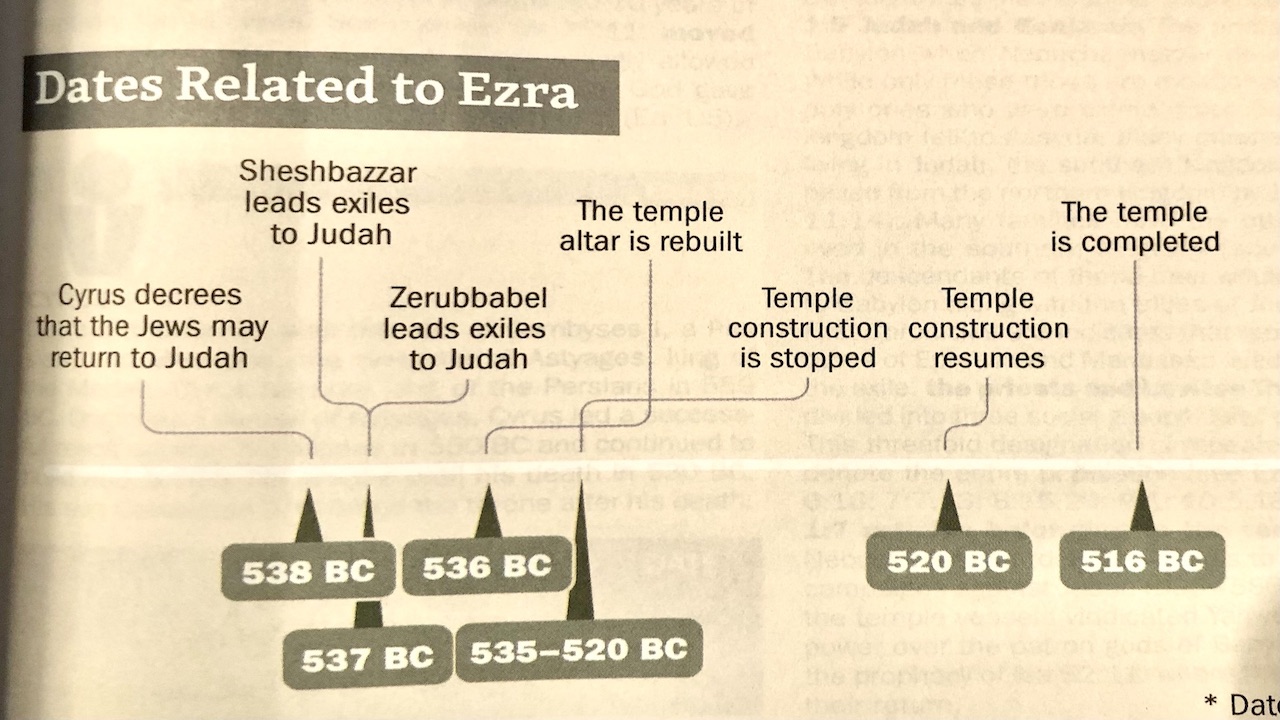
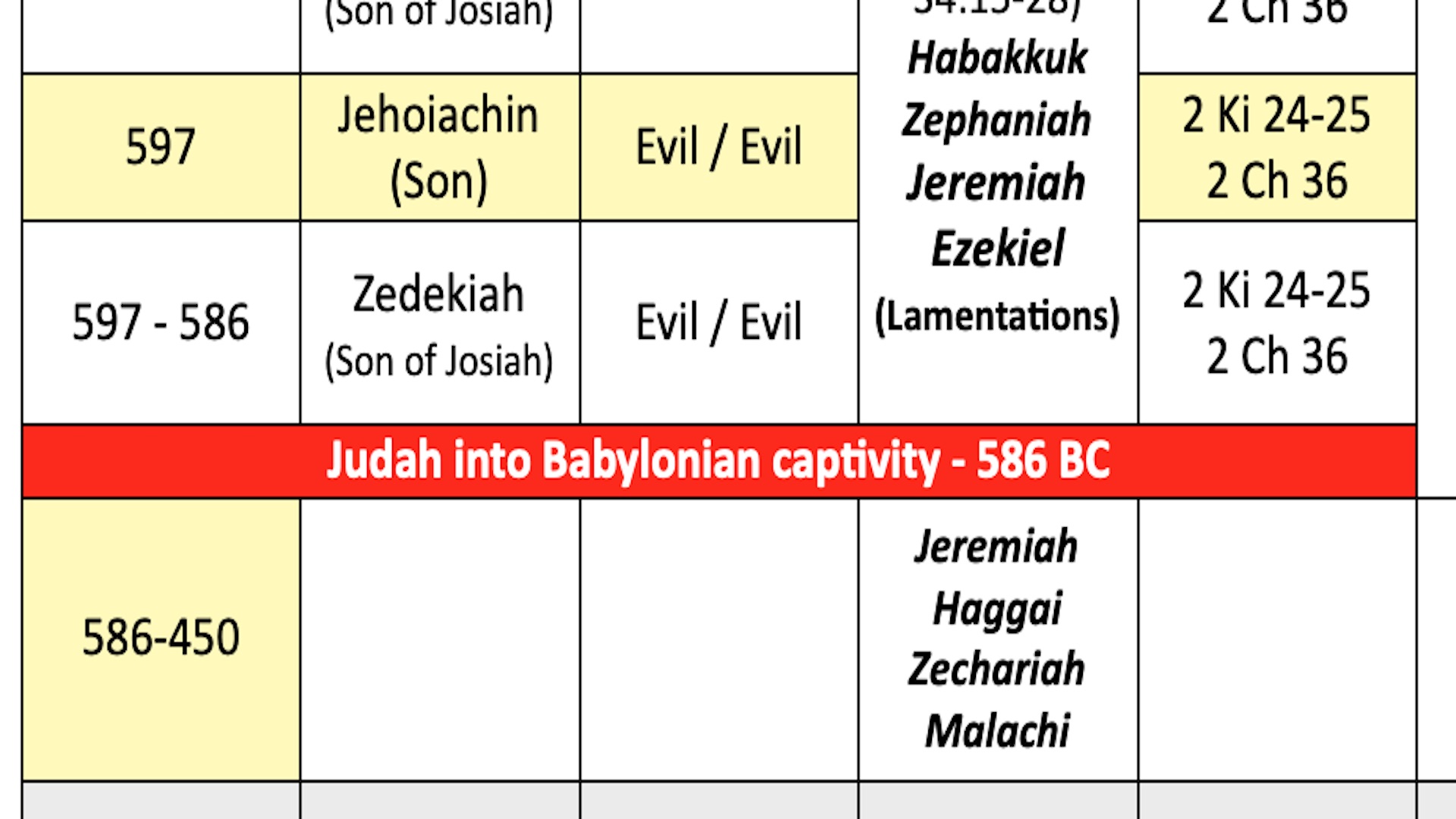
The reason these dates are so important is that they precisely align with the prophecy spoken by Jeremiah BEFORE the Israelites were even taken into exile. God said that they would return to worship in Jerusalem 70 years after their exile (Jeremiah 29:10-14; Daniel 9:1-2). Which is exactly what happened: They were taken into captivity in 586 BC, and the temple was completed in 516 BC!
Haggai’s final prophecy (Haggai 2:20-23) has an unusual ending. It’s unusual in that it doesn’t sound like “The End” that usually ends a book of the Bible. That is precisely because it’s not the end.
God tells Zerubbabel that he is God’s “signet ring,” a mark of God’s supreme authority. Zerubbabel was not the signet ring, but he was a forerunner—a type—of Jesus.
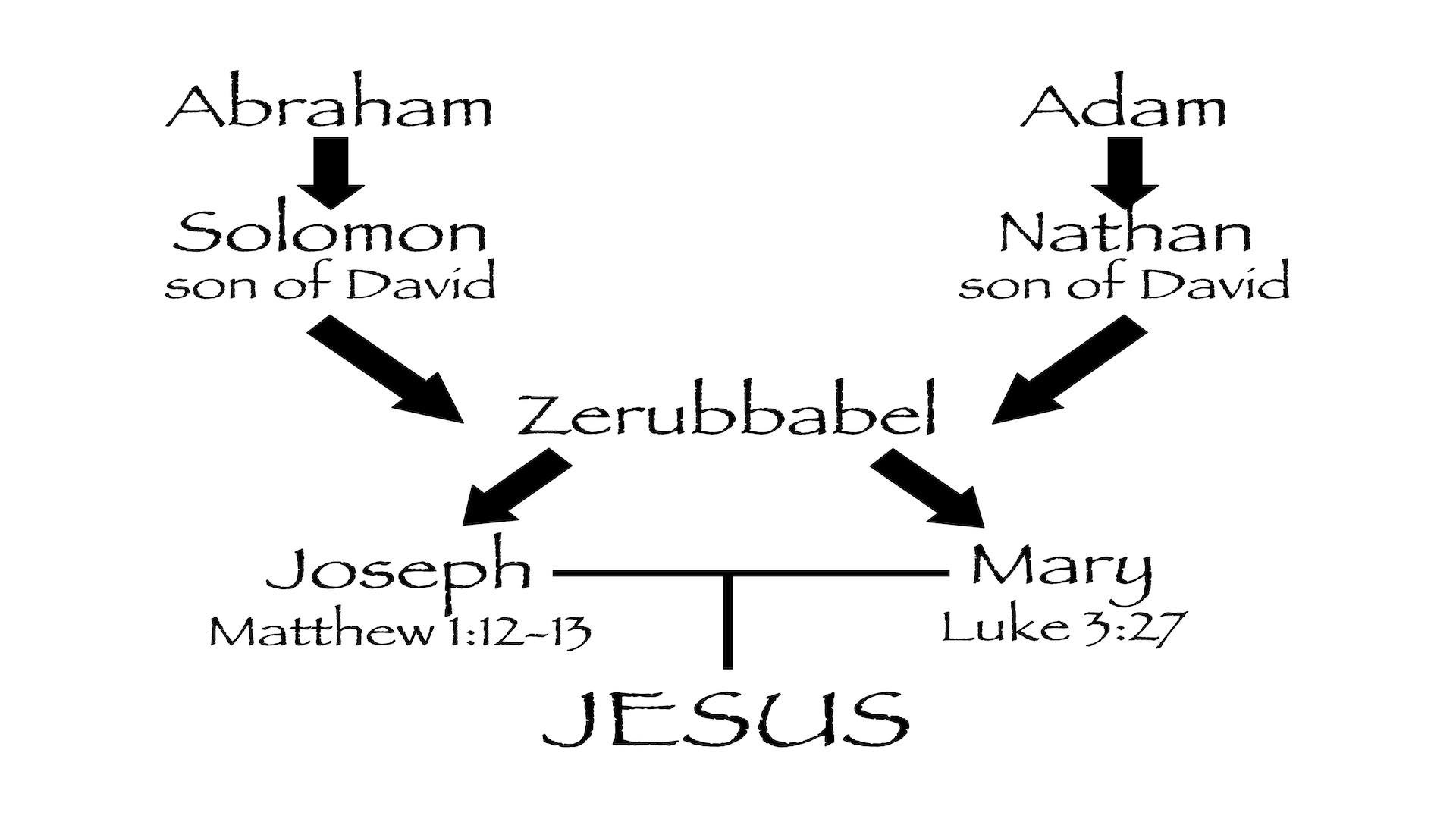
So when we trace the genealogies of Jesus in the New Testament, we see that Zerubbabel appears in the family line of both Joseph and Mary—both the family line from Abraham who received God’s covenant, and the family line of Adam who heard God promise that a human offspring would crush satan’s head.
These genealogies are as precise and exacting as the dates for the return of the exiles. God does everything exactly according to plan. He speaks His promises to us, and we can stand on those promises. Jesus is THE Signet Ring that stamps His “Amen” to every promise of God on which we stand.
Listen to the podcast of this post by clicking on the player below, and you can also subscribe on Apple, Spotify, or Audible.
I had a great time on the Thriving In Ministry podcast with Kyle Willis and Dace Clifton.
Kyle asked me if I had a life verse that was working on me. Two verses—John 13:3-4—quickly sprang to mind from the actions of Jesus on the night He was betrayed. Here’s how I answered that question on the podcast…
In John 13, Jesus prepared to share a final meal with His disciples. John recorded these words: “Jesus knew that God had put all things under His power” (v. 3). ALL things—not some limited power, but all power. At that moment, Jesus was, without question, the most powerful Person standing on planet earth. By modern-day standards, we could say Jesus had reached the top of the ladder!
What would you do with that much power? How would you respond to having God’s full approval?
Here’s what Jesus did: He took on the role of the lowest of servants and washed His disciples’ feet. Then after doing this, He said something He had never said to His disciples before: “I have set you an example that you should do as I have done for you” (v. 14).
Jesus used His unlimited power to serve.
Our Good Shepherd’s plan all along was to serve people. He said, “The Son of Man did not come to be served, but to serve and to give His life as a ransom for many” (Mark 10:45).
Quite simply stated: Shepherd leaders serve.
I’ll be sharing more clips from this interview soon, so please stay tuned. In the meantime, Shepherd Leadership is now available in print, ebook, and audiobook.
Listen to the podcast of this post by clicking on the player below, and you can also subscribe on Apple, Spotify, or Audible.
Haggai appears on the historical scene for just five months, but what a bright light he shines! He is the first of three post-exilic prophets to encourage the Israelites who have returned to Jerusalem.
Before we talk about Haggai’s ministry, we need a brief grammar lesson. Specifically, let’s look at two prefixes: un- and non-. Both of them ultimately mean “not,” but there is a distinction that we need to consider when it comes to the Bible:
unbiblical would mean something contrary to the teaching of the Bible
non-biblical is something that may or may not be correct, but it’s not specifically mentioned in the Bible
Let me give you an example from my book Shepherd Leadership: The Metrics That Really Matter. Chris asked me whether I preferred the title senior pastor or lead pastor. This is a non-biblical issue; that is, it doesn’t really matter to me because neither of those titles are found in the Bible. Technically, the word pastor isn’t in the Bible either. The word that is usually translated “pastor” is really a herdsman or a shepherd.
The problem is that if we put too much focus on non-biblical things, those things can end up becoming unbiblical pursuits. Like when Jesus took the Pharisees to task for their focus on traditions over Scripture (see Matthew 15:1-6). I wrote Shepherd Leadership mainly to get pastors and church leaders to spot non-biblical metrics which may have sneakily turned into unbiblical pursuits, so that they could return to pure biblical principles. In the Preface of my book, I wrote—
“My larger concern is that churches, parachurch organizations, and nonprofit ministries that are largely founded to fulfill a biblical mandate are straying from the simple, freeing truths found in the Bible. Or maybe I should say that they are adding things to their ministries that aren’t in the pages of Scripture. Whichever way you want to say it, the result is the same: We are using the wrong metrics to define ‘success’ for our ministries. I fear that in our focus on unbiblical practices, we are missing the joy of really doing ministry.”
Haggai calls God’s people to return to God’s Word. This is the second-shortest book in the Old Testament (at just 38 verses long), yet Haggai says something like “this is what God says” 28 times in these 38 verses!
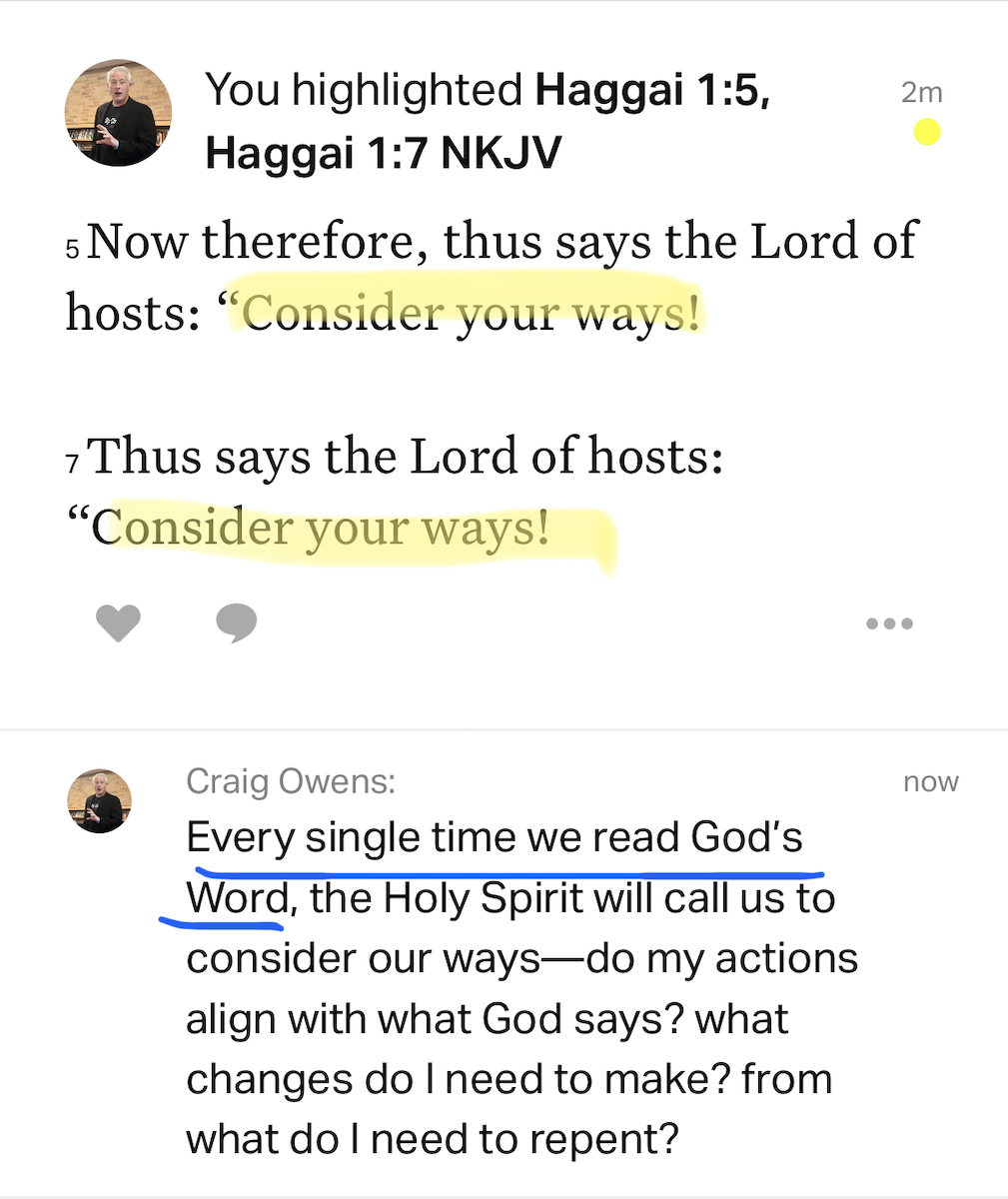
Haggai also records five times that God says, “Give careful thought to your ways.” This phrase literally means to take a strong hold on each thought and examine it intensely. This idea is always connected to a phrase like, “This is what the Lord Almighty says” (1:5, 7; 2:14-15, 17-18). In other words, we are to thoughtfully examine our lifestyle with God’s Word being THE standard of measurement.
Paul made a similar connection in the New Testament: We demolish arguments and every pretension that sets itself up against the knowledge of God, and we take captive every thought to make it obedient to Christ (2 Corinthians 10:5).
Jesus did this too. When speaking to the religious leaders, He said, “You are wrong because you know neither the Scriptures nor God’s power” (Matthew 22:29). And even with His own disciples, He had to open their minds to see how the Scriptures pointed to Him and were fulfilled in Him (Luke 24:25-27, 44-45).
Indeed, the phrase “it is written” is used 75 times in the New Testament!
That’s why Haggai’s words still ring true to us today: “Give careful thought” to how you live in light of how God says you should be living. Christians need to…
We must become people of the Word of God or else we run the very real risk of letting our non-biblical decisions spiral downward into a sinful, unbiblical lifestyle that grieves the heart of God.



 Many pastors limit their leadership effectiveness by clinging to either confidence or humility. The better option—and one that Jesus Himself demonstrated for us—is to be both confident and humble.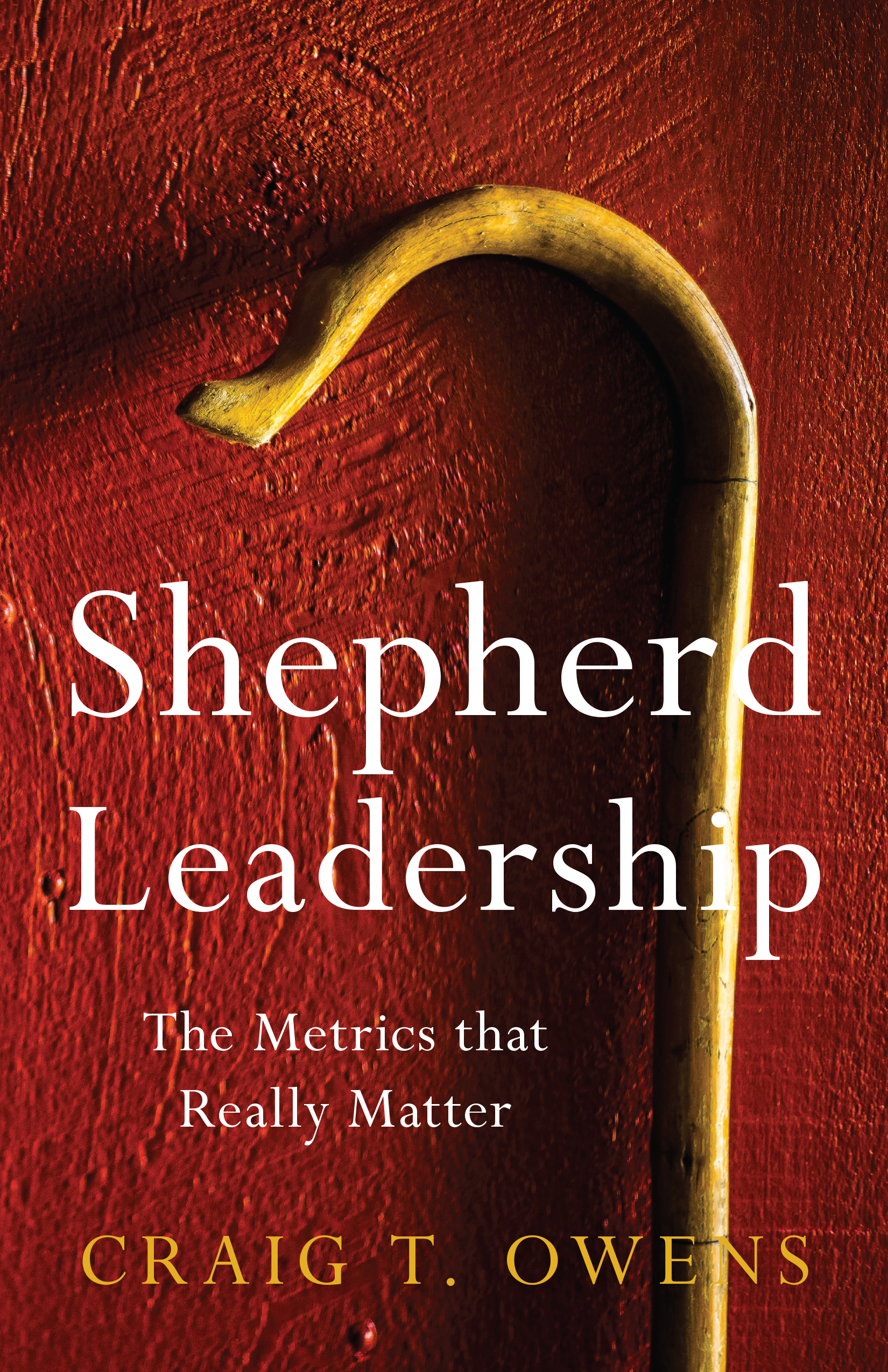




 Craig T. Owens