I believe that one of the main reasons His words had such authority and power to capture people’s attention was because He was so immersed in Scripture. As Jesus cleared the temple, He quoted from two Old Testament prophets. As He told a parable to the crowd in the temple—a parable that the religious leaders knew “He had spoken…against them”—He made a passage from Psalm 118 the foundational piece of His story.
The words of Jesus are…
Scriptural
authoritative
loving
unswervingly truthful
practical
challenging
unconventional (according to human standards)
God-glorifying
paradigm challenging
life changing
I want others to say of me what Charles Spurgeon said of John Bunyan, “Why, this man is a living Bible! Prick him anywhere—his blood is Bibline, the very essence of the Bible flows from him. He cannot speak without quoting a text, for his very soul is full of the Word of God.”
Wouldn’t you want that said of your life too? I sure would!
Our first step is to read the Word of God. Next, we need to allow the God of the Word to transform our minds. And then we can rely on the Holy Spirit to help us apply the Bible to everything we say and do.
Heavenly Father, I pray that people may hear the words of Jesus in all the words I speak. Holy Spirit, bring all of the Word I have read back to my mind (John 14:26; Mark 13:11) so that it is not my words that I am speaking but Yours. In the name of Jesus I ask this. Amen!
In January 1647, Oliver Cromwell captured King Charles I during the British Revolution. Within just a few months, Charles escaped and was able to raise another army. A year later, in August 1648, Cromwell’s forces once again defeated the army Charles had raised, and once again Charles was taken prisoner.
Oliver Cromwell put Charles on trial for his crimes, and after the guilty verdict was pronounced, Charles I was executed. A total of 59 people signed the former king’s death warrant.
Fast forward eleven years and Oliver Cromwell had died and his son Richard had taken his place as Lord Protector of England. Unlike his father, there was great discontent with Richard’s leadership. As a result, the Loyalists were able to sweep Charles II into power.
After assuming the throne of England, Charles II wanted the 59 death warrant signers put on trial, but fifteen of them had already died. That little fact didn’t stop King Charles II. He ordered that their bodies be exhumed, placed on trial, convicted of their crimes, and then hung.
I’m no psychologist, but I think it’s safe to say that Charles II might have had a slight problem with unforgiveness!
This is from a chapter I entitled “The ties that no longer bind.” The insidious nature of unforgiveness is that it ties us to the one who injured or offended us.
Jesus taught us to pray, “Forgive us our debts, as we also have forgiven our debtors” (Matthew 6:12). The word He uses for “debts” means something justly or legally due, or an offense or sin that has been committed. So a debtor is one who morally or legally owes another for the wrong committed.
So for these debts, we are taught to ask for forgiveness of God and to give that same forgiveness to others. Jesus uses the same root word for both “forgive” and “forgiven,” but there are nuances that make the picture quite clear.
When we ask God to forgive our debts, it is the active voice (I have to ask for it) and it is stated in the second person (I have to receive it). When I ask my Heavenly Father for this, my offense has been paid-in-full because the legal and moral requirements aren’t due any longer. I couldn’t pay this debt on my own, but Jesus paid it for me (2 Corinthians 5:21).
When I forgive someone who has wronged me, it is again the active voice (I have to give it), but it is now in the first person (I don’t wait around for the other person to ask for forgiveness). I let it go. I don’t hinder the other person or myself with waiting for the penalty to be paid any longer.
This is the only part of this model prayer for which Jesus gives a commentary afterwards (in Matthew 6:14-15). With this, Jesus is teaching us that to say, “I’m forgiven” is also to say, “I’m forgiving.”
Unlike Charles II, when we are forgiven and forgiving, the inevitable result is freedom for both ourselves and our offenders.
If we practice this relentlessly, we are both freed ourselves and freeing others!
When we pray, “Forgive as we also have forgiven,” we are both acknowledging His power to forgive us and requesting the faith need to be forgiving people. As C.S. Lewis noted, “To be a Christian means to forgive the inexcusable, because God has forgiven the inexcusable in you.”
The Bible describes satan’s activity as stealing, killing, and destroying. He’s called the father of lies, so he uses slander to try to steal, kill, and destroy. His slander is: “God can’t forgive that” and “You shouldn’t let them off the hook for what they did to you.”
These two thoughts are linked, just as “I’m forgiven” and “I’m forgiving” are linked. If I begin tothink that what someone did to me was too big for me to forgive, then I can also believe that there is a sin I have committed that is too big for God to forgive. But when I live both receiving and giving forgiveness, I can tune out this lie from hell.
Listen to the podcast of this post by clicking on the player below, and you can also subscribe on Apple, Spotify, or Audible.
Pastors are called to be shepherd leaders. Karl Vaters points out that some pastors get caught up in “the green room syndrome” that disconnects them from their sheep.
Here is another clip from The Church Lobby Podcast where Karl and I talk about this.
The biblical passage I reference in this interview is John 10:1-16.
Check out other parts of my interview on The Church Lobby podcast here. Or check out the full conversation Karl and I had on The Church Lobby podcast here.
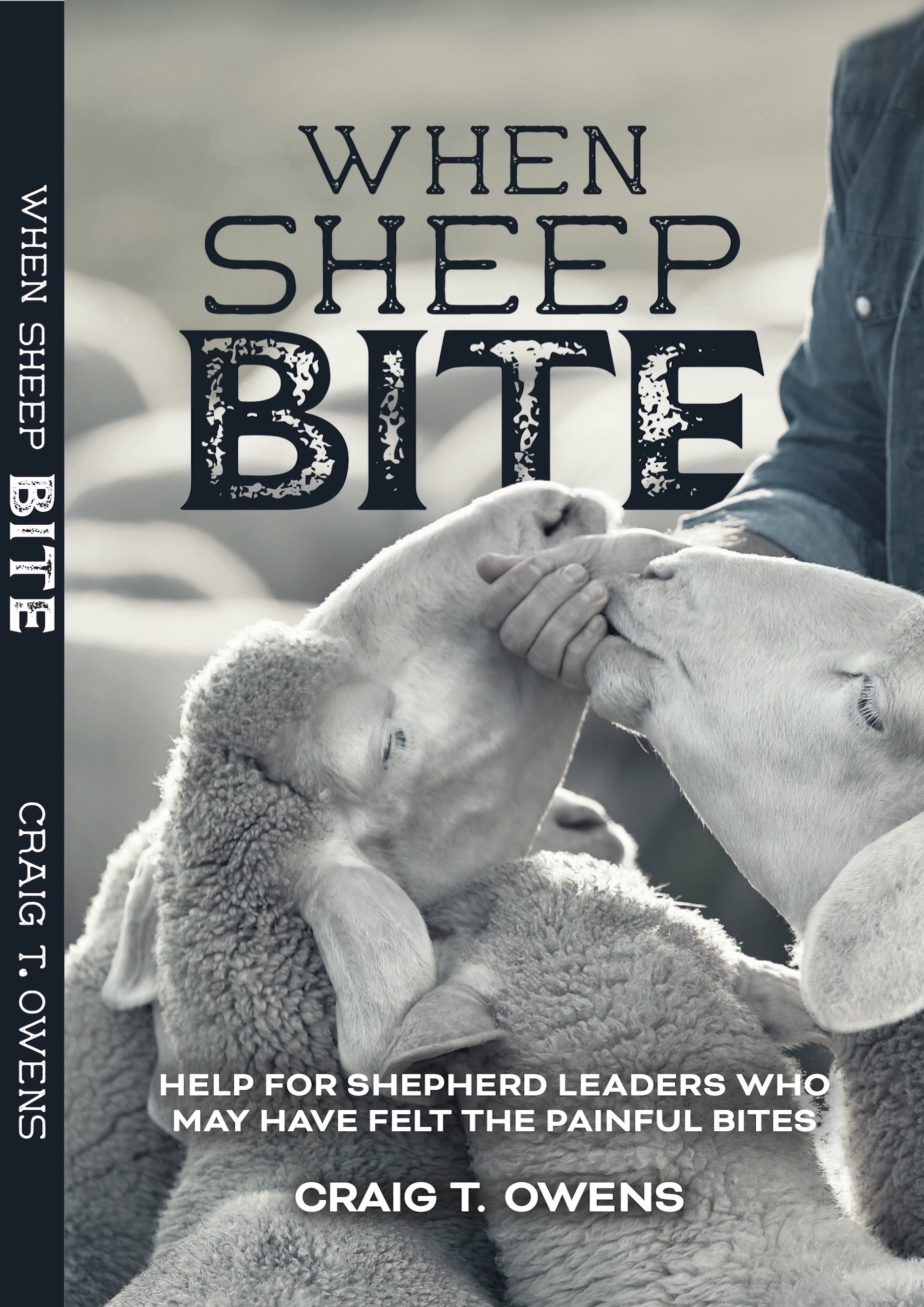
Get more information on Shepherd Leadershiphere. And pre-order my newest book When Sheep Bitehere.
“When the Lord chose His twelve disciples, it was ‘that they might be with Him and that He might send them out to preach’ (Mark 3:14). A life in fellowship with Him prepared them for the work of preaching. …
“The law of their first calling remained unchanged: their unbroken fellowship with Him was the secret of their power to preach and to testify of Him. …
“The same principle stands for all His servants, for all time: without the experience of His presence with us, our preaching has no power. The secret of our strength is the living testimony that Jesus Christ is every moment with us, inspiring, directing and strengthening us. …
“But remember that this power is never meant to be experienced as if it were our own. It is only as Jesus Christ as a living Person dwells and works with His divine energy in our own hearts and lives that there can be power in our preaching as a personal testimony. …
“For it’s only when His servants show in their lives that they obey Him in all His commands can they expect the fullness of His power and His presence to be with them. Only when they themselves are living witnesses to the reality of His power to save and to keep from sin can they expect to experience His abiding presence, and the power to train others to the life of obedience that He asks.
“The living experience of the presence of Jesus is an essential element in preaching the gospel. If this becomes clouded, work becomes a human effort, without the freshness and power of the heavenly life. Nothing can bring back the power and blessing but a return to the Master’s feet so that He may breathe into the heart, in divine power, His blessed word, ‘I am with you always!’” —Andrew Murray
Listen to the podcast of this post by clicking on the player below, and you can also subscribe on Apple, Spotify, or Audible.
I hope you’ve noticed so far that the parts of Christ’s model prayer that we’ve looked at so far are both an acknowledgement of the holiness of God and the greatness of His Kingdom, and also a request for us to be empowered to live in a way that makes those things known to Earthlings.
One of the ways we live to make these things seen is found in the next phrase: Your will be done on earth as it is in Heaven (Matthew 6:10).
In A Christmas Carol, Charles Dickens shows us a scene where the Ghost of Christmas Present has taken Scrooge to his nephew’s home. After dinner, these young adults begin playing games. Dickens says, “For it is good to be children sometimes, and never better than at Christmas, when its mighty Founder was a child Himself.”
Jesus loved children! Being around “the littles” lately at on our school campus, I have a whole new appreciation for this. Because Jesus loved children, their parents wanted them around Him, and He wanted them around too (see Matthew 19:13-15; Mark 10:14-16; Luke 18:15-17).
Children are loud, busy, adventurous, and easily distracted. But they are also loving, trusting, curious, innocent, and easily comforted. And Jesus loved to bless them!
What does this have to do with “Your will be done on earth as it is in Heaven”? Jesus taught us to address our praying to “Our Father.” That means we are to interact with Him as His children.
Children love to do the will of their parents. They’re not trying to earn their approval, but joyfully obeying out of innocence. When we obey God as loving children, we are doing His will on earth as it is done in Heaven!
So once again, this is both an acknowledgement and a request.
In Psalm 131, David uses this same picture of a contented child for us.
Childlike is lovingly dependent. Childish is selfishly independent. Childlike is trusting someone wiser. Childish is believing I know best.
Our prayer request should always be, “Father, may I trust You and obey You as an innocent child.”
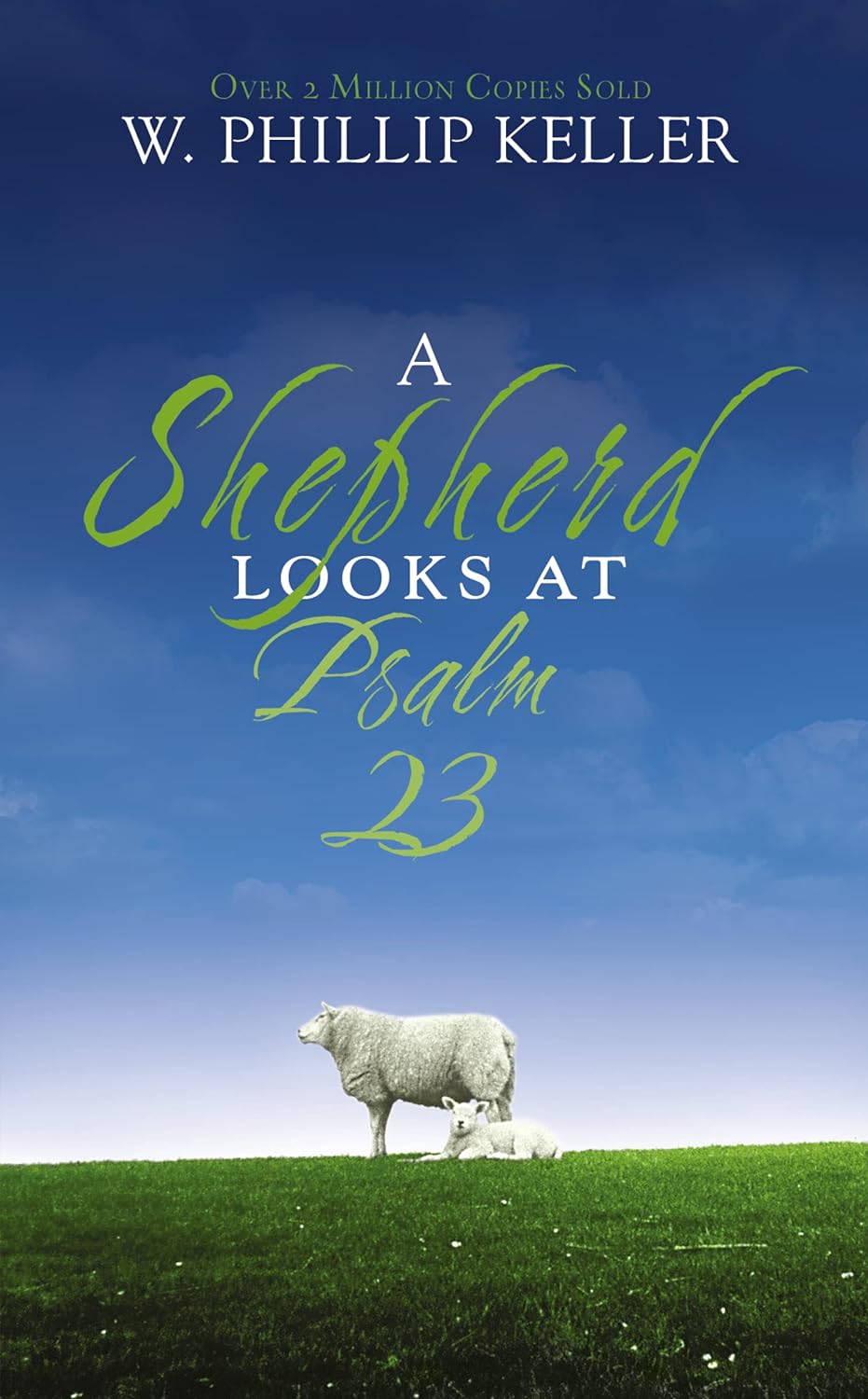
After I wrote the best-selling book Shepherd Leadership, I started naturally gravitating toward anything shepherd related. A Shepherd Looks at Psalm 23 was the perfect fit for me! But I think anyone will enjoy these beautiful insights on Psalm 23. Check out my full book review here.
Here are some quotes that especially caught my eye—
“Sheep do not ‘just take care of themselves’ as some might suppose. They require, more than any other class of livestock, endless attention and meticulous care. … From early dawn until late at night this utterly selfless Shepherd is alert to the welfare of His flock. … Above all, He is very jealous of His name and high reputation as the Good Shepherd. He is the Owner who delights in His flock. For Him there is no greater reward, no deeper satisfaction, than that of seeing His sheep contented, well fed, safe, and flourishing under His care. This is indeed His very ‘life.’ He gives all He has to it. He literally lays Himself out for those who are His. He will go to no end of trouble and labor to supply them with the finest grazing, the richest pasturage, ample winter feed, and clean water. He will spare Himself no pains to provide shelter from storms, protection from ruthless enemies and the diseases and parasites to which sheep are so susceptible.”
“A flock that is restless, discontented, always agitated and disturbed never does well. … When one startled sheep runs in fright, a dozen others will bolt with it in blind fear, not waiting to see what frightened them.”
“In the course of time I came to realize that nothing so quieted and reassured the sheep as to see me in the field. The presence of their master and owner and protector put them at ease as nothing else could do, and this applied day and night. … When my eyes are on my Master they are not on those around me. This is the place of peace.”
“Only those intimately acquainted with sheep and their habits understand the significance of a ‘cast’ sheep or a ‘cast down’ sheep. This is an old English shepherd’s term for a sheep that has turned over on its back and cannot get up again by itself.”
“Sheep are notorious creatures of habit. If left to themselves, they will follow the same trails until they become ruts; graze the same hills until they turn to desert wastes; pollute their own ground until it is corrupt with disease and parasites. … No other class of livestock requires more careful handling, more detail direction, than do sheep.”
My Patreon supporters had early access to these quotes, plus I have shared many more quotes from this book with these friends.
My newest book When Sheep Bite is releasing soon. You can pre-order a copy for yourself here.
Mental health tip: Stop beating yourself up because of what you did or didn’t do in the past. Learn from it and keep moving forward. Check out a whole series of posts and videos on a Christian’s mental health. I have lots of new content every week, which you can check out on my YouTube channel.
“God cannot part with His grace, or goodness, or strength, as an external thing that He gives us, as He gives the raindrops from heaven. No; He can only give it, and we can only enjoy it, as He works it Himself directly and unceasingly. And the only reason that He does not work it more effectually and continuously is, that we do not let Him. We hinder Him either by our indifference or by our self-effort, so that He cannot do what He would.” —Andrew Murray, Waiting on God
The unlimited genius of our All-wise Creator is seen so clearly in the unique and beautiful design of each snowflake. Check out these amazing photographs!
“You don’t have to be a fantastic hero to do certain things—to compete. You can be just an ordinary chap, sufficiently motivated to reach challenging goals.” —Sir Edmund Hillary
Biblical archaeologist Joel Kramer takes viewers into a hidden cave to show them an ancient Christian inscription that offers direct extra-biblical, archaeological evidence for Jesus.
When I wrote my first book, my publisher asked me to write on “servant leadership,” but the more I dove into the topic, the more I kept coming back to Jesus as the ultimate example. But then I noticed that Jesus not only called Himself a shepherd, but many of the Old Testament prophecies foretelling His arrival also used shepherding terms. It was then that I pivoted to entitle my book Shepherd Leadership.
Ever since I immersed myself in the research for that book, I’ve been especially attentive to all things related to shepherding. In going through books from my Mom’s library, I stumbled upon A Shepherd Looks at Psalm 23 by Phillip Keller.
Oh my! I wish I would have discovered this amazing little book while I was writing my book! What a depth of insight I have gleaned from someone who looks after actual sheep!
As the title denotes, Keller uses the well-known Psalm 23 to give us so many eye-opening insights into our Good Shepherd. He goes phrase by phrase—“the Lord is my Shepherd,” “I shall not want,” “He makes me lie down in green pastures,” and so on—with each phrase adding a new level of intimacy with this One who cares for us so profoundly.
And as an added bonus for me, it was so sweet to see the highlights and notations my Mom had made as she read this book. This made A Shepherd Looks at Psalm 23 a double blessing for me.
(P.S. Check out some quotes I’ve shared from this book here.)
Listen to the podcast of this post by clicking on the player below, and you can also subscribe on Apple, Spotify, or Audible.
We said our protocol in approaching Almighty God in prayer is found in just two words: Our Father.
Notice the transition: your Father (3x in Matthew 6:6, 8) to Our Father (6:9). How does this happen? Jesus makes it possible and the Holy Spirit continually reminds us of Christ’s completed work (Hebrews 2:11; John 14:13-14; Romans 8:15-16).
It’s not just “our Father” but “our Father in Heaven.” Let’s remember that our Father is both All-loving and All-powerful. The phrase in Heaven reminds us of His absolute sovereignty. “Our God is in heaven; He does whatever pleases Him” (Psalm 115:3). What pleases Him? To give us His kingdom (Luke 12:32).
Then there’s another phrase that is vital: Our Father in Heaven, hallowed be Your name.
Hallowed means both to acknowledge His greatness and to keep Him separate from any profane things. What is profane? The dictionary says it is irreverence or contempt for God. The opposite of profane is holiness—something set apart exclusively for God. This is not something better than something else, but something exclusively that will bring glory to our Father in Heaven.
The root word for hallowed is “holy.” We see this literally translated in the name Holy Spirit. It is a word also referring to Jesus when He is called “the Holy One of God” (see Mark 1:24). The angel uses the word twice when he says, “The Holy Spirit will come on you, and the power of the Most High will overshadow you. So the Holy One to be born will be called the Son of God” (Luke 1:35).
And that same word translated hallowed and holy is also translated saints. Literally that means “holy ones” or set apart people.
Jesus is teaching us that our prayer is BOTH an acknowledgment of how God’s name is to be hallowed AND a request that He would empower us to pray and live in ways that makes that happen.
This means our attitude needs to be focused on God’s reputation not my reputation (as in Matthew 6:5, 7:21-23).
We hallow God’s name when our prayer and daily lifestyle bring Him the supreme glory that is due exclusively to His awesome name! When we keep our eyes and hearts on Him, He will provide everything else we need (see Matthew 6:32-33).
To follow along with all of the message in this prayer series called Kingdom Praying, please click here.



 After Jesus drove the merchants out of the temple, He began to teach those who gathered around Him. Luke records that “all the people hung on His words” (Luke 19:48).