Links & Quotes

Whether you call it grit or stick-to-it-iveness, those who don’t give up easily are the ones who will become leaders by their example. Check out the conversation we had on The Craig and Greg Show.

I have a lot of new video content on my YouTube channel every week. Please check it out and subscribe so you don’t miss anything.

I was thrilled to be asked to write an article for Influence Magazine about the biting sheep that every pastor has experienced. I am praying that this article will help pastors recover and thrive in their shepherding ministry.

“Knowing our lowliness and Christ’s worthiness, we neither grovel nor saunter into the presence of God. And we do not go home flippant or weeping. In Christ, we will receive what we ask or what we should have asked.” —David Mathis

In 1 Thessalonians 5:19, the apostle Paul warns us not to quench the Holy Spirit. T.M. Moore asks, “How do we quench the Spirit?” and then gives Christians seven warning signs to avoid this quenching. Check out his post Joy In His Spirit.

I really enjoy these archeological biographies of biblical people and places. The Bible Archeology Report writes, “The Neo-Babylonian king, Amēl-Marduk (biblical Evil-Merodach) is only mentioned twice in Scripture (in 2 Kings 25:27–30 and the parallel passage, Jeremiah 52:31–34), both times in connection with the restoration of Jehoiachin, king of Judah.” In a separate post, John Stonestreet shares an archeological discovery in a Roman cemetery in Frankfurt of an amulet that shows that “the Gospel spread farther and faster than historians thought.”

Kenneth Blanchard shares his novel way of setting personal and business goals for the year in a post ‘Look forward to looking back at your goal success in 2025.’

Don’t Try To Grow Your Ministry

Listen to the podcast of this post by clicking on the player below, and you can also subscribe on AppleSpotify, or Audible. 

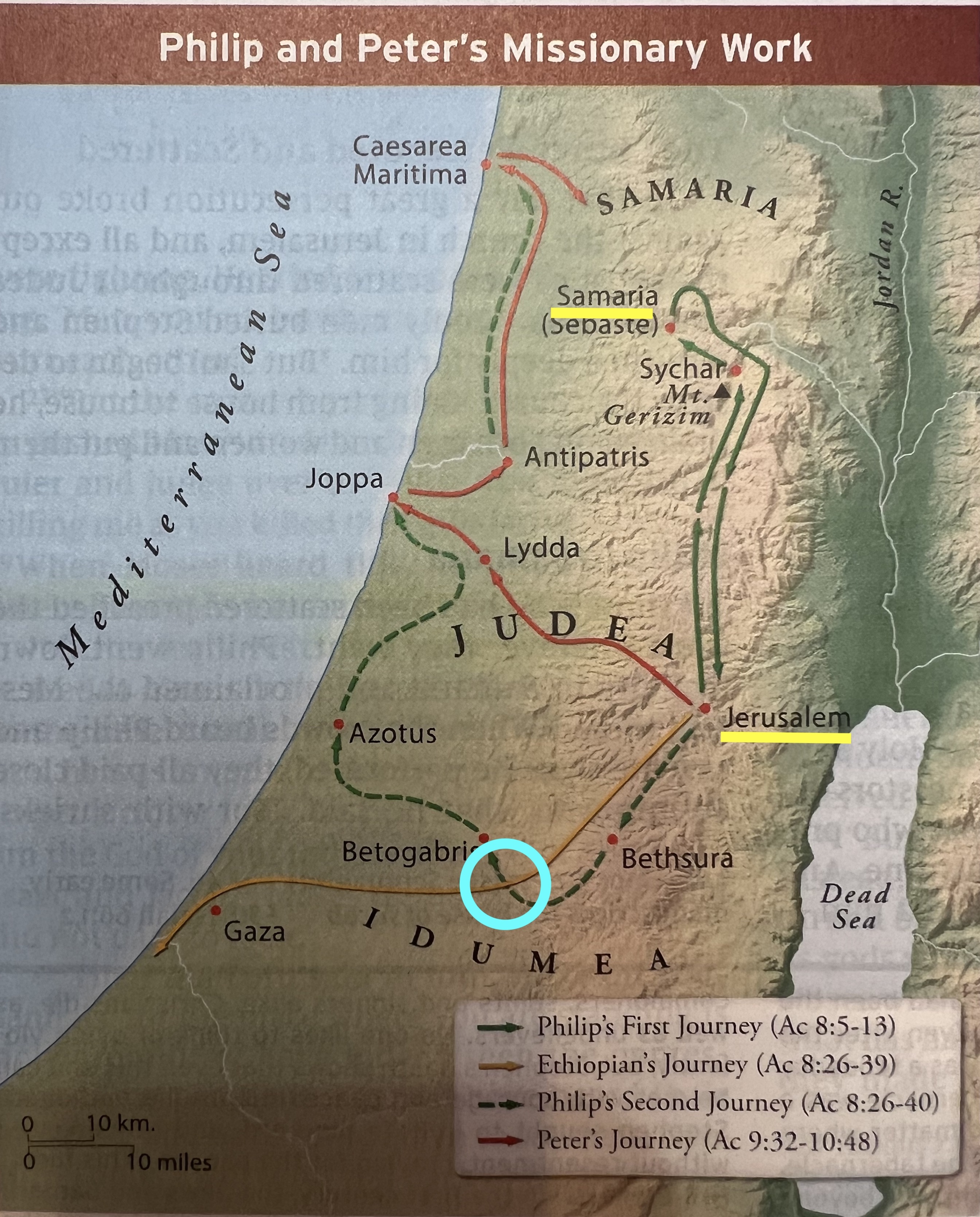
Ministry was booming in Samaria, and Philip was at the center of the activity. People were getting saved, healed, and set free from demonic possession. 

And then an angel tells Philip it is time to move on. We don’t see Philip debating or negotiating, but we just see his immediate obedience. As Philip is traveling the route the angel gave him, he sees a chariot approaching. The Holy Spirit then speaks to Philip and says, “Get close to that chariot and stay near it.” It was then that Philip hears the man in the chariot reading aloud from the Book of Isaiah, so he asks him if he understands what he is reading. This high-ranking official from Ethiopia then invites Philip into his chariot to explain the meaning to him. 

Philip had to leave Samaria in time to cross paths with the Ethiopian official who was heading home from Jerusalem—they met in the middle of a desert. An angel got Philip started. The Holy Spirit refined where Philip needed to be. And then Philip took it from there. 

If Philip had been trying to “grow” a successful ministry, he may have downplayed or even ignore the messages he received. But Philip wasn’t concerned about bigger numbers, just quicker obedience. 

Philip’s quick obedience placed him precisely where God needed him to be, precisely when he needed to be there! (See Acts 8:4-40.)

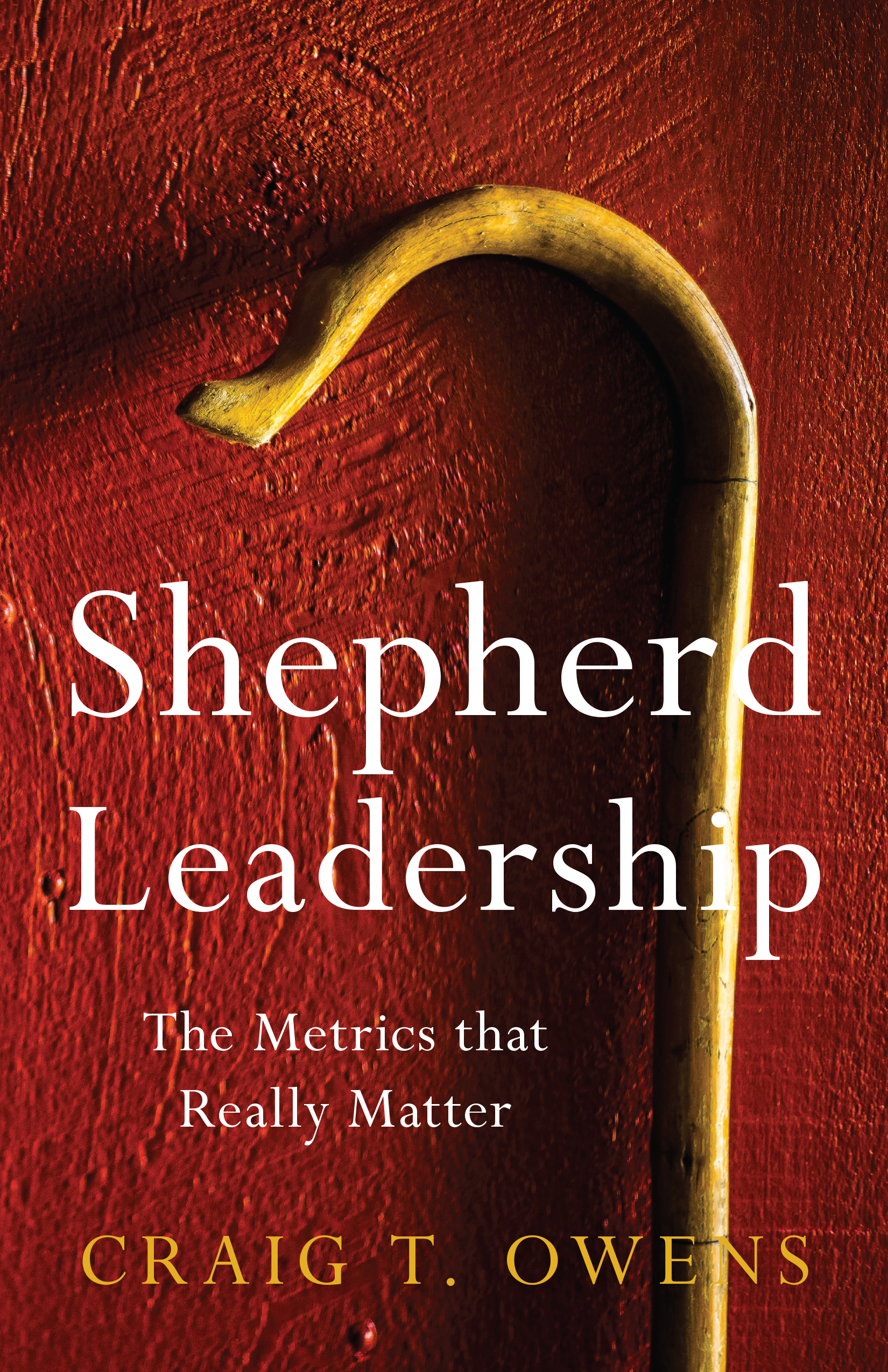
In my book Shepherd Leadership, I have a chapter entitled “Don’t Try to Grow Your Ministry.” A portion of what I wrote comes from Philip’s quick obedience—

     Don’t try to grow your ministry. First, because it’s not yours, it’s His; and second, because your measure of success is probably more slanted toward quantitative measurements than qualitative. Jesus wasn’t concerned about bigger numbers: “What do you think?” He asked, “If a man has a hundred sheep, and one of them goes astray, does he not leave the ninety-nine and go to the mountains to seek the one that is straying?” (Matthew 18:12). 

     Philip went to Samaria to tell people about Jesus. He didn’t go there because it fit his plan, but because Jesus said, “You will be My witnesses in Jerusalem, and in all Judea and Samaria, and to the ends of the earth” (Acts 1:8). Philip’s obedience brought God’s success: hundreds turned to Jesus as their Savior, demon-possessed people were delivered, the sick were healed, and the new Christians were baptized in the Holy Spirit. Yet God called Philip to leave these “ninety-nine” and go to the desert to cross paths with just one confused and wondering sheep (Acts 8). After that, Philip virtually disappears from Luke’s historical record. 

     What’s the value of one government official’s life? God says that his value is incalculable. Apparently, God knew that Philip was the perfect shepherd to lead this Ethiopian to the pasture where he would accept Jesus as his Savior. Philip was obedient, a sheep was saved, and God was pleased. But I wonder how many people today might think Philip’s ministry was unsuccessful because he left a bigger ministry in Samaria to go to a smaller ministry in the desert? Bishop William C. Abney said, “I’m still waiting for a leader to say, ‘God called me to a smaller ministry.’ We usually only say, ‘God called me’ when it’s something bigger. God’s math doesn’t work our way.” 

     The Chief Shepherd made this commitment to His sheep: “And I will give you shepherds according to My heart, who will feed you with knowledge and understanding” (Jeremiah 3:15). My prayer is that we would much rather feed a few sheep where God has directed us and given us His heart than for us to try to manufacture success that is measured by how many nickels and noses we can count. 

Philip demonstrates for us that it’s not about bigger numbers, it’s about obedience to God’s voice in the moment, and then hearing our Chief Shepherd’s voice at the end of our life saying, “Well done, good and faithful servant.” 

The subtitle of my book is “The metrics the really matter.” I invite you to pick up a copy today! 

►► Would you please prayerfully consider supporting this ministry? My Patreon supporters get behind-the-scenes access to exclusive materials. ◀︎◀︎
Beware Of Boasting

Listen to the podcast of this post by clicking on the player below, and you can also subscribe on AppleSpotify, or Audible. 

Jesus had just healed the sick people that were brought to Him, and then we read:

So the crowd was astonished as they saw those who were unable to speak talking, those with impaired limbs restored, those who were limping walking around, and those who were blind seeing; and they glorified the God of Israel. (Matthew 15:31)

Before Jesus ascended back into Heaven, He told His followers that they would do the same things He had done, including preaching the Gospel and healing the sick. The focal point is still to be the same as it was while Jesus was on earth: “They glorified God.” 

We would laugh if an ax boasted about the tree he had cut down. We all know that the power came from the lumberjack. 

It was the lumberjack who chose the ax, sharpened the ax, and skillfully used the ax to chop down the large tree. The felled tree is a testament to the lumberjack’s strength. 

In the same way, God may use one of us as His instrument to display His power. If the blind receive their sight, the lame can walk, and the lost find Jesus as their Savior, we would laugh if the one who prayed or preached boasted about his ability that brought about these miracles. 

These changed lives are a testament to the power and wisdom that flows from God. The one who prays or preaches is merely the instrument that was used by Him. God may pick up that person again and again, or He may lean him against the wall after one use. God determines the best instrument to use for His glory. 

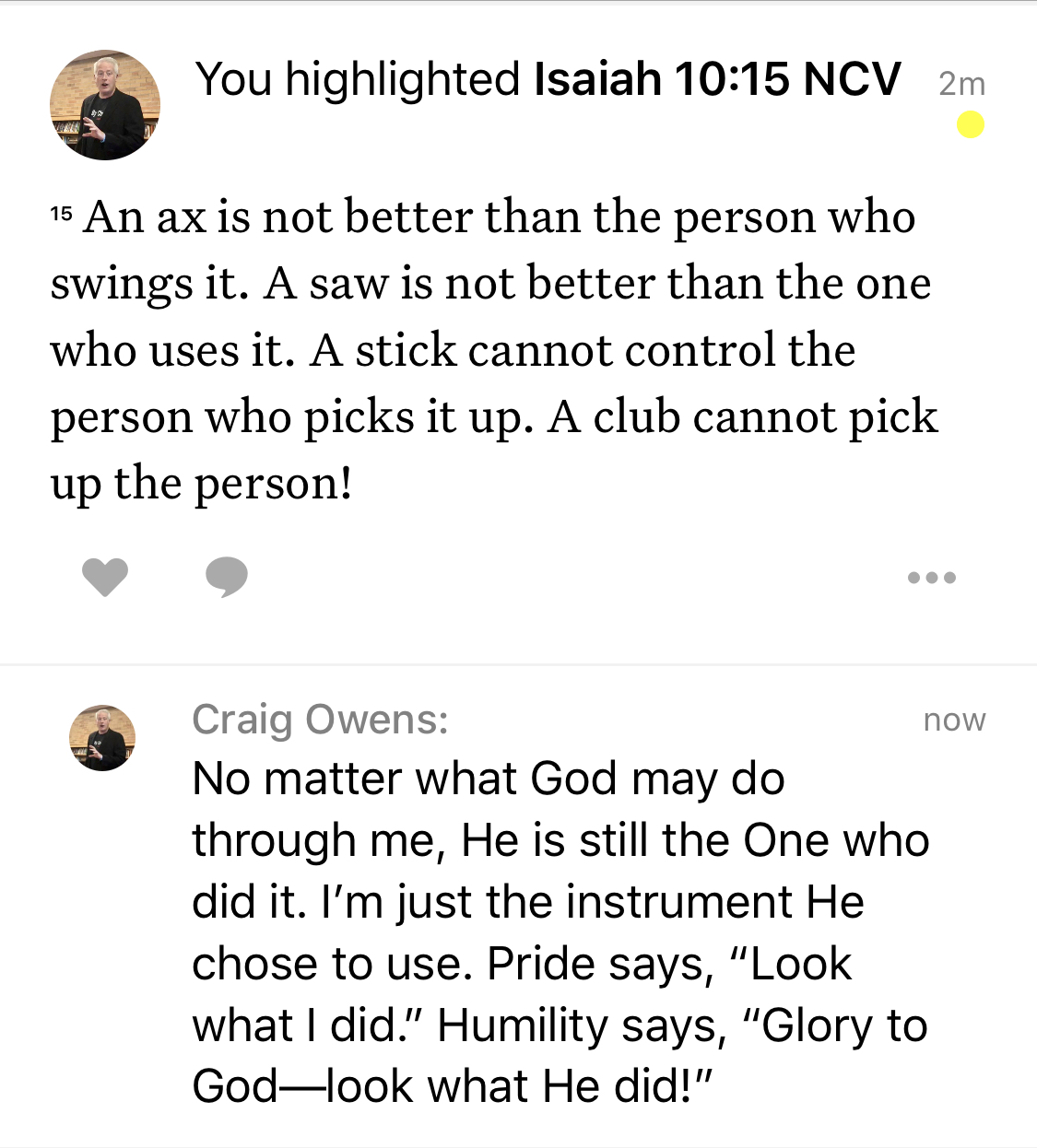
In fact, God Himself says, “Does the ax raise itself above the person who swings it, or the saw boast against the one who uses it?” (Isaiah 10:15). And, “Let not the wise boast of their wisdom or the strong boast of their strength or the rich boast of their riches, but let the one who boasts boast about this: that they have the understanding to know Me” (Jeremiah 9:23-24). 

Be careful if you find yourself thinking, “Look what I have done,” and let your heart quickly change that to, “Look what my merciful God has been please to do through Me!” 

It’s not about our glory, is all about God’s glory! 

Sola Deo gloria! 

(Check out what A.W. Tozer said about a Christian neither boasting nor belittling.)

►► Would you please prayerfully consider supporting this ministry? My Patreon supporters get behind-the-scenes access to exclusive materials. ◀︎◀︎
Links & Quotes

When a teammate seems to choke in a pressure-packed situation, good coaches help them learn from their mistake and get right back into the game. This is how leaders help their teammates go from choke to clutch. Check out the full conversation Greg and I had about this.

I have lots of new content every week, which you can check out on my YouTube channel.

“Most of us who aspire to be tops in our fields don’t really consider the amount of work required to stay tops.” —Althea Gibson, tennis great

“There is only one way forward when vindication is delayed: total forgiveness. And I can give you a motivation to forgive totally greater than any other that could be conceived: you do it for an audience of One. Yes. That’s it. That is how you do it! Total forgiveness comes easily when you realize you are doing it for God and the glory of Jesus Christ!” —R.T. Kendall

More archeological evidence supporting the historicity of the Bible. Here are the top ten discoveries related to the Book of Jeremiah.

ICR reports: “Millions of years of erosion should have toppled all the beautiful sandstone arches out West, yet many hundreds remain.” But following the biblical timeline of Creation and the Flood makes it unsurprising that the arches are still standing.

Dr. Glenn Sunshine offers a beautiful, biblically-centric prayer for our nation, especially during this current election cycle.

“A coach is someone who can give correction without causing resentment.” —John Wooden

October is the month Protestants remember the start of the Reformation. The folks at Desiring God have a wonderful resource available by email every day during October called Here We Stand. Each day you will receive an email with a mini-biography of a key character in the Reformation. I am thoroughly enjoying these each day. Sign up here.

None of us are self-made. God created us on purpose and for a purpose. He gave us the gifts we need to accomplish that purpose. We will only find our fulfillment in life in stewarding those God-given gifts and opportunities in ways that glorify God. Not only fulfillment here, but then eternal satisfaction when we hear our Savior say, “Well done, good and faithful servant! Enter into your Master’s happiness!”

Empowered For Obedience

Listen to the podcast of this post by clicking on the player below, and you can also subscribe on AppleSpotify, or Audible. 

In the 40 days between His resurrection and His ascension, we read that Jesus was with His disciples “giving instructions through the Holy Spirit” (Acts 1:2). 

I think this word “instructions” in the NIV is too soft. The other translations say things like:

  • commandments (NKJV) 
  • orders (NASB & NET) 
  • instructed and commanded (AMPC) 

The Greek word Luke uses in Acts 1:2 is entellomai and it is a word that carries weight. Throughout the New Testament this word is used to identify…

  • …the words of God (Matthew 4:6, 15:4; Luke 4:10; Acts 13:47; Hebrews 9:20) 
  • …the words of Moses (Matthew 19:7; Mark 10:3; John 8:5) 
  • …the words of Jesus (Matthew 17:9, 28:20; Mark 11:6; John 14:31; 15:14, 17; Acts 1:2, 13:47) 
  • …the words of recognized leaders (Mark 13:34; Hebrews 11:22) 

(Check out all of the above Scriptures by clicking here.)

In the Septuagint (the Greek translation of the Old Testament) this word is used seven times. Five of these times link together the words “command” and “covenant” (Deuteronomy 4:13; Joshua 23:16; Judges 2:20; Psalm 111:9–10; Jeremiah 11:3–4). The other two times express God’s strong promise-keeping power that is awe-inspiring (Psalm 90:11, 91:11). 

In other words, these aren’t just any words, but they carry an awesome authority with them. These are binding commands. They are not merely wise counsel or suggestions for godly living. They are indispensable to the Christian life. 

Luke points out that Jesus gave these commands “through the Holy Spirit” because it is only through the Holy Spirit that you and I can understand them, apply them, and be empowered to obey them. 

Jesus uses the same word entellomai in the Great Commission (Matthew 28:20) as well as in Acts 1:2. Clearly, the Scripture is telling us that we are powerless to understand and powerless to obey without the Holy Spirit’s daily empowerment. Jesus would never give us commands that we were unable to carry out, which is why He gives us instructions through the Spirit, and then the Spirit gives us the power to joyfully obey those commands. 

Don’t ever think that you are on your own in trying to figure out what Jesus said, and how you are going to live it out.

I discuss the role of the Holy Spirit in a Christian’s life in much greater detail in my series called We Are: Pentecostal. 

►► Would you please prayerfully consider supporting this ministry? My Patreon supporters get behind-the-scenes access to exclusive materials. ◀︎◀︎

Getting Uncomfortable With Staying Comfortable

Listen to the podcast of this post by clicking on the player below, and you can also subscribe on AppleSpotify, or Audible. 

We as a Church are underperforming. How do I know this? Look at the way the world treats Christians; specifically, look at what’s NOT happening. 

  • By this all will know that you are My disciples, if you have love for one another” (John 13:35). Jesus said this right after He served His disciples by washing their feet. Is this happening today: Do people know you are a Christian by the way you put your love into servant-hearted action, or do they just know what you are against? 
  • “Be prepared to give an answer to everyone who asks you to give the reason for the hope that you have” (1 Peter 3:15). When was the last time someone saw your hope-filled life in such contrast to everyone else’s response that they said, “How can I have what you have?” 

(Find all of the Scriptures I’ve used in this post by clicking here.)

Peter said our adversary prowls like a lion. He is perfectly willing to bide his time, picking the strategy that works best. One of his favorite strategies is lies—sometimes half-truths or out-of-context truths. 

…Woe to the earth and the sea, because the devil has gone down to you! He is filled with fury, because he knows that his time is short. … The dragon was enraged with the woman and went off to make war against the rest of her offspring—those who obey God’s commandments and hold to the testimony of Jesus (Revelation 12:12, 17). 

Lies are his native tongue. He lied to Adam and Eve right in the beginning (Genesis 3:1, 4-5), and he still lies now (Revelation 12:10). Jesus contrasted this with the truth that He came to proclaim (John 8:42-45). 

The devil has learned that with many people, outright attacks drive them TO God. We see this in the oldest book of the Bible (Job 1:6f, 20-22), and in modern times (churches were filled after the 9-11 terrorist attacks). 

What the devil would rather do is lie to you to keep you comfortable. In The Screwtape Letters, Screwtape implores Wormwood to keep his patient indifferent and comfortable. Indeed, we all have a comfort zone and we love to stay in it. 

King Saul went from 3000 men to 600 men, from a full armory to only two swords, from defeating the Ammonites to being hemmed in by the Philistines. King Saul was enjoying life as the king, hanging out with his friends, sitting under a pomegranate tree, far away from his enemies. Life was good for Saul, life was familiar and comfortable. Saul was living in his comfort zone. But the comfort zone is a lousy place to live. 

In the comfort zone you only tell stories, but never live an adventure. In the comfort zone, you only hear about what God has done for others, but you never experience Him move in miraculous ways for yourself. 

God has given us all gifts so that we can live as overcomers and bring Him glory, but we settle for living only in our comfort zone. Our comfort zones are always way smaller than our gift zones, and the devil is perfectly happy to see us stay there.

Moses was comfortable in the desert, but God sent him in His power (Exodus 3:11, 14). 

David was comfortable in the pasture, but God equipped him to lead a whole nation (2 Samuel 7:18; Psalm 78:70-71). 

Jeremiah was comfortable being an anonymous priest, but God gave him words to prophesy to a wayward nation (Jeremiah 1:4-8). 

Saul was comfortable as a Pharisee, but God sent him to tell the world the Jesus is the Messiah (Acts 8:3; 1 Timothy 1:16). 

What lies have kept you in your comfort zone? 

  • Maybe a parent said, “You’ll never amount to anything.” 
  • Maybe a teacher said, “You’re slow.” 
  • Maybe a classmate said, “You’re weird.” 
  • Maybe the devil said, “You cannot make a difference in the world.” 

You need to silence those lies with God’s truth: 

  • God created me on purpose and for a purpose—Psalm 139:13-17 
  • He has given me all the gifts I need to soar—2 Peter 1:3-4 
  • He wants to help me, if I will trust Him—Isaiah 41:10, 13-14 

Charles Spurgeon said, “The extent of power God can infuse into a person is immeasurable; when divine strength is granted, human weakness ceases to be a hindrance.” 

So, friends, it’s time to get uncomfortable with staying comfortable. It’s time to stretch and soar out of your comfort zone and into more of your gift zone! 

How do you discover your gifts? That’s what we are going to unpack in this series over the next few weeks, I hope you will continue to follow along. And you can catch up on anything you may have missed in our series called Living in Your Gift Zone by clicking here. 

►► Would you please prayerfully consider supporting this ministry? My Patreon supporters get behind-the-scenes access to exclusive materials. ◀︎◀︎
Reassuring The Timid Soul

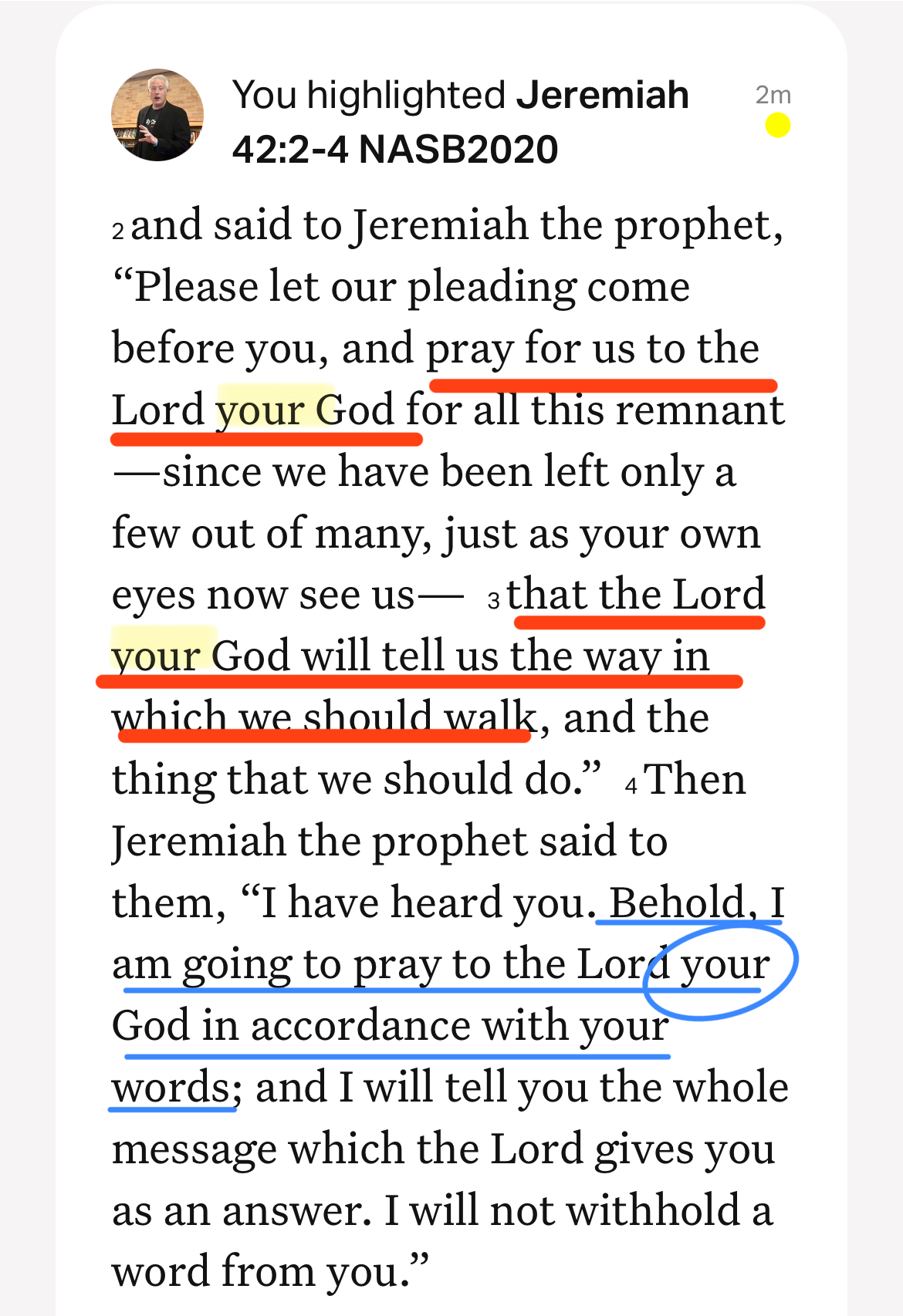
…All the people from the small to the great approached and said to Jeremiah the prophet, “Please let our pleading come before you, and pray for us to the Lord your God for all this remnant—since we have been left only a few out of many, just as your own eyes now see us—that the Lord your God will tell us the way in which we should walk, and the thing that we should do.” Then Jeremiah the prophet said to them, “I have heard you. Behold, I am going to pray to the Lord your God in accordance with your words; and I will tell you the whole message which the Lord gives you as an answer. I will not withhold a word from you.” (Jeremiah 42:1-4)

You can hear the distance that the people felt from God in the words they say to Jeremiah, “the Lord YOUR God.” 

But Jeremiah reassures them that God still sees them and loves them when he responds with the exact same words—not “the Lord my God” (as the people thought he would say) but “the Lord YOUR God.” 

This word of encouragement from Jeremiah helped this same group of people to see God in the right light: “Whether it is pleasant or unpleasant, we will listen to the voice of the Lord OUR God to whom we are sending you, so that it may go well for us when we listen to the voice of the Lord OUR God” (v. 6).

This is a good reminder for all of us that we need to encourage one another whenever we have the opportunity. “Let’s approach [our] God with a sincere heart in full assurance of faith … and let’s consider how to encourage one another in love and good deeds” (Hebrews 10:22, 24).

You may want to check out my post A Unique Look At “Church” for some further thoughts about encouraging our brothers and sisters.

Rebelling Against Government And God

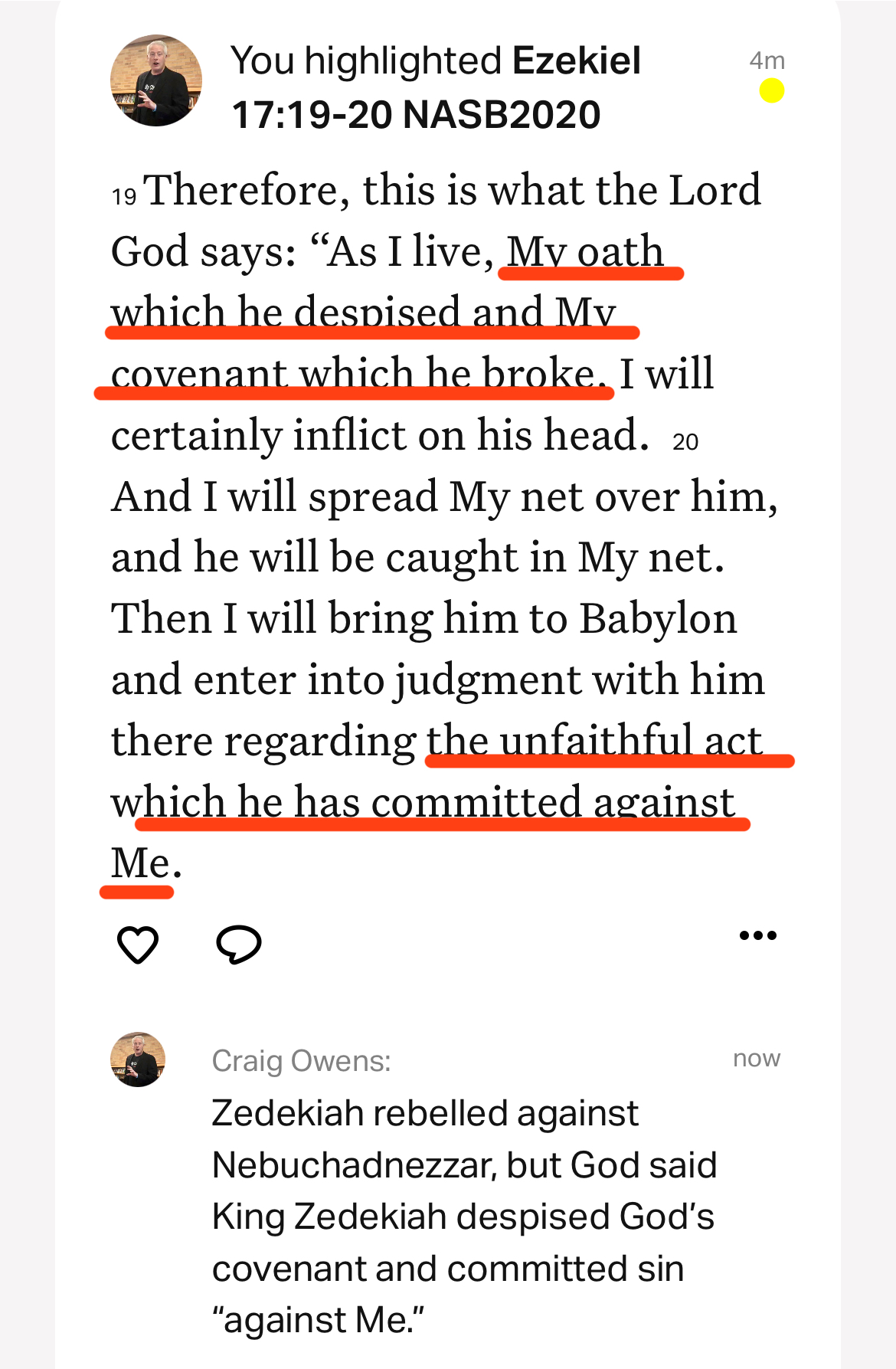
Therefore, this is what the Lord God says: “As I live, My oath which he [Zedekiah] despised and My covenant which he broke, I will certainly inflict on his head. And I will spread My net over him, and he will be caught in My net. Then I will bring him to Babylon and enter into judgment with him there regarding the unfaithful act which he has committed against Me. (Ezekiel 17:19-20) 

Zedekiah rebelled against Nebuchadnezzar, but God said King Zedekiah despised God’s covenant and committed sin “against Me.” 

All governing authorities on earth are God’s servants. God used Babylon as His means of punishing Judah for her sin. When King Zedekiah conspires with Pharaoh to attack Nebuchadnezzar, God says Zedekiah is really rebelling against God Himself!

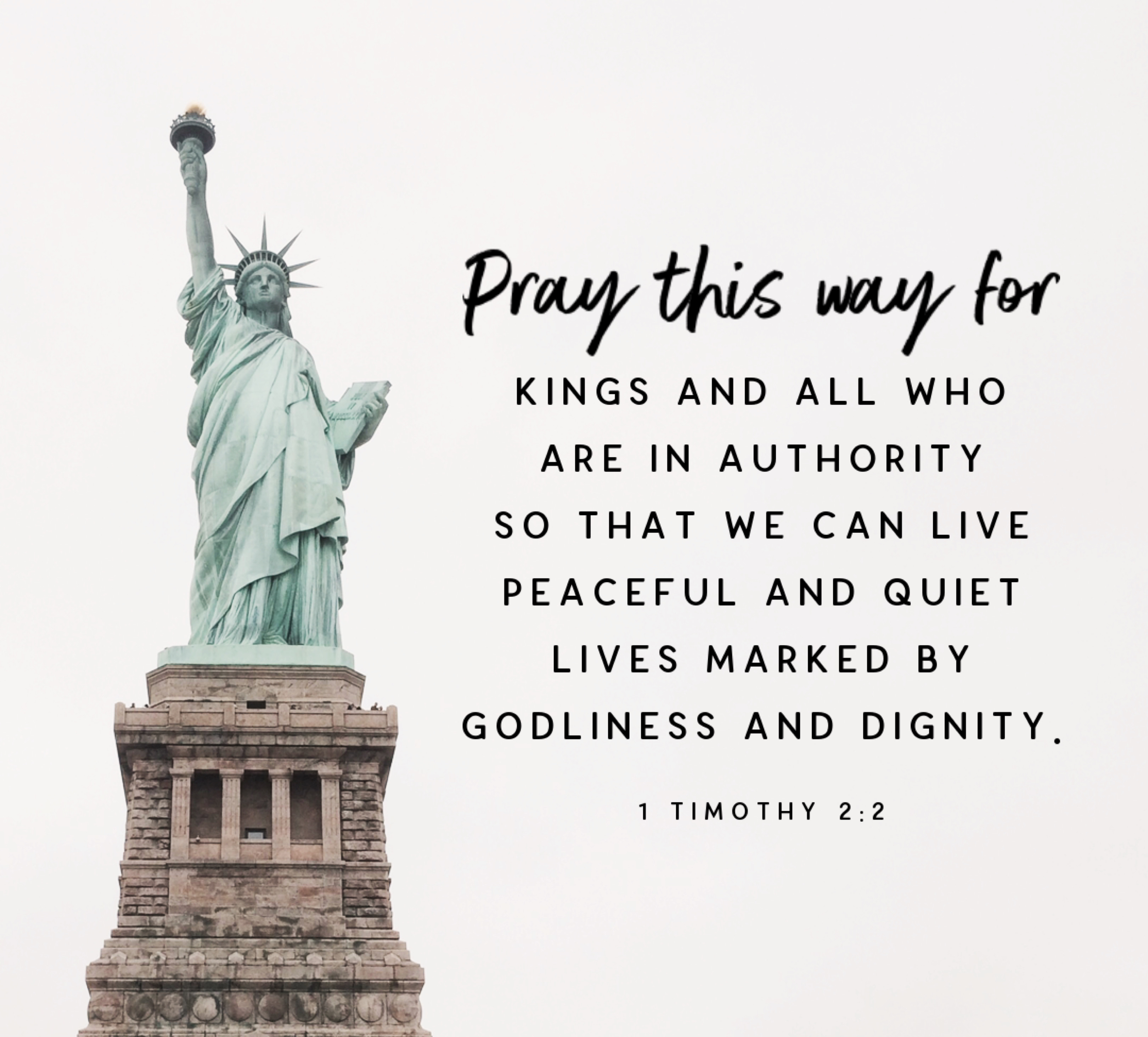
Christians are called to pray for those in governmental leadership. To dig a little deeper on this topic, check out two previous blog posts and sermon videos:

Links & Quotes

No one wants what the gloomy person has. Joy is a Christian’s testimony—it’s what attracts others to Jesus! Check out this full message from my series on the Songs of Ascent.

I have lots of new content every week, which you can check out on my YouTube channel.

“At first glance, people may not see how these different forms of sexual violence connect to each other. But, in fact, experts are increasingly recognizing that they may all stem from one common source—sexual objectification. Sexual objectification occurs when people perceive others as sex objects rather than complex human beings deserving of dignity and respect.” Pornography is a major contributor to the sexual objectification which leads to sexual violence.

Dr. Brian Thomas describes why fossils are found where they are and why land animals may even be found near marine animals: “This fossil discovery [a bone from a South American megaraptor found near Cape Otway, Australia] fits well with a biblical history, which goes something like this: Around 2348 BC, a worldwide flood crushed and reshaped the earth’s surface, breaking up a single landmass (Pangaea) into continents and fossilizing countless living things. Prior to the Flood megaraptors roamed Pangaea, during the Flood they were fossilized, and in the late Flood stages the boundaries of new continents (along with their fossils) were roughly shaped. Unlike the standard story, the outlines of this history have been testified to by reliable eyewitnesses, and this testimony has been faithfully preserved in Genesis.”

“The more we let God take over us, the more truly ourselves we become—because He made us.” —C.S. Lewis

J. Warner Wallace shares two trends in American society that are contributing to the decline of religious adherence in America.

“There is no way around hard work. Embrace it.” —Roger Federer

Shame on my thoughts, how they stray from me!
During the Psalms, they wander on a path that is not right; they run, they distract…
One moment they follow the ways of loveliness, and the next the ways of riotous shame…
Swiftly they leap in one bound from earth to heaven…
O beloved Christ… may the grace of the sevenfold Spirit come to keep them in check!
Rule this heart of mine, O swift God of the elements, that You may be my love, and I may do Your will! —Anonymous, On the Flightiness of Thought, Irish, 8th-9th century

Ungodly leaders become more and more selfish, while shepherd leaders become more and more God-fearing and more and more attentive to the needs of others (Jeremiah 12:10-11). Check out my series of posts for godly leaders and my book Shepherd Leadership.

Selfish Pragmatism

Why has this people, Jerusalem, turned away in continual apostasy? They hold on to deceit, they refuse to return. I have listened and heard, they have spoken what is not right; no one repented of his wickedness, saying, “What have I done?” Everyone turned to his own course, like a horse charging into the battle. (Jeremiah 8:5-6)

“Everyone turned to his own course” is the description of our culture today.

It’s selfish pragmatism—I can determine what’s right for me. This “continual apostasy” will be our undoing as individuals and as a nation unless we repent and turn wholeheartedly back to God and His righteous ways!