Links & Quotes

link quote

“‘God works for those who wait for Him’ (Isaiah 64:4). The proper connotation of saying God works for me is that I am bankrupt and need a bailout. I am weak and need someone strong. I am endangered and need a protector. I am foolish and need someone wise. I am lost and need a Rescuer. ‘God works for me’ means I can’t do the work.” —John Piper

“Pure holy simplicity confounds all the wisdom of this world and the wisdom of the flesh.” —Francis of Assisi

The Cedar Springs Post has a nice article about our residents which are featured in the Heart of West Michigan’s ArtPrize. Glad our town is so well represented!

This is pretty amazing: why the information in our DNA points to a Creator.

Eric Metaxas explains how the heroin epidemic in our country is a great opportunity for the church.

5 lies that lead to burnout.

[VIDEO] Cecile Richards admits under oath that Planned Parenthood has lied about providing mammograms—

And here is a list of how beyond lying to the public, Planned Parenthood continues to break the law!

One Word

RedemptionWhen it comes right down to it, there is really just one word that makes Christians peculiar. Just one word changes our citizenship from Earth to Heaven. One word took us from a path where our sins had us headed toward an eternity in Hell.

Jesus stepped in where He didn’t have to go. Jesus became our sin to pay-off our sin debt. Jesus took us back from satan’s possession, and made us a part of His Father’s family.

Jesus redeemed us! 

I wonder if we truly understand that word redemption?

Peter is speaking to us as “strangers here in reverent fear” on Earth, and he calls us to live up to God’s call—Be holy, because I am holy (1 Peter 1:16; Leviticus 11:44-45). He asks us to obediently follow God’s Word (1:22), to get rid of Earth-bound things (2:1), and instead taste that the Lord is good (2:3).

Why? Because we’ve been “redeemed from the empty way of life…by the precious blood of Christ” (1:18-19) We don’t live holy lives to try to earn redemption, but because we have been redeemed we are now capable of living holy lives!

To help illustrate his point, Peter quotes a couple of verses from Isaiah 40. In this chapter, we are invited to weigh the greatness and love and knowledge and power of God against the things we can provide for ourselves on Earth. Please check out the video below, where I go through this 40th chapter of Isaiah.

If you’ve missed any messages in this series, you may find the complete list by clicking here.

Holy Rescuers

QophThe Hebrew Aleph-Bet is nothing like the English alphabet. First of all, in English, letters are just letters; they don’t really mean anything. In Hebrew, every letter has its own definition and imagery. Second, in the English alphabet, the order of the letters doesn’t have any significance; but the order in Hebrew is of vital importance.

It is significant that qoph (vv. 145-152) comes after tsadhe (vv. 137-144) in Psalm 119. Tsadhe tells us about God’s righteousness, and how the Word gives us a reliable way to approach All-Righteous God as a humble, obedient servant. This must come before qoph, which encourages us to stay in the presence of Holy God for a specific reason.

Qoph is the second of two Hebrew letters that has two pen strokes that don’t touch. This is a reminder for us to stay close to God. But qoph is the only Hebrew letter that goes below the line. This is a reminder that God came down to rescue us!

Qoph is the first letter in the Hebrew word for holy. When Isaiah saw God, and heard the angels shouting, “Holy, Holy, Holy is the Lord God Almighty,” he saw himself unworthy to come into God’s presence, until his sin had been atoned for. After that, he was ready to be sent out as God’s messenger. (see Isaiah 6:1-8).

In the last book of the Bible, the picture in Heaven is similar, with angels still crying, “Holy!” (Revelation 4:8). As Christians, Jesus Christ has become our Atonement, so we can approach holy God’s throne with humble confidence.

Not only that, but Jesus sent us out as holy witnesses. He sent us “below the line.” Just like He came down to rescue us, He has commissioned us as holy rescuers (Proverbs 24:11-12; Jude 21-25).

As you stay close to God’s holiness, you become a more effective witness for Christ, a holy rescuer! What a privilege to be used by God in this way.

If you would like to watch the message I delivered yesterday on being holy rescuers, check this out—

If you have missed any of the messages in our P119 series, you can access them all by clicking here.

Poetry Saturday—Strength From Heaven

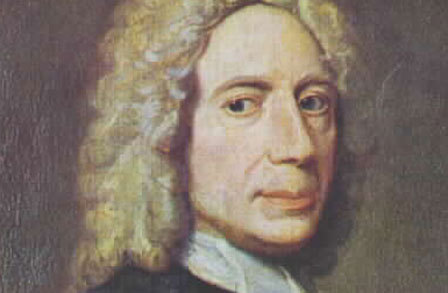
Isaac WattsWhence do our mournful thoughts arise?
And where’s our courage fled?
Has restless sin and raging hell
Struck all our comforts dead?

Have we forgot th’ almighty Name
That formed the earth and sea?
And can an all-creating Arm
Grow weary or decay?

Treasures of everlasting might
In our Jehovah dwell;
He gives the conquest to the weak
And treads their foes to hell.

Mere mortal power shall fade and die,
And youthful vigor cease;
But we that wait upon the Lord
Shall feel our strength increase.

The saints shall mount up on eagles’ wings
And taste the promis’d bliss,
Till their unwearied feet arrive
Where perfect pleasure is. —Isaac Watts (from Isaiah 40:27-30)

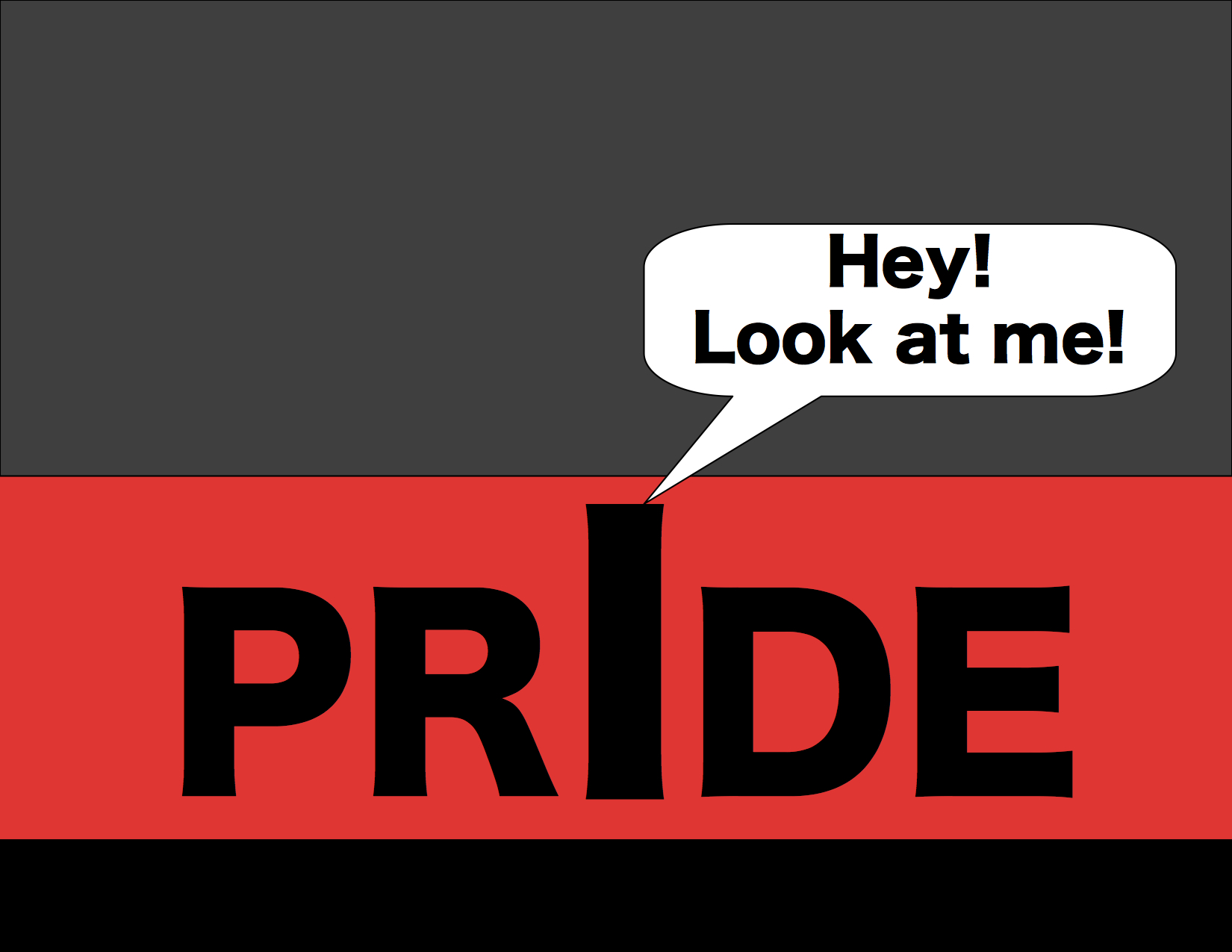
4 Reminders To Avoid Pride

Listen to the podcast of this post by clicking on the player below, and you can also subscribe on AppleSpotify, or Audible.

Pride deceives. Pride perverts. Pride corrupts. Pride brings God’s punishment. And persistent pride brings utter destruction.

If we trace the origin of pride, we’ll see why it is so destructive.

An entire city saw themselves as flawless―“You say, O Tyre, ‘I am perfect in beauty’” (Ezekiel 27:3).

This proud attitude came from their king who saw himself as a god―“In the pride of your heart you say, ‘I am a god; I sit on the throne of a god in the heart of the seas’” (Ezekiel 27:2).

And the king’s attitude sounds just like that of Lucifer’s, who saw himself as greater than God―

I will ascend to heaven; I will raise my throne above the stars of God; I will sit enthroned on the mount of assembly, on the utmost heights of the sacred mountain. I will ascend above the tops of the clouds; I will make myself like the Most High. (Isaiah 14:13-14)

It’s too simplistic to simply say, “I need to remain humble.” You and I need a constant reminder of why we must not let pride creep in:

  1. I am a created being, not the Creator of beings (Ezekiel 28:13, 15).
  2. God has ordained a plan for me; I am not a self-made man (Ezekiel 28:14).
  3. God gives gifts―beauty, wisdom, ability―to whom He sees fit; I don’t have any of those things because I choose them (Ezekiel 28:12-14).
  4. Pride removes me from God’s presence (Ezekiel 28:6-10, 15-19).

I am valued because God loves me. God doesn’t love me because I have value. The more I recall that, the easier it is for me to remain humble.

UPDATE: In my book Shepherd Leadership, I have two back-to-back chapters on how a godly leader can cultivate both humble confidence and confident humility. Check it out!

You may also want to check some other blog posts:

►► Would you please prayerfully consider supporting this ministry? My Patreon supporters get behind-the-scenes access to exclusive materials. ◀︎◀︎

From The Cutting Room Floor: The Love In The Law

Love In The LawWhenever I am working on a series of messages, I always end up with way more material than I could possibly share. But it’s still really good stuff! I remember a movie director once remarking that some of his best and favorite scenes ended up on the cutting room floor during the movie’s editing process. So here are some of the quotes and thoughts I really liked, recovered from “the cutting room floor” as I prepared our Love In The Law series.

“True obedience to God (not just to lists of laws) means more than outward performances which can be tallied in percentages (like 80 percent obeyed). Rather, true obedience is to be so transformed that we delight to do God’s will at multiple levels. We delight in His will as the excellent expression of His wisdom and justice and love. We delight in personal, close communion with Him as our guide, which we would lose, at least for a season, if we acted against His counsel. We delight in His gift of a clean conscience. We delight in the smile of His approval. We delight in God Himself whom we see and know more clearly when we walk in unbroken fellowship and obedience. We delight in the prospect of ongoing assurance and hope, which is jeopardized and weakened if we gradually slip away from Him in callous disobedience.” —John Piper

I delight to do Your will, O my God; yes, Your law is with in my heart. —Psalm 40:8

“To detect ourselves thus balancing a transgression here, against many observances there, ought at once to startle us into the conviction that the whole principle of our lives must be faulty. Our aim is, not to love God, or to obey Him, but to get to heaven, or at least escape hell, on the cheapest terms.” —Alfred Plummer

“Our will is morally and spiritually flawed. Nevertheless we are responsible to do the commandments of God. The moral corruption that cripples us does not relieve us of our responsibility to do what is right and good to do.” —John Piper

“I call the love to God the motion of the soul toward the enjoyment of God for His own sake, and the enjoyment of one’s self and of one’s neighbor for the sake of God.” —Augustine

“If thou neglect thy love to thy neighbor, in vain thou professest thy love to God; for by thy love to God, the love to thy neighbor is begotten, and by thy love to thy neighbor, thy love to God is nourished.” —Francis Quarles

“A pennyweight o’ love is worth a pound o’ law.” —Scottish Proverb

It pleased the Lord for the sake of His righteousness to make His law great and glorious. —Isaiah 42:21

13 Quotes From Jerry Bridges In “Transforming Grace”

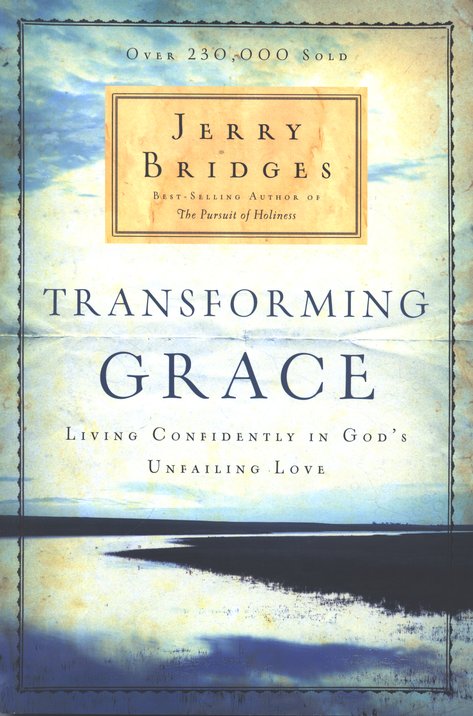
Transforming GraceI think Transforming Grace by Jerry Bridges is one of the best books about God’s grace I have ever read! You can read my full book review by clicking here. There are way too many quotes for me to share from this book, so here are a few that really zero-in on grace (I’ll be posting more quotes soon).

“I think most of us actually declared temporary bankruptcy. Having trusted in Christ alone for our salvation, we have subtly and unconsciously reverted to a works relationship with God in our Christian lives. We recognize that even our best efforts cannot get us into heaven, but we do think they earn God’s blessings in our daily lives.” 

“It was because of His grace that God the Father sent His only Son to die in our place. To say it another way, Christ’s death was the result of God’s grace; grace is not the result of Christ’s death.”

“The gospel is addressed to those who have no money or good works. It invites us to come and ‘buy’ salvation without money and without cost [Isaiah 55:1]. But note the invitation to come is addressed to those who have no money—not to those who don’t have enough. Grace is not a matter of God’s making up the difference, but of God’s providing all the ‘cost’ of salvation through His Son, Jesus Christ.” 

“We can never rightly understand God’s grace until we understand our place as those who need His grace.”

“We were dead in our transgressions, but God intervened. We were in bondage to sin, but God intervened. We were objects of wrath, but God intervened. God Who is rich in mercy intervened. Because of His great love for us, God intervened and made us alive with Christ, even when we were dead in our transgressions and sins. All this is summed up in one succinct statement: ‘it is by grace you have been saved.’ Our condition was hopeless, but God intervened in grace.” 

“God’s grace, then, does not supplement our good works. Instead, His grace overcomes our bad works, which are our sins. God did this by placing our sins on Christ and by letting fall on Him the wrath we so richly deserved. … That’s the way His grace operates. It looks not to our sins or even to our good deeds but only to the merit of Christ.”

“The apostle John wrote that Jesus was ‘full of grace and truth,’ and ‘from the fullness of His grace we have all received one blessing after another’ (John 1:14, 16). The idea portrayed in verse 16 is analogous to the ocean waves crashing upon the beach. One wave has hardly disappeared before another arrives. They just keep coming from an inexhaustible supply. So it is with the grace of God through Christ. He is full of grace and truth, and it is from His inexhaustible fullness that we received one blessing after another.” 

“God often does bless people who seem to us to be quite unworthy. But that is what grace is all about, because we are all unworthy.”

“We all want grace, but we cannot enjoy grace when there is an attitude of comparing.” 

“Under a sense of legalism, obedience is done with a view to meriting salvation or God’s blessing on our lives. Under grace, obedience is a loving response to salvation already provided in Christ, and the assurance that, having provided salvation, God will also through Christ provide all else that we need.”

“All Christians look to Christ alone for their justification, but not nearly as many also look to Him for their perfect holiness before God. … Holiness should be an objective for your daily life. But to live by grace, you must never, never look to the work of the Holy Spirit in you as the basis for your relationship with God. You must always look outside of yourself to Christ. You will never be holy enough through your own efforts to come before God. You are holy only through Christ.” 

“When our Father looks at us, He does not see our miserable performance. Instead, He sees the perfect performance of Jesus.”

“We died to the observance of the law as a requirement for attaining righteousness before God. We died to the curse and condemnation that resulted from our inability to perfectly keep the law. … Being under law implies the wrath of God, whereas grace implies forgiveness and favor. Law implies a broken relationship with God, whereas grace implies a restored relationship with Him. So when Paul said we died to the law, he meant we died to that entire state of condemnation, curse, and alienation from God.” 

Social Justice

Scales of social justiceThere is a lot of talk about “social justice”—speaking out and acting on behalf of those who are oppressed, marginalized and disenfranchised. This is close to God’s heart, too, as He describes “pure religion” in terms of caring for orphans and looking after widows (see James 1:27).
But we hinder our attempts at social justice if it’s not tied to God’s righteousness. Because without righteousness, we don’t have God’s unlimited help and are simply operating under our own limited power.

Surely the arm of the Lord is not too short to save, nor His ear too dull to hear. But your iniquities have separated you from your God; your sins have hidden His face from you, so that He will not hear. (Isaiah 59:1-2, emphasis added)

Justice is mentioned four times in this 59th chapter of Isaiah, but always in close proximity to righteousness

The opening verse is the perfect conclusion: God has the ability to help us (justice), but our lack of righteousness prevents Him from hearing our pleas and moving to action.

The single-best way to make social justice maximally effective is for each of us to pursue God’s righteousness. 

All efforts at social justice apart from God’s help will bring small, temporary gains at best. But even our smallest attempts at social justice with God’s help will bring lasting results for the greatest number of people.

7 Bible Study Ideas From D.L. Moody

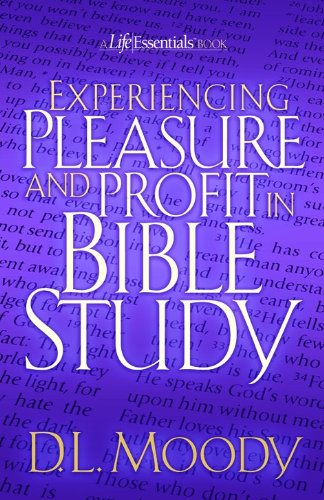
Pleasure & ProfitAs I read D.L. Moody’s book Pleasure & Profit In Bible Study, I made note of several ideas that could stimulate a great Bible study. Check out my review of this book by clicking here, then check out these great study-starters:

“If you are impatient, sit down quietly and commune with Job. If you are strong-headed, read of Moses and Peter. If you are weak-kneed, look at Elijah. If there is no song in your heart, listen to David. If you are a politician, read Daniel. If you are getting sordid, read Isaiah. If you are chilly, read of the beloved disciple. If your faith is low, read Paul. If you are getting lazy, watch James. If you are losing sight of the future, read in Revelation of the promised land.” —Richard Baxter 

“Every chapter [of Mark] but the first, seventh, eighth and fourteenth begins with ‘And,’ as if there was no pause in Christ’s ministry.”

“Matthew begins with Abraham; Mark with Malachi; Luke with John the Baptist; but John with God Himself. Matthew sets forth Christ as the Jew’s Messiah. Mark as the active worker. Luke as a man. John as a personal Savior.”

“[In John’s Gospel] the word repent does not occur once, but the word believe occurs ninety-eight times.”

“Dr. A. T. Pierson says: Let the introduction cover five P’s; place where written; person by whom written; people to whom written; purpose for which written; period at which written.” 

“Some time ago a man wanted to take my Bible home to get a few things out of it, and when it came back I found this noted in it:

  • Justification, a change of state, a new standing before God.
  • Repentance, a change of mind, a new mind about God.
  • Regeneration, a change of nature, a new heart from God.
  • Conversion, a change of life, a new life for God.
  • Adoption, a change of family, new relationship towards God.
  • Sanctification, a change of service, separation unto God.
  • Glorification, a new state, a new condition with God.”

“I was wonderfully blessed by taking the seven ‘Blesseds’ of the Revelation. … Or you may take the eight ‘overcomes’ in Revelation…. I have been greatly blessed by going through the ‘believings’ of John. Every chapter but two speaks of believing. … Take the six ‘precious’ things in Peter’s Epistles. And the seven ‘walks’ of the Epistle to the Ephesians. And the five ‘much mores’ of Romans 5. Or the two ‘receiveds’ of John 1. Or the seven ‘hearts’ in Proverbs 13, and especially an eighth. Or ‘the fear of the Lord’ in Proverbs.” 

“No scripture is exhausted by a single explanation. The flowers of God’s garden bloom, not only double, but seven-fold: they are continually pouring forth fresh fragrance.” —Charles Spurgeon

The Horrors Of Crucifixion

Good FridayWilliam Barclay, in his commentary on the Gospel of John, wrote graphically about the horrors of crucifixion—

   There was no more terrible death than death by crucifixion. Even the Romans themselves regarded it with a shudder of horror. Cicero declared that it was “the most cruel and horrifying death.” Tacitus said that it was a “despicable death.” It was originally a Persian method of execution. It may have been used because, to the Persians, the earth was sacred, and they wished to avoid defiling it with the body of an evil-doer. So they nailed him to a cross and left him to die there, looking to the vultures and the carrion crows to complete the work. The Carthaginians took over crucifixion from the Persians; and the Romans learned it from the Carthaginians.

   Crucifixion was never used as a method of execution in the homeland, but only in the provinces, and there only in the case of slaves. It was unthinkable that a Roman citizen should die such a death. Cicero says: “It is a crime for a Roman citizen to be bound; it is a worse crime for him to be beaten; it is well nigh parricide for him to be killed; what am I to say if he be killed on a cross? A nefarious action such as that is incapable of description by any word, for there is none fit to describe it.” It was that death, the most dreaded in the ancient world, the death of slaves and criminals, that Jesus died.

   The routine of crucifixion was always the same. When the case had been heard and the criminal condemned, the judge uttered the fateful sentence: Ibis ad crucem, “You will go to the cross.” The verdict was carried out there and then. The condemned man was placed in the centre of a quaternion, a company of four Roman soldiers. His own cross was placed upon his shoulders. Scourging always preceded crucifixion and it is to be remembered how terrible scourging was. Often the criminal had to be lashed and goaded along the road, to keep him on his feet, as he staggered to the place of crucifixion. Before him walked an officer with a placard on which was written the crime for which he was to die and he was led through as many streets as possible on the way to execution. There was a double reason for that. There was the grim reason that as many as possible should see and take warning from his fate. But there was a merciful reason. The placard was carried before the condemned man and the long route was chosen, so that if anyone could still bear witness in his favor, he might come forward and do so. In such a case, the procession was halted and the case retried. (emphasis added)

Always remember that Jesus willingly went through this for you and me.

Surely He took up our pain
    and bore our suffering,
yet we considered Him punished by God,
    stricken by Him, and afflicted.
But He was pierced for our transgressions,
    He was crushed for our iniquities;
the punishment that brought us peace was on Him,
    and by His wounds we are healed. (Isaiah 53:4-5, emphasis added)