Thursdays With Spurgeon—The Depths Of God’s Love For Us

This is a weekly series with things I’m reading and pondering from Charles Spurgeon. You can read the original seed thought here, or type “Thursdays With Spurgeon” in the search box to read more entries.

The Depths Of God’s Love For Us

I have made You known to them, and will continue to make You known in order that the love You have for Me may be in them and that I Myself may be in them. (John 17:26) 

     Is He not Himself very God of very God? … He declared the righteous Father in His life, for in His life He incarnated truth and grace. Jesus Christ on earth was without sin in thought, in word, and in deed. Point me to a sin He ever committed, inculcated, or excused. Righteousness was about Him as the atmosphere that He breathed. Well did the psalmist say of Him, “You love righteousness and hate wickedness” (Psalm 45:7). And yet what love there was in Him and pity for the wandering sheep! He mingled with sinners and yet was separate from sinners. He touched their diseases and healed them and yet was not defiled by their impurities. He took their infirmities upon Himself and yet in Him, personally, there was no trace of sin. Our Lord was so righteous that you perceived at once that He was not of this world—and yet He was so lovingly human that He was altogether a Man among men. … 

     He was man’s Brother and his physician, his Friend and his Savior! When you want to know the Father’s righteousness and love, read the history of Jesus Christ—no, know the Lord Jesus Himself and you know the Father! … 

     Beloved, when Jesus Christ died, there was a greater display of the righteousness and the fatherhood of God than could have been possible by any other means! Then the mystery was made plain and the depth opened up to its very bottom! O Lord our God, what an abyss of adorable goodness have You thus laid bare before us! … 

     And now, today, it is the business of our Lord to continue to reveal the righteous fatherhood of God, and He does so by the work of His Holy Spirit [John 14:26]. … That Spirit of God working on behalf of Christ is still declaring this among the nations! As the years roll on, He is opening the eyes of the blind and bringing His own chosen, one by one, to behold the glory of God in the face of Jesus Christ! And then they can say, “O righteous Father, I know You and rejoice in You.”

To each one of us who is saved, Jesus is declaring this righteous Father more and more.… I trust that every day we see a little more of the righteous fatherhood of God and will continue to do so, world without end!

From The Righteous Father Known And Loved

May we never, ever come to the end of learning about these depths of love that Jesus revealed in His life, death, and resurrection, and which the Holy Spirit is continuing to impart to us. 

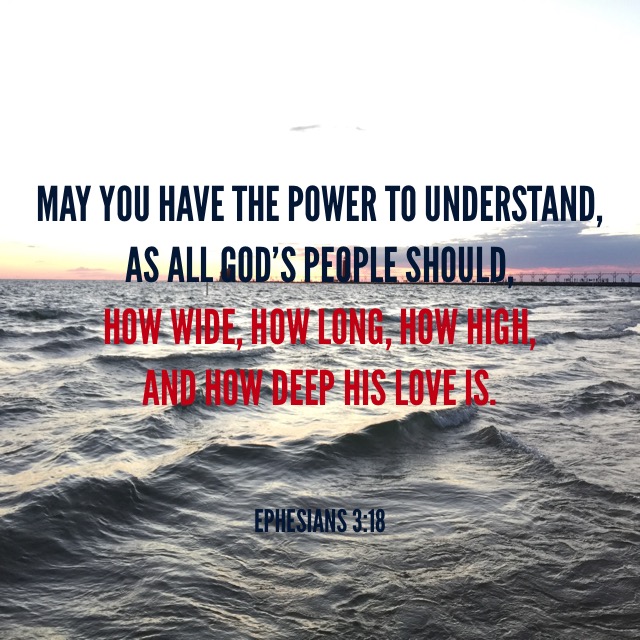
May we add our Amen to the apostle Paul’s prayer: I keep asking that the God of our Lord Jesus Christ, the glorious Father, may give you the Spirit of wisdom and revelation, so that you may know Him better. … I pray that out of His glorious riches He may strengthen you with power through His Spirit in your inner being, so that Christ may dwell in your hearts through faith. And I pray that you, being rooted and established in love, may have power, together with all the Lord’s holy people, to grasp how wide and long and high and deep is the love of Christ, and to know this love that surpasses knowledge—that you may be filled to the measure of all the fullness of God. (Ephesians 1:17; 3:16-19)

Why Should Christians Sing?

Some things are fascinating by what isn’t said. For instance, in the Christmas carol It Came Upon A Midnight Clear there is something conspicuously missing. 

One thing that isn’t missing is singing. Every one of the stanzas ends with a phrase about the angels singing. But can you spot what IS missing? I didn’t see it at first until I read this quote from respected music professor Dr. C. Michael Hawn: “This may be the only commonly sung Christmas carol in our hymnals that does not mention the birth of Christ! 

This carol just sort of assumes that we know why the angels are singing. But do we know? 

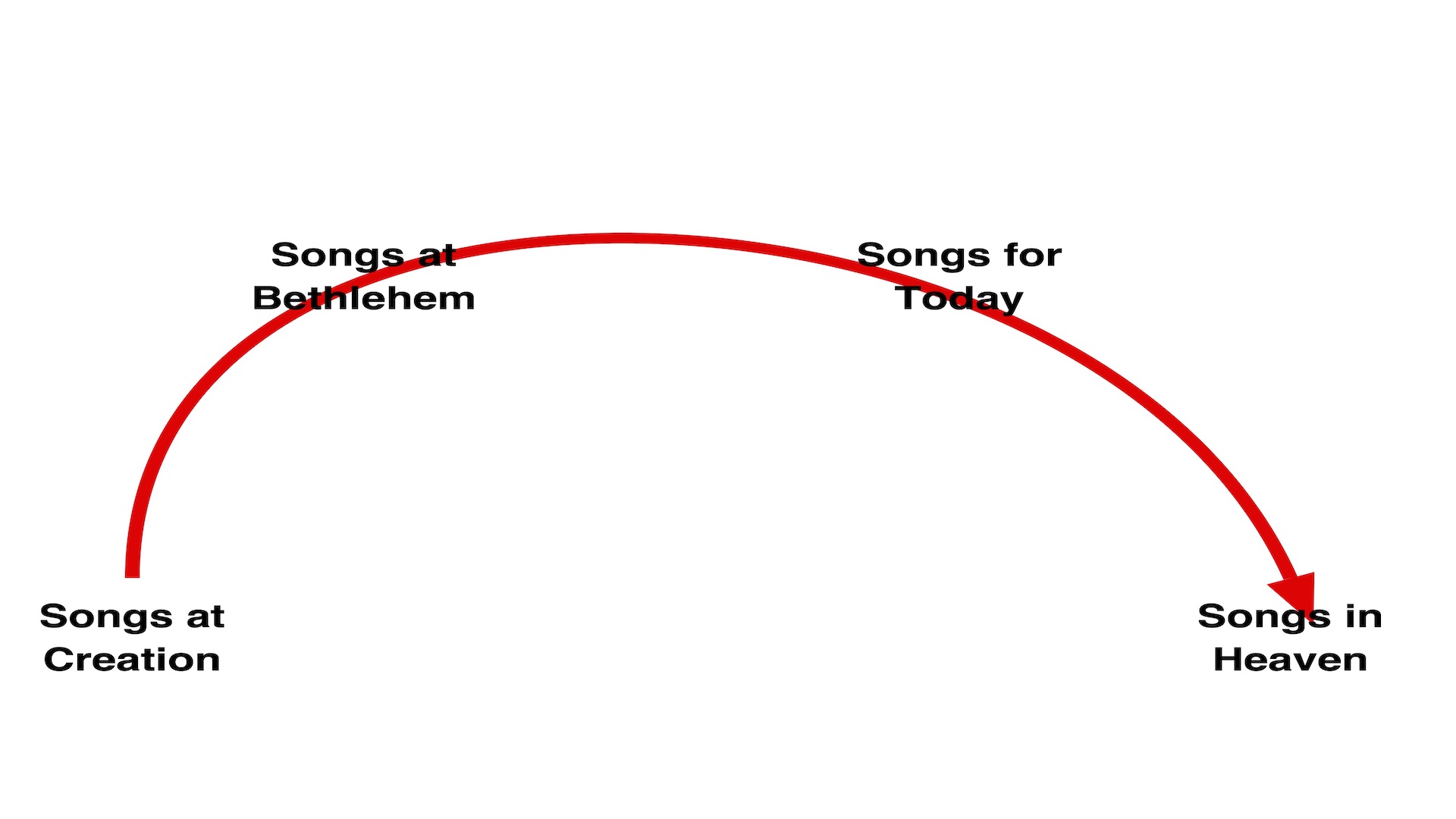
The Bible tells us that the angels were singing at Creation and that they are still singing in Heaven for all of eternity (Job 38:4-7; Revelation 5:9-13; 7:9-12; 15:2-4). Then we have this glimpse of the angels singing when Jesus was incarnated as a human baby in Bethlehem (Luke 2:14). Where did they get their song and their inspiration to sing it?

Their song comes from the Choir Leader who is the King of kings. Jesus is singing in Heaven, before the throne of His Father, about the salvation that He brought to mankind through His incarnation, sinless life, death on Calvary, and resurrection from the grave (see Hebrews 2:9-12). 

The song that Jesus sings tells the story of how He came to earth just like us—made a little lower than the angels—so that He might taste sin and death and conquer them for us. Now as our victorious Savior, He is not ashamed to call those who put their faith in Him His brothers and sisters.

Now perhaps you see why angels are also singing all the time! 

Even today there is a lot of singing around the Christmas season, but there is something missing in most of the songs: a focus on what Christmas really means. The world’s songs are about trees, and gifts, and Santa, and falling in love, but it’s a song that is out of tune with the angelic song. 

As Christians, we have a choice we can look around at this out-of-tune singing and lament what’s happening in our world, we can join in these meaningless songs, or we can look up at our Savior and sing the song He is singing. 

Christian, will you join with the angelic choir to let the world hear the unmistakable love song that Jesus is still singing today? 

If you’ve missed any of the message in this series, you can check them out by clicking here.

Poetry Saturday—On A Day When Men Were Counted

On a day when men were counted, God became the Son of Man,
That His name in every census should be entered was His plan.
God, the Lord of all creation, humbly takes a creature’s place;
He whose form no man has witnessed has today a human face.

On a night, while silent shepherds watched their flocks upon the plain,
Came a message with its summons brought by song of angel train:
Lo, in Bethlehem’s little village has arrived the shepherd King,
And each shepherd to his Master must his sheep as offering bring.

When there shone the star of David in the spangled eastern sky,
Kings arrived to pay their homage to the Christ, the Lord Most High.
Yet not all, for lo, there soundeth through the streets a fearful cry;
For a king who will not worship has decreed that Christ must die.

Yet it’s Christmas, and we greet Him, coming even now to save;
For the Lord of our salvation was not captive to the grave.
Out of Egypt came the Savior, man’s Immanuel to be—
Christmas shines with Easter glory, glory of eternity. —Daniel Thambyrajah Niles

Rejoicing At The Coming Of The Judge

In Psalm 50, we read the first-of-twelve psalms written by King David’s handpicked worship leader, a man named Asaph. On the day that Asaph first took up his position as worship leader, David gave him a special song, which definitely influenced Asaph’s songwriting.  

Psalm 50 has a pretty easy outline: an introduction in the first six verses, followed by 17 verses of God speaking to His people—speaking to you and me! In between the introduction and God’s speaking is the word selah.

Selah means a time for us to pause and carefully consider. So Asaph is essentially saying, “God is getting ready to speak with us, so we need to selah—pause from what we are doing so that we can pay careful attention to His words!”  

Asaph sets the stage in the first verse, telling us that the Mighty One, God, the Lord speaks. The words that are about to be spoken come from THE I AM—the All-Sufficient One, the Omnipotent, the All-Knowing, All-Powerful Ruler of the Universe. Asaph also reminds us that He is coming as THE Judge.

When you hear that THE All-Powerful, All-Knowing One is THE Judge that has summoned you into His courtroom, it’s quite likely that your heart would skip a beat. Especially when God lists some of the sins you and I are guilty of breaking in verses 16-20. 

It’s also possible that the news that you have to appear before THE Judge could cause you to rejoice. What? How can we rejoice at that?! David taught Asaph this concept in the song he gave him: God’s people should rejoice over God’s judgments. 

You see, in Psalm 50 God says, “I do not rebuke you for your sacrifices, or for all your attempts to follow the rules.” It’s not in the practices of the law that we find salvation.

God doesn’t need our sacrifices, but He wants our hearts. 

In order to win our hearts for Himself, THE Judge did something absolutely mind-blowing—THE I AM became flesh like us. And then He became the once-for-all sacrifice for our sins, paying our penalty Himself when He died on the Cross (see Hebrews 2:14-17; 7:17-27). 

This is why we can rejoice when we hear we have to stand before THE Judge. When you have placed your faith in what Jesus did for you on the Cross, when THE Judge opens His perfect record book to your page He will read this inscription written in the crimson red blood of Jesus: PAID IN FULL!

This is why we can rejoice at the thought of seeing THE Judge face to face!

Join me next Sunday as we wrap up this summer looking at the Selahs in the Psalms. We plan to restart this series next summer, unless the Judge calls us home before then!

Poetry Saturday—Jesus, The Very Thought Of Thee

Jesus, the very thought of Thee
With sweetness fills the breast;
But sweeter far Thy face to see,
And in Thy presence rest.

Nor voice can sing, nor heart can frame,
Nor can the memory find
A sweeter sound than Thy blest Name,
O Savior of mankind!

O hope of every contrite heart,
O joy of all the meek,
To those who fall, how kind Thou art!
How good to those who seek!

But what to those who find? Ah, this
Nor tongue nor pen can show;
The love of Jesus, what it is,
None but His loved ones know.

Jesus, our only joy be Thou,
As Thou our prize will be;
Jesus be Thou our glory now,
And through eternity.

O Jesus, King most wonderful
Thou Conqueror renowned,
Thou sweetness most ineffable
In Whom all joys are found!

When once Thou visitest the heart,
Then truth begins to shine,
Then earthly vanities depart,
Then kindles love divine.

O Jesus, light of all below,
Thou fount of living fire,
Surpassing all the joys we know,
And all we can desire.

Jesus, may all confess Thy Name,
Thy wondrous love adore,
And, seeking Thee, themselves inflame
To seek Thee more and more.

Thee, Jesus, may our voices bless,
Thee may we love alone,
And ever in our lives express
The image of Thine own.

O Jesus, Thou the beauty art
Of angel worlds above;
Thy Name is music to the heart,
Inflaming it with love.

Celestial Sweetness unalloyed,
Who eat Thee hunger still;
Who drink of Thee still feel a void
Which only Thou canst fill.

O most sweet Jesus, hear the sighs
Which unto Thee we send;
To Thee our inmost spirit cries;
To Thee our prayers ascend.

Abide with us, and let Thy light
Shine, Lord, on every heart;
Dispel the darkness of our night;
And joy to all impart.

Jesus, our love and joy to Thee,
The virgin’s holy Son,
All might and praise and glory be,
While endless ages run. —Bernard of Clairvaux

What Jesus Did Because He Loved You

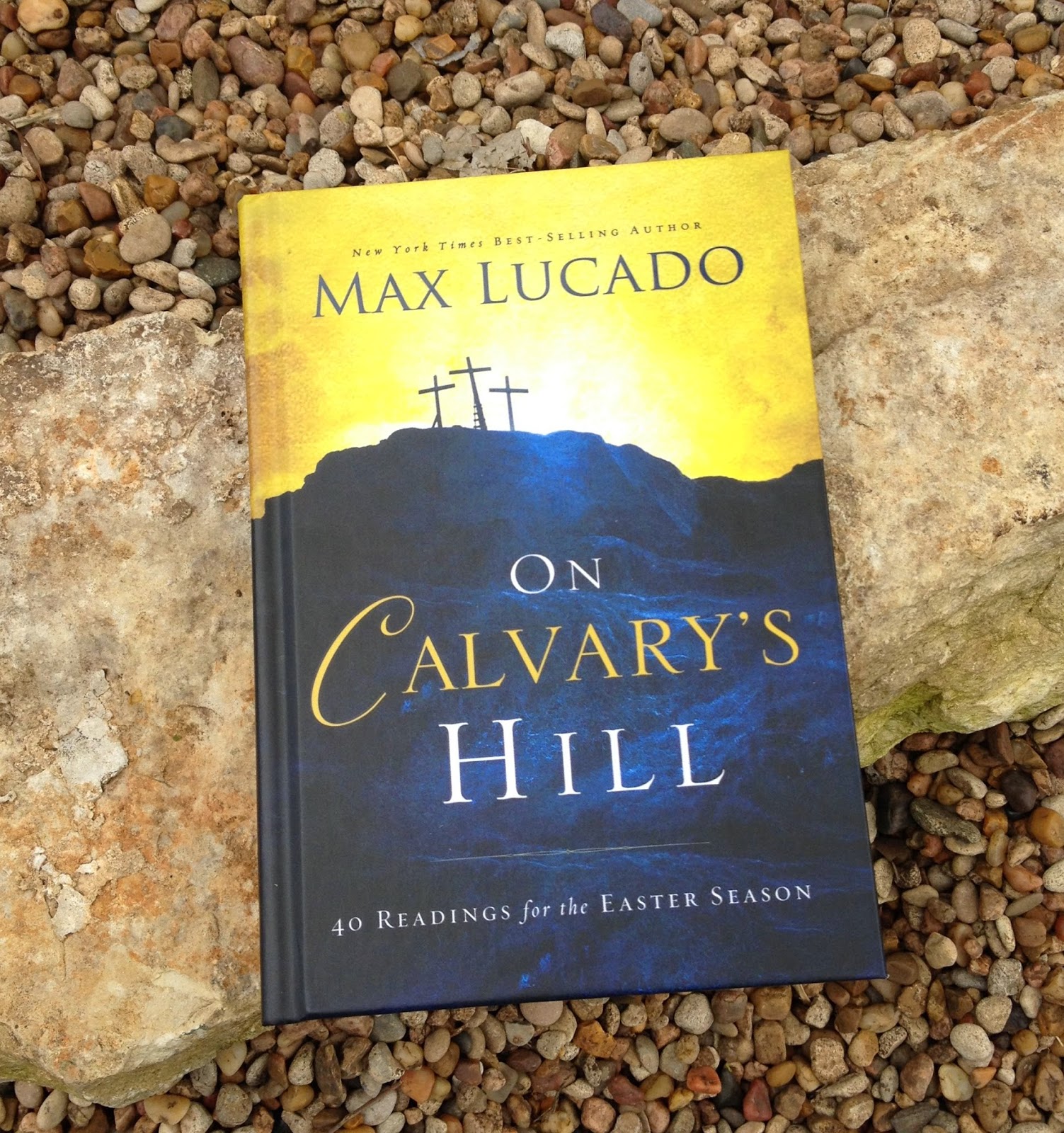
“Want to know the coolest thing about the Incarnation? Not that the One who played marbles with the stars gave it up to play marbles with marbles. Or that the One who hung the galaxies gave it up to hang doorjambs to the displeasure of a cranky client who wanted everything yesterday but couldn’t pay for anything until tomorrow. Not that He, in an instant, went from needing nothing to needing air, food, a tub of hot water and salts for His tired feet, and, more than anything, needing somebody—anybody—who was more concerned about where He would spend eternity than where He would spend Friday’s paycheck. Or that He resisted the urge to fry the two-bit, self-appointed hall monitors of holiness who dared suggest that He was doing the work of the devil. Not that He kept His cool while the dozen best friends He ever had felt the heat and got out of the kitchen. Or that He gave no command to the angels who begged, ‘Just give the nod, Lord. One word and these demons will be deviled eggs.’ Not that He refused to defend Himself when blamed for every sin of every slut and sailor since Adam. Or that He stood silent as a million guilty verdicts echoed in the tribunal of heaven and the Giver of light was left in the chill of a sinner’s night. Not even that after three days in a dark hole He stepped into the Easter sunrise with a smile and a swagger and a question for lowly Lucifer—‘Is that your best punch?’ That was cool, incredibly cool. But the coolest thing about the One who gave up the crown of heaven for a crown of thorns: He did it for you. Just for you.” —Max Lucado, On Calvary’s Hill

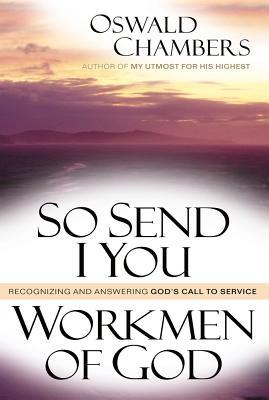
8 Quotes From “Workmen Of God”

Although written over 100 years ago, Workmen Of God is still a treasure-trove for anyone in pastoral ministry today. I have shared longer passages from this book in my weekly series called “Thursdays With Oswald,” but here are a few other gems from this book. You can read my full book review of Workmen Of God by clicking here.

“We must keep ourselves in touch, not with theories, but with people, and never get out of touch with human beings, if we are going to use the Word of God amongst them, and if the Holy Spirit is to apply the Word of God through us as workmen meeting not to be ashamed.”

“Men’s minds will always assent that Jesus Christ is right—why? Because Jesus Christ is Incarnate Reason. There is something in Jesus Christ that appeals to every man, no matter what condition he is in. If once Jesus Christ is brought into contact with the man, let that man seem to us dead and indifferent, destitute of anything like goodness—let him come in contact with Jesus Christ by the Holy Spirit, and you will instantly see that he can grasp something about Him in a way we cannot understand unless we know the Holy Spirit.”

“Unless your religion will go to the lowest and the worst and the most desperate case you know of, your religion is of no use.”

“Intercessory prayer for a backslider is a most instructive but most trying work for God, it will teach the worker that prayer is not only making petitions, but that prayer is breathing and atmosphere.”

“When the message you have to deliver, brother preacher, strikes straight home, don’t water it down just a little. Go straight for God if you come from Him. Neither for fear nor favor alter the message.”

“Love for men as men will never stand the strain. In order to catch men for the Lord Jesus Christ, you must love Jesus Christ absolutely, beyond all others. You must have a consuming passion of love, then He will flow through you in a passion of love and yearning and draw all men to Himself.”

“We need to live steadfastly in the presence of God so that when we are praised we don’t arouse the spirit of envy, the spirit that makes a man want to do something, not because he loves God, but because he wants to emulate us. … God grant we may see that the great need of every worker is a first-hand acquaintance with Jesus Christ which puts to death the spirit of ambition.”

“You cannot have holiness without a chaste physical life. Oh, the sapping power of God because of unchaste men and women who preached His Gospel.”

11 Quotes From “Shade Of His Hand”

The book of Ecclesiastes in the Bible can be a challenging read for many people. In Shade Of His Hand, Oswald Chambers walks us through this biblical book of wisdom chapter-by-chapter. Shade is a great companion for your personal Bible study time in Ecclesiastes. Check out my full book review by clicking here.

Below are just a few of the many (many!) passages I highlighted in Shade. Some of the longer passages I have already shared in my weekly “Thursdays With Oswald” posts. You can read those by clicking here.

“We always get out of touch with the Bible attitude to things when we come to it with our own conclusions.”

“The intellectual order of life does not take things as it finds them, it makes us shut our eyes to actual facts and try to live only in the ideal world. … Solomon is fearless in facing facts as they are. … It is not a question of living a blind life in the brain away from actuality, not of living in dawns or on mountain tops; but of bringing what you see there straight down to the valley where things are sordid, and living out the vision there.”

“Unless you bank your faith in God, you will not only be wrongly related in practical life and have your heart broken, but you will break other things you touch.”

“Almighty God does not matter to me, He is in the clouds. To be of any use to me, He must come down to the domain in which I live; and I do not live in the clouds but on the earth. The doctrine of the Incarnation is that God did come down into our domain. The Wisdom of God, the Word of God, the exact expression of God, was manifest in the flesh.”

“To serve God in order to gain heaven, is not the teaching of Christianity. Satisfaction cannot be found in gain, but only in a personal relationship to God. … A man is not to serve God for the sake of gain, but to get to the place where the whole of his life is seen as a personal relationship to God.”

“Whenever we put theology or a plan of salvation or any line of explanation before a man’s personal relationship to God, we depart from the Bible line, because religion in the Bible is not faith in the rule of God, but faith in the God Who rules.”

“Sometimes it is cowardly to speak, and sometimes it is cowardly to keep silence. In the Bible the great test of a man’s character is his tongue (see James 1:26). The tongue only came to its right place with in the lips of the Lord Jesus Christ, because He never spoke from His right to Himself. He Who was the Wisdom of God Incarnate, said ‘the words that I speak unto you, I speak not of Myself.’ … We are either too hasty or too slow; either we won’t speak at all, or we speak too much, or we speak in the wrong mood. The thing that makes us speak is the lust to vindicate ourselves.”

“The general history of Christianity is that it has been tried and abandoned because it is found to be difficult; but wherever it has been tried and honorably gone on with, it has never failed.”

“The Christian faith is exhibited by the man who has the spiritual courage to say that that is the God he trusts in, and it takes some moral backbone to do it.” 

“We reap terrific damage to our own characters when we vow and do not perform. … Promises are a way of shirking responsibility.”

“It is appalling to find spiritual people when they come into a crisis taking an ordinary common-sense standpoint as if Jesus Christ had never lived or died.”

More quotes from Shade Of His Hand are coming soon…

Praying With The Authority Of The Creator

pray-boldlyJesus had a way of praying that sounds unusual to our ears because He didn’t pray “normal” prayers. His prayers were bold statements! But Jesus also taught us to pray just like He did.

Most prayers that Christians pray sound like they come from the same formula. We may start with something like, “Heavenly Father” or “Dear God.” Then we probably spend some time praising God for His greatness before we make our requests of Him. Often our requests include something like “If this is Your will, I ask You to please heal/help/answer/etc.” And then almost always the prayer concludes, “In Jesus’ name, Amen!”

When Jesus prayed, His prayers sounded more like commands than requests. He would say things like, “Be clean” or “Rise up and walk” or “Blind eyes, be opened.” He usually didn’t ask His Father if it was His will to heal/help/answer/etc. And He never concluded a prayer by saying, “In My name, Amen!”

In Luke 6 there is a story about a man with a withered hand. Jesus healed him by speaking to the man, not to God. He said, “Stretch out your hand,” and when the man did so, his hand was completely restored. Jesus spoke with the authority of the Creator. 

I believe this was possible because Jesus had an unbroken conversation with His Father and the Holy Spirit. Certainly He had set times of prayer (see Mark 1:35, Mark 6:45-46, and Luke 6:12-13 as examples), but Jesus also told us that He only did what His Father told Him to do (John 5:19), and He only said what His Father told Him to say (John 12:49).

I know sometimes people want to say, “Yeah, but this is Jesus we’re talking about! C’mon, He’s the Son of God, so of course He could do these things.” But remember that the miracle of Christ’s Incarnation is that He chose NOT to do these things out of His Deity while He was on Earth, but restricted Himself only to His humanity. That’s why the Bible says that everything we face, Jesus also faced in the flesh (Hebrews 2:14-18).

But perhaps another example from someone who had no Deity in his nature might help. Consider Joshua—this man spent more time in God’s presence, listening to His voice, than even Moses (Exodus 33:11). So when the time came, Joshua could pray an incredibly bold prayer: He actually spoke to the sun and the moon and told them to stand still in the sky, AND THEY OBEYED HIM!

Just like Jesus spoke to the man with the withered hand in the authority of the Creator, Joshua spoke to the sun and the moon in the same authoritative voice. How could these men do that? Because they were familiar with God’s voice, and when He told them to speak out boldly, they simply obeyed.

Jesus said we could pray the same way—Very truly I tell you, whoever believes in Me will do the works I have been doing, and they will do even greater things than these, because I am going to the Father. And I will do whatever you ask in My name, so that the Father may be glorified in the Son. You may ask Me for anything in My name, and I will do it (John 14:12-14, emphasis added).

How can we learn to pray this boldly? We need to spend more and more time in dialogue with God. We need to become increasingly aware of the His abiding presence with us. Then we, too, can pray in the Creator’s authority.

Praying this way glorifies God!

Get together with a friend this week and work through these application questions:

  1. Am I spending time in planned prayer and Bible reading?
  2. How can I make myself more aware of God’s perpetual presence?
  3. What’s holding me back from praying more boldly?

Thursdays With Oswald—Jesus Makes Joy Possible

Oswald ChambersThis is a weekly series with things I’m reading and pondering from Oswald Chambers. You can read the original seed thought here, or type “Thursdays With Oswald” in the search box to read more entries.

Jesus Makes Joy Possible

     “These things have I spoken unto you,” said Jesus, “that My joy may be in you.” What joy did Jesus have? He failed apparently in everything He came to do; all His disciples forsook Him, He was crucified, and yet He talked of His joy. The joy of Our Lord lay in doing what the Father sent Him to do. His purpose was not to succeed, but to fulfill the design of His coming—“For I am come down from heaven not to do Mine own will, but the will of Him that sent Me.” … 

     “God shall judge the righteous and the wicked.” But who is God? I have never seen God, or spoken to Him. An omnipresent, omniscient, omnipotent Being does not amount to anything to me; He is an abstract finding of man’s intellect. Can God take on hands and feet and man’s way of doing things, and manifest Himself on the plane on which we live? The Bible says that that is what God did do. Jesus Christ lived a human life on this earth…. What Jesus Christ exhibited was not omnipotence and omniscience and omnipresence, but absolute holiness in human flesh, and He said “he that hath seen Me hath seen the Father.” … 

     The essence of Christianity is not adherence to principles; but a personal relationship to God through Jesus Christ at work in the whole of my life. 

From Shade Of His Hand

Are you basing your “success” on what you are accomplishing? If so, prepare yourself for disappointment.

But if you define “success” as a growing relationship with Jesus Christ, be prepared for an eternity of limitless joy!