The Apostle Paul tells us to “be transformed by the renewing of your mind” (Romans 12:2). This implies that there is an ongoing process of evaluation and renewal. This starts when I give up my way of doing things (v. 1), and then the remainder of that 12th chapter is a checklist of changes in behavior that come about because of the renewing of our minds.
We need a regular report card on—
☐ Seeing myself in the right light of faith
☐ Knowing and using my God-given gifts
☐ Loving without hypocrisy
☐ Avoiding evil
☐ Promoting good
☐ Loving others like brothers and sisters
☐ Not fighting for my way
☐ Being diligent in my work
☐ Being diligent in my spiritual health
☐ Serving God
☐ Rejoicing even in difficulties
☐ Growing in patience
☐ Praying regularly
☐ Hospitably serving others
☐ Blessing my enemies
☐ Being appropriately empathetic
☐ Finding common ground
☐ Remaining humble
☐ Repaying good for evil
☐ Not trying to get even
☐ Being a peacemaker
☐ Overcoming evil with good
Holy Spirit, I need Your honest evaluation. Show me my deficits, and then help me hear Your loving voice that guides me in the changes I need to make. I want Jesus to be seen in my life. Amen!
Examine and test and evaluate your own selves to see whether you are holding to your faith and showing the proper fruits of it. Test and prove yourselves… (2 Corinthians 13:5).
The root word for discern in the New Testament Greek is dokimazō. This word means to examine something—scrutinize it closely—to see if it is genuine. We’re instructed to take a close, scrutinizing look at…
…our beliefs about God (Romans 1:28)
…our understanding of God’s will for our lives (Romans 12:2)
…our relationship with God and others (1 Corinthians 11:28)
In his book Romans: God’s Glory, Donald Grey Barnhouse discussed the root word for discern (the Greek word dokimos). He said,
“In the ancient world there was no banking system as we know it today, and no paper money. All money was made from metal, heated until liquid, poured into moulds and allowed to cool. When the coins were cooled, it was necessary to smooth off the uneven edges. The coins were comparatively soft, and of course many people shaved them closely. In one century, more than eighty laws were passed in Athens to stop the practice of whittling down the coins then in circulation. But some money-changers were men of integrity, who would accept no counterfeit money; they were men of honour who put only genuine, full-weight money into circulation. Such men were called dokimos, and this word is used here for the Christian as he is to be seen by the world.” (emphasis mine)
This should be said of every Christian: “They are dokimos—men and women who are honorable and are the real deal. They don’t shave anything off; they don’t water anything down. They can be scrutinized closely and found to be the genuine article.”
The Bible makes it clear that before the world can call us dokimos, the Holy Spirit first has to stamp that word on us. It’s only after we have allowed Him to scrutinize (and correct) our beliefs, relationships, faith, and motives that we can be labeled dokimos. When we are the real deal in His presence, the world cannot help but see the genuine article when they examine us.
Let’s live this way! May both God and the watching world be able to call us dokimos!
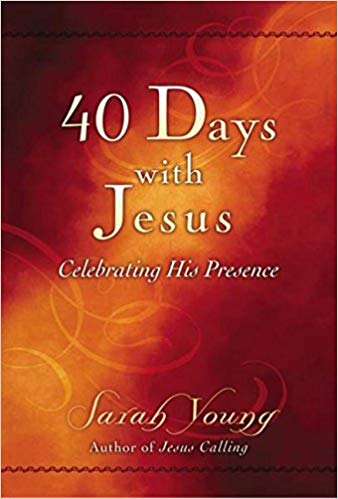
Sarah Young does a masterful job in helping us hear Jesus speak to us in the first-person, as she weaves Scripture together so beautifully. Check out my full book review by clicking here.
“Taste and see that I am good. The more intimately you experience Me, the more convinced you become of My goodness.”
“Follow Me one step at a time. … Keep your mind on the present journey, enjoying My Presence. Walk by faith, not by sight, trusting Me to open up the way before you. … I set the pace in keeping with your needs and My purposes.”
“Walking in the light of My presence blesses you in many ways. Good things are better and bad things are more bearable when you share them with Me. As you bask in My Love-Light, you are better able to love others and enjoy fellowship with them. You are less likely to stumble or fall because sins are garishly obvious in My holy Light. As you walk in this Light with Me, I encourage you to exult in My righteousness.”
“Although your new self is being conformed to My image, this process does not erase the essence of who you are. On the contrary, the more you become like Me, the more you develop into the unique person I designed you to be.”
“Holiness is letting Me live through you. Since I dwell in you, you are fully equipped to be holy. Pause before responding to people or situations, giving My Spirit space to act through you. Hasty words and actions leave no room for Me; this is atheistic living. I want to inhabit all your moments—gracing your thoughts, words, and behavior.”
“Talk with Me about every aspect of your day, including your feelings. Remember that your ultimate goal is not to control or fix everything around you; it is to keep communing with Me. A successful day is one in which you have stayed in touch with Me, even if many things remain undone at the end of the day.”
“Do not let your to-do list (written or mental) become an idol directing your life. Instead, ask My Spirit to guide you moment by moment.”
“Exceeding Joy is for both you and Me. I delight in you now, but this Joy will be astronomically magnified when you join Me in Glory. The Joy you will experience in heaven is so far beyond anything you have known on earth that it is indescribable. Nothing can rob you of this glorious inheritance which is imperishable and will not fade away.”
“Thankfulness is not some sort of magic formula; it is the language of Love, which enables you to communicate intimately with Me.”
Martin Luther said, “The Bible is alive, it speaks to me.” Truly, the Bible is God’s Word speaking to us every time we peer into its pages, so I love how Sarah Young strings passages of Scripture together to allow us to hear Jesus speaking to us in a first-person voice.
40 Days With Jesus was designed as a series of readings during the Lenten season, as we walk with Jesus to the Cross and His resurrection from the dead. But any time is a good time when we can walk with Jesus and hear His unmistakable voice reassuring our hearts.
Are you walking through a dark time in your life? Know that Jesus is walking with you.
Do you want to live a life of purpose and lasting value? Listen to Jesus counsel you.
Are you standing at a crossroads trying to make the right decision? Let Jesus point the way.
Each time I read a Sarah Young book, it reignites my heart to read the Bible as though Jesus is personally speaking to me. Because He is!
40 Days With Jesus is a great starting point for you to learn to hear Jesus speaking to you every time you open your Bible. The Holy Spirit will then use those words read in your quiet time to continue to bring you direction and reassurance all throughout your day (John 14:26).
…Gentile—to Jews, Gentiles were just the fuel to stoke the fires of hell.
…resident of the city of Caesarea—since this was the headquarters of the Roman government for Palestine, not many Jews would venture there.
…Roman—historians say only 10% of Romans in this era were monotheistic.
…centurion—not just any centurion, but an extremely powerful centurion from the Italian Regiment (not just a local mercenary who was in it for the money). And he took his name from Cornelius Sulla, a Roman general known both for his mercy and his ruthlessness.
All of this makes Cornelius a fully self-sufficient and a well-to-do man who was not likely to look for help from God. Nor was he the type of person that a Christian missionary might seek out.
But clearly, something was missing in Cornelius’ life because he was completely countercultural in his pursuit after God. Not just his pursuit of God, but his quick understanding of exactly who Jesus was.
Luke the historian describes Cornelius as:
…devout and God-fearing. The Greek word for devout literally means “a right worshipper.” It’s a word Luke only uses three times in Acts, and two of those times are describing Cornelius.
…prayerful. The word Luke uses for him means someone who makes prayer personal and ongoing.
…generous. Cornelius took care of people who couldn’t take care of themselves.
When Peter came to Cornelius’ house, twice he said “as you know” (vv. 36, 37), showing us that Cornelius was aware that there was not only one true God, but that a relationship with Jesus was the only way to be in right relationship with God. As Peter spoke with Cornelius, his family, his relatives, his close friends, and even his fellow soldiers, the Holy Spirit baptized them just as He had done with the disciples of Jesus on the day of Pentecost.
So here are 3 vital lessons for all men to learn from the life of Cornelius the centurion—
Your devotion to God is influential. People around you do notice your devoted pursuit of God.
Your openness to all that God has puts your family, friends, and coworkers in a place to receive God’s blessings too.
God’s blessings flowing through you have lasting and far-reaching results. The outpouring of the Holy Spirit on Cornelius may have opened the door for Christian evangelism to Gentiles unlike anything that had happened before.
Dads, be devoted to God. Desire all He has for you, and all He has for those around you. Pursue Him no matter how many “strikes” there may be against you.
This is a weekly series with things I’m reading and pondering from Charles Spurgeon. You can read the original seed thought here, or type “Thursdays With Spurgeon” in the search box to read more entries.
A Firm Doctrine
If a tree has to be taken up two or three times a year, you will not need to build a very large loft in which to store the apples. When people are always shifting their doctrinal principles, they are not likely to bring forth much fruit to the glory of God. It is good for young believers to begin with a firm hold upon those great fundamental doctrines that the Lord has taught in His Word.
From The Autobiography Of Charles Spurgeon
This is true of any endeavor—can you imagine constantly shifting the way you learn math, or biology, or cooking, or anything else? There’s always a “learning curve” in every new endeavor that brings a momentary setback before there are new gains.
Thankfully, the Bible has a consistent message from Genesis to Revelation. Getting into the Word regularly and attending a Bible-preaching church will help you immensely.
There is no “right way” to read the Bible. In fact, Spurgeon had a great response to a man who told him that he “read my Bible on my knees.” Spurgeon said—
“I think you read the Bible in a very uncomfortable posture, and if you had read it in your easy chair, you would have been more likely to understand it. Pray, by all means, and the more, the better, but it is a piece of superstition to think there is anything in the posture in which a man puts himself for reading.”
The point is not in what posture you read the Bible, or in what translation, or at what time of day, but the point is that you are regularly reading God’s Word. Get into the Word, and let the Holy Spirit get the Word into you.
I love to read, averaging about 30 books per year. In addition to books, I have a lot of news feeds that I check daily. But hands down, everything else comes in a distant second place to my number-one read: the Bible.
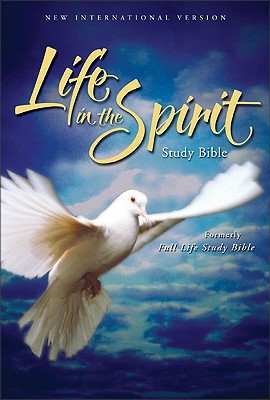
I read the Bible for myself. I read the Bible to prepare my Sunday messages. I read the Bible to teach classes. I read the Bible to confirm or refute what I am reading in other books and news feeds. And with all that Bible reading, I have also gravitated toward my favorite study Bible—The Life In The Spirit Study Bible.
At one time people referred to this Bible as “the fire Bible” because of the graphic on the front cover depicting the fire that fell on praying Christians at the Pentecost celebration immediately following Christ’s ascension into heaven. That fire still falls in my heart every time I read God’s Word!
The study notes in this Bible are fantastic! But don’t be deceived by the name: these are not study notes that focus on the Holy Spirit out of proportion; rather, the role of the Spirit is merely noted where others have ignored it. Far too many people don’t ponder very much about the Holy Spirit’s involvement, except for perhaps the Book of Acts and maybe Paul’s instruction on the operational gifts of the Spirit in 1 Corinthians. The Life In The Spirit Study Bible simply seeks to make us aware of the Spirit’s involvement.
In addition to the short commentary notes at the bottom of each page, there are several insightful and scholarly articles throughout this whole book that will make the Scripture come alive in new ways.
This is my “preaching Bible” that I take with me for every sermon I deliver, which means it is the Bible I am diving deep into each day as I study. I cannot recommend this Bible to you highly enough.
According to Paul, there are only two ways people can live: in the flesh or in the Spirit. That is—(1) operating separate from God, or (2) with a soul/body that is operating with God’s full involvement.
The trouble is: we’re always—as long as we’re alive—still in the flesh because we need these bodies to carry around our soul and spirit. But changes begin to occur first at salvation (when the connection of our spirit to God’s Spirit is reestablished), and even more so after being baptized in the Holy Spirit (when we are not trying to work out things on our own).
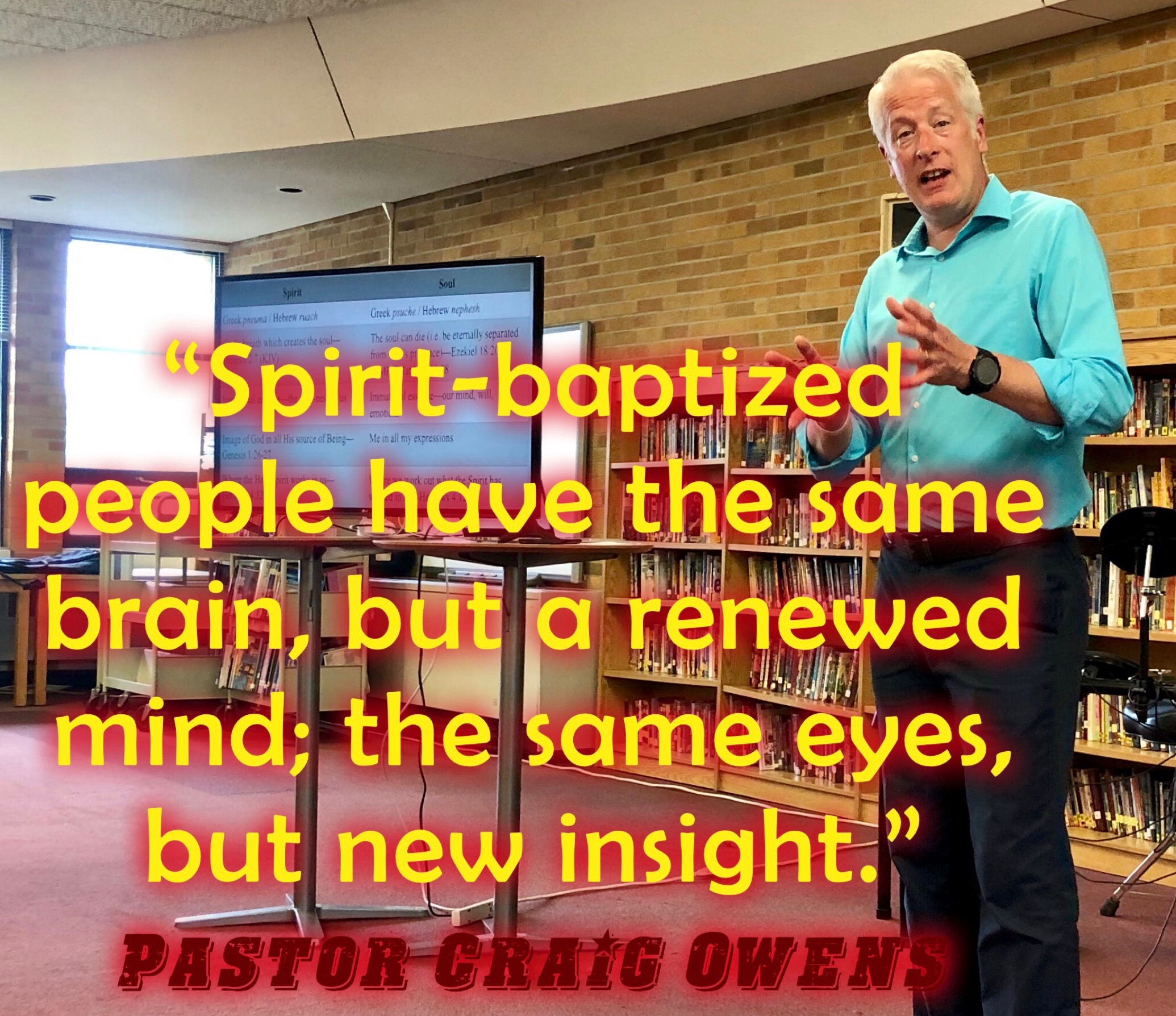
As a result, we have the same brain, but a mind that is being renewed; the same eyes, but insight that is being expanded; the same ears, but learning new ways to hear what the Holy Spirit is saying.
Remember that Jesus promised that the baptism in the Holy Spirit would empower us TO BE His witnesses (Acts 1:8). Not just to do things differently, but to have our spirit so enlivened by the Holy Spirit that we are living, breathing, walking, talking witnesses of a life transformed.
Have you noticed that there wasn’t a steep “learning curve” for the disciples of Jesus following Pentecost? Part of that is due to four key habits that the Holy Spirit helped form in their lives.
Correct biblical application—We immediately see people going from “They didn’t understand from the Scriptures” to quickly applying biblical texts to their current situations. This is exactly what Jesus promised would happen (John 20:6-9; Acts 2:16, 25, 34; John 14:26).
Intercessory prayer—To intercede is to take someone else’s needs to God on their behalf. The Holy Spirit can help us apply Scripture to our prayers, and can even help us without words at all (Acts 4:24-26; Romans 8:26-27).
Healthy conflict resolution—We’re all different, so not seeing eye-to-eye is bound to happen, but Spirit-empowered Christians will be able to resolve conflicts faster and with better results (Acts 6:1-8; Acts 15:1-31).
“Your life as a Christian should make unbelievers question their disbelief in God.” —Dietrich Bonhoeffer
Amen! Your life as a Christian that is living out daily habits that have been empowered by the Spirit should make everyone around you want to go deeper and deeper into all that the Holy Spirit has in store for them too.
This is a weekly series with things I’m reading and pondering from Charles Spurgeon. You can read the original seed thought here, or type “Thursdays With Spurgeon” in the search box to read more entries.
The Life-Changing Power In The Bible
When the Spirit came with His divine life and quickened the entire Book to my newly enlightened soul, the inner meaning shone forth with wondrous glory. … Whatever I found to be in His Word, I received with intense joy. … Moreover, I have found that those points of my character that were most weak have been strengthened, while strong passions have been subdued, evil propensities have been kept under, and new principles have been implanted. I am changed; I am as different from what I was as a man could be who had been annihilated and had then been made over again. Nor do I claim any of the credit for this change—far from it. God has done great things for me, but He has done the same for others and is willing to do it for any soul who seeks His face through Jesus Christ and His great atoning sacrifice. …
An idea has long possessed the public mind that a religious man can scarcely be a wise man. It has been the custom to talk of infidels, atheists, and deists as men of deep thought and comprehensive intellect, and to tremble for the Christian controversialist as if he must surely fall by the hand of his enemy. But this is purely a mistake, for the gospel is the sum of wisdom, an epitome of knowledge, a treasure house of truth, and a revelation of mysterious secrets. In it we see how justice and mercy may be married; here we behold inexorable law entirely satisfied and sovereign love bearing away the sinner in triumph. Our meditation upon it enlarges the mind, and as it opens to our soul in successive flashes of glory, we stand astonished at the profound wisdom manifest in it.
From The Autobiography Of Charles Spurgeon
As Spurgeon experienced, all Christians can experience. Think about this—the same Holy Spirit that inspired the written words of the Bible is the same Holy Spirit in you that can illuminate and apply the words of the Bible to your life!
Bible-reading, Spirit-empowered Christians should be the most informed, creative, wise people you will ever meet. Not because they have studied nature, but because they are getting to know Nature’s God intimately. The Creator can open up the mysteries of creation better than any scientist or philosopher.
But we don’t read the Bible just to know God’s Word, but we read the Bible to get to know the God revealed in the Word. He said He would reveal Himself to those who earnestly seek for Him. Ask the Holy Spirit to open your eyes, your mind, your heart as you read your Bible.
Speaking in tongues as the Spirit enables you is the unmistakable, objective, outward, initial physical evidence. The Bible makes clear that continuing to pray in tongues has huge benefits for both our personal prayer lives and for the corporate church body. But don’t stop there!
The initial, outward evidence is primarily for the individual Christian—it’s a way of knowing that you know that you have indeed been baptized in the Spirit. But there also needs to be some everyday evidence for others that testifies to them that something is different about your life.
Consider the disciples of Jesus before and after being baptized in the Holy Spirit…
Their vocabulary
Before being baptized in the Spirit they said stupid things because they didn’t know what to say (Mark 9:5-6) But after being baptized in the Spirit there was no more foot-in-mouth disease. Just as the Holy Spirit enabled them to praise God in an unlearned tongue, He also empowered their natural dialect. The same Greek word is used in Acts 2:4 (enabledby the Holy Spirit), 2:14 (Peter addressed the crowd), and 26:25 (what I am saying is true and reasonable).
Before they argued about who was the greatest. Afterward, they gladly gave all that they had to others (Mark 9:33-34; Acts 2:44-45).
Their boldness in the face of adversity
Before they abandoned Jesus, ran away, and hid in locked rooms. Afterward, there was no intimidating or silencing them (Acts 4:8, 13, 18-20).
Their understanding of Scripture
Before they had virtually no understanding of Scripture’s application. Afterward, they understood how to apply God’s Word in almost every situation (Acts 2:16, 33-35; 4:24-26).
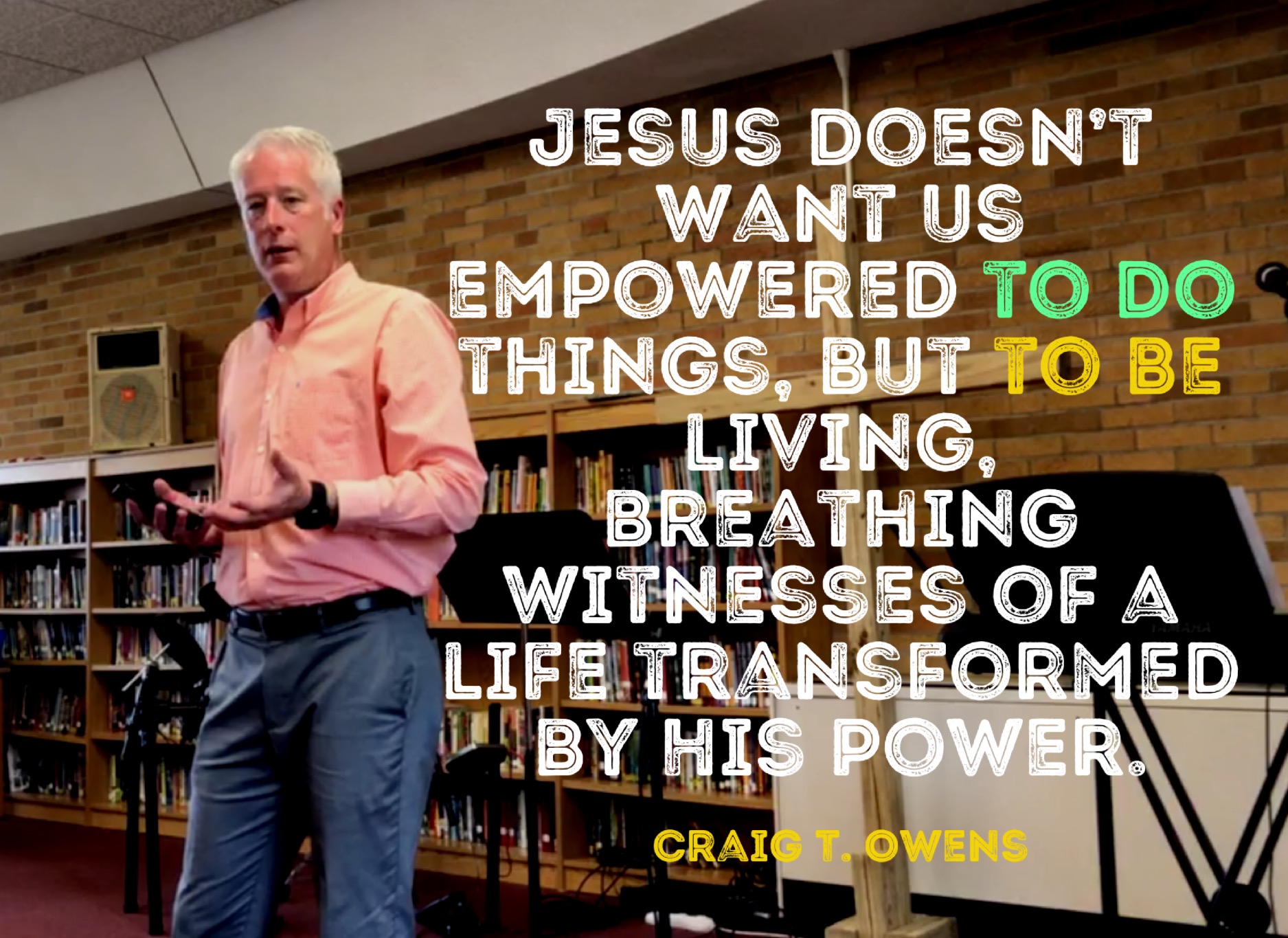
Jesus promised that the baptism in the Holy Spirit would empower us TO BE His witnesses (Acts 1:8). Not just to do things for Him. There’s nothing wrong about doing Jesus-glorifying things, but in themselves, they are too short-sighted. Jesus doesn’t want us empowered to do things, but TO BE a living, breathing, walking, talking witness of a life transformed by His power. That’s the reason why I say to you again and again: Don’t stop at salvation. Press on and press in to be baptized in the Holy Spirit so that you can BE an empowered, transformed and transforming witness for Jesus!



 We need a regular report card on—




 Craig T. Owens