Thursdays With Spurgeon—All The Trinity In Salvation

This is a weekly series with things I’m reading and pondering from Charles Spurgeon. You can read the original seed thought here, or type “Thursdays With Spurgeon” in the search box to read more entries.

All The Trinity In Salvation

     We are, alas, too apt to forget that while there are distinctions as to the persons in the Trinity, there are no distinctions of honor—and we do frequently ascribe the honor of our salvation, or at least the depths of its mercy and the extremity of its benevolence, more to Jesus Christ than we do to the Father. This is a very great mistake.

     What if Jesus came? Did not His Father send Him? If He were made a Child, did not the Holy Spirit beget Him? If He spoke wondrously, did not His Father pour grace into His lips that He might be an able minister of the new covenant? If His Father did forsake Him when He drank the bigger cup of gall, did He not love Him still? And did He not, by and by, after three days, raise Him from the dead and at last receive Him up on high, leading captivity captive?

     Ah, beloved, he who knows the Father, the Son, and the Holy Spirit as he should know them never sets one before another. He is not more thankful to one than the other; he sees them at Bethlehem, at Gethsemane, and on Calvary all equally engaged in the work of salvation.

From The Incarnation And Birth Of Christ

All of the Godhead is involved in our salvation. God doesn’t separate Himself—He is One. 

God the Father planned our salvation and sent His Son (Micah 5:2; Matthew 10:40; Ephesians 1:4-5).

God the Son proclaimed the Father’s good news and purchased our salvation (Mark 10:45; John 3:17; Ephesians 1:9-10). 

God the Holy Spirit seals and confirms our salvation (Galatians 4:4-6; Ephesians 1:13-14). 

We come to the Father, through the Son, by the drawing of the Spirit. We need the full Trinity to bring us fully into His presence forever and ever! 

What’s In A Name?

Leah became pregnant and gave birth to a son… (Genesis 29:32). 

Jesus said that ALL the Scripture pointed to Him (John 5:39). That means even the various names of people in the Scripture give us some insight into the nature of Jesus. 

Consider Jacob and his sons, who become the fathers of the tribes of the nation of Israel. Jacob the deceiver is transformed into Israel the guileless, and the names of his sons point to what Jesus does to transform all of us into His righteous brothers and sisters. 

[Check out the links posted below to read all the Scripture references.]

Reuben—God sees my misery and sends His Son (Genesis 29:32; John 3:16). 

Simeon—God sent His Son when I was unlovable (Genesis 29:33; Romans 5:6-8). 

Levi—after I am saved from my sins, I am joined to God (Genesis 29:34; Ephesians 2:1-5).

Judah—my salvation brings praise to God (Genesis 29:35; John 15:8).

Dan—God has vindicated me in Jesus (Genesis 30:6; John 8:11).

Naphtali—Christ’s righteousness has given me victory over my struggles (Genesis 30:8; Romans 8:1; 1 Corinthians 15:54-56). 

Gad—God’s favor now advances toward me like an unstoppable troop (Genesis 30:11; Romans 8:31-39). 

Asher—I am now able to enjoy God’s happiness (Genesis 30:13; Matthew 25:21, 34). 

Issachar—God IS my reward (Genesis 30:18; Revelation 3:20-21).

Zebulun—my Husband (Jesus) honors me (Genesis 30:20; Ephesians 5:22-23; Hebrews 2:11).

Joseph—God has taken away my disgrace and added His blessing (Genesis 30:24; Romans 8:1, 32).

Manasseh—God has made me forget my past (Genesis 41:51; Psalm 103:12).

Ephraim—God has made me abundantly fruitful (Genesis 41:52; 1 Peter 2:9-10).

Benjamin—I am God’s son (Genesis 35:18; Ephesians 2:6)! 

God has done ALL this—and more!—through Jesus! 

When you read the Bible, don’t rush through it. Slow down. Meditate on it. Soak in it. And then see how the Holy Spirit will illuminate truth to you. 

[Please check out the Bible references I’ve listed above for yourself. All of the Genesis references are here, and all of the other references are here.]

God Keeps His Word

…as He had said… (Genesis 21:1-7).

This thought—and even the phrase itself—permeates the Bible. From the very beginning of Time itself, whatever God says—happens!

His word is His bond: What He had promised (v. 1b). There are no loopholes, no equivocations. When God says it, it is signed, sealed, delivered!

When is His word accomplished? From the moment He says it. His word cannot be altered nor delayed. We simply wait for its fulfillment: At the very time God had promised (v. 2).

This also means that I must obey what God says. If His word is immutable, my faith and obedience must be just as steadfast. Just like Abraham: Abraham circumcised him, as God commanded him (v. 4).

Jesus said that the Holy Spirit would help remind us of everything God has said. The same Word that tells us God’s promises is also the same Word that sparks the faith to believe His Word (Romans 10:17). 

Get God’s Word.
Believe He will fulfill it in His timing. 
Obey everything He says.
Laugh in joy when you see His word accomplished: God has brought me laughter (v. 6)! 

A Praying Family

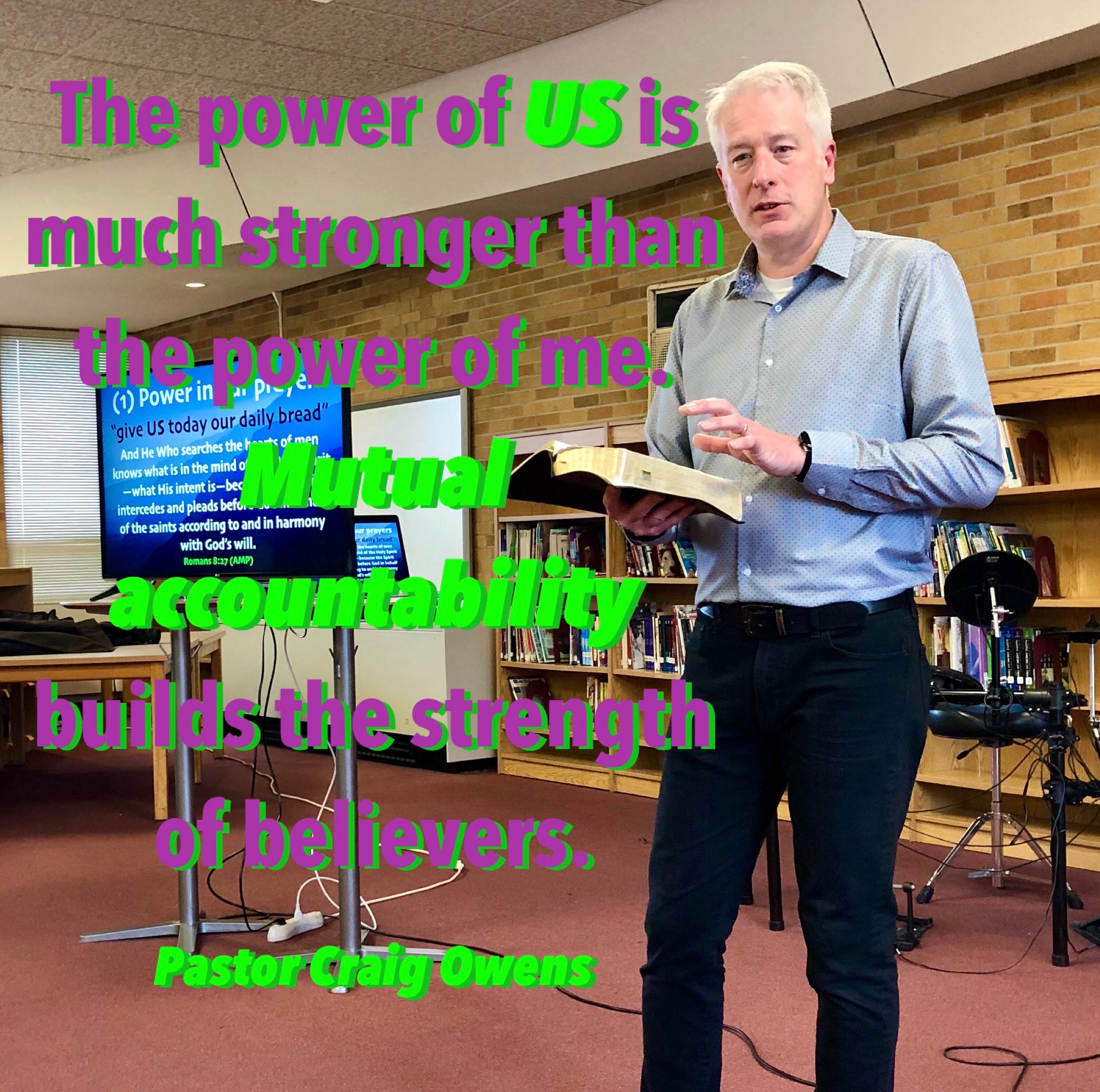
Not one word in Scripture is wasted: not one word is redundant or replaceable. When Jesus taught us to pray to a Heavenly Father, He taught us to say, “OUR Father.” That means we are all His children, with His Holy Spirit helping us to grasp this—The Spirit Himself testifies with our spirit that WE are God’s children. Now if WE are children, then WE are heirs—heirs of God and co-heirs with Christ… (Romans 8:16-17). 

Did you know that the word saints never appears in the singular in Scripture? No one person is singled out for his or her saintliness. Because we are saintS, praying together to OUR Father, this means accountability. For some people, accountability is a bad word. It seems to them to feel like someone is looking over their shoulder or checking up on them. But Christians should never feel this way! I like how Ken Blanchard defines this: “Accountability means: We owe each other for something we’ve agreed upon.” 

What have the saints of God agreed upon? That God is our Father, that Jesus is His Son and our Brother, and that the Holy Spirit is our Helper. We’ve agreed that if we are brothers and sisters in God’s family, we are mutually accountable to one another. 

In the context of the prayer Jesus taught us to pray, being mutually accountable means: 

  1. Power in our prayersgive US today our daily bread. Jesus talks about the power in agreement, and the apostle Paul emphasizes how the Holy Spirit helps believers harmonize in prayer with each other and with God’s will (Matthew 18:19-20; Romans 8:27). 
  1. Strengthening of our characterforgive US our debts, as WE also have forgiven our debtors. Jack Hayford points out that, “The believer’s best defense against self-deception is through mutual accountability to one another.” In order for our character to be strengthened, we have to allow others to speak into our lives—even the lovingly painful words (Proverbs 27:17, 6). 
  1. Protection from falling to temptationlead US not into temptation, but deliver US from the evil one. Samson became entangled with a prostitute when he was all by himself; Elijah became depressed when he sent his servant away; David fell into sin when he was alone; Peter denied Christ when all of the other disciples had run away. That’s why the writer of Hebrews counsels us to stick close to our Christian family members (Hebrews 10:21-25). 

In an earlier post, I noted that how we view God is going to determine what we pray and what we expect after we pray. Coming together and praying together will help us see God better. Just as the angels around the throne are always crying out to each other “Holy! Holy! Holy!”, when we come together we can show our fellow saints what we’ve learned about our holy Father’s love and power. This is both an encouragement to others and allows others to be an encouragement to us too. Then together we can pray more boldly and expect great things in response to our prayer. 

Being mutually accountable to the saints in prayer…

  • hallows God as our Father

  • glorifies Jesus as our Brother

  • honors the Spirit as our Helper

God never intended that you would have to walk through life alone. He wants us to share the journey with fellow saints—His family made up of our brothers and sisters. This praying family truly honors God’s name! 

Join me on Sunday as we continue to learn more about prayer. 

Poetry Saturday—What Is Prayer?

Prayer is the soul’s sincere desire,
Unuttered or expressed;
The motion of a hidden fire,
That trembles in the breast.

Prayer is the burden of a sigh,
The falling of a tear;
The upward glancing of an eye,
When none but God is near.

Prayer is the simplest form of speech
That infant lips can try;
Prayer, the sublimest strains that reach 
The Majesty on high.

Prayer is the Christian’s vital breath,
The Christian’s native air;
His watchword at the gates of death—
He enters heaven with prayer.

Prayer is the contrite sinner’s voice,
Returning from his ways;
While angels in their songs rejoice
And cry, ‘Behold, he prays!’ 

The saints in prayer appear as one,
In word, in deed, and mind;
While with the Father and the Son,
Sweet fellowship they find.

No prayer is made by man alone
The Holy Spirit pleads;
And Jesus, on th’ eternal throne
For sinners intercedes.

O Thou! by Whom we come to God,
The Life, the Truth, the Way;
The path of prayer Thyself hast trod:
Lord, teach us how to pray. —James Montgomery

Prayer Expectations

Many of our prayers could be much bolder and much more specific than they are. Why is that? Because how we view God is going to determine what we pray and what we expect after we pray.

When we pray, we approach an All-Loving Father, and we approach an All-Powerful God. I have found that typically people get warmed by the idea of Father and get scared by the idea of God. They say things like: “What if my prayers don’t hallow God’s name? What if He’s mad at me? What if I pray an improper prayer?” 

God wants us to come to Him in prayer, so He makes Himself very accessible! The Father is both Father and God; the Son is both Friend and King; the Spirit is both Comforter and Convictor. We get ALL of this in One God. 

Charles Spurgeon had this word of encouragement: “If You are my Father, then You love me. If I am Your child, then You will regard me, and poor though my language is, You will not despise it.” Jesus came to earth fully God and fully man, making Him our perfect intermediary (see Job 9:32-35; 1 Timothy 2:5; Hebrews 7:25). And the Holy Spirit helps interpret our groaning prayers (Romans 8:26-27). 

Have you ever noticed that neither the prophets of the Old Testament, nor Jesus in the Gospels, nor the apostles in the New Testament ever prayed, “God, if this is Your will please do such-and-such”? They simply prayed. Or more accurately, they prayed so boldly and specifically it almost sounded like a command: “Stand up” or “Be clean” or “Go, your prayer has been answered.” 

When you and I are praying to an All-Loving and All-Powerful Father, with Jesus interceding for us, and the Spirit helping us, we too can pray these bold and highly specific prayers. 

After all, if you don’t pray specifically and expectantly, how will you know when your prayer is answered? 

I find John Piper’s acrostic very helpful in praying these bold and expectant prayers. He calls it APTAT: 

  • A—Admit I can’t do anything without Christ. This hallows His Name. 
  • P—Pray for help to do it. 
  • T—Trust a specific promise of God to help me (two general promises are found in Isaiah 41:10 and Romans 8:32). 
  • A—Act. Do the things I need to do: apply for the job, ask forgiveness, schedule a meeting. 
  • T—Thank Him when I’m done. 

Two final thoughts—

  1. Make prayer more of a listening relationship than a talking relationship. 
  2. Give yourself some grace as you are maturing; don’t expect immediate perfection. Start praying and then let the Father, the Son, and the Spirit help you mature in your prayer life. 

I hope you can join me this Sunday as we continue to work on our plans to pray.

Godly Leaders Need (+) Desires

…if someone desires to be a church leader, he desires an honorable position (1 Timothy 3:1). 

Desires—Paul uses two different Greek words for this one English word. The first word is orego. In the (+) sense it means to stretch out in order to grasp something. In the (-) sense it means to give one’s self up to the love of money.

The second word is epithymeo. In the (+) sense it means to long for a good thing (see Matthew 13:17; Luke 22:15). In the (-) sense it means to covet what is forbidden (see Matthew 5:28; James 4:2).

So (+) or (-) leadership comes down to desire. If I want a leadership position for what I can get, that is a (-) desire. Should you then seek great things for yourself? Do not seek them… (Jeremiah 45:5). 

But if I desire a leadership position for what I can give, that is a (+) desire. Not so with you. Instead, whoever wants to become great among you must be your servant, and whoever wants to be first must be slave of all. For even the Son of Man did not come to be served, but to serve, and to give His life as a ransom for many (Mark 10:43-45). 

With these differing desires in mind, the list of qualifications for church leaders in verses 2-7 and 8-13 should be viewed through the (+)/(-) desire lenses:

  • Why should I be above reproach: (-) so that I can get something, or (+) so that I can serve others better?
  • Why should I be faithful in marriage: (-) so that I look good, or (+) so that I am strengthened by my spouse to serve? 
  • Why should I be temperate, self-controlled, respectable, hospitable, an able teacher, sober, gentle, agreeable, content, and so on? The answers to those questions determine what desire I have.

A godly leader desires to glorify God and serve others, so a godly leader willingly submits to the Holy Spirit to address any area of (-) desire that may derail the God-honoring (+) desires. Just as Jesus is the Ultimate Servant-leader, I too must “have the same mind as Christ Jesus” (Philippians 2:5).

A mark of a godly leader is one who desires leadership with a (+) desire.

This is part 43 in my series on godly leadership. You can check out all of my posts in this series by clicking here.

Praying The Word

The more consistently we pray on the ordinary days, the more prepared we will be to pray on the extraordinary days. But some people say, “I don’t know how to pray” or “I don’t know what to ask for.” That ignorance hinders a lot of people—even someone like Peter who not only spent huge amounts of time with Jesus but was with Him when He was in one of His most glorious states (Luke 9:28-33). As Jesus is transfigured before his very eyes, both Mark and Luke say this about the statement Peter blurted out: He did not know what he was saying. 

While Peter was still speaking from his ignorance, God the Father gave him (and us) some invaluable advice: This is My Son, whom I have chosen; listen to Him. 

So when the disciples ask Jesus to teach them to pray, Jesus didn’t reprimand them for asking. In fact, He told us how much He wants us to pray and how much His Father wants to answer our prayers (Luke 11:1-13; 12:32).  

There is a consistent theme about the “name” of God that permeates all that Jesus teaches about prayer. We see Him instructing us to address our prayer to our “Heavenly Father” and to pray “in My name” (Luke 11:2; John 14:13-14; 15:7; 16:23-24). This doesn’t mean that simply saying, “Dear Heavenly Father” at the beginning of a prayer or “in the name of Jesus, amen” at the end of a prayer makes our prayer magical. 

It’s about praying in the character of Jesus, directing our prayer to the only One who can help us, all with the guidance of the Holy Spirit. 

To help us do this, we have an invaluable prayer resource preserved for us in the pages of the Bible. The Scriptures are inspired by the Holy Spirit—the same Holy Spirit that lives in a Christian and helps the Christian pray according to God’s will. The same Spirit who inspired the Word can illuminate the Word to us, so we need to get into the Word and let the Holy Spirit get the Word into us! 

No matter what you’re going through, you can apply God’s Word to your situation. Look through the prayers of the Psalms, read the prayers of other great saints throughout the Scriptures, check out the prayers the apostles prayed in the New Testament, and even read the prayers of Jesus Himself. Then make those prayers your prayers!

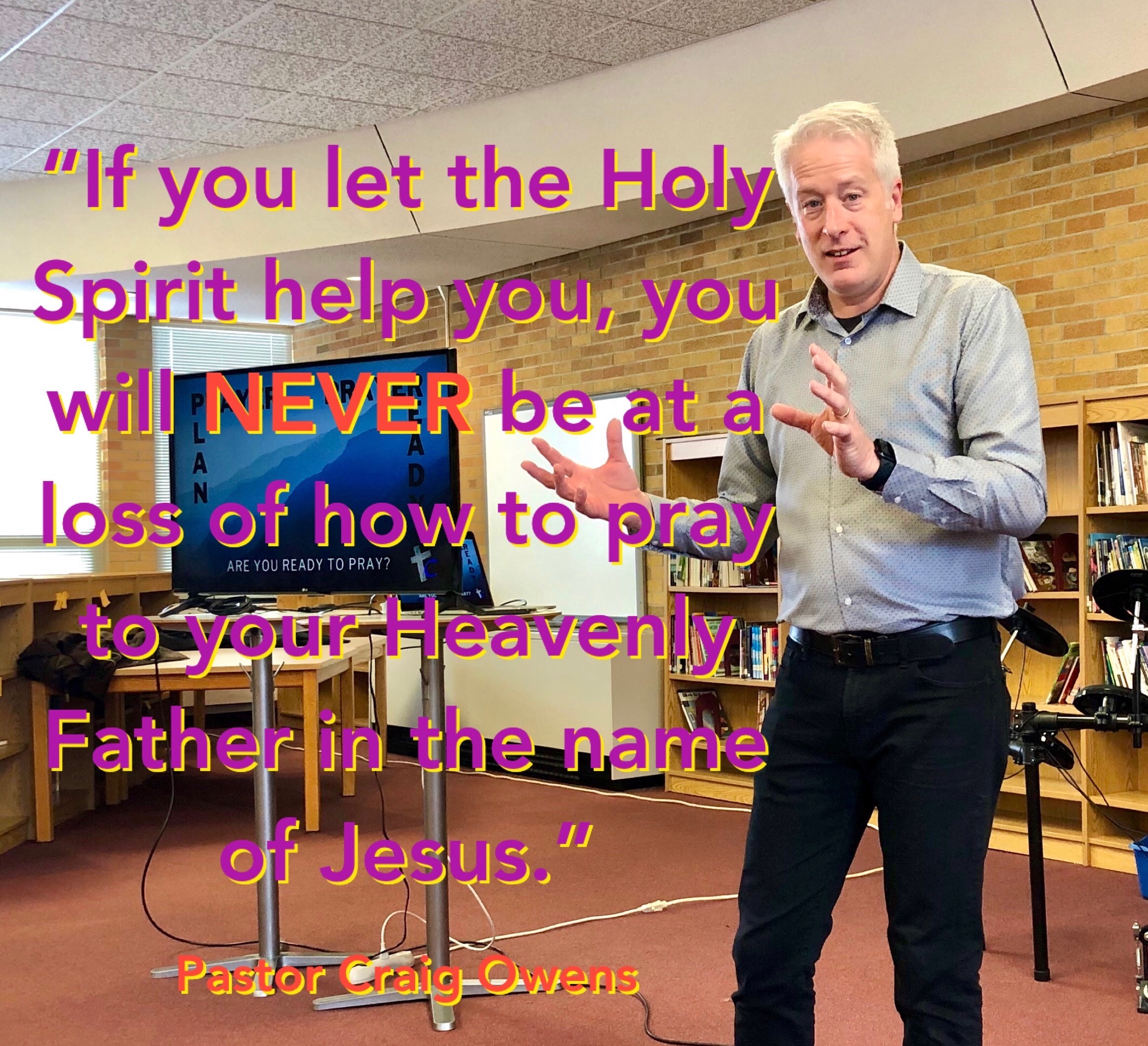
If you let the Holy Spirit show you how the Bible applies to your situation, you will NEVER again be at a loss of how to pray to your Heavenly Father in the name of Jesus!

Join me this Sunday as we continue to learn how to to be ready to pray by making our plan to pray. 

Run To Wait

My wife is a fan of the TV show (and movie) Downton Abbey, which means I have come to appreciate it as well. I think Mr. Carson, the head butler, gives us some great insight into a Christian’s prayer relationship with God. 

Mr. Carson has a lot to oversee with the house, the staff, and the needs of the family members and their guests. Everything needs to be tidy and ready at all times for both important guests and the Grantham family. That means Mr. Carson has to have a schedule and routine for everything. 

He doesn’t get up in the morning and sit around waiting for someone to tell him what to do—he gets up and gets to work. He’s a busy man with a lot of responsibilities. But can you imagine if Lord or Lady Grantham came to him with a request and he responded, “Not now, I’m too busy with my To Do list”? No way! He’s their servant, so he quickly responds, “Yes, my lord.” 

Christians can so busy and hurried with our own “To Do list” that we miss out on what’s really important. As Rick Warren then noted, “Hurry is the death of prayer!” 

The dictionary defines hurry as acting in haste, usually in a state of urgency, or feeling rushed. Notice the word “urgency” in the definition. Far too often we confuse urgent things and important things. It’s not that what we’re busy with are bad things, but perhaps we are busy with things that are keeping us blind to the important things. 

Long before Mr. Carson, there was another notable servant named Abraham (Genesis 18:1-8). God showed up and Abraham wanted to be in His presence. So notice that Abraham had to run to wait to God’s presence—the narrative uses words like hurried, “quick” and ran.  

Abraham was quick to get into God’s presence SO THAT he could linger in God’s presencehe stood near Them under a tree: that’s the posture of a servant-in-waiting. 

In the NIV translation, the text says Abraham hurried, but almost every other translation says he ran to meet Them—this is an important distinction. Hurry speaks to things that are urgent, but run speaks to things that are important. 

Stephen Covey has a great diagram that helps us identify four important quadrants in our life:

As you place items from your life on this grid, our Prayer Coach—the Holy Spirit—can help us identify the time-wasters. The key is to find time to wait in prayer. The best place to make time for Quadrant II prayer comes from Quadrant IV. As you eliminate those time-wasters, you will be able to spend health-enhancing time in prayer, worship, planning, and self-care in Quadrant II. This will also better equip you to handle the Quadrant I crises as they appear.

Ultimately, like Mr. Carson, we need to be both proactive with our schedule and responsive to the requests of our Lord. A good daily posture for all of us is “If the Lord wills” (James 4:13-17). But we have to not be so distracted with unimportant things that we can hear what God is speaking to our hearts.

Please join me next week as we continue to uncover things that could derail our regular prayer times, and then strategize a plan for dealing with them.  

Cultivation Of Christian Character (book review)

I’ve always enjoyed reading J. Oswald Sanders. Let me rephrase that: I enjoy the new insights on God’s Word that Sanders’ books have given me, but the confrontation of the Holy Spirit that comes while reading these books can be quite painful at times. Cultivation Of Christian Character is no exception! 

In his opening words, Sanders explains the purpose of “this little volume” (as he calls it)—

“The genuine disciple of Christ earnestly desires a closer walk with God and a greater conformity to Christ. If these are absent, there is reason to doubt the genuineness of the discipleship. But many true lovers of the Lord are beset with a sense of inadequacy and failure in living the Christian life as it ought to be lived. They are very conscious with Paul that they have not already attained, neither are already perfect, but they yearn to know Christ better and to serve Him more worthily.” 

There you have it in a nutshell: If you yearn to be more Christlike, and yet at the same time struggle with how far you still have to go to see the fruits of Christlikeness in your life, this is the book for you. 

The chapters are short enough to read in just a few minutes. But the thought processes and the heart-searching that these short chapters will stimulate will undoubtedly take a long time to assimilate into your daily life. At least, this is the case for me. 

None of J. Oswald Sanders’ books are long books, but all of his books live long inside of me. Dive into Cultivation of Christian Character with an attitude of ready submission to the Holy Spirit, and then watch the amazing fruitfulness and Christlikeness that will begin to blossom from your life. 

I am a Moody Publishers book reviewer.