Some Pain For Greater Gain

My US Marine Corps buddy always tells me to suck it up when I complain about something hurting. He says, “Pain is just weakness leaving your body.” Hoo-Rah!

Great.

But for the most part, I don’t like pain. What about you? Most of us non-Marine-types do our best to avoid pain. And if any pain does make it through, we can take care of that really fast with some Motrin or Tylenol, or Icy Hot or a massage session.

However, there are times that some pain is good for greater gain.

What about the temporary pain from an immunization injection? Short-term pain for the long-term gain of being free of disease.

What about a low-grade fever (below 101 degrees)? Taking Tylenol too soon can preempt the natural way your body is raising the heat to kill off an infection. The short-term pain of a fever for the long-term gain of dead germs.

What about the soreness from exercising? Again, the pain is short-term; the benefits of healthy exercise are long-term.

How about saying “no” to temptation? Shouldn’t you trade the short-term pain of temptation for the long-term gain of holiness?

Or God’s discipline? He sometimes puts us in positions that are painful because He is trying to bring the best out of us. Here my Marine buddy is correct: this pain is weakness leaving our (spiritual) body.

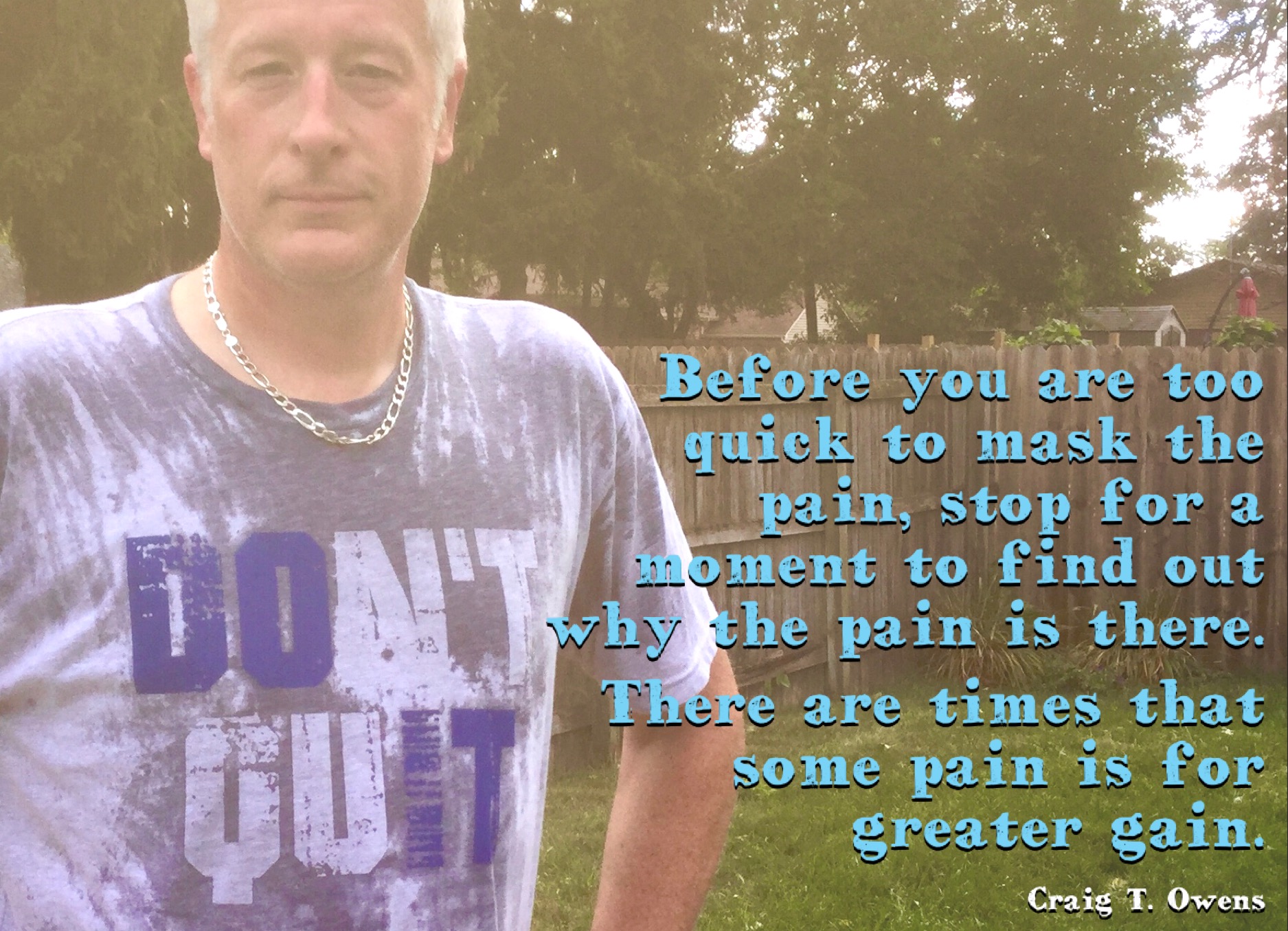
Before you are too quick to mask the pain, stop for a moment to find out why the pain is there. An immunization or low-grade fever or exercise or discipline may be just the short-term pain you need for far greater gain.
Insert Your Name Here

I don’t think anyone would mind having his or her name inserted in any of the following compliments:

  • ___________ is a righteous person.
  • ___________ is blameless before God.
  • God looks favorably on ___________.
  • ___________ walks with God.

Pretty nice pedigree, huh?

This is the description of Noah in the Bible. I especially love the phrase “walks with God.” It’s only used of two people in the Bible: Noah and Enoch. But it’s even more encouraging to me when I read it about Noah’s life.

Noah is the first in Adam’s family line to be born after Adam died. That’s significant because all of his ancestors (including Enoch) would have been able to get a first-hand account from Adam himself about what it was like to be in the Garden of Eden. All of Noah’s ancestors could have heard right from Adam’s mouth what it was like to visit with God personally each evening, to talk to Him face-to-face. And they could have heard firsthand how devastatingly painful it was to lose that intimate fellowship because of sin.

Since Noah was the first person in this family tree to hear about this secondhand, he’s the first person to walk with God by faith. Which is the exact same way we walk with God today:

Faith is being sure of what we hope for and certain of what we do not see (Hebrews 11:1).

You too can insert your name in this blank: “___________ walks with God.”

How do you do this? Pray this:

“God, I want to walk with You. I know it’s impossible to please You except by faith. I want to get closer to You. So I believe that You exist and that You care enough to respond to me when I seek You and love You with all of my heart, soul, mind, and strength.”

Let’s enourage one another to walk in this way every single day.

Naked Before God

Imagine: You and your wife are the only people on the face of the earth. No bills, no employer, no economic downturn, no kids, no school, no traffic. Just you and God. That was Adam and Eve in the Garden of Eden. The Bible gives this commentary, “Now the man and his wife were both naked, but they felt no shame.”

Nothing to hide from God. Nothing to hide from each other. A perfect relationship with God. A perfect relationship with each other.

Then the temptation, and the bite of the forbidden fruit. Sin enters. Now, something changes when God comes to talk with His favorite couple: “Then the man and his wife heard the sound of God as He was walking in the garden in the cool of the day, and they hid from God among the trees.”

“Why are you hiding from Me?” God asks.

“Uh,” Adam stammers, “because we’re naked.”

Sin made mankind uncomfortable in God’s presence. Sin made them want to hide from God. They knew He was there, but they tried to pretend He wasn’t. This is why I think many of us don’t come into God’s presence in prayer: we’re uncomfortable because of our sin.

We should not run away from God, instead, we should run to Him. “If we confess our sins to Him, He is faithful and just to forgive us our sins and to cleanse us from all wickedness” (1 John 1:9).

What happens when we’re forgiven? We’re re-clothed. God Himself clothes us. He made clothes for Adam and Eve, and He clothes us, too, in the righteous robes of Jesus. “And all who have been united with Christ in baptism have put on Christ, like putting on new clothes” (Galatians 3:27).

And when we’re clothed in Christ, we no longer have to hide from God, nor feel uncomfortable in His presence. Instead, we can “come boldly to the throne of our gracious God. There we will receive His mercy, and we will find grace to help us when we need it most” (see Ephesians 3:12 and Hebrews 4:16).

Perhaps the reason we don’t spend enough time in prayer is that we feel self-conscious, sinful, uncomfortable… naked.

You don’t have to be naked. You can be clothed in Christ. You can enter into God’s presence without shame and find the mercy and grace and help that you need.

Spurred On

There are times when it’s not so nice to have someone behind me who is pushing me forward. Like when I’m standing in the check-out line at the grocery store. After all, I can only go as fast as the person in front of me, right? So I start to have this imaginary conversation with the shopper behind me, “Look, you can nudge and prod and bump me all you want, but I can’t go any faster.”

But it’s a whole different story when the way in front of me is wide open. Now my imaginary conversation changes, “Okay, here we go! You’re nudging and prodding is really going to make me fly now!”

I think this is might have been what the Apostle Paul was thinking when he wrote, “Follow me as I follow Christ.” In essence, it was a thank you note to those behind him, “Thank you for spurring me on to preach better, teach better, live better, be better.”

Here’s what Jesus did for us: He was spurred on both by those of us who would be following Him and by the calling of His Heavenly Father. We do this by keeping our eyes on Jesus, the champion who initiates and perfects our faith. Because of the joy awaiting Him, He endured the Cross, disregarding its shame. Now He is seated in the place of honor beside God’s throne.

So Paul said he could follow that example in his own life. Not that I have already obtained all this, or have already been made perfect, but I press on to take hold of that for which Christ Jesus took hold of me. Brothers, I do not consider myself yet to have taken hold of it. But one thing I do: Forgetting what is behind and straining toward what is ahead, I press on toward the goal to win the prize for which God has called me heavenward in Christ Jesus.

I’m in awe of what God has called me to do.

I’m grateful for the way Jesus has opened up the way for me.

I’m thankful for those who spur me on every day. Especially my family and my congregation. You make me want to preach better, teach better, live better, be better. Thank you!

Who’s spurring you on?

Nothing Left But Ashes

In the “Your Gift To God” series at Calvary Assembly of God, we have been following the pattern of the gifts that the Magi gave to Jesus as a pattern for the gifts that we, too, should give to God.

First, the Magi gave gold. The king of metals for the King of kings. They acknowledged that this was the Eternal King. Gold is a gift for a king.

The second gift is a bit of a head-scratcher gift: frankincense. This type of incense was used in the Old Testament in worship and sacrifices in the Tent Of Meeting. Incense is a gift for a priest. But would the Magi give a priestly gift to a king?

Jesus came as both King, Priest, and Sacrifice. The frankincense was used as the high priest went from the Holy Place to the Most Holy Place to offer the sacrifice of atonement. But look what the Bible says about Jesus:

…Christ loved us and gave Himself up for us as a fragrant offering and sacrifice to God.

And because of what Jesus did for us:

And so, dear brothers and sisters, we can boldly enter heaven’s Most Holy Place because of the blood of Jesus.

When we offer a sacrifice of frankincense to Jesus our High Priest, we’re saying, “I trust You with this. I don’t want to carry this any longer. I give it to You completely.” That means what we offer to Him is completely consumed.

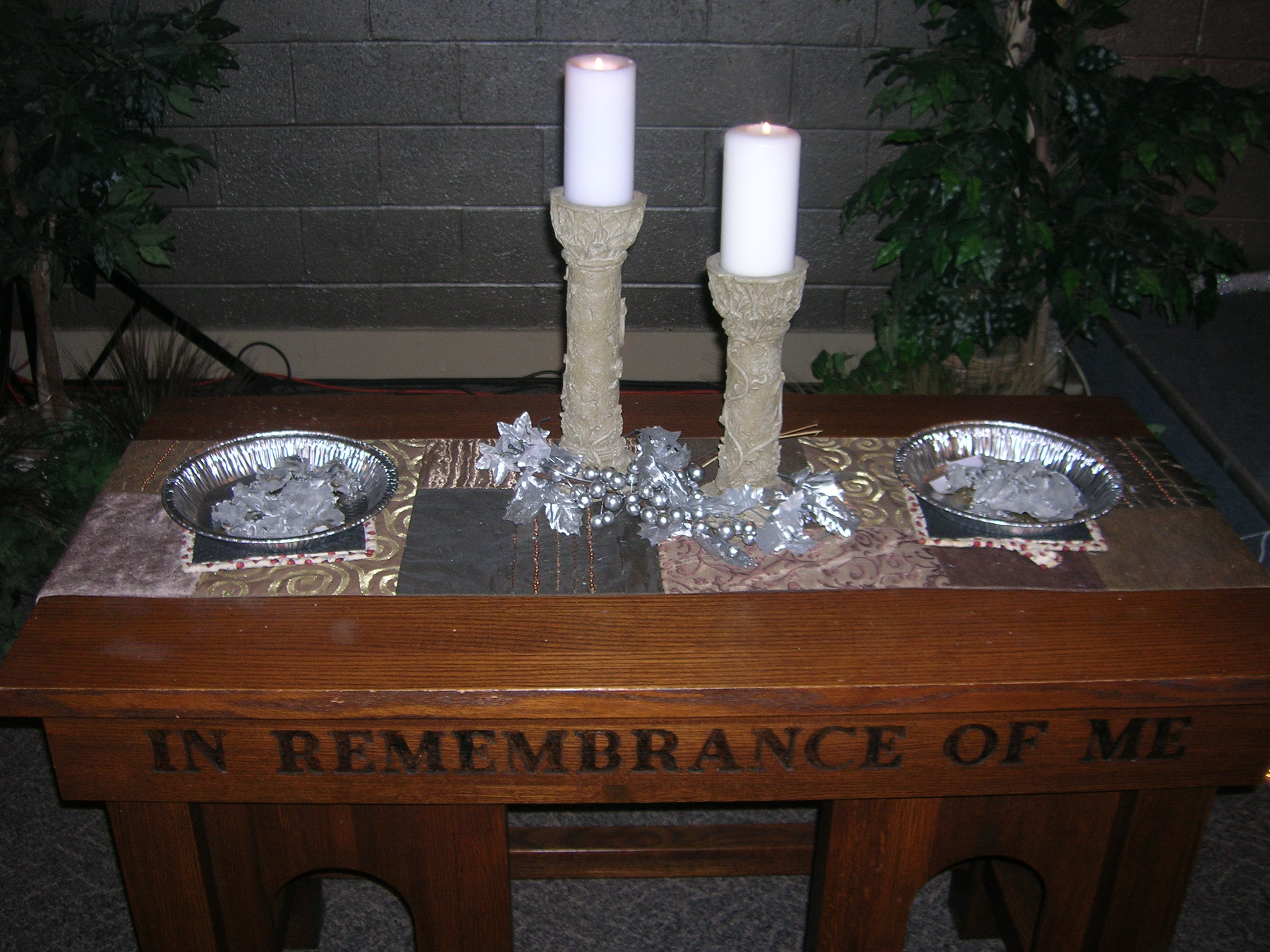
Yesterday our congregation wrote down their burdens and concerns and challenges on a slip of paper. Then we brought those concerns to Jesus and burned them up like frankincense in His presence. As I smelled the aroma, I could only imagine the incredible scent that Jesus detected.

All of the concerns people wrote down were reduced to ash yesterday morning!

I believe people were set free! The concerns were burned up like a sacrifice before our High Priest! No longer do they have to carry these heavy loads:

Casting the whole of your care [all your anxieties, all your worries, all your concerns, once and for all] on Him, for He cares for you affectionately and cares about you watchfully.

Your greatest gift to God could be all of the things that have burdened you for way too long. Give them to Him because He cares for you. Let them be consumed completely, and never pick them up again.

Live free!

The Wounded Healer (book review)

Wounded Healer, The

“For the minister is called to recognize the sufferings of his time in his own heart and make that recognition the starting point of his service. Whether he tries to enter into a dislocated world, relate to a convulsive generation, or speak to a dying man, his service will not be perceived as authentic unless it comes from a heart wounded by the suffering about which he speaks” (from the introduction).

Henri Nouwen was a man ahead of his time. Although this book was written in the early 1970s, it sounds so applicable for today. The Wounded Healer challenged me as a Christian leader to step into the pain-filled lives as others in a more authentic way. Nouwen argues that healers must first be personally acquainted with the same type of pain that other wounded people are experiencing.

Isaiah 53 says that Christ “was wounded for our transgressions, He was bruised for our guilt and iniquities; the chastisement [needful to obtain] peace and well-being for us was upon Him, and with the stripes [that wounded] Him we are healed and made whole.” Because Jesus was wounded in the same way we are wounded, He knows how to help (see Hebrews 2:18).

One closing quote from Nouwen: “If there is any posture that disturbs a suffering man or woman, it is aloofness. … No one can help anyone without becoming involved, without entering with his whole person into the painful situations, without taking the risk of become hurt, wounded or even destroyed in the process. The beginning and the end of Christian leadership is to give your life for others.”

This book reconfirmed my desire to—like Jesus—be a wounded healer for others.

Walking In Someone Else’s Flip-Flops

DSCN0970“Empathy is a stunning act of imaginative derring-do, the ultimate virtual reality—climbing into another’s mind to experience the world from that person’s perspective.” —Donald H. Pink

As we continued our series called Bigger Than Me last night (part 1 is here), we challenged our Impact! youth group to develop greater empathy. That word literally means to be immersed in the feelings of others … to step into someone else’s reality … to walk around in someone else’s flip-flops.

The greatest example ever of this is when Jesus Christ came to earth. He stepped into our flip-flops by coming to live among us in human flesh. He experienced everything we ever have or ever will experience; He knows our weaknesses, our dreams, our joys.

For we do not have a High Priest Who is unable to understand and sympathize and have a shared feeling with our weaknesses and infirmities and liability to the assaults of temptation, but One Who has been tempted in every respect as we are, yet without sinning. … For because He Himself [in His humanity] has suffered in being tempted (tested and tried), He is able [immediately] to run to the cry of (assist, relieve) those who are being tempted and tested and tried…. (Hebrews 4:15, 2:18)

Our youth have committed themselves to develop this Christ-like attribute of empathy. Last night they came to the altar to pick up a flip-flop keychain to remind themselves of this commitment. All of us who made this commitment are going to try to walk in others’ flip-flops by trying to find out:

  1. What do they cry about?
  2. What do they sing about?
  3. What do they dream about?

(Thank you, John Maxwell, for your instruction to me on this!)

I hope you have personally experienced the incredible empathy of Jesus. He understands your fears, your joys, and your dreams even better than you understand them yourself. And I hope that you will join us in our commitment to greater empathy with each other. What a blessing you can be to others when you choose to walk in their flip-flops for awhile.

Stuff

We’re almost done unpacking. Just 10 days after moving into our new home in Cedar Springs, we’ve just about got the unpacking done. Notice I said, “almost done.”

We’re trying to find a place for everything that we brought with us. But the closets are a bit smaller, there aren’t quite as many cupboards in the kitchen, and there’s one less bedroom and one less bathroom than our previous home. That means we still have quite a few boxes that have been moved to the garage. These are the we’ll-hang-on-to-this-for-awhile-to-see-if-we-need-it things.

After 19 years of marriage and three kids, we’ve accumulated quite a bit of stuff. And do you know what I’ve found? I don’t need or use much of the stuff I so carefully packed up and moved with me.

So I have been thinking,

  • How much stuff do I have packed away in my heart and mind that I don’t really need?
  • How many unkind words do I continue to keep packed away in case I need to pull them out?
  • How many painful memories do I keep packaged up just in case I need to feel sorry for myself?
  • How many mistakes from my past do I keep pulling out and packing up again?”

Throw off your old sinful nature and your former way of life, which is corrupted by lust and deception (Ephesians 4:22).

Let us throw off everything that hinders and the sin that so easily entangles, and let us run with perseverance the race marked out for us (Hebrews 12:1).

I’m not saying that I have this all together, that I have it made. But I am well on my way, reaching out for Christ, who has so wondrously reached out for me. Friends, don’t get me wrong: By no means do I count myself an expert in all of this, but I’ve got my eye on the goal, where God is beckoning us onward—to Jesus. I’m off and running, and I’m not turning back (Philippians 3:12-14).

It feels really good to get rid of the old stuff. I’m enjoying not having so much cluttering up my life, so I think I’m going to make it a regular practice to clean out the unused stuff.

Do you have any stuff you need to clear out today? I promise you: It will feel so wonderful when you do!

Real Raw Emotions

This week I’ve been writing about my favorite book—the Bible—and why I find it so fascinating. Yesterday I talked about how the Bible helps me mentally. But we are not just mental creatures, we are emotional, too, and I have found my Bible to be an excellent way to express some of my deepest, rawest emotions.

(If you would like to read the other parts of this series, they are here, here, here, and here.)

Humans are created in God’s image, and God expresses emotion. In fact, God expresses emotion more deeply and purely than we humans can His sorrow is more bitter, His love is more intense, His jealousy is more pure.

Emotion is expressed throughout the Bible, but I’m particularly attracted to the emotional responses in the Psalms. These are prayers and songs which express the deepest emotions of angry, loving, hurting people. A few examples—

You know what I long for, Lord; You hear my every sigh. (Psalm 38:9 NLT)

Be merciful to me, O God, for men hotly pursue me; all day long they press their attack. My slanderers pursue me all day long; many are attacking me in their pride. (Psalm 56:1-2 NIV)

God, smash my enemies’ teeth to bits, leave them toothless tigers. Let their lives be buckets of water spilled, all that’s left, a damp stain in the sand. Let them be trampled grass worn smooth by the traffic. Let them dissolve into snail slime, be a miscarried fetus that never sees sunlight. Before what they cook up is half-done, God, throw it out with the garbage! (Psalm 58:6-9 The Message)

O my God, my life is cast down upon me and I find the burden more than I can bear…. (Psalm 42:6 AMP)

My God, my God, why have You forsaken me? Why are You so far from saving me, so far from the words of my groaning? O my God, I cry out by day, but You do not answer, by night, and am not silent…. I am poured out like water, and all my bones are out of joint. My heart has turned to wax; it has melted away within me. My strength is dried up like a potsherd, and my tongue sticks to the roof of my mouth…. Dogs have surrounded me; a band of evil men has encircled me, they have pierced my hands and my feet. …But you, O Lord, be not far off; O my Strength, come quickly to help me. (Psalm 22:1-2, 14-16, 19 NIV)

Jesus came to earth as fully God and fully man, able to experience the deepest, rawest emotions of anyone. “He was despised and rejected—a man of sorrows, acquainted with deepest grief” (Isaiah 53:3). Jesus knows what you feel because He felt it, too: “For we do not have a High Priest Who is unable to understand and sympathize and have a shared feeling with our weaknesses and infirmities and liability to the assaults of temptation” (Hebrews 4:15). As a result, “He lives forever to intercede with God on [our] behalf (Hebrews 7:25).

Don’t ever be afraid to express your rawest emotions in God’s presence—He knows profoundly what you are feeling. When you are struggling with deep emotion, the Bible knows how to speak your heart’s cry to God.

Still Learning

I live by the axiom, “If you’re through learning, you’re through.” So I try to learn something new every day.

I just finished a class called New Testament Survey: a quick overview of the 27 books that compromise the New Testament of the Bible. Here’s a couple of interesting factoids I picked up from my studies:

  • The earliest-written book was James. Interesting, because at one point James thought Jesus (his half-brother) was nuts.
  • Only Matthew uses the term kingdom of heaven; all of the other writers use kingdom of God.
  • Mark uses the word immediately more times than anyone else. Perhaps because his source (Peter) was always doing things so quickly… sort of a ready, FIRE!, aim kinda guy.
  • Luke wrote what is called “the global gospel” for everyone, so he included 45 teachings/events that no one else records.
  • John doesn’t record any of Jesus’ parables.
  • John uses the word believe nearly 100 times— way more than any other writer.
  • Luke talks about the Holy Spirit nearly 60 times in the 28 chapters of Acts.
  • Romans is the longest of Paul’s epistles with 7101 words; Philemon is the shortest with just 355 words.
  • With the exception of the pastoral epistles (1 Timothy, 2 Timothy, Titus) Paul’s letters are arranged in the Bible from longest to shortest.
  • In 1 & 2 Thessalonians (only 136 verses) Paul refers to God, Christ, the Holy Spirit, or a combination thereof more than 150 times.
  • Paul gives Timothy seven word pictures to describe the kind of pastor he should be: son, soldier, athlete, farmer, workman, instrument, and servant.
  • Hebrews is called “the book of better things” so better is used 13 times. This word is used only six times in the remaining 26 books of the New Testament.
  • James wrote 108 verses but issues 50+ direct commands.
  • In John’s three short epistles he uses the word know 33 times, and the word dear ten times.

Keep on learning! There’s a lot of good stuff out there. What have you learned lately?