11 Quotes From “Pleasure & Profit In Bible Study”

Pleasure & ProfitD.L. Moody’s book Pleasure & Profit In Bible Study is a Bible study rejuvenator for both the novice and experienced reader of the Bible. You can read my full book review by clicking here. Below are some of the quotes I especially appreciated in this book.

“The more you love the Scriptures, the firmer will be your faith. There is little backsliding when people love the Scriptures.” 

“I believe we should know better how to pray if we knew our Bibles better. … And if we feed on the Word, it will be so easy then to speak to others; and not only that, but we shall be growing in grace all the while, and others will take notice of our walk and conversation.”

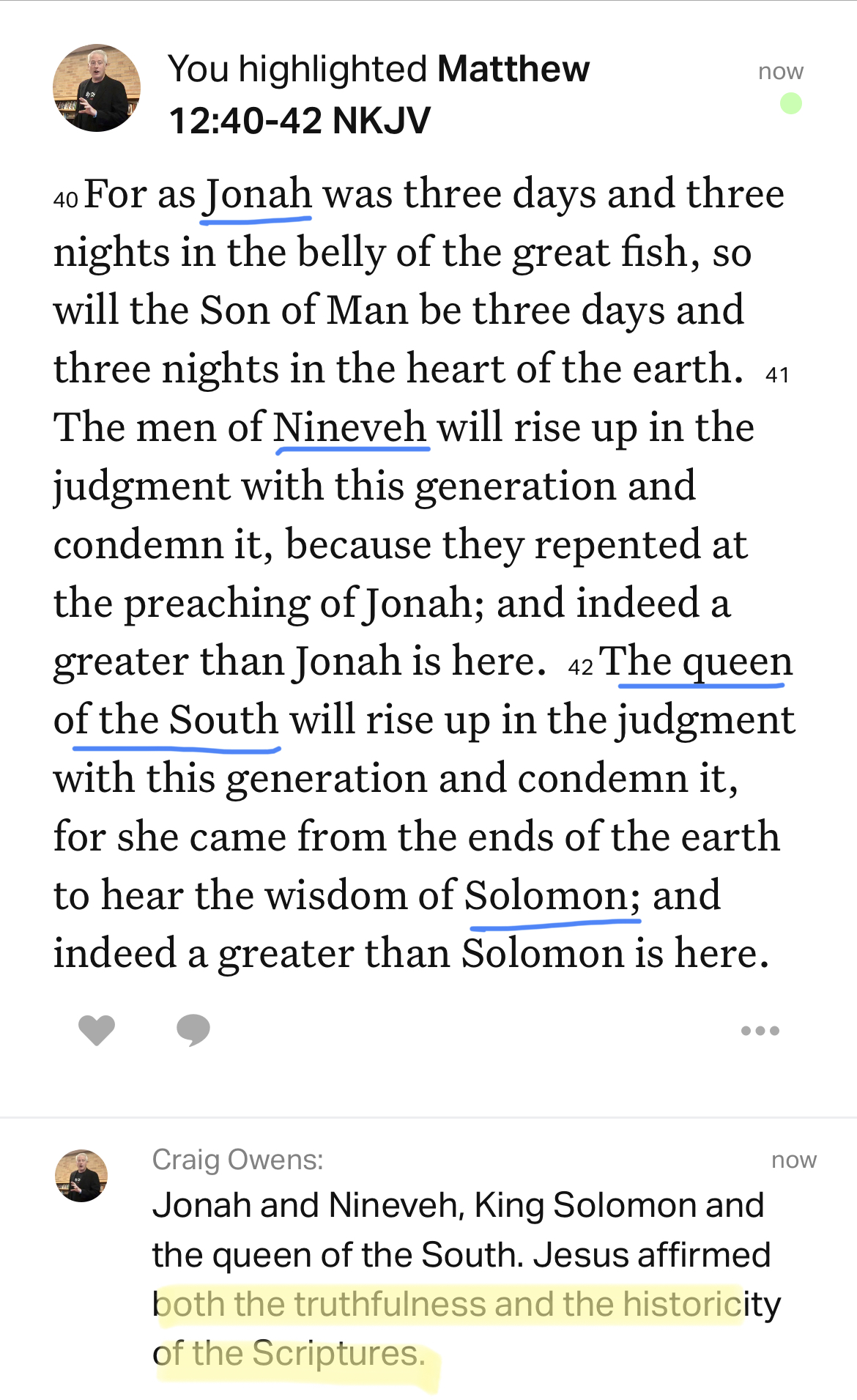
“It is a very interesting fact that of the thirty-nine books of the Old Testament, it is recorded that our Lord made quotations from no less than twenty-two. … About 850 passages in the Old Testament are quoted or alluded to in the New…. In the Gospel by Matthew there are over a hundred quotations from twenty of the books in the Old Testament. In the Gospel of Mark there are fifteen quotations taken from thirteen of the books. In the Gospel of Luke there are thirty-four quotations from thirteen books. In the Gospel of John there are eleven quotations from six books. In the four Gospels alone there are more than 160 quotations from the Old Testament. … In Paul’s letter to the Corinthians there are fifty-three quotations from the Old Testament; sometimes he takes whole paragraphs from it. In Hebrews there are eighty-five quotations, in that one book of thirteen chapters. In Galatians, sixteen quotations. In the book of Revelation alone, there are 245 quotations and allusions.”

“It is very important that every Christian should not only know what the Old Testament teaches, but he should accept its truths, because it is upon this that truth is based. Peter said the Scriptures are not given for any private interpretation, and in speaking of the Scriptures, referred to the Old Testament and not to the New. … If the Old Testament Scriptures are not true, do you think Christ would have so often referred to them, and said the Scriptures must be fulfilled? When told by the tempter that He might call down the angels from heaven to interpose in His behalf, he said: ‘Thus it is written.’ Christ gave Himself up as a sacrifice that the Scriptures might be fulfilled. Was it not said that He was numbered with the transgressors? And when He talked with two of His disciples by the way journeying to Emmaus, after His resurrection, did He not say: ‘Ought not these things to be? am I not to suffer?’ And beginning at Moses He explained unto them in all the Scriptures concerning Himself, for the one theme of the Old Testament is the Messiah. … Christ referred to the Scriptures and their fulfillment in Him, not only after He arose from the dead, but in the book of Revelation He used them in Heaven. He spoke to John of them on the Isle of Patmos, and used the very things in them that men are trying to cast out. He never found fault with or rejected them.”

“Prophecy is history unfulfilled, and history is prophecy fulfilled. … Between 500 and 600 hundred Old Testament prophecies have been remarkably and literally fulfilled, and 200 in regard to Jesus Christ alone. Not a thing happened to Jesus Christ that was not prophesied from 1700 to 400 years before He was born.”

“Someone has said that there are four things necessary in studying the Bible: Admit, submit, commit and transmit. First, admit its truth; second, submit to its teachings; third, commit it to memory; and fourth, transmit it. If the Christian life is a good thing for you, pass it on to some one else.”

“Application to the Word will tend to its growth within and its multiplication without.”

“We learn that Christ prayed when he was baptized, and nearly every great event in His ministry was preceded by prayer. If you want to hear from Heaven you must seek it on your knees.”

“If you want to reach people that do not agree with you, do not take a club to knock them down and then try to pick them up. When Jesus Christ dealt with the erring and the sinners, He was as tender with them as a mother is with her sick child.” 

“Let us go to the Bible and see what that old Book teaches. Let us believe it, and go and act as if we believed it, too.”

“But we can not be ready if we do not study the Bible. So whenever you hear a good thing, just put it down, because if it is good for you it will be good for somebody else; and we should pass the coin of heaven around just as we do the coin of the realm.”

Altar To Alter

Listen to the podcast of this post by clicking on the player below, and you can also subscribe on AppleSpotify, or Audible.

The process of sanctification—or as I like remember the word: saint-ification—is the process whereby the Holy Spirit develops Christlike character in us. His process is immediate, personalized, and ongoing. In other words, the Spirit is intimately and immediately involved in every aspect of our lives.

Christlikeness in us is described in the Bible with phrases like…

  • Being made new in the attitude of your minds; and putting on the new self, created to be like God in true righteousness and holiness (Ephesians 4:23-24).
  • Conformed to the likeness of God’s Son (Romans 8:29).

The Holy Spirit is often portrayed as fire. In fact, the Bible says that Jesus will baptize you with the Holy Spirit and with fire (Matthew 3:11). This is because in order for Christlike character to be formed in us, that character will have to be forged in us. Forged in the Spirit’s fire.

Look at two examples:

  • Until the time came to fulfill his dreams, the Lord tested Joseph’s character (Psalm 105:19).
  • Even though Jesus was God’s Son, He learned obedience from the things He suffered (Hebrews 5:8).

Here’s what I’ve learned—

We must altar our lives so that the Holy Spirit can alter our lives.

Unless we yield to what the Holy Spirit wants to do with us, He cannot and will not bring about the changes that will lead to more Christlikeness being revealed in us.

It may be painful to altar our lives, but the apostle Paul says, “I consider that our present sufferings are not worth comparing with the glory that will be revealed in us” (Romans 8:18).

You altar, and then watch the Holy Spirit alter your life in a way that reveals God’s glory!

►► Would you please prayerfully consider supporting this ministry? ◀︎◀︎

Money & Hammers

Money checklistHammers are very similar to money. Don’t believe me? Just take a look at some of the things they have in common. They both…

  1. …are tools.
  2. …can be used to build up or destroy.
  3. …are amoral.
  4. …don’t have any power until they’re in a person’s hand.

I realize in church circles it can make people uncomfortable to talk about money, but it shouldn’t be that way. The Bible is very clear in saying wealth comes from God, as well as how to use that wealth, so why should that be uncomfortable? Here are some of the things the Bible says about wealth:

  • If we honor God, He blesses our work (Proverbs 3:9-10).
  • If we take the glory for our success, God calls us “foolish” (Luke 12:16-21).
  • Money can be used to build God’s kingdom (Acts 4:34-37) or to build our own reputations (Acts 5:1-11).
  • Making the pursuit of money our priority becomes an idol (Luke 16:10-13).
  • The anxiety over money can choke our spiritual life (Matthew 13:22).
  • God gives us the ability to work, to make money, and to enjoy both the work and the rewards of work (Ecclesiastes 5:19).
  • God alone judges our attitude toward money (Luke 16:15).

It’s not money that is immoral, but our pursuit of Money (with a capital “M” or what the Bible calls Mammon) that is immoral.

It’s not money that will ruin us, but our trust in money that will ruin us.

It’s not money that gives us a secure future, but God Who richly provides us with everything for our enjoyment (1 Timothy 6:17).

Don’t envy people with more money than you. Don’t look down on people with less money than you. Don’t—as Jesus said to the Pharisees—justify your opinions and attitudes about money.

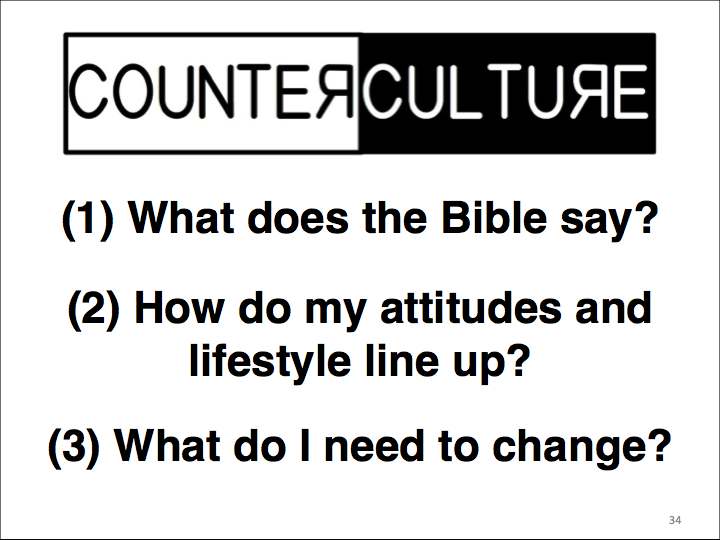
Only an honest listening to the Holy Spirit about your attitude and lifestyle concerning money is what can keep us from letting money rob us of God’s blessing.


7 Quotes From “Did Jesus Rise From The Dead?”

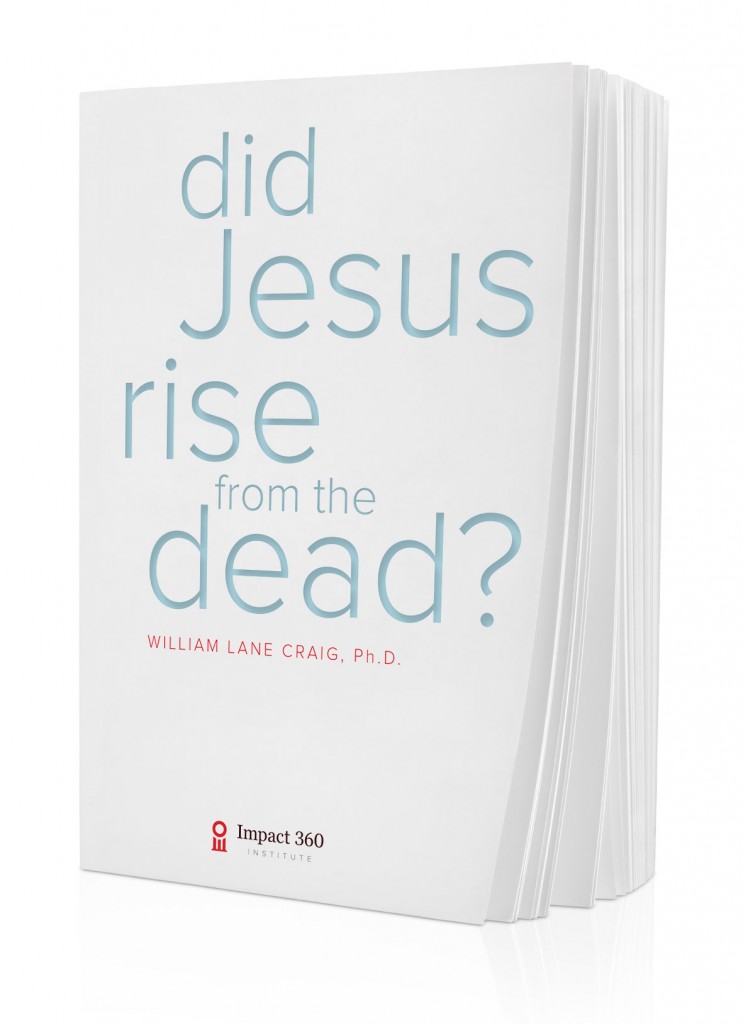
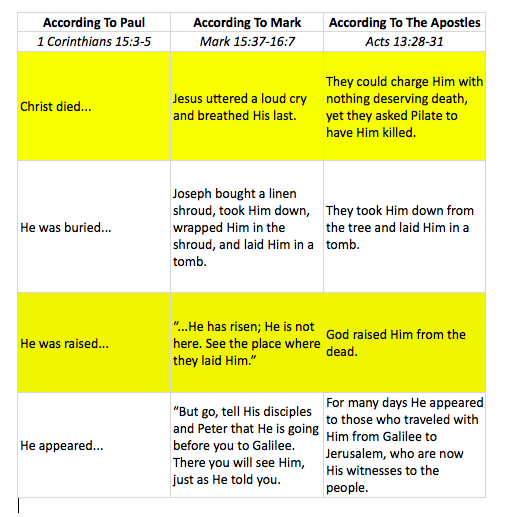
Did Jesus Rise From The DeadDid Jesus Rise From The Dead? is an excellent apologetic for both the biblical skeptic and the biblical student. You can read my full book review by clicking here. Below are seven noteworthy quotes and one infographic from this fascinating book.

“One of the most noteworthy facts about the early Christian belief in Jesus’ resurrection was that it flourished in the very city where Jesus had been publicly crucified. So long as the inhabitants of Jerusalem thought that Jesus’ corpse lay in the tomb, few would have been prepared to believe such silliness as the claim that God had raised Jesus from the dead.”

“We have the extraordinary number of at least five independent sources for Jesus’ burial, some of which are extremely early. The Gospels describe Joseph as a rich man, a member of the Jewish Sanhedrin. As a member of the Jewish Sanhedrin that condemned Jesus, Joseph of Arimathea is unlikely to be a Christian invention. The Sanhedrin was a sort of Jewish high court made up of seventy of the leading men of Judaism, which presided in Jerusalem. There was an understandable hostility among early Christians toward the Jewish Sanhe-drists, for Christians blamed the Sanhedrists for engineering a judicial murder of Jesus at the hands of the Romans. … Therefore, Jesus’ burial by Joseph is very probably historical, since it would be almost inexplicable why Christians would invent a story about a Jewish Sanhedrist who gives Jesus a proper burial.”

“Matthew is clearly working with an independent source, for he includes the story of the guard at the tomb, which is not derived from Mark and is unique to his Gospel; moreover, his comment that the rumor that the disciples had stolen Jesus’ body, ‘And this story has been spread among the Jews to this day,’ (Matthew 28:15) shows that the guard is not Matthew’s own creation, but was part of prior tradition. Luke also has an independent source, for he tells the story, not found in Mark, of two disciples’ inspecting the tomb to verify the women’s report that the tomb was vacant. This story cannot be regarded as Luke’s own creation, since the incident is independently reported in John’s Gospel. And, again, given John’s independence of the other three Gospels, we have yet another independent report of the empty tomb.”

Did Jesus Rise From The Dead infographic

(click image for a larger view)

“To appreciate how restrained Mark’s narrative is, we need only read the account in the second-century apocryphal Gospel of Peter. It describes Jesus’ triumphant exit from the tomb as a gigantic figure whose head reaches above the clouds, supported by giant angels, followed by a talking cross, heralded by a voice from heaven, and all witnessed by a Roman guard, the Jewish leaders, and a multitude of spectators! This is how real legends look: They’re richly decorated with theological and apologetical motifs. By contrast, Mark’s account is stark in its simplicity.”

“Think about that: ‘His disciples came by night and stole Him away’ [Matthew 28:13]. The Jewish authorities did not deny the fact that Jesus’ tomb was empty; instead they entangled themselves in a hopeless series of absurdities, trying to explain it away. In other words, the Jewish claim that the disciples stole the body presupposes that the body was, in fact, missing. Therefore, we have evidence from the very adversaries of the early Christian movement for the fact of the empty tomb.”

“All the followers of those first century messianic movements were fanatically committed to the cause…. But in no case right across the century before Jesus and the century after Him do we hear of any Jewish group saying that their executed leader had been raised from the dead, and he really was the Messiah after all.” —N.T. Wright

“A supernatural explanation of the empty tomb, the resurrection appearances, and the origin of the Christian faith is not contrived given the context of Jesus’ own unparalleled life, ministry, and personal claims.”

Thursdays With Oswald—The Historicity Of The Cross

This is a weekly series with things I’m reading and pondering from Oswald Chambers. You can read the original seed thought here, or type “Thursdays With Oswald” in the search box to read more entries.

The Historicity Of The Cross 

     It is essential to have an historic basis for our Christian faith: our faith must be centered in the Life and Death of the historic Jesus. Why is it that that Life and Death have an importance out of all proportion to every other historic fact? Because there the Redemption is brought to a focus. 

     Jesus Christ was not a Man who twenty centuries ago lived on this earth for thirty-three years and was crucified; He was God Incarnate, manifested at one point of history. All before look forward to that point; all since look back to it. The presentation of this fact produces what no other fact in the whole of history ever could produce, viz.: the miracle of God at work in human souls. The death of Jesus was not the death of a martyr, it was the revelation of the Eternal heart of God. That is why the Cross is God’s last word.

From Conformed To His Image

This is THE Fact of history—

For God loved the world so much that He gave His One and Only Son, so that everyone who believes in Him will not perish but have eternal life. God sent His Son into the world not to judge the world, but to save the world through Him. (John 3:16-17)

God-Oriented & People-Focused

God-oriented & People-focusedYou can spin it around, roll it down the stairs, throw it high in the air, and still it isn’t phased one bit. It doesn’t matter if you’re moving fast or slow, if you’re at high altitudes or in Death Valley, it still works. The needle of the compass always points north.

It can’t help it: it is naturally oriented to the north pole. Whether it’s pitch-black outside, or 40 degrees below zero; whether you feel like north is “north” or not, the needle will always point its way back to north.

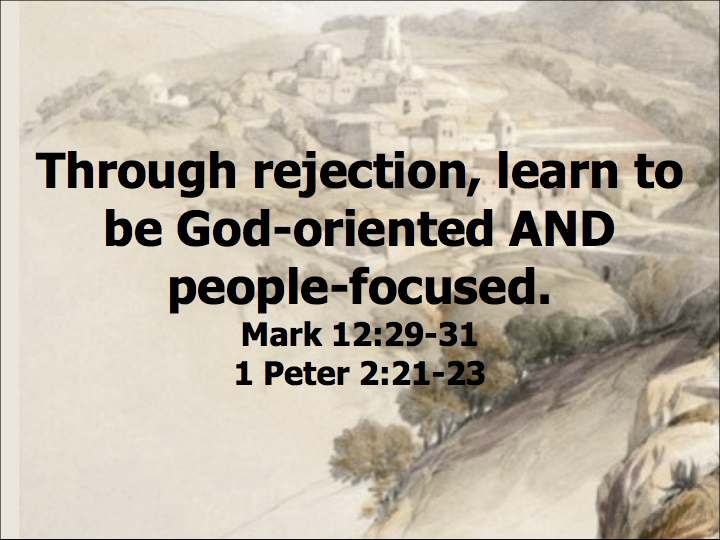
Jesus could be cheered by the crowds or jeered by them. People could shout “Hosanna!” or “Crucify Him!” The weather could be calm or stormy, His disciples could be courageous or scared to death, and still Jesus was oriented to His Father.

Every word Jesus said, every action He undertook, every lesson He taught, every prayer He prayed was God-oriented.

But not only that, even as much as people ridiculed Him, snubbed Him, rejected Him, or denied Him, Jesus was still people-focused. After being so cruelly treated, I think I may have turned from some people, or even turned on some people with some not-so-kind words. I may have even begun to withdraw from people. But despite the way people mistreated Him, Jesus remained lovingly people-focused (see 1 Peter 2:21-23).

Jesus us told us that if we stand for Him, we will be mistreated as well (see Luke 21:17 and John 15:20). But He also told us there was a reward for that mistreatment (see Matthew 5:11-12).

When asked what the greatest of all the commandments was, Jesus replied that it was to be God-focused and people-oriented

Jesus replied, “The most important commandment is this: ‘Listen, O Israel! The Lord our God is the one and only Lord. And you must love the Lord your God with all your heart, all your soul, all your mind, and all your strength.’ The second is equally important: ‘Love your neighbor as yourself.’ No other commandment is greater than these.” (Mark 12:29-31)

So a good check-up question for us all: How am I doing at being God-oriented and people-focused, no matter what the circumstances are?

UPDATE: I explore the example of how Jesus responded to His critics in a couple of chapters of my book When Sheep Bite.

Jesus Is The Supernova

Listen to the podcast of this post by clicking on the player below, and you can also subscribe on AppleSpotify, or Audible. 

In astronomical terms, a supernova is an explosion almost beyond compare. For a brief moment the explosion is the brightest point in the universe, sending enriching energy reverberating in every direction.

There was a supernova in the opening words of the Old Testament—in the beginning God created (Genesis 1:1). There was an explosion of God’s love that was the brightest spot in the universe He just created. But shortly after a supernova explodes, it appears to go dark for a period of time.

In history this could be seen as the time in-between the in the beginning of the Old Testament and the time before Jesus is born. Isaiah describes this as a people walking around in darkness and gloomy distress. Then all of sudden Isaiah says a great light explodes on the scene—

Nevertheless, there will be no more gloom for those who were in distress…. The people walking in darkness have seen a great light; on those living in the land of deep darkness a light has dawned. … For to us a Child is born, to us a Son is given, and the government will be on His shoulders. And He will be called Wonderful Counselor, Mighty God, Everlasting Father, Prince of Peace. (Isaiah 9:1-2, 6)

The reverberation of God’s supernova in the opening words of the Old Testament show up again in the opening words of the New Testament—A record of the genealogy of Jesus Christ (Matthew 1:1). The light of Jesus exploded on the scene!

And the Christ became flesh and tabernacled among us; and we actually saw His glory, such glory as an only begotten Son receives from His Father, full of grace and truth. (John 1:14)

Because of the energy released in the supernova of Creation and the reverberation of Christ’s First Advent, we are the beneficiaries. Astronomers tell us that the explosion of a supernova makes it possible for other stars to be born. That’s you and me!

Live clean, innocent lives as children of God, shining like bright stars in a world full of crooked and perverse people. (Philippians 2:15)

May this Advent season remind you of the supernova explosion of love of Jesus Christ, and our ability to shine brightly because of His life in us. Shine brightly!

Check out the other ways Jesus shined brightly at His Advent in our series The Star Of CHRISTmas.

►► Would you please prayerfully consider supporting this ministry? My Patreon supporters get behind-the-scenes access to exclusive materials. ◀︎◀︎

Making A Name For Yourself

D.L. MoodyIt’s a focus of far too many people: “I’ve got to make a name for myself.” It’s nothing new but has been going on as long as men have been on earth.

In Revelation 3, Jesus is addressing the church in Sardis about their pursuit of a reputation. Jesus tells them, “You have definitely made a name for yourself. People know you are making things happen, and you have a reputation of being successful.” Sounds good, right? Except Jesus goes on to say, “But I’m not concerned about your reputation; I’m more interested in your character.”

Jesus uses the same Greek word four times in just six short verses to show the progression He is looking for to go from a popular reputation to godly character:

  • You have tried to make a name for yourself, but your focus is wrong (Rev. 3:1).
  • The name you should focus on is My name—you should be glorifying Me, not yourself (v. 4).
  • If you glorify Me, I will make sure your name is never erased from the Book of Life (v. 5a).
  • Not only that, if you glorify Me, I will personally introduce you to My Father. I will say, “This one is Mine!” (v. 5b)

Wow! 

Contrast that with people who say, “Jesus, didn’t we do some pretty amazing things in Your name? Did you check us out?!?” And Jesus will reply to them, “I never knew you because you were only using Me to make yourself look good” (see Matthew 7:21-23; Revelation 3:2).

I am not living for the applause of men, but only for the applause of nail-scarred Hands.

I don’t want the headlines here, but I want to hear my Lord say, “Well done, good and faithful servant!”

I don’t want a reputation here, but I want a godly character in Heaven.

That’s the name I want!! 

If you are near Cedar Springs this weekend, please join us for part six of this series The 7-Star Church.

Lord, Save Me

He shall save His people from their sins. (Matthew 1:21)

C.H. SpurgeonLord, save me from my sins. By the name of Jesus I am encouraged thus to pray. 

Save me from my past sins, that the habit of them may not hold me captive. 

Save me from my constitutional sins, that I may not be the slave of my own weaknesses. 

Save me from the sins which are continually under my eye that I may not lose my horror of them. 

Save me from secret sins; sins unperceived by me from my want of light. 

Save me from sudden and surprising sins: let me not be carried off my feet by a rush of temptation. 

Save me, Lord, from every sin. Let not any iniquity have dominion over me. —Charles Spurgeon

Is Confrontation A Dirty Word?

ConfrontationJesus takes the church of Thyatira to task because they are tolerating someone with a Jezebel spirit to remain in a position of leadership and influence (Revelation 2:18-29). This is still a message to the church today!

However, for some reason Christians have made “confrontation” a dirty word. We don’t confront people in error, especially those who are in leadership positions within their church. Perhaps equally as wrong: when we do confront, we do it in a way that is destructive.

The goal of confrontation is restoration, not destruction!

In Revelation 2, Jesus gives us five steps toward healthy, biblical, God-honoring confrontation:

  1. Don’t tolerate a Jezebel spirit by remaining silent (v. 20). Instead we need to follow the principles in Matthew 18:15-17 and 1 Timothy 5:19.
  2. Allow the one whom you’ve confronted time to repent (v. 21a).
  3. If they don’t repent, don’t rescue them from God-inflicted punishment (vv. 21b-23).
  4. Run away from secrets (v. 24). If something more than Scripture is required by the Jezebel leader, reject it.
  5. Don’t run away from the situation, but hold on to Jesus until Jesus returns (vv. 25-28).

Not one human is infallible, but Jezebel not only claims infallibility, but also demands blind allegiance to her teachings. But it is just as wrong to tolerate Jezebel as it is to confront her unbiblically; Jesus opposed both.

One way for us to always avoid these two extremes: Try to out-serve one another, just as Jesus directed us—

“You know that the rulers of the Gentiles lord it over them, and their high officials exercise authority over them. Not so with you. Instead, whoever wants to become great among you must be your servant, and whoever wants to be first must be your slave—just as the Son of Man did not come to be served, but to serve, and to give His life as a ransom for many.” (Matthew 20:25-28)

If you are near Cedar Springs next Sunday, please join me as we continue our series on The 7-Star Church.

Check out this clip about confrontation—