Jesus Is The Supernova

Listen to the podcast of this post by clicking on the player below, and you can also subscribe on AppleSpotify, or Audible. 

In astronomical terms, a supernova is an explosion almost beyond compare. For a brief moment the explosion is the brightest point in the universe, sending enriching energy reverberating in every direction.

There was a supernova in the opening words of the Old Testament—in the beginning God created (Genesis 1:1). There was an explosion of God’s love that was the brightest spot in the universe He just created. But shortly after a supernova explodes, it appears to go dark for a period of time.

In history this could be seen as the time in-between the in the beginning of the Old Testament and the time before Jesus is born. Isaiah describes this as a people walking around in darkness and gloomy distress. Then all of sudden Isaiah says a great light explodes on the scene—

Nevertheless, there will be no more gloom for those who were in distress…. The people walking in darkness have seen a great light; on those living in the land of deep darkness a light has dawned. … For to us a Child is born, to us a Son is given, and the government will be on His shoulders. And He will be called Wonderful Counselor, Mighty God, Everlasting Father, Prince of Peace. (Isaiah 9:1-2, 6)

The reverberation of God’s supernova in the opening words of the Old Testament show up again in the opening words of the New Testament—A record of the genealogy of Jesus Christ (Matthew 1:1). The light of Jesus exploded on the scene!

And the Christ became flesh and tabernacled among us; and we actually saw His glory, such glory as an only begotten Son receives from His Father, full of grace and truth. (John 1:14)

Because of the energy released in the supernova of Creation and the reverberation of Christ’s First Advent, we are the beneficiaries. Astronomers tell us that the explosion of a supernova makes it possible for other stars to be born. That’s you and me!

Live clean, innocent lives as children of God, shining like bright stars in a world full of crooked and perverse people. (Philippians 2:15)

May this Advent season remind you of the supernova explosion of love of Jesus Christ, and our ability to shine brightly because of His life in us. Shine brightly!

Check out the other ways Jesus shined brightly at His Advent in our series The Star Of CHRISTmas.

►► Would you please prayerfully consider supporting this ministry? My Patreon supporters get behind-the-scenes access to exclusive materials. ◀︎◀︎

Making A Name For Yourself

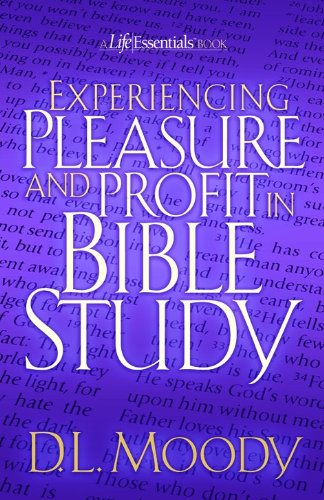
D.L. MoodyIt’s a focus of far too many people: “I’ve got to make a name for myself.” It’s nothing new but has been going on as long as men have been on earth.

In Revelation 3, Jesus is addressing the church in Sardis about their pursuit of a reputation. Jesus tells them, “You have definitely made a name for yourself. People know you are making things happen, and you have a reputation of being successful.” Sounds good, right? Except Jesus goes on to say, “But I’m not concerned about your reputation; I’m more interested in your character.”

Jesus uses the same Greek word four times in just six short verses to show the progression He is looking for to go from a popular reputation to godly character:

  • You have tried to make a name for yourself, but your focus is wrong (Rev. 3:1).
  • The name you should focus on is My name—you should be glorifying Me, not yourself (v. 4).
  • If you glorify Me, I will make sure your name is never erased from the Book of Life (v. 5a).
  • Not only that, if you glorify Me, I will personally introduce you to My Father. I will say, “This one is Mine!” (v. 5b)

Wow! 

Contrast that with people who say, “Jesus, didn’t we do some pretty amazing things in Your name? Did you check us out?!?” And Jesus will reply to them, “I never knew you because you were only using Me to make yourself look good” (see Matthew 7:21-23; Revelation 3:2).

I am not living for the applause of men, but only for the applause of nail-scarred Hands.

I don’t want the headlines here, but I want to hear my Lord say, “Well done, good and faithful servant!”

I don’t want a reputation here, but I want a godly character in Heaven.

That’s the name I want!! 

If you are near Cedar Springs this weekend, please join us for part six of this series The 7-Star Church.

Lord, Save Me

He shall save His people from their sins. (Matthew 1:21)

C.H. SpurgeonLord, save me from my sins. By the name of Jesus I am encouraged thus to pray. 

Save me from my past sins, that the habit of them may not hold me captive. 

Save me from my constitutional sins, that I may not be the slave of my own weaknesses. 

Save me from the sins which are continually under my eye that I may not lose my horror of them. 

Save me from secret sins; sins unperceived by me from my want of light. 

Save me from sudden and surprising sins: let me not be carried off my feet by a rush of temptation. 

Save me, Lord, from every sin. Let not any iniquity have dominion over me. —Charles Spurgeon

Is Confrontation A Dirty Word?

ConfrontationJesus takes the church of Thyatira to task because they are tolerating someone with a Jezebel spirit to remain in a position of leadership and influence (Revelation 2:18-29). This is still a message to the church today!

However, for some reason Christians have made “confrontation” a dirty word. We don’t confront people in error, especially those who are in leadership positions within their church. Perhaps equally as wrong: when we do confront, we do it in a way that is destructive.

The goal of confrontation is restoration, not destruction!

In Revelation 2, Jesus gives us five steps toward healthy, biblical, God-honoring confrontation:

  1. Don’t tolerate a Jezebel spirit by remaining silent (v. 20). Instead we need to follow the principles in Matthew 18:15-17 and 1 Timothy 5:19.
  2. Allow the one whom you’ve confronted time to repent (v. 21a).
  3. If they don’t repent, don’t rescue them from God-inflicted punishment (vv. 21b-23).
  4. Run away from secrets (v. 24). If something more than Scripture is required by the Jezebel leader, reject it.
  5. Don’t run away from the situation, but hold on to Jesus until Jesus returns (vv. 25-28).

Not one human is infallible, but Jezebel not only claims infallibility, but also demands blind allegiance to her teachings. But it is just as wrong to tolerate Jezebel as it is to confront her unbiblically; Jesus opposed both.

One way for us to always avoid these two extremes: Try to out-serve one another, just as Jesus directed us—

“You know that the rulers of the Gentiles lord it over them, and their high officials exercise authority over them. Not so with you. Instead, whoever wants to become great among you must be your servant, and whoever wants to be first must be your slave—just as the Son of Man did not come to be served, but to serve, and to give His life as a ransom for many.” (Matthew 20:25-28)

If you are near Cedar Springs next Sunday, please join me as we continue our series on The 7-Star Church.

Check out this clip about confrontation—

A Harmony Of The Gospels (book review)

HarmonyFor anyone who wants to read the four New Testament gospels with greater insight, I highly recommend A Harmony Of The Gospels For Students Of The Life Of Christ by A.T. Robertson.

Dr. Robertson wrote: “The purpose of a harmony is not to teach theology, but to make available for men of any faith the facts in the Gospels concerning Jesus of Nazareth.” And that’s exactly what this book does.

It is one of the more interesting ways I have ever read Matthew, Mark, Luke and John. When I followed the outline in Robertson’s book, instead of reading each gospel straight through, I read them in chronological order. For instance, in reading about John’s message announcing the soon-arrival of Jesus, I was reading Mark 1:7-8, Matthew 3:11-12, and Luke 3:15-18.

In other words, you will be reading the four gospels in chronological order as the events unfolded in Christ’s ministry. Right alongside each section of study are Dr. Robertson’s fascinating and insightful notes. Reading the gospels this way really brought out details that you may have missed when just reading through the gospels in a more traditional manner.

You don’t have to be a scholar to use this book, you just need to be desirous to learn more about Jesus.

No Apologies Needed

Listen to the podcast of this post by clicking on the player below, and you can also subscribe on AppleSpotify, or Audible. 

Jesus spoke.
A lot.
In fact,
He’s called the Word.
He told stories,
He quoted Scripture,
He used nursery rhymes.
He laughed,
He cried,
He thundered.
He spoke to the religious,
And the irreligious;
To Jews,
To Gentiles,
To Samaritans.
His words excited,
And angered,
Healed,
And restored.
But…
Not once did He misspeak,
Or stumble,
Or apologize.
How could He do this?
“I did not speak of My own accord,
But the Father who sent Me
Commanded Me what to say
And how to say it …
So whatever I say
Is just what the Father
Has told Me to say” (John 12:49-50)
You and I can speak like this too:
We, too, can slow down, listen, and then speak only those Holy Spirit-directed words. If we can do that, we won’t ever need to apologize.

Check out my video called Time To Check The Mirror where I talk about so-called Freudian slips, and my blog post A Leader’s Sincere Apology.

►► Would you please prayerfully consider supporting this ministry? My Patreon supporters get behind-the-scenes access to exclusive materials. ◀︎◀︎

Careless Words

Listen to the podcast of this post by clicking on the player below, and you can also subscribe on AppleSpotify, or Audible. 

“But I tell you that men will have to give account on the day of judgment for every careless word they have spoken.” —Jesus Christ, in Matthew 12:36

The King James Version uses the phrase idle words, which is a rather apt description. The root Greek word is the picture of a worker, but the prefix “a” with it means that the worker is either lazy or unemployed. Not only that but he couldn’t care less (“careless”) about his unemployed, unproductive state.

It’s lazy to use whatever word comes to mind, especially if it’s not the right word. 

It takes hard work to say the right word at the right time. 

It requires great care to leave the wrong word unspoken.

Just prior to the above quote from Jesus, His critics had just thrown out the line, “He casts out demons through the power of the devil.” They didn’t think about what they were saying, so Jesus said, “If you had thought that through before you said it, you would have realized that it makes no sense. That was an idle, unproductive, lazy thing to say.” In the meantime, who knows how many people heard that throw-away line and then turned away from Jesus (see Matthew 12:22-37).

Words have consequences. Idle, careless words may have eternal consequences. I’ll have to stand before God to explain my careless words some day.

And so will you.

►► Would you please prayerfully consider supporting this ministry? My Patreon supporters get behind-the-scenes access to exclusive materials. ◀︎◀︎

Run To The Pain

Listen to the podcast of this post by clicking on the player below, and you can also subscribe on AppleSpotify, or Audible.

We have become a numbed culture: we try to soften every blow, water down each negative report, ask only surface questions in the hopes that no one will really tell us how much they’re hurting, and then medicate away every symptom. But these symptoms are screaming to be noticed!

Dr. Paul Brand the renown hand surgeon and missionary to leprosy patients in India, wrote:

     “Pain contributes daily to a normal person’s quality of life…. Every normal person limps occasionally. Sadly, leprosy patients do not limp. Their injured legs never get the rest needed for healing…. This inability to ‘hear’ pain can cause permanent damage because the body’s careful responses to danger will break down. … A body only possesses unity to the degree that it possesses pain…. We must develop a lower threshold of pain by listening, truly listening, to those who suffer. … The body protects poorly what it does not feel.” —Dr. Paul Brand & Philip Yancey, In His Image

The Gospels often talk of the compassion of Jesus. His compassion led Him to teach the confused, feed the hungry, and heal the sick. The phrase usually used in the NKJV is descriptive: Jesus was moved with compassion. In other words His feelings moved Him to action.

The Old English way of describing compassion was to say someone was “moved in his bowels.” This is because when someone else is suffering it should be like a kick in my gut too.

Jesus gravitated toward the hurting, but in one story He told, Jesus related something different about His Father’s compassion. It’s the story we now call the story of the prodigal son. In this story Jesus said His Father watched the horizons every day to see if His wayward child would return. When He saw this child coming into view, God saw his slumped shoulders, He could detect his heavy heart and worn-out body. Then Jesus says something amazing, “The Father was moved with compassion and He RAN TO HIS SON!

If our Heavenly Father runs TO another’s pain, what right do we have to ever run AWAY from it? 

If we are to be God-honoring in our interaction with others, we need to—as Dr. Brand says—lower our threshold of pain. We need to feel what others feel, to feel it like a kick in our own gut, and then move toward the pain with help and healing and restoration.

Christians—if we are truly Christ-like—should be known as the most compassionate people of anyone.

So we need to always be asking: What am I doing to let this compassion be seen in my life?

Check out all of the other messages in our series Live Together by clicking here.

►► Would you please prayerfully consider supporting this ministry? My Patreon supporters get behind-the-scenes access to exclusive materials. ◀︎◀︎

The Domineering Pastor

I wrote to the church, but Diotrephes who loves to be first, will have nothing to do with us. (3 John 9)

The King James Versions says that Diotrephes loveth to have the preeminence. He loved his title, his position of authority, and having everything in the church flow through him.

He wanted not only to approve who spoke in the church, but even with whom church people could socialize outside of church. He wielded his positional authority like a sword and cut off people from the fellowship of the church if they didn’t join lockstep with him.

He used fear and intimidation to demand people follow him, and wouldn’t receive a loving letter from the Apostle John. To counteract any who would question him, Diotrephes engaged in gossip and character assassination of any he perceived to be a threat to his position as pastor.

For shame! 

This type of attitude has no place in the Body of Christ, especially among the pastorate! Jesus came to serve, and taught us to do likewise. Jesus didn’t snuff out the smoldering wick or stomp on the bruised reed, but ministered lovingly to all. Peter told shepherds to never use their position to lord it over others.

My fellow pastor, having the title of pastor doesn’t mean I’m the smartest person in the room, or that I have all the answers. I am one member of the Body of Christ. Each member of the Body needs all the other members of the Body. I should humbly serve, never demanding allegiance to me or blind obedience to my wishes. I should never try to hide behind my title, but be the most transparent, the most willing to admit my mistakes, and the first to forgive and to ask forgiveness.

Lord, guard my heart against the spirit of Diotrephes!!

UPDATE: This is one of the seed thoughts that went into my book Shepherd Leadership.

Thursdays With Oswald—Our Father

This is a weekly series with things I’m reading and pondering from Oswald Chambers. You can read the original seed thought here, or type “Thursdays With Oswald” in the search box to read more entries.

Our Father

     Think for one minute, have you behaved today as though God were your Father or have you to hang your head in absolute shame before Him for the miserable, mean, unworthy thoughts you have had about your life? 

     It all springs from one thing, you have lost hold of the idea that God is your Father. Some of us are such fussy, busy people, refusing to look up and realize the tremendous revelation in Jesus Christ’s words—Your heavenly Father knows what you need…. 

From He Shall Glorify Me 

What an amazing thought that when Jesus taught us to pray, He said we could address Almighty God with the affectionate title of “Our Father.” In his book Who Do You Think You Are?, Mark Driscoll points out:

     “In the thirty-nine books of the Old Testament, God is referred to only as Father roughly fourteen times—and each time it’s impersonally, in reference to the nation of Israel, not to individuals. Everything radically changed with Jesus. He spoke of God as Father more than sixty times in the New Testament.

Your heavenly Father loves you more than you can possibly imagine! Let that truth sink in. Don’t give in to the thoughts that your life is not very valuable, or even that God doesn’t like you very much.

God loves you as if you were the only person on earth to love! And He sent Jesus to earth to make it possible for you to be adopted into His family, to call Him Father. Even more than that, to call Him “Daddy God” (see Romans 8:15-17).

Live in your heavenly Father’s love today.