Talk Back To Your Thoughts

Listen to the podcast of this post by clicking on the player below, and you can also subscribe on AppleSpotify, or Audible. 

Do you talk to yourself? 

Of course you do. We all talk to ourselves: it’s called “thinking.” 

But do you talk out loud when you talk to yourself? 

An unhealthy habit for most of us is that our thoughts are only a one-way monologue. That is, we are listening to our thoughts but we are not talking back to them. As a result, everything negative we’ve heard from our enemies is bouncing around in our heads. The more we hear it, the more likely we are to believe it. 

In Psalm 42, we hear from a psalmist who is longing to experience God’s presence but at the same time there’s a nagging thought implanted by skeptics: “Where is your God?” The psalmist reminisces how it used to be, which means there is a nagging doubt in his mind that it may never be like that again. 

But finally, the psalmist does the mentally healthy thing: he talks back to his thoughts. He asks himself a question and then he gives a new response—a response that is hope-filled instead of doubt-plagued. 

Why are you downcast, O my soul? Why so disturbed within me? Put your hope in God, for I will yet praise Him, my Savior and my God. My soul is downcast within me; therefore I will remember You. (Psalm 42:5-6) 

When the nagging thought of “Where is your God?” comes up again just a couple of verses later, he doesn’t linger or brood over this doubt-inducing thought but immediately talks back to that negative voice with hope-filled words (vv. 10-11). 

The devil has a singular agenda: to separate you from God. He does this through lies and doubts. Jesus told us the devil’s native language is lies: “He was a murderer from the beginning, not holding to the truth, for there is no truth in him. When he lies, he speaks his native language, for he is a liar and the father of lies” (John 8:44). 

The Bible tells us that the devil can also put thoughts and desires in our hearts, but they are all lies (see John 13:2; Acts 5:3). 

We cannot let these lies go unchallenged, so here’s our battle strategy: 

For the weapons of our warfare are not physical weapons of flesh and blood, but they are mighty before God for the overthrow and destruction of strongholds, inasmuch as we refute arguments and theories and reasonings and every proud and lofty thing that sets itself up against the true knowledge of God; and we lead every thought and purpose away captive into the obedience of Christ—the Messiah, the Anointed One. (2 Corinthians 10:4-5 AMP) 

There are five questions we need to use to talk to ourselves about the thoughts we hear: 

  1. Is this thought unbiblical? (2 Timothy 3:16-17)
  2. Does this thought rob God of the glory due His name (Psalm 29:1-11)? 
  3. Does this thought stifle my love for God or others (Mark 12:28-31)? 
  4. If I linger on this thought, does it rob me of peace (Isaiah 26:3-4)? 
  5. Does this thought make me apathetic toward sin (Genesis 4:7)? 

(Check out all of the above verses by clicking here.)

If we answer “yes” to any of these questions, we must capture that thought and put it to death, which requires the sword of the Spirit, which is the Word of God (Ephesians 6:17). Because of what Jesus has done for us on the Cross, every promise in God’s Word is “yes and amen” in Jesus, and therefore is an invincible weapon against lying thoughts (2 Corinthians 1:20). 

Here’s how we use those promises: 

For the accuser of our brothers and sisters, who accuses them before our God day and night, has been hurled down. They triumphed over him by the blood of the Lamb AND by the word of their testimony. (Revelation 12:10-11)

Listen to your thoughts, but don’t listen too long before you start to challenge them with these five questions. Then demolish those lies—triumph over them by the blood of the Lamb and your spoken testimony. Speak the truth out loud for all to hear. 

This is part 4 in our series on a Christian’s mental health. If you’ve missed any of the other messages I’ve shared, you can find them all by clicking here. 

►► Would you please prayerfully consider supporting this ministry? My Patreon supporters get behind-the-scenes access to exclusive materials. ◀︎◀︎
Links & Quotes

Shalom—the peace that comes from God—could be defined simply as “nothing missing.” But couldn’t it also be defined as “no one missing”? It sure could! What peace there is when no one is missing from Heaven! Check out more of this message hereAnd be sure to check out all of my videos on my YouTube channel.

“A good man is a God-fixated man, ever-receiving, ever-overflowing.” —Dick Brogden, in Proverbs: Amplified and Applied

“Despite the moon’s apparently simple shape, uniformitarian scientists have long had great difficulty explaining how it could form by natural processes apart from a supernatural Creator. One Harvard astrophysicist once quipped that the best explanation for the moon’s existence was observational error—the moon doesn’t really exist!” This is a very interesting post from the Institute for Creation Research.

“Do we not miss very much of the sweetness and efficacy of prayer by a want of careful meditation before it, and hopeful expectation after it? … We too often rush into the presence of God without forethought or humility. We are like people who present themselves before a king without a petition, and what wonder is it that we often miss the end of prayer? We should be careful to keep the stream of meditation always running, for this is the water to drive the mill of prayer. … Prayer without fervency is like hunting with a dead dog, and prayer without preparation is hawking with a blind falcon. Prayer is the work of the Holy Spirit, but He works by means. God made man, but He used the dust of the earth as a material. The Holy Ghost is the Author of prayer, but He employs the thoughts of a fervent soul as the gold with which to fashion the vessel. Let our prayers and praises be not the flashes of a hot and hasty brain but the steady burning of a well-kindled fire.” —Charles Spurgeon, in Spurgeon and the Psalms

What a powerful word to pastors from T.M. Moore’s post First Things First. “Pastors sometimes complain that their people don’t seem very hungry or thirsty for the things of the Lord. Sated on the junk food of getting-and-spending, generously ladled over with pop culture, God’s people have little appetite for Christ or His Word. But what about us? Does our hunger and thirst for Christ make them long for the same? Do they see in us that earnest desire to be with the Lord that tells them they’re missing something of great importance? Loving Christ and delighting to be with Him is infectious. If the people we serve see it in us, they’ll want it for themselves, more than anything this world might offer.”

We don’t read about Jesus getting angry that often, but what usually got Him upset was when people in need were being kept from the God who could meet their needs. Sadly, it was usually man-made rules and practices that kept people away. I don’t want to make Jesus angry, so I need to evaluate anything in my life that may be standing in the way of connecting needy people with a need-satisfying God. 

“So in our broader culture, people no longer sin; they make mistakes. What about our Christian environment? In our case, sin is not denied. Instead it is often redefined to refer to the more flagrant sins of society. We tend to ignore our own sins of pride, selfishness, gossip, and the like. So, effectively, no one sins anymore. The reason is that we have lost sight of the biblical meaning of sin.  Typically, if we are not actually murderers, felons, or adulterers, we tend to think of our common sins as no more serious than a parking violation. We are so used to living with pride, selfishness, envy, gossip, and a whole host of other ‘respectable sins’ that we don’t even think of them as sin. But the fact is that, as serial sinners, we are all as guilty before God as that murderer. You and I sin every day in thought, word, deed, and motive. And whether those sins appear great or small in our own sight, in reality every sin we commit is an act of rebellion against God, a rejection and attempted negation of His sovereignty and rulership over us.” —Jerry Bridges

The Timeliest Of Words

Listen to the podcast of this post by clicking on the player below, and you can also subscribe on AppleSpotify, or Audible.

Jesus began to speak to them in parables… (Mark 12:1). 

This is only the fourth parable that Mark records, and as the final parable that Jesus uses in this Gospel, it brings His public ministry to a close. 

Jesus concludes this parable by quoting from Psalm 118. This psalm is the last of the “Hallel Psalms” to be sung at the conclusion of the Passover celebration—it is the psalm that looks eagerly to the Messiah‘s arrival. It contains the words that the crowds just used on Palm Sunday: “Lord, save us! Lord, grant us success! Blessed is He who comes in the name of the Lord” (Psalm 118:25-26; Mark 11:9-10).

At the conclusion of this parable, the religious leaders “knew He had spoken this parable against them” (Mark 12:12). 

This is the essence of a Holy Spirit-anointed sermon: The connection of timeless Scripture to current events. The Holy Spirit is also the One who brings the application to bear on the hearts of the audience. 

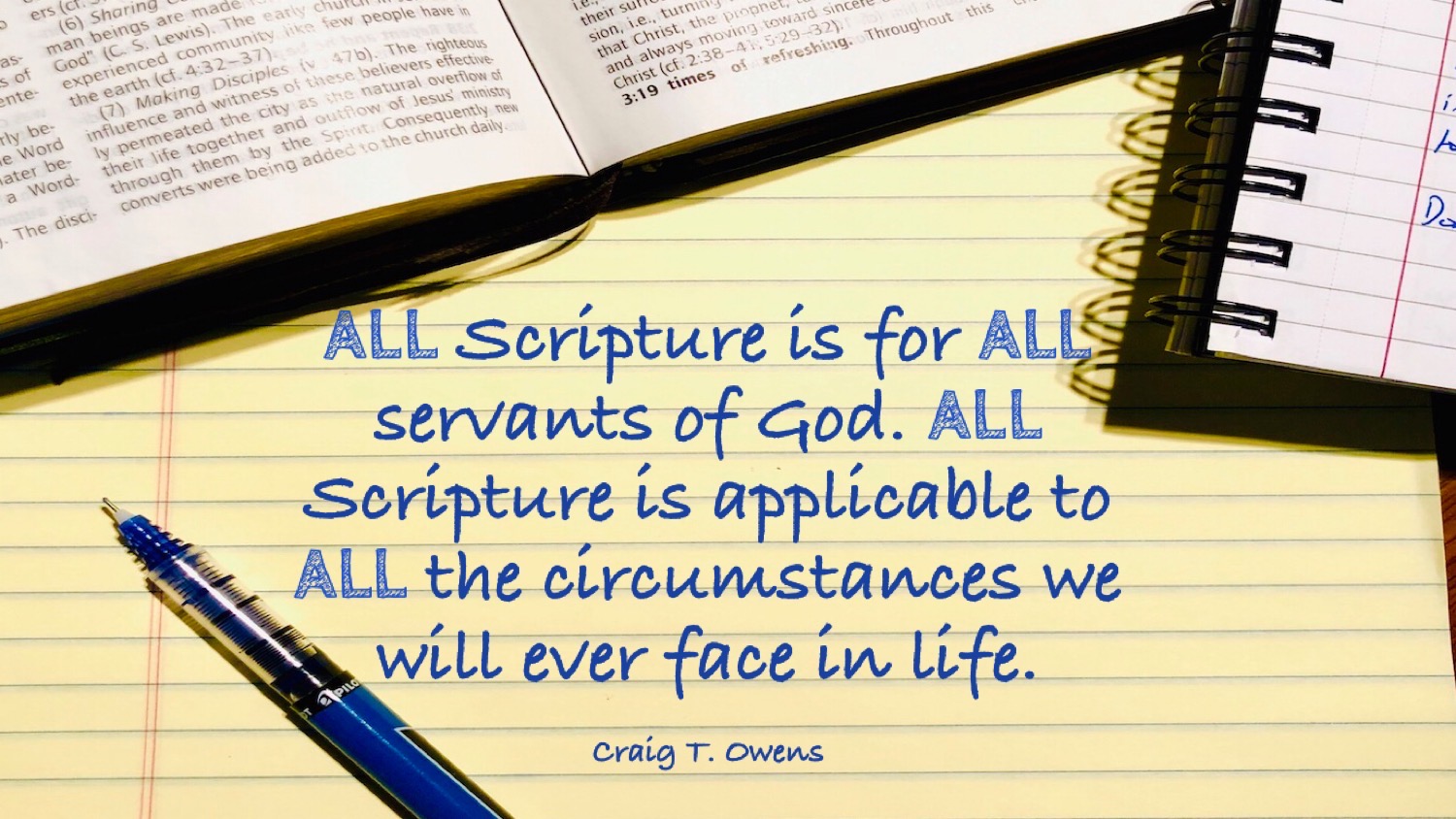
This is important for pastors as they prepare their sermons, but it’s also important for every Christian. We face challenges every day. The Holy Spirit can give us the timeliest of words. The Word of God is the inspired message for us. It is just as relevant and applicable today as it was the day the words were penned. The same Holy Spirit who inspired the authors of Scripture is the same Holy Spirit in us today who will illuminate and apply the Word for us (John 14:26).

Let’s not find our “timely word” from the ever-changing attitudes and opinions of culture, but let us continually go back to the unchanging, always-timely, always-relevant Word of God. That is the only place to find the timeliest of words every single time!

►► Would you please prayerfully consider supporting this ministry? My Patreon supporters get behind-the-scenes access to exclusive materials. ◀︎◀︎

Be An “Instead” Leader

Listen to the podcast of this post by clicking on the player below, and you can also subscribe on AppleSpotify, or Audible.

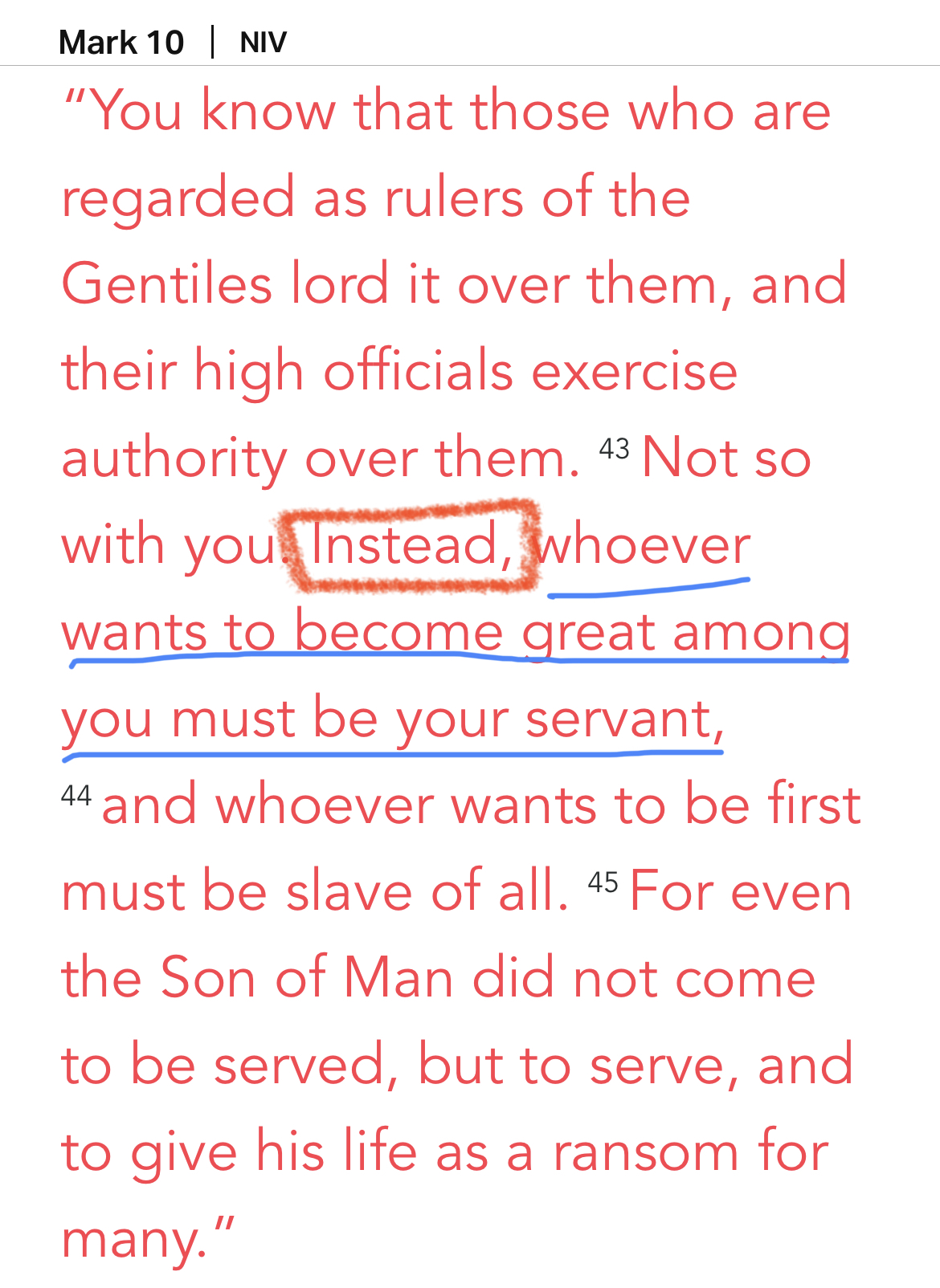
So Jesus called them together and said, “You know that the rulers in this world lord it over their people, and officials flaunt their authority over those under them. Not so with you. Instead…” (Mark 10:42-43).

A Christlike leader is an “instead” leader. 

Instead of exercising authority, exercising humility. 

Instead of being served, serving everyone else. 

Instead of being first in line, being last in line. 

Instead of seeking recognition, seeking anonymity. 

Instead of collecting titles, collecting calluses.

Instead of receiving, giving. 

Jesus, help me to be an “instead” leader—to strive to more consistently lead like You. 

►► Would you please prayerfully consider supporting this ministry? My Patreon supporters get behind-the-scenes access to exclusive materials. ◀︎◀︎
Facts And Hope

Listen to the podcast of this post by clicking on the player below, and you can also subscribe on AppleSpotify, or Audible. 

As Jesus headed towards Jerusalem, Mark records, “with Jesus leading the way” (Mark 10:32).

The Greek word for “lead” is proago. The prefix pro- means before or in front, and the root word -ago means to lead oneself, to lead by accompanying, or to lead by taking hold. This means that Jesus never sends us off by ourselves. He goes before us, with us, alongside us. 

One would think that this would give the disciples great comfort. But Mark also records two unexpected responses from these men: “astonished” and “afraid.” 

The words “astonished” or “amazed” are both the same word in Greek and are used both here and just a couple of verses earlier (verse 24), when Jesus said how hard it was for a rich person to enter into the kingdom of God. That statement amazed the disciples. Now they are astonished that Jesus is going to Jerusalem. “After all,” they might be thinking, “That’s where His main antagonists are headquartered! Why would He go there?” 

It appears that the father they went on their journey, the more their astonishment morphed into fear. The Greek word here is the one for which we get the word “phobia”—the kind of fear that can paralyze us or tempt us to run away. 

There are two things that Jesus does here to help His fearful friends:

(1) He gives them the unvarnished facts: “We are going up to Jerusalem…and the Son of Man will be delivered over to the chief priests and the teachers of the law. They will condemn Him to death and will hand Him over to the Gentiles, who will mock Him and spit on Him, flog Him and kill Him….” 

(2) He gives them an unshakable assurance: “…three days later He will rise” (Mark 10:32-34). 

Leaders who want to honor Jesus in their leadership would do well to follow this example—Give your fearful friends both the facts (no matter how painful they might seem) and the unshakable hope that God is sovereignly in control. 

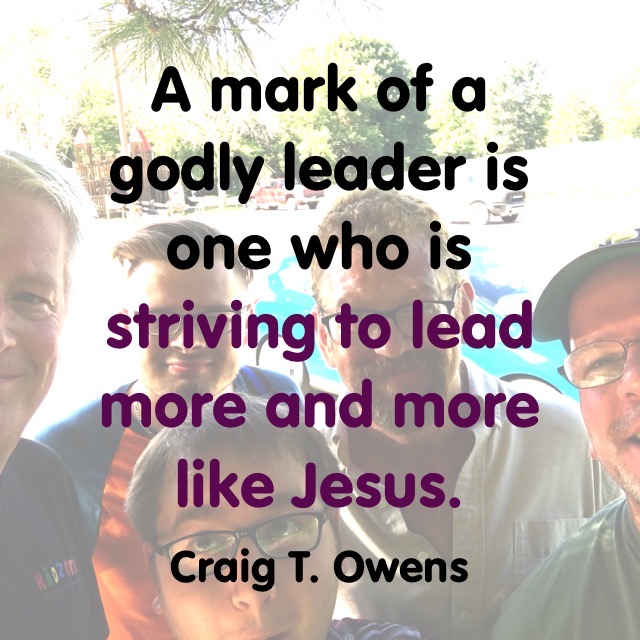
A mark of a godly leader is one who is striving to lead more and more like Jesus.

Let’s keep studying His life and allowing the Holy Spirit to teach us the lessons we can apply in our leadership roles. 

This is part 70 in my series on godly leadership. You can check out all of my posts in this series by clicking here.

►► Would you please prayerfully consider supporting this ministry? My Patreon supporters get behind-the-scenes access to exclusive materials. ◀︎◀︎
Reason To Hope And To Proclaim

Listen to the podcast of this post by clicking on the player below, and you can also subscribe on AppleSpotify, or Audible. 

On Resurrection Sunday, Christians celebrate an event that is the foundational truth for all of the Bible and for the Christian faith which springs from the Scriptures: The resurrection of Jesus. 

If Jesus wasn’t resurrected, this is a terrible, cruel lie we are perpetuating. If Jesus was resurrected, we have been given the key to eternal life. No one has ever made the bold claims that Jesus made about His own death and resurrection and then backed them up! 

On the Sunday morning after Jesus was crucified, some women arrived at His tomb to finish preparing His body for burial, but Luke records something fascinating: “They did not find the body of the Lord Jesus” (Luke 24:1-8). 

Think about this in a modern-day setting. If you were at the bedside of your loved one when they took their last breath, if you heard the doctor pronounce them dead, if you were at the funeral and saw their body in a casket, and if you saw that casket closed, sealed, and lowered into the ground, you would have every reason to find a body if that casket were re-opened. 

These women were on Golgotha when Jesus died, they saw the Roman soldiers verify His death, they witnessed Joseph and Nicodemus wrap His body in linen strips, and they saw His body placed in a sealed tomb. 

Then when there is no body where the dead body of Jesus is expected, there are only three possibilities: 

(1) He never died

Medical experts have concluded that the horrific torture that Jesus endured prior to even being crucified resulted in significant blood loss, and would have put His body in shock. Then the strain on His weakened body during crucifixion would have resulted in His body experiencing either pleural effusion or cardiac effusion, which is attested to by the flow of “blood and water” from Jesus’ dead body when His side was pierced by a Roman spear (John 19:34). 

The dead body of Jesus was thoroughly examined by both the Romans who conducted the crucifixion and His friends who prepared His body for burial (Mark 15:43-45; John 19:38-40). And two contemporary historians—Tacitus and Josephus—who were unfriendly to the cause of Christianity both attested to Christ’s death by crucifixion. 

(2) His body was stolen

The Sanhedrin was so insistent on Jesus being crucified, they wouldn’t have left the “conspiracy” option open. So they convinced Governor Pontius Pilate to allow them to both seal the tomb and place a group of soldiers outside the tomb to guard it (Matthew 27:62-66). It is highly unlikely that the disciples who fled before the temple guard and who were now locked in a room because they were quaking with fear would somehow gain the courage to undertake a mission to steal Jesus’ body. Nor is it likely that they could have escaped the notice of the highly-trained Roman soldiers guarding the tomb. 

(3) He was resurrected 

The angels at the empty tomb reminded the women that Jesus had foretold both the manner of His death and the assurance of His resurrection. Jesus described His death in detail multiple times, including such key details as His death would be in Jerusalem, the religious leaders would pronounce a death sentence but the Romans would crucify Him, and that He would be resurrected three days later (Matthew 20:18-19; Luke 18:31-33). In addition, Paul tells us that there were hundreds of eyewitnesses to the resurrected Jesus (1 Corinthians 15:3-8). 

Jesus said, “The reason my Father loves Me is that I lay down My life—only to take it up again. No one takes it from Me, but I lay it down of My own accord. I have authority to lay it down and authority to take it up again. This command I received from My Father” (John 10:17-18). 

If Jesus foretold this and fulfilled this, we can also trust His other promises. Assurances such as:

  • He is preparing an eternal home for us and He will come back to take His followers there 
  • That He alone holds the keys to Death and Hades
  • And that only those who have been cleansed from their sins will be able to enter Heaven

(see John 14:1-3; Revelation 1:18, 22:12-14)

The bold claim that Jesus would be resurrected back to life is adequately backed up by the events on Resurrection Sunday! So now we can say that believing the bold claim of Christ’s resurrection gives us hope for the future and reason to tell others about Him! 

If you’ve missed any of the other bold claims that we have discussed, you can find them all by clicking here. 

►► Would you please prayerfully consider supporting this ministry? My Patreon supporters get behind-the-scenes access to exclusive materials. ◀︎◀︎

An Unlikely Convert

There is a man that we meet in just a couple of verses of Scripture. We know that he is a Roman centurion. I gave him an appropriate Roman name of Vitellius. I created a fictional backstory for this centurion, but all of the events are well documented in both biblical history and contemporary history books of the time. I have listed below all of the scripture references that you may want to consult, along with some quotes from notable historians. 

What isn’t fictional is the fact that the Cross didn’t happen to Jesus, but He came to make Calvary happen. 

Jesus said this about His crucifixion, “And I, when I am lifted up from the earth, will draw all people to Myself” (John 12:32). That’s what happened to the thief, and to the centurion Vitellius, and to me, and to all who have acknowledged that Jesus is the Savior. 

Vitellius’ bold claim on the day Jesus was crucified still rings true 2000 years later: “Certainly this was a righteous Man!” 

Looking at Jesus who was lifted up on that Cross, we can appreciate the beauty of the 700-year-old prophecy about Him:

He had no beauty or majesty to attract us to Him, nothing in His appearance that we should desire Him. He was despised and rejected by mankind, a man of suffering, and familiar with pain. Like one from whom people hide their faces He was despised, and we held Him in low esteem. Surely He took up our pain and bore our suffering, yet we considered Him punished by God, stricken by Him, and afflicted. But He was pierced for our transgressions, He was crushed for our iniquities; the punishment that brought us peace was on Him, and by His wounds we are healed. (Isaiah 53:2-5)

Which is what we celebrate in Communion still to this day. “And [Jesus] took bread, gave thanks and broke it, and gave it to them, saying, ‘This is My body given for you; do this in remembrance of Me.’ In the same way, after the supper He took the cup, saying, ‘This cup is the new covenant in My blood, which is poured out for you’” (Luke 22:19-20). 

The way Christians live today can still lift Jesus up for all to see. Jesus told His followers, “Whoever wants to be My disciple must deny themselves and take up their cross and follow Me. For whoever wants to save their life will lose it, but whoever loses their life for Me will find it” (Matthew 16:24-25). 

When we live this way, our lives become the aroma of life to even sin-hardened thieves and war-hardened soldiers.  

Check out this video of Vitellius’ personal experience—

Here are some further resources for you to check out:

  • The Bible verses that form the background for this centurion’s story—Luke 23:1-47; Matthew 27:11-54; Mark 15:1-39; John 18:28-19:34
  • Historian William Barclay wrote this about the centurions, “The centurions were the backbone of the Roman army. In a Roman legion there were 6,000 men; the legion was divided into sixty centuries, each containing 100 men, and in command of each century there was a centurion. These centurions were the long-service, regular soldiers of the Roman army. They were responsible for the discipline of the regiment, and they were the cement which held the army together. … A centurion was the equivalent of a regimental sergeant-major; and the centurions were the backbone of the Roman army.”
  • The horrific torture of crucifixion

If you have missed any of the other messages in our series of Bold Claims, you can find them all my clicking here.

Keep In Tune

Listen to the podcast of this post by clicking on the player below, and you can also subscribe on AppleSpotify, or Audible. 

When Luke says first that “Jesus grew in wisdom” before he mentions any of the other ways Jesus grew, that is our indication that a healthy mind is at the foundation for every other aspect of health (Luke 2:52). If you’ve missed the mental health keys we’ve already learned, you can review them by clicking here. 

It’s been said that lions are tamed with a chair. Specifically, with the legs of the chair. These powerful animals are trying to focus on too many points at one time which keeps them from initiating an attack. So they are not so much “tamed” as they are paralyzed and overwhelmed by trying to concentrate on too many things. 

It’s the same with us: If we try to concentrate on every voice speaking to us, we’ll become overwhelmed and paralyzed. “The Bible says this … my Mom says that … my best friend told me to try … my agnostic coworker said I should….” It’s overwhelming and mentally draining! Just like our bodies can become exhausted, so can our minds. Exhausted bodies are susceptible to germs, and so are exhausted minds susceptible to unhealthy ideas. 

Consider all of the voices Jesus had to deal with in His last days heading toward Calvary. From about 4 months out, things really began to intensify. He still had the voices of His critics constantly harping on Him, and I’m sure the devil was still looking for his “opportune time” (Luke 4:13), not to mention all of the other voices around Jesus. There are two important principles to keep in mind here: 

  1. God can speak truth to us through harsh, unfriendly voices 
  2. The devil can lie to us through kind, friendly voices 

So we cannot automatically listen to or ignore messages because of who the messenger is.

The friendly voice of Peter told Jesus, “You are the Messiah!” To which Jesus replied, “The Holy Spirit revealed that to you. Now let me remind you that we are heading to Jerusalem where I am going to be crucified.” 

The now not-so-friendly voice of Peter then rebuked Jesus, “Never, Lord! This shall never happen to You!” Jesus turned to Peter to say, “Get behind Me, satan! You are a stumbling block to Me; you do not have in mind the concerns of God, but merely human concerns.” 

The Father gave Peter, James, and John a glimpse of the glory Jesus would have when He was resurrected from the dead when they saw Him transfigured. During this time Moses and Elijah affirmed that Jesus was headed to Jerusalem to fulfill all that was prophesied about Him. In the aftermath of His transfiguration, Jesus again repeated, “I am going to be crucified and resurrected.” 

As Jesus entered Jerusalem on the day we now celebrate as Palm Sunday, people cheered and the religious leaders jeered. To both groups, Jesus once again affirmed His mission, “I am going to be crucified and resurrected.” 

(See Luke 9:18-44; 18:31-33; Matthew 16:23; John 12:12-19, 23-33)

No matter what others said or did, Jesus never changed His tune. How did He keep clear about the mission He was on? He simply compared every voice with God’s voice. Jesus never changed His tune because He was in tune with the Father’s voice. 

Years ago, I played the tympani in our church orchestra. I learned very quickly that the best way to tune these big kettle drums was to put my face close to the drumhead while I hummed the proper note. Then as I adjusted the tuning pedal, I knew I had the tympani tuned to the right note when what I was humming resonated back to me from the drumhead. 

At the Transfiguration, the Father told the disciples to listen to the voice of Jesus. Jesus claimed that He only said and did what the voice of His Father resonated to Him. And Jesus told us that His sheep know and follow His voice in the same way (Luke 9:35; John 12:49-50; John 10:3-5). 

The Book of Psalms opens with these words: 

Blessed is the one who does not walk in step with the wicked or stand in the way that sinners take or sit in the company of mockers, but whose delight is in the law of the Lord, and who meditates on His law day and night. (Psalm 1:1-2)

The word meditate can be translated as “hum.” When we read and study God’s Word, the Holy Spirit will help us know which voices are in-tune with the Father’s heart and which ones are out-of-tune. You can check out a great example of this from the life of the apostle Paul in Acts 20:22-24; 21:10-15. 

So our important mental health reminder is this: To make sure we are listening to the right voices, tune your ear to the voice of the Holy Spirit. Then receive any voice that resonates with that tune, and reject any voice that is out of key. 

If you would like to download the graphic of this reminder for your phone, simply leave me a comment with the model of the phone, and I’ll get the right-sized graphic right out to you. If you’ve missed any of the messages in our mental health series, you can find all of them by clicking here. 

►► Would you please prayerfully consider supporting this ministry? My Patreon supporters get behind-the-scenes access to exclusive materials. ◀︎◀︎

Rejuvenated Faith

Listen to the podcast of this post by clicking on the player below, and you can also subscribe on AppleSpotify, or Audible. 

I have always appreciated the story of the desperate father who brought his son to Jesus. We get the idea from this story that this Dad had tried everything he could think of to help his boy, but nothing had worked. 

This father heard about Jesus and he believed that Jesus could help them. We read that he brought his son to Jesus, but when he arrived, he found Jesus still on the mountain where He was transfigured, along with Peter, James, and John. The nine remaining disciples apparently tried to address this problem, but they were unsuccessful. 

As Jesus and the three disciples came down the mountain, they found an argument in full boil. The teachers of the law were arguing with the disciples of Jesus. Apparently, each group had its own idea of how to help this demon-possessed boy. 

Now, because of the failure of the disciples to bring relief, this father is experiencing creeping doubts about the original faith he had in Jesus. He says, “If You can do anything, take pity on us and help us.” 

Jesus replied, “‘If you can’? Everything is possible for him who believes.” 

Then this man speaks the honest, but faith-filled words that I believe resonate with so many of us: “I do believe; help me overcome my unbelief!” (Read the full story in Mark 9:14-27.)

He was so wise to continue to come to Jesus even when he was plagued with doubt. His prayer was an honest, bold prayer. In essence, he was saying, “Jesus, I had initial faith in You. But the setback I experienced has caused me to doubt. I want to believe again that You can help me, but only You can rejuvenate my faith.” 

Jesus loves to pray for our faith to be rejuvenated! 

Knowing what Peter was about to encounter, Jesus told him, “I have prayed for you, Simon, that your faith may not fail” (Luke 22:32). Peter did indeed deny Jesus. But even after that denial, Jesus fully restored him. It would have required incredible faith on Peter’s part to allow Jesus to do that (John 21:15-17). Peter’s humble acceptance of Christ’s restoration demonstrated Peter’s rejuvenated faith to trust in his Savior again. 

A good prayer for us may be: 

Jesus, even when I doubt, You are faithful. You pray for my faith to be strengthened so that I can come to You again and again. Jesus, I do believe You! Please rejuvenate my faith to drive out these nagging doubts.

Only Jesus is called “the Author and Perfecter of our faith” (Hebrews 12:2), so only He can rejuvenate our faith. Let’s learn a lesson from this father and continue to come to Jesus—even with our nagging doubts—to have our faith rejuvenated. It’s this faith that moves the hand of God to do miracles on our behalf. 

►► Would you please prayerfully consider supporting this ministry? My Patreon supporters get behind-the-scenes access to exclusive materials. ◀︎◀︎

My Rebel Mind

Listen to the podcast of this post by clicking on the player below, and you can also subscribe on AppleSpotify, or Audible. 

…Peter took [Jesus] aside and began to rebuke Him (Mark 8:32). 

Can you imagine someone rebuking Jesus?! 

It’s even harder to comprehend when we realize that just three verses earlier Peter made such a bold declaration about Jesus more explicitly than anyone else ever had: “You are the Messiah!” 

This is similar to what happened when Jesus preached His first public sermon in Luke 4:16-30. Luke tells us that the people went from speaking well of Jesus to wanting to kill Him in just a matter of a couple of minutes.

Why? How could this happen so quickly?

In his Gospel, Matthew records Peter’s rebuke this way: “Never, Lord! This shall never happen to You!” (Matthew 16:22). This was Peter’s response to Jesus predicting His cruel mistreatment at the hands of the religious leaders, and His impending crucifixion. 

In the sermon in Luke 4, the people wanted their Messiah to only focus on the Jews and let the rest of the world burn. When Jesus said He was on-mission to save all people everywhere, they were furious with Him. They were angry because He wasn’t going to do things their way. “After all,” they probably thought, “our way is the most logical way.” 

You and I are also in danger of going from praising to rebuking in just a matter of minutes. It can happen so naturally. By naturally I mean that our sinful nature must not be allowed to get its own way.

After Peter rebuked Jesus, He told him, “You do not have in mind the concerns of God, but merely human concerns” (Mark 8:33). Our mind of flesh is hostile to the mind controlled by the Holy Spirit.

There are things that may seem unpleasant or illogical to my natural mind, but I must not be controlled by that mind. I must listen to, and obey, what the Holy Spirit reveals to me. That means I must allow my mind to be transformed to “the concerns of God.” 

Our daily prayer must be like the prayer Jesus prayed just moments before His arrest: Father, not My will, but Your will be done. If I continue to do things my way, my natural mind will naturally rebuke Jesus, and I can go from praise to rebuke in a matter of moments. I don’t ever want to be guilty of rebuking Jesus, so I desire to “have the same mindset as Christ Jesus” (Philippians 2:5). I hope you will join me in this prayer.

►► Would you please prayerfully consider supporting this ministry? My Patreon supporters get behind-the-scenes access to exclusive materials. ◀︎◀︎