Eyes On The Prize

Listen to the podcast of this post by clicking on the player below, and you can also subscribe on Apple, Spotify, or Audible. 

Greg Heeres is my lifelong friend and co-host of The Craig and Greg Show leadership podcast. We have just released the first book in our series called Business by the Book. These books will help business leaders see how relevant the Bible is for the day-to-day wisdom they need to make impactful decisions for their organizations. 

I write chapters one, three, and five with a biblical example of the book’s focal point, and then Greg writes a business application of those examples in chapters two, four, and six. 

Our first book is about the CEO’s vital role of vision-casting. 

We wanted to give you a taste of what these books are all about, so here is the first chapter in this book entitled “Eyes on the Prize”—

Where there is no vision, the people are unrestrained. (Proverbs 29:18)

It All Starts with You 

     It all starts with you as the leader of your organization. If you have a clear vision in mind for both your personal life as well as for your organization, your people will join you on this journey, no matter how long or difficult it may seem. 

     On the other hand, the number one cause of both personal and corporate failure is drifting away from the vision that brought success. 

     God gives vision. He doesn’t give a vision to a leader so that a leader can have a better life, but so that leader can help people get to a better place. Vision is always through the leader to the people. Solomon said, “Where there is no vision, the people are unrestrained” (Proverbs 29:18). 

     Another translation of this verse carries even more weight, “Where there is no vision, the people perish.” 

Eye Discipline 

     In almost every sport that involves a ball, the tried-and-true maxim is, “The ball goes where your eyes go.” 

     Greg and I first met on a basketball court. There were a group of guys that got together to play basketball every day at lunchtime. Because Greg and I were about the same height, we were almost always placed on opposite teams and I had the unenviable assignment of guarding this exceptional athlete. 

     One of the things I noticed right away about Greg’s game was how good he was “in traffic.” He could exploit a small gap between defenders and dribble the ball through that opening to give himself a good look at the hoop. That good look usually meant success in scoring. 

     I did my best to match Greg shot for shot, but I usually came out on the losing side of these match-ups. There is something about competition that causes me to focus on my task—both in business and on the basketball court. So as I guarded Greg, I studied what made him so successful. Eventually I spotted one of the main differences between us: It was his eyes. 

     As Greg drove through traffic, he kept his eyes on the basketball rim, so when he was ready to shoot, the ball went where his eyes already were. I noticed about myself that when I tried to navigate through all the bodies on the court, my eyes went down to the basketball, and only when I thought I was in the clear did I move my eyes to the rim. 

     The more consistently you keep your eyes on your vision, the better your likelihood of making it real. Your life and your organization are going to go where your eyes are fixed. You must have a clear vision for your own life, a vision that is lived out with integrity through good days and bad days, to earn the right to lead people. 

Nehemiah the Vision-caster

     The nation of Israel was being allowed to return to their homeland after 70 years in exile. The capital city Jerusalem was in a shambles—the walls had been knocked down, the gates were burned, and their temple of worship had been demolished. 

    When Nehemiah arrived in Jerusalem, he made a careful inspection of the situation. He undertook his first assessment by himself at night; he didn’t share his findings with the people right away. 

     Nehemiah was a man of personal integrity. Throughout the historical account of his leadership, we see him handling his position of authority, the funds entrusted to him for the rebuilding project, his own personal finances, and even the “competitors” that wanted the Israelites to fail, with godly wisdom and impeccable character. 

     With his personal life in order, Nehemiah then approached the people of Israel. In his journal, recorded for us in the Book of Nehemiah in the Bible, he wrote— 

Then I said to them, “You see the trouble we are in: Jerusalem lies in ruins, and its gates have been burned with fire. Come, let us rebuild the wall of Jerusalem, and we will no longer be in disgrace.” I also told them about the gracious hand of my God on me and what the king had said to me. (Nehemiah 2:17-18) 

     Because Nehemiah went first, the people readily accepted his vision of a rebuilt city: “So they said, ‘Let us rise up and build.’ Then they set their hands to this good work” (Nehemiah 2:18). 

     A mark of a godly leader is one who can inspire all sorts of people to pursue the same vision. Nehemiah did such a good job casting the vision God had given him that people from all professions and persuasions joined in. 

     Although the vision was to rebuild the walls around Jerusalem, most of those who joined Nehemiah in pursuing this vision were anything but builders. They were priests, goldsmiths, perfume makers, and merchants. They were young and old, men and women, native-born Israelites and God-fearing foreigners, those who lived in the city and those who lived in the countryside (see Nehemiah 3). With one voice they cried out, “Let’s rise up and build!” and they got down to business. 

     All these different people bought into one godly leader’s vision. 

What’s Your Vision? 

     Do you have a clear vision for your own life? What about for your organization? You need to have your eyes on a prize that will stand the test of time and will have lasting—even eternal—significance. 

     If you cannot readily identify a compelling vision for either yourself or your organization, I would like to suggest three places you could start. You could say, “My/our vision is . . . 

     (1) . . . to do good. Peter summed up the entirety of Jesus’s public ministry by saying, “Jesus went around doing good and healing all who were oppressed by the devil” (Acts 10:38 NLT). 

     (2) . . . to do what is right, to love mercy, and to walk humbly with your God. This is an exact quotation of the vision statement God gave through the prophet Micah (Micah 6:8 NLT). 

     (3) . . . to bring life where there is death and to set captive people free. This was what Jesus stated as His personal vision for His public ministry (Luke 4:18-19). 

     Find your personal vision and keep your eyes on the prize. This will give you moral authority for the vision you will share with your team. Your vision as the leader is the key to unlocking your organization’s success. 

You can check out this episode of The Craig and Greg Show where we talk more about this project. And then pick up a copy of Business by the Book: A CEO’s Vision-casting. 

►► Would you please prayerfully consider supporting this ministry? My Patreon supporters get behind-the-scenes access to exclusive materials. ◀︎◀︎

Inviting Others To Our King

Listen to the podcast of this post by clicking on the player below, and you can also subscribe on Apple, Spotify, or Audible. Check out the video content in this post by clicking here. 

Although no one can truly verify the accuracy of this story, it seems to fit the character of what we do know about Alexander the Great. This powerful leader was walk-in among the camp during the night and came upon a soldier who was supposed to be on guard duty. Except Alexander found him dozing off. 

“Soldier, what is your name?” he demanded, bringing the sleeping soldier quickly awake.
“Alexander,” he stammered weakly.
Alexander stepped closer to the young man and repeated, “What is your name?”
“My name is Alexander, sir,” the soldier said a little more clearly this time.
Now, almost nose to nose, Alexander asked again, “What is your name?”
This time the soldier quietly said, “My name, sir, is Alexander.”
Alexander the Great then looked intently at the young soldier, “Either change your name or change your conduct.” 

That story may or may not be true, but Brennan Manning’s words are most assuredly true: “The greatest single cause of atheism in the world today is Christians: who acknowledge Jesus with their lips, walk out the door, and deny Him by their lifestyle. That is what an unbelieving world simply finds unbelievable.” We must take an honest assessment of our lifestyle and then either change our name or change our conduct. 

Our next Royal Psalm is Psalm 96. This psalm begins by echoing the words of praise the King David sang on the day the ark of the covenant of the Lord was brought to Jerusalem (see 1 Chronicles 16:23-29). This day may have been the pinnacle of this great king’s reign. Immediately after celebrating the return of the ark of the covenant of the Lord, God makes the promise to King David that his family will continue to reign until the coming of King Jesus (1 Chronicles 17). 

(See all of the Scriptures I reference in this post by clicking here.)

Although this is a celebratory day for Israel—God’s chosen people—David’s psalm of thanks reverberates into all the world. It is David’s desire that not just the Jewish people, but all people know King Jesus as their Lord. 

In our last Royal Psalm, we saw an invitation give to us three times to come into the presence of the King of kings (Psalm 95:1, 2, 6). But we are not to stay in the tabernacle with Him—Luke 9:28-33; 10:1. David uses words like: all the earth, the nations, all peoples, families of nations, the world (vv. 1, 2, 7, 9, 10, 13). 

In the middle of Psalm 96 is our proclamation to the world. We have the word ascribe (vv. 7-8) three times and an invitation in the word come. Ascribe means, “Come! Come on! Come see His glory and strength!” Then just as we have seen His glory and strength for ourselves, we invite the world to bring an offering and come into His courts. 

T.M. Moore wrote, “People in the unbelieving world have witnessed a good bit of hypocrisy, shallowness, disingenuousness, dishonesty, and corruption among the members of the Church. Many of them have installed a spam filter on their brains which automatically blocks anyone calling himself a Christian as having anything meaningful or significant to say.” 

So these action words in Psalm 96 are our words backed up or supported by our lifestyle. 

Sing (3x) in vv. 1-2. Songs naturally come from our lips because of what is in our minds and hearts. Make sure you are singing to the LORD a new song of His moment by moment goodness to you. 

Praise His name (v. 2) is better translated as bless (see NKJV, AMPC, Strong’s). Bless means to not only celebrate our King, but then to bless other people in the name of the Lord. In the New Testament Greek, bless means to say good words—say good words to people about your good King. 

Proclaim His salvation (v. 2). …You are a chosen people. You are royal priests, a holy nation, God’s very own possession. As a result, you can show others the goodness of God, for He called you out of the darkness into His wonderful light. (1 Peter 2:9 NLT) 

Declare His glory…His marvelous deeds (vv. 3-6). Recount God’s miracles to you again and again. 

Worship the LORD (v. 9). The Old English spelling was worth-ship—find ways to tell people how invaluable our King’s blessings are. 

Say… “The LORD reigns” (v. 10). Do your words and attitude express that God is on His throne? 

C.S. Lewis wrote, “Fine feelings, new insights, greater interest in ‘religion’ mean nothing unless they make our actual behavior better; just as in an illness ‘feeling better’ is not much good if the thermometer shows that your temperature is still going up. In that sense the outer world is quite right to judge Christianity by its results. Christ told us to judge by results. A tree is known by its fruit; or, as we say, the proof of the pudding is in the eating. When we Christians behave badly, or fail to behave well, we are making Christianity unbelievable to the outside world. … Our careless lives set the outer world talking; and we give them grounds for talking in a way that throws doubt on the truth of Christianity itself.” 

Jesus called us to this (Matthew 5:16). Let’s be sure our words and lifestyle are an invitation to our King that no one can ignore. 

If you’ve missed any of the other messages on the Royal Psalms, you can find them all here. 

►► Would you please prayerfully consider supporting this ministry? My Patreon supporters get behind-the-scenes access to exclusive materials. ◀︎◀︎
Still Breathing? Still Useful!

Listen to the podcast of this post by clicking on the player below, and you can also subscribe on Apple, Spotify, or Audible. Check out the video content in this post by clicking here. 

Think about this: How do your favorite books end? How about the ending of your favorite movies? 

I love listening to old-time radio shows, and I can quote the endings because they are all identical. 

In the Bible, how do the epistles end? Most end with the author passing along his greetings, speaking a doxology like, “The Lord be with you,” or even a simple “Amen.” 

Now listen to the last two verses of the Book of James: My brothers and sisters, if one of you should wander from the truth and someone should bring that person back, remember this: Whoever turns a sinner from the error of their way will save them from death and cover over a multitude of sins (5:19-20). 

(Check out all of the Scriptures in this post by clicking here.) 

That’s not really an ending, is it? 

James is a general epistle—not written to a particular congregation—so it was intended to be read to saints everywhere. The same is true for the Gospels: 

  • Matthew: Jesus commissions His followers to go into all the world and preach the Gospel and then He promises, “I am with you always, to the very end of the age” (Matthew 28:19-20). 
  • Mark: “Then the disciples went out and preached everywhere” (Mark 16:20). 
  • Luke-Acts: “And they stayed continually at the temple, praising God” (Luke 24:53); they were baptized in the Holy Spirit and more saints went out preaching (Acts 2); Paul “proclaimed the kingdom of God and taught about the Lord Jesus Christ—with all boldness and without hindrance!” (Acts 28:31). 
  • John: “Jesus did many other things as well. If every one of them were written down, I suppose that even the whole world would not have room for the books that would be written” (John 21:25). The implication, I believe, is that we are to do this as well—“Very truly I tell you, whoever believes in Me will do the works I have been doing and they will do even greater things than these because I am going to the Father” (John 14:12). 

So James writes instructions to the saints in this same posture of an ongoing work. He writes his epistle as a cycle—

  • He ends with”brothers and sisters” (Greek: adelphos in 5:19-20), and starts with adelphos (1:2), 
  • He ends with a call to prayer (5:13-15), and opens with a call to prayer (1:5-7). 
  • He ends with a call to patience in trouble (5:7-11), and he begins teaching saints about trials (1:2-4). 
  • He ends with encouragement of how maturing saints can triumph over difficult situations (5:16), and he opens with the word of encouragement that our difficult situations serve to mature us (1:12). 
  • In between these bookends is fabulous counsel for daily living: Dealing with temptation, learning from the Word, watching our words, letting our day deeds reflect our faith, growing in wisdom, and seizing each day for God’s glory. 

 There is no finish line for me while God still has me on earth. If I’m still here, He’s still working on me so that He can work through me. We start our Christian journey justified—a one-time event where we’ve been made just as if we had never sinned. We end out journey when we are glorified—a one-time event when we arrive in Heaven. But along the journey we are being sanctified—an going process (that I like to call saint-ification) the whole time we’re on earth. 

Throughout this sanctification process, we are continually growing. See Psalm 92:12-14—

The righteous will flourish like a palm tree, they will grow like a cedar of Lebanon, planted in the house of the LORD, they will flourish in the courts of our God. They will still bear fruit in old age, they will stay fresh and green. 

If you’re still breathing, you should still be…

  • …maturing through trials 
  • …bearing increasingly more fruit 
  • …useful for the Kingdom 
  • …invaluable to the Body of Christ 

So take a deep breath. 

If you’re still breathing, God still has a plan for you. Don’t worry about the finish line (God will take care of that), but keep learning, growing, and serving all the way to the end. 

►► Would you please prayerfully consider supporting this ministry? My Patreon supporters get behind-the-scenes access to exclusive materials. ◀︎◀︎

Our Joyful Duty

Listen to the podcast of this post by clicking on the player below, and you can also subscribe on Apple, Spotify, or Audible. Check out the video content in this post by clicking here. 

Have you ever heard the phrase, “Choose work you love, and you will never have to work a day in your life”? I’m not sure that is totally accurate. Work that is meaningful and fulfilling will be draining, hard work. We see Jesus taking time away from His work to be replenished from the activities that drained Him. 

Instead, I think we need to find joy in our work. That joy comes from knowing why we are working. If we know the answer to the question, “Why do I do what I do, even if what I do is hard and demanding work” (and we can stay focused on that), then I think there is a joy that makes our duty a delight. 

Jesus knew His duty from the very beginning. We see this in the story Luke shares with us about 12-year-old Jesus visiting Jerusalem (Luke 2:41-50). The phrase “I had to be in My Father’s house” (NIV) is rendered “must be” (NLT, KJV), and “I had to be here dealing with the things of My Father” (MSG). And I think the AMPC version is especially telling: Did you not see and know that it is necessary as a duty for Me to be in My Father’s house and occupied about My Father’s business? 

(Check out all of the Scriptures in this post by clicking here.) 

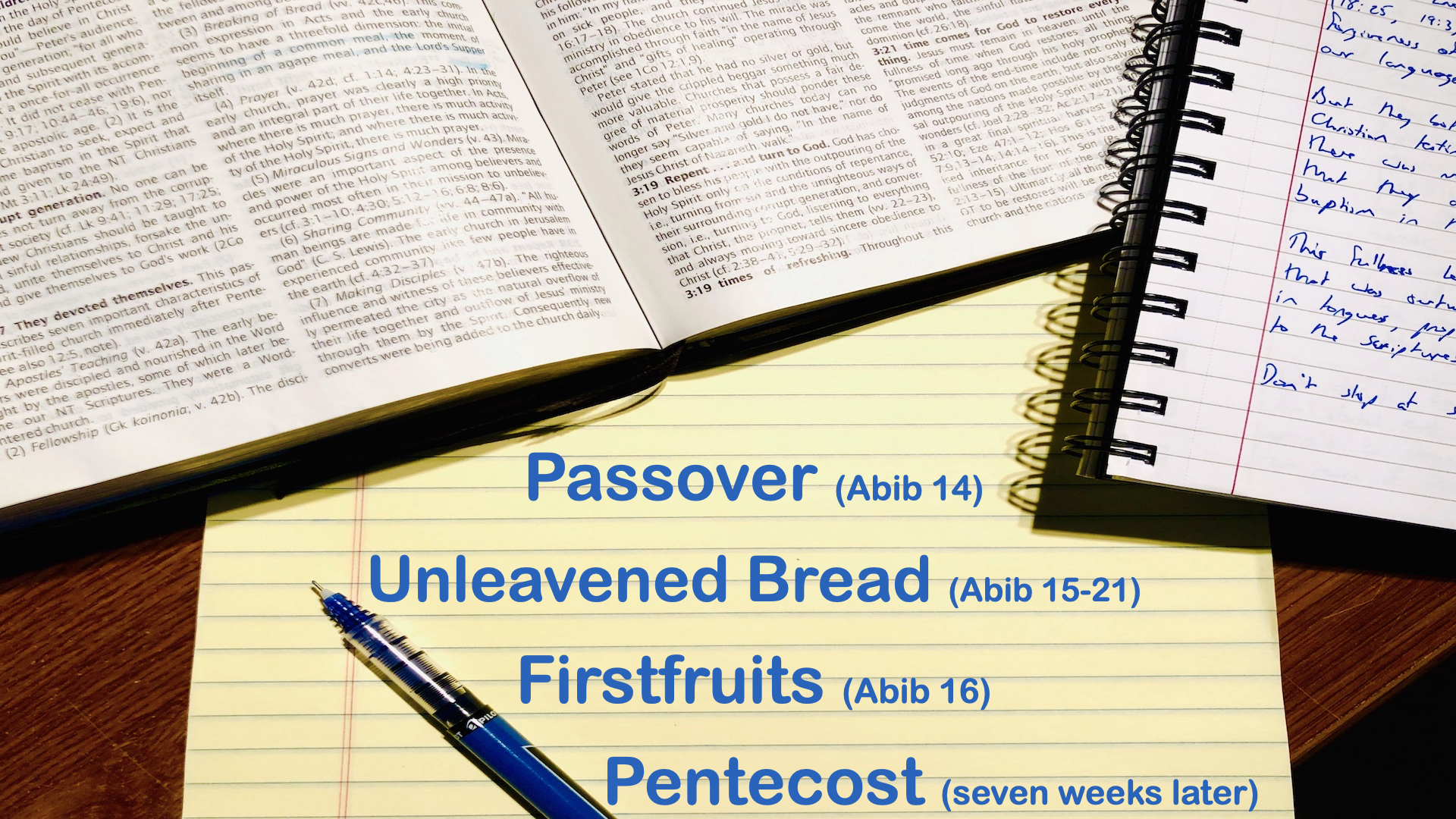
Jesus came to Jerusalem every year for the festivals of Passover, Unleavened Bread, and Firstfruits (see Leviticus 23:4-6, 9-14). Now at “twelve years old” He has had His bar mitzvah and is considered a Man in the eyes of the Jewish community. Eighteen years later, we see Jesus still focused on this same duty (Luke 3:23, 9:18-22). 

Jesus found delight and fulfillment in doing His duty (Luke 10:21; John 4:31-34). 

Jesus calls His followers to this same food that sustained Him (John 4:35-38). He calls this “hard work” that allows us to “be glad together.” Our joy is the joy of Jesus. Notice in Luke 10:21 that His joy was because His followers found joy in doing their duty for Him (Luke 10:1-3, 17). 

Don’t look for the wages or your reward here, but do your duty joyfully in expectation of future and eternal rewards (Luke 17:7-10; John 3:27-30).  

Let’s go back to 12-year-old Jesus in the temple. He was there during three Old Testament feasts that all pointed to Him and were fulfilled in Him: 

  • Passover (Abib 14)—the day Jesus was crucified 
  • Unleavened Bread (Abib 15-21)—when Jesus was in the grave 
  • Firstfruits (Abib 16)—the day Jesus was resurrected (see James 1:18) 
  • Pentecost (50 days after Firstfruits)

Twenty-one years after this story in Luke 2, in the very same place where Jesus is interacting with these religious leaders, the followers of Jesus would be baptized in the Holy Spirit! He is the One Who makes our duty a delight. 

We get a foreshadowing of the joy in the Holy Spirit in Luke 1:41-44 when just a greeting from Mary—who was pregnant with Jesus by the Holy Spirit—causes the baby in Elizabeth’s womb to leap with joy in the Holy Spirit. We, too, live in joy when the Spirit is actively at work in us (John 15:11; Romans 5:3-5). The Spirit reminds us of the rewards for our joyful duty (Matthew 25:34; Luke 12:35-37). 

You can stick with your have-to-do duties if you have a get-to-do attitude that comes from the joy the Holy Spirit gives. 

Which is why Jesus prays for our joy to be complete, and Paul prays, “May the God of hope fill you with all joy and peace as you trust in Him, so that you may overflow with hope by the power of the Holy Spirit” (Romans 15:13). 

Check out all of the messages in this series about the power of the Holy Spirit in our lives by clicking here. 

►► Would you please prayerfully consider supporting this ministry? My Patreon supporters get behind-the-scenes access to exclusive materials. ◀︎◀︎

Power To Defeat Temptation

Listen to the podcast of this post by clicking on the player below, and you can also subscribe on Apple, Spotify, or Audible. Check out the video content in this post by clicking here. 

The first temptation of mankind was to doubt the God was good and that He was trustworthy. That’s why satan tempted Adam and Eve by saying they could become “like God.” Every Christian faces temptation, and one of the biggest is still satan’s same strategy: to try to get us to handle things on our own. 

The baptism in the Holy Spirit is to help us realize that we cannot rely on ourselves, but we must rely totally on His power. 

David Wilkerson said, “This is an ongoing problem with many Christians. We look to the Holy Spirit as some kind of booster shot to empower or energize our human will. We expect Him to build up our supply of grit and determination, so we can stand up to temptation the next time it comes. We cry, ‘Make me strong, Lord! Give me an iron will, so I can withstand all sin.’ But God knows this would only make our flesh stronger, enabling it to boast.”  

Overcoming temptation is not about willpower but Spirit-power. Paul said this in 2 Corinthians 12:9.  

(Check out all of the Scriptures in this post by clicking here.)

Being tempted to sin is not a sign that God has abandoned me or that I am living apart from Him. Jesus was perfect and yet we are told He was tempted in every way (Hebrews 4:15). So we can easily determine that temptation is not a sin because Jesus was tempted (Luke 4:3-13). This story is told in all three synoptic Gospels (Matthew 4:1-10; Mark 1:13). 

Look at what preceded this temptation: Jesus was baptized in the Holy Spirit (Matthew 3:13-17; Mark 1:9-12; Luke 3:21-22, 4:1-2). The Spirit was the One Who led Jesus into the wilderness specifically to face temptation. 

Temptation comes the the Latin word meaning “to stretch.” Oswald Chambers noted, “Every temptation of satan is perfectly wise. The wisest, shrewdest, subtlest things are said by satan, and they are accepted by everybody as the acme of human philosophy; but when the Spirit of God is at work in a man, instantly the hollow mockery at the heart of what satan is trying to do, is seen. When we understand the inwardness of the temptation we see how satan’s strategy is turned into confusion by the Spirit of God.” 

Temptation is not a sin, but a stretching. It is a call for us to give up our willpower and trust the Spirit’s power. 

When Jesus came to earth, He gave up His rightful prerogatives as God. The stretching test here was this: Would He continue to rely on the Spirit’s power or would He try to reclaim the power He surrendered? 

It’s the same question for us when we are tempted: Will we take matters into our own hands, or will we leave ourselves in the Spirit’s hands? In one paragraph, James tells us both the blessing of overcoming temptation and where temptations originate—

Blessed is the one who perseveres under trial because, having stood the test, that person will receive the crown of life that the Lord has promised to those who love Him. When tempted, no one should say, “God is tempting me.” For God cannot be tempted by evil, nor does He tempt anyone, but each person is tempted when they are dragged away by their own evil desire and enticed. Then, after desire has conceived, it gives birth to sin; and sin, when it is full-grown, gives birth to death. (James 1:12-15) 

The Spirit shows us the way to have the mind of Christ in overcoming temptation (1 Corinthians 10:13). 

Just before Jesus was tempted, we see the help that is promised to all of us through the baptism in the Holy Spirit (Matthew 3:11; Mark 1:8; Luke 3:15-16). 

There are some things we will learn about ourselves in a time of temptation that we cannot learn in any other way. Being baptized in the Holy Spirit is about empowerment, but it is really the power to submit—full and unconditional surrender to the only One who can bring me safely through (Hebrews 4:15; 5:7-9; 2:17-18). 

As we talked about last week, the Spirit of Truth gives us the mind of Christ (John 16:13, 15; 1 Corinthians 2:16). 

We, just like Jesus, can be victorious over these temptations by doing what Jesus did. (1) He was fully submitted to His Heavenly Father, (2) He was sensitive to go where the Holy Spirit led Him, and (3) He uncovered the shrewd and subtle arguments of satan by using the Word of God. 

Instead of saying, “I gave in to temptation,” we can say, “I gave in to the Holy Spirit, Who helped me defeat temptation!” 

Check out all of the other messages in our series We Are: Pentecostal by clicking here. 

►► Would you please prayerfully consider supporting this ministry? My Patreon supporters get behind-the-scenes access to exclusive materials. ◀︎◀︎
The Normalcy of Extraordinary Power

Listen to the podcast of this post by clicking on the player below, and you can also subscribe on Apple, Spotify, or Audible. Check out the video content in this post by clicking here. 

I’m not sure that any other aspect of the Christian faith generates as much discussion as the role of the Person of the Holy Spirit. Specifically, I would say “nuanced discussion.” By that I mean, people carefully choosing their words to remain biblically accurate but not sound weird. “After all,” they might say, “we don’t want people looking at us strangely because we’re talking about signs, wonders, and speaking in unknown languages. Yet at the same time, we don’t want to grieve the Holy Spirit.” 

I believe there is a better way to handle this: Let Scripture speak for itself. 

Let me share one recent example with you that will address this point. A rather well-known Christian apologist, who happens to be quite skilled in ancient biblical languages, was recently asked in an interview, “Can you explain the gift of speaking in tongues?” 

Here are some of the main things he said in reply: “I think there is something going on in the New Testament that is different. … There is a uniqueness to that time period. It’s normative in a way that it is not now” because, he says, we don’t see today what we see in the New Testament, “because the disciples are building the foundation of the Church. … Now we have the books of Scripture where God speaks to us in a different way. … Speaking in tongues, prophesying happen; I just don’t think they’re normative in the way we see them happening in the New Testament.” 

There’s a lot to unpack here, but I want to focus on a word he repeated: normative. 

The dictionary defines that word: implying, creating, or prescribing a norm or standard; especially an assumed norm regarded as the standard of correctness in behavior, speech, writing, etc. 

So I guess we need to ask, “What is normal?” 

Let’s begin with this question: What did the pre-Ascension followers of Jesus consider normal? 

First, Jesus was with them bodily form, and He regularly explained Scripture to them. Jesus healed people and so did His followers. Jesus told them He was leaving in bodily form, but that He would send the Holy Spirit to be with them (John 14:16-17). 

(Check out all of the Scriptures in this sermon here.) 

The next question is: What did the post-Ascension followers of Jesus consider normal? 

There was a joy of anticipating the Holy Spirit’s outpouring (Luke 24:50-53). Jesus was no longer with them bodily, but they still operated in His name and authority. They understood Scripture without Jesus in bodily form explaining it to them. They wrote the books of the New Testament, which are really a commentary on Scripture (the Old Testament) in light of the life, death, and resurrection of Jesus. They healed people. 

Our final question should be: What should we consider normal? 

Let’s go back to John 14:16-17 where Jesus promised the arrival of the Counselor. The baptism in the Holy Spirit is empowerment in a wholly different level. At salvation, He is “with” us; at baptism, He is “in” us. Jesus is still not with us in bodily form, but we can still operate in His name, we understand Scripture without Jesus in bodily form explaining it to us, and we can operate in a realm of power that seems extra-ordinary to others! 

Listen to a couple of key phrases from Peter’s Pentecost Sunday sermon. He says this outpouring of the Holy Spirit is the fulfillment of a promise made by Jesus, and it is proof of the resurrection and ascension of Jesus (Acts 2:33, 38-39). 

Nowhere is this implied that this is a one-time empowerment, nor an exclusive empowerment for those living in that time, nor is it exclusively for those called apostles. The saints lived this out as their normal daily life. See just a few examples in Acts 4:20, 30-31; 6:3, 8-10; 8:4-8, 14-17. 

“The secret of our strength is the living testimony that Jesus Christ is every moment with us, inspiring, directing and strengthening us. This is what made the disciples so bold in preaching Him as the Crucified One in the midst of His enemies. They never for a moment regretted His bodily absence, for they had Him with them, and in them, in the divine power of the Holy Spirit.” —Andrew Murray 

I think we have accepted sub-normal as normative for so long, that we now call that normal. Instead our normal should be a lifestyle, a language, a power that is called extraordinary by others. 

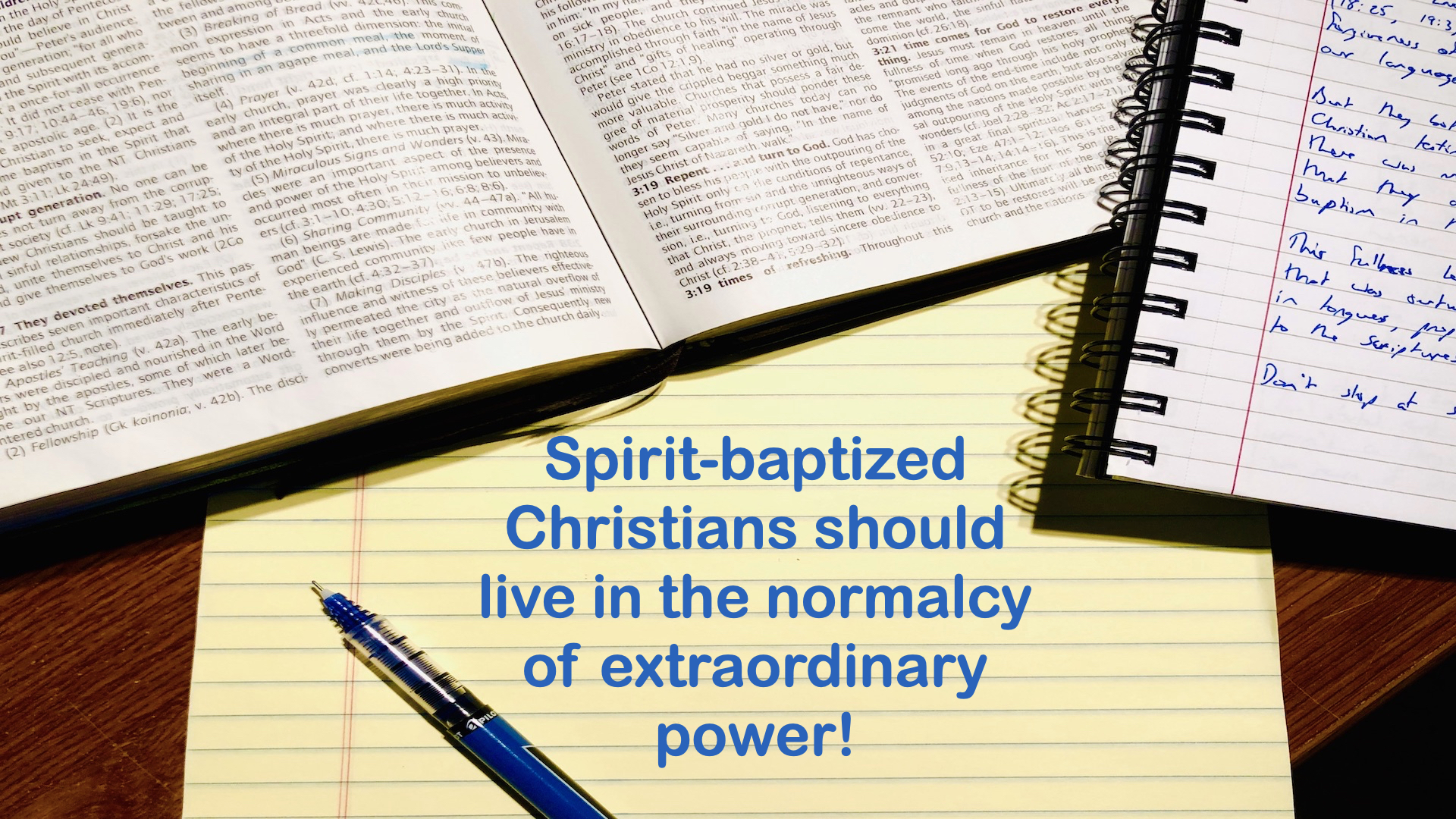
Spirit-baptized Christians should live in the normalcy of extraordinary power! 

Please check out the other messages we have covered in this series called We Are: Pentecostal by clicking here.

►► Would you please prayerfully consider supporting this ministry? My Patreon supporters get behind-the-scenes access to exclusive materials. ◀︎◀︎
The Cure For Disintegrating Morality

Listen to the podcast of this post by clicking on the player below, and you can also subscribe on Apple, Spotify, or Audible. Check out the video content in this post by clicking here. 

Jesus spoke and people listened. 

He taught “in the power of the Spirit” and “everyone praised Him” (Luke 4:14-15). Jesus quoted the prophet Isaiah, and everyone’s eyes “were fastened on Him.” He declared that He was the fulfillment of the prophecies about the Messiah, and “all spoke well of Him” and were “amazed at the gracious words that came from His lips” (vv. 18-22). 

(Check out all of these Scriptures here.) 

So how is it that in just a few verses, this same crowd of admirers is now furious with Him and ready to throw Him off a cliff? 

The people liked it when the words of Scripture suited them and seemed to be pointing to blessings that were coming their way. But when Jesus continued to quote Scripture in reply to their request to do something that thrilled them, they became furious. 

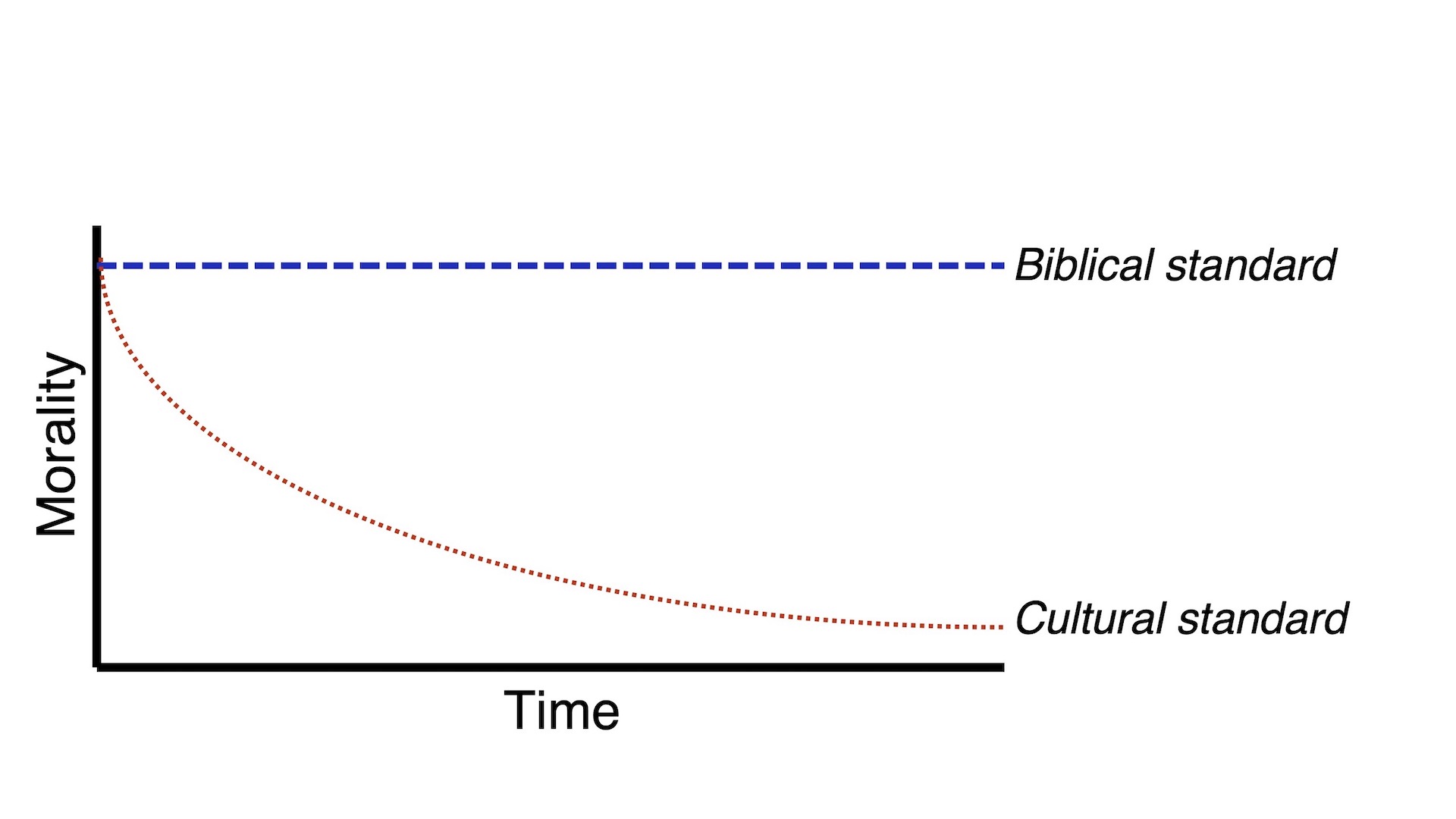
God’s Word is unwavering in presenting the righteous standard to which all people are held, while the prevailing culture is always looking for a way to bend those standards to something more palatable and comfortable. 

When culture gets a hold of it, morality always decays. As a result, those who cling to the the biblical standard become the problem and must be thrown off the cliff. 

Jesus never compromised on truth. This is because He was “led by the Spirit” and walked “in the power of the Spirit”—the One Whom He would later call the Spirit of Truth (Luke 4:1, 14; John 16:13). 

Jesus didn’t come to speak comforting words to comfortable people, but truthful words to desperate people. 

Speaking comfort to people with morals far removed from the standard of Scripture is to condone them right into hell. 

If Jesus was so reliant on the indwelling power and counsel of the Holy Spirit to live righteously as morality decayed around Him, what would make us think we could get by with anything less?! We need to allow the Spirit of Truth to search us for any areas where we may have compromised with culture, so that we can repent and return to the unwavering biblical standard. 

This is the only way we can shine brightly for Jesus in a culture with disintegrating morality. 

You may also want to check out:

►► Would you please prayerfully consider supporting this ministry? My Patreon supporters get behind-the-scenes access to exclusive materials. ◀︎◀︎

Holding On To Help Others Hold On

Listen to the podcast of this post by clicking on the player below, and you can also subscribe on Apple, Spotify, or Audible.  

“Therefore, holy brothers and sisters, who share in the heavenly calling, fix your thoughts on Jesus…” (Hebrews 3:1). 

The phrase “fix your thoughts” is one Greek word (katanoeo) which means a deep, attentive studying.

This isn’t merely a quick glance, but a sustained and deep study. Jesus used this word with the examples He gave of His Father’s provision for us—

Consider [katanoeo] the ravens: They do not sow or reap, they have no storeroom or barn; yet God feeds them. And how much more valuable you are than birds! … Consider [katanoeo] how the wild flowers grow. They do not labor or spin. Yet I tell you, not even Solomon in all his splendor was dressed like one of these. (Luke 12:24, 27). 

The writer of Hebrews says we need this deep studying for two reasons.

First, this deep and sustained look into the glory and supremacy of Jesus is the essential part of our hope and confidence in Him. “And we are His house if indeed we hold firmly to our confidence and the hope in which we glory” (Hebrews 3:6). I want you to remember that phrase “hold firmly” (Greek: katecho) because we will come back to it in just a minute. 

It is very hard to hold firmly to anything if we only have a surface understanding of it. But when we gaze deeply at Jesus and live in awe of His majesty and strength and love, we cannot help but cling evermore firmly to Him! 

The second reason we need to fix our thoughts (katanoeo) on Jesus is to be able to help our fellow saints—our “holy brothers and sisters.” I asked you to remember that phrase “hold firmly” (katecho). Notice how it is linked together with “consider” (katanoeo) in these verses—

Let us hold unswervingly (katecho) to the hope we profess, for He who promised is faithful. And let us consider (katanoeo) how we may spur one another on toward love and good deeds. (Hebrews 10:23-24) 

So the writer of Hebrews is telling us that when we are gazing intently at the majesty of Jesus, we discover more reasons to not only hold firmly to Him ourselves, but we also discover more reasons to encourage others to gaze at Him and hold Him firmly themselves. 

In his letter to the church, James uses katanoeo in the negative sense. In James 1:23-24, he says that those who only casually listen to and meditate on God’s Word—never looking into it deeply—will walk away unchanged.

I want to be changed every time I encounter the glory of God as revealed in the Word of God! 

Deep, sustained gazing stimulates more attentive meditating, which turns into more reasons to hold firmly. The more firmly I hold onto Jesus, the more the life of Jesus changes me. Then my ability to spur on other saints to their own gazing, abiding, and holding is increased exponentially. 

I am holding on to Jesus to help others hold on to Jesus too! 

►► Would you please prayerfully consider supporting this ministry? My Patreon supporters get behind-the-scenes access to exclusive materials. ◀︎◀︎
Maturing Or Declining?

Listen to the podcast of this post by clicking on the player below, and you can also subscribe on Apple, Spotify, or Audible. 

Last week I reminded you about the greeting in the early church. One saint would say to another, “He is risen!” and the other person would respond, “He is risen indeed!” 

That word “indeed” is important. In Greek, the word is ontōs—in point of fact, as opposed to what is pretended or fictitious. Our English dictionary says something similar, but adds something I think is memorable: in fact; in reality; in truth—used for emphasis, to confirm and amplify a previous statement. 

The word ontōs is only used a few times in the Old Testament. In Jeremiah, God speaks to His people, calling them to return to Him. The people respond, “We will come to You. Indeed the world is deception; indeed You are our salvation” (see Jeremiah 3:22-23). 

(Check out all of the Scriptures in this post by clicking here.) 

In the New Testament, Paul said that if the law could have saved us, there would have been no reason for Jesus to die on a Cross and be resurrected back to life—Galatians 3:21-22. When He died for our sins, the Roman centurion overseeing His crucifixion recognized that Jesus was indeed the righteous Savior (Luke 23:47; Matthew 27:54). Jesus said of Himself that He came to give freedom indeed (John 8:36). 

When we put our faith in Jesus as our Savior, we are indeed saved from the death penalty that our sins deserve. We are justified through our faith in our crucified and risen Savior. We are now free indeed to participate in the eternal life Jesus gave us! 

The Bible uses three pictures of the life we are now free to enjoy. Since we camped out in the Book of Ephesians last week, let’s return there to see these three pictures—

(1) The Building of the Lord—Ephesians 2:19-22 

We have to stay on the foundation of Jesus, if we want to build something lasting (Matthew 7:24, 26). This means we have to submit to sanctification process of the Holy Spirit (or as I like to say this word: “saint-ification”). When guests come over, you dust and vacuum. If you don’t clean again, dust will accumulate. Jesus isn’t a one-time or occasional Guest, but He wants to abide in us (Revelation 3:20). 

(2) The Body of Christ—Ephesians 4:3-6, 12-13, 16 

Look a the phrases “…make every effort … works of service … become mature….” These are all ongoing processes which we need for healthy growth (Hebrews 5:12-13). As our physical bodies age, we lose 3-5% of our body’s muscle mass every year unless we are actively working to add muscle. Body building requires (a) protein intake, (b) exercise, (c) rest and recovery—God’s Word applied and resting in the work of the Holy Spirit. 

(3) The Bride of Jesus—Ephesians 5:25-28, 33 

We don’t want to be like this out-of-touch husband, whose wife said to him on their 40th anniversary, “I remember on our wedding day how you told me you loved me. How come you never say that any more.” The husband replied: “If anything changed, I would have let you know.” We need to be continually falling in love with our Bridegroom! Listen to how Jesus addressed these saints at Ephesus. He tells them they have persevered through the difficult times (Revelation 2:1-3), yet they have forsaken the most important thing: their first love (v. 4). If we’ve done this, we need to remember, repent, and return to Jesus (v. 5). 

If we’re not maturing, we’re declining. 

If we are only going through the motions, where is the satisfaction? Where is the freedom indeed? 

Listen to these tough—but needed—words from John Piper: 

“The problem with the church today is not that there are too many people who are passionately in love with heaven. The problem is not that professing Christians are retreating from the world, spending half their days reading Scripture and the other half singing about their pleasures in God all the while indifferent to the needs of the world. The problem is that professing Christians are spending ten minutes reading Scripture and then half their day making money and the other half enjoying and repairing what they spend it on. It is not heavenly-mindedness that hinders love. It is worldly-mindedness that hinders love, even when it is disguised by a religious routine on the weekend.” 

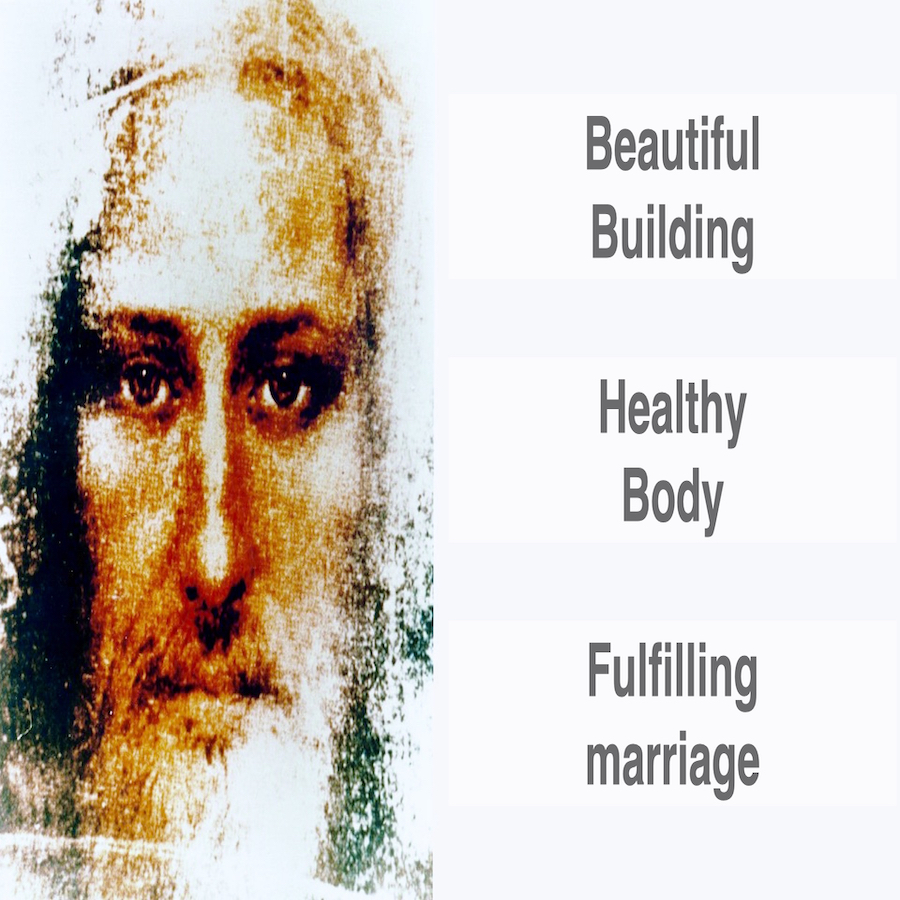
Continuing to mature in our faith makes the Building more beautiful, the the Body healthier, and the Marriage more fulfilling! Let’s keep maturing so that we honor Jesus as our Savior and Lord. 

If you’ve missed any of the messages in this series, you can check them all out here. 

►► Would you please prayerfully consider supporting this ministry? My Patreon supporters get behind-the-scenes access to exclusive materials. ◀︎◀︎
What Does That Mean?

Listen to the podcast of this post by clicking on the player below, and you can also subscribe on Apple, Spotify, or Audible. 

In one of my favorite movies—The Princess Bride—one character believe himself to be very smart. In fact, Vizzini considers Plato, Aristotle, and Socrates to be morons compared to his massive intelligence. But in one section of the movie he keeps using a singular word over and over again, until Inigo says to him, “You keep using that word. I do not think it means what you think it means!” Sometimes I wonder if this is what people want to say to Christians! 

Every family has its own unique lexicon—words and phrases mean something to them that they don’t mean to others. Every industry has shorthand for its products and services. Every friend group has their own inside jokes. And we Christians are just as guilty. 

  • Sometimes instead of saying, “Yes” we say, “Amen.” 
  • Instead of calling someone, “Mr. or Mrs.” we call them, “Brother or Sister.” 
  • We soften some of our stronger language by saying, “I’m grieved in my spirit,” instead of saying more honestly, “I’m really ticked off!” 
  • And sometimes, to sound super-spiritual when we pray, we begin to speak in Old English. 

Is it any wonder that people outside of our church circles sometimes look at us like we’re a bit off? 

So what do we mean by calling ourselves “Christian”? This was not the preferred name for followers of Jesus in the early Church: 

  • Saints—60x (only 4x in Acts)
  • Believers—43x (26x in Acts) 
  • Disciples—24x (all in Acts) 
  • Christian—3x 

The word originates in Acts 11:19-26 (v. 19 references the persecution of 8:1). The Greek language follows the Roman pattern of adding “ian” to the name of a great leader whom others were following. King Agrippa used this word in Acts 26:28, showing us how it has gained traction. 

(Check out all of the Scriptures in this post by clicking here.)

Christ is not a proper name, nor is it the surname of Jesus. Christ means the anointed One. So it’s more correct for us to say, “Jesus the Christ” (as in John 1:41). 

So to be a Christian is to follow the Anointed One. To believe that He died to pay the penalty for our sins, and that He rose to life again to give us His eternal life. 

To be a Christian is to live like Jesus, or to live as His ambassadors (2 Corinthians 5:11-21). 

To be a Christian is to continue to live like Jesus even in the face of opposition (1 Peter 4:12-16; 2:21-23; 3:13-17). 

Christians are being the Church when they are intentionally living in a way that makes Jesus known as the Christ—the One and Only Anointed One. 

Some excellent questions for Christians to ponder: 

  • What do you mean when you say, “I am a Christian”? 
  • Do others see and hear Jesus in what you do and say? 
  • Does your verbal confession and lifestyle confession compel others to come to Jesus? 

Let’s make sure our lives are the best definition of what the Bible says a Christian truly is! 

Check out all of the other messages in this series by clicking here. 

►► Would you please prayerfully consider supporting this ministry? My Patreon supporters get behind-the-scenes access to exclusive materials. ◀︎◀︎