Pete Marra from Breakpoint shared this on a podcast: ”What we have at our disposal through business, the ability to organize, to solve problems, to create value, to deploy capital, to steward the things that God has given us, is something that’s very unique to enterprise itself. … I believe not only has God brought you to this place and called you to this space, but he’s equipped you for it.” My podcast cohost and I have co-authored a series of books called “Business by the Book.” They are designed to help equip you with God’s wisdom for each department of your organization. Check them out here.
“To say any man is a real Christian is undeniably the highest honor we can confer upon him.” —Wilfred Grenfell
“A friend of mine said, ‘We regard God as an airman regards his parachute; it’s there for emergencies but he hopes he’ll never have to use it.’ Now God, who has made us, knows what we are and that our happiness lies in Him. Yet we will not seek it in Him as long as he leaves us any other resort where it can even plausibly be looked for. While what we call ‘our own life’ remains agreeable we will not surrender it to Him. What then can God do in our interests but make ‘our own life’ less agreeable to us, and take away the plausible source of false happiness?” —C.S. Lewis, in The Problem of Pain
“Sometimes you fall apart on the inside while you look put together on the outside. Your private and public worlds don’t connect at all. Others cannot perceive the trauma you feel, the despair and loneliness. Only God knows that.
“The danger in success is dishonesty with self, others, or God. You will substitute eternal accomplishment for internal peace. What happens to you becomes more important than what happens in you. David alerts us to face this problem. Our successes may be happening despite God’s displeasure. Our concern must be more upon, ‘Is God pleased with me? than ‘Is God pleased with what I am doing?’” —Dr. George O. Wood, in A Psalm in My Heart, commenting on Psalm 60
Listen to the podcast of this post by clicking on the player below, and you can also subscribe on Apple, Spotify, or Audible. Check out the video content in this post by clicking here.
Being the new leader of an organization is a difficult task. It doesn’t matter if you’re a first-time leader or have decades of leadership experience, you’re still “the new guy” to everyone else in the organization. So when you step into your new role and have to begin making changes you will most likely encounter areas of resistance.
In this episode, Greg and I have a thought-provoking discussion on how to mitigate and confront resistance to change, as well as laying out why we think patience can often be your most important trait during a transition.
T.M. Moore wrote, “The apostle Paul promised that, whenever we are faced with temptation, God will provide a way of escape, so that we can bear up and grow through temptation into greater maturity in the Lord (1 Corinthians 10:13). We are practicing self-control when we search for that way of escape and direct our steps toward it: ‘I thought about my ways, and turned my feet to Your testimonies. I made haste, I did not delay to keep Your commandments’ (Psalm 119:59, 60).” Read more about the necessity of self-control in this post.
“Character doesn’t make you a leader; it protects you as a leader.” —John Maxwell
“Hard words are an evidence of the weakness of the cause which they are used to support. Hard arguments softly put, are the really effective weapons, but it takes some of us a long time to learn this; and generally, in our younger days, we wear away our own strength by the violence with which we use it.” —Charles Spurgeon
One of the leaders in my school shared this: “Numerous researchers have studied the use of wait time by teachers. Pausing for just 3-5 seconds after a question has been shown to produce higher-level thinking and answering. This is true both of classroom questioning and individual conversation. Slow down during conversation today and see what happens!” Previously, I shared an important lesson I learned about slowing down.
Listen to the podcast of this post by clicking on the player below, and you can also subscribe on Apple, Spotify, or Audible. Check out the video content in this post by clicking here.
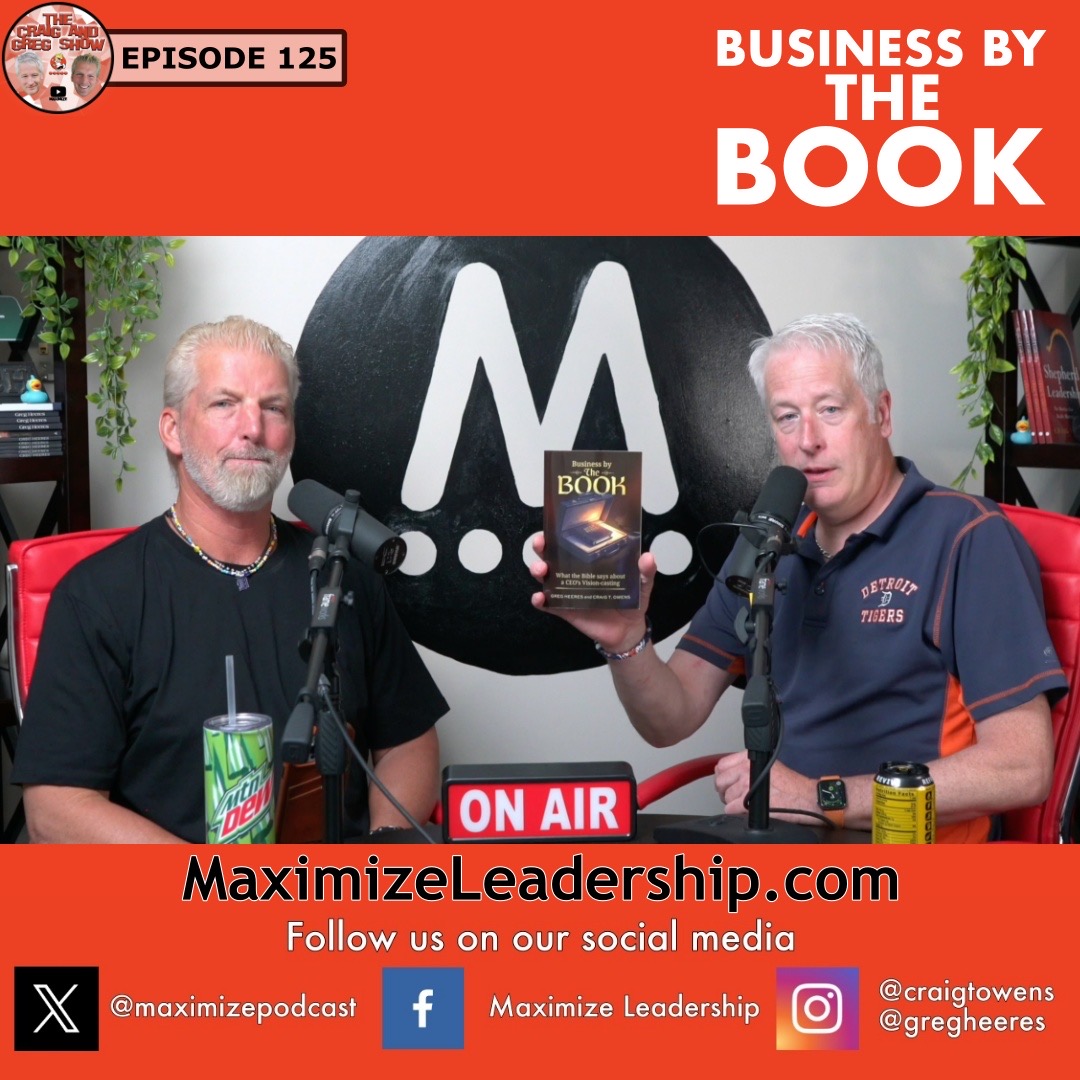
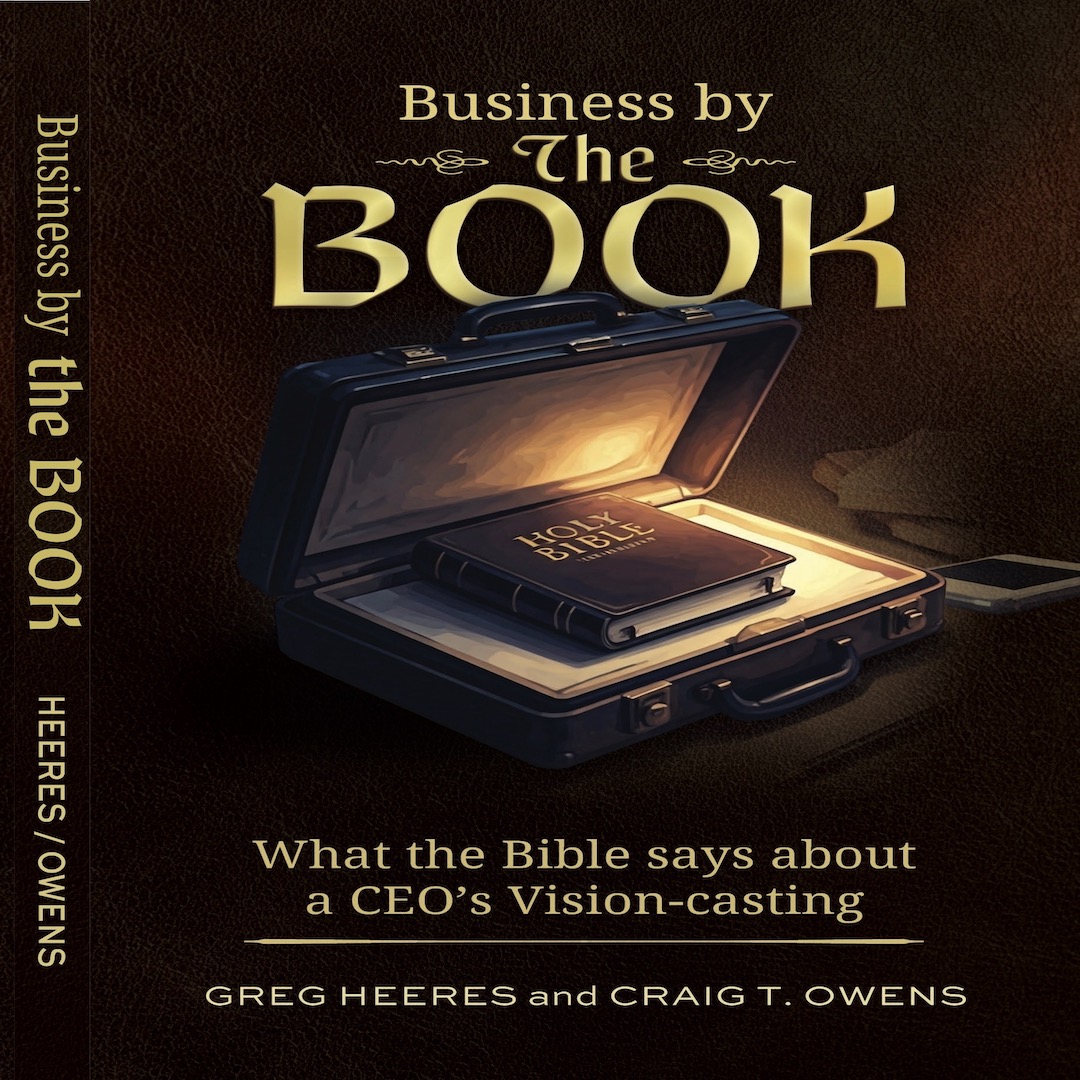
It seems like many people put business and faith in two separate boxes, considering them entirely different topics of discussion. Greg and I completely disagree—the Bible is a resource for all areas of our lives, from the board room to the living room. That’s why we wrote our Business By The Book series. This is a guide to help you apply biblical principles to the corporate world. In today’s episode we preview the first book in this series: Business by the Book: What the Bible says about a CEO’s vision-casting.
[0:00] Introduction
[2:10] What does it mean for the leader to cast vision for his or her organization?
[3:07] Here’s what you can expect from Business by the Book—What the Bible says about a CEO’s vision-casting
[4:13] After a leader has cast a vision, that leader then needs to empower his or her entire team to help them achieve the vision.
[6:46] Leaders must be self-aware of their strengths and weaknesses, and help their teammates learn about themselves as well.
[9:06] Organization chart maneuvering can help empower teammates to accomplish great things. And I also share a teaser about a new project on which Greg is working.
[10:26] Greg talks about two vastly different roles: Commander and Includer.
[12:27] I share an excerpt from a chapter that Greg wrote in this book, and then Greg elaborates on how this helps a team pursue the vision.
[16:37] Leaders can move from doing to facilitating, which will help others set up into new roles.
[18:21] Some counsel for leaders who are first time vision-casters.
[19:26] Greg shares a tip for facilitating meetings to get more people involved.
[21:44] “Leaders become great not because of their power, but because of their ability to empower others.”
[24:18] HERE’S HOW TO WIN A FREE COPY OF OUR NEW BOOK!
Listen to the podcast of this post by clicking on the player below, and you can also subscribe on Apple, Spotify, or Audible.
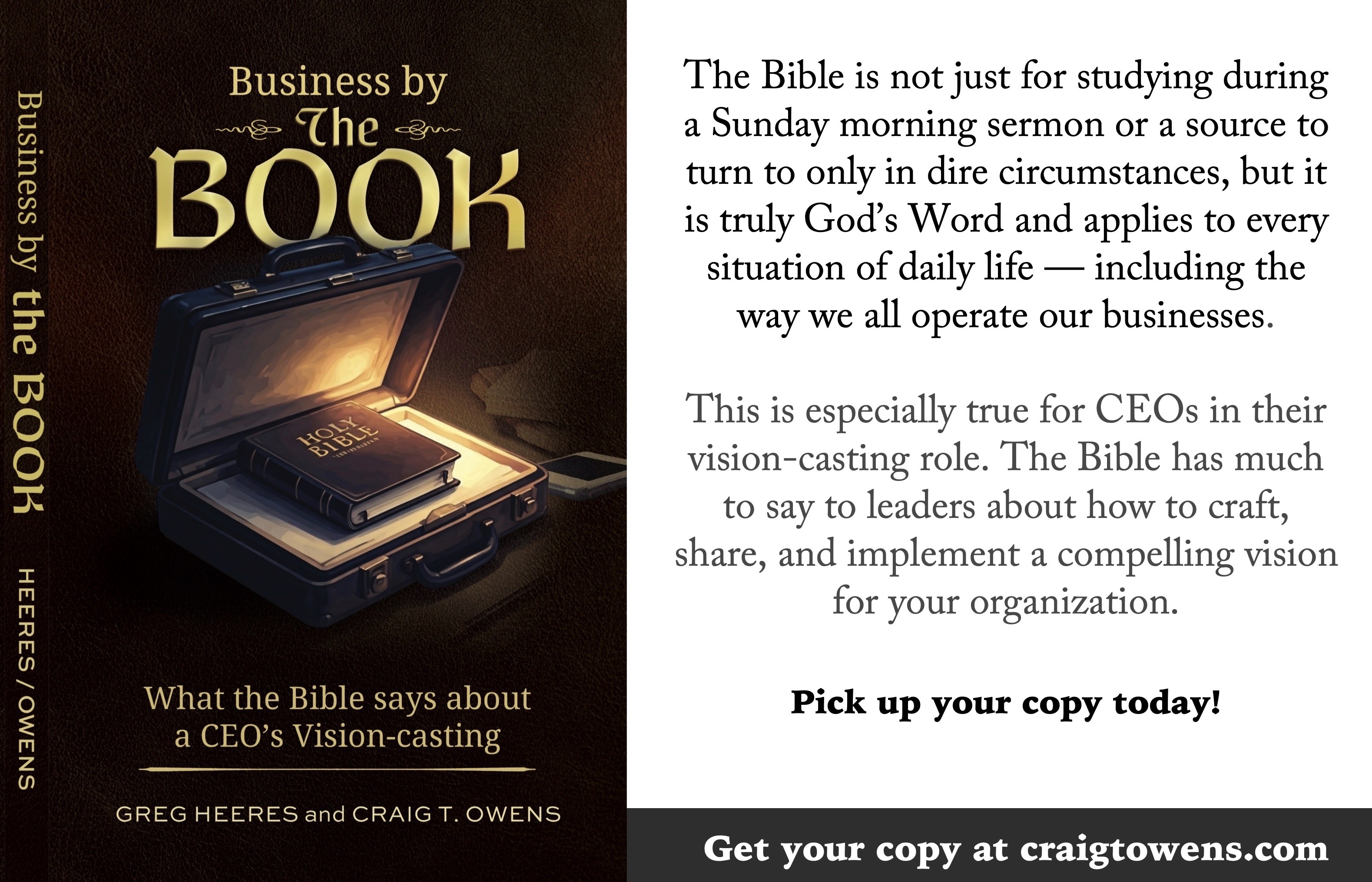
My podcast cohost, Greg Heeres, and I just finished our first co-authored book in our seriesBusiness by the Book. This book is both biblical wisdom and practical insight into how a CEO casts vision for themselves and the organization they lead.
We write about the God-honoring way to cast vision, but there is another way—the human way. In their book Spiritual Leadership, Henry and Richard Blackaby describe it like this:
“The Gospel of Luke provides a graphic contrast between peoples’ agendas and God’s [Luke 9:28-36]. Jesus took Peter, James, and John with Him up a mountain to experience a divine encounter. God the Father was unfolding His specific will for His Son. The Father brought Moses and Elijah to encourage Jesus for the enormous work of redemption He was about to accomplish. So sacred was that moment that Jesus radiated the glory of His divinity. Peter and his companions, however, had been sleeping. When they awoke and saw the magnificent scene unfolding, Peter spoke up: ‘Master, it’s good for us to be here! Let us make three tabernacles: one for You, one for Moses, and one for Elijah’ (v. 33). Peter’s first thought was to build something tangible to institutionalize the divine encounter. Peter, a natural leader, could already envision the ongoing ministry he and his friends would administer as a result of that encounter. However, the instant Peter began talking, the vision was removed, and only Jesus remained visible. Clearly Peter’s plan was not God’s agenda. The heavenly Father immediately rebuked Peter, saying, ‘This is My Son, the Chosen One; listen to Him!’ (v. 35). Peter, because he was human, instinctively thought in temporal terms. He envisioned something he could control and manage. He wanted to move Jesus, Moses, Elijah, James, and John on to his agenda instead of seeking to understand God’s will and adjusting his own life accordingly. Peter’s ignorance of spiritual ways is all too prevalent among today’s spiritual leaders. Too often people assume that along with their role of leader comes the responsibility of determining what should be done. They develop aggressive goals. They imagine grandiose dreams. They cast grand visions. Then they pray and ask God to join them in their agenda and bless their efforts. That’s not the spiritual leader’s role. Spiritual leaders seek God’s will, whether it is for their church, family, or corporation, and then they mobilize their people to pursue God’s plan. …
“We must emphasize that planning or goal setting is not wrong. Organizations must have direction and order. The key is the source of those plans. Spiritual leaders seek God’s guidance in discerning God’s purposes for their organization. Then they mobilize their organizations to effectively accomplish what God assigns.”
One final thought from the Blackabys: “God has the vision of what He wants to do. God does not ask leaders to dream big dreams for Him or to solve the problems confronting them with their own best thinking. He asks leaders to walk with Him so intimately that when He reveals His agenda they immediately adjust their lives and their organizations to His will and the results bring glory to God.”
Listen to the podcast of this post by clicking on the player below, and you can also subscribe on Apple, Spotify, or Audible.
Greg Heeres is my lifelong friend and co-host of The Craig and Greg Show leadership podcast. We have just released the first book in our series called Business by the Book. These books will help business leaders see how relevant the Bible is for the day-to-day wisdom they need to make impactful decisions for their organizations.
I write chapters one, three, and five with a biblical example of the book’s focal point, and then Greg writes a business application of those examples in chapters two, four, and six.
Our first book is about the CEO’s vital role of vision-casting.
We wanted to give you a taste of what these books are all about, so here is the first chapter in this book entitled “Eyes on the Prize”—
Where there is no vision, the people are unrestrained. (Proverbs 29:18)
It All Starts with You
It all starts with you as the leader of your organization. If you have a clear vision in mind for both your personal life as well as for your organization, your people will join you on this journey, no matter how long or difficult it may seem.
On the other hand, the number one cause of both personal and corporate failure is drifting away from the vision that brought success.
God gives vision. He doesn’t give a vision to a leader so that a leader can have a better life, but so that leader can help people get to a better place. Vision is always through the leader to the people. Solomon said, “Where there is no vision, the people are unrestrained” (Proverbs 29:18).
Another translation of this verse carries even more weight, “Where there is no vision, the people perish.”
Eye Discipline
In almost every sport that involves a ball, the tried-and-true maxim is, “The ball goes where your eyes go.”
Greg and I first met on a basketball court. There were a group of guys that got together to play basketball every day at lunchtime. Because Greg and I were about the same height, we were almost always placed on opposite teams and I had the unenviable assignment of guarding this exceptional athlete.
One of the things I noticed right away about Greg’s game was how good he was “in traffic.” He could exploit a small gap between defenders and dribble the ball through that opening to give himself a good look at the hoop. That good look usually meant success in scoring.
I did my best to match Greg shot for shot, but I usually came out on the losing side of these match-ups. There is something about competition that causes me to focus on my task—both in business and on the basketball court. So as I guarded Greg, I studied what made him so successful. Eventually I spotted one of the main differences between us: It was his eyes.
As Greg drove through traffic, he kept his eyes on the basketball rim, so when he was ready to shoot, the ball went where his eyes already were. I noticed about myself that when I tried to navigate through all the bodies on the court, my eyes went down to the basketball, and only when I thought I was in the clear did I move my eyes to the rim.
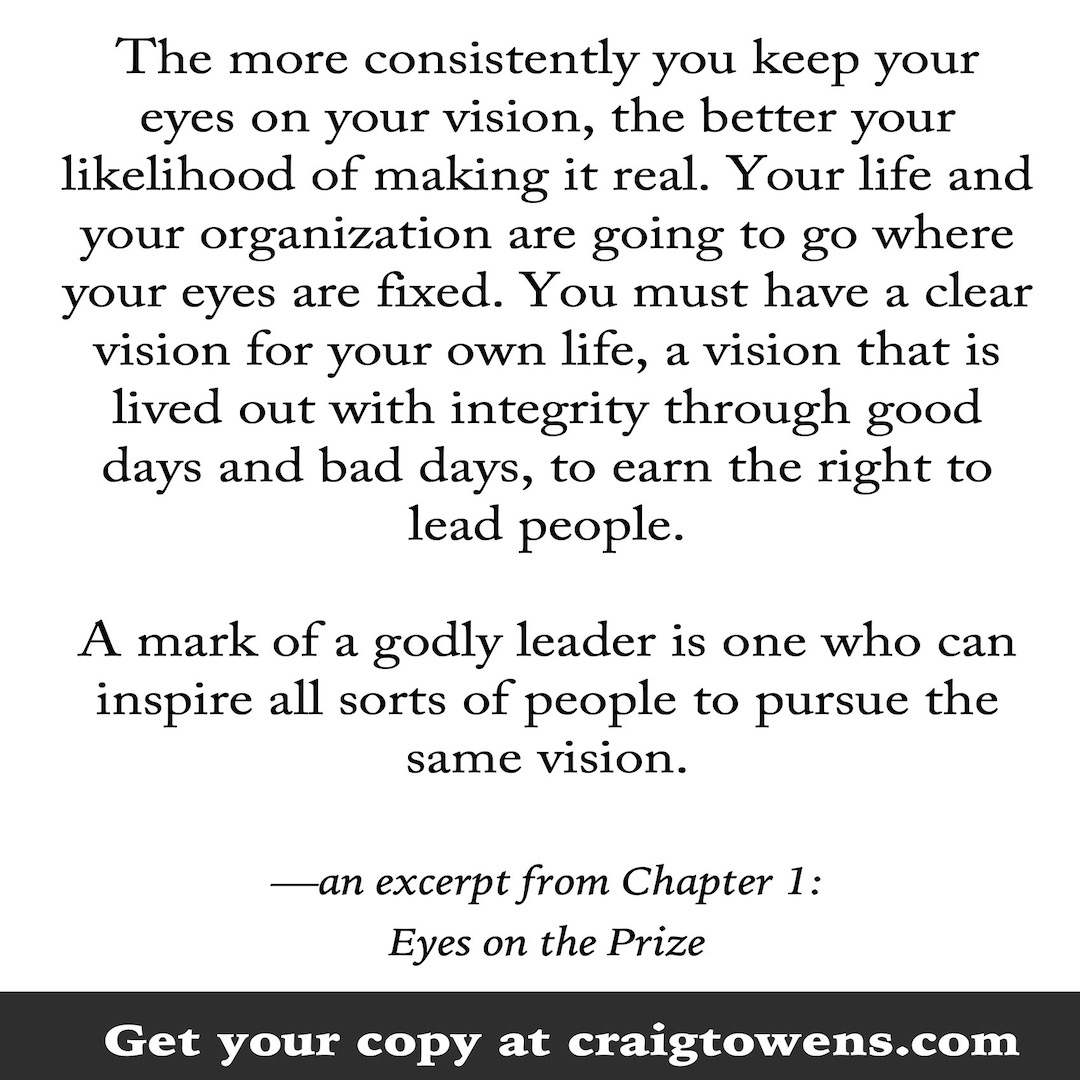
The more consistently you keep your eyes on your vision, the better your likelihood of making it real. Your life and your organization are going to go where your eyes are fixed. You must have a clear vision for your own life, a vision that is lived out with integrity through good days and bad days, to earn the right to lead people.
Nehemiah the Vision-caster
The nation of Israel was being allowed to return to their homeland after 70 years in exile. The capital city Jerusalem was in a shambles—the walls had been knocked down, the gates were burned, and their temple of worship had been demolished.
When Nehemiah arrived in Jerusalem, he made a careful inspection of the situation. He undertook his first assessment by himself at night; he didn’t share his findings with the people right away.
Nehemiah was a man of personal integrity. Throughout the historical account of his leadership, we see him handling his position of authority, the funds entrusted to him for the rebuilding project, his own personal finances, and even the “competitors” that wanted the Israelites to fail, with godly wisdom and impeccable character.
With his personal life in order, Nehemiah then approached the people of Israel. In his journal, recorded for us in the Book of Nehemiah in the Bible, he wrote—
Then I said to them, “You see the trouble we are in: Jerusalem lies in ruins, and its gates have been burned with fire. Come, let us rebuild the wall of Jerusalem, and we will no longer be in disgrace.” I also told them about the gracious hand of my God on me and what the king had said to me. (Nehemiah 2:17-18)
Because Nehemiah went first, the people readily accepted his vision of a rebuilt city: “So they said, ‘Let us rise up and build.’ Then they set their hands to this good work” (Nehemiah 2:18).
A mark of a godly leader is one who can inspire all sorts of people to pursue the same vision. Nehemiah did such a good job casting the vision God had given him that people from all professions and persuasions joined in.
Although the vision was to rebuild the walls around Jerusalem, most of those who joined Nehemiah in pursuing this vision were anything but builders. They were priests, goldsmiths, perfume makers, and merchants. They were young and old, men and women, native-born Israelites and God-fearing foreigners, those who lived in the city and those who lived in the countryside (see Nehemiah 3). With one voice they cried out, “Let’s rise up and build!” and they got down to business.
All these different people bought into one godly leader’s vision.
What’s Your Vision?
Do you have a clear vision for your own life? What about for your organization? You need to have your eyes on a prize that will stand the test of time and will have lasting—even eternal—significance.
If you cannot readily identify a compelling vision for either yourself or your organization, I would like to suggest three places you could start. You could say, “My/our vision is . . .
(1) . . . to do good. Peter summed up the entirety of Jesus’s public ministry by saying, “Jesus went around doing good and healing all who were oppressed by the devil” (Acts 10:38 NLT).
(2) . . . to do what is right, to love mercy, and to walk humbly with your God. This is an exact quotation of the vision statement God gave through the prophet Micah (Micah 6:8 NLT).
(3) . . . to bring life where there is death and to set captive people free. This was what Jesus stated as His personal vision for His public ministry (Luke 4:18-19).
Find your personal vision and keep your eyes on the prize. This will give you moral authority for the vision you will share with your team. Your vision as the leader is the key to unlocking your organization’s success.
Listen to the podcast of this post by clicking on the player below, and you can also subscribe on Apple, Spotify, or Audible. Check out the video content in this post by clicking here.
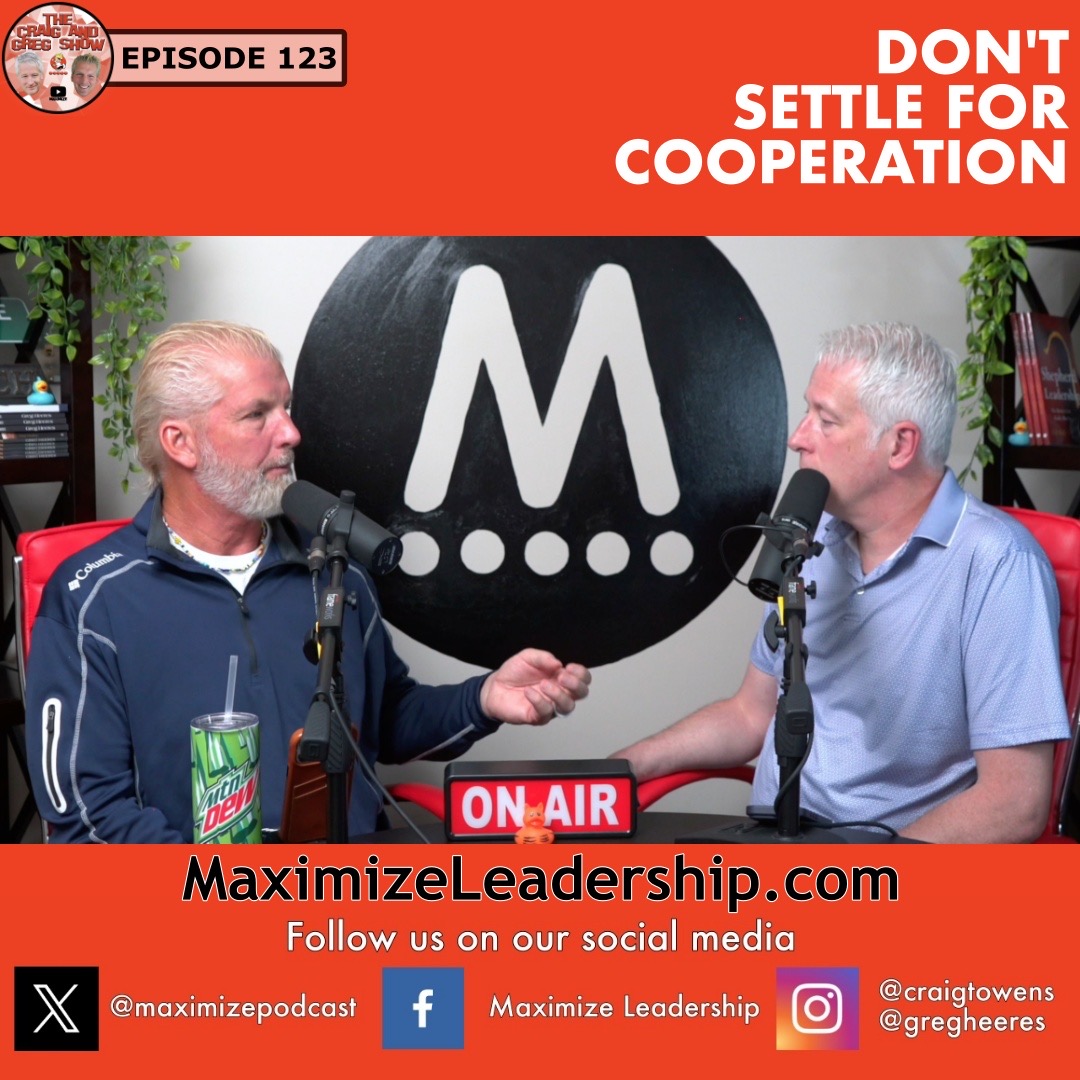
Greg and I promise we aren’t here to nitpick your grammar, but in some instances understanding the full meaning of words can help us to realize how they are affecting our patterns of thinking. In today’s episode we are discussing cooperation and collaboration—two words that are often used interchangeably. However, a deeper examination reveals that their differences can be the deciding factor between a surviving team and a thriving team.
[0:00] Introduction
[0:49] Not to nitpick on the definitions, but we need to make sure we understand the words “cooperate” and “collaborate.”
[2:03] Let’s start with cooperation—how do leaders get their teams to cooperate together?
[3:33] In our Business by the Book book for CEOs, we talk about a trailblazer in the Old West who sets a good example for us in how to get people to begin cooperating.
[7:13] Assumptions will kill cooperation before it even gets started.
[9:33] Stephen Covey has good insight for us in his book The 8th Habit that servant leaders can leverage for success.
[12:13] Collaboration is harder work, which will require more patience from the leader to allow the rest of the team to build their endurance for it.
[13:48] Teammates will have to wrestle with sacrifice and risk in order to allow the whole time to move forward.
[16:07] A strategy that Greg has employed successfully to help teammates move from cooperation to collaboration.
[18:02] The value of ideation in collaborative meetings is so much higher than sticking to the agenda of a cooperative meeting.
[19:27] We like the tension of the difficulty of collaboration.
[20:42] Moving from cooperation to collaboration will require legitimate humility on the part of the leader.
[23:08] An outstanding quote from John Maxwell’s book Teamwork 101.
[23:48] If you are wondering if your leadership might be stifling the move from cooperation to collaboration, please consider calling in Maximize Leadership as a business coach.
Listen to the podcast of this post by clicking on the player below, and you can also subscribe on Apple, Spotify, or Audible.
In a previous episode we brought you the exciting news that Greg and I are collaborating to write a series of books called Business By The Book. In today’s episode, we revisit the first book in this series—A CEO’s Vision—and discuss how once the vision has been cast the next vital step is to bring your team along with you.
[0:00] Introduction
[0:11] I welcome Greg to an exclusive club!
[0:49] We show why we think we are over-achievers.
[2:00] Leaders need to take others along with them, transitioning from “I” to “we.”
[4:39] How do leaders handle the frustration of a slow-moving team?
[6:51] How we wrote “Business by the Book” for a CEO who is casting vision.



 Pete Marra from Breakpoint shared this on a podcast: ”What we have at our disposal through business, the ability to organize, to solve problems, to create value, to deploy capital, to steward the things that God has given us, is something that’s very unique to enterprise itself. … I believe not only has God brought you to this place and called you to this space, but he’s equipped you for it.” My podcast cohost and I have co-authored a series of books called “Business by the Book.” They are designed to help equip you with God’s wisdom for each department of your organization. Check them out here.