


Listen to the podcast of this post by clicking on the player below, and you can also subscribe on Apple, Spotify, or Audible.
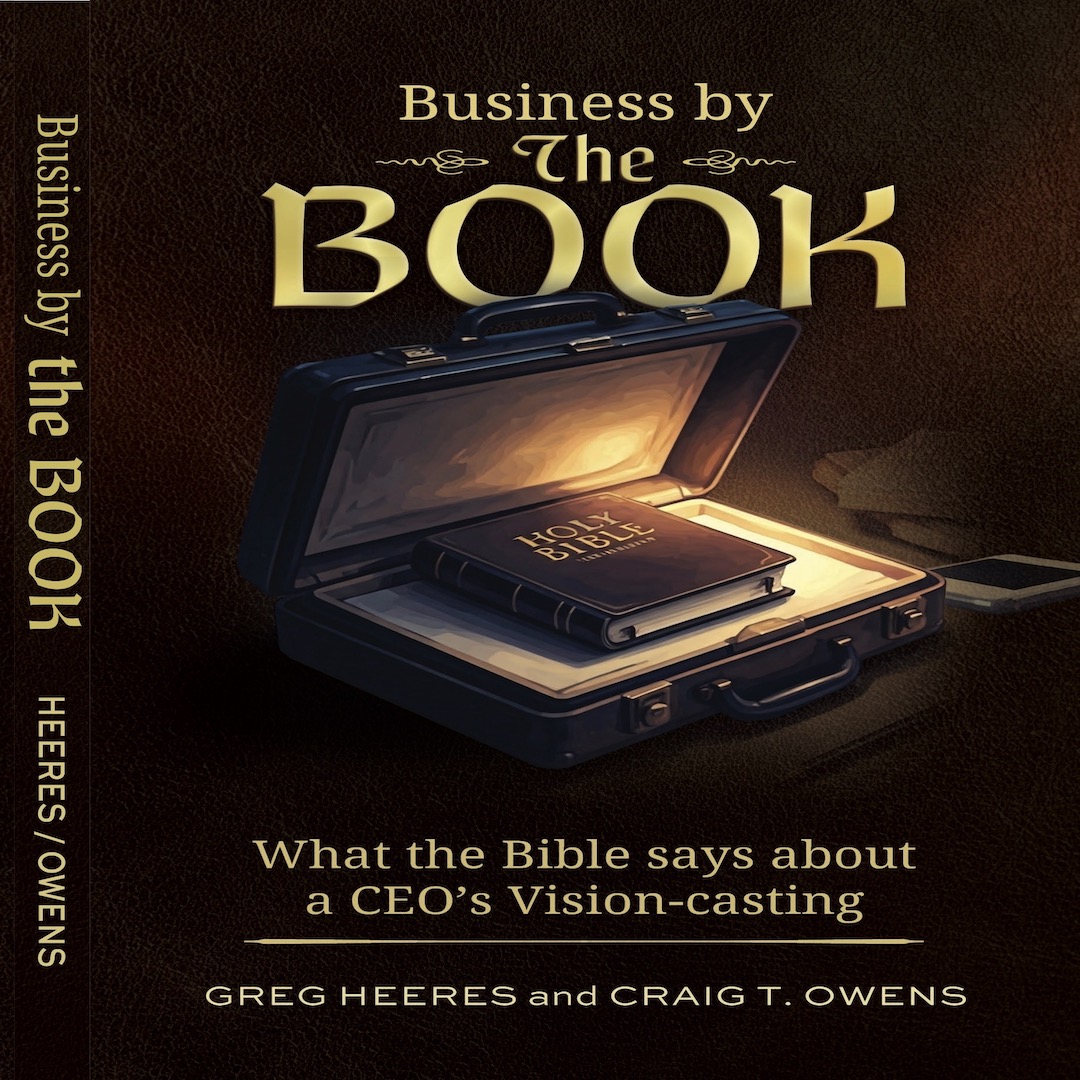 My podcast cohost, Greg Heeres, and I just finished our first co-authored book in our series Business by the Book. This book is both biblical wisdom and practical insight into how a CEO casts vision for themselves and the organization they lead.
We write about the God-honoring way to cast vision, but there is another way—the human way. In their book Spiritual Leadership, Henry and Richard Blackaby describe it like this:
“The Gospel of Luke provides a graphic contrast between peoples’ agendas and God’s [Luke 9:28-36]. Jesus took Peter, James, and John with Him up a mountain to experience a divine encounter. God the Father was unfolding His specific will for His Son. The Father brought Moses and Elijah to encourage Jesus for the enormous work of redemption He was about to accomplish. So sacred was that moment that Jesus radiated the glory of His divinity. Peter and his companions, however, had been sleeping. When they awoke and saw the magnificent scene unfolding, Peter spoke up: ‘Master, it’s good for us to be here! Let us make three tabernacles: one for You, one for Moses, and one for Elijah’ (v. 33). Peter’s first thought was to build something tangible to institutionalize the divine encounter. Peter, a natural leader, could already envision the ongoing ministry he and his friends would administer as a result of that encounter. However, the instant Peter began talking, the vision was removed, and only Jesus remained visible. Clearly Peter’s plan was not God’s agenda. The heavenly Father immediately rebuked Peter, saying, ‘This is My Son, the Chosen One; listen to Him!’ (v. 35). Peter, because he was human, instinctively thought in temporal terms. He envisioned something he could control and manage. He wanted to move Jesus, Moses, Elijah, James, and John on to his agenda instead of seeking to understand God’s will and adjusting his own life accordingly. Peter’s ignorance of spiritual ways is all too prevalent among today’s spiritual leaders. Too often people assume that along with their role of leader comes the responsibility of determining what should be done. They develop aggressive goals. They imagine grandiose dreams. They cast grand visions. Then they pray and ask God to join them in their agenda and bless their efforts. That’s not the spiritual leader’s role. Spiritual leaders seek God’s will, whether it is for their church, family, or corporation, and then they mobilize their people to pursue God’s plan. …
“We must emphasize that planning or goal setting is not wrong. Organizations must have direction and order. The key is the source of those plans. Spiritual leaders seek God’s guidance in discerning God’s purposes for their organization. Then they mobilize their organizations to effectively accomplish what God assigns.”
God’s desire has always been to give vision to leaders who will lead in a God-honoring way. If you are the point leader for your organization, by all means seek to cast a compelling vision for your team, but use the wisdom in God’s Word to ensure your vision is something that makes an eternal difference.
One final thought from the Blackabys: “God has the vision of what He wants to do. God does not ask leaders to dream big dreams for Him or to solve the problems confronting them with their own best thinking. He asks leaders to walk with Him so intimately that when He reveals His agenda they immediately adjust their lives and their organizations to His will and the results bring glory to God.”
Please pick up a copy of Business by the Book: What the Bible says about a CEO’s Vision-casting today.
►► Would you please prayerfully consider supporting this ministry? My Patreon supporters get behind-the-scenes access to exclusive materials. ◀︎◀︎


Tell me what you think about this...