Biblical Worldview

Listen to the podcast of this post by clicking on the player below, and you can also subscribe on Apple, Spotify, or Audible. 
The definition of salvation comes from Romans 10:9. When we believe in our heart that Jesus paid the penalty for our sins and we confess that with our mouth, we are now justified. I can now stand before God just as if I had never sinned. But the Christian life is more than merely going to heaven at some point. It’s about glorifying God and pointing others to Jesus while we’re on our way to heaven. 

(Check out all of the Scriptures in this post by clicking here.)

We are immediately justified but sanctification (or as I like to call it “saint-ification”) is an ongoing process. 

  • The sanctified life is fruitful 
  • The sanctified life is joy-filled
  • The sanctified life is a testimony to others  

Paul wrote to saints in Corinth (1 Corinthians 1:2; 2 Corinthians 1:1) but he also called them “mere human beings” in 1 Corinthians 3:1-3. Paul points out that there is a difference between viewing this life from a worldly viewpoint and a biblical viewpoint (2 Corinthians 5:16). 

A naturalistic world view is constantly shifting as new discoveries are made. A biblical worldview knows there is nothing new under the sun, that everything is addressed in Scripture. 

In order to not view this world through the lens of “mere human beings” we have to read, study, meditate on, and apply the whole counsel of God’s Word. We put it in and the Holy Spirit helps us live it out. Just like our prescription glasses won’t do a thing to correct our vision of they aren’t on our face, Scripture won’t help us navigate this world in a God-glorifying way if we haven’t put it in our heart. 

Each day before I ready my Bible I pray Psalm 119:18, which asks the Holy Spirit to open my eyes to the amazing things in Scripture. I read, I journal, and I pray over the passage that I have read. Then the Holy Spirit makes good application of that Scripture (John 14:26, 16:13; 1 John 4:6). I want to be sure to read the whole counsel of God’s Word, not just cherrypicking my favorite parts. And I always want to be going deeper (Hebrews 6:1). 

One place that we see contrasting world views—the natural worldview versus the biblical worldview—is in 2 Timothy 2:14-19. 

  • Natural worldview #1—quarreling about words 
  • Biblical worldview #1—correctly handling the Word of truth 
  • Natural worldview #2—engaging in godless chatter 
  • Biblical worldview #2—standing on the firm foundation of Scripture 

The results of a biblical worldview are amazing: 

  1. A sure foundation (Matthew 7:24-27) 
  2. The attention of others (Matthew 7:28-29) 
  3. Useful treasures to share with others (Matthew 13:52) 
  4. A strong defense against critics (Acts 6:9-10; Psalm 119:99) 

Let’s not get stuck in the “mere human being” level of a natural worldview, but let’s commit to studying our Bibles diligently so that the Holy Spirit can develop a robust biblical worldview in us. This worldview is fruitful, joyful, and enhances our testimony. 

Follow along with all the other messages in our series on B.A.S.I.C. Christianity by clicking here. 

►► Would you please prayerfully consider supporting this ministry? My Patreon supporters get behind-the-scenes access to exclusive materials. ◀︎◀︎

Links & Quotes

The armor of God is not for us to fight in but to shield us while we pray. Prayer is the weapon!

I have a lot of new video content on my YouTube channel every week. Please check it out and subscribe so you don’t miss anything.

“Psychologists, since the beginning of the discipline, have argued about the essence of what it means to be human. Some, like [Sigmund] Freud, insist that we are motivated by physical pleasure, while others, like Victor Frankl or Abraham Maslow, believe that some higher purpose…. Human beings, made in the image and likeness of God, only realize their full potential and pleasure as they participate in the very being of God and know and experience the pleasure He takes in Himself and His glory.” —T.M. Moore 

“If you are persevering in faith today, you owe it to the blood of Jesus. The Holy Spirit, who is working in you to preserve your faith, is honoring the purchase of Jesus. God the Spirit works in us what God the Son obtained for us. The Father planned it. Jesus bought it. The Spirit applies it—all of them infallibly.” —John Piper

“The Hebrew word Davar (דבר, pronounced ‘daw-var’) reveals something profound about God’s Word—it’s not merely information, but transformation. … Throughout Scripture, God’s Word consistently proves both living and active. It has the power to create worlds (Genesis 1), transform lives (Psalm 119:105), and accomplish God’s purposes (Isaiah 55:11).” —Dave Adamson 

More fascinating archeology that supports the Bible’s historicity. This is a look at the library of letters found at Tell el-Amarna in Egypt. “The most obvious connection between the Amarna Letters and biblical history is that some of the letters appear to be describing, in real-time, the attacks of the Israelites during the period of the conquest. Remember, the initial conquest battles took a period of some 5–6 years, but the attempts by various tribes to conquer their allotted territories lasted into the period of the Judges. The letters from the rulers of some of the very cities named in the biblical conquest calling for help from the attacking ʿapîru/ḫa-bi-ru, provide a poignant backdrop to this period of biblical history.”

“Because I am your constant Companion, there should be a lightness to your step that is observable to others. Do not be weighed down with problems and unresolved issues, for I am your burden-bearer.” —Jesus in Sarah Young’s Jesus Calling, based on Psalm 31:19–20; John 16:33

The Freedom In Fear

Listen to the podcast of this post by clicking on the player below, and you can also subscribe on Apple, Spotify, or Audible. 

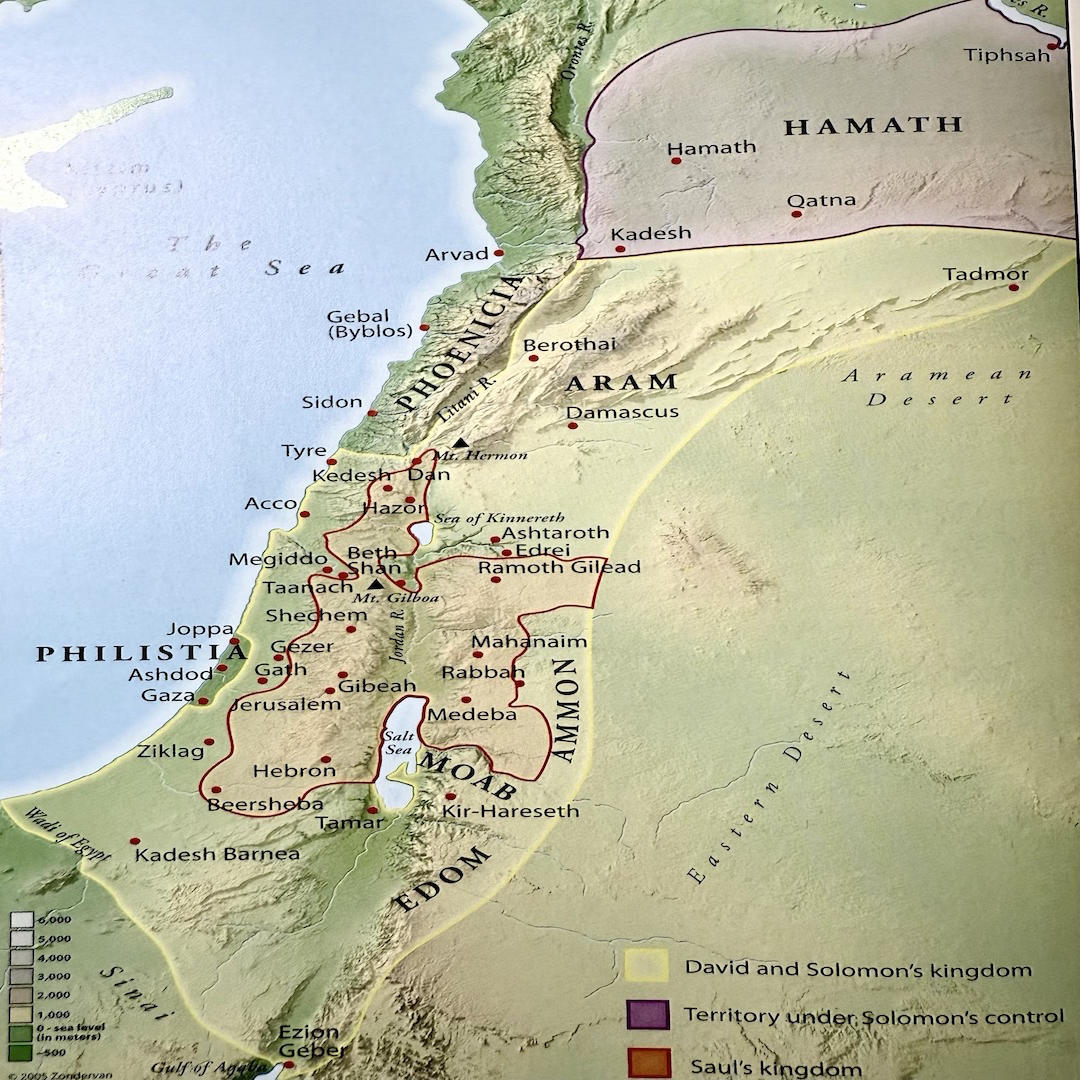
Our Royal Psalms take us from King David to King Jesus. David went from the anointed king on the run from King Saul, to being king over Judah (2 Samuel 2:4), to being king over “all the tribes” (2 Samuel 5:1-3; 8:15). 

(Check out all of the Scriptures in this post by clicking here.) 

David’s kingdom stretched far and wide (1 Chronicles 22:14-16; 29:10-13). This absolute control King David now wields over every nation surrounding Israel puts fear into the hearts of Israel’s enemies. Fear of David brings freedom for the people of his kingdom.

As the Sons of Korah think about this fear that brings them freedom, they look beyond their earthly king to the King of Heaven and compose this Royal Psalm recorded in Psalm 47. This psalm has majestic terminology for God in almost every verse; including, Lord Most High, great King over all the earth (vv. 2, 7, 9), God reigns over the nations; and God is seated on His holy throne. 

I’m especially intrigued by the word awesome in verse 2. The KJV says “the Lord Most High is terrible” because it does take two Hebrew words to give us the full definition of awesome. First, “Most High” is best thought of with the suffix -est: greatest, highest, noblest. In other words, there is nothing above Him. Then “terrible” is to be held in awe, to be honored, to be reverenced. 

Just as the Israelites had no fear of enemies because David was on the throne, God says the same thing to us: Because the Most High is on the throne, His people have no fear of their enemies. 

When we fear God we need not fear anything else. 

When we fear God: 

…we hate our own sin (Psalm 36:1-3) 

…we love His mercy that forgives our sin (Psalm 103:2-3, 10-12) 

…we hate sin in the world (2 Timothy 2:26) 

…we love sinners (2 Timothy 2:24-26; Acts 10:38; Jude 20-23) 

…we hate the darkness that traps people (2 Corinthians 4:4) 

…we love shining the light of King Jesus (Philippians 2:15-16) 

…we hate this life (John 12:25) 

…we love eternal life (Romans 3:23-24, 8:18)

When the people of Israel reverenced David as their king, they would be able to know his blessings. When we fear our awesome God, we will also receive His blessings. Take a look at the amazing blessings Jesus Himself—the King of kings—lists for those who reverence His awesome Kingship (Revelation 2:7, 11, 17, 26-28; 3:5, 11-12, 21)! 

God is awesome and asks us to reverence Him and then enjoy life in His freedom. 

If you have missed any of the other royal psalms we have covered, you can find the full list by clicking here. 

►► Would you please prayerfully consider supporting this ministry? My Patreon supporters get behind-the-scenes access to exclusive materials. ◀︎◀︎
Light In The Darkest Of Times

Listen to the podcast of this post by clicking on the player below, and you can also subscribe on Apple, Spotify, or Audible. 

One of the reasons I appreciate the Bible—in fact, one of the main reasons that continually convinces me of the truthfulness of the Bible—is the way it portrays life as it really is. It doesn’t avoid the difficult subjects, nor does it sugarcoat the bitterness of life. The Bible tells it as it is. 

The songs that have us singing praises to God “when the sun’s shining down on me and the world’s all as it should be” are great, but when we can also find hope when we’re “found in the desert place” is the real test. 

Dark times come to all of us. 

David is anointed king of Israel and given a promise by God for a lasting legacy (2 Samuel 7:8-9, 16, 27-29; Psalm 110:1). And yet David cried out one of the most painful phrases ever uttered in Psalm 22:1-2, “My God, my God, why have You forsaken me?”  

(Check out all of the Scriptures in this post by clicking here.) 

Despite the promises that God gave David, when any of us are in a dark place, there is a natural human tendency to focus on the darkness around us and second-guess what is happening to us. You know the questions:

  • How did I get here? 
  • How will I get out of here? 
  • When will I get out of here? 
  • Have I offended God and perhaps missed out on His promise? 
  • Has He forgotten me? 

The Bible does tell us, “If You, Lord, kept a record of sins, Lord, who could stand?” and we also know it’s true that “all have sinned and fall short of the glory of God” (Psalm 130:3; Romans 3:23). 

That’s for us, not for Jesus. He is the sinless One. He obediently became human to rescue us, knowing full well that He was the fulfillment of the promise God made to David (Matthew 1:1; 22:41-44). Yet He ended up uttering the same painful words David did (Matthew 27:41-46). 

Remember I said that King David was a visible picture to help us see the coming King of kings. David was inspired by the Holy Spirit with this knowledge (Acts 2:29-30, 25-28). 

The old hymn says, “When darkness veils His lovely face, I rest on His unchanging grace” and “When all around my soul gives way, He then is all my hope and stay.” Look at David’s preaching to himself:

  • I am feeling forsaken (Psalm 22:1-2) … YET You are on Your throne (vv. 3-5) 
  • I am scorned by others (vv. 6-8) … YET You are closer than my scorners (vv. 9-11) 
  • I am completely cut off (vv. 12-18) … BUT You are my rescue (vv. 19-24) 

What did Jesus know:

  • He would sit on the throne of Heaven—Matthew 26:62-64 
  • His Father was completing everything—John 19:30; Psalm 22:25-31 
  • He would conquer every enemy—Revelation 1:8, 18 

Jeremiah cries out about his dark time, and then like David he says, “YET this I call to mind and have hope.” Jeremiah then talks about the never-ending love and mercy of God, and concludes by preaching to himself, “I say to myself, ‘The Lord is my portion; therefore I will wait for Him’” (Lamentations 3:19-24). 

“The Lord is my portion” means the Lord is my King who declares promises and fulfills promises. 

The help in suffering is not found in focusing on the present darkness—and all the questions—but to focus on God’s promises. Like David’s “yet” and “but” we need to preach to ourselves about God’s past deliverance and then be assured of our future hope. 

Just assuredly as our King of kings said, “I will be resurrected from the dead to sit on the throne of Heaven,” He also said, “I will come to take you where I am”! 

Take your eyes off the present, temporary darkness and put them on the eternal King! 

If you have missed any of the messages in this series on the Royal Psalms, you can find them all here. 

►► Would you please prayerfully consider supporting this ministry? My Patreon supporters get behind-the-scenes access to exclusive materials. ◀︎◀︎
Resourced Like Jesus

Listen to the podcast of this post by clicking on the player below, and you can also subscribe on Apple, Spotify, or Audible. 

If Jesus needed to be empowered by the Holy Spirit in order to do His Father’s business, how much more do we need this anointing today? 

You can check out the full sermon from which I took this clip: The Father’s Business.

The Scriptures I reference in this clip—Luke 3:22; Matthew 17:5; Luke 4:1, 18-19; Acts 10:38; John 5:36. 

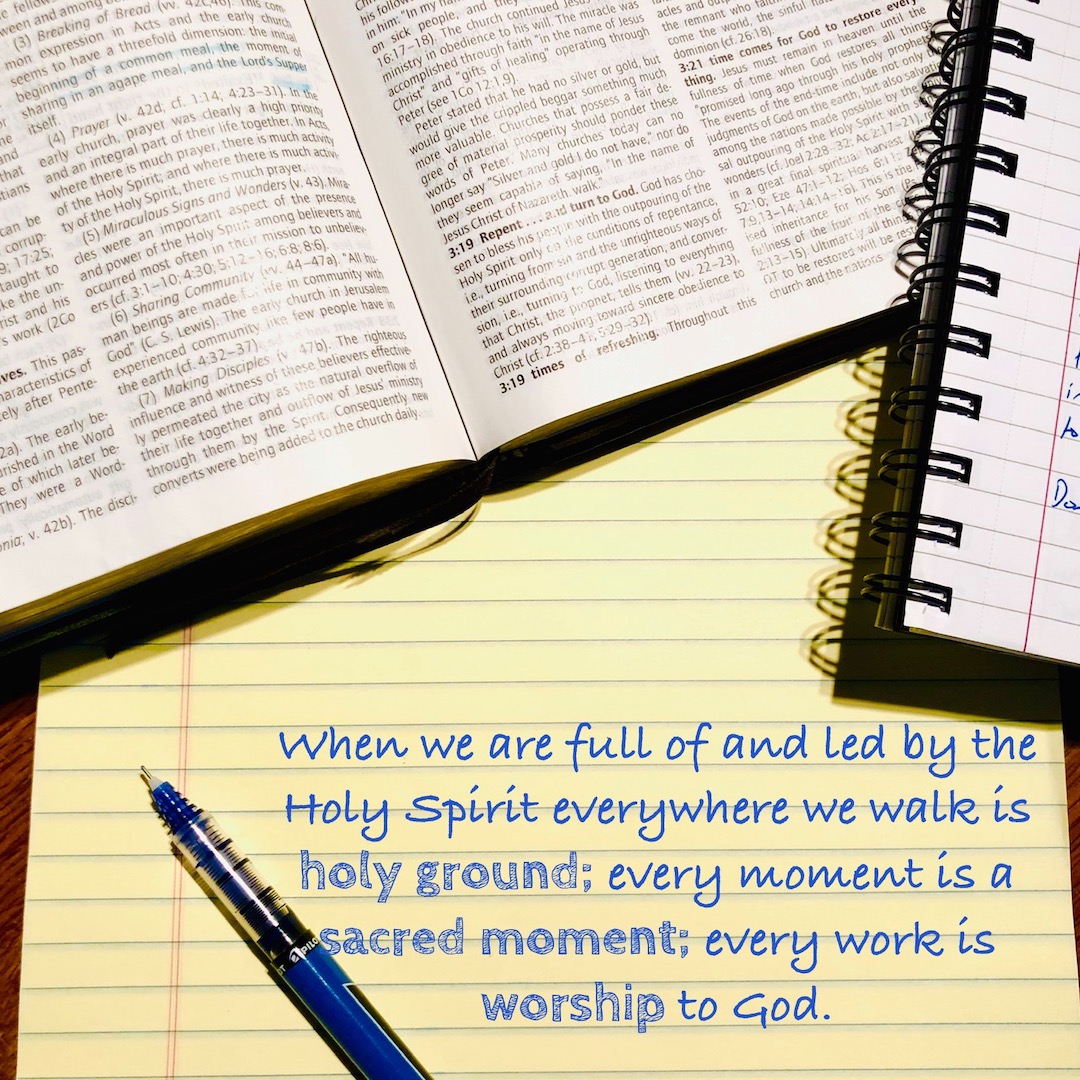
Like Jesus, when we are full of and led by the Holy Spirit everywhere we walk is holy ground; every moment is a sacred moment; every work is worship to God because we are occupied about the Father’s business.

Check out the full series of messages about the empowerment of the Holy Spirit in the series We Are: Pentecostal. 

►► Would you please prayerfully consider supporting this ministry? My Patreon supporters get behind-the-scenes access to exclusive materials. ◀︎◀︎
A Leader Worth Following

Listen to the podcast of this post by clicking on the player below, and you can also subscribe on Apple, Spotify, or Audible. 

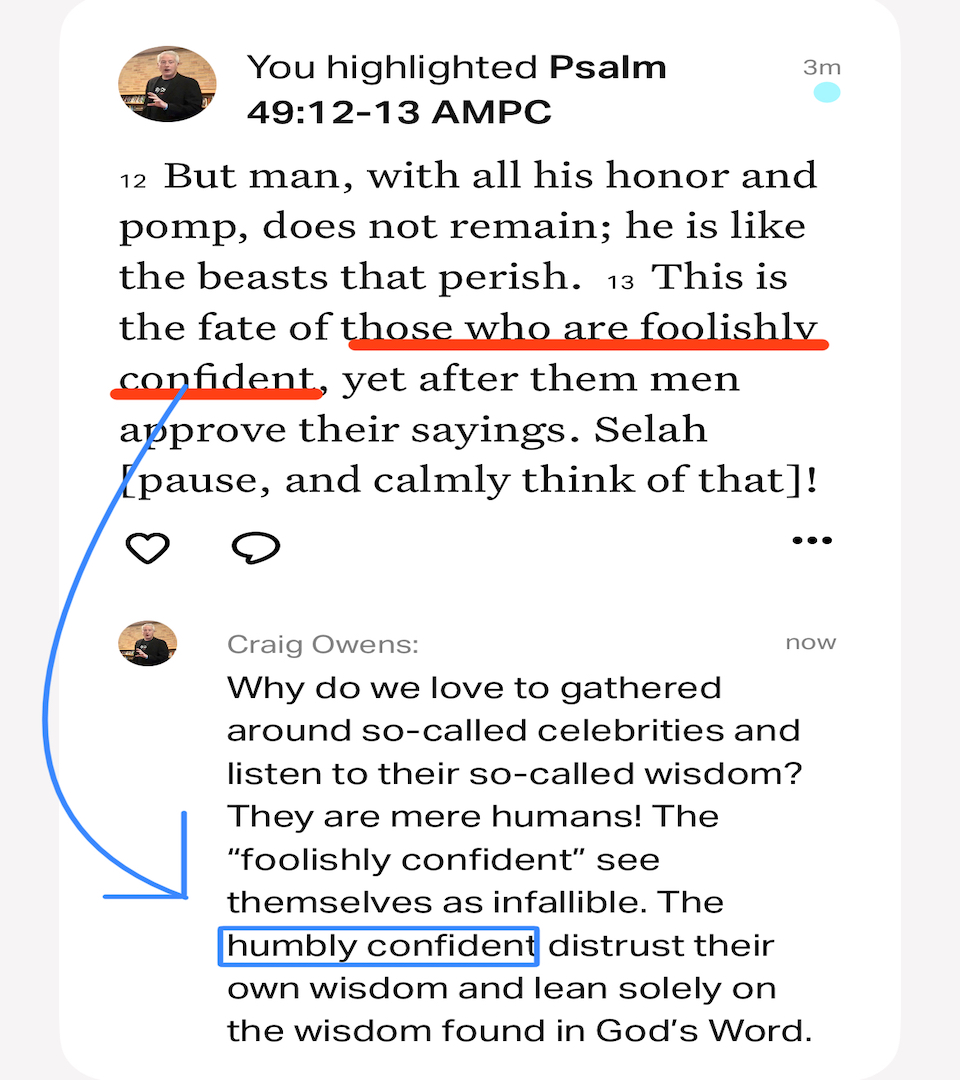
We live in a celebrity-obsessed culture. Sadly, this unbiblical pursuit has infected our churches too. Let’s talk about this on this episode of The Podcast. 

The Scriptures I reference in this episode are Psalm 49:12-13; 1 Corinthians 11:1; and John 3:30. 

If you want to check out the blog posts that I mentioned: 

In my book Shepherd Leadership, I have two chapters that address a godly leader’s confident humility and humble confidence. You can also check out several blog posts on videos on this subject by clicking here. 

►► Would you please prayerfully consider supporting this ministry? My Patreon supporters get behind-the-scenes access to exclusive materials. ◀︎◀︎
Fickle Crowds

Listen to the podcast of this post by clicking on the player below, and you can also subscribe on Apple, Spotify, or Audible. 

One day, the Lyaconians hailed Barnabas and Paul as gods and tried to offer sacrifices to them, and the next day they attempted to murder Paul. 

     Even in the light of these words [Barnabas and Paul] with difficulty prevented the people from offering sacrifice to them. But some Jews arrived there from Antioch and Iconium; and having persuaded the people and won them over, they stoned Paul and afterward dragged him out of the town, thinking that he was dead. (Acts 14:18-19) 

Crowds have always been fickle—quickly changing their allegiance from one person or idea to another one. Think about Jesus: they went from “Blessed is He Who comes in the name of the Lord” to “Crucify Him” in less than a week! 

Jesus wasn’t surprised by this. He knew what was in men’s hearts and never built His hopes or His ministry on them (John 2:23-25). 

So why do we? 

Why do we equate a large church attendance or lots of views of our online content as “successful” and anything less as “failure”? 

Jesus didn’t want or need the approval of a large crowd. Instead, He heard, “This is My beloved Son in Whom I am well pleased” (Matthew 3:17, 17:5). 

Paul didn’t want or need the approval of a large crowd. Instead, in his final letter he noted that with the exception of Luke, everyone else had abandoned him. And still some of his last words were, “I have fought the good fight, I have finished the race, I have kept the faith. Now there is in store for me the crown of righteousness, which the Lord, the righteous Judge, will award to me on that day—and not only to me, but also to all who have longed for His appearing” (2 Timothy 4:7-8). 

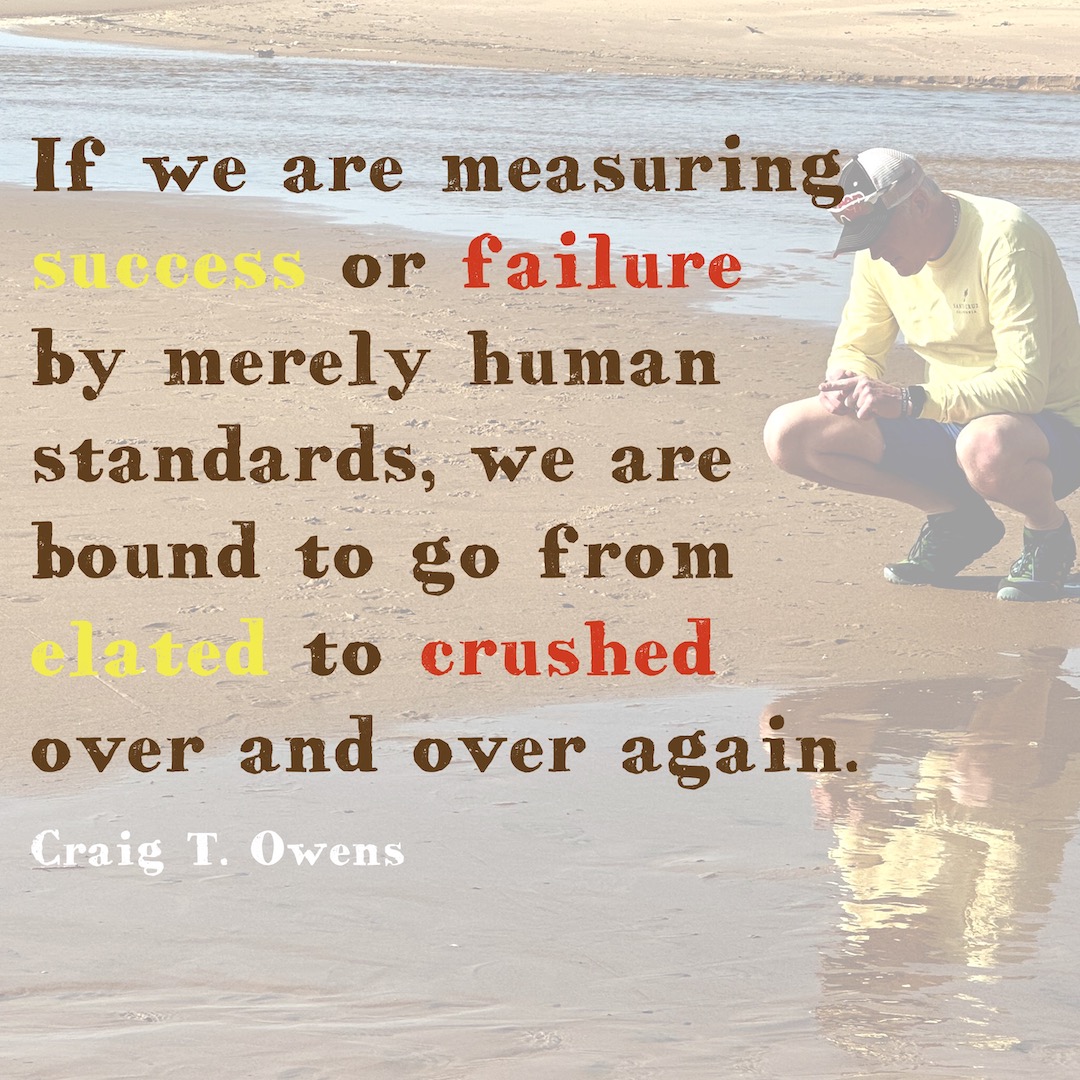
If we are measuring success or failure by merely humans standards, we are bound to go from elated to crushed over and over again. 

There is only one metric of success we should ever give weight to: 

We should only desire to hear our Master say, “Well done” because we faithfully stewarded the gifts and opportunities He gave to us. 

Let’s stop this thrilled-disappointed-thrilled-disappointed cycle by taking our eyes and hearts off of numbers, and resolving to keep our eyes and hearts solely on our Savior.

P.S. If this topic intrigues you, please consider checking out my book Shepherd Leadership: The Metrics That Really Matter.

►► Would you please prayerfully consider supporting this ministry? My Patreon supporters get behind-the-scenes access to exclusive materials. ◀︎◀︎
Weighty Words

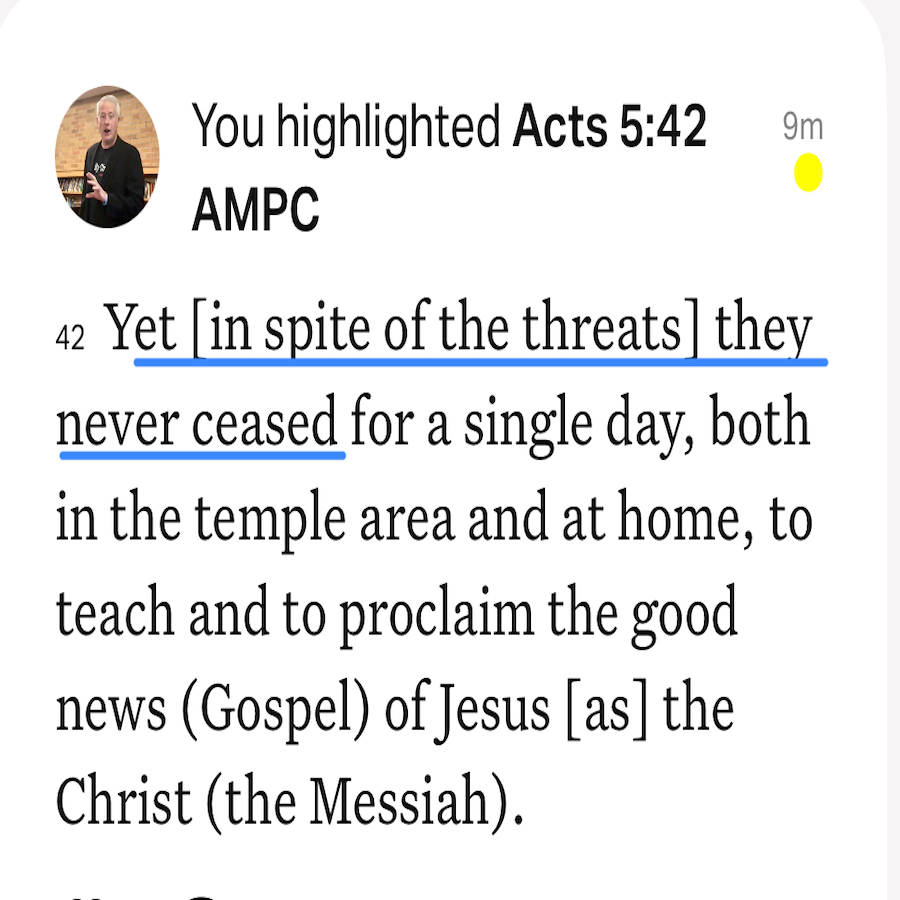
Yet [in spite of the threats] they never ceased for a single day, both in the temple area and at home, to teach and to proclaim the good news (Gospel) of Jesus [as] the Christ (the Messiah). (Acts 5:42 AMPC) 

On the one hand, the apostles were sent by God to proclaim the name of Jesus; on the other hand, the Sanhedrin commanded them not to proclaim the name of Jesus (vv. 20, 28). 

Not only had the Holy Spirit empowered and emboldened these men to testify, but Jesus also said (in John 14:26) that at key moments the Spirit would remind them of His words. One word Jesus had given them, which the Spirit undoubtedly brought to their remembrance, was this: “And do not be afraid of those who kill the body but cannot kill the soul; but rather be afraid of Him who can destroy both soul and body in hell (Gehenna)” (Matthew 10:28). 

God is glorified when we give greater weight and reverence to His words than we do to the words of mere humans.

Inspiration, Illumination, And Boldness

Listen to the podcast of this post by clicking on the player below, and you can also subscribe on Apple, Spotify, or Audible. 

David declared that the Holy Spirit inspired the words he penned. “The Spirit of the Lord spoke in and by me, and His word was upon my tongue” (2 Samuel 23:2). 

Both Jesus and Peter affirm this in the New Testament as well when they make mention that David’s words were given to him by the Holy Spirit (Matthew 22:43; Mark 12:36; Acts 1:16, 4:25). 

It’s not just the words of David, but all Scripture is God-breathed (2 Timothy 3:16; 2 Peter 1:21)! This is why we would be wise to pray before reading our Bibles to ask the One Who inspired the Scripture to illuminate our minds to understand it and guide us into its daily application (John 14:26, 16:13). 

Jesus desired that we go even farther than this. His directive to His followers was for them to be baptized in the Holy Spirit. This initial baptism took place on the first Pentecost celebration after Jesus had ascended to Heaven. Luke records it this way—

And they were all filled (diffused throughout their souls) with the Holy Spirit and began to speak in other (different, foreign) languages (tongues), as the Spirit kept giving them clear and loud expression in each tongue in appropriate words. (Acts 2:4 AMPC) 

And in the subsequent verses Luke makes it clear that these were intelligible languages and intelligent words that served as a testimony to the worldwide visitors that were in Jerusalem—

And when this sound was heard, the multitude came together and they were astonished and bewildered, because each one heard them—the apostles—speaking in his own particular dialect. And they were beside themselves with amazement, saying, “Are not all these who are talking Galileans? Then how is it that we hear, each of us, in our own (particular) dialect to which we were born? Parthians and Medes and Elamites and inhabitants of Mesopotamia, Judea and Cappadocia, Pontus and the province of Asia, Phrygia and Pamphylia, Egypt and the parts of Libya about Cyrene, and the transient residents from Rome, both Jews and the proselytes to Judaism from other religions, Cretans and Arabians too—we all hear them speaking in our own native tongues and telling of the mighty works of God!” (vv. 6-11 AMPC) 

In his sermon that followed this event, Peter states that the baptism in the Holy Spirit—with the physical evidence of speaking in tongues—is an evidence of Christ’s resurrection. “Being therefore lifted high by and to the right hand of God, and having received from the Father the promised blessing which is the Holy Spirit, He has made this outpouring which you yourselves both see and hear” (v. 33). 

Later on, when the Christians were facing the threat of persecution from the Jewish leadership, they prayed. In their prayer, they noted again the Spirit-inspired words that David penned and the desire of Jesus for them to be His missionaries (see Acts 4:24-30). 

God answers their prayer powerfully! “And when they had prayed, the place in which they were assembled was shaken; and they were all filled with the Holy Spirit, and they continued to speak the word of God with freedom and boldness and courage” (v. 31). 

The Holy Spirit gave us the Scripture, and He illuminates the Scripture to us. 

The Holy Spirit assures us of our salvation, and He empowers us to share this Good News with others. 

The Holy Spirit gives us words to speak, and He gives us the boldness and courage to speak them. 

He speaks, He illuminates, He empowers, He emboldens! If your theology limits the work of the Holy Spirit to some obscure corner of your world, you are robbing yourself of the power to live a God-glorifying, Jesus-promoting life. 

You may be interested in some additional posts and sermons where I discuss more about the initial physical evidence of speaking in tongues as the Holy Spirit empowers Christians—

You may also be interested in an extensive series of messages I have shared called We Are: Pentecostal. 

►► Would you please prayerfully consider supporting this ministry? My Patreon supporters get behind-the-scenes access to exclusive materials. ◀︎◀︎
The Father’s Business

Listen to the podcast of this post by clicking on the player below, and you can also subscribe on Apple, Spotify, or Audible. 

The Holy Spirit’s involvement in our lives isn’t reserved for just the “big” things, but He wants us to be aware of and tuned in to His voice and His thoughts all the time. There shouldn’t be a secular-sacred divide in our activities, but we should make every place holy ground and every moment a divine opportunity for God to be glorified. Or said another way, we shouldn’t have times of work and times of worship, but our worship should be seen in every single thing we do. 

I think everyone of us has experienced at one time or another a poor employer or manager. Maybe it’s an employer that demands results but doesn’t give you the training or the tools to do the job. Or maybe you have the training and tools but you don’t know exactly how much you are able to use these things without crossing a line. 

Maybe you have known a boss that is barely present, but when they do stop by the worksite, they aren’t happy with the work that has been done. On the opposite side, maybe it’s a boss who does everything and then gets mad that you aren’t keeping up or working as hard as them. It’s drudgery working for someone like this! 

But, somewhat surprisingly, Jesus used more work examples to talk about the Kingdom of God than He did worship examples. He talked about farmers, bakers, builders, employers, managers, and employees way more than about worshiping, singing, or preaching. 

One of the few glimpses we have of the early life of Jesus shows Him talking about His mission while on earth. Consider the story of Jesus in the temple in Jerusalem when He was 12 years old (Luke 2:41-49). The phrase in the NIV where Jesus says that He must be “in My Father’s house” can be translated…

  • about My Father’s business (NKJV) 
  • dealing with the things of My Father (MSG) 
  • occupied about My Father’s business (AMPC) 

(Check out all of the Scriptures in this post by clicking here.)

Jesus was consistent about this idea of working while He was on earth (John 5:17, 36; 9:4; 17:4). For Jesus, His work was a delight because it was directed by the Holy Spirit (Luke 3:21-22; 4:1, 18-19; Acts 10:38). 

Remember that I mentioned the unreasonable employer that gives us no training, no tools, no goals for which to aim, but expects us to work for his benefit alone. This was not the case with Jesus! He trained us, provided us with the Holy Spirit to guide us, told us the goal for which we were to aim, and said that both His Father would be glorified and we would be rewarded by our Kingdom work done on earth. 

Jesus wants us to work as He did, and He promised that the Holy Spirit would help us in this (John 14:10-12, 24:49; Mark 16:19-20). 

We saw that Luke 2:49 in the AMPC has Jesus saying, “occupied about My Father’s business.” In Luke 19:13 Jesus tells us to “occupy till I come” (KJV). This word is also translated into phrases like: 

  • put this money to work (NIV) 
  • do business (NKJV) 
  • invest this (NLT) 

Jesus is talking about the “talents” given to His stewards (Luke 19:11-13, 16-23). Every servant received the same thing: one mina. We all have been given one life to live; we all have been given 24 hours in a day; we all have been given opportunities to be occupied about our Father’s business. 

The Holy Spirit as our Counselor is there at every moment, every conversation, every decision to help us hear His voice, think His thoughts, and sanctify every experience. Jesus says that He will reward our occupying until He returns. Just doing things like feeding the hungry, giving water to the thirsty, taking care of those in need. This sounds a lot like the work of Jesus in Luke 4:18-19 and Acts 10:38. This Spirit-empowered work earns the commendation from our Master, “Well done, good and faithful servant! Enter into your Master’s happiness!” 

Be baptized in the Holy Spirit and let Him help you be about your Father’s business until Jesus returns. 

If you’ve missed any of the messages in our We Are: Pentecostal series, you can check them all out here. 

►► Would you please prayerfully consider supporting this ministry? My Patreon supporters get behind-the-scenes access to exclusive materials. ◀︎◀︎