Turning Pain Into Prayer

Listen to the podcast of this post by clicking on the player below, and you can also subscribe on AppleSpotify, or Audible. 

Last week we saw how the Israelites in exile had their time of grief—being targeted for annihilation—turned to joy when God granted favor to Queen Esther. 

The books of 1 and 2 Chronicles, Ezra, and Nehemiah are all written during this time period as the exiles are returning in waves to Israel. This is another grief-into-joy moment! More than likely, all four of these books were written by Ezra. Notice the note of joyful celebration that is repeated in the last words of 2 Chronicles and the opening words in the Book of Ezra (2 Chronicles 36:22-23; Ezra 1:1-4). We don’t know which psalmist wrote Psalm 126, but it sounds the same joyful note. 

(Please check out all of the Scriptures in this post by clicking here.)

Not all the exiles returned at once. In fact, the Book of Daniel shows us that Daniel likely stayed in his position of leadership to these governments until his death. 
The exiles were returning in waves. As the worship practices at the temple were reestablished and as people returned to lands allotted to each tribe, it was important for the leaders to make sure the right people were in the right places. So 1 Chronicles opens with genealogies. 

  • Beginning with Adam and Noah (1:1-4) 
  • The spiritual fathers (1:34) 
  • The family line of the Messiah (2:1-15; Matthew 1:1-6) through the family tree of David (3:1-24) 

Then 1 Chronicles 4 lists more clans in the tribe of Judah. Of special note is the Calebite clan (2:9, 18). 

In the Calebite clan we meet Jabez in 1 Chronicles 4:9-10. His name literally translated is sorrow. I wonder: is this a nickname or his birth name? how did he even get this name? 

His mother is quoted, “I gave birth to him in pain.” Did that mean it was physically a difficult birth? Did she die after childbirth? Was he born during the painful exile? His father isn’t mentioned, so maybe his birth reminded everyone of the father who was no longer there. The Amplified Bible says his mother named him “sorrow maker.” 

Whatever the case, Jabez has become aware that his name or his presence is causing grief to others. There is a bit of a play on words here: “his mother named (Hebrew: qara) … Jabez cried out (Hebrew: qara) to the God of Israel.” In essence, Jabez is saying, “Since my mother cried out in pain—or thinks I am a sorrow maker—I have no where else to go but to cry out to God!” 

I believe Jabez was a teenager at this time. One medical journal says, “Adolescents are physically, cognitively, and socioemotionally more advanced than children but prone to behave in ways that are inconsistent with adult values and norms. … Adolescents also frequently report greater self-consciousness, and are more concerned with and interested in others’ perceptions of self.” 

This means that as the brain matures during adolescence, teenagers begin to look at themselves through the eyes of others. They are beginning to make decisions that will earn approval from their peers and their family. 

This describes Jabez. He doesn’t want to be the sorrow maker any longer. 

Grief happens when my reality falls short of my expectations. Jabez has become self-aware that he is a painful reminder to everyone around him. He is living in a place of grief

Jabez is called “more honorable than his brothers” (v. 9) because he turns his pain into his prayer. His brothers may either have not been as self-aware, or maybe they were aware but simply didn’t care. Jabez realized, “People have been calling me sorrow maker my whole life. There’s nothing I can do about it on my own, so the only thing I can do is call on the only One who can turn my grief into joy” (v. 10). 

Look at his noble prayer:

  • bless me—God, You are the only One whose favor I desire 
  • enlarge my territory—even out of this grief, bless me so that I can be a blessing  
  • let Your hand be with me—only Your hand can restore my fortunes, can help me reap a harvest, and can allow me to sing Your songs of joy (see Psalm 126:1-6). 

Let us follow this example from Jabez’s life and begin to turn every pain into prayer. 

God doesn’t want to give us temporary relief from our pain, but He desires for us to know His never-ending joy (Isaiah 25:7-9; Revelation 21:3-4). 

If you’ve missed any of the other messages in this series Grief Into Joy, you can find them all here. 

►► Would you please prayerfully consider supporting this ministry? My Patreon supporters get behind-the-scenes access to exclusive materials. ◀︎◀︎

Praying For Our Governments

Listen to the podcast of this post by clicking on the player below, and you can also subscribe on AppleSpotify, or Audible. 

You may have heard it said that Christians are supposed to pray for those who are in governmental leadership positions over them. Is that really true? And if it is, what exactly are we supposed to pray for them?

Check out this episode of The Podcast.

Resources mentioned in this video:

►► Would you please prayerfully consider supporting this ministry? My Patreon supporters get behind-the-scenes access to exclusive materials. Become a supporter today and get access to all of my previous posts plus have instant access to all of the new materials that are being posted weekly. ◀︎◀︎

The Seed Of Revival

Listen to the podcast of this post by clicking on the player below, and you can also subscribe on AppleSpotify, or Audible.

The London Times asked, “What’s wrong with the world today?”

In his characteristic wit and candor, G.K. Chesterton responded with a letter:

“Dear Sir,

I am. 

Yours, G.K. Chesterton”

I hear the same humble honesty in Ezra’s prayer:

O my God, I am ashamed and embarrassed to lift up my face to You, my God, for our iniquities have risen above our heads and our guilt has grown even to the heavens. … Now, our God, what shall we say after this? For we have forsaken Your commandments (Ezra 9:6, 10). 

This isn’t a word for “back then” or exclusively for Israelites—this is still a word for all of us today. 

Several years ago I was asked to sign a joint letter from local pastors condemning a couple of headline-making heinous activities. In part of my response to these pastors, I wrote,

“I’m not sure if a letter to the editor is an appropriate response or not. But if this is the correct response for us, I am very hesitant to sign my name to a letter that calls out merely one of many sins. The problem we face is a singular one: sin. 

“The solution is also a singular one: Jesus. 

“A response that merely denounces evil acts is not, in my mind, effective. Such a letter is only highlighting sins, but not the solution.”

This, also, is what I see Ezra doing. It may have been one particular sin that got his attention (in this case, intermarriage with non-believers) but he then confesses their universal condition: the sin of departing from God’s commandments. 

It’s so easy to spot sins in society, shake our heads in disgust, and say, “They should know better! What’s wrong with the world today? Someone should do something about that!” 

Instead, any and every sinful expression we observe should send us to our knees saying, “But for the grace of God, I would be guilty of the same thing. God, be merciful to me, a sinner. I confess my sin and plead for Your mercy and forgiveness.” 

Revival will never be a widespread response until it is first an individual response.

When we began as individuals to confess “my sin,” others will soon join with us in confessing “our sin” (see Ezra 9:4). That attitude is the seed of revival.

If you are a pastor and would like to join other pastors in a weekly prayer time for revival, please email T.M. Moore to get plugged into this strategic online gathering.

Check out some other thoughts I have shared about revival here.

►► Would you please prayerfully consider supporting this ministry? My Patreon supporters get behind-the-scenes access to exclusive materials. ◀︎◀︎

Don’t Fight Fire With Fire

Listen to the podcast of this post by clicking on the player below, and you can also subscribe on AppleSpotify, or Audible. 

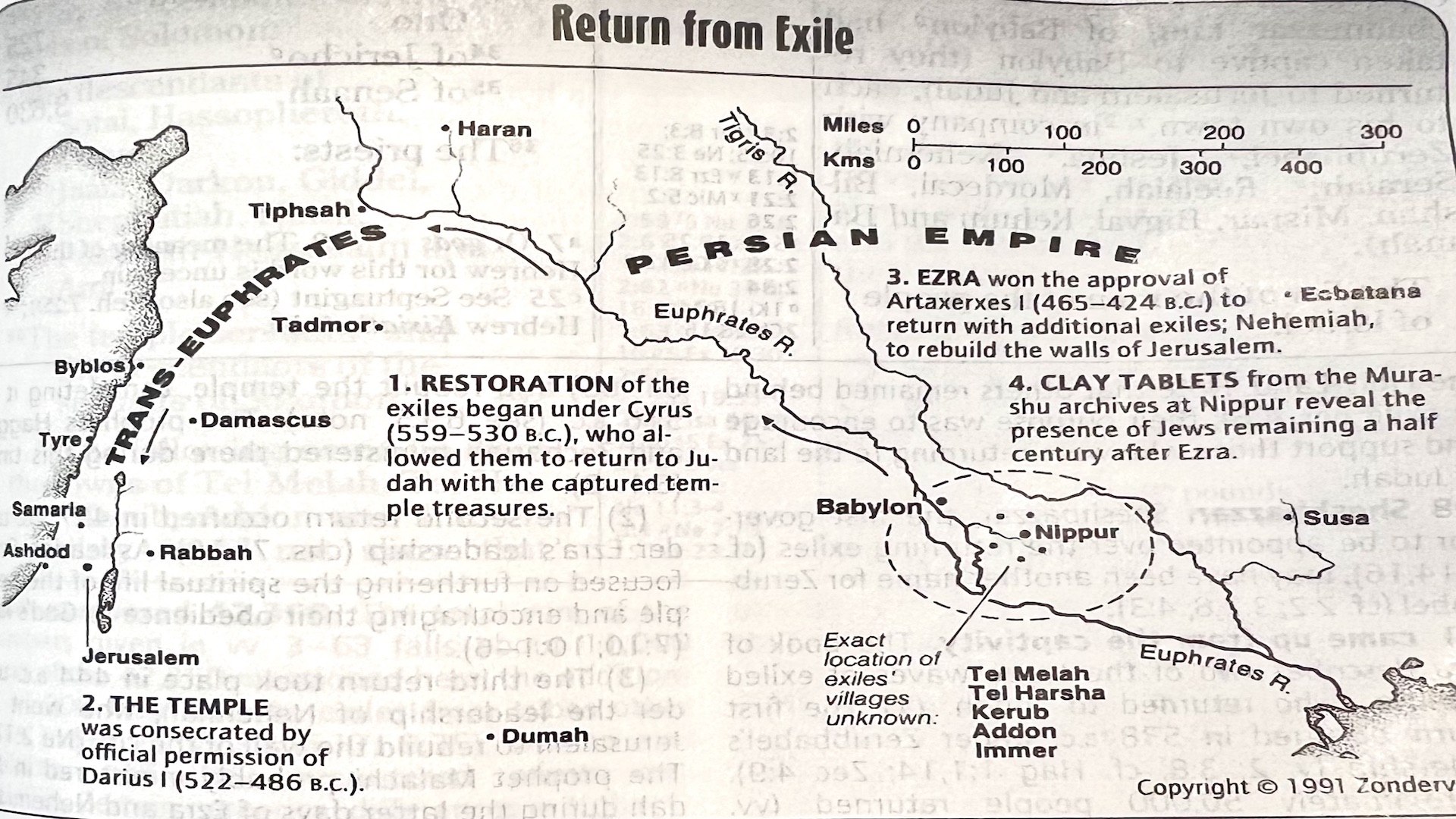
The events in the Bible are rooted in history. These are actual events in which real people lived in a moment in recorded history. The songs of ascent were sung both pre-exile and post-exile. The post-exile pilgrims were returning to Jerusalem after the edict of King Cyrus (2 Chronicles 36:22-23). 

The first pilgrims to go up to Jerusalem after the exile were the rebuilders of both Jerusalem and the temple, and they faced heavy opposition (Ezra 4:1-5; Nehemiah 4:1-3, 7-8). In light of these events, I think the song of ascent in Psalm 125 is especially pertinent to this situation. 

The middle verse of Psalm 125 contains a warning to godly people. God’s followers may be tempted to grab earthly political power to try to make things right—to “fight fire with fire.” The phrase “the scepter of the wicked” symbolizes the royal authority of a foreign conqueror. In other words, we might justify using the scepter of the wicked because we think “the ends justify the means.” But notice the warning if we do: “the righteous might use their hands to do evil.” 

You can see this in a couple of other biblical translations. The Amplified Bible says, “lest the righteous (God’s people) stretch forth their hands to iniquity and apostasy,” and the New Living Translation says, “the godly might be tempted to do wrong.” 

Instead, we are called to look to God for our security. Psalm 125:1-2 sounds like an echo of Psalm 121, in which we are reminded that our God is unshakable, unrivaled, and eternal. Political parties come and go, even evil dictators and tyrannical regimes come and go, but the Sovereign God remains forever. All of History is His story! 

Chuck Colson used to frequently remind his audiences, “Salvation does not arrive on Air Force One!” 

The motto on our US currency is still accurate: In God we trust! Psalm 125:4 says the same thing: God does good to those who trust Him. 

Earlier I mentioned the opposition that Ezra and Nehemiah recorded. Let me also share with you how these God-fearing men instructed the Jewish people to respond. Ezra says that the prophets called them to remember “the name of the God of Israel, who was over them,” and three times Nehemiah records that their response was prayer to God (Ezra 5:1; Nehemiah 4:4, 9; 6:9). 

In God we trust, not in political power. On the flip side, Psalm 125:5 warns us that God treats as evildoers those who look to the worldly scepter to try to get ahead. 

So when opposition and even persecution come, we should pray to God and ask for Him to remove the scepter of the wicked. Let’s pray for God to put His favor in the hearts of even ungodly leaders. Ezra recognized this when he said—

Praise be to the Lord, the God of our ancestors, who has put it into the king’s heart to bring honor to the house of the Lord in Jerusalem in this way and who has extended His good favor to me before the king and his advisers and all the king’s powerful officials. Because the hand of the Lord my God was on me, I took courage and gathered leaders from Israel to go up with me. (Ezra 7:27-28)

The New Testament calls on Christians to pray for those in governmental leadership over us (1 Timothy 2:1-2). But perhpas you ask, “What exactly are we to pray for these leaders?” Solomon wrote, “The king’s heart is like channels of water in the hand of the Lord; He turns it wherever He wishes” (Proverbs 21:1). So perhaps a God-honoring prayer is to ask for our leaders’ hearts to be moved as King Cyrus’ heart was. 

Commenting on this verse from Proverbs 21, Dick Brogden wrote:

“God is King of kings and ultimately always wins, always gets His way. Even when it seems that earthly authorities continually rebel against the Lord and His Anointed, the reality is that even their most heinous acts are turned against them. It must be very frustrating to be the devil and to constantly see how God turns situations to gospel good and God’s unique glory. God is so wise that He turns the hearts of authorities without them knowing it. Smug on their decaying thrones, the power brokers of this world revel in their supposed autonomy and imagined resistance, never realizing how foolish they look to the angel hosts who are privy to God’s unmatched strategic dominance.”

Let’s never try to fight fire with fire, but let’s turn repeatedly to God in prayer whenever opposition arises against God-fearing people anywhere. 

If you’ve missed any of the messages in our Ascending series, you can find all of the previous messages here. 

►► Would you please prayerfully consider supporting this ministry? My Patreon supporters get behind-the-scenes access to exclusive materials. ◀︎◀︎

Links & Quotes

The seed your weakened hand is sowing
May ripen to a harvest broad,
Which yet may help, without your knowing,
To fill the granaries of God! —Margaret J. Prescott

My friend and podcast partner Greg Heeres talked about growing and learning through change. You can check out the rest of this episode of The Craig And Greg Show here.

Sometimes the prophetic language in the Bible can be a bit confusing. Like the phrase: “A time, times, and half a time.” Here is how Dr. Henry Halley unpacks this—

“It denotes the duration of the other horn of the fourth beast (Daniel 7:25). It denotes the period from Daniel to the time of the end (Daniel 12:6–7). It is used in Revelation 12:14 as identical to 42 months and to 1260 days (Revelation 11:2–3; 12:6, 14; 13:5), the period of time the Holy City was trampled, the two witnesses prophesied, the woman was in the wilderness, and the revived beast was on the throne. 

“The word ‘time,’ in the phrase ‘a time, times, and half a time’ is generally taken to mean year; the phrase thus means three and a half years, which is 42 months, or 1260 days. 

“By some, this is taken to refer to a literal three and a half years. Others, on the year-day interpretation (Numbers 14:34; Ezra 4:6), take it to be a period of 1260 years. Still others look upon the figures, not as defining time limits or periods, but as being symbolic: 7 Is the symbol of completeness, while three and a half, which is half of 7, represents incompleteness—that is, the reign of evil will be only temporary.” —Halley’s Study Bible (check out all of the biblical references in this quote by clicking here)

“Ambivalence toward the Law of God is troubling. Theologians discard the Law, and pastors either reject or neglect it. Jesus said that keeping and teaching the Law of God was a mark of Kingdom greatness (Matthew 5:17-19). Apparently that’s not a goal many of us aspire to. He also said that when the Law of God is neglected, love grows cold (Matthew 12:24). The ubiquitous lack of love in our world today is undoubtedly related to our failure to teach and live according to the Law of God. … 

“Pastors have three main resources for the work and business of ministry: The Word of God, prayer, and their personal example (Acts 6:4; 1 Peter 5:1-3). If any of these fails, their ministry will as well. Especially must pastors be seen to be men zealous for the Law of God, to obey all the counsel of the Lord in His Word and to resist the devil and overcome every temptation. Jesus did. Paul did. John said this is the way love flourishes (1 John 5:1-3). Throughout this generation, failures of obedience on the part of highly visible pastors have contributed to the Church’s becoming an object of scorn by many unbelievers, while believers have been largely silent about their failings. We must be diligent in obeying Christ if we would teach others to do so and thus fulfill our calling to the Kingdom and glory of God.” —T.M. Moore

New wide-angle X-ray scattering (WAXS) analysis dates the Shroud of Turin to the first century.

Not all viruses need to be eliminated. A study has discovered 5500 new RNA viruses on the ocean, finding “an entire phylum, the Taraviricota . . . found all over the oceans, which suggests they’re ecologically important.” The Creator knew what He was doing!

God’s Precision

Listen to the podcast of this post by clicking on the player below, and you can also subscribe on AppleSpotify, or Audible.

I love how often archeological discoveries absolutely verify biblical accounts. Haggai is a great example of this: He so precisely dates his prophecies, which are then corroborated by extra-biblical records from the Medes and Persians.  

For instance, check out these specific dates:

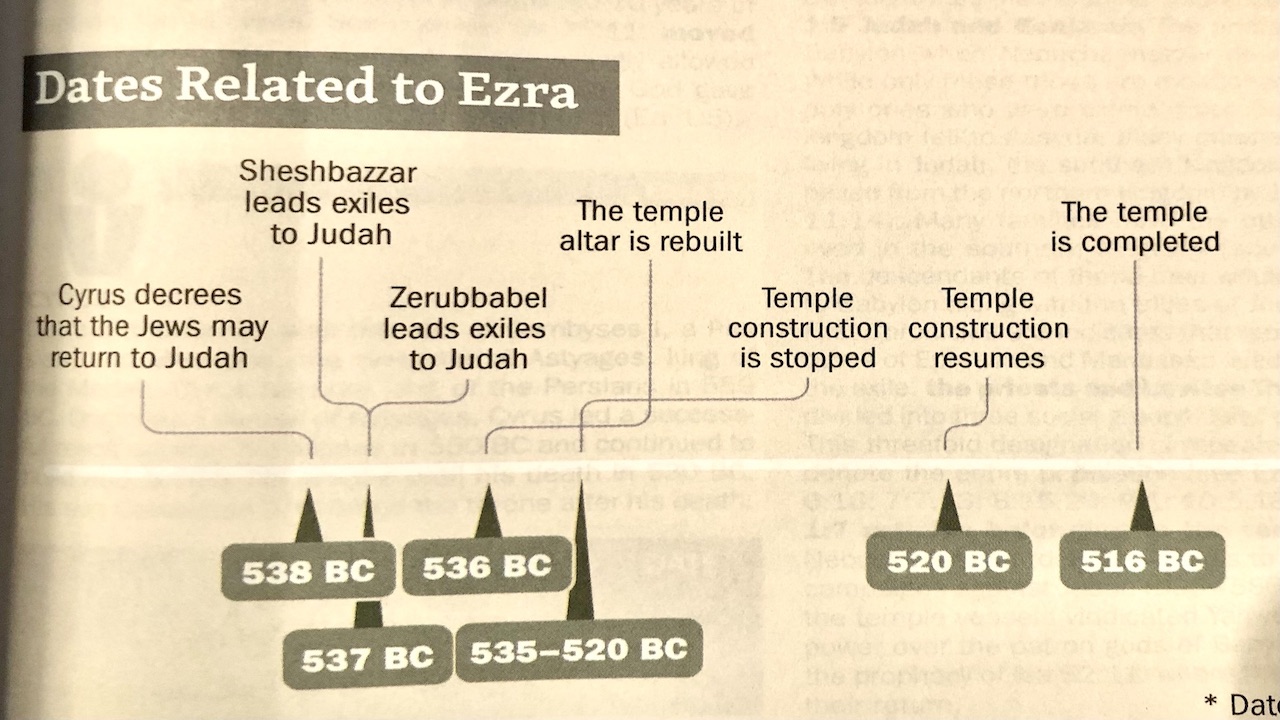
  • 538 BC—Cyrus issues a decree allowing the Jews to return to Israel (Isaiah 45:1-3) 
  • 537 BC—exiles return and in 536 BC they lay the foundation of the temple (Ezra 3:8)
  • 536 BC—opposition arises and the work stops (Ezra 4:1-6) 
  • 520 BC—Haggai and Zechariah arrive and begin ministering (Ezra 5:1-2; Haggai 1:1-15) 
  • 520 BC—opposition arises again and Haggai speaks a word of encouragement (Ezra 5:3-5; Haggai 2:1-9)
  • 516 BC—after receiving a favorable reply from King Darius, the temple is completed (Ezra 6:13-15)

(You can check out all of the above referenced verses by clicking here.) 

The reason these dates are so important is that they precisely align with the prophecy spoken by Jeremiah BEFORE the Israelites were even taken into exile. God said that they would return to worship in Jerusalem 70 years after their exile (Jeremiah 29:10-14; Daniel 9:1-2). Which is exactly what happened: They were taken into captivity in 586 BC, and the temple was completed in 516 BC! 

Haggai’s final prophecy (Haggai 2:20-23) has an unusual ending. It’s unusual in that it doesn’t sound like “The End” that usually ends a book of the Bible. That is precisely because it’s not the end. 

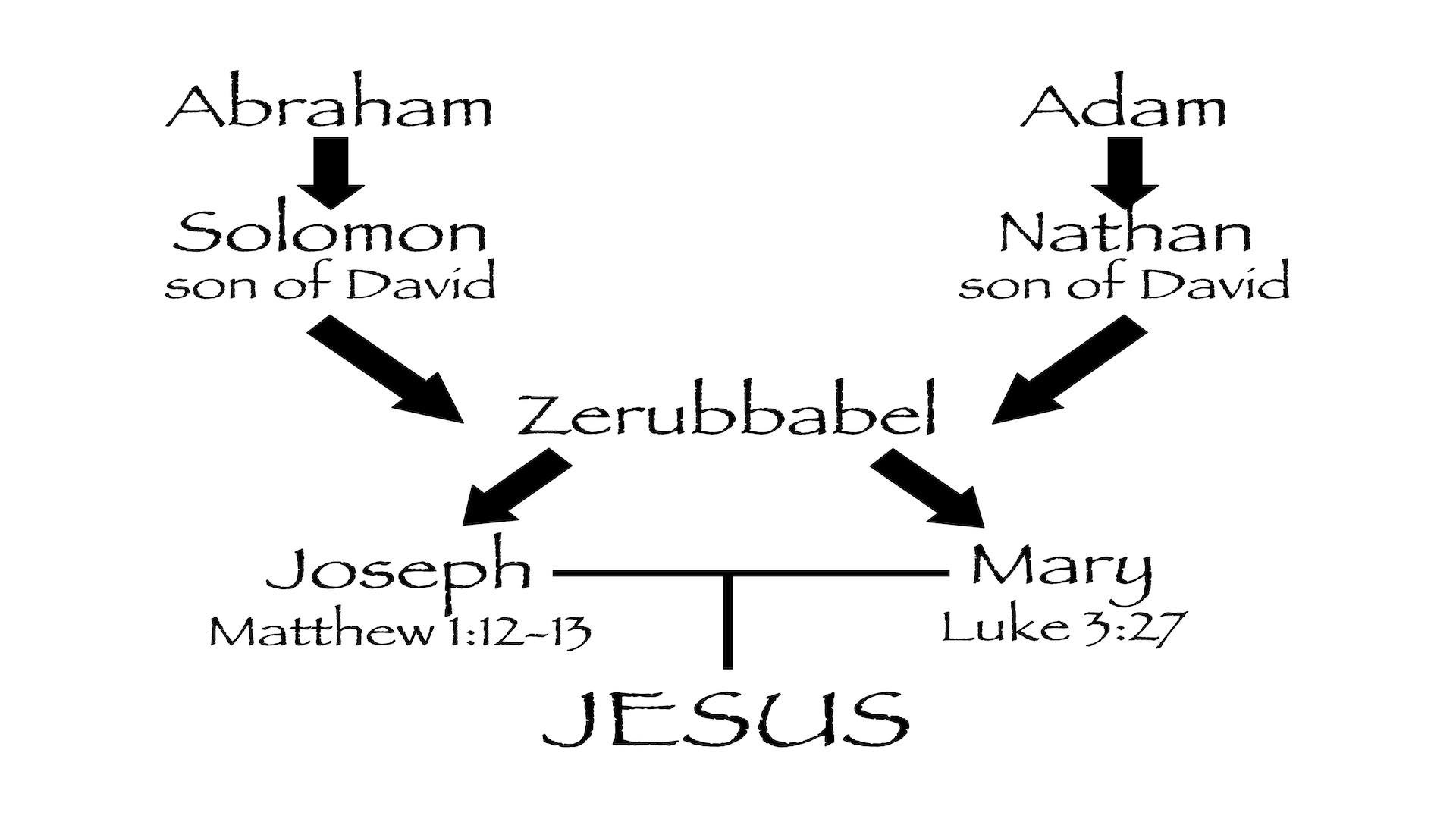
God tells Zerubbabel that he is God’s “signet ring,” a mark of God’s supreme authority. Zerubbabel was not the signet ring, but he was a forerunner—a type—of Jesus. 

So when we trace the genealogies of Jesus in the New Testament, we see that Zerubbabel appears in the family line of both Joseph and Mary—both the family line from Abraham who received God’s covenant, and the family line of Adam who heard God promise that a human offspring would crush satan’s head. 

These genealogies are as precise and exacting as the dates for the return of the exiles. God does everything exactly according to plan. He speaks His promises to us, and we can stand on those promises. Jesus is THE Signet Ring that stamps His “Amen” to every promise of God on which we stand.  

God is not vague; He is precise. He has a plan for all of history—which is His story—and He has a precise plan for your life too!  

So in building on our list from last week, let’s add one more item: 

  1. Hear the Word of God
  2. Consider the Word of God
  3. Obey the Word of God
  4. Stand assured, encouraged, and unmovable on the Word of God.

What God says He will do, He will do! 

If you’ve missed any of the messages in our series looking at the major lessons from the minor prophets, you can access the full list by clicking here. 

►► Would you please prayerfully consider supporting this ministry? ◀︎◀︎

Which Hand Is On You?

…the hand of God … the hand of foreign kings… (Ezra 7-9 and Nehemiah 1-2).

The picturesque language of someone’s hand being on another person signifies who is in control and to whom one is giving their allegiance. Ezra and Nehemiah boil it down to God’s hand or the hand of foreign leaders.

God’s hand brings:

  • favor with foreign kings
  • safety
  • courage 
  • coworkers
  • protection from bandits 

A foreign king’s hand brings:

  • a sword
  • captivity
  • pillage
  • humiliation 

Ezra explains, “The gracious hand of our God is on everyone who looks to Him, but His great anger is against all who forsake Him” (8:22). So God’s hand prevents the hand of a foreign king from doing anything outside of God’s will. 

Here are two irrefutable and unchangeable principles: (1) I can only have one hand on my life at a time, and (2) I get to choose which hand it will be: God’s or a foreign leader. 

Why We Pray For Government Leaders

…the Lord filled them with joy by changing the attitude of the king of Assyria so that he assisted them in the work on the house of God, the God of Israel (Ezra 6:22).

King Darius didn’t just allow the Israelites to worship God at the temple, he assisted them in reestablishing worship at the temple! He did this because God changed his attitude. 

Nearly 60 years later, King Artaxerxes did the same thing for Ezra: “the king had granted him everything he asked for, for the hand of the Lord his God was on him” (7:6). Artaxerxes gave Ezra and the returning Israelite exiles…

  • … authority 
  • … provisions 
  • … tax exemptions (vv. 14, 20-22, 24) 

Ezra says again that this was all due to God putting this in Artaxerxes’ heart: Praise be to the Lord, the God of our fathers, who has put it into the king’s heart to bring honor to the house of the Lord in Jerusalem this way (vv. 27-28).

Daniel declares that all of the world leaders are in that position of leadership because God placed them there. The apostle Paul teaches us that government officials are God’s servants and that we are to pray for them (Romans 13:1-7; 1 Timothy 2:1-2). 

God can change the attitude of even the most hard-hearted, godless leader. Not just change their attitude, but give God’s people favor with that leader. 

Don’t become frustrated—pray. 

Don’t get discouraged—pray. 

Pray, pray, pray for all of God’s servants who are in leadership over us. God has a plan. All of history is His story, and He will change attitudes so that His servants fulfill His plan. 

King And Commoner

In the first year of Cyrus king of Persia, in order to fulfill the word of the Lord spoken by Jeremiah, the Lord moved the heart of Cyrus… (Ezra 1:1). 

Ezra begins as 2 Chronicles ends: with the proclamation of Cyrus allowing the Israelites to return to Jerusalem. 

The Babylonians defeated the Assyrians, who were then defeated by the Medes, who were themselves defeated by the Persians under Cyrus II. This was a powerful man who claimed “all the kingdoms of the earth” as his possession. (v. 2). 

Yet this conquering king who was called Cyrus the Great had his heart directed by God. 

Among the Israelite exiles that returned to Jerusalem were princes, priests, Levites, servants, and common people of every stripe. These exiles were rulers of nothing. 

Yet these people also had their hearts moved by God (v. 5)—42,360 of them, to be precise. 

The same God who moved the heart of the most powerful king on earth also moved the hearts of common people. God had a plan to fulfill and He knew exactly which hearts to move at the precise time to bring about His purpose. God is sovereignly in control. All of history—including all the people in history—is His story. 

The king is not too powerful and the common citizen is not too small to be used by God. 

Let me make that statement more personal: All of the “great” people on earth today are not too powerful to be used by God, nor are you too small to be used by Him. 

Will you say “yes” when He moves your heart to action?

A Minor Introduction

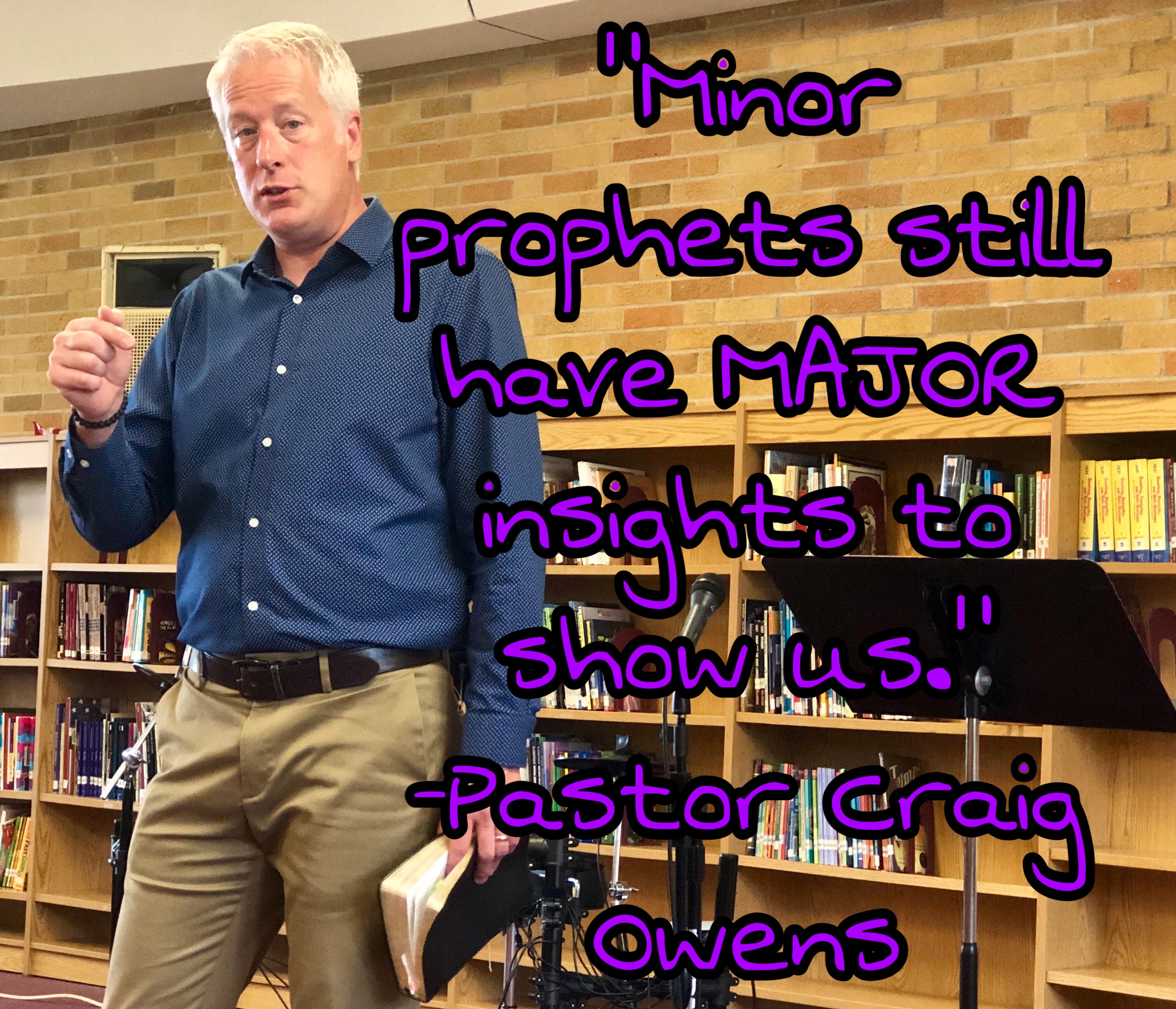
The minor prophets in the Bible are pretty cool! But we have to be careful with man-made titles. For example, the “old” in Old Testament doesn’t mean outdated; nor does the “new” in New Testament mean something updated to modern times. 

In the same way, the minor prophets are only called “minor” because of the volume of their writing, not the quality of their message. In fact, their messages are actually quite major! 

The minor prophets cover a span of about 300 years, from 760 BC (Amos) to 450 BC (Malachi). You can check out this side-by-side chart to see where these prophets fit in the history of Judah and Israel. 

Here are some interesting tidbits about the minor prophets:

  • In the Hebrew Bible, these books are referred to simply as “The Twelve.” 
  • All of these prophets identify themselves in the first verse of their writing except Jonah, but he is identified in 2 Kings 14:23-25. 
  • The only others of the Twelve that are mentioned elsewhere in the Old Testament are Micah, Zephaniah, Haggai, and Zechariah (see Jeremiah 26:16-19; 2 Kings 25:18-21; Ezra 5:1). 
  • The prophets consistently give us some historical context in their writings to help us place when, where, and to whom their ministry took place. 

The Twelve also show up quite liberally in the New Testament. Every one of them has either direct quotations or has their writings implicitly referred to throughout the New Testament. Here’s just a small sampling… 

  • Micah 5:2 tells us where Jesus would be born (Matthew 2:6)
  • Hosea 11:1 says Jesus would spend time in Egypt (Matthew 2:15)
  • Malachi 4:5 says an “Elijah” would precede Jesus (Matthew 17:10-11)
  • Zechariah 9:9 foretells Christ’s triumphal entry into Jerusalem (Mark 11:1-10)
  • Jonah 1:17 was used by Jesus to predict His own resurrection (Matthew 12:39-42)
  • Joel 2:28-32 was quoted by Peter on the Day of Pentecost (Acts 2:16-21)
  • Amos 9:11-12 foretold all peoples coming to Jesus (Acts 15:16-17)
  • Hosea 13:14 was quoted by Paul to show how death was defeated (1 Corinthians 15:53-57)
  • Habakkuk 2:4 was also quoted by Paul to tell how righteous people live (Galatians 3:11)
  • Haggai 2:6 foretells the end times (Hebrews 12:26-29)

I look forward to diving deep into the major lessons in the minor prophets over the next several weeks, but in preparation for that let me give you 3 overarching lessons for all Bible studies:

  1. Christianity is rooted in history. The Bible is a historical record of real people, saying and doing real things in real places in the world. It’s not a collection of fables, myths, or legends. 
  2. We need to study the whole counsel of God’s Word. All of Scripture is interdependent on all the other parts of Scripture, and every part reinforces and amplifies every other part. Don’t limit your Bible reading to just one or two parts.
  3. Looking back in wonder and gratitude builds faith for today and hope for tomorrow. When we see what God has done in the past, and we realize that He is still the same God today, it builds our faith for today. And when our faith today is strengthened, it gives us a bright hope for tomorrow. 

I look forward to having you join me on this journey of discovery through the minor prophets!