Thursdays With Spurgeon—The Wonder Of Christ

This is a weekly series with things I’m reading and pondering from Charles Spurgeon. You can read the original seed thought here, or type “Thursdays With Spurgeon” in the search box to read more entries.

The Wonder Of Christ

     Works of art require some education in the beholder before they can be thoroughly appreciated. … Because of failures in our character and faults in our life, we are not capable of understanding all the separate beauties and the united perfection of the character of Christ, or of God, His Father. … 

     You cannot fail to notice that men, through the alienation of their natures, are continually misrepresenting God because they cannot appreciate His perfection.… Men will misunderstand Him because they are imperfect themselves and are not capable of admiring the character of God. …

     Did you ever notice, when you read the history of Jesus Christ, that you could never say He was noble for any one virtue at all? … 

     It is because of the complete perfection of Jesus Christ that we are not accustomed to say of Him that He was eminent for His zeal, or for His love, or for His courage. We say of Him that He was a perfect character, but we are not able very easily to perceive where the shadows and the lights blended, where are the meekness of Christ blended into His courage and where His loveliness blended into His boldness in denouncing sin.

     We are not able to detect the points where they meet. And I believe the more thoroughly we are sanctified, the more it will be a subject of wonder to us how it could be that virtues that seem so diverse were in so majestic a manner united into one character. It is just the same of God.

From Mercy, Omnipotence, And Justice

As we grow in our understanding of processes and techniques, our appreciation of a work of art or a symphony grows as well. We may go from “Oh, I like that” to “That is amazing” to “This is an exquisite masterpiece! 

Christians should experience the same wonder and awe of the character of God seen in Jesus and revealed to us by the Holy Spirit. 

I believe the reason the angels around God’s throne are constantly calling out, “Holy, Holy, Holy!” is because at every moment they are perceiving a new facet of His sheer awesomeness. They are calling out to one another, “Did you see that?! Holy!” And another responds back, “Yes, and look at that! Holy!” 

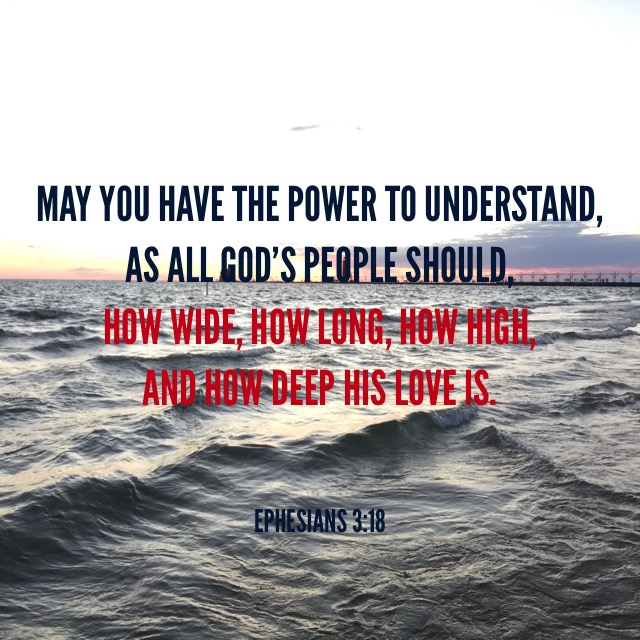
We are invited to join in that chorus. The apostle Paul prayed that our eyes would be opened and our vision expanded to see new depths, and heights, and widths, and lengths of the awesomeness of our God (see Ephesians 3:16-19).
Full Of Gratitude And Prayer

I have not stopped thanking God for you. I pray for you constantly. (Ephesians 1:16)

Paul didn’t pray just a one-and-done prayer, but every time he thought of his friends he was grateful and prayerful. 

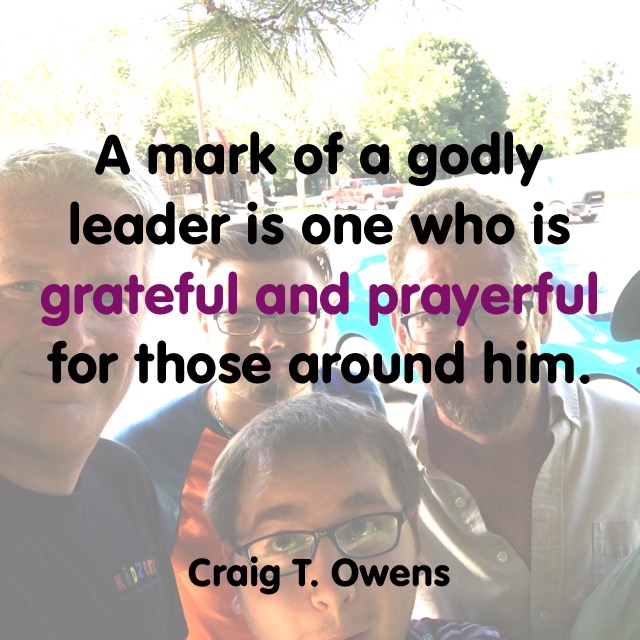
The mark of a godly leader is one who is grateful and prayerful of those around him.

What a prayer Paul prayed! He didn’t want his friends just barely eking out an existence, but he desired for their lives to experience explosive growth and joy! 

He prayed for them to experience…

  • … the full weight of God’s glory
  • … the vast knowledge of God’s revelation wisdom 
  • … an ever-increasing understanding of just who God is
  • … an enlightened mind to grasp God’s nature
  • … an unshakable hope in God
  • … the immeasurable richness of an intimate relationship with God through Jesus Christ
  • … God’s power working both in them and through them 
  • … the rock-solid security they have in Jesus
  • … their inestimable value they were to God
  • … their indispensable place in the Body of Christ 

I like the way Eugene Peterson captures this prayer in The Message:

That’s why, when I heard of the solid trust you have in the Master Jesus and your outpouring of love to all the followers of Jesus, I couldn’t stop thanking God for you—every time I prayed, I’d think of you and give thanks. But I do more than thank. I ask—ask the God of our Master, Jesus Christ, the God of glory—to make you intelligent and discerning in knowing Him personally, your eyes focused and clear, so that you can see exactly what it is He is calling you to do, grasp the immensity of this glorious way of life He has for His followers, oh, the utter extravagance of His work in us who trust Him—endless energy, boundless strength!

Spiritual leaders should be working for and praying for the ever-growing maturity of those under their care. When they see that growth, they should burst out into grateful prayer. And if they don’t see the growth they anticipated, they should pray in faith believing that maturity will soon be visible. 

Let me say it again: The mark of a godly leader is one who is grateful and prayerful of those around him.

This is part 40 in my series on godly leadership. You can check out all of my posts in this series by clicking here.

Dressed For Victory

Finally, be strong in the Lord and in His mighty power (Ephesians 6:10).

Not…

  • be strong in my own ability
  • be strong in the company of another warrior

But…

  • be strong in the Lord
  • be strong in the power of His might

The armor I wear has been battle-tested by the undefeated Champion. It’s armor emblazoned with the crimson red blood of Calvary. It’s armor gleaming brightly with the glow of Resurrection victory.

I wear Christ’s armor! 

  • The belt of truth—it’s the righteousness of Jesus (Isaiah 11:1-5)
  • The breastplate of righteousness—worn by the Messiah who defeated evil (Isaiah 59:15-17)
  • The helmet of salvation—worn by Jesus as He won salvation for us (Isaiah 59:16-17)
  • The shoes of the gospel of peace—worn by our Lord as He defeated our enemies (Isaiah 52:5-7)
  • The shield of faith—God says, “I am your shield” (Genesis 15:1)
  • The sword of the Spirit—what Jesus used to strike down satan’s temptations (Isaiah 49:1-2; Luke 4:4, 8, 12)

I must continually clothe myself in God’s armor. Then I keep the armor bright by prayer—

Restraining prayer, we cease to fight 
Prayer makes the Christian’s armor bright 
And satan trembles when he sees 
The weakest saint upon his knees. (William Cowper)

Holy God, may I be dressed in YOU at every moment. May I daily use YOUR battle-tested armor and weapons to strike a blow against satan! 

(Check out all the Scripture references above by clicking here.)

Awesome God, Awesome Praise

Last I week I told you how Hebrew poetry often puts the climax in the middle. In Psalm 47 that middle climax is in verse 5—God has ascended. This is one of seven “psalms of enthronement” in the Psalter. Since all of the Scripture points to Jesus, let’s look at the definition of this word ascend and see how it fits with Jesus: 

When a king is coronated—when he is heading toward his throne—we can expect the people to be happy. So the psalmist tells us that in God’s case the people are clapping and shouting (v. 1), telling God how awesome He is (v. 2), thanking Him for subduing their enemies (v. 3), and expressing their gratitude that He has established them as His people (v. 4). 

Then comes the Selah / Pause—what is happening during this pause? The King is being crowned. He has ascended to His rightful throne. So this is selah/pause is really a deep breath that’s about to explode in a crescendo of praise! 

Now there are shouts of joy (v. 5a). In our earthly understanding, it would be something like: “LONG LIVE THE KING!!” There is also a sounding of trumpets (v. 5b) which literally means a thundering of trumpets. And then there’s the singing—lots and lots of singing. In fact, the word sing appears five times in the next two verses. 

From The Infographic Bible (click the image for more)

There are so many ways to say LONG LIVE THE KING—singing, dancing, raising our hands, falling down on our knees. shouting.  

Our God is praise-worthy. He is clap-worthy! He is sing-worthy! He is dance-worthy! He is shout-worthy! He is bowing-worthy! 

Our awesome God deserves awesome praise! 

Why does it seem that we are prone to worship so quietly? Perhaps we need to take it up a notch or two (or three or four). Perhaps we haven’t gazed into His awesome beauty enough to realize just how incredible He is! 

Do you think shouting praises to the King of kings is too undignified? Did you know that when the King of kings returns, He is going to shout and there is also going to be a thundering trumpet? For the Lord Himself shall descend from heaven with a shout, with the voice of an archangel, and with the trumpet of God (1 Thessalonians 4:16)! 

Here are 4 important lessons from this Psalm of Enthronement—

  1. God is the King of all kings, enthroned on the Throne above all thrones. He is worthy of your “undignified” praise and acclamation. 
  2. God should always get your best praise. In verse 7 the phrase sing praises with understanding really means to sing with insight and skill. 
  3. God deserves a holy vocabulary. We see the word awesome in verse 2. Every time this word is used in the Scripture, it’s speaking of God. So why would we use a word like this for something like a hamburger!?!
  4. All nations and kings and peoples and tribes will bow before God at the end. They will bow in either acclamation for their King, or in abject terror of the All-Righteous Judge. Let’s remain missional so more people in the end are crowning Him as their All-Merciful King. 

I hope you can join me this next Sunday as we continue our series looking at the Selahs in the Psalms. 

Walk This Way

In his letter to the Christians in Ephesus, Paul uses the word “walk” seven times to instruct them how to follow the path Jesus laid down for us. 

In Greek, the word for “walks” (peripatēo) means something that regulates my life, or something that keeps me on the right path. It’s my lifestyle that is kept in proper boundaries by something outside of me. 

First of all, notice how Paul tells Christians how not to walk. DON’T WALK THIS WAY…

…following pop culture (2:2)—Living a certain lifestyle because “everyone” is doing it, or because some popular people are living that way. 

…without thinking about why you’re walking the way you are (4:17)

…without comparing your walk to truth (5:8)—Living a life because it feels good to me is a dangerous way to live. I must make sure there is an objective truth that is keeping me on a proper path.

…foolishly (5:15)—To be foolish is either (a) not knowing the truth, (b) not applying the truth I have been shown, or (c) choosing to disregard the truth I’ve been given. 

Instead, Paul tells Christians to WALK THIS WAY

…knowing I am God’s workmanship, created for a great purpose (2:10)—It may take me some time to discover my purpose and my talents, but I keep at it. 

…worthy of my vocation (4:1)—Once I have discovered my talents, I develop them into strengths that will benefit others. 

…lovingly (5:2)—Just as Jesus did! 

…in the light of God’s truth (5:8)—This is the exact opposite of foolishly walking. It means I seek the truth and I apply the truth to my life. 

…circumspectly (5:15)—Not wasting my moments, but making sure I am giving 100 percent every single day.

When I WALK THIS WAY people will inevitably notice that I’m motivated not by popularity with people, but by intimacy with God (5:2-7). They will see that my path is bordered by the principles in God’s Word (5:8-14; Psalm 119:105). And they will notice that my life has purpose and is productive (5:15-20). 

All Christians should ask themselves:

  • Is Jesus pleased with the path I’m on today?
  • Can others follow my footsteps toward their own relationship with Christ? 

If you can answer “yes” to those questions, then Jesus will be pleased that you WALK THIS WAY! 

[You can check out the Scriptures I referenced in this post by clicking on DON’T WALK THIS WAY and WALK THIS WAY above.]

9 Quotes From “God’s Promises”

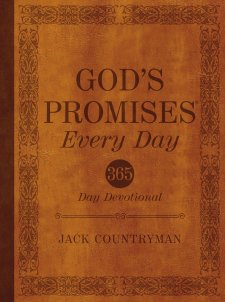
God’s Promises by Jack Countryman is a wonderful resource to help you use the Bible to enhance your prayer life and build your faith. Check out my full review of this fantastic book by clicking here.

“Each day we can look forward to God’s Spirit going before, clearing the way, leading the path, and giving us the guidance we need. … But God doesn’t stop at mere survival. He doesn’t just satisfy and strengthen. Though there will be difficulties and times of drought in our lives, God guides us to His living waters. He enables us to flourish ‘like a watered garden,’ where His blessings always bloom.” [Isaiah 58:11] 

“When life darkens our door with its troubles and trials, satan wants nothing more than for us to feel forsaken and alone—but we are not! God stands by our side; He guides, counsels, and comforts. Rest assured, no matter what you face in the coming year, nothing can separate you from the love of your Father (Romans 8:38-39). Therefore walk boldly into each new day, knowing that you follow the footsteps of the One who never leaves you.” [Deuteronomy 31:8] 

“Troubles are never pleasant at the time, but they quickly turn into tools when entrusted to God. Our Lord will take our times of troubles and trials—even the hard feelings we experience in them—then use them to teach us to fully rely on Him and His provision.” [Psalm 138:7] 

“Our God is a loving God, but He isn’t Santa Claus or a genie in a bottle. Our God loves to give good gifts, but in His economy the best gifts are not tangible or material. Yes, our God feels compassion when we hurt, but He still allows hardships into our lives that will refine our character and strengthen our faith. Against the backdrop of these truths, we can better understand the often-misread statement that God will give us the desires of our hearts. The real promise of this verse is that, as we pray, read His Word, and grow closer to the Lord, He will change our hearts so that what we desire for ourselves is what He desires for us.” [Psalm 37:4] 

“Mercy. We don’t deserve it. We haven’t done—can’t possibly do—anything to earn it. And yet we are promised that this unbelievably lavish gift is ours when we choose to follow Jesus. Why? Why would such a perfect and powerful God gives such a gift to ones so undeserving? He tells us in Titus 3:4: because of ‘the kindness and love of God our Savior toward man.’ And He not only gave us mercy, He also ‘poured out on us abundantly’ His own Spirit, to live and work within us, making us more and more like the Savior who died to save us.” [Titus 3:4-6] 

“Our God is not some fickle, capricious, changeable sort of God. He does not search out ways to be angry or displeased with His people. In fact, He so wants to be pleased with us that He gave us the example of His Son to follow.” [Ephesians 5:2] 

“When our burdens and sorrows seem too heavy for us to bear, God offers to carry them for us, inviting us to cast them upon Him (Psalm 55:22). And when the sorrow is so great that we feel we cannot put one foot in front of the other, God gives us this promise: ‘I will carry you; I will sustain you’ (Isaiah 46:4).” 

“Perhaps nothing is as devastating as being betrayed by someone you love and trust. Know that Jesus—betrayed by Judas, denied by Peter—fully understands. He will enable you to recover. The key, as hard as it is, is to pray for that person and ask God to bless him or her. When you pray to God—and you may have to do this again and again—you release the anger and disappointment that come with being betrayed. It is difficult to despise someone you lift up in prayer. And though retaliating is a natural response, it’s not a godly one. Praying is always the best option. Allow the Lord to receive your hurt and to replace it with His peace.” [Psalm 3:4, 6] 

“When we place our faith in Christ, the stormy seas of our lives—churned up by our own sins—are stilled. And while the storms may still rage around us in this sin-plagued world, they do not rage within us. That does not mean our troubles and tribulations are over, but it does mean we can rest in knowing God will see us through them.” [Romans 5:1] 

Winning The Unseen Spiritual Battles

C.S. Lewis said, “If satan’s arsenal of weapons were restricted to a single one, it would be discouragement.” How true! In relation to our prayer time, satan tries to discourage with lies like—

    • “God has bigger things on His mind than your puny request!” 
    • “God helps those who help themselves; what have you done for yourself?”
    • “You created this situation and now you think God is going to bail you out?!?”
    • “Haven’t you prayed about this long enough already?” 
    • “Your prayers don’t really make a difference.” 

All of these lies are designed to discourage you, but always remember this—they are all lies! David said to God, “You keep track of all my sorrows. You have collected all my tears in Your bottle. You have recorded each one in Your book. My enemies will retreat when I call to You for help. This I know: God is on my side!” (Psalm 56:8-9) 

A great example of a man who prayed long and hard—and fought off the things that might discourage him to give up—was Daniel. 

Daniel had previously been given insight from God to interpret dreams, visions, and other messages from heaven, but on one particular instance, he was stuck. God gave Daniel a vision, but not the meaning of that vision. 

Daniel began to do two things in the physical realm that results in two unseen spiritual victories taking place. 

First, Daniel prayed. Daniel not only prayed boldly, but he also prayed long. Although Daniel prayed for 21 days, when an angel arrived with God’s answer, the angel said, “From the moment you decided to humble yourself to receive understanding, your request was heard in heaven. I have come in answer to your prayer.” 

Second, Daniel fasted. The word fast literally means “to cover the mouth.” In Daniel’s case, we know that for 21 days he abstained from meat and wine. But he also abstained from “choice food” (NIV). What are those? I think these might be our “comfort foods.” Foods we go to to help relieve stress. Foods that become substitute sources of help, instead of humbling ourselves to go to God and ask for wisdom. 

As Daniel was praying and fasting, it appeared that nothing was happening. But there were actually two victories won out of human sight. 

First, a spiritual battle was won. The angel sent to Daniel was locked in combat with a demon for 21 days before he broke free to come to Daniel. We are still involved in that kind of spiritual warfare today (see Ephesians 6:12-18). 

Second, Daniel was being refined and strengthened. When the angel arrived, he called Daniel “highly esteemed.” Don’t miss this—this greeting is the same Hebrew word used for what Daniel fasted (“choice food”). In other words, the temporary thing Daniel fasted turned into something of invaluable strength. 

What if Daniel had stopped praying after 2 days? 10 days? 20 days? 

Daniel—and you and I—may not see with our natural eyes the victories that are being won, but make no mistake about it: Our fasting and praying IS doing something amazing. 

Your prayers are being heard. Spiritual battles are being won. You are being refined. God IS going to accomplish something great. God IS being glorified. Don’t stop praying and fasting until God comes through!

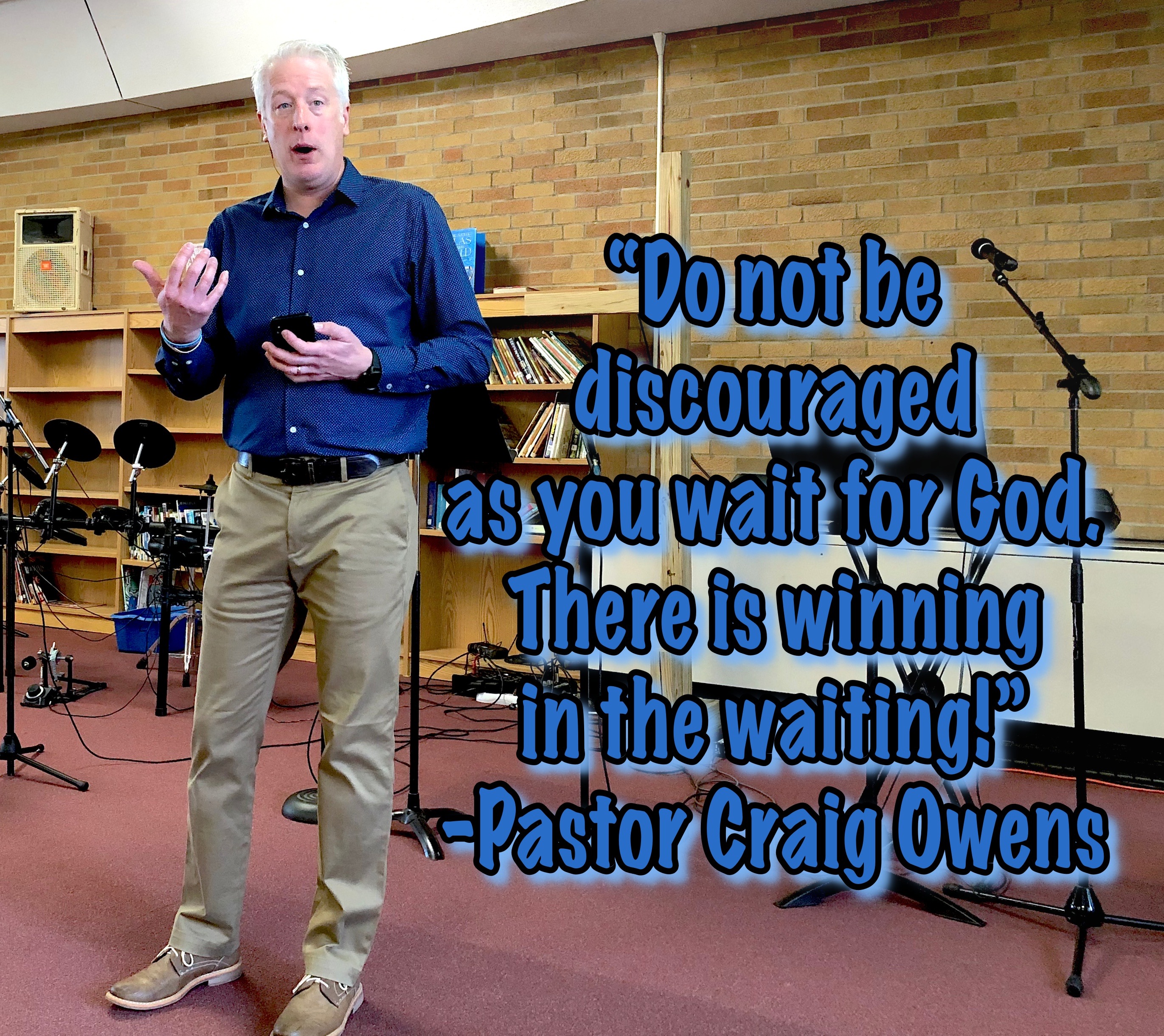
Do not be discouraged as you wait on God. There is winning even in the waiting!

Join me this Sunday as we conclude on series looking at the bold pray-ers in the Bible. 

God’s Call On A Leader’s Life

For this is he who was spoken of by the prophet Isaiah… (Matthew 3:3).

There is no doubt about: John the Baptist was called by God.

God uses people to fulfill His purpose. Some, like John, are mentioned by prophets, but all of us have our lives written in God’s Book before we are born (Psalm 139:13-16; Jeremiah 1:5; Ephesians 2:10; Luke 1:13-17).

Just as John was obedient to his calling, I need to be obedient to God’s calling as well.

John spoke God’s word clearly. He lived it out. He didn’t water down nor compromises his message. He didn’t let “ministry success” lead to pride. His whole life pointed everyone to Jesus.

This I must do too!

A mark of a godly leader is one who is humbly confident that God has a call on his life.

This is part 33 in my series on godly leadership. You can check out all of my posts in this series by clicking here.

15 Quotes On Prayer From J.C. Ryle

In my current Bible reading time, I am reading J.C. Ryle’s Expository Thoughts On The Gospels as a read-along companion with my Bible. Bishop Ryle correctly feels the weight and effectiveness of prayer in the life of a Christian. Here are some of his quotes regarding prayer. 

“If afflictions drive us nearer to Christ, the Bible, and prayer, they are positive blessings.” 

“It is not for us to prescribe either the time or the way in which our requests are to be answered.… Let us rather ‘continue in prayer,’ ‘watch unto prayer,’ ‘pray always and not faint.’” 

“Why is it that there is so much apparent religious working and yet so little result in positive conversions to God—so many sermons, and so few souls saved—so much machinery, and so little effect produced—so much running here and there and yet so few brought to Christ? Why is all this? The reply is short and simple: there is not enough private prayer. The cause of Christ does not need less working, but it does need among the workers more praying. … The most successful workmen in the Lord’s vineyard are those who are, like their Master, often and much upon their knees.” 

“If we would have good ministers we must remember our Lord’s example and pray for them. Their work is heavy. Their responsibility is enormous. Their strength is small. Let us see that we support them and hold up their hands by our prayers.” 

“Let us bear these rules in mind every Sunday morning before we go to hear the Word of God preached. Let us not rush into God’s presence careless, reckless, and unprepared, as if it mattered not in what way such work was done. Let us carry with us faith, reverence, and prayer. If these three are our companions, we shall hear with profit and return with praise.” 

“Let a petition for more faith form a part of all our daily prayers. As ever we would have peace, and calmness, and quietness of spirit, let us often say, ‘Lord, increase our faith.’” 

“Let us strive and pray that the same mind may be in us which was in our blessed Master. Like Him, let us be willing to go anywhere, do anything, suffer anything when the path of duty is clear and the voice of God calls. Let us set our faces steadfastly to our work when our work is plainly marked out, and drink our bitter cups patiently when they come from a Father’s hand.” 

“We must seek to have knowledge as well as zeal. Zeal without knowledge is an army without a general, and a ship without a rudder. We must pray that we may understand how to make a right application of Scripture.”

“Prayer is one of the best and most powerful means of helping forward the cause of Christ in the world. … Not all believers have money to give to missions. Very few have great intellectual gifts or extensive influence among men. But all believers can pray for the success of the Gospel—and they ought to pray for it daily.” 

“Prayer is one of the principal weapons which the minister of the Gospel ought to use. To be a true successor of the apostles, he must give himself to prayer as well as to the ministry of the Word (Acts 6:4). He must not only use the sword of the Spirit, but pray always, with all prayer and supplication (Ephesians 6:17, 18). This is the way to win a blessing on his own ministry. This, above all, is the way to procure helpers to carry on Christ’s work.” 

“Daily bread and daily mercy are by far the first and principal things that mortal man needs. He is the rich man who possesses them. He is the wise man who is not ashamed to pray for them every day.” 

“Nothing that concerns God’s people is too little for Him to manage or for them to bring before Him in prayer.”

“‘He spoke a parable to this end: that men ought always to pray, and not to give up.’ These words, be it remembered, are closely connected with the solemn doctrine of the second advent, with which the preceding chapter concludes. It is prayer without fainting during the long weary intervals between the first and second advents which Jesus is urging His disciples to keep up.” 

“Let us often pray that we may have wisdom from above in order to answer rightly when perplexing questions are put to us. The servant of Christ must expect a portion like his Master. He must count it no strange thing if the wicked and worldly-minded endeavor to entangle him in his talk, and to provoke him to speak unadvisedly with his lips.” 

“Whatever other means of relief we use, let us pray. The first Friend we should turn to ought to be God. The first message we should send ought to be to the throne of grace.” 

Four Kings Of Kings

When C.S. Lewis first introduces us to the land of Narnia in The Lion, The Witch and The Wardrobe, we discover that the White Witch has Narnia seemingly under her iron fist, and has made it so that it’s always winter but never Christmas. 

“Come on!” cried Mr. Beaver, who was almost dancing with delight. “Come and see! This is a nasty knock for the Witch! It looks as if her power is already crumbling. … Didn’t I tell you, that she’d made it always winter and never Christmas? Didn’t I tell you? Well, just come and see!” 

And then they were all at the top and did see.

It was a sledge, and it was reindeer with bells on their harness. But they were far bigger than the Witch’s reindeer, and they were not white but brown. And on the sledge set a person whom everyone knew the moment they set eyes on him. He was a huge man in a bright red robe (bright as holly-berries) with a hood that had fur inside it and a great white beard that fell like a foamy waterfall over his chest. … Some of the pictures of Father Christmas in our world make him look only funny and jolly. But now that the children actually stood looking at him they didn’t find it quite like that. He was so big, and so glad, and so real, that they all became quite still. They felt very glad, but also solemn.

“I’ve come at last,” said he. “She has kept me out for a long time, but I have got in at last. Aslan is on the move. The Witch’s magic is weakening.” 

I think the Israelites waiting for their Messiah must have felt a little like the Narnians: always winter, but never Christmas; trapped under the iron-fisted rule of Babylon, and Persia, and Rome. 

But as they approached what we now call the year 1 AD, winter is about to end and the Advent of CHRISTmas is about to occur at long last! 

You might think that the birth of Jesus brought us the King of Kings. But actually, there were three other “king of kings” that preceded Jesus, who all helped to fulfill God’s ultimate plan. 

Nebuchadnezzar was the king of Babylon. God called him “My servant” and also gave him the title king of kings (Jeremiah 27:6; Ezekiel 26:7). It was he who defeated Judah and took captives with him to Babylon. Among those captives was a young man named Daniel. 

God gave Daniel the ability to interpret Nebuchadnezzar’s dream which foretold of three other kingdoms which would follow Babylon, with the fourth kingdom being called a kingdom of iron. History shows us that Babylon was defeated by the Medes, who were in turn defeated by the Persians, who were themselves defeated by the Greco-Romans. 

Artaxerxes was king of the Persians, and he called himself king of kings (Ezra 7:12). He helps to facilitate the Jews’ return back to Jerusalem, and even helped fund their efforts to rebuild the temple of Solomon and reestablish worship there. 

In 44 BC, Julius Caesar was assassinated, and Octavius was named in Caesar’s will as his adopted son and heir. Eventually, Octavius quelled a 20-year-long civil war and established himself as the unquestioned ruler of the Roman Empire. He changed his name to Caesar Augustus, which means the exalted one. But all throughout the Mediterranean world archeologists have discovered numerous other titles for Caesar Augustus—Divine, Son of God, God Incarnate, God from God, Lord, Redeemer, Liberator, Savior of the World, and King of Kings. 

Historian Luke records these words, “In those days Caesar Augustus issued a decree” (Luke 2:1). This decree called everyone to return to his hometown to be registered in Rome’s census. This decree meant that Joseph was obligated to return to Bethlehem. He took his pregnant wife with him to arrive just in time for Jesus to be born. 

JesusTHE eternal and ultimate King of Kings—was born in Bethlehem just as had been prophesied 700 years earlier in the winter of Israel’s captivity: 

But you, Bethlehem Ephratah, you are little to be among the clans of Judah; yet out of you shall One come forth for Me Who is to be Ruler in Israel, Whose goings forth have been from of old, from ancient days (eternity). (Micah 5:2) 

The coming of THE King of Kings is proof that God sees you too. God brought the king of kings named Nebuchadnezzar, and Artaxerxes, and Caesar Augustus to power just to move two “average Joes” 70 miles from Nazareth to Bethlehem so that THE King of Kings could be born there to fulfill the prophesy. 

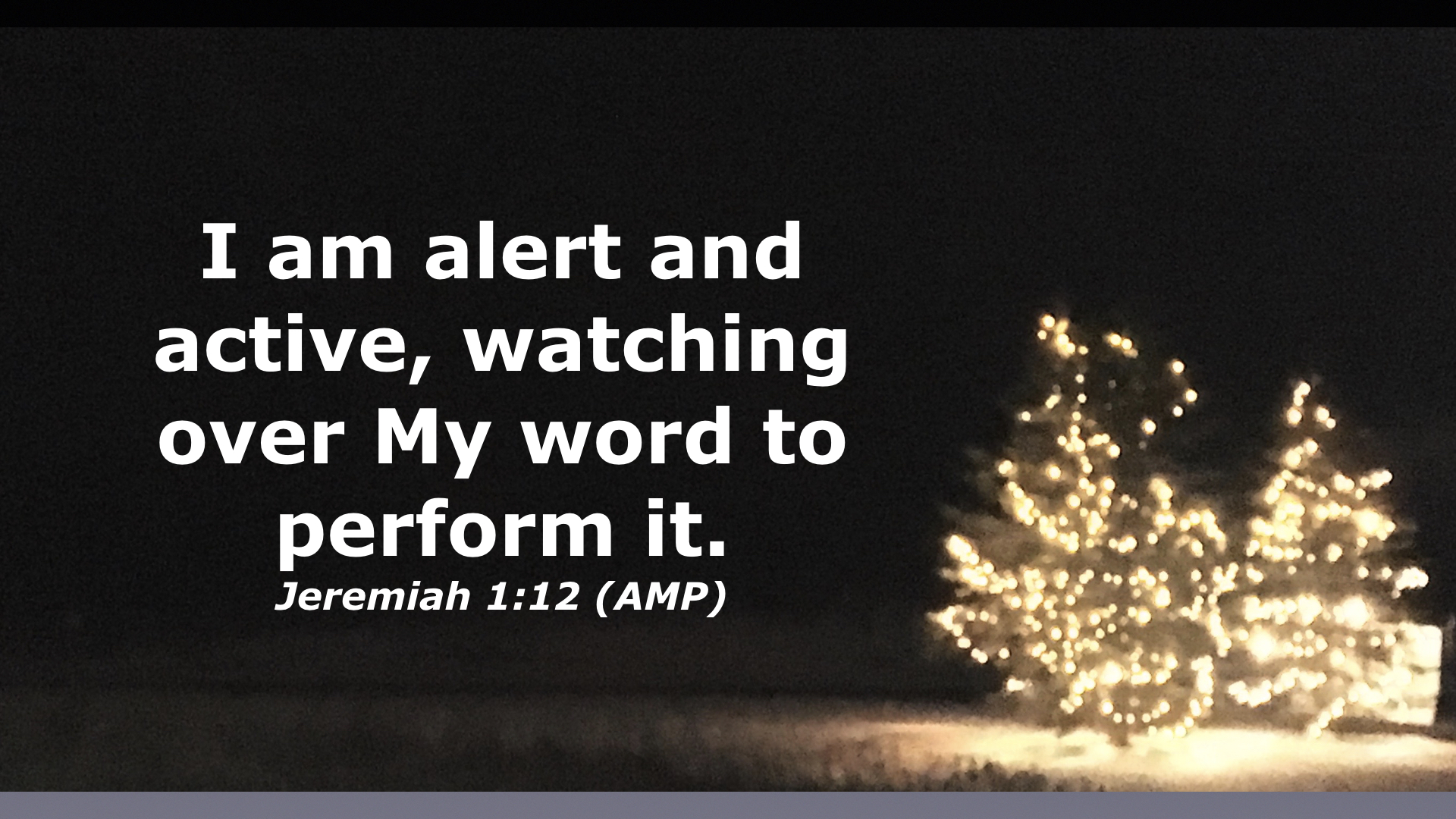
God has a plan for your life. His plan for you was in place before you were even conceived in your mother’s womb. And—even this very moment—He is watching over world events to make sure that every detail of His plan is fulfilled (see Ephesians 2:10; Psalm 139:16; Jeremiah 1:12)! 

If you ever feel like you are in a “winter” season of your life—always winter and never Christmas—just remember that God sees you, He has a plan for you, and He will bring an end to your winter just in time to bring you CHRISTmas!