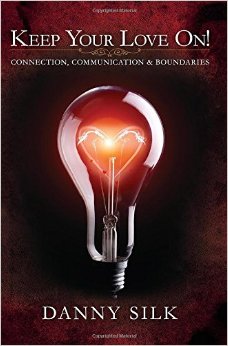
 I have shared a couple of sets of quotes from Danny Silk’s book Keep Your Love On! (which you can read here and here). I have also posted a review on this book here.
This book is a must-read for pastors or counselors who do marriage or family counseling. This is also an excellent book to read if you have a relationship in your life that you would like to see healed or strengthened. Check out a few more quotes below.
“If you cannot communicate your needs to another person clearly, it is obviously going to be very difficult for that person to meet them. That’s why one of the primary tasks of reaching maturity is learning how to express thoughts, feelings, and needs. Those who never learn this skill, however, expect relationships to function without it. They say things like, ‘Well, if you love me, then you will just know what I need. Didn’t you notice that that bothered me? Haven’t you been paying attention? I can’t believe you don’t know that about me.’ Where does this desire or expectation that loved ones have a telepathic ability to know our feelings and needs come from? It comes from powerlessness and fear. It comes from dreaming that everything will turn out magically without actually having to communicate. Powerless people want to win the lottery, get their dream girl/guy with minimal effort, lose weight without exercise, and get their needs met without ever having to say a word.”
“The reason we can’t get our needs met without expressing them is that we were designed to have our needs met through a relational exchange. God made us this way. … Think about it. God, the one Person in the universe Who knows all things, and knows us incomparably better than we know ourselves, never says, ‘Well, obviously I know your needs, so you don’t need to tell Me about them.’ Instead, He repeatedly tells us to ask Him for what we need, and gives us some of the most profound, beautiful, and honest language for doing so—like the Lord’s Prayer, and most of the Psalms. He won’t meet our needs outside of a connection where we have to show up and crack our hearts open to Him, because that very connection is what we need to have our needs met in the first place.”
“If you want to protect your connection and build trust by always communicating respectfully, then your guiding rule must be, ‘It’s my job to tell you about me, and your job to tell me about you.’ The best tool for telling another person about you is an ‘I message.’ The basic structure of the ‘I message’ is: ‘I feel [emotion] when [described experience] and I need to feel [emotion].’”
“As you construct an ‘I message,’ make sure that you are really expressing a feeling, not an opinion. … If you start to say, ‘I feel like…’ you should stop and check yourself—because what is most likely going to follow is not a feeling, but a judgment. And a judgment statement is actually an expression of mistrust, not trust.”
“Intimacy—‘into-me-see’—is created between two people who can say, ‘We can be ourselves together because you can see into me and I can see into you.’ The experience of intimacy—of being completely known and accepted, and completely knowing and accepting in return—is the most satisfying experience we can have as humans. Intimacy in a safe place brings euphoria. Remember the Garden of Eden? Paradise was the place where a man and a woman were unafraid to be vulnerable and intimate with each other in every way. The problem is that most of us are scared to death to be vulnerable in relationships. The reason is simple: In being vulnerable, we reach for our greatest need while risking our greatest pain.”
“Fear of rejection and shame sets us up to fall for the enemy’s counterfeits. Ever since sin entered the world and humanity became disconnected from God, we have been looking for ways to get our needs met outside of relationship or any scenario where we are required to be vulnerable and risk our hearts. We have always desperately sought the benefits of intimacy without wanting to pay the price. And the enemy continues to offer us the euphoric experiences we think we can control—things like alcohol, drugs, sex, Internet pornography, shopping, carbohydrates, adrenaline, or cash. We use these things to give ourselves a euphoric release and take care of our needs. But the counterfeits always have ugly repercussions, like drunk drivers killing innocent people, young kids destroying their brains, men ignoring the beautiful real women beside them in favor of the images, serious debt, morbid obesity and the host of diseases that accompany it, thrill seekers slowly becoming numb to reality, and selfish jerks not caring who they step on to get what they want. Counterfeits never come through.”
“Every respectful conversation needs one speaker and one listener at all times. … The listening role is the true servant role in a respectful conversation. The listener affirms, ‘Right now, this conversation is about you and your needs. I am here to help you figure them out and find a way to help you get them met.’ But in the end, the listener is really the winner. If I listen well, I will have two vital pieces of information—what you need and what I need to do. With these two pieces of information, I start to identify and take ownership of the problem and create an effective solution.”
“A skilled listener with a servant’s heart is the deadliest weapon against the fear-bombs that threaten connection.”



 “Laughter increases the number and activity of some white blood cells called ‘T’ and ‘B’ cells, natural killers that fight viral infections and some types of cancer cells. It multiplies the antibody IgA, which fights upper respiratory tract infections. A hearty chuckle builds up gamma interferon, which stimulates the various components of the immune system.