And [God] humbled you and allowed you to hunger and fed you with manna, which you did not know nor did your fathers know, that He might make you recognize and personally know that man does not live by bread only, but man lives by every word that proceeds out of the mouth of the Lord. … Know also in your [minds and] hearts that, as a man disciplines and instructs his son, so the Lord your God disciplines and instructs you. (Deuteronomy 8:3, 5 AMPC)
God allows us to be humbled and hungry so that we can learn that He is our only source. Proud people will not open their hearts and minds to learn because they see themselves as know-it-alls.
Because He loves us, God humbles us. If we will yield, we can learn from God and grow in intimacy with Him. “Know also in your minds and hearts that, as a man disciplines and instructs his son, so the Lord your God disciplines and instructs you” (Deuteronomy 8:5). But the proud are deprived of all of these blessings.
Verses 11-20 add a warning about forgetfulness. Success tends to make us think we have accomplished something in our own power, which stokes our pride. Twice we are told to “beware”…
…of forgetting that God is our Provider
…of thinking we are our own provider
Humility keeps us dependent on God and increasingly intimate with Him. Pride pushes God away.
Check out my series of posts about forgetfulness called Fading Gratitude.
Listen to the podcast of this post by clicking on the player below, and you can also subscribe on Apple, Spotify, or Audible.
The apostle Peter said he wrote two letters to the church “as reminders to stimulate you to wholesome thinking” (2 Peter 3:1). And Paul reminded his young friend Timothy to “keep reminding [your congregation] of these things” (2 Timothy 2:14).
In the spirit of those great apostles, I have made it a practice to take time at the end of each year to look back on all that we have learned in the previous year, and then to look forward to where God may be leading Calvary Assembly of God in this upcoming year.
Clicking on each series title will take you to a list of all of the sermons in that series.
Intimate Conversation—The dictionary defines the word “intimate” with these phrases: associated in close personal relations, characterized by warm friendship, and closely personal. These words perfectly describe the relationship God wants to have with His children through prayer. Pete Briscoe said, “Prayer is an intimate conversation with the One who passionately loves you and lives in you.” The One who loves you so passionately desires to walk with you and share intimate knowledge with you. Prayer is not something formal, cold, or mechanical, but it is vibrant, warm, engaging, and life-changing.
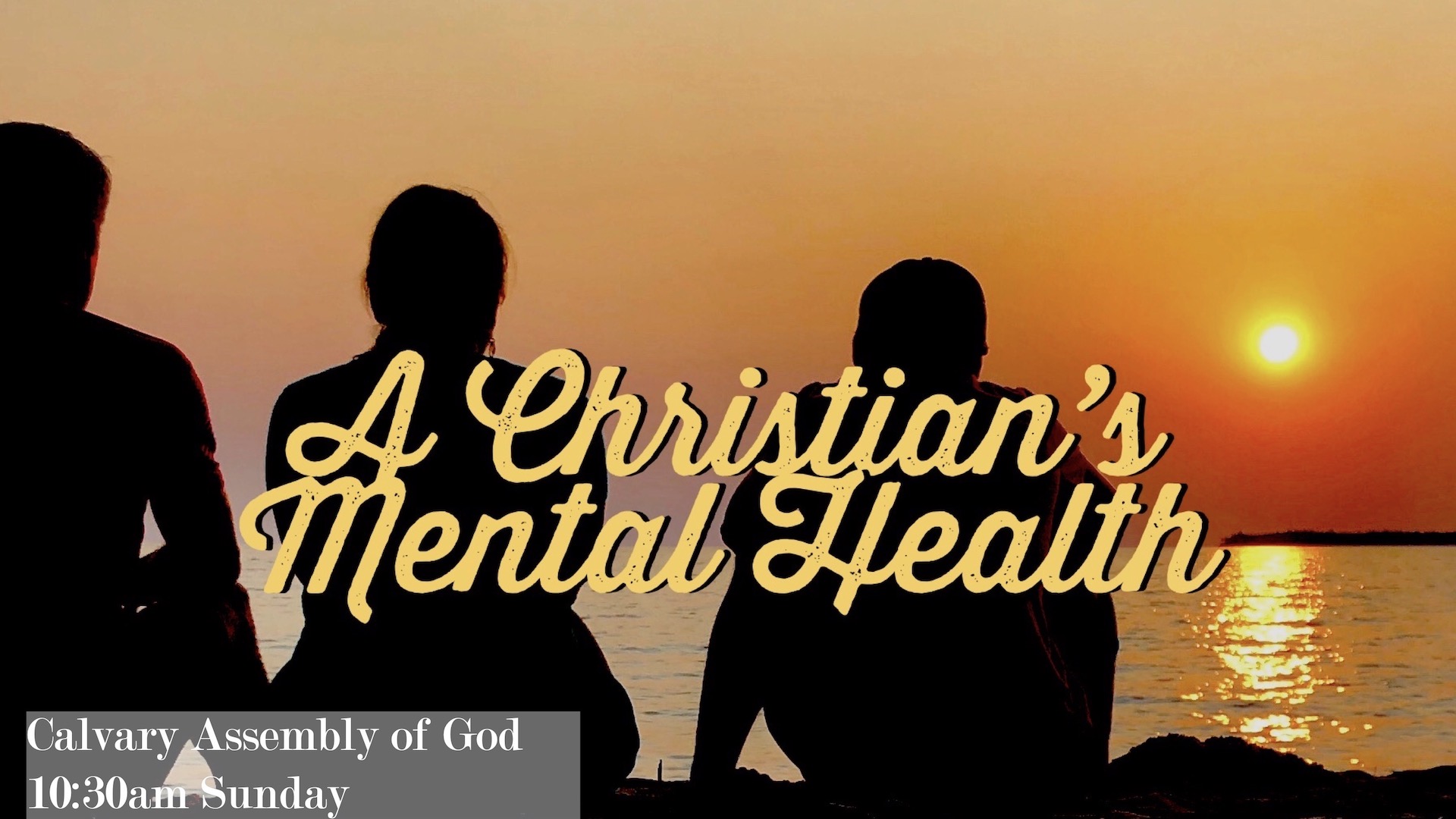
A Christian’s Mental Health—I don’t think there is any arguing that Jesus was the healthiest individual who ever walked planet Earth. Some may want to push back with, “Of course He was because He didn’t have any problems to deal with!” But the writer of Hebrews tells us that Jesus experienced everything you and I will ever experience (Hebrews 2:17), so His deity didn’t exclude Him from the stressors that His humanity would have to face. And yet, He handled all of these things successfully. Luke the physician observed the growth of Jesus and tells us that it all began with Jesus having a robust mental health. From that foundation, everything else—physical, spiritual, relational—all could develop properly. We must learn from this example and pay careful attention to our own mental health.
Bold Claims—“That’s a pretty bold claim. Are you prepared to back that up?” I’ll bet you have heard something like that said to you, and maybe you have even said that yourself to someone else who made a big, audacious statement. After Jesus is arrested by the religious leaders—an arrest that will ultimately lead to Jesus being crucified on the Cross—there are some incredibly bold claims spoken by key people in this part of the Story. For the most part, these are claims that we don’t read earlier in any of the Gospels, but as this story is heading toward its most crucial moment, we have these audacious statements pronounced. But here’s the most important part: These bold claims weren’t just made, but they were backed up with proof as well.
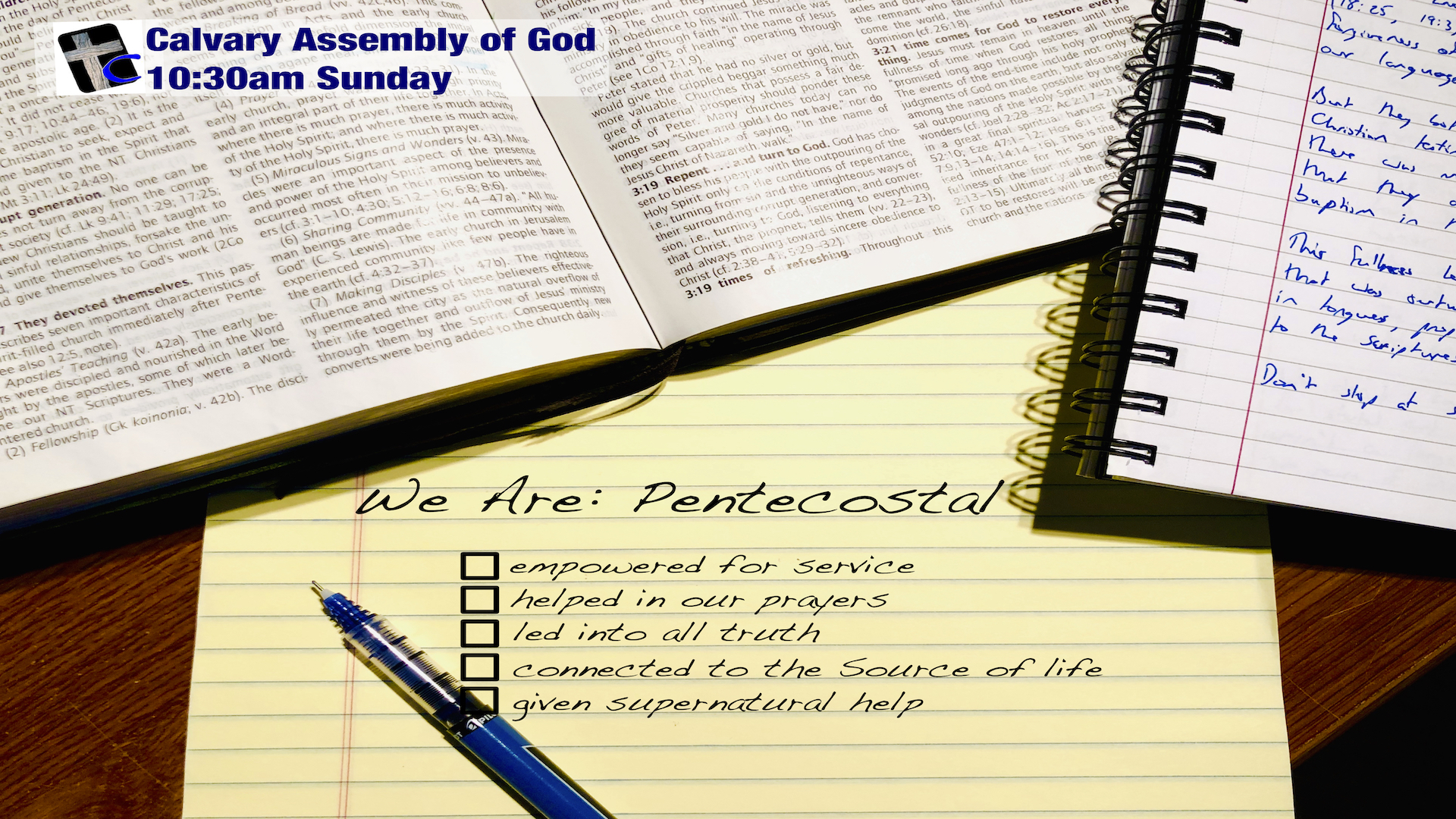
We Are: Pentecostal—Pentecost for over 1500 years was a celebration in Jerusalem that brought in Jews from all over the world. But on the Day of Pentecost that came just ten days after Jesus ascended back into heaven, the meaning of Pentecost was forever changed! Followers of Jesus—now empowered by an infilling of the Holy Spirit—began to take the good news of Jesus all over the world. These Spirit-filled Christians preached the Gospel and won converts to Christ even among hostile crowds, performed miracles and wonders, stood up to pagan priests and persecuting governmental leaders, and established a whole new way of living as Christ-followers. We, too, can be Pentecostal followers of Jesus Christ today.
Ascending—Every year, Jews from around the world made four pilgrimages up to Jerusalem for various feasts and sacrifices. These journeys reminded them of God’s goodness as they went to the Temple to worship, and they helped refocus on God’s ways as they returned to their regular routines. Jerusalem is over 2500 feet above sea level, so the pilgrimage there was a physical workout as well as a spiritual workout. These workouts were beneficial for God’s people, preparing them to minister in their cities in the following months. The Book of Psalms contains 15 songs that these pilgrims would sing to and with each other as they traveled up to Jerusalem. These Psalms of Ascent are still instructive for Christians today.
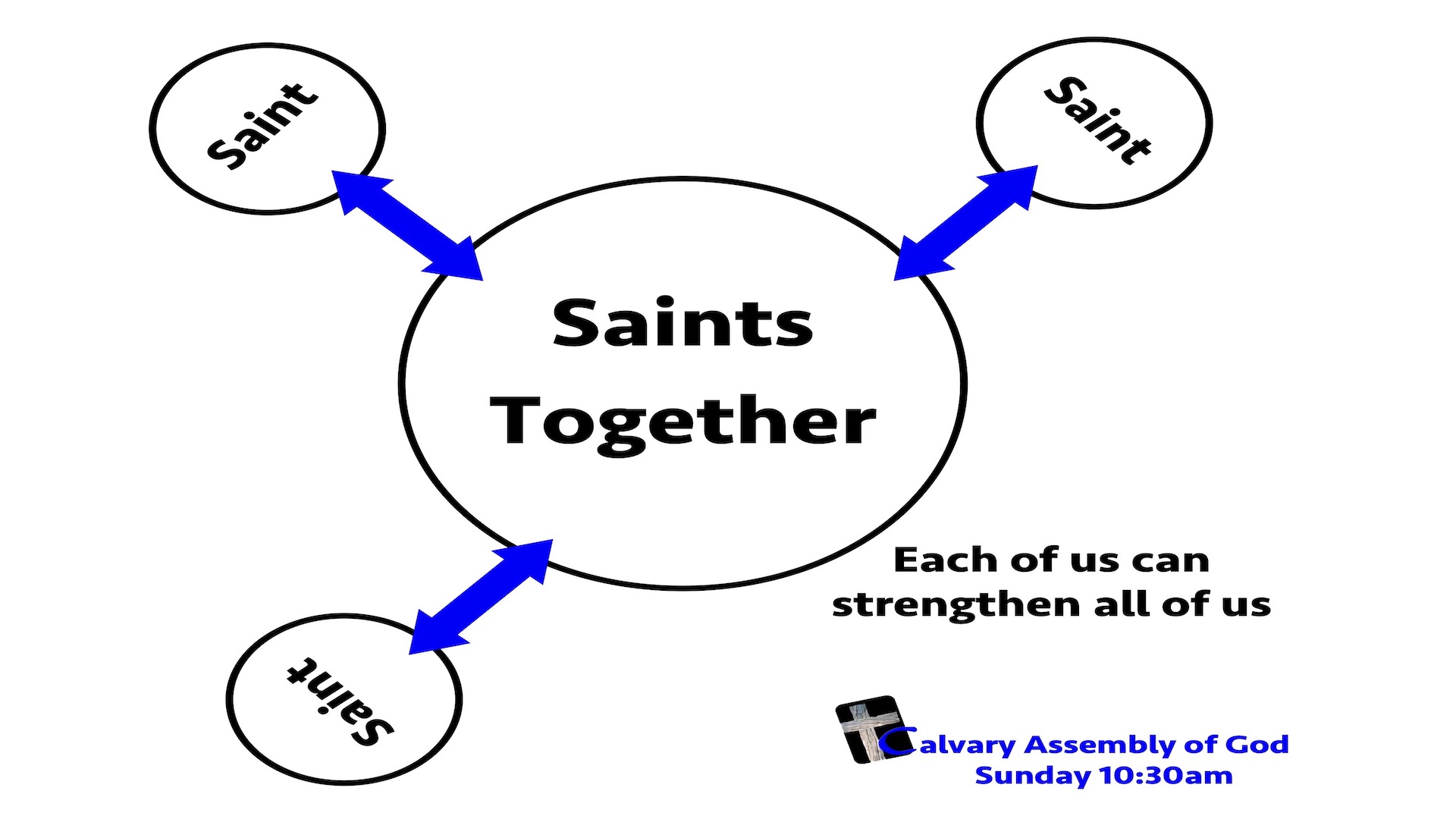
Saints Together—Throughout the New Testament the word “saints” is always in the plural form. This is a clear indication that none of us can develop into the full-fledged Christians we were meant to be on our own. We all need each other. More specifically, we all need the most mature version of each other. A key component of an individual saint’s development is the time spent alone being forged by the discipline of the Holy Spirit. Maturing saints then come together with each other to continue to strengthen and sharpen everyone in the church. Strong individual saints make a strong church, and a strong church makes strong individual saints! Let’s learn about six important spiritual disciplines that each individual saint must put into practice so that they can use their newly developed strengths to help other saints in their own development.
The Great Attitude Of Gratitude—There’s something about gratitude that distinguishes people. Think about it: would you rather hang around with grumblers or grateful people? The gratitude of Paul and Silas certainly made them stand out from the crowd when they were in Philippi. Wrongly accused, beaten, and thrown in prison, but instead of bellyaching, they were praising God. Later on, when Paul wrote his letter to the Christians in Philippi, the theme of gratefulness permeates his letter. The distinguishing mark is actually in the title: The GReat ATTITUDE spells out GRATITUDE!
Long Live The King Of Kings—Throughout human history, whenever a king died, the people would say something like, “The king is dead. Long live the king!” They would say this because the next king ascended to the throne immediately after his predecessor died. Except when a nation had been defeated, the cry, “The king is dead” was unanswered by, “Long live the king!” Israel must have felt like this. After being defeated by Nebuchadnezzar and spending 70 years in exile, it appeared to many that the line of kings was broken. Even after retuning to their homeland, Israel continued to live under the thumb of other powerful nations. And yet, some still clung to the glimmer of the promise God had made about an eternal King sitting on Jerusalem’s throne. The First Advent of Jesus revealed to us in the Gospels reassures us that the promise of an eternal King is true. Jesus came to earth to reveal His majesty to us. The First Advent is so important because it bolsters our faith for the imminent Second Advent when Jesus will return as the King of kings! Christmas is a great time to be reminded that even now we can confidently declare, “Long live the eternal King of kings!”
2024 promises to be an exciting year! If you don’t have a home church in the northern Kent County area, I would love to have you join us!
Listen to the podcast of this post by clicking on the player below, and you can also subscribe on Apple, Spotify, or Audible.
Our sixth spiritual discipline—confession—is at the pinnacle of our growth as maturing saints. That’s because many of the other disciplines will culminate in one saint confessing to another saint. Confession not only keeps us strong as individuals, but it keeps the whole Christian community in a strong, healthy place.
The story has been told about two monks who had woven plenty of baskets to sell in town on market day. On the way to town they devised a strategy where one monk would sell at one end of the market and the other at the opposite end. At the end of the day they would meet at a designated place to go back to the monastery. One monk sold all of his baskets and returned to the meeting place. He waited, and waited, and waited. It wasn’t until the next morning that the second monk appeared.
“I cannot return to the monastery with you,” he told his waiting friend. “I have committed a terrible sin. I was tempted, and I gave into the temptation and committed fornication last night. I have broken my vows to my brothers and to God, so you will have to go back without me.”
The first monk listened to his friend and then answered, “Come, my friend. We will go back to the monastery and repent together.”
He was really saying to his friend, “I can identify, because under the same circumstances I might have done the same thing. Perhaps if I had stayed at your side I could have held you accountable, so I bear mutual responsibility for your stumble.”
The early church is described in terms of togetherness. James, the early leader of the church in Jerusalem, was a part of this togetherness and used it as an important conclusion to his book of instructions to the saints—
Is anyone among you in trouble? Let them pray. Is anyone happy? Let them sing songs of praise. Is anyone among you sick? Let them call the elders of the church to pray over them and anoint them with oil in the name of the Lord. And the prayer offered in faith will make the sick person well; the Lord will raise them up. If they have sinned, they will be forgiven. Therefore confess your sins to each other and pray for each other so that you may be healed.… My brothers and sisters, if one of you should wander from the truth and someone should bring that person back, remember this: Whoever turns a sinner from the error of their way will save them from death and cover over a multitude of sins. (James 5:13-16, 19-20)
James wants the saints to be together in prayer, together in worship, together in confession, and together in rescuing their fellow brothers and sisters. The word he uses for “confession” means an out-loud profession or agreement. When he says, “confess your sins” he uses a word that means a deviation from a standard, or a falling short of God’s word.
James sees this ongoing confession as a preventative to “a multitude of sins.” In this instance, the word he uses is an outright violation of God’s laws. In other words, the small deviations can add up to something deadly.
Paul uses a similar idea when he writes, “Let us purify ourselves” (2 Corinthians 7:1). The implication again is that we are confessing both individually and corporately. I can be a huge blessing to my brothers and sisters by going first in confession (Matthew 7:1-5).
In each of our previous five spiritual disciplines I’ve shared a “so that” statement to help us keep perspective of why we need to employ those disciplines. For confession, here’s our focal point: I confess to other saints so thatwe can be mutually accountable in our growth toward purity and maturity.
Confession is good for us individually and corporately, so let’s continue to use this to strengthen everyone.
Listen to the podcast of this post by clicking on the player below, and you can also subscribe on Apple, Spotify, or Audible.
I’ve always loved this stanza from a William Cowper poem:
Restraining prayer, we cease to fight
Prayer makes the Christian’s armor bright
And satan trembles when he sees
The weakest saint upon his knees.
Prayer is indispensable in spiritual warfare! Prayer is where we fight best for those we love.
Have you ever heard the question, “Are you a lover or a fighter?” I don’t believe this is an either-or answer, both both-and. I’m a fighter because I’m a lover. I love Jesus and I am loved by Jesus.This fuels my passion to fight for His glory to be seen. This drives me to fight against the powers that keep others from knowing this love for themselves.
T.M. Moore wrote, “If we want God to bring revival and save the world from its many and increasing troubles, we must give ourselves to extraordinary efforts in prayer before we enter the conflict.” Prayer isn’t preparation for the fight; prayer is the fight that has been lovingly empowered. This is why our fifth spiritual discipline of prayer is so vital.
As we have seen with giving and fasting, Jesus also has some don’ts and dos for us about praying (Matthew 6:5-8):
don’t pray publicly for earthly recognition or human applause (v. 5)
do pray privately (v. 6)
don’t pray robotically—And when you pray, do not heap up phrases—multiply words, repeating the same ones over and over—as the Gentiles do, for they think they will be heard for their much speaking (v. 7 AMP)
do pray intimately (v. 8)
Jesus practiced what He preached about praying in secret: Jesus was praying in private (Luke 9:18). He must have prayed so differently than anyone else the disciples had ever heard because they asked Him, “Lord, teach us to pray” (Luke 11:1).
There is a way I speak to my wife in private that I don’t typically say in public. If I didn’t speak intimately to her in private, others would notice a difference in public. When I do have intimate, private, regular conversations with her, it also shows publicly.
So too with prayer. The New Testament doesn’t record very many of the prayers of Jesus for us. In fact, many of things we might think of as prayers sound more like commands from Jesus—“Lazarus, come forth,” “Little girl, get up,” “Be clean,” and similar phrases. We see the public display of power because Jesus had been empowered in private by His Father.
Private prayer is noticed publicly in the lives of the followers of Jesus too (see Acts 4:13; 6:15).
I don’t pray privately so that I can show off publicly. I pray in intimate privacy so that I can publicly show off Jesus!
All of our spiritual disciplines are for us individually so that we have something to give corporately. For instance—
As we are built up in private prayer, there is a greater unity in corporate prayer, and Jesus is lifted up for the world to see. We love Jesus and we love others, so we fight for the glory of God and the strengthening of our brothers and sisters. We are loving fighters!
So let me encourage you to make private, intimate conversation with Jesus a priority in your life.
Listen to the podcast of this post by clicking on the player below, and you can also subscribe on Apple, Spotify, or Audible.
I find it interesting how many spiritual disciplines have both a physical and spiritual impact on our lives. Bible study, solitude, and giving all have benefits in both the physical and spiritual realms. This is even more apparent in spiritual discipline #4—fasting.
As we saw with giving last week, fasting is another one of the spiritual activities that Jesus has a cautionary word for us (Matthew 6:16-18). As with giving and praying, Jesus notes that there are only two categories: true fast-ers and hypocrites. Of course, hypocrite means someone simply playing a role—it’s not who they really are.
In Matthew 9:14-17, Jesus is asked about fasting and He uses some unusual analogies about fabrics and wineskins to teach us two don’ts about fasting:
Don’t fast if you’re not ready for it. Jesus notes that “the unshrunken cloth” will do damage to both the new and old pieces of fabric. This goes back to the get-to vs. have-to attitude we should have about spiritual discipline.
Don’t try to add a new religious practice to a religion-hardened heart. Jesus addresses this using the analogy of new wine ruining old wineskins.
These fasting thoughts aren’t a teaching that is exclusive to the New Testament, but through the prophet Isaiah, God addressed it in the exact same way (Isaiah 58:5-9). In this passage we can learn the dos about fasting:
Do fast when my heart’s motivation is a hunger for more of God.
Do fast as the Holy Spirit directs you, not in a formulaic, lifeless ritual.
I’m not a big fan of diets that are no-no diets because telling people what they cannot eat isn’t a good motivator. But telling people what they can eat brings joy and freedom.
The insidious nature of junk food is not so much the fat, sugar, and other unhealthy ingredients, but the fact that junk food is really empty calories. Your body needs a certain amount of fuel to operate. Junk food contains calories but lacks nutrients. You eat junk food, your body sends a signal to your brain that you’re no longer hungry, and then you never eat the nutrient-rich food. This is why your Mom may have told you something like, “Broccoli first, then dessert.”
The Hebrew word for “fast” literally means to cover the mouth, but I think fasting is more than that. Just as we said money was one aspect of giving, so food is one aspect of fasting. The idea behind fasting is to be able to identify the “empty calories” of some of our lifestyle choices so that we can feast on the rich “nutrients” that God has for us.
Just as junk food with its empty calories keeps us from nutrient-rich food, hours of video games or TV binge watching keeps us from mind-enriching learning, endless social media scrolling keeps us from developing real relationships with real people, and obsessive news gathering keeps us from focusing on God’s promises.
Periodically fasting from these things will allow us to spot the junk food we’ve been consuming. Our so that statement for this spiritual discipline says: I fast so that I can identify the junk food that is keeping me from feasting on Jesus.
Can I give you a brief assignment for this spiritual discipline? After making sure your heart attitude about fasting is God-honoring, add regular fasting to your life so that you can use that time to feast on Jesus.
Listen to the podcast of this post by clicking on the player below, and you can also subscribe on Apple, Spotify, or Audible.
In our series on six important spiritual disciplines, our key phrase is “so that”—
I get stronger so that we can get stronger.
For discipline #1: I study my Bible so that I have something to apply to my life.
For discipline #2: I take time for solitude so that I can respond in a God-glorifying way in stressful situations.
Our third spiritual discipline makes people nervous: Giving. So perhaps if I give you the “so that” up front that will help you stick with me. Here it is: I practice the spiritual discipline of giving so that I can encourage others and experience God’s greater blessings.
Jesus has a caution about giving: Don’t give to get earthly recognition (Matthew 6:1-4). He states this with two don’ts and one do:
do not announce your giving
do not calculate or reckon your reward for giving
do expect God’s reward for your giving
The stark contrast is seen between Joseph Barnabas and Ananias and Sapphira in Acts 4:34-5:4. Barnabas gave everything he had received from the sale of a piece of property without expecting anything in return. Ananias and Sapphira pretended to give everything they had received from the sale of a piece of property fully expecting some sort of recognition. The results are just as stark and clear: Barnabas was honored by both the church and God, while Ananias and Sapphira were severely punished by God.
When Jesus tells us in Matthew 6 that our giving should be in “secret,” He clearly doesn’t mean that no one knows that we have given. Clearly, in our examples in Acts, people knew that Barnabas had given money to the church.
In two of his public letters, Paul gave public thanks to the church at Philippi for their financial gifts to him, and he called out the church at Corinth for their failure to give as they had promised they were going to (Philippians 4:10; 2 Corinthians 8:11).
Paul noted that the Philippians gave because they knew there was a need, and Paul praised them for this and told them that they would see God’s reward for their generosity (Philippians 4:10-20). We can see our “so that” idea here: Paul was encouraged, he said that the Philippians would have all their needs met, and God was glorified.
Paul used this example of the Philippians as an encouragement to the Corinthians (see 2 Corinthians 8:1-12, 9:5-8). Paul encouraged them to make sure they had a “get to” attitude about giving, not a “have to” obligation. He noted that God blesses the cheerful, get-to giver.
Notice how similar the blessings of God sound to these two churches:
And God is able to bless you abundantly, so that in all things at all times, having all that you need, you will abound in every good work. (2 Corinthians 9:8)
And my God will meet all your needs according to the riches of His glory in Christ Jesus. (Philippians 4:19)
When the Bible talks about giving, it is never restricted to money, although that is part of it. The Bible talks about giving in three categories. We could call these The three Ts—
Treasure—our tithes and offerings.
Time—giving our service to those in need.
Talent—using the abilities God has given each believer to build up the Kingdom of God.
How much of our treasure, time, and talent should we give? We should never look for the bare minimum, but we should be lavish givers. C.S. Lewis said it this way in his book Mere Christianity:
“I do not believe one can settle how much we ought to give. I am afraid the only safe rule is to give more than we can spare. In other words, if our expenditure on comforts, luxuries, amusements, etc., is up to the standard common among those with the same income as our own, we are probably giving away too little. If our charities do not at all pinch or hamper us, I should say they are too small. There ought to be things we should like to do and cannot do because our charities expenditure excludes them.”
For myself, I am trying to think of spiritual discipline #3 as this prayerful declaration:
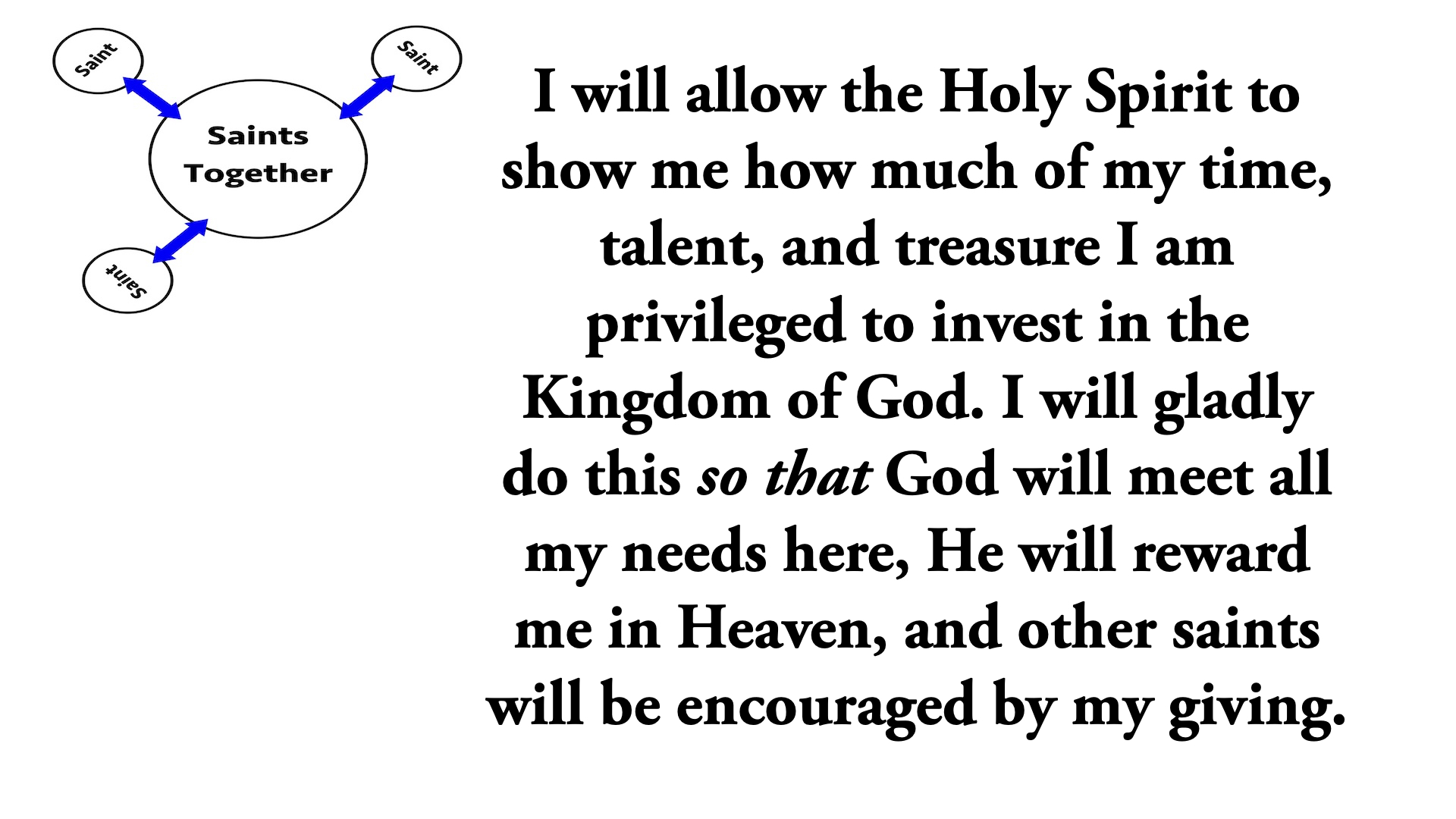
I will allow the Holy Spirit to show me how much of my time, talent, and treasure I am privileged to invest in the Kingdom of God. I will gladly do this so that God will meet all my needs here, He will reward me in Heaven, and other saints will be encouraged by my giving.
I hope you will join me in making this your declaration as well.
Listen to the podcast of this post by clicking on the player below, and you can also subscribe on Apple, Spotify, or Audible.
Let’s keep in mind why we are learning and working on these spiritual disciplines. The key phrase is “so that”—I get stronger so that we can get stronger.
Today we are looking at spiritual discipline #2—Solitude. We will need discipline to abide with Jesus in our time of solitude—removing all distractions—so that we can respond better to our circumstances, and help other saints respond better too.
Part of the dictionary definition of solitude is “a place absent of human activity.” Note that important word human activity. Solitude is a time for stepping back from all our human striving to get a heavenly perspective. Solitude is a proactive pause in difficult times so that we can respond with a God-honoring reaction.
Let me give you five ideal situations to discipline ourselves to find solitude.
(1) After ministry exertion. I’m sure there have been times when an interaction with another person or a group of people has exhausted you. It’s at these times we should find a place of solitude to be refreshed, just as Jesus did (Luke 5:16).
(2) In stormy times. When everything around us seems to be unstable, proactively pausing in a time of solitude is saying with the psalmist, “God is our refuge and strength, an ever-present help in trouble,” and then hearing God say to our anxious hearts, “Be still, and know that I am God” (Psalm 46:1, 10). These are the same words Jesus said to both the stormy seas and the disquieted hearts of His disciples (see Mark 4:35-39).
(3) When we’re between a rock and a hard place. This is when we feel like neither option before us is a pleasant one. Like when the Israelites were caught between the onrushing Egyptian army and the uncrossable Red Sea. Listen to how similar the words of Moses sound, “The Lord will fight for you; you need only to be still” (see Exodus 14:1-14).
(4) When we have a big decision ahead. We may gather all of the information and do our our research and still feel inadequate to make a good decision. Jesus had hundreds of disciples, but He needed to choose just twelve to serve as His apostles. Before making this decision, Jesus spent the night in solitude with His Father (Luke 6:12-13).
(5) When we get angry. There are other strong emotions that sometimes seem to overwhelm us, but I’ve noticed that anger causes more people to fly off the handle than most of the other emotions. When Jesus saw the shameful way the temple was being used, He got so angry that His disciples recalled the Psalm that said zeal was burning Him up (Psalm 69:9; John 2:17). Instead of reacting in the heat of the moment, Jesus spent all night in solitude with His Father (Mark 11:11, 19).
Then keep in mind that solitude is not retreating and staying away from others, but solitude is so that I can effectively respond to pressing situations. Christian solitude is not me-time, it’s us-time (where the “us” is me + Jesus) so that I’m ready for we-time (where the “we” is me + others).
This is such an important discipline for Christians so that we don’t respond inappropriately in an intense situation, but we respond in a Christ-like way that brings glory to God. Pay attention to your strong emotions, listen to the Holy Spirit, and proactively find a place of solitude.
“…and let us all hasten to approach to perfect manhood, to the measure of the completed growth of the fullness of Jesus Christ, in Whom let us love one another, praise one another, correct one another, encourage one another, pray for one another, that with Him in one another we may reign and triumph.” —Columbanus, Letter to Certain Bishops, Irish, early 7th century
Have you ever wondered how the laws of the Old Testament era should be applied to New Testament Christians? Theologian T.M. Moore has an excellent series of articles on this, but I think his post The Church is not Ancient Israel is especially informative.
Here is one way the Holy Spirit can speak to us—
“It is not the body of truth that enlightens; it is the Spirit of truth who enlightens. If you are willing to obey the Lord Jesus, He will illuminate your spirit. He will inwardly enlighten you. The truth you have known intellectually will now be known spiritually. Power will begin to flow up and out, and you will find yourself changed—marvelously changed.” —A.W. Tozer
“The greatest tragedy of life is not unanswered prayer, but unoffered prayer.” —F.B. Meyer
This is pretty cool: some fossilized human footprints in the salt flats of Utah. “Both creationist and uniformitarian scientists agree that these tracks were made during the Ice Age, although they disagree about when the Ice Age occurred. Creationists think these footprints are just a few thousand years old. However, evolutionists think the tracks are more than 10,000 years old, because they believe the wet conditions needed to form and preserve the footprints have been absent from the Great Salt Lake area for at least that long. … wet Ice Age deserts are extremely difficult for evolutionary scientists to convincingly explain. However, the Bible’s real history makes much better sense of both these wet deserts and preserved Ice Age footprints.”
Don’t cut corners to get more. Instead, be faithful, do your best work, and the “more” will follow at the right time—
This is a weekly series with things I’m reading and pondering from Charles Spurgeon. You can read the original seed thought here, or type “Thursdays With Spurgeon” in the search box to read more entries.
Listen to the podcast of this post by clicking on the player below, and you can also subscribe on Apple, Spotify, or Audible.
Blessed Discipline
Blessed is the man whom You instruct, O Lord, and teach out of Your law, that You may give him rest from the days of adversity, until the pit is dug for the wicked. For the Lord will not cast off His people, nor will He forsake His inheritance. But judgment will return to righteousness, and all the upright in heart will follow it. (Psalm 94:12-15)
First, I will ask you to notice that God’s children are under instruction. Other children may run about and take holiday. They may wander into the woods, gather the flowers, and do very much what they like, but God’s own children have to go to school. This is a great privilege for them, although they do not always think so. Children are not often good judges of what is best for themselves. …
Some of us have learned much from the Lord’s chastening rod! For instance, we have learned the evil of sin. ‘Before I was afflicted I went astray, but now I keep Your Word’ (Psalm 119:67). … Do we not also learn by affliction our own frailty and our own impatience? We are wonderfully patient when we have nothing to suffer, and we are all great heroes and very courageous when there is no fighting to be done. …
Do we not, then, learn also the value of prayer? … Do we ever pray in such dead earnest as when everything seems to be sinking from under our feet and our sweetest cups are full of bitterness? … And then how precious the promises become! As we only see the stars when the shadows gather at night, so the promises shine out like newly kindled stars when we get into the night of affliction! …
And, oh, dear friends, how should we ever know the faithfulness of God if it were not for affliction? We might talk about it and theoretically understand it, but to try to prove the greatness of Jehovah’s love and the absolute certainty of His eternal faithfulness—this comes not except by the way of affliction and trial! …
O Lord, still use the rod if You see that it is necessary. But go on teaching us out of Your Word! We are slow to learn and poor scholars at best, but You may yet make something of us.
In one of my darkest times of affliction, I stumbled upon this poem from Robert Browning Hamilton:
I walked a mile with Pleasure—
She chattered all the way
But left me none the wiser
For all she had to say.
I walked a mile with Sorrow
And ne’er a word said she,
But, oh, the things I learned from her
When Sorrow walked with me.
If you’re going through a difficult time, don’t try to get out of it, but get closer into God’s presence. He is teaching you invaluable lessons during this trial.



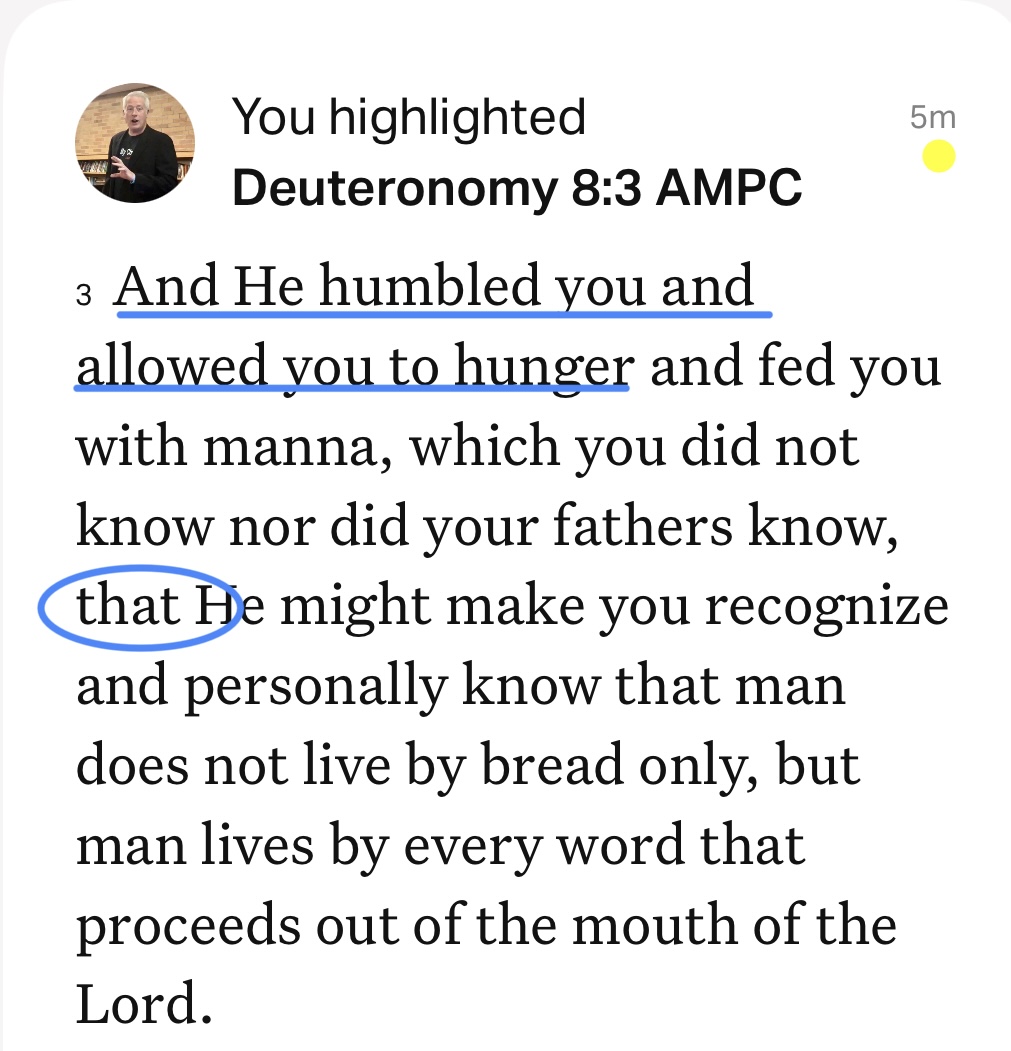 And [God] humbled you and allowed you to hunger and fed you with manna, which you did not know nor did your fathers know, that He might make you recognize and personally know that man does not live by bread only, but man lives by every word that proceeds out of the mouth of the Lord. … Know also in your [minds and] hearts that, as a man disciplines and instructs his son, so the Lord your God disciplines and instructs you. (Deuteronomy 8:3, 5 AMPC)











 Craig T. Owens