You are a one-of-a-kind creation on purpose! God’s plan for your life is as unique as you are. I had the privilege of speaking at Country Chapel’s week-long revival services, and this is a clip from my sermon.
I have lots of new content every week, which you can check out on my YouTube channel.
What “began 90 years ago in Seattle as ‘an agency to supply candidates for the ministry to our churches and on the mission field,’” is now celebrating its 90th anniversary as Northwest University. It is really cool to see the hand of God supplying in miraculous ways for those who were so passionate about this endeavor.
“How thankful we are, Father God, for a crucified Redeemer. Nothing in heaven or earth is such an amazing wonder as this; nothing can compete with it for excellence. May all the many charms of sin be overcome by this ravishing love, which bubbles up in every drop of our Redeemer’s blood. How can we, with thoughts of the Cross alive in our hearts, sin against so much tenderness, compassion, and grace, and all the other perfections of You, our God, which sound so loud in our ears from the Cross of Jesus?” —Stephen Charnock
“Where shall language be found which shall describe Your matchless love, Your unparalleled love, toward the children of men? Your love is so vast and boundless that, as the swallow skims the water without diving into its depths, so all descriptive words merely touch the surface of Your love, while depths immeasurable lie beneath. … The most inspired mind must utterly fail to fathom this love. Here is love! And truly it is love that surpasses knowledge. Oh, let this love fill our hearts with adoring gratitude and lead us to practical manifestations of its power.” —Charles Spurgeon
When a leader admits a need for help to his or her team, it actually increases the level of respect the team has for that leader.
What does pornography have to do with loneliness? “Dr. Gary Brooks, a psychologist who has worked with people struggling with unwanted porn habits for the last 30 years, explains that ‘Anytime [a person] spends much time with the usual pornography usage cycle, it can’t help but be a depressing, demeaning, self-loathing kind of experience.’”
Romans 8:28 tells us that God uses ALL things to accomplish His purpose for our lives. Too many times I tried to rush through things without getting anything out of it. I have lots of new content every week, which you can check out on my YouTube channel.
He is 98 years old and he’s still busy serving other people! I pray we can all be as selfless and vibrant in ministering to others until the day God calls us home.
“When with an eye of faith we behold Christ crucified we ought to weep, not for Him, but for ourselves. We must not be affected with the death of Christ as with the death of a common person whose calamity we pity, or of a common friend whom we are likely to part with. The death of Christ was a thing peculiar; it was His victory and triumph over His enemies; it was our deliverance, and the purchase of eternal life for us. And therefore let us weep, not for Him, but for our own sins, and the sins of our children, that were the cause of His death; and weep for fear (such were the tears here prescribed) of the miseries we shall bring upon ourselves, if we slight His love, and reject His grace, as the Jewish nation did, which brought upon them the ruin here foretold.” —Matthew Henry, on Jesus’ word, “Do not weep for Me” in Luke 23:28
J. Warner Wallace shares three responses Christians can give to those who make the claim that Jesus didn’t think He was God. In this video, Detective Wallace talks about a section of his website that gives further evidence. You can find that section here.
The Institute for Creation Research is a group of scientists explaining how science points to a Creator. What does Creation have to do with Easter? “Any view of Christianity that incorporates long ages of death and suffering before Adam makes a sham of the Cross. This Easter season, as we remember our salvation made possible by the death of our Lord Jesus Christ on the Cross and His triumphant resurrection from the grave, let us understand it within the ‘big picture’ of a ‘very good’ creation that was ruined by our rebellion but restored by the willing sacrifice of our great Creator-Savior.”
“One measure of the greatness of a man is not only that he practices what he preaches, but also that he doesn’t consider himself above the ordinary means of grace that all Christians need.” —John Piper
“Beware of idleness—satan sows most of his seed in fallow ground.” —Thomas Watson
Listen to the podcast of this post by clicking on the player below, and you can also subscribe on Apple, Spotify, or Audible.

Jesus hung on the Cross for about 6 hours. He was mostly silent during this time—His seven statements from the Cross would have taken less than a minute to say them all back-to-back.
He hung silently and thoughtfully. I know He was thoughtful because John records, “Later, knowing that all was now completed, and so that the Scriptures would be fulfilled, Jesus said, ‘I am thirsty’” (John 19:28).
Movie directors will often show a flashback scene where their character looks back to remember what came before. I think during this silent time on the Cross, Jesus reviewed His public ministry. He reviewed every jot and tittle of every promise His Father had made, and He knew that each and every one had been completed.
This culminating event on the Cross was the fulfillment of the big picture that God had been painting all along. The system of sacrifices centered in the tabernacle or the temple had been trying to show us something.
There were daily sacrifices and annual sacrifices; there were sacrifices for willful sins and sacrifices for unintentional sins; there were sacrifices for priests and for laypeople. Day after day, week after week, month after month, year after year, decade after decade, century after century these sacrifices continued, never feeling like the work was finished.
These practices were only a shadow, but a shadow that foretells the Reality—
The law is only a shadow of the good things that are coming—not the realities themselves. For this reason it can never, by the same sacrifices repeated endlessly year after year, make perfect those who draw near to worship. … The reality, however, is found in Christ. (Hebrews 10:1; Colossians 2:17)
Jesus knew that He had come as the Reality (John 13:1), but before this final event on the Cross that would fully reveal the Reality, Jesus had one last thing to do: He wanted to share a final meal with His friends (Luke 22:7-15).
Jesus said that eagerly desired to eat the Passover meal with them. This Passover remembrance looked backwards to the deliverance from Egypt and was celebrated year after year, decade after decade, century after century.
The events were so long ago that they may have seemed like fading shadows to those who were celebrating this meal over a millennia after the fact. Jesus brought Reality.
Jesus knew He was the most powerful Person on earth, but He also knew that He had come to serve (Mark 10:45; John 13:3-5). To demonstrate His servanthood…
He washed the feet of His betrayer
He washed the feet that would run away from Him in terror
He prepared them for what was coming
Peter boldly declared that he would never run away, and Matthew and Mark record that all of the other disciples declared the same thing—(Luke 22:33; Matthew 26:35; Mark 14:31). But Jesus knew the prophecy that said, “I will strike the Shepherd, and the sheep of the flock will be scattered (Matthew 26:31).
So Jesus prepared them by praying for them, and He prepared them by showing them the Reality of all those daily, weekly, monthly, annual, and Passover sacrifices (Luke 22:17-20, 31-32).
Jesus was the completion of this sacrifices (Hebrews 7:26-28, 9:11-14)!
The prophecy God gave in Jeremiah was completed in Christ’s broken body and spilled blood on the Cross—“For I will forgive their wickedness and will remember their sins no more” (Jeremiah 31:31-34; Hebrews 8:12).
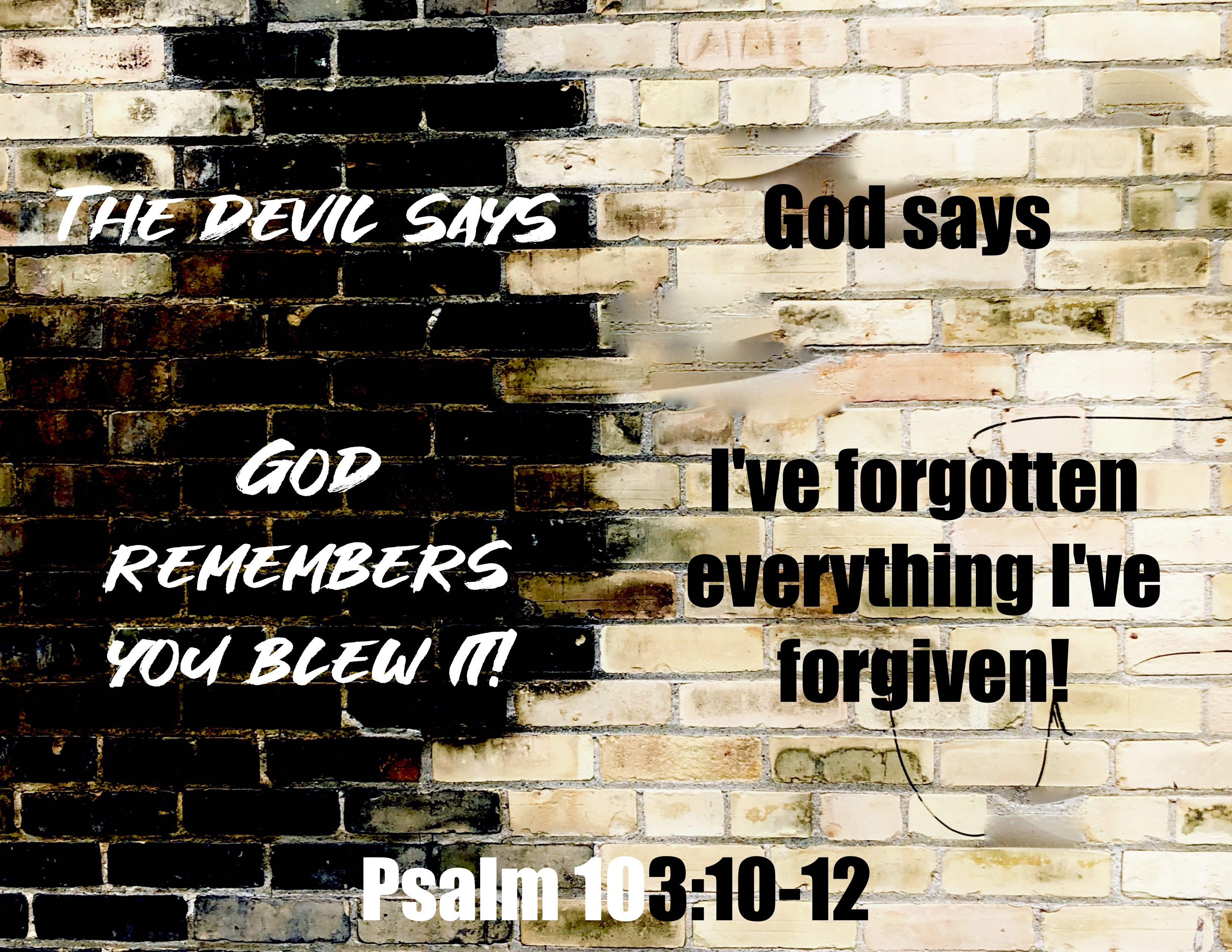
The purpose of this Last Supper—this meal that completes so many jots and tittles—is to remember. The devil wants you to remember what YOU did. Jesus wants you to remember what HE did.
Good Friday and the celebration of Communion helps us remember correctly that Jesus paid in-full the penalty for our sins, so now our forgiven sins are forgotten sins. The moment we sin, there is already the remedy for our sins that has been paid for. We repent, ask forgiveness, and receive His immediate cleaning.
Such amazing love!
If you have missed any of the messages in this series looking at some of the jots and tittles of prophecy that are fulfilled in Jesus, you can check them all out by clicking here.
God is doing something in me through wicked people and evil times.
But there is one more Selah in this chapter that we need to consider—Do not grant the wicked their desires, O Lord; do not let their plans succeed, or they will become proud. Selah. (v. 8)
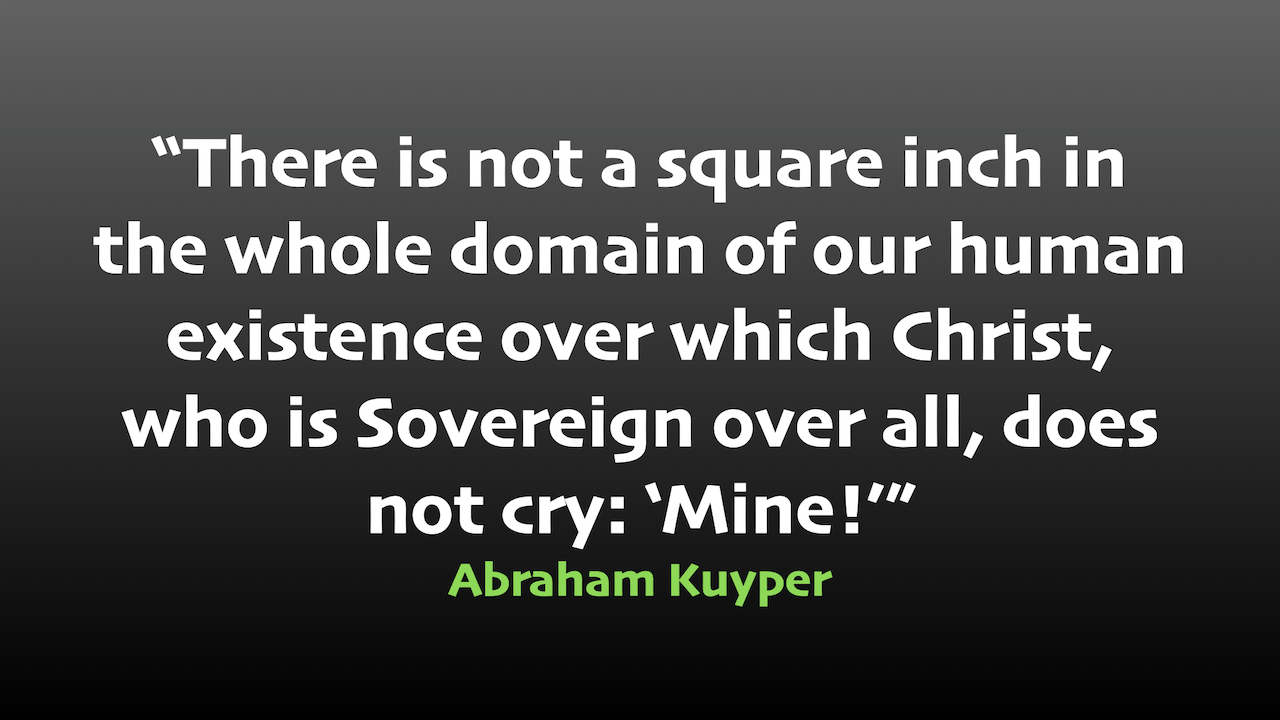
Most ofus would probably agree with Abraham Kuyper who said, “There is not a square inch in the whole domain of our human existence over which Christ, who is Sovereign over all, does not cry: ‘Mine!’”
But the amazing thing here is that God allows David—and you and me—to call Him mine! “O LORD, I say to You, ‘You are MY God’” (v. 6). David goes on to say that God is my strong deliverer who shields me against evildoers (v. 7).
But isn’t David’s God also the God of the wicked? Aren’t they a part of “the whole domain of human existence” that is His? Yes!
So that must mean that God wants even wicked people to call Him, “My God”!
This is exactly what Jesus told us: For God so loved the world [including wicked people] that He gave His one and only Son, that whoever [including wicked people] believes in Him shall not perish but have eternal life. For God did not send His Son into the world to condemn the world, but to save the world [including wicked people] through Him (John 3:16-17).
Just before this third Selah in verse 8 David prays that the plans of the wicked might be thwarted so that proud people don’t become even more proud. That seems okay. But after the Selah David seems to be asking God to let everything that wicked people have planned to boomerang back on them (vv. 9-11).
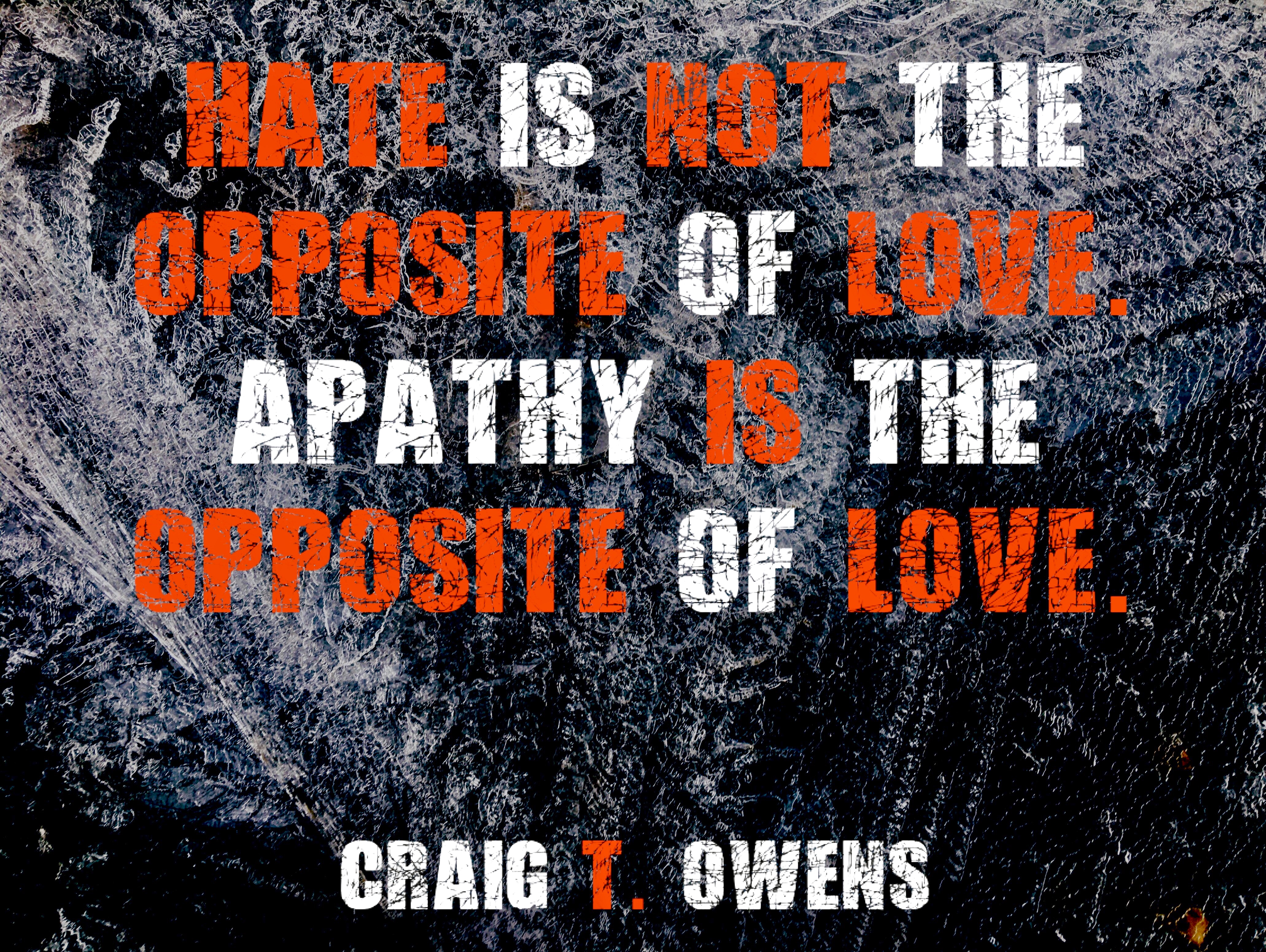
Hate isn’t the opposite of love, but apathy is the opposite of love. Hate is a very strong emotion that usually comes out when something we love or desire is thwarted or kept from us.
Just as we learned last week that God allows evil people and their slander and wickedness to prune us and make us more fruitful, can’t God give back to evil people exactly what they need to get their attention? Can’t He use their own evil plans for them just as He used them for us? Yes!
If God loves us—and He does—then He must hate anything that keeps us from Him.
If God loves wicked people—and He does—then He must also hate anything that keeps them from accepting the atoning work Jesus did for them on the Cross.
God is love. There is nothing you can do to make God love you any more. There is nothing an evil person can do to make God love them any less.
David’s third Selah is really his reminder that he must leave evil people to the only One who can discipline them in perfect measure. We have to leave evil people to God’s care—the only One who can rescue them. That’s why Jesus told us to “love your enemies and pray for those who persecute you” (Matthew 5:44).
David’s prayer in verses 9-13 does leave evil people in God’s hands, and it’s a prayer you and I can personalize for those whom we desire to know Jesus as their Savior.
It’s not God’s desire that any should perish. So let’s Selah to call God, “My God,” but to also pray that even the wicked people around us will come to the realization that through faith in Jesus, they too can cry out, “My God!”
God gave me a unique story when I was walking through a challenging time with a friend that I needed to leave to God’s care. I called the story The Parable of the Lifeguard. You can watch it in the video below, or you can read it by clicking here.
Listen to the podcast of this post by clicking on the player below, and you can also subscribe on Apple, Spotify, or Audible.
A father came home from work and noticed a note addressed to him taped to his teenage son’s door:
Dear Dad,
Jason and I borrowed Mom’s car to go to Taco Bell. I know I didn’t have permission, but I thought we’d be back before you and Mom got home. Unfortunately, I hit a pothole and blew out the front right tire.
We jacked up the car to put on a spare tire, but the jack slipped and the car rolled backward into the ditch.
Bill came with his pickup to pull us out, but the tow strap pulled off the front bumper and the car rolled further down the hill and sunk in the pond.
I bought a bus ticket to get out of town and go enlist in the Army. Give Mom a hug and I’ll see you both in about 2 years.
Love, your son
P.S. None of the above is true. Mom took her car to Aunt Jan’s house and I rode my bike to Jason’s house. However, I hope the fact that none of these bad things actually happened will help you put in perspective the D+ on my report card.
We like to manage expectations, don’t we? We frequently deliver bad news with the good news close by.
Psalms 88 and 89 are written by brothers: both of them are called Ezrahite, and both of them were worship leaders in the tabernacle. And until Solomon, these guys were considered the wisest in the land (1 Chronicles 2:6; 15:19; 1 Kings 4:29-34).
I believe these two psalms form a couplet. They make up the last two psalms of Book III in the Psalter, with Psalm 89 ending with, “Amen and Amen.” Both of them label their psalms a maskil which means “a poem of contemplation” (NKJV). And look how Psalm 88 leaves us in the dark, while Psalm 89 shines a light in the dark.
In Psalm 88, Heman soberly prepares us for his two-Selah psalm in his introductory remarks. He uses a phase mahalathleannoth which means someone who is so physically weak from emotional grief that they are now battling depression. The NLT calls it “the suffering of affliction.”
Heman is describing a reality: We will all experience pain in this life. Maybe even for our entire earthly life—from my youth I have been afflicted and close to death (v. 15). Heman’s reality is seen in his words in the first five verses of this psalm.
His first Selah is breathtaking because he wants us to pause to realize that God has allowed all of this (notice the pronoun You in vv. 6-8, 16-18). But still, Heman knows God saves because he has made a decision to continue to praise Him even in the dark times (vv. 1-2, 9, 13).
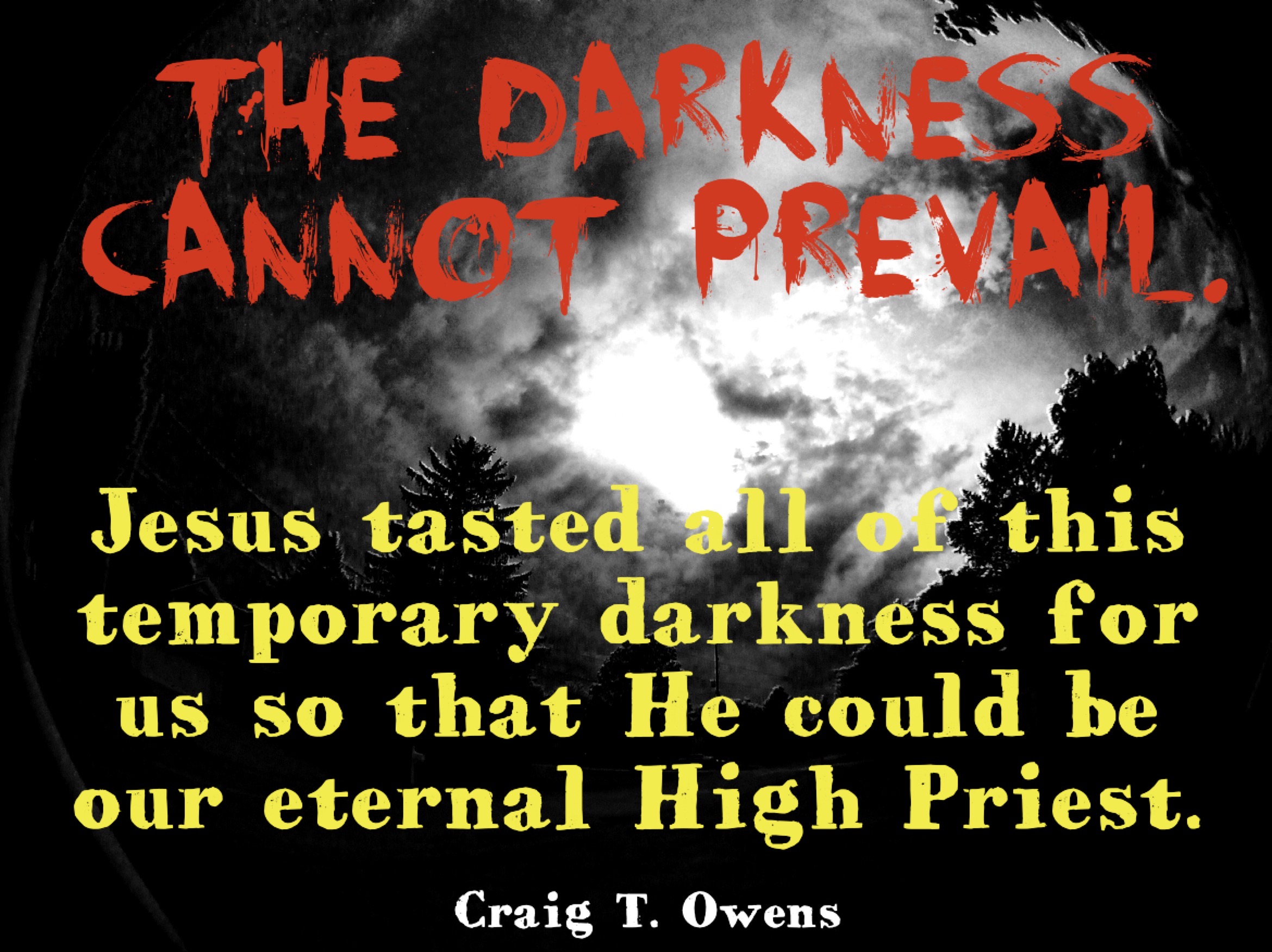
Heman’s second Selah comes in the middle of a series of five questions (vv. 10-14) that sound a lot like both questions Jesus asked in Gethsemane and from the Cross, and the reality of the temporary darkness He was facing (Psalm 22:1-2; Luke 22:53; John 19:11).
Even the way Heman closes his psalm foreshadows the darkness surrounding the death of Jesus: “My God, My God, why have You forsaken Me?”
Psalm 88 shows us the reality of temporary darkness (like Good Friday), but Psalm 89 points us to the certainty of eternal light (like Resurrection Sunday)!
So when you are battling your dark times, let me give you these assurances:
Listen to the podcast of this post by clicking on the player below, and you can also subscribe on Apple, Spotify, or Audible.
In the movie Groundhog Day, Bill Murray’s character (Phil) is stuck in a small town where February 2 keeps repeating. Phil tries desperately to get out of this town and out of this day, but nothing he seems to do gets him out of the endless loop. He becomes smarter and richer each day, but at the end of the day, everything resets to the beginning.
It’s frustrating!
God’s people of the Old Testament had their own “Groundhog Day”—the Day of Atonement that came every single year. This was the day their sins were confessed, forgiven, and atoned for, and had a very specific set of sacrifices and rituals. Much like Phil in the movie, they began to go through these motions almost entirely without thinking.
Year after year, millennia after millennia “the same sacrifices repeated endlessly year after year, [couldn’t] make perfect those who draw near to worship” (see Hebrews 10:1-4).
Even those who were God-fearing and tried their best to live perfectly righteous lives could find in the law provision for those who “sin unintentionally” (Leviticus 4:2, 13, 22, 27; 5:15, 18, 22, 24, 27-29). It was just another reminder that the loop of sin-confession-repentance-forgiveness-atonement was never ending.
And as if all the requirements of the Torah weren’t enough, Jesus came on the scene and seemed to raise the bar, telling us even though our outward actions might look righteous, our inward thoughts and attitudes made us just as sinful (Matthew 5:21-22, 27-28). And then Jesus even dropped this on us, “Be perfect, therefore, as your heavenly Father is perfect” (Matthew 5:48)!
Perfect?! As perfect as God?! This could easily make people throw their hands up in resignation, “I give up! Why even try?”
Through Ezekiel, God prophesied an internal change. This wasn’t something I must do, but something GOD will do—
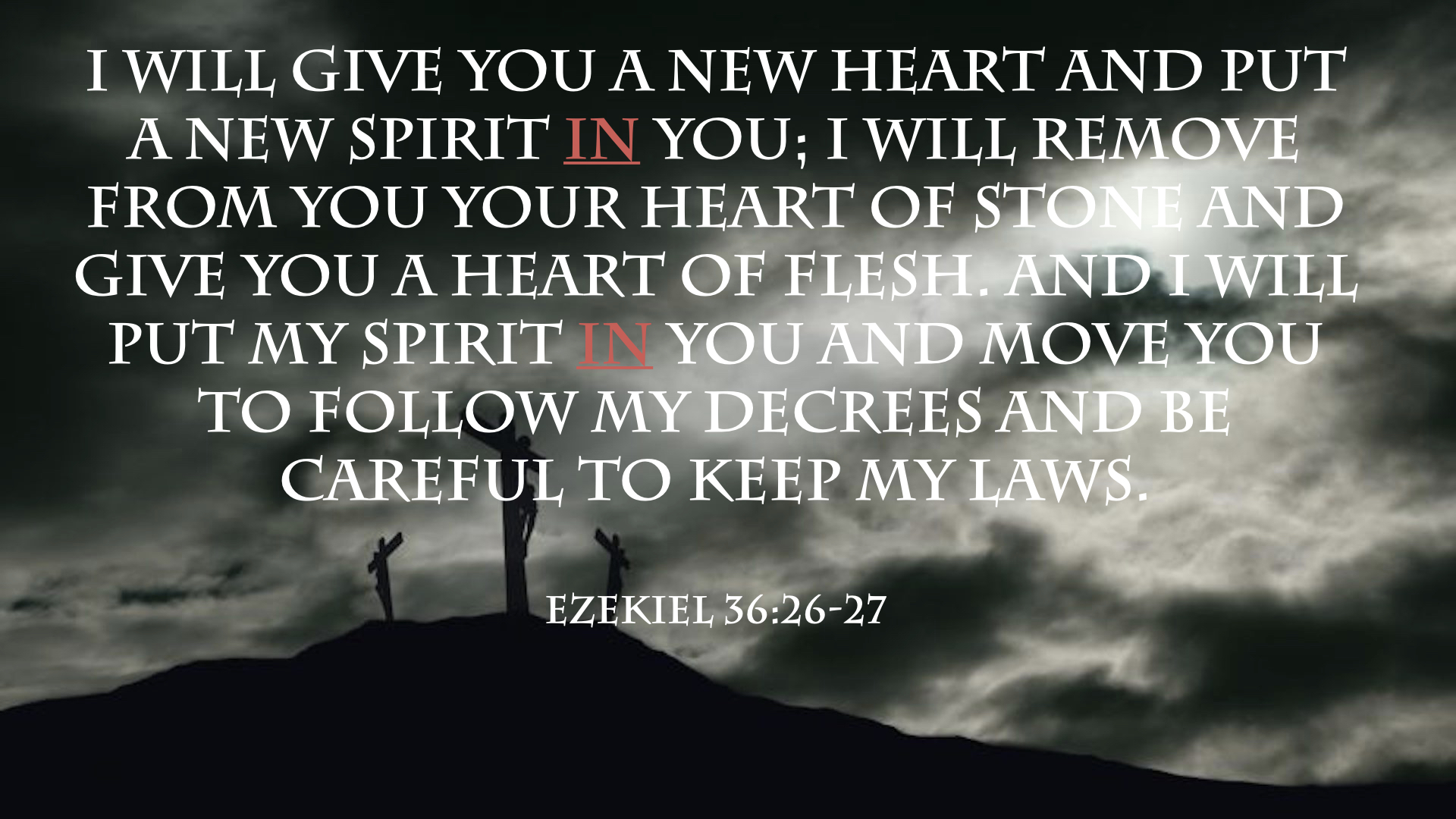
I will give you a new heart and put a new spirit in you; I will remove from you your heart of stone and give you a heart of flesh. And I will put My Spirit in you and move you to follow My decrees and be careful to keep My laws. (Ezekiel 36:26-27)
The solution to our endless loop of sin-confession-repentance-forgiveness-atonement must become internal. It’s no use trying to correct the fruit if the root is still evil! That requires an inside job.
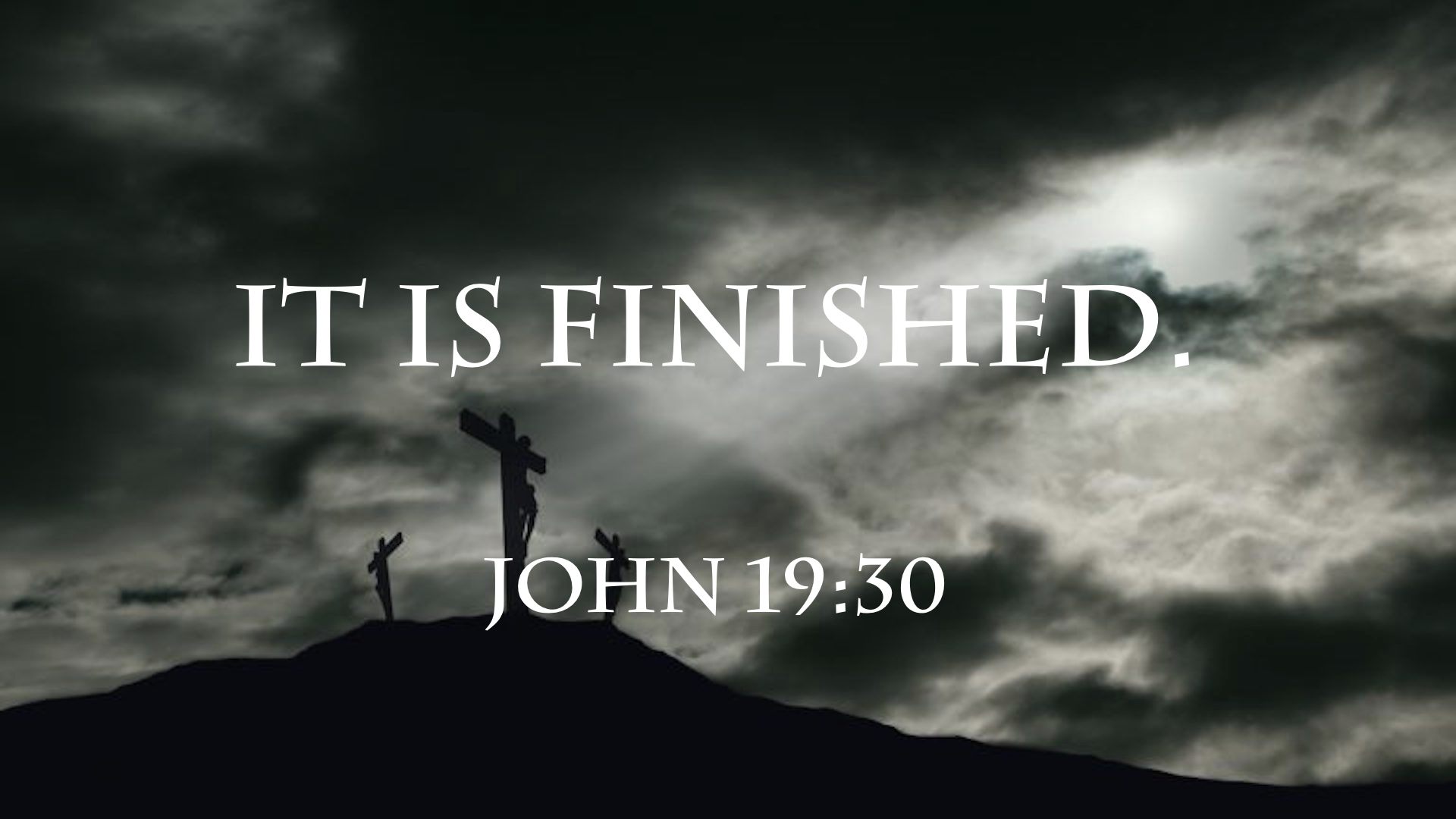
On Good Friday, the last words Jesus spoke before His death were, “It is finished” (John 19:30).
What was finished? Our struggle to get ourselves out of this endless loop. The writer of Hebrews had this to say about Jesus:
But when this Priest had offered for all time one sacrifice for sins, He sat down at the right hand of God. … For by one sacrifice He has made perfect forever those who are being made holy. (Hebrews 10:12, 14)
Remember Jesus told us we had to be perfect like God? The root word for “perfect” in that verse is telos. When Jesus cried out, “It is finished,” He said one word in Greek: tetelestai. This also comes from the root word telos. Jesus perfectly finished all that was necessary for us to become perfect in God’s sight.
Christians often use the the phrase “I invited Jesus into my heart” as an expression of their faith in what Jesus did for them on the Cross. That word “IN” is a good reminder.
Jesus comes IN and the fear of punishment—the fear of being eternally stuck in the endless loop—has to go out. “There is no fear IN love. But perfect love drives out fear, because fear has to do with punishment. The one who fears is not made perfectIN love” (1 John 4:18).
The word “perfect” in that verse is also from the same root word telos.
Not only does Jesus come IN to our hearts to make them new, but He also takes us IN to His perfection. “Looking away from all that will distract to Jesus, Who is the Leader and the Source of our faith—giving the first incentive for our belief—and is also its Finisher—bringing it to maturity and perfection…” (Hebrews 12:2 AMP).
Jesus shared a last supper with His disciples. His last supper was the first Communion. At this time Jesus told them He was establishing a “new covenant.” How do we square this with His previous statement that He didn’t come to abolish the law but to fulfill it?
Jesus said this new covenant was IN His blood. His blood doesn’t abolish the law, but it perfects the law. His perfect blood makes out hearts new and takes us out of the external loop and IN to His prefect righteousness.
Jesus accomplished all that was needed to make us perfect inside, and then to perfectly take us into God’s presence. As the hymn The Old Rugged Cross reminds us, “In that old rugged Cross, stained with blood so divine, a wondrous beauty I see. For ’twas on that old Cross Jesus suffered and died to pardon and sanctify me!”
May we always cherish the perfection that was purchased for us on that Cross.
This is a weekly series with things I’m reading and pondering from Charles Spurgeon. You can read the original seed thought here, or type “Thursdays With Spurgeon” in the search box to read more entries.
Listen to the podcast of this post by clicking on the player below, and you can also subscribe on iTunes or Spotify.
Love So Amazing
Forgiving one another, even as God for Christ’s sake has forgiven you. (Ephesians 4:32)
The first phrase to think about is ‘for Christ’s sake.’ We use these words very often, but probably we have never thought of their force. … All the good things that God has bestowed upon us have come to us ‘for Christ’s sake.’ But especially the forgiveness of our sins has come ‘for Christ sake.’ …
It is His very love as well as His holiness and His justice that, if I may use such a term, compels Him to severity of judgment so that sin cannot and must not be blotted out till atonement has been presented. There must, first of all, be a sacrifice for sin, that, mark you, the great Father, to show His love, supplies, for it is His own Son who is given to die! And so the Father Himself supplies the ransom through His Son, that Son is one with Himself by bonds of eternal unity, mysterious but most intense. If God demands the penalty in justice, He Himself supplies it in love. …
I want you to consider, for a moment, how readily God may now blot out sin since Christ has died. … God, for Christ’s sake, has accepted us in Him, has forgiven us in Him, and looks upon us with infinite love, changeless in Him. This is how all our blessings come to us, in and through Christ Jesus. And if we are indeed in Him, the Lord does not only forgive us our sins, but He bestows upon us the boundless riches of His grace in Him. In fact, He treats us as He would treat His Son. He deals with us as He would deal with Jesus! …
And you, big evil sinner, if you will go to God at this moment and say, ‘Lord, I cannot ask You to forgive me for my own sake, but do it out of love for Your dear Son,’ He will do it…. Christ took the shame that He might magnify His Father, and now His Father delights to magnify Him by blotting out the sin.
From Forgiveness Made Easy
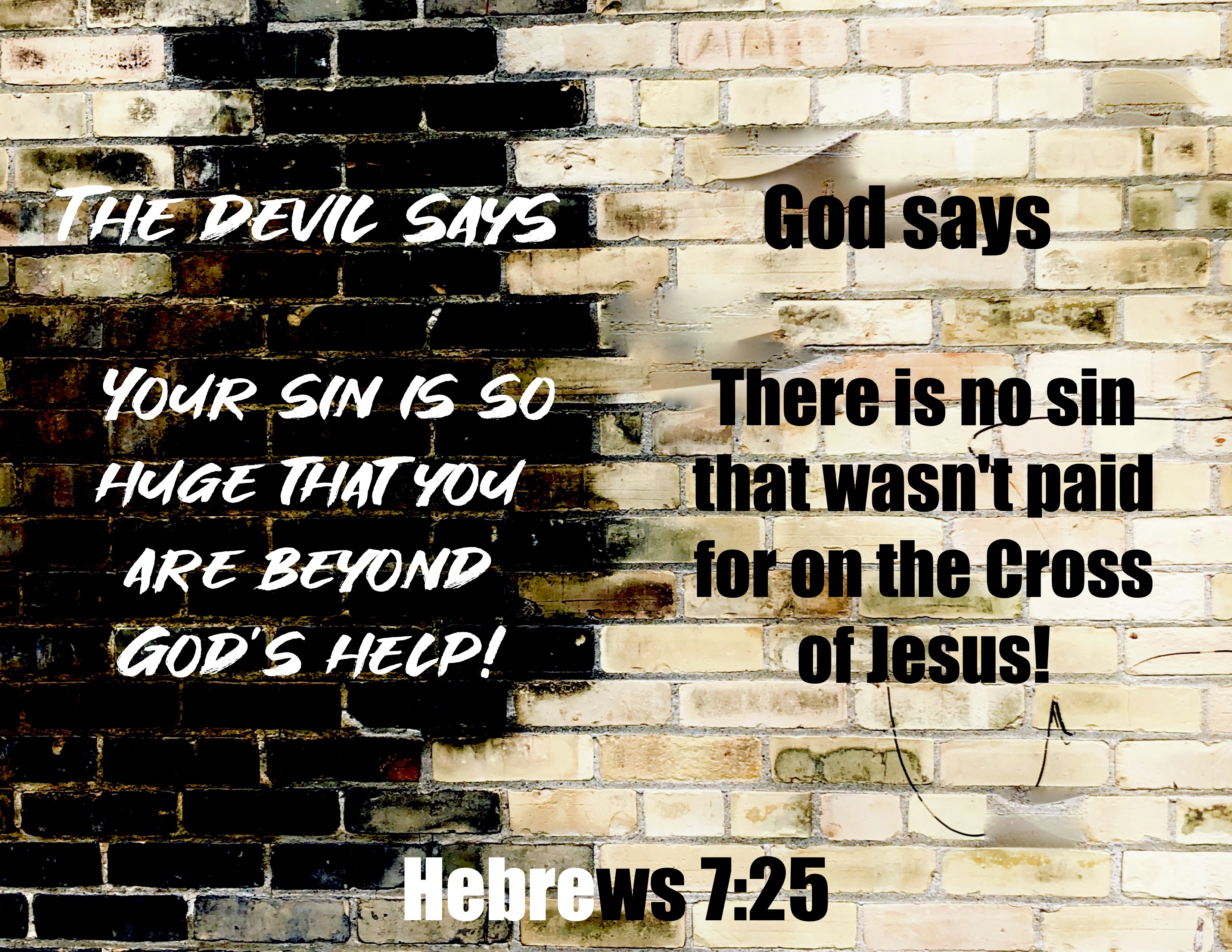
I’ve lost track of the number of times someone has told me, “I’ve messed up for so long—I’ve done such atrocious things—there is no way God could forgive me.” This is one of satan’s lies that keeps people from accepting God’s forgiveness.
Don’t wait another moment: If you haven’t asked God to forgive you “for Christ’s sake,” do it right this very minute! I’d love to chat with you about this, so reach out to me and let’s talk more about this amazing new relationship you now have with Almighty God because you are forgiven for Christ’s sake.