Set Up For Success (Or Failure)

Listen to the podcast of this post by clicking on the player below, and you can also subscribe on AppleSpotify, or Audible. 

Like it or not, your example as a leader is making an impact on all the people around you—including the next generation of leaders who will take their positions after you have passed away. 

So I have a simple question for you: Are you setting them up for success or failure? 

There is no middle ground. 

Consider three generation of kings of Judah—Hezekiah, Manasseh, and Amon. 

Hezekiah had been sick and God miraculously healed him. When Merodach-baladan, king of Babylon, heard about this, he sent envoys to see King Hezekiah. Instead of bragging on God, Hezekiah bragged about all of his riches. 

After the envoys left, the prophet Isaiah told Hezekiah the consequences of his pride

“Behold, the days are coming when everything that is in your house, and what your fathers have stored up to this day, will be carried to Babylon; nothing will be left,” says the Lord. “And some of your sons who will come from you, whom you will father, will be taken away, and they will become eunuchs in the palace of the king of Babylon.” (Isaiah 39:6-7) 

Sadly, Hezekiah responded, “At least it won’t impact me.” 

A mark of a godly leader is one who desires to set up future leaders for success. 

His son Manasseh became one of the most evil, godless kings that Judah had ever known. And as a result, he experienced the punishment that Isaiah had prophesied. 

Thankfully, Manasseh eventually humbled himself, repented of his sin, and got to experience God’s restoration to a small degree—

When he was in distress, he appeased the Lord his God and humbled himself greatly before the God of his fathers. When he prayed to Him, He was moved by him and heard his pleading, and brought him back to Jerusalem to his kingdom. Then Manasseh knew that the Lord alone is God. (2 Chronicles 33:12-13) 
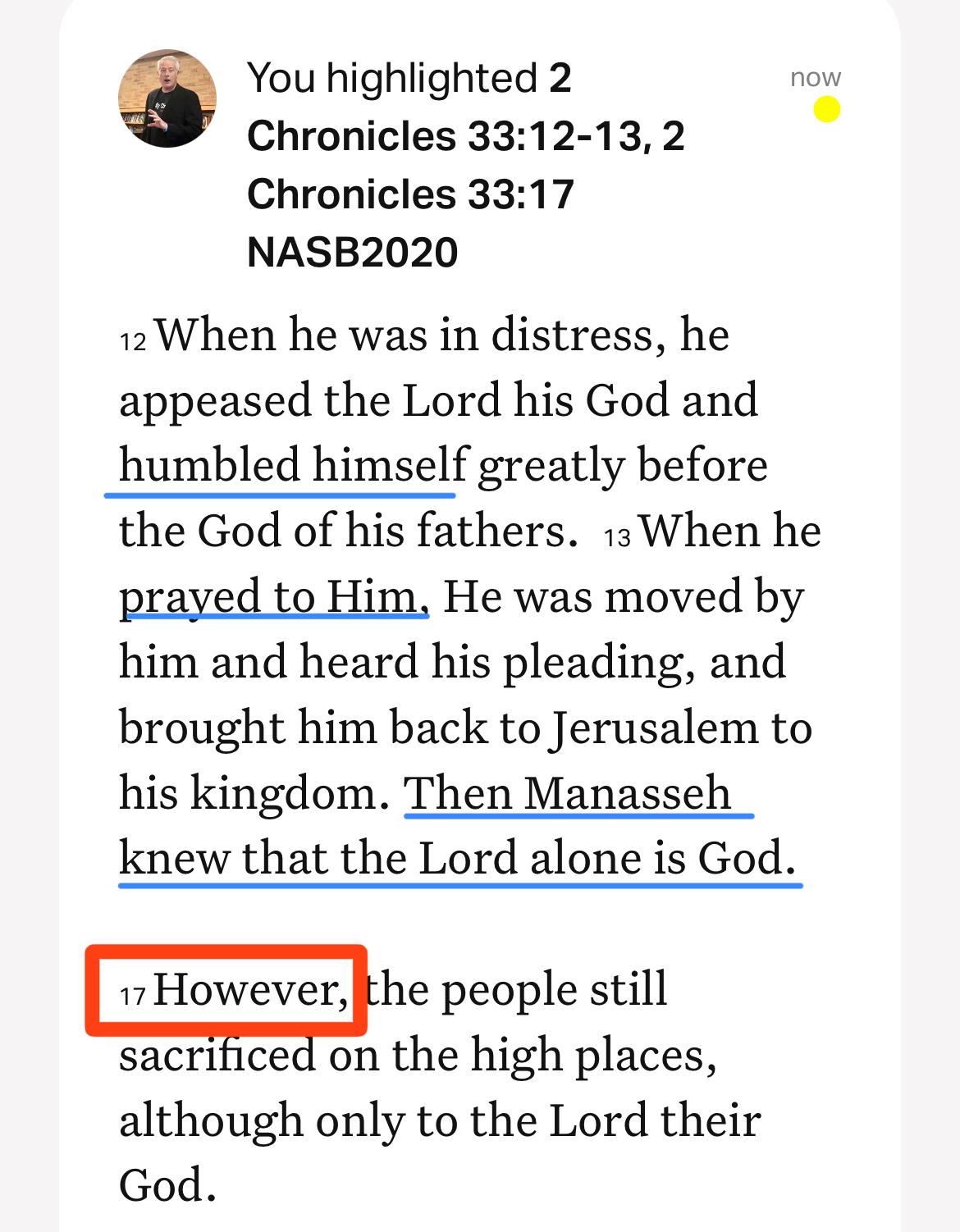
But there is a sad “however” for Manasseh’s son Amon: However, the people still sacrificed on the high places (2 Chronicles 33:17). This mixing of the worship of God with the worship of pagan idols always pulls people away from God. It certainly did that for Amon because “he did evil in the sight of the Lord, just as his father Manasseh had done. For he walked entirely in the way that his father had walked, and served the idols that his father had served, and worshiped them” (2 Kings 21:20-21). “Furthermore, he did not humble himself before the Lord as his father Manasseh had done, but Amon multiplied his guilt” (2 Chronicles 33:23). 

Godly leaders should be just as concerned about the people that come after them as they are about the people around them now. Godly leaders strive to set up future generations for success—so they can receive God’s continued and increased blessings.

This is part 78 in my series on godly leadership. You can check out all of my posts in this series by clicking here.

►► Would you please prayerfully consider supporting this ministry? My Patreon supporters get behind-the-scenes access to exclusive materials. ◀︎◀︎

Links & Quotes

I am really looking forward to a new series of sermons that I am launching this Sunday. This will be a once-per-month series for the remainder of the year and it’s simply called A Christian’s Mental Health. If you don’t have a home church in the west Michigan area, I would love for you to join me in person, but the sermons will also be posted on my YouTube channel.

T.M. Moore has an outstanding post called The Essence of the Lie. In one part, Moore writes, “Thus the lie claims to be the truth, but, at the same time, it insists that truth is personal, relative, pragmatic, and utilitarian. Truth, from this perspective, is not absolute, but dynamic, changeable rather than fixed. It is conditioned by circumstances of time and place. At the end of the day, people are the final arbiters of truth, and truth is whatever they find to be useful for their purposes. Ultimate truth is that which people impose on others by one or another kind of force, whether intellectual, political, or physical.” Check this one out!

Harvard University has been studying a group of individuals since 1938 to try to determine the main factors that contribute to a long and healthy life. The director and assistant director of this study just published an article that sums up what they have learned over all these years—“[If] we had to take all 85 years of the Harvard Study and boil it down to a single principle for living, one life investment that is supported by similar findings across a variety of other studies, it would be this: Good relationships keep us healthier and happier. Period. If you want to make one decision to ensure your own health and happiness, it should be to cultivate warm relationships of all kinds.”

“The battle for control and leadership of the world has always been waged most effectively at the idea level. An idea, whether right or wrong, that captures the minds of a nation’s youth will soon work its way into every area of society, especially in our multimedia age. Ideas determine consequences.” — The American Covenant 

“The storms of life are no longer our point of reference when [Jesus] is our focal point.” —Dutch Sheets

John Stonestreet was intrigued by a street reporter asking, “What are men good for?” There were a lot of soft, ambiguous answers given, but John quipped, “Men are good for fathering, protecting, loving, providing, leading, fighting for what’s right with their lives if need be, and obeying, in a masculine way, the creation mandate of the God who made us male and female and declared both ‘very good.’ Was that so hard?” Amen!

Dan Reiland identifies four common mistakes that will cause your church to struggle.

When leaders quit growing, they in essence have “quiet quit” on their team. If the leader’s not growing, what is the incentive for anyone else in the organization to improve themselves or work hard? Leaders quiet quit long before their teammates do! Check out the full conversation Greg Heeres and I had on avoiding quiet quitting by clicking here.

The Sin Of Man, The Salvation Of Jesus

Listen to the podcast of this post by clicking on the player below, and you can also subscribe on Apple or Spotify.

“Jesus is risen indeed!” This is the glorious good news that Christians around the world celebrate. 

But good news is really only good news when you fully realize how bad the bad news was. Like when the doctor comes in to tell you, “You’re going to be fine,” and you breathe a sigh of relief. And then the doctor goes on to explain what your condition was and all of the heroic efforts that were undertaken on your behalf, and you realize how close to death you actually were that your sigh of relief turns into a shout of joy! 

The resurrection of Jesus is the good news that brings us eternal life. But instead of merely breathing a sigh of relief thinking, “I shall not perish but have everlasting life,” let’s take a look at how close we were to everlasting death. 

Our fourth foundational belief says: “Man was created good and upright…. However, man by voluntary transgression fell and thereby incurred not only physical death but also spiritual death, which is separation from God.” 

Adam and Eve were given a choice: they were able not to sin and they were able to sin. God gave them dominion over everything in His creation but themselves, and He made them to be personally and intimately connected with Himself. But satan tempted them to take dominion over themselves, saying that they would become like God.

They sinned. “And sure enough, they then had knowledge of good and evil, but it was from the standpoint of becoming evil and remembering how good they once were,” said Nancy Guthrie. Because they sinned, now all of us are unable not to sin. Why? Because no one has been able to demonstrate to us how to be able not to sin. 

Their sin had consequences for them that have extended to us:

  • they felt shame at their vulnerability before God
  • they were fearful to be in God’s presence 
  • they were separated from God  
  • and they doomed all of us to live an utterly meaningless existence forever! 

But Adam and Eve’s sin didn’t send God scrambling for a remedy. Our fifth foundational truth says: “Man’s only hope of redemption is through the shed blood of Jesus Christ the Son of God.” 

Jesus turned the absolutely worst news into the most eternally, overwhelmingly good news ever! 

Jesus was made the cure for sin from before the foundation of the world. God made Jesus to be our sin (not just to carry our sins). In order for this to happen, Jesus had to become human like us. That means that Jesus, like Adam and Eve, had the same choice to sin or to not sin but He did not sin. This allowed Him to be our perfect sacrifice on the Cross. 

When He died on the Cross, Jesus removed the uncrossable abyss between us and God. Jesus made it possible once again for us to be able not to sin. Not only that, but Jesus covers the shame that would linger even after our sin is forgiven by clothing us in His own righteousness! 

(check out all of the biblical references for the above points by clicking here)

Sin had us doomed to not only a meaningless existence on earth, but also to an utterly meaningless existence for the eternity following death. Jesus became our sin to allow us to be reunited with God and reclothed in Christ’s righteousness. This is not just good news, it’s eternally, overwhelmingly good news! 

If you’ve missed the discussion of any of our other foundational truths, you may access the full list by clicking here.

►► Would you please prayerfully consider supporting this ministry? ◀︎◀︎

Finishing Well Is Better

Listen to the podcast of this post by clicking on the player below, and you can also subscribe on iTunes or Spotify.

The land was at peace… (2 Chronicles 14:6).

King Asa started out so well. The beginning of his reign could best be described by the word “peace”:

  • The land was at peace 
  • No one was at war with him 
  • The Lord gave him rest 
  • “[God] has given us rest on every side”  
  • The Lord his God was with him

When Cush attempted to attack the nation of Judah, Asa called on God: “Lord, there is no one like You to help the powerless against the mighty. … Do not let mere mortals prevail against You” (14:11). God gave Asa a great victory over Cush, and other God-fearing people from Israel began flocking to Judah “when they saw that the Lord his God was with [Asa]” (15:9). 

This peace lasted for 35 years!

And then came one poor decision from which Asa never recovered. 

The king of Israel began to make preparations for war against Judah. Instead of calling on God as he did when Cush was preparing to attack, Asa reverted to political maneuvering. He sent a bribe to a rival nation, enticing them to attack Israel. 

The prophet Hanani told Asa, “The eyes of the Lord range throughout the earth to strengthen those whose hearts are fully committed to Him. You have done a foolish thing, and from now on you will be at war” (16:9). 

From “the land was at peace” to “from now on you will be at war” came about because Asa…

  • …trusted his own ingenuity instead of relying on God 
  • …calculated his odds instead of calling on his God 
  • …forgot about God’s past provision 
  • …refused to confess his sin and repent from it, even when the prophet called him out
  • …utterly abandoned his God (16:2-12) 

Starting well is good, but finishing well is far better! 

A mark of a godless leader is one who refuses to confess and repent from his sin. 

Asa’s refusal to admit his sin resulted in the end of his life being spent afflicted with disease and his country being surrounded and oppressed by enemies. 

This is part 54 in my series on godly leadership. You can check out all of my posts in this series by clicking here.

Obvious Consequences

I think these correlations are pretty visible in the life of King Jehoshaphat. See if you can spot them too. 

Jehoshaphat “followed [God’s] commands” and “the Lord established the kingdom under his control.” 

Jehoshaphat sent Levites out to teach the people God’s law and “the fear of the Lord fell on all the kingdoms of the land surrounding Judah.” 

Jehoshaphat cried out to God while being pursued by enemies, “and the Lord helped him.” 

Jehoshaphat allied himself with Israel—marrying Ahab’s daughter and going to war with Israel—and he was told, “the wrath of the Lord is on you.” 

“Jehoshaphat resolved to inquire of the Lord” when the enemy was poised to attack and God gave him assurance of victory. 

Jehoshaphat appointed worshipers to lead the army and “the Lord set ambushes” to defeat the enemy, causing His fear to once again fall on the surrounding nations. 

Jehoshaphat allied himself with Israel again and their joint sailing venture ended in shipwreck. 

[check out the biblical texts for all of the above examples by clicking here] 

It seems to me that the blessings of following God and doing things His way, and the consequences of ignoring His commands, are so plainly visible. There really is no excuse for my ignorance on this.

The question is: Will I do things God’s way and enjoy His blessings, or will I continue to try to do things my way and risk God’s wrath?

The Lingering Effects Of Poor Leadership

Surely these things happened to Judah according to the Lord’s command… (2 Kings 24:3). 

I am intrigued by the succession of the last kings of Judah just before Jerusalem falls in 586 BC. The leadership authority has been completely undermined by the downward spiral of sin in the previous leaders. As a result, the kings of Judah are now just an “empty suit,” with someone else exerting the real influence.

King Josiah was the last God-fearing king Judah had. After Josiah died, “the people of the land” made Jehoahaz king of Judah. He only reigned three months. 

After Jehoahaz died, “Pharaoh Neco made Eliakim son of Josiah king” after Egypt subdued Judah. Pharaoh changed his name to Jehoiakim, took all of Judah’s treasures, and imposed a tribute on Judah, forcing Jehoiakim to tax all the citizens. 

Later on, Jehoiakim became a vassal king of Nebuchadnezzar. After Jehoiakim died, his son Jehoiachin only reigned as king for three months before he was deposed by Nebuchadnezzar. 

Nebuchadnezzar then “made Mattaniah” king. He also imposed tribute and changed the king’s name to Zedekiah. 

King Zedekiah rebelled and was executed, after which Nebuchadnezzar “appointed Gedaliah as governor.” Gedaliah was assassinated shortly thereafter, completing the collapse of Judah and sending the people into exile in Babylon for the next 70 years. 

[Check out all of the biblical references for these sad events by clicking here]

Oh, what misery for the people of Judah for this last 20-year span under these final kings! The consequences of the leaders’ continual rebellion against God brought such uncertainty and heartache for the citizens. 

A mark of a godless leader is the wake of misery that follows him for generations afterward. 

Lord God, help me to see that my actions today have consequences for tomorrow. I want to leave an empowering, God-honoring legacy for the next generations, but this can only happen as I remain obedient to You! 

This is part 51 in my series on godly leadership. You can check out all of my posts in this series by clicking here

Justice And Love

But the Lord God called to the man, “Where are you?” (Genesis 3:9). 

There are consequences for sin (because God is Just) and there is a remedy for sin (because God is Love). 

Adam and Eve sinned. 

They lost their innocence before God, they were expelled from the Garden of Eden, they would experience pain in childbirth, they would have to scratch to provide their food, they would experience relational turmoil, and most devastatingly of all, they faced the potential of being separated from God’s presence forever. 

These are all just penalties for sin. 

But don’t miss God’s love in this too—

  • God came to them in the cool of the day, not in the instant of their sin 
  • He came walking in the Garden, not hurling lightning bolts of judgment 
  • He came with questions, not accusations 
  • He cursed the devil and the ground, but not Adam and Eve 
  • He provided for the final defeat of satan, not the final defeat of mankind 
  • He killed an animal to clothe their nakedness, not leaving them vulnerable 
  • He didn’t allow them to become immortal while still in their sin

There are painful consequences for sin—this is Justice. 

But even in justice, never lose sight of the fact that GOD IS LOVE ❤️

Killing Discontentment

Fading gratitude is a terrible thing. Not being thinkful of our past not only keeps us from being thankful, but it also keeps us stuck in the past. And allowing gratitude to fade also sucks the life out of our every-day experiences.

Asaph told us about the manna that God provided for the Israelites to eat every single day that they were in the wilderness. He called it the bread of angels. But even this wasn’t enough for people who weren’t thinkful nor thankful. Instead, they craved more (Psalm 78:25-30). 

The dictionary defines forgetfulness as “ceasing to think about something.” Gratitude, then, is to continue to think about Someone—that “Someone” being God who daily provides for us.

Fading gratitude brings two ugly realities: 

(1) Discontentment. The dictionary calls this “a restless desire or craving for something one does not have.” In other words, it’s counting up what you don’t have instead of being grateful for what you do have. 

(2) Entitlement. This is discontentment’s sickly twin sister. Where discontentment counts up what it doesn’t have, entitlement says, “I deserve what I don’t have!” Jesus told a story about entitled people who had been given land, a vineyard, and everything they needed to be successful with their farm. Yet when the owner of the farmland asked for his rightful payment, the renters thought they were entitled to keep it all. 

There are serious—and potentially eternal—consequences for our unchecked discontented entitlement. Jesus said, “What then will the owner of the vineyard do? He will come and kill those tenants and give the vineyard to others” (Mark 12:9). And Asaph reported that for the discontented, entitled Israelites, “God’s anger rose against them; He put to death the sturdiest among them, cutting down the young men of Israel. … So He ended their days in futility and their years in terror” (Psalm 78:31, 33). 

One of two things is going to happen: either we kill discontentment, or discontentment will kill us! 

It’s not complicated to kill discontentment, but it is hard work. We kill discontentment with contentment. We learn to separate the dis from discontentment with the sword of gratitude! 

The apostle Paul wrote “…I have LEARNED to be content whatever the circumstances. I know what it is to be in need, and I know what it is to have plenty. I have LEARNED the secret of being content in any and every situation, whether well fed or hungry, whether living in plenty or in want. I can do all this through Him who gives me strength” (Philippians 4:11-13). 

One way to learn contentment is to keep reminders around you of all the things which with God has blessed you. Don’t let your gratitude fade for one moment! 

Next week we will be wrapping up this series by considering what can happen to our future outlook if we let gratitude fade from our hearts and minds. I hope you can join me! 

Consequences For Children

Dr. Kathy Koch has some great insights in her book Start With The Heart for anyone who works with children.

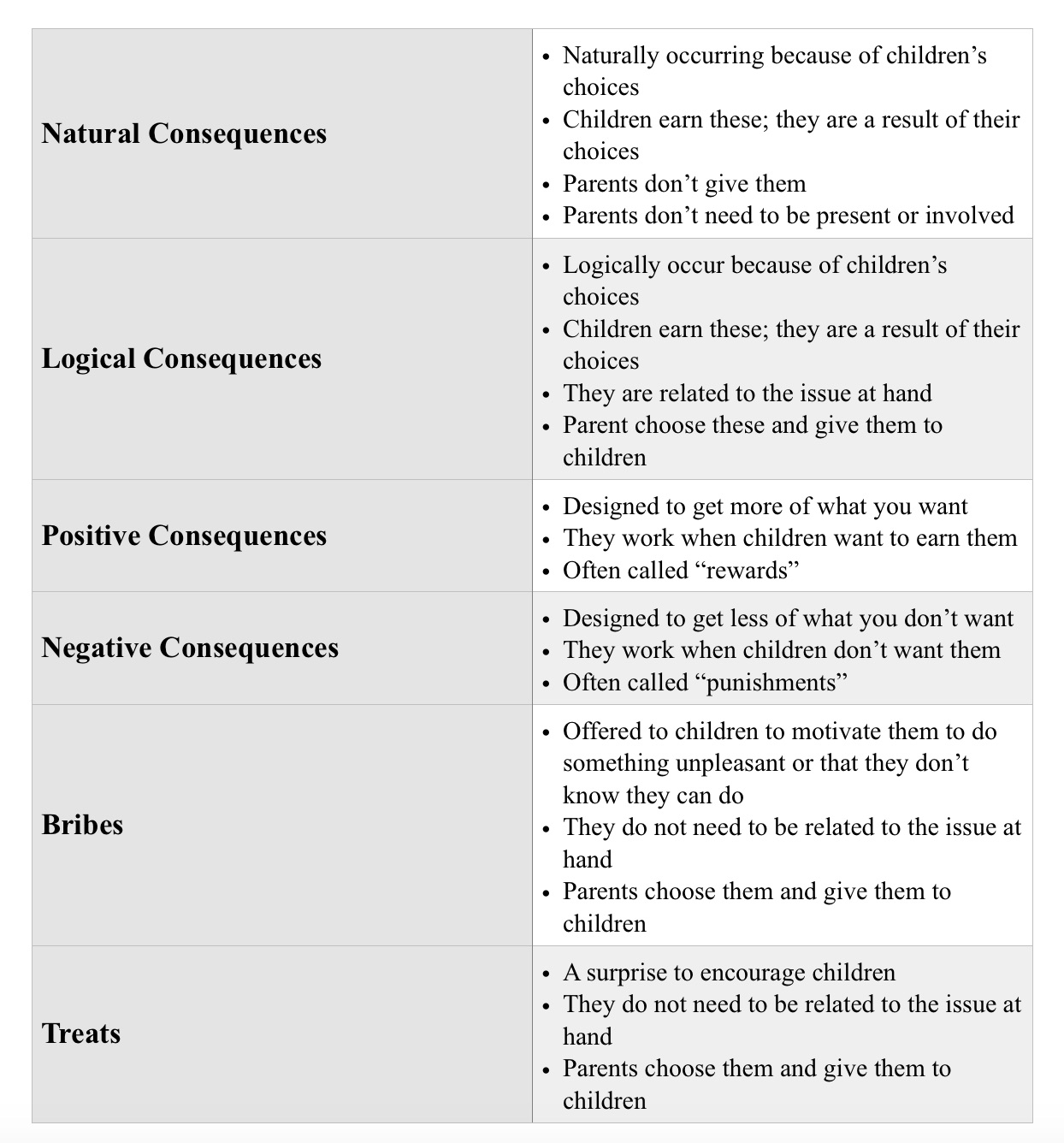
“Rather than using the words ‘rewards’ and ‘punishments,’ I recommend using the word ‘consequences.’ This small change helps children own their responsibility in changing negative behavior and maintaining positive behavior. Rewards and punishments are things we give children. Consequences are what children earn because of their choices.” —Dr. Kathy Koch

Check out my book review of Start With The Heart by clicking here. You can also read some other quotes from this book here and here.

Saturday In The Proverbs—The Perils Of Breaking God’s Laws (Proverbs 28)

[Each chapter in the Book of Proverbs contains thoughts that fit into a theme; they are not just random thoughts gathered together. In this “Saturday In The Proverbs” series, I will share a theme that I see in each chapter. But the cool thing about God’s Word is that you may see an entirely different theme. That’s great! If you do, I would love for you to share it in the comments below.]

Those who forsake the law praise the wicked, but such as keep the law contend with them (Proverbs 28:4).

I could jump off a tall building, but the law of gravity demands I will pay a painful—perhaps even a deadly—price in the end. 

Violating God’s laws are no less painful and deadly. Break them at your own peril.

If you do violate God’s laws, the consequences include:

  • fear (v. 1)
  • more rulers and more rules being imposed on you (vv. 2, 15, 16)
  • justice is perverted (vv. 3, 5, 6)
  • shame (vv. 7, 18, 22-24)
  • insecurity (vv. 8, 19, 26)
  • your prayers are unheard by God (v. 9)
  • retribution coming back to bite you (vv. 10, 13, 14, 17, 20, 21, 27)
  • embarrassment (v. 11)
  • a backlash from others (vv. 12, 25, 28)