11 Quotes From “When The Darkness Will Not Lift”

John Piper has given us an extremely helpful book whether we ourselves are battling the darkness of depression, or someone close to us is. Please check out my full book review of When The Darkness Will Not Lift by clicking here. 

“This is the rock where we stand when the dark clouds gather and the floods lick at our feet: justification is by grace alone (not mixed with our merit), through faith alone (not mixed with our works) on the basis of Christ alone (not mingling His righteousness with ours), to the glory of God alone (not ours).” 

“Where should you start? Start at the easiest place for those in darkness. Start with despair. Despair of finding any answer in yourself. I pray that you will cease from all efforts to look inside yourself for the rescue you need. I pray that you will do what only desperate people can do, namely, cast yourself on Christ.” 

“You cannot isolate the spiritual from the physical for we are body, mind and spirit. The greatest and the best Christians when they are physically weak are more prone to an attack of spiritual depression then at any other time and there are great illustrations of this in the Scriptures.” 

“It will be of great advantage to the struggling Christian to remember that seasons of darkness are normal in the Christian life.” 

“One of the reasons God loved David so much was that he cried so much. … It is a beautiful thing when a broken man genuinely cries out to God.” 

“Faith is sustained by looking at Christ, crucified and risen, not by turning from Christ to analyze your faith. … Paradoxically, if we would experience the joy of faith, we must not focus much on it. We must focus on the greatness of our Savior.” 

“It follows from this that we should all fortify ourselves against the dark hours of depression by cultivating a deep distrust of the certainties of despair. Despair is relentless in the certainties of its pessimism. But we have seen again and again, from our own experience and others, that absolute statements of hopelessness that we make in the dark are notoriously unreliable. Our dark certainties are not sureties. While we have the light, let us cultivate distrust of the certainties of despair.” 

“Instead of only saying, ‘Just do your duty,’ we must say…that joy is part of your duty. The Bible says, ‘Rejoice always’ (1 Thessalonians 5:16). And in regard to the duty of giving, it says, ‘God loves a cheerful giver’ (2 Corinthians 9:7). In regard to the duty of service, it says, ‘Serve the Lord with gladness’ (Psalm 100:2). In regard to the duty of mercy, it says do it ‘with cheerfulness’ (Romans 12:8). In regard to the duty of afflictions, it says, ‘Count it all joy’ (James 1:2). We simply water down the divine command when we call someone to half their duty.” 

“In dealing with our sin we can make two mistakes. One is to make light of it. The other is to be overwhelmed by it.” 

“If we want the joy of seeing and savoring God in Christ, we must not make peace with our sins. We must make war.” 

“Sometimes the darkness of our souls is owing in some part to the fact that we have drifted into patterns of life that are not blatantly sinful but are constricted and uncaring. … Unconsciously we have become very self-absorbed and oblivious and uncaring toward the pain and suffering in the world that is far worse than our own.”

“Paradoxically, depressed persons may say that they must care for themselves and cannot take on the problems of the world, when in fact part of the truth may be that their depression is feeding on the ingrown quality of their lives. … Joy in Christ thrives on being shared. That is the essence of Christian joy: it overflows or dies.”


Thursdays With Spurgeon—The Joy Of Saying, “My God”

This is a weekly series with things I’m reading and pondering from Charles Spurgeon. You can read the original seed thought here, or type “Thursdays With Spurgeon” in the search box to read more entries.

The Joy Of Saying, “My God”

     We commence then by the first thing, which is enough to startle us by its immense value. In fact, unless it had been written in God’s Word, we never could have dreamed that such a blessing could have been ours. God Himself, by the covenant, becomes the believer’s own portion and inheritance. “I will be their God” [Jeremiah 31:33]. … 

     Stop just one moment and think it over before we start. In the covenant of grace, God Himself conveys Himself to you and becomes yours. Understand it. God and all that is meant by that word—eternity, infinity, omnipotence, omniscience, perfect justice, infallible rectitude, and immutable love; all that is meant by God as Creator, Guardian, Preserver, Governor, Judge. All that that great word God can mean of goodness and of love, of bounty and of grace. All that this covenant gives you to be your absolute property as much as anything you can call your own: “I will be their God.” … 

     While He is Judge of all, He especially is their judge because He is the Judge whom they love to reverence, the Judge whom they long to approach because they know His lips will confirm that which their hearts have already felt, which is the sentence of their full acquittal through the merits of the glorious Savior. Our loving God is the Judge who will acquit our souls, and in that respect we can say He is our God whether as Sovereign, as Governor enforcing law, or as Judge punishing sin. Although God is in some sense the God of all men, yet in this matter there is something special toward His people so that they can say, “He is our God, even in those relationships.” … 

     Furthermore, the Christian can call God his God from the fact of his justification. A sinner can call God, God, but he must always put in an adjective and speak of God as an angry God, an incensed God, or an offended God. But the Christian can say “my God” without putting in any adjective except it be a sweet one wherewith to extol Him, so now we who were sometime afar off are made near by the blood of Christ. We who were enemies to God by wicked works are His friends, and looking up to Him, we can say “my God,” for He is my Friend, and I am His friend.

From God In The Covenant 

What an incredible assurance in those two words: my God! Therefore, there is now no condemnation for those who are in Christ Jesus (Romans 8:1). 

It makes me want to sing along with Fanny Crosby:

Blessed assurance, Jesus is mine!
O what a foretaste of glory divine!
Heir of salvation, purchase of God,
Born of His Spirit, washed in His blood.
This is my story, this is my song
praising my Savior all the day long!


Our Prayer Coach

I love football! 

The plays that the quarterback calls in the huddle are very creative. It may sound something like this: “soultrain alert 13 trap on 1.” Then after the team breaks the huddle with the play that they just know will be successful, the quarterback may look over the other team’s defense and callout something like, “check” or “sally” or “Omaha.” This is called an “audible” and it’s communicating to the team how they are now going to modify the play that they just called. The quarterback calls this audible because it appears to him that the defense may know what sort of play they were planning to run. 

The teams that can adjust better on-the-fly—or call audibles—usually win the game. 

None of this happens without lots of practice! Practice builds good habits. Practice helps teams learn from their mistakes and develop even better habits. All of this practicing also requires a good coach overseeing the process, and individual team members who are willing to submit to the coach’s direction and correction. 

Have you noticed that there are some Christians who “audible” well? Unexpected things pop up that seem to throw many people off their game plan, but these Christians seem to adapt so easily. Why is that? It’s definitely not because they are wired that way, or have a higher spiritual IQ, or they can think faster. It’s because they’ve practiced good habits, they’ve learned from past experiences which have developed better “audibling” habits, all under the guidance of a perfect Coach. 

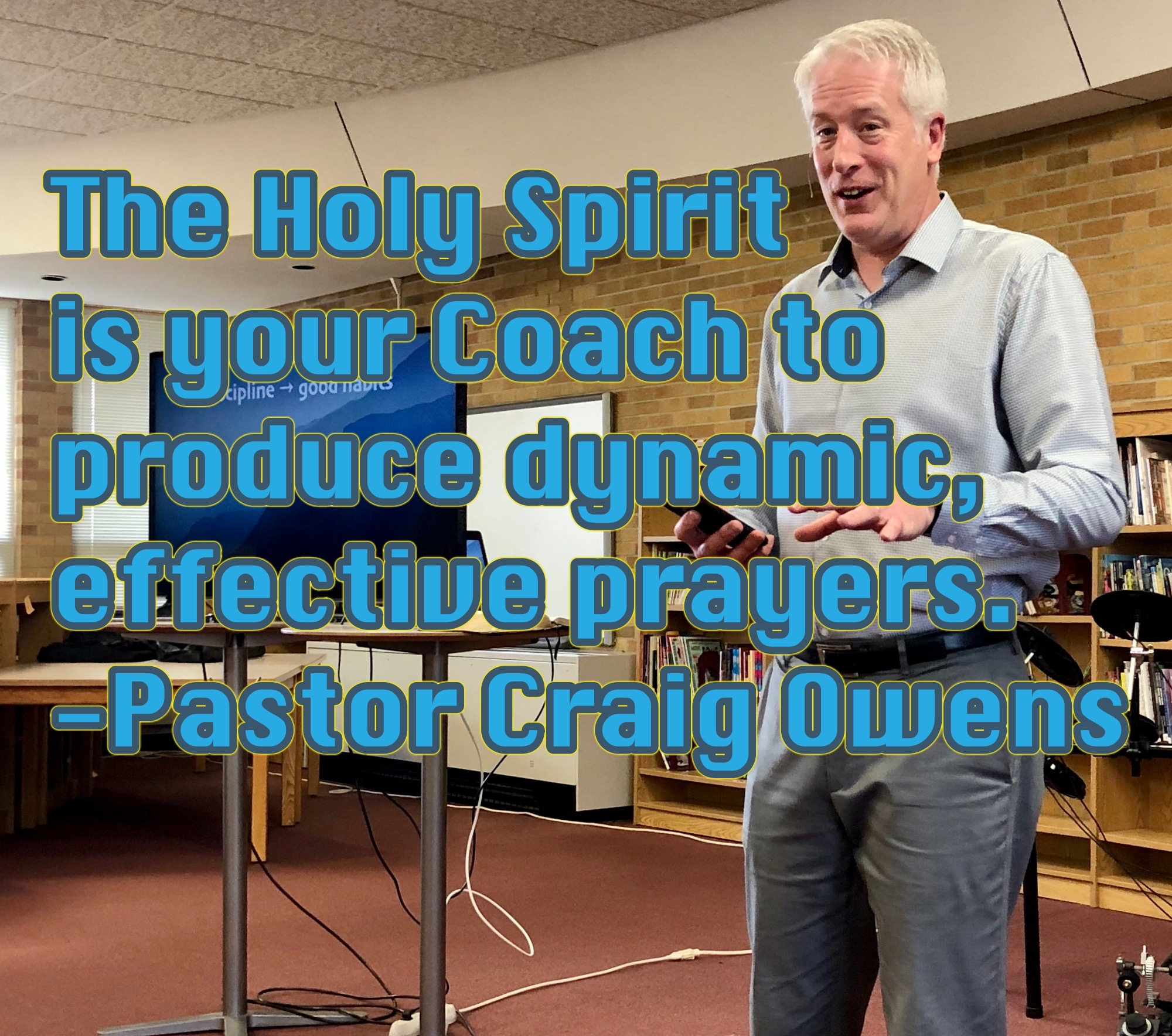
Jesus told us about the amazing prayers that we would be able to pray, and how the Holy Spirit can be our perfect Coach in this process (John 14:12-17, 26; 16:13-15). 

There are some incredible things that happen when we pray consistently, when we pray boldly, and when we pray in the character of Jesus. 

John Piper asks, “Why do God’s children so often fail to have consistent habits of happy, fruitful prayer?” He answers his own question like this: “Unless I’m badly mistaken, one of the reasons is not so much that we don’t want to, but that we don’t plan to.” 

Successful football teams don’t simply show up on game day and compete successfully. They plan to be successful. They practice and study the coach’s game plan so that they can be ready to audible when necessary. So too for Christians—we can’t just show up for spiritual battle and expect to be successful. We must also practice, and study the game plan laid out in the Bible, and listen to the Holy Spirit as He coaches us. That’s the only way we can successfully handle all that life and even the devil throws at us. 

Over the next couple of weeks, I’m going to be sharing some hindrances that I see that can derail our practice of prayer. In the meantime, I want to challenge you—as I’ve challenged myself personally—to think on three questions:

  1. Do I really want to pray effectively? 
  2. Am I willing to put in the energy necessary to pray this way?
  3. Am I willing to let the Holy Spirit coach and discipline me in my prayer practice? 

If you can, please join me at Calvary Assembly of God on Sunday as we continue our series called Prayer Plan. 

Thursdays With Spurgeon—Christ Came On Purpose

This is a weekly series with things I’m reading and pondering from Charles Spurgeon. You can read the original seed thought here, or type “Thursdays With Spurgeon” in the search box to read more entries.

Christ Came On Purpose

     This heavenly knowledge is not given to us for its own sake alone. Even the high and blessed revelation of the righteous Father is not made to us that we may know it and end in knowing. Our Lord says, “I have declared to them Your name, and will declare it, that the love with which You have loved Me may be in them, and I in them” [John 17:24-26]. The objective of the knowledge bestowed upon us is the infusion of a love unrivaled in value and extraordinary to the last degree! … 

     Therefore does Christ declare the blessed name of the righteous Father, in order that it may come home to you with an unconquerable power that the Father loves you and loves you beyond conception, seeing that not even His dear Son was so loved as to be spared, but He must die that you might live and that the justice of God might be satisfied on your account! … 

     Christ has come on purpose to declare the name of God that the love of God may be perceived by us, its power felt, its glory recognized, its greatness wondered that, its infinitude delighted in. … 

     Now, if you fully know the righteous fatherhood of God, as Christ would have you know it, you will learn that God loved you as He loved His Son. … If He had not loved you as He loved His Son, He would have said to His Son, “Son, you will never leave heaven for that polluted planet. You will never descend to poverty and suffering. You will never have Your hands and feet pierced. You will never be despised and spit upon and put to a cruel death.” But because He loved us as He loved His Son, He gave His Son! …

     Do you try, if you can, to realize this high privilege. It is true, O believer, that God, the infinite Father, takes pleasure in you!

From The Righteous Father Known And Loved

THIS is what we celebrate in remembering Christ’s First Advent! 

THIS is why forgiven sinners can eagerly long for Christ’s Second Advent!

What Is The Church Supposed To Look Like?

If someone asked you what a church is supposed to look like, do you describe steeples and crosses, stained glass windows and big wooden pulpits?

Guess what? The first Church in Jerusalem had none of those things!

Luke the historian describes the church this way: “They studied and prayed together, they ate with each other, they fed the hungry, and they took care of the poor. God performed miracles through them, everyone thought well of them, and people were getting saved every single day” (see Acts 2:42-47). Other historians of the day noted that Christians started the first orphanages, the first feeding programs, the first homes/schools for the blind, and the first medical dispensaries. They described how the Christians changed the cultural understanding of marriage and family, and how they gave dignity to women, children, the elderly, and the sick. 

They did this by putting their faith into action, just as Jesus described (see Matthew 25:31-40). James reminds us that this required a deeply personal faith and a roll-up-your-sleeves attitude. In fact, James went so far as to say that faith in Jesus wasn’t enough. 

Faith without works is dead. Works without faith is useless. We must believe it and live it. We need both faith and works.

Everyone can do this… 

  • if a young kid is hungry, get involved with feeding them
  • if an elderly lady in your neighborhood needs a friend, stop by for coffee
  • if a neighbor is sick and can’t cover their usual tasks, mow their lawn 
  • if a high school student can’t go to homecoming because she can’t afford the dress, take her shopping and buy the dress for her
  • if someone has an extended hospital stay, collect their mail and water their plants
  • if no one is visiting them in the hospital, go sit with them for a while

Jesus said, “When you do this for others, you are really doing it for Me.” 

Luke didn’t say, “Every day the Christians were preaching.” He says, “Every day the Christians were serving. And then every day God was adding to their number people who were being saved.” 

Your faith in action speaks a sermon louder and more convincingly than any sermon ever could. 

How will you show your neighbors the love of Jesus this week?

Poetry Saturday—The Spirit-Filled Life

O the Spirit-filled life; is it thine, is it thine?
Is thy soul wholly filled with the Spirit Divine?
O thou child of the King, has He fallen on thee?
Does He reign in thy soul, so that all men may see
The dear Savior’s blest image reflected in thee?
Has He swept through thy soul like the waves of the sea?
Does the Spirit of God daily rest upon thee?
Does He sweeten thy life, does He keep thee from care?
Does He guide thee and bless thee in answer to prayer?
Is it joy to be led of the Lord anywhere?
Is He near thee each hour, does He stand at thy side?
Does He gird thee with strength, has He come to abide?
Does He give thee to know that all things may be done
Through the grace and the power of the Crucified One?
Does He witness to thee of the glorified Son?
Has He purged thee of dross with the fire from above?
Is He first in thy thoughts, has He all of thy love?
Is His service thy choice, and is sacrifice sweet?
Is the doing His will both thy drink and thy meat?
Dost thou run at His bidding with glad eager feet?
Has He freed thee from self and from all of thy greed?
Dost thou hasten to succor thy brother in need?
As a soldier of Christ dost thou hardness endure?
Is thy hope in the Lord everlasting and sure?
Hast thou patience and meekness, art tender and pure?
O the Spirit-filled life may be thine, may be thine,
In thy soul evermore the Shekinah may shine;
It is thine to live with the tempests all stilled,
It is thine with the blessed Holy Ghost to be filled;
It is thine, even thine, for thy Lord has so willed. —Lettie Cowman

The Personal Element

It is the personal element that Christian discipleship needs to emphasize. ‘The gift without the Giver is bare.’ The call of this age is a call for a new discipleship, a new following of Jesus, more like the early, simple, apostolic Christianity when the disciples left all and literally followed the Master. Nothing but a discipleship of this kind can face the destructive selfishness of the age, with any hope of overcoming it. … But if our definition of being a Christian is simply to enjoy the privileges of worship, be generous at no expense to ourselves, have a good, easy time surrounded by pleasant friends and by comfortable things, live respectably, and at the same time avoid the world’s great stress of sin and trouble because it is too painful—if this is our definition of Christianity, then surely we are a long way from following the steps of Him who trod the way with tears of anguish for a lost humanity.” —Rev. Maxwell in Charles Sheldon’s In His Steps (emphasis mine)

A Life Worthy Of The Gospel

Only let your conduct be worthy of the gospel of Christ… (Philippians 1:27).

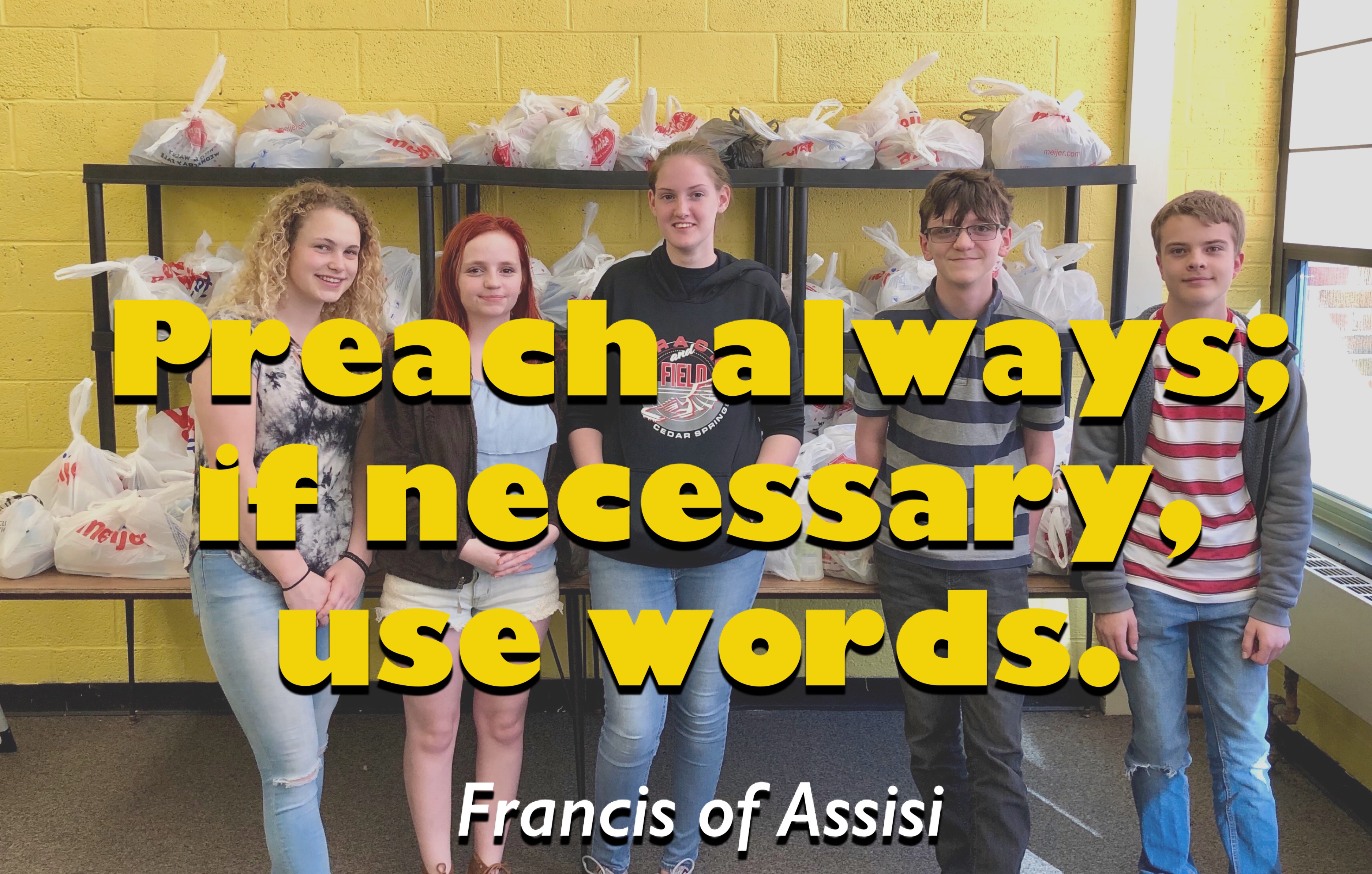
The apostle Paul wanted the Philippians’ living to be their preaching. Much like Francis of Assisi said years later: “Preach always; if necessary, use words.”

The big question is—what does conduct “worthy of the gospel of Christ” look like? I believe Paul identifies at least 15 characteristics in just the next 20 or so verses

  1. It is not a people-pleasing lifestyle. It is a God-honoring, Spirit-lead, Christ-glorifying lifestyle.
  2. It is steadfast, which means it perseveres even through the trials and difficulties.
  3. It is a heart and mind unified with other Christians.
  4. It is bold—“without being frightened in any way by those who oppose you.” 
  5. It is strengthened in Christ and it is in constant fellowship with the Holy Spirit. 
  6. It overflows with loving comfort, affection, and mercy to those around it.
  7. It humbly serves others while confidently refreshing itself in Christ.
  8. It strives to live as Jesus did, seeking always for God to be glorified.
  9. It is obedient to the conviction and direction of the Holy Spirit.
  10. It finds pleasure in doing God’s will.
  11. It doesn’t complain.
  12. It is a blameless and harmless life.
  13. It shines a light that attracts others to God’s love.
  14. It holds fast to the Word of life for the long haul.
  15. It is a rejoicing, contented lifestyle.

Heavenly Father, may it always be said of my life that it is one that is worthy of the gospel of Christ. May I always be sensitive to the nudges of the Holy Spirit to keep my life aligned in this way. In Jesus’ name I pray, Amen! 

The Church Needs To Foster Community

“Amid the confusion of Christians mistreating people with gender dysphoria to prop up their sense of self-righteousness, and progressives mistreating them to advance their agenda of autonomy, those with real identity struggles are forgotten. Christ alone understands who we are through and through. And because of that each one of us in our fractured states needs to come to Him. …

“The need of the hour is for biblically faithful compassion. The church needs to open its doors and Christians need to open their hearts so that those struggling to find resolution to their dysphoria—and those who are struggling to find clarity amidst other confusions—can find community and, ultimately, their true identity in Christ. In Christ, they can be understood. …

“God’s original intent is for harmony between one’s soul and one’s body. This is why Christians, of all people, should be compassionately concerned with helping people find mind-body congruence. For the Christian, the mind and the body are both important and were meant to work harmoniously. … This biblical perspective defends our integrity as whole human beings in contradistinction to the secular effort to reduce us to our chemistry and jettison any idea that we have an immaterial mind or soul. …

“That is why the invitation of Christ has come in this order: recognition, repentance, redemption, regeneration. When we recognize our need for the Savior (because of our sins in general, not because of our dysphoria), repentance happens and then we are redeemed. But that redemption works itself out in our lives over time. It is the Holy Spirit who lives and works in us to conform us to Jesus’ likeness. It is not an overnight process, which means the church must do a better job of helping that process along. The church needs to foster community.” —Abdu Murray

Thursdays With Spurgeon—The Most Unlikely Recruits

This is a weekly series with things I’m reading and pondering from Charles Spurgeon. You can read the original seed thought here, or type “Thursdays With Spurgeon” in the search box to read more entries.

The Most Unlikely Recruits

     Men and women have come in simply out of curiosity—a curiosity often created by some unfounded story or malicious slander of prejudiced minds. Yet Jesus Christ has called them and they have become both His disciples and our warmhearted friends. Some of the most unlikely recruits has been, in after days, our most valuable soldiers. They began with aversion and ended with enthusiasm. They came to scoff but remained to pray. Such cases are not at all uncommon.

     They were not unusual in the days of Whitefield and Wesley. They tell us in their journals of persons who came with stones in their pockets to throw at the Methodists, but whose enmity was slain by a stone from the sling of the Son of David. Others came to create disturbances, but a disturbance was created in their hearts that could never be quelled till they came to Jesus Christ and found peace in Him. The history of the church of God is studded with the remarkable conversions of persons who did not wish to be converted, who were not looking for grace but were even opposed to it, and yet, by the interposing arm of eternal mercy, were struck down and transformed into earnest and devoted followers of the Lamb. 

From The Autobiography of Charles Spurgeon

It is true that “the history of the church of God is studded with the remarkable conversions.” Think of the murderous persecutor Saul of Tarsus who encountered Jesus on a road near Damascus. This unlikely recruit to Christianity spread the Gospel of Jesus Christ far and wide. 

Think of an atheistic college professor named C.S. Lewis who eventually surrendered to the truth in the Bible, calling himself the most dejected and reluctant convert in all of England. Lewis went on to write some of the most influential Christian apologetic books of the 20th century. 

And most personally, think of yourself. Paul reminds us, “Brothers and sisters, think of what you were when you were called. Not many of you were wise by human standards; not many were influential; not many were of noble birth” (1 Corinthians 1:26). Yet God is using you right now to build His Church.

Keep on loving Jesus. Keep on sharing Jesus with your unsaved friends—no matter how antagonistic they may seem to your message. You never know what God may do with those “reluctant recruits.”