I love reading, and I love sharing my love of good books with others! Here is a list of the books I read and reviewed in 2019. Click on a title to be taken to that review.
This is a weekly series with things I’m reading and pondering from Charles Spurgeon. You can read the original seed thought here, or type “Thursdays With Spurgeon” in the search box to read more entries.
God Will Not Acquit The Wicked
The Lord is slow to anger and great in power, and will not at all acquit the wicked [Nahum 1:3]. The Lord is slow to anger because He is great in power. ‘How say you so?’ says one. I answer: He who is great in power has power over himself. And he who can keep his own temper down and subdue himself is greater than he who rules the city, or can conquer nations. … When God’s power does restrain Himself, then it is power indeed—the power to curb power. The power that binds omnipotence is omnipotence surpassed. God is great in power, and therefore does He keep in His anger. … We bless God that the greatness of His power is just our protection! He is slow to anger because He is great in power. …
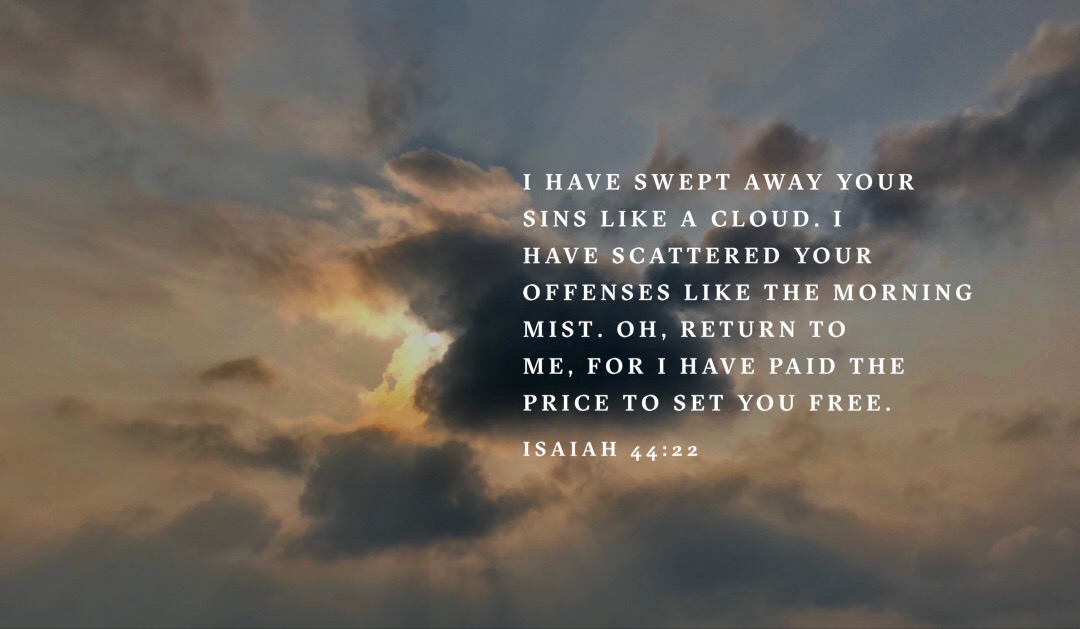
I have blotted out like a thick cloud your transgressions, and like a cloud your sins [Isaiah 44:22]. Not of one of all those sins that have been pardoned was pardoned without punishment. Do you ask me why and how such a thing as that can be the truth? I point you to yonder dreadful sight on Calvary. The punishment that fell not on the forgiven sinner fell there. … Sin is still punished, though the sinner is delivered. …
And now we trace this terrible attribute to its source. Why is this? We reply, God will not acquit the wicked, because He is good. What? Does goodness demand that sinners will be punished? It does. The judge must condemn the murderer because he loves his nation. …
Mercy, with her weeping eyes (for she has wept for sinners), when she finds they will not repent, looks more terribly stern in her loveliness than justice in all his majesty. She drops the white flag from her hand and says, “No. I called and they refused. I stretched out my hand and no man regarded. Let them die, let them die” and that terrible word from the lip of mercy’s self is harsher thunder then the very damnation of justice. Oh yes, the goodness of God demands that men should perish if they will sin. …
Can you by humble faith look to Jesus and say, “My substitute, my refuge, and my shield; You are my rock, my trust, in You I do confide”? Then, beloved, to you I have nothing to say except never be afraid when you see God’s power. For now that you are forgiven and accepted, now that by faith you have fled to Christ for refuge, the power of God need no more terrify you than the shield and sword of the warrior need terrify his wife or his child.
From Mercy, Omnipotence, And Justice
Have you looked in faith to the work Jesus did on Calvary so that your sins could be forgiven? If so, wonderful! You have nothing to fear from God’s justice.
If not, I plead with you—look again. God’s mercy has been extended to you at least long enough for you to read this, but His justice must fall. Don’t procrastinate another moment: Allow the acquittal of your sins that Jesus purchased with His blood to be yours this very moment!
“And behold, two men were conversing with Him—Moses and Elijah, who appeared in splendor and majesty and brightness and were speaking of His exit from life, which He was about to bring to realization at Jerusalem.” (Luke 9:30-31)
It was at a moment like this—when Jesus had yet another choice to make about what path He would follow—that Moses and Elijah talked to Him, reminding Him of the ultimate outcome of His obedient and correct choices.
At every crossroads—at every decision point—Jesus chose correctly. He chose to do God’s will for His life. He could have decided to do things His own way, but He leaned into the unmistakable voice of the Holy Spirit pointing Him toward the right path.
What does that mean for us today?
I have failed to make the right choice.
That means that I could have chosen correctly.
Jesus was human just like me.
Which means He had choices too.
He always chose correctly, even though the other possibility was there.
In Psalm 50, we read the first-of-twelve psalms written by King David’s handpicked worship leader, aman named Asaph. On the day that Asaph first took up his position as worship leader, David gave him a special song, which definitely influenced Asaph’s songwriting.
Psalm 50 has a pretty easy outline: an introduction in the first six verses, followed by 17 verses of God speaking to His people—speaking to you and me! In between the introduction and God’s speaking is the word selah.
Selah means a time for us to pause and carefully consider. So Asaph is essentially saying, “God is getting ready to speak with us, so we need to selah—pause from what we are doing so that we can pay careful attention to His words!”
Asaph sets the stage in the first verse, telling us that the Mighty One, God, the Lordspeaks. The words that are about to be spoken come from THE I AM—the All-Sufficient One, the Omnipotent, the All-Knowing, All-Powerful Ruler of the Universe. Asaph also reminds us that He is coming as THE Judge.
When you hear that THE All-Powerful, All-Knowing One is THE Judge that has summoned you into His courtroom, it’s quite likely that your heart would skip a beat. Especially when God lists some of the sins you and I are guilty of breaking in verses 16-20.
It’s also possible that the news that you have to appear before THE Judge could cause you to rejoice. What? How can we rejoice at that?! David taught Asaph this concept in the song he gave him: God’s people should rejoice over God’s judgments.
You see, in Psalm 50 God says, “I do not rebuke you for your sacrifices, or for all your attempts to follow the rules.” It’s not in the practices of the law that we find salvation.
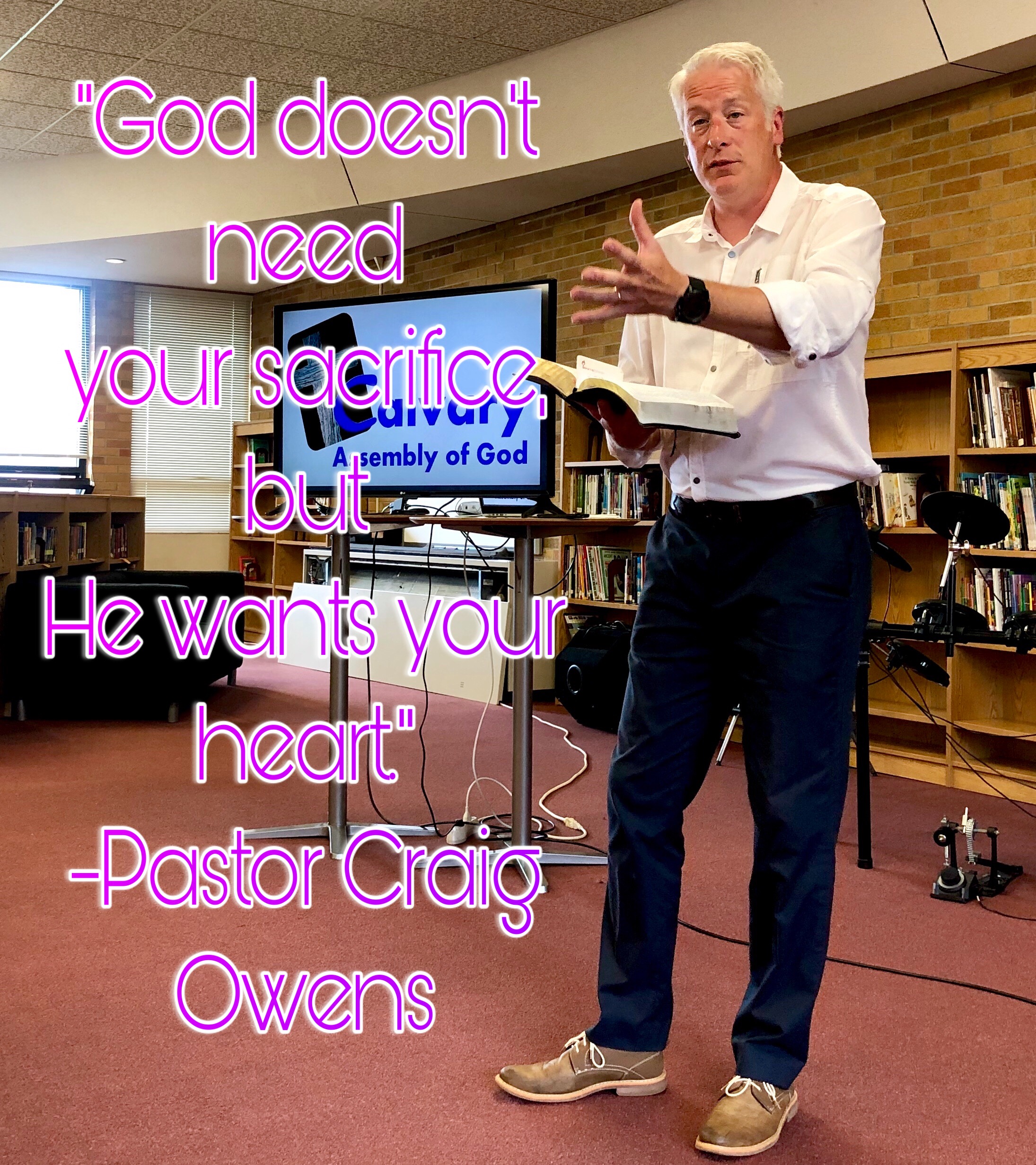
God doesn’t need our sacrifices, but He wants our hearts.
In order to win our hearts for Himself, THE Judge did something absolutely mind-blowing—THEI AM became flesh like us. And then He became the once-for-all sacrifice for our sins, paying our penalty Himself when He died on the Cross (see Hebrews 2:14-17; 7:17-27).
This is why we can rejoice when we hear we have to stand before THE Judge. When you have placed your faith in what Jesus did for you on the Cross, when THE Judge opens His perfect record book to your page He will read this inscription written in the crimson red blood of Jesus: PAID IN FULL!
This is why we can rejoice at the thought of seeing THE Judge face to face!
Join me next Sunday as we wrap up this summer looking at the Selahs in the Psalms. We plan to restart this series next summer, unless the Judge calls us home before then!
Last week I posted a quote on some of my social media channels that simply stated: “Our opinions don’t matter if they don’t square with God’s Word on the matter.” This seemed to me to be a fairly uncontroversial statement, but one anonymous reader really took me to task for using the hashtag #objectivetruth. Apparently, he thinks there is no such thing.
But don’t we all rely on objective, external standards all the time? For instance, a gallon of gasoline is a gallon regardless of where you buy it, or whether you feel like it’s a gallon or not. And when you go to pay for your gasoline, the price isn’t based on how the gas station attendant is feeling at that moment, but on the objective amount posted.
Psalm 49 is somewhat unusual in that it is a “wisdom psalm.” This psalm feels a lot more like something we would read in Proverbs or Ecclesiastes than it does a prayer or song in the Psalms.
This psalmist—like Solomon—wants us to understand how important it is to get wisdom. So we are urged to listen intently to those who have hard-won insight, to those who have “been there, done that” so that we don’t have to repeat their folly.
What is that wisdom? It can be broken down into two profound statements:
(1) Everyone dies.
That can be a really depressing truth IF your focus is building your own kingdom. If all there is to life is what you can earn and build before you die, only to realize that your “kingdom” ends at your last breath, that can be very depressing.
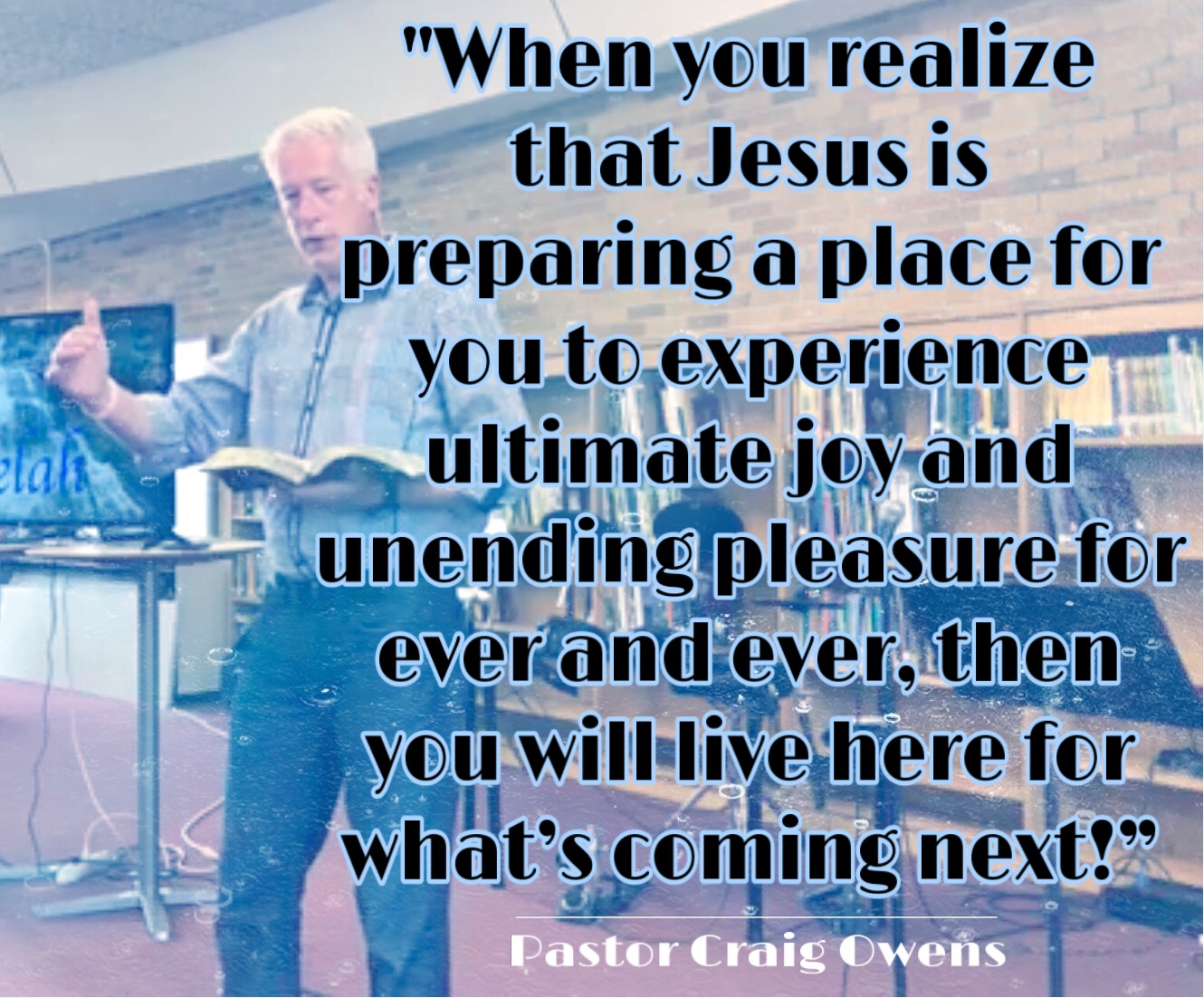
However, this realization that everyone dies can be a very liberating truth IF your focus is on the eternal kingdom that is awaiting you in Heaven. When you realize that Jesus is preparing a place for you to experience ultimate joy and unending pleasure forever and ever, then you will live here for what’s coming next!
(2) Our eternal destination after we die is determined before we die.
If someone told me that he had discovered the secret to immortality, and then he died and came back to this life to tell me that his theory was correct, it would be wise listen to him.
That’s exactly what Jesus did for us!
He told us that He would die on a Cross and that He would be raised back to life. AND HE DID IT! His hard-won insight, His “been there, done that” wise words to us are this—“Believe in Me. I died to pay the penalty for the sins that will keep you out of Paradise. So place your faith in what I did, and ask my Father to forgive your sins. Then I promise you that you will spend forever and ever with Me in Paradise!”
THIS objective truth determines everything else about our lives.
So I’ll repeat it again—
“Our opinions don’t matter if they don’t square with God’s Word on the matter.” —Craig T. Owens
Finally, be strong in the Lord and in His mighty power (Ephesians 6:10).
Not…
be strong in my own ability
be strong in the company of another warrior
But…
be strong in the Lord
be strong in the power of His might
The armor I wear has been battle-tested by the undefeated Champion. It’s armor emblazoned with the crimson red blood of Calvary. It’s armor gleaming brightly with the glow of Resurrection victory.
I wear Christ’s armor!
The belt of truth—it’s the righteousness of Jesus (Isaiah 11:1-5)
The breastplate of righteousness—worn by the Messiah who defeated evil (Isaiah 59:15-17)
The helmet of salvation—worn by Jesus as He won salvation for us (Isaiah 59:16-17)
The shoes of the gospel of peace—worn by our Lord as He defeated our enemies (Isaiah 52:5-7)
The shield of faith—God says, “I am your shield” (Genesis 15:1)
The sword of the Spirit—what Jesus used to strike down satan’s temptations (Isaiah 49:1-2; Luke 4:4, 8, 12)
I must continually clothe myself in God’s armor. Then I keep the armor bright by prayer—
Restraining prayer, we cease to fight
Prayer makes the Christian’s armor bright
And satan trembles when he sees
The weakest saint upon his knees. (William Cowper)
Holy God, may I be dressed in YOU at every moment. May I daily use YOUR battle-tested armor and weapons to strike a blow against satan!
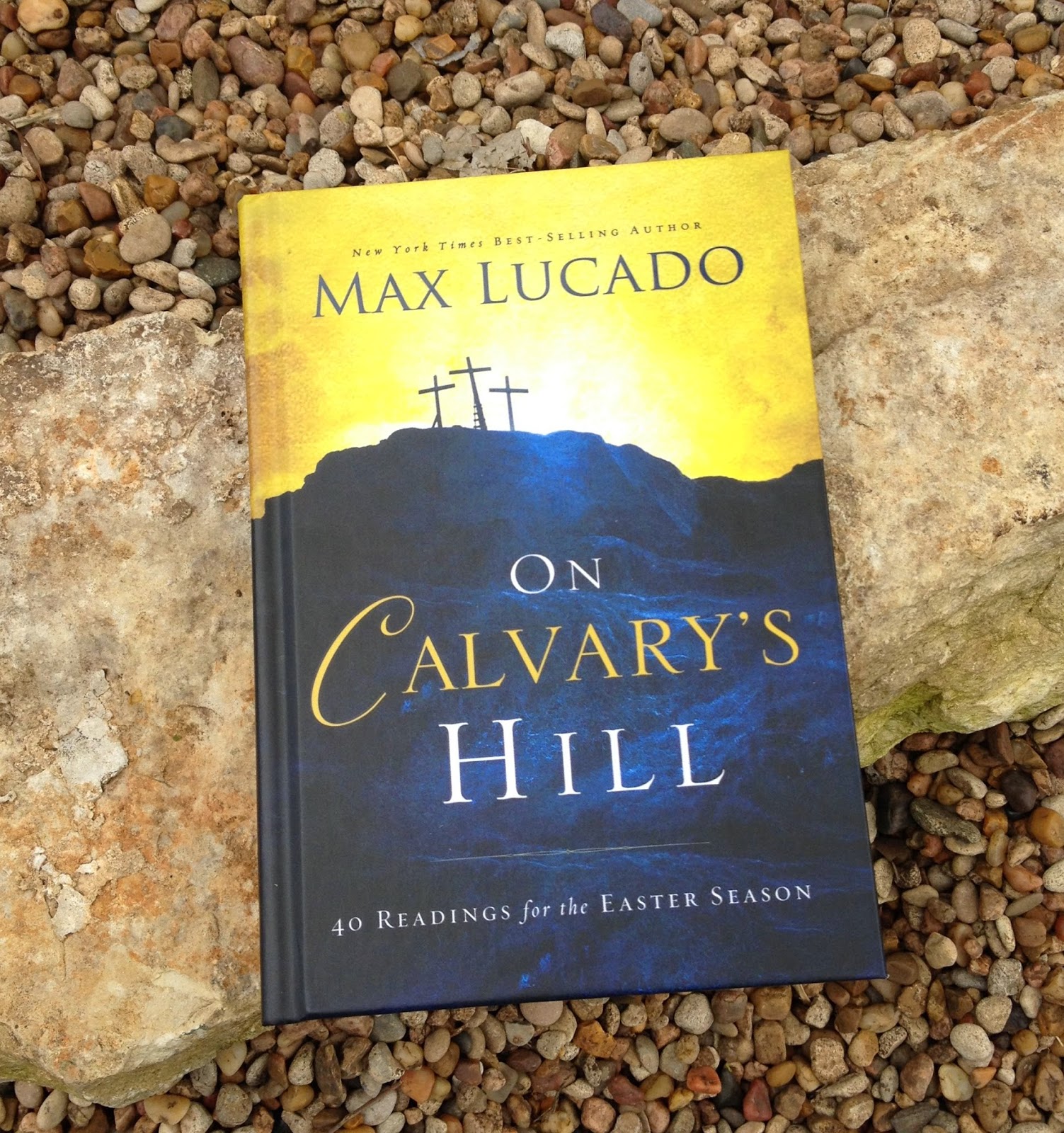
“Six hours, one Friday. To the casual observer the six hours are mundane. A shepherd with his sheep, a housewife with her thoughts, a doctor with his patients. But to the handful of awestruck witnesses, the most maddening of miracles is occurring. God is on a Cross. The Creator of the universe is being executed. Spit and blood are caked to His cheeks, and His lips are cracked and swollen. Thorns rip His scalp. His lungs scream with pain. His legs knot with cramps. Taut nerves threaten to snap as pain twangs her morbid melody. Yet, death is not ready. And there is no one to save Him, for He is sacrificing Himself. It is no normal six hours . . . it is no normal Friday. For worse than the breaking of His body is the shredding of His heart. His own countrymen clamor for His death. His own disciple planted the kiss of betrayal. His own friends ran for cover. And now His own Father is beginning to turn His back on Him, leaving Him alone. Let me ask you a question: What do you do with that day in history? What do you do with its claims? If it really happened . . . if God did commandeer His own crucifixion . . . if He did turn His back on His own Son . . . and if He did storm satan’s gate, then those six hours that Friday were packed with tragic triumph. If that was God on that Cross, then the hill called Skull is granite studded with stakes to which you can anchor your soul forever.” —Max Lucado, On Calvary’s Hill
Listen to the podcast of this post by clicking on the player below, and you can also subscribe on Apple, Spotify, or Audible.
Jesus is on His passionate journey toward the Cross. Every step on this journey is a step of love.
After Jesus finished His last supper with His disciples, they all went to one of their favorite places to pray—the Garden of Gethsemane. It was a place they all knew well. Including Judas, who had been looking for an opportunity to turn Jesus over to the religious authorities when He was out of the public eye.
Jesus knew this time was coming (Matthew 10:33-34; John 13:1, 3; 18:4), and His knowing prompted His serving. So we can say that His foot-washing service was as much a reminder to Himself as it was to His followers.
But let us never forget that through all of this horrific, inhumane mistreatment and torture, Jesus remains the King of kings, the Son of God. In fact, very God Himself.
The Jewish religious leaders knew this too (John 8:54-59; 10:31-33). And without “knowing it” the soldiers that came to arrest Jesus knew it as well.
Just look at the absolute authority of the King of kings. Grown men—religious leaders and hardened soldiers—fall to their knees at just three words: “I am He.”
Christ’s kingdom has overruling authority. It collects no taxes, it has no standing army, it requires no checks-and-balances because its Sovereign IS Truth and Love. This unequaled, unrivaled power was contained in Jesus—“You would have no authority over Me unless it was given you from above.”
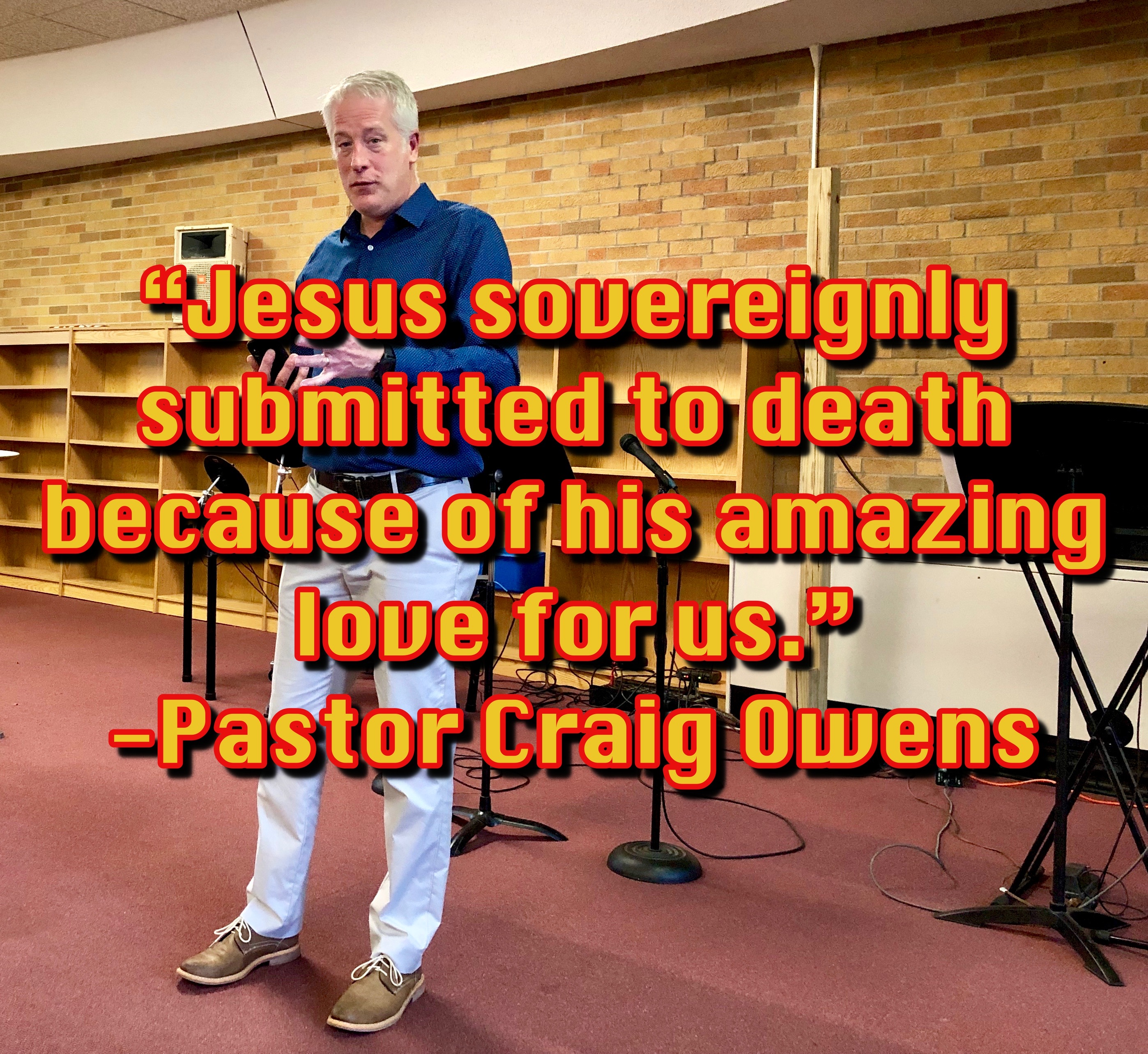
Which makes His submission to Pilate and others even more amazing! One word from Him could have crushed legions and toppled governments—yet for love’s sake, He submitted. Let that sink in—Sovereignty submitted.
What appeared to be the cruelty of man was the sovereignty of God.
No one can take My life from me. I sacrifice it voluntarily. For I have the authority to lay it down when I want to and also to take it up again. For this is what My Father has commanded. (John 10:18)
“Christ’s death was not the death of a martyr, who sinks at last overwhelmed by enemies, but the death of a triumphant conqueror, who knows that even in dying He wins for Himself and His people a kingdom and a crown of glory.” —J.C. Ryle
Christ has bought us out from under the doom of that impossible system by taking the curse for our wrongdoing upon Himself. For it is written in the Scripture, “Anyone who is hanged on a tree is cursed” (as Jesus was hung upon a wooden Cross). (Galatians 3:13 TLB)
Sovereign love submitted to the cruelty of man SO THAT you and I could be saved from the inescapable doom that will inevitably crash down on us. Jesus loved us so much that He allowed the Cross to happen to Him.
The question now remains—what are you doing with this sovereign love?
Do you know Jesus as your Savior? Have you received this gift He willingly, lovingly purchased for you on the Cross?



 I love reading, and I love sharing my love of good books with others! Here is a list of the books I read and reviewed in 2019. Click on a title to be taken to that review.




 Craig T. Owens
Dressed For Victory
July 30, 2019 — Craig T. OwensNot…
But…
The armor I wear has been battle-tested by the undefeated Champion. It’s armor emblazoned with the crimson red blood of Calvary. It’s armor gleaming brightly with the glow of Resurrection victory.
I wear Christ’s armor!
I must continually clothe myself in God’s armor. Then I keep the armor bright by prayer—
Holy God, may I be dressed in YOU at every moment. May I daily use YOUR battle-tested armor and weapons to strike a blow against satan!
(Check out all the Scripture references above by clicking here.)
Share this: