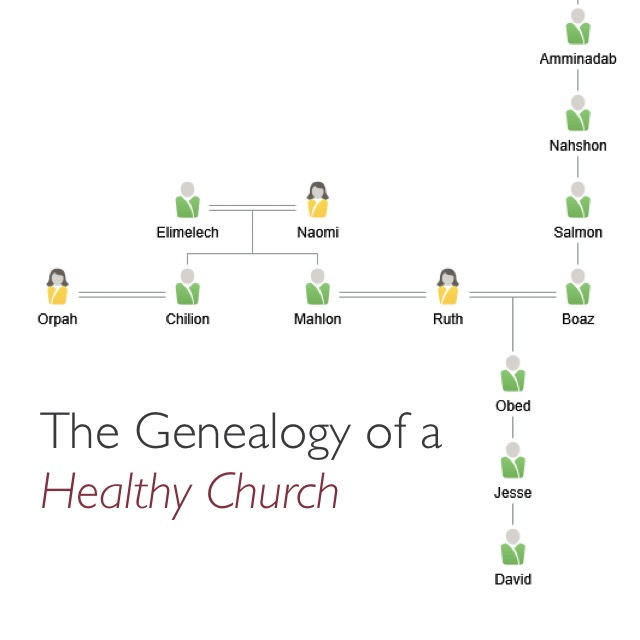
The Genealogy of a Healthy Church

And the things you have heard me say in the presence of many witnesses entrust to reliable people who will also be qualified to teach others. (2 Timothy 2:2)

Paul list four generations in this healthy church—Paul ➡️ Timothy ➡️ faithful Christians ➡️ others. 

We all have a role to play, and every role is vital in a healthy church. Are you a…

Paul: a first generation Christian that needs to start the ball rolling?

Timothy: one who needs to pass along what you have learned to the next generation?

faithful Christian: someone that is actively living out what has been taught to you?

member of the Body of Christ: one that needs to reach out to someone who isn’t a part of the Body yet?

Every single role is indispensable if the Church is going to remain healthy. If any part of this genealogy is lost, the whole Church suffers.

11 Quotes From “The Way Of Abundance”

Ann Voskamp speaks lovingly to the hurting and broken. She never condemns them for their brokenness, nor does she encourage them to stay in their difficult place. Instead, Ann brings a new perspective to the path of healing; a path that allows our brokenness to become our givenness to other broken and hurting people. This is The Way Of Abundance. Be sure to check out my full book review by clicking here. 

“Go fall in love with grace and mercy and the only One who has ever loved you to death—and back to the realest, abundant life. Because the world is begging us all to get out of bed and live given, get out of bed and sacrifice for someone hurting, for someone different, for someone forgotten or marginalized, to hold the hand of someone who doesn’t look like a us, to lean in and listen to someone angry and grieving and doubting the likes of us, to give a bit of ourselves to those who feel like they aren’t given much real space at the table.” 

“The real Jesus turns our questions of why—why this brokenness, why this darkness?—and says, ‘You’re asking the wrong question. You’re looking for someone to blame. There is no such cause-effect here.’ ‘This happened so the power of God could be seen in him’ [John 9:3]. There’s brokenness that’s not about blame. There’s brokenness that makes a canvas for God’s light to be lavishly splashed across the darkness. There’s brokenness that carves windows straight into our souls. Brokenness cracks open a soul so the power of God can crack the darkness in the world.” 

“When you aren’t afraid of being afraid, you transform fear into friend. … Feelings can accompany you, but they don’t get to control you. Feelings get to inform you, but they don’t get to form you. Feelings get to keep you company, but they don’t get to keep you in bondage. Only God keeps you.” 

“We are always lost until our heart makes its home inside of someone else. Our lives are unfulfilling if we only let our hearts fill us instead of filling other people’s broken places. The art of living is believing there is enough love in you, that you are loved enough by Him, to be made into love to give. Fulfilling lives happen when we give our hearts to fill other people’s empty spaces.” 

“There are really only two choices when begging temptation looks you square in your twitching eye: there is either the pain of self-denial, or the pain of self-destruction. … They’ll tell you there’s no such thing called temptation anymore, only repressed self-limitation. They’ll tell you temptation isn’t an issue for the sophisticated. And all I want to say: just don’t say you’re a follower of Christ if you’re actually following your own heart.” 

“Shame dies when stories are told in safe places. … Shame gets unspeakable power only if it’s unspeakable.” 

“The only way to live a truly remarkable life is not to get everyone to notice you, but to leave noticeable marks of His love everywhere you go.” 

“When you feel basically respectable, you want religion. And when you know you feel the brokenness of rejection, you want the gospel. In religion, it’s the ‘respectable’ who search for a God to impress. But in the Gospel, it’s God who searches for the brokenhearted rejected to save.” 

“Never fear the moments you imagine will freeze you: unexpected blasts of cold can be what draws you nearer to the flame of His love.” 

“The body of Christ must recapture its vision as the only collective in the world that exists for its nonmembers. … We are a community that will not dish out condemnation but courage, that will lean in and listen long and love large.” 

“You love as much as you are willing to be inconvenienced. … The brokenness of people is never truly an intrusion. Loving the broken people when it is inconvenient is the way to have fuller inclusion in the life of Christ.” 

10 Great Reasons To Go To Church Regularly

Without exception, all human beings have exactly 168 hours in a week. No one gets any bonus time and no one has any hours taken away. We’re supposed to get 8 hours of sleep a night, and most of us work about 40 hours each week. So let’s do the math…

168 hours per week
– 56 hours for sleeping
– 40 hours for work
=72 discretionary hours

In those 72 hours there must be time for eating and taking care of chores. But what about going to church? The problem for many people is looking at church attendance as just another “chore” or item on their “To Do” list.

But instead of thinking of going to church as “I have to,” how about if you looked at all of the “I get to” benefits?

Here are 10 great reasons for going to church regularly. I get to…

  1. …draw closer to my Heavenly Father, just like Jesus did (Luke 2:49)
  2. …be an example to others (1 Timothy 4:12)
  3. …hang out with some really great people (Hebrews 10:24)
  4. …get to know Jesus and my brothers and sisters better (1 John 1:3)
  5. …reaffirm the priority that God is first in my life (Matthew 6:33)
  6. …learn to better understand Scripture (2 Timothy 2:15)
  7. …join with a choir of God worshipers (John 4:23-24)
  8. …grow spiritually (1 Peter 2:2-5)
  9. …complete the Body of Chris (1 Corinthians 12:12)
  10. …avoid becoming isolated and possibly lost (Proverbs 18:1)

“Sometimes we make it sound like we’re making a sacrifice to go to church, but think about the very real sacrifice Jesus made so that we could meet together as brothers and sisters!” —Scott Troost

How about it? Do you think you could invest an hour or two of your 72 discretionary hours in a local church this week?

My thanks to my brother, Scott Troost, for sharing such a timely message!

Prayer Partners

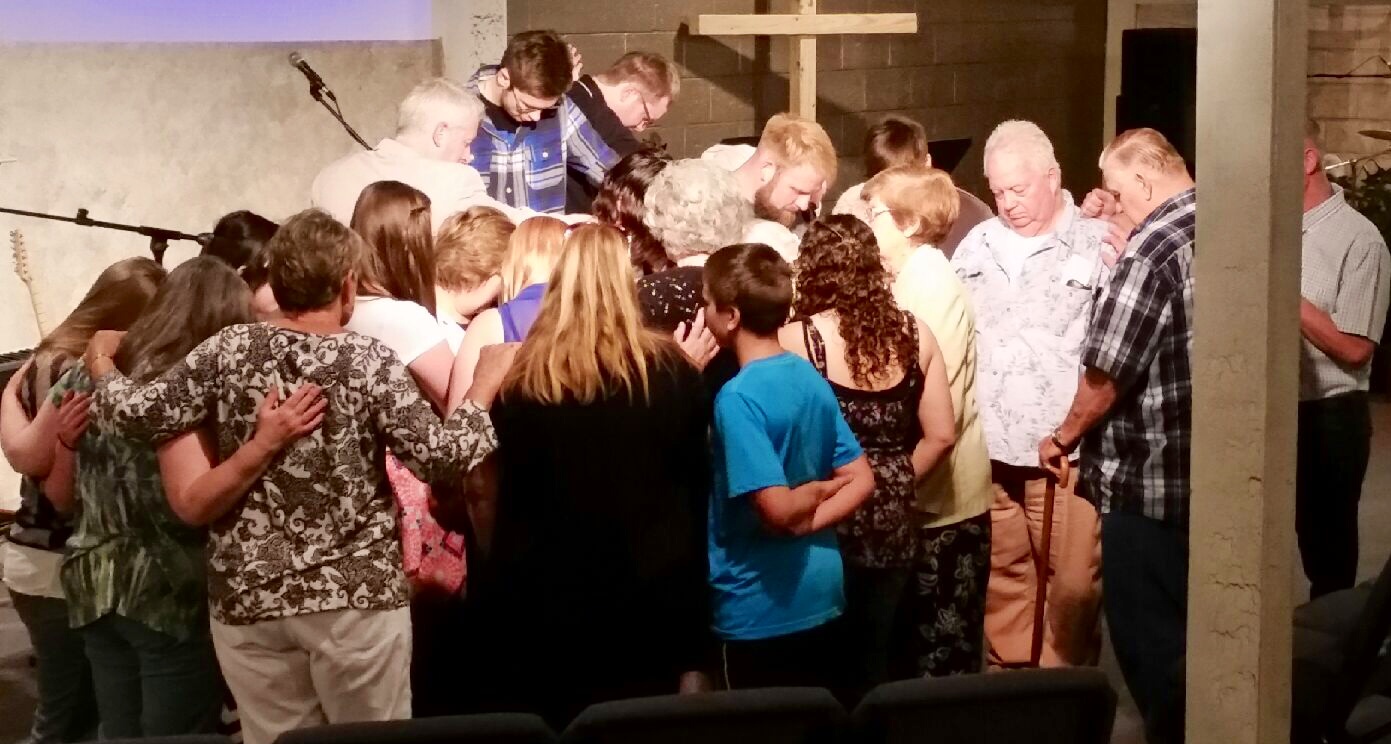
Had a fellow pastor who is on vacation stop by Calvary Assembly of God today. One of our leaders felt led by the Holy Spirit for us to pray for them, so we gathered around this couple and prayed for God’s blessing on their lives. I ♥ my church, and I love their passion for all of the Body of Christ!

Prayer

8 Quotes From “Promotion”

PromotionPromotion by Rick Renner is a book to help both ministry and for-profit business organizations make better personnel decisions. You can read my full book review by clicking here. The following are a few quotes I highlighted.

“When choosing people for promotion, it’s important to understand that nothing is more important to God in the life of a leader then his heart. The heart takes first place over gifts, talents, education, and everything else.” 

“A person who is satisfied with little will never achieve much. On the other hand, a person who has a desire for excellence will never be satisfied with a low level performance in his or her life.”

“Any person who does just the required minimum should never be considered for leadership. … So be very careful not to over-spiritualize the selection process when choosing leaders. Don’t ignore telltale signs in a candidates natural life that alert you to a lack of desire.” 

“It’s normal for people to occasionally misunderstand. But when staff members misunderstand their leader’s instructions 99% of the time, something is wrong with the way that leader is communicating with those under his authority. His followers cannot be wrong all the time.”

“You should not look for a candidate free of problems, but for one who knows how to turn to God and manage life’s challenges according to Scripture.”

“Never forget that when you’re a leader, the most important pulpit you’ll ever possess is the testimony of your own personal life.”

“You’re never going to find a perfect person. … So never forget to let mercy triumphs over judgment. But if your peace is disturbed because of things you see occurring in a potential leader’s life, don’t ignore what is bothering you. Pay attention to what your spirit is telling you. Perhaps he or she is the right leader, but it isn’t the right time yet. It’s better to be slow and sure then to move forward without the inner conviction that you’re on the right track.”

“You may have a more visible position than others do during this earthly life, but your value to God for eternity is no different than anyone else in His Body.”

The Contemplative Pastor

Search mePastors can get caught in a rut, just like anyone in any number of other professions. That’s why it’s so vital for us to pause often to make sure we haven’t slipped into something without being aware of its impact.

It is absolutely vital for pastors to have regular quiet time with God. Read the Word, pray, contemplate, read other pastors (especially the “old guys”), pray, and contemplate some more. Let the Holy Spirit point out to you any blind spots.

I’ve been contemplating two quotes from the “old guys” over the last few days.

[1] “We prefer to build up converts to our own point of view.” —Oswald Chambers

I want to make sure I’m always allowing the Holy Spirit to be as unique with others as He is with me. I need to be cautious that I’m not making my practices the universal practices for everyone. I need to give these converts a solid biblical foundation, and then let the Spirit build them up as He knows best.

[2] “Recollect, as ministers, that your whole life, your whole pastoral life especially, will be affected by the vigor of your piety. If your zeal grows dull, you will not pray well in the pulpit; you will pray worse in the family, and worst in the study alone. When your soul becomes lean, your hearers, without knowing how or why, will find that your prayers in public have little savor for them; they will feel your barrenness, perhaps, before you feel it yourself.” —Charles Spurgeon

I need to be a praying pastor. My sermons must be birthed in prayer before I deliver them, and sealed in prayer after I deliver them; my appointments must be covered in prayer; my schedule must be directed by prayer; my relationships must be nurtured through prayer. I must be in prayer continually if I am to be effective at anything.

My fellow pastor, I hope you are taking the time to contemplate: to be quiet as you ponder how the Holy Spirit is speaking to you. It is absolutely vital for the health of the part of the Body of Christ to which we minister.

Strengths Formula

God wants you to be yourself, but not as you can make you. But to be the “you” He created you to be. Part of what He implanted in you was certain gifts, talents, and abilities. To the extent that you allow the Holy Spirit to (1) reveal these gifts to you, and (2) turn these gifts into strengths, you will find more joy in being “you” as your “you” builds up the Body of Christ.

Just before listing some of the innumerable spiritual gifts God reveals in humanity, the apostle Paul says this:

For by the grace given me I say to every one of you: Do not think of yourself more highly than you ought, but rather think of yourself with sober judgment, in accordance with the measure of faith God has given you. (Romans 12:3)

Does that sound contradictory at all: Do not think…but rather think?

The root word is the same in each usage (phroneo in the Greek), but the prefix is what sets them apart from each other.

  • The first has the prefix hyper-. That means it’s overly analyzed, overly concerned = self-focused. 
  • The second time the prefix is soph- (meaning “wise”). This is sound thinking, big-picture thinking = others-focused.

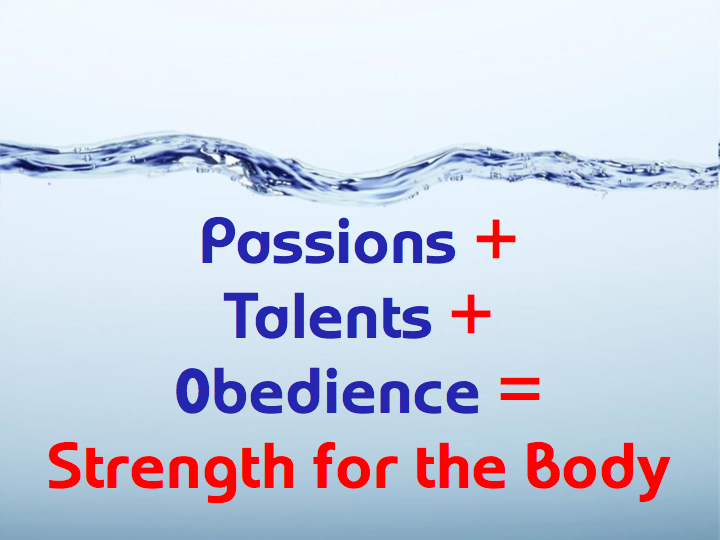
The Holy Spirit gives you sophroneo thinking to reveal your God-implanted gifts and talents to benefit others—to benefit the whole Body of Christ. He helps us turn our talents into strengths by using a formula like this:

Passions + Talents + Your Obedience = Strength for the Body

Pay attention to your passionate responses to situations, as they will reveal to you some of your gifts.

Listen to areas where others say you are talented. This will help you know how God has wired you.

Then you must be obedient to the prompting of the Holy Spirit in how to use your talents. If you let them sit on the shelf, they will never become strengths. Strengths develop when you passionately and obediently use your God-given talents for God’s glory.

The Holy Spirit wants to help you in all of these areas. Will you let Him?

If you’ve missed any of the messages in the Immersed series, you can find them all here.

Why Would You Go Through It?

The process we call sanctification is usually not a lot of fun. At least not in the moment the Holy Spirit is doing His work on us.

I like to remember the definition of sanctification by saying it this way: saint-ification. Literally, the Holy Spirit is making us into saints.

So why would you or I want to go through that saint-ification process?

Is it so others will admire us? Is it so we will become the example for everyone else to follow? No!

We go through it because it glorifies God when we become saints.

And notice this: the word is saintS (plural, not singular). If you search through the New Testament you will find that this word is always in the plural. There are no singular saints. The Holy Spirit saint-ifies us to bring unity to the Body of Christ.

May the God who gives endurance and encouragement give you a spirit of unity among yourselves as you follow Christ Jesus, so that with one heart and mouth you may glorify the God and Father of our Lord Jesus Christ. (Romans 15:5-6)

Think of your physical body. You go through the process of dieting or exercising for the benefit of the entire body. Your tastebuds may really want to savor some junk food, but for the good of the whole body, you go through the discipline of eating the healthy food. Your legs may not want to go for that jog, but for the good of the whole body, you push through your exercise routine.

It’s the same way spiritually: The Holy Spirit helps you become saint-ified for the good of the whole Body of Christ. The Holy Spirit wants you to mature as a saint so that you can help other saintS, and together the unified Body of Christ can glorify God.

So allow the Holy Spirit to take you through the saint-ification process, because other saintS need your help. And God will be glorified as you do!

If you’ve missed any of the messages in the Immersed series, you can find them all here.

Codependent?

Modern psychologists have coined the term codependent to mean someone who allows their life to be controlled by another person, much like the moon controls the tides on the earth’s oceans. Almost always this relationship ends up being a lose-lose relationship: both the person being controlled and the person doing the controlling are headed the wrong way.

Codependent is not a biblical term.

But there is a concept in Scripture that is the anti-codependent. I would call it interdependent. Here’s a couple of verses to back it up…

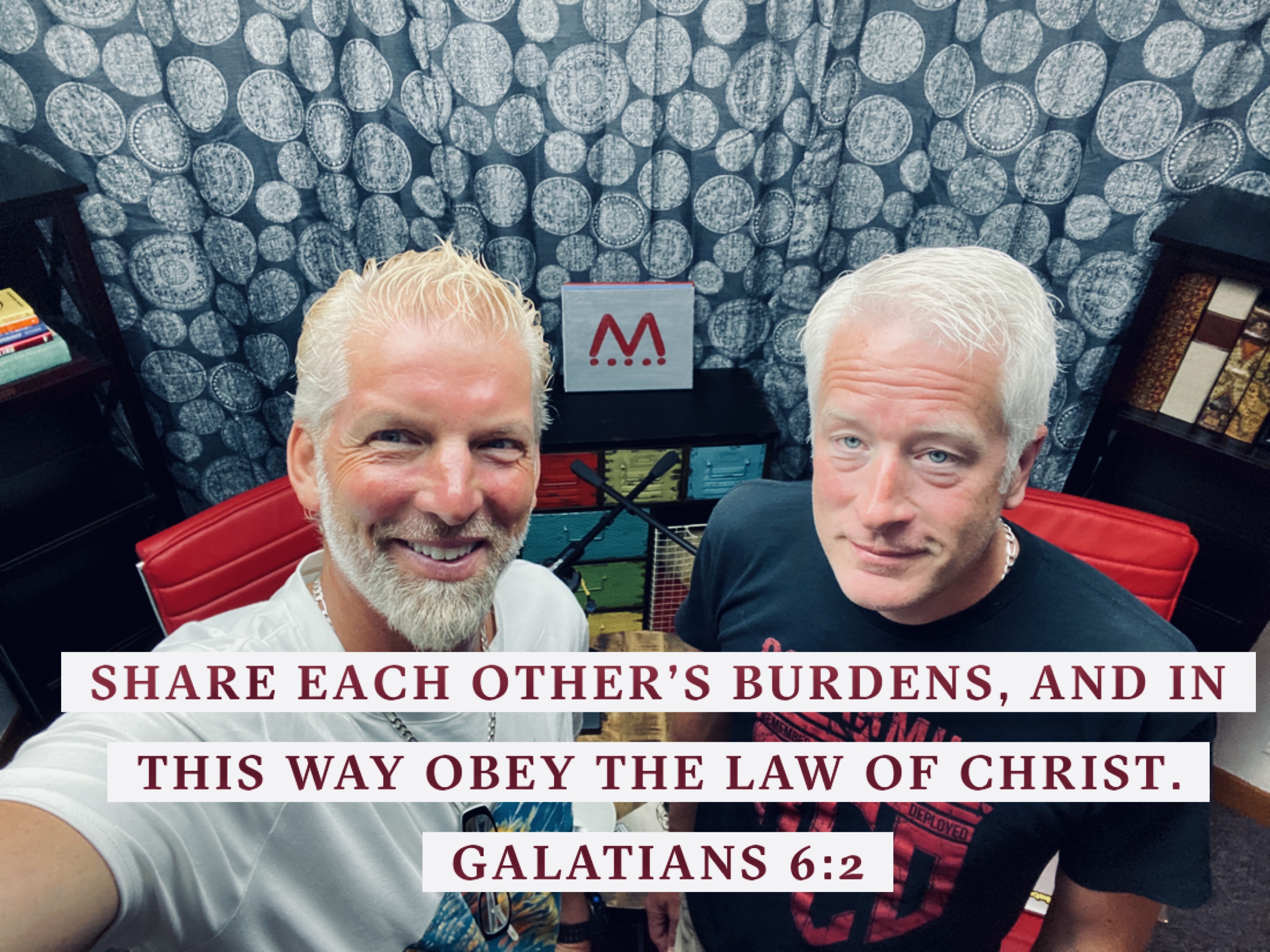
Dear brothers and sisters, if another believer is overcome by some sin, you who are godly should gently and humbly help that person back onto the right path. And be careful not to fall into the same temptation yourself. Share each other’s burdens, and in this way obey the law of Christ. (Galatians 6:1-2)

Wounds from a friend can be trusted, but an enemy multiplies kisses. (Proverbs 27:6)

It is absolutely clear that God has called you to a free life. Just make sure that you don’t use this freedom as an excuse to do whatever you want to do and destroy your freedom. Rather, use your freedom to serve one another in love; that’s how freedom grows. (Galatians 5:13)

God has given each of you a gift from His great variety of spiritual gifts. Use them well to serve one another. (1 Peter 4:10)

This isn’t excusing bad behavior, or winking at poor choices, or rescuing someone from the consequences of sin. Excusing, winking, and rescuing are symptoms of codependency.

Interdependency is saying, “I need you to be stronger—to be healthy—because I may need to lean on you someday.”

Christians try to get stronger and develop their own spiritual gifts so that they can help a friend-in-need get stronger and develop his/her spiritual gifts.

The Body of Christ needs you to be interdependent, which completely trumps codependent.

Your Lego

Listen to the podcast of this post by clicking on the player below, and you can also subscribe on Apple or Spotify.

Red, yellow, green, or blue?

Six dots, four dots, three, or two?

Long and straight, or thick and round?

Inside, outside, upside-down?

Cutting-edge that’s very new?

Or a classic shape that’s tried-and-true?

The Creator made you, oh, so right!

That’s why your Lego shines so bright.

God loves the way He made you! You were made to fit just right and make the Body of Christ all that it could be. If you hold back from using your talent, we’re all diminished. The Bible has a different way of expressing this:

Just as each of us has one body with many members, and these members do not all have the same function, so in Christ we who are many form one body, and each member belongs to all the others. We have different gifts, according to the grace given us.

►► Would you please prayerfully consider supporting this ministry? ◀︎◀︎