10 Great Reasons To Go To Church Regularly

Without exception, all human beings have exactly 168 hours in a week. No one gets any bonus time and no one has any hours taken away. We’re supposed to get 8 hours of sleep a night, and most of us work about 40 hours each week. So let’s do the math…

168 hours per week
– 56 hours for sleeping
– 40 hours for work
=72 discretionary hours

In those 72 hours there must be time for eating and taking care of chores. But what about going to church? The problem for many people is looking at church attendance as just another “chore” or item on their “To Do” list.

But instead of thinking of going to church as “I have to,” how about if you looked at all of the “I get to” benefits?

Here are 10 great reasons for going to church regularly. I get to…

  1. …draw closer to my Heavenly Father, just like Jesus did (Luke 2:49)
  2. …be an example to others (1 Timothy 4:12)
  3. …hang out with some really great people (Hebrews 10:24)
  4. …get to know Jesus and my brothers and sisters better (1 John 1:3)
  5. …reaffirm the priority that God is first in my life (Matthew 6:33)
  6. …learn to better understand Scripture (2 Timothy 2:15)
  7. …join with a choir of God worshipers (John 4:23-24)
  8. …grow spiritually (1 Peter 2:2-5)
  9. …complete the Body of Chris (1 Corinthians 12:12)
  10. …avoid becoming isolated and possibly lost (Proverbs 18:1)

“Sometimes we make it sound like we’re making a sacrifice to go to church, but think about the very real sacrifice Jesus made so that we could meet together as brothers and sisters!” —Scott Troost

How about it? Do you think you could invest an hour or two of your 72 discretionary hours in a local church this week?

My thanks to my brother, Scott Troost, for sharing such a timely message!

8 Quotes From “Paths To Power” by A.W. Tozer

As I said in my book review, A.W. Tozer’s words frequently make me say both “Ouch!” and “Amen!” Maybe you’ll feel the same thing in these few quotes.

“Left to herself the Church must have perished as a thousand abortive sects had done before her, and have left nothing for a future generation to remember. That the Church did not so perish was due entirely to the miraculous element within her. That element was supplied by the Holy Spirit who came at Pentecost to empower her for her task. For the Church was not an organization merely, not a movement, but a walking incarnation of spiritual energy. …

“In short, the Church began in power, moved in power, and moved just as long as she had power. When she no longer had power she dug in for safety and sought to conserve her gains. But her blessings were like manna: when they tried to keep it overnight it bred worms and stank. So we have had monasticism, scholasticism, institutionalism; and they have all been indicative of the same thing: absence of spiritual power.” 

“The weakness in our message today is our overemphasis on faith with a corresponding underemphasis on obedience. This has been carried so far that ‘believe’ has been made to double for ‘obey’ in the minds of millions of religious persons.”

“In every denomination, missionary society, local church, or individual Christian this law operates. God works as long as His people live daringly; He ceases when they no longer need His aid.” 

“To any casual observer of the religious scene today, two things will at once be evident: one, that there is very little sense of sin among the unsaved, and two, that the average professed Christian lives a life so worldly and careless that it is difficult to distinguish him from the unconverted man.”

“It is always dangerous to isolate a truth and then press it to its limit without regard to other truth.”

“It may be stated as an axiom of the Christian system that whatever makes sin permissible is a foe of God and an enemy of the souls of men.”

“Some time after Pentecost a group of believers met to pray for strength and power to meet the emergency then facing them, and to enlist the help of God on their behalf. ‘And when they had prayed, the place was shaken where they were assembled together; and they were all filled with the Holy Ghost, and they spake the Word of God with boldness’ (Acts 4:31). Some of these were of the original number filled at Pentecost. It is hardly conceivable that God acted contrary to His own will in filling them again after Pentecost. Still other outpourings are recorded in Acts 8, 10 and 19. All these occurred some years after the original act.

“In brief, the teaching of the New Testament is that the outpouring at Pentecost was the historic beginning of an era which was to be characterized by a continuous outpouring of the Holy Spirit.”

“This anti-emotionalism, though it is sponsored by some good people and travels in pretty orthodox company, is nevertheless an unwarranted inference, not a scriptural doctrine, and is in violent opposition to psychology and common sense. Where in the Bible are feeling and faith said to be at odds? The fact is that faith engenders feeling as certainly as life engenders motion. We can have feeling without faith, it is true, we can never have faith without feeling. Faith as a cold, unemotional light is wholly unknown in the Scriptures.”

Paths To Power (book review)

As I read A.W. Tozer’s words I find myself saying two things: (1) “Ouch!” and (2) “Amen!” Tozer’s Paths To Power is a continuation in those responses as he outlines what robs the Church and individual Christians of the power God wants them to have.

Right at the outset, Tozer identifies a key element robbing the Church of power: a lack of obedience in the things God has commanded us. “A knowledge of the truth is not enough,” he writes. “The truth must be followed if we would realize in actual experience the blessedness which is here described.”

Another power-blocker is an unwillingness to let God confront us and help us change. We get stuck in a this-is-how-it’s-always-been rut and then shut our eyes to the times of refreshing God wants to send to us. Other blockers include poor doctrine, putting the Holy Spirit in a box, justifying our sin, and not unleashing our faith, to name just a few.

Thankfully, Tozer also points us to the straightforward cures for all of the blockages to power. If we are willing to open our eyes, ears, and hearts to God’s voice, His unlimited blessings could flow uninterrupted into our lives and churches.

Paths To Power contains only seven short chapters, but the digestion, contemplation, and implementation of Tozer’s cures will be something that will involve a lifetime commitment for those ready for God’s fresh power to be poured into their lives.

I am a Moody Publishers book reviewer.

Godly Leaders Raise Up Godly Leaders

“…as the hand of the Lord my God was upon me…I gathered leading men of Israel to go up with me” (Ezra 7:28).

A mark of a godly leader is one who raises up other godly leaders. He doesn’t want to walk alone; he doesn’t want to keep God’s blessings to himself. He knows that there can never be too many God-fearing leaders.

How did Ezra raise up more godly leaders?

  1. Ezra made sure his team had everyone it needed to be successful. When he discovered his team had no Levites to oversee functions in the temple, he made an appeal for a Levite to join his team. “Then, by the good hand of our God upon us” God sent Ezra nearly 250 Levites (Ezra 8:18-20)!
  2. Ezra made sure his team would be adequately cared for. He prayed and fasted as he asked for God’s direction and protection for his team (vv. 21-23).
  3. Ezra trusted his teammates. He entrusted them with precious, irreplaceable treasures (vv. 24-34).

What Ezra did became contagious. The leading men that came to follow Ezra all brought other potential leaders with them as well.

Godly leaders are never content arriving at their destination alone—they want as many other godly leaders alongside them as possible.

My prayer—God, place Your good hand on me to empower me to raise up godly leaders.

This is the first part of my series on godly leadership. To check out all of the posts, please click here.

Where Preachers Are Powerless

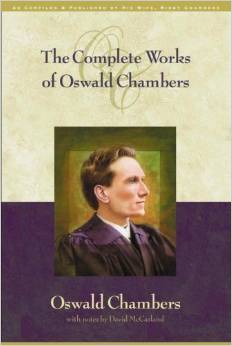
To my dear pastor friends, please ponder carefully these wise words from Oswald Chambers:

“As preachers and teachers we are powerless to make saints. Our duty is to put the seed into the right place and leave the rest to God. …

“Modern evangelism makes the mistake of thinking that a worker must plough his field, sow the seed, and reap the harvest in half-an-hour. Our Lord was never in a hurry with the disciples, He kept on sowing the seed and paid no attention to whether they understood Him or not. He spoke the truth of God, and by His own life produced the right atmosphere for it to grow, and then left it alone, because He knew well that the seed had in it all the germinating power of God and would bring forth fruit after its kind once it was put in the right soil. …

“Sow the Word of God, and as sure as God is God, it will bring forth fruit. …

“Sow emotions, and the human heart will not get beyond you. There are men and women at work for God who steal hearts from God, not intentionally, but because they do not preach the Word of God. They say, ‘I don’t want anyone to think about me’; that should never need to be said. If the thought of ourselves is lurking anywhere as we preach, we are traitors to Jesus Christ. Our duty is to get people through to God. … See that you sow the real seed of the Word of God, and then leave it alone.” —Oswald Chambers, in The Servant As His Lord

These words prompt me to take a close look into God’s mirror to see if I’m preaching in a way that God can bless. How about you?

The Servant As His Lord (book review)

One of the most straight-talking, tell-it-like-it-is Christian speaker and author is Oswald Chambers. No one could ever accuse him of sugar-coating the Christian walk! In The Servant As His Lord, Chambers takes an unflinching look at the difficulty a Christian will have in living as his Lord, Jesus Christ, did.

As is the case with nearly all of Oswald Chambers’ books, The Servant As His Lord is a compilation of three sources: lectures, sermons, and essays for some small pamphlets. Biddy Chambers, his wife, often recorded Oswald’s sermons via shorthand and then put them into a book form at a later date.

The material in this book was all recorded during the height of The Great War (or what we now refer to as World War I). Many Christians were quite shaken in their faith during this time, questioning why God’s followers should have to go through such horrific things. Oswald Chambers, as he always did, never dodged the question nor made excuses, but simply stated: Jesus suffered pain, ridicule, and injustice while on earth, and His followers will too. The servant will be as his Lord.

Even though this book addresses some heavy topics, it’s not at all a “downer” for the reader. Quite the contrary! This book is actually very encouraging for the Christian going through any kind of difficulty or trial, knowing that Jesus not only went through the same thing, but that He is walking with us through our own trials.

This is definitely one of Chambers’ meatier books, but it is well worth the mature Christian’s time to study these wise and encouraging words.

10 Quotes From “Legacy Leadership”

I just finished an outstanding reading plan on YouVersion called Legacy Leadership by Dr. J. Lee Whittington. For anyone interested in the biblical concept of servant-leadership, I highly recommend you check out this reading plan.

Here are a few quotes I especially liked…

“Legacy Leadership is a process of intentional influence that takes place in the context of a relationship.”

“There is a recurring pattern of affirmation and exhortation in Paul’s leadership. He provided a dynamic balance between challenging his followers to grow and acknowledging their progress. He was affirming, but never content.”

“There is a growing trend to attack, criticize, and resent anyone who has talent or achievements that sets them apart from others. This tendency extends to those who resent the efforts of leaders who challenge the status quo. Opponents of change initiatives often attempt to marginalize leaders by attacking their character and questioning their motives. If the messenger is flawed, then the message and vision they offer cannot be trusted. As disappointing as it is, these challenges come with the territory of leadership.

“If I am to lead with integrity, I must always confront my own lack of integrity. This demands a willingness to constantly reflect on my motives and the courage to confront my own hypocrisy. It also requires me to allow myself the discomfort of inviting the scrutiny of both the Lord and others who care enough to confront me about my motives, my attitudes, and my behavior.”

“The most effective leaders are able to exert influence without asserting their formal authority. … Paul deliberately chose to forego the legitimate, reward, and coercive power inherent in his position. Instead, he leaned into another base of power: referent power. Referent power is based on respect and admiration. When this is present, the followers identify with and want to emulate their leader. This power base does not come from the leader’s position or control of resources. Rather, it is based on the leader’s character and integrity. Referent power is based on who the leader is.”

“Legacy Leaders do not lead from a distance. They imitate Jesus who said, ‘I am among you as one who serves’ (Luke 22:27). They are comfortable sharing their lives with their followers.”

“The best relationships between a leader and their followers are those that are characterized by a great deal of mutual trust and shared information. The responsibility for creating this type of relationship rests squarely on the shoulders of the leader.”

“Authentic leaders have a seamless link between their values and their actions. But the congruence between values and attitudes is just the starting point for authentic leadership.  From the perspective of scripture, a leader’s attitudes and actions must be anchored to God’s standards. When a leader’s enacted values are in congruence with their espoused values, and those espoused values are in turn anchored to God’s principles, the leader had moral authority.”

“It’s easy to critique the authenticity of others.  But, if we are really serious about developing our own authenticity, we must focus on ourselves. I read this statement several years ago: ‘If we are to be people of integrity, we must constantly confront our lack of integrity.’”

“Legacy Leaders embrace the principles of servant-leadership and understand that the conscious choice to lead comes after the desire to serve. This inclination is not natural. It must be energized by continuous reliance on the empowering presence of God’s Spirit.”

Comparisons Are Killers

It is always a thrill for me to watch a young leader excel so wonderfully! Yesterday I listened as our youth pastor Josh Schram brilliantly illustrated a key component that can kill relationships or build them up.

Trust me: Josh’s opening illustration is worth the watch in the video below!

Here are a few takeaways I had from Josh’s message…

A relationship killer is comparing yourself to others. 

Comparing yourself to others may make you feel superior to them or inferior to them, but neither of these feelings serve a useful purpose, and neither of them honors God.

The fastest way to kill something God is doing in your life is to compare it to what He’s doing in someone else’s life.

When we compare someone else’s highlight reel to our behind-the-scenes mess, it makes us feel less than what God intends because it always increases dissatisfaction. Remember: living this way is comparing yourself to an artificial standard.

Notice how God speaks to us as individuals—Make a careful exploration of who you are and the work you have been given, and then sink yourself into that. Don’t be impressed with yourself. Don’t compare yourself with others. Each of you must take responsibility for doing the creative best you can with your own life. (Galatians 6:4-5, emphasis added)

A relationship builder is examining yourself.

Jesus ran His own race, and we are called on to remove any obstacles that keep us from running our own race too (see Hebrews 12:1-2).

  • Run your own race.
  • Stay in your lane.
  • Stay focused on Jesus.

No one can be a better you than you.

Remember: someone else’s success is NOT your failure (see 1 Corinthians 12:12-26).

I need to ask myself: Am I being the best me I can be with what God has equipped me to be? If the answer is “yes” then everyone else gets better!

Don’t compare your relationship with God or with other people to others’ relationships. Instead, examine yourself to make sure you are being the best you God created you to be!

True Beauty vs. Pornography

God’s design for sex is truly the most beautiful thing that exists between two people. Its counterfeit is called pornography. Porn is simulated, imitated, and purchased; but no price tag can ever buy true beauty.

God demonstrates the purest love in Himself, when one part of the Godhead is the Lover and the other parts of the Godhead are the Beloved. The Lover is constantly discovering the beauty in the Beloved, and then praising that beauty. The Beloved then reciprocates back to the Lover. It’s a love dance! 

Humans are created in God’s image. We are first created to be God’s beloved. Then we are designed to be both lover and beloved in the bonds of marriage. True beauty—real, lasting beauty that pleases God—is discovered. It’s something that starts inside and radiates outside. A true lover takes the time to discover who the beloved truly is.

To see this in action, just look at some of the compliments between husband and wife in the Song of Songs—How beautiful you are, my darling! Oh, how beautiful! … How handsome you are, my lover! Oh, how charming! … Like a lily among thorns is my darling among the maidens. … My lover is mine and I am his. … All beautiful you are, my darling; there is no flaw in you.

True love that sees this kind of beauty cannot be imitated, purchased or simulated. If someone attempts to, it’s called pornography.

The dictionary gives this definition of pornography: sexually explicit materials whose purpose is to elicit sexual arousal. In other words, porn tries to imitate and simulate true beauty at a purchase price.

Jesus identified this sell-out of true love with the Greek word porneia (see Mark 7:14-23). This word means any sexual involvement outside the marriage between a husband and wife. Porneia comes from words that fill out its definition: things like prostitution, idolatry, and slavery.

Your body was not made for porneia but for God (1 Corinthians 6:13). You were made in His image: to be His Beloved, and He your Lover, and then to have a marriage relationship with another image-bearer of God, where you are both lover and beloved, and where you focus on true beauty.

Anything else is imitated, purchased, and simulated. It’s pornography. It’s idolatry.

Christians are told to fight many temptations, but there are only two that we are told not to fight, but to flee: pornography (1 Corinthians 6:18) and idolatry (1 Corinthians 10:14). So our prayer for the purity and enjoyment of God’s true beauty should be: Turn my eyes away from worthless things (Psalm 119:37).

Don’t sell out to the fake beauty in pornography. Discover true beauty exclusively in your spouse!

We’ll be looking at more relationship builders and killers, and I’d love to have you along for this journey of discovery.

What If We Had Higher Expectations?

Humans are hardwired by God to be in relationship with Him and with others.

  1. God is a Triune God so each part of the Godhead is in relationship with the other parts—John tells us in his epistle that God is love, meaning there is both a Lover and a Beloved.
  2. We are created in God’s image—we are made to love and be loved.
  3. God affirmed our need for relationships with others—see Genesis 2:18.
  4. Relationships with others give us a return on investment, help in trouble, encouragement in dark times, and protection from attack—see Ecclesiastes 4:9-12.
  5. Christians being in healthy relationships with others is a testimony to just how powerful God’s love is.

Sadly, Brennan Manning pointed out that Christians “have come a long sad journey from the first century, when pagans exclaimed with awe and wonder, ‘See how these Christians love one another!’”

When I read this, I don’t want to throw in the towel, but I want to reclaim this awe and wonder! 

One of the things that will quickly kill relationships is having low expectations for the other person or for the relationship itself. This can be counteracted by having higher expectations for other people and for our relationships with them.

John Maxwell noted, “People rise or fall to meet our level of expectations for them. If you express skepticism and doubt in others, they’ll return your lack of confidence with mediocrity. But if you believe in them and expect them to do well, they’ll wear themselves out trying to do their best.”

Consider the high expectations that God had for a relationship with us. If He had low expectations, one of the best-known verses in the Bible would be, “God thought a few people in the world had something worth saving, so He sent a handful of angels to tell us His story.”

Instead, the verse tells us: God so loved the entire world that He sent the very best that He had—He sent His One and Only Son!

  • Jesus died for us when we were unworthy of His love
  • Jesus gave us all His authority to represent Him in the world
  • Jesus empowered us with His Holy Spirit to be His witnesses
  • Jesus told us that our love for others would be a blazing sign to that we were His

Since God has this high expectation for us … what would happen if we had the same high expectations for everyone with whom we came into contact? What would happen if we believed the best for everybody, and then gave all that we could to bring the best out of them? I think that once again people would exclaim with awe and wonder,

“See how these Christians love one another!”

We will be talking more about Relationship Builders & Killers this Sunday and I would love if you could join me!