“Hard times create strong men. Strong men create good times. Good times create weak men. Weak men create hard times.” —G. Michael Hopf
“Luck is when an opportunity comes along and you’re prepared for it.” —Denzel Washington
“Ministers are set to be lights to the souls of men in this respect, as they are to be the means of imparting divine truth to them, and bringing into their view the most glorious and excellent objects, and of leading them to and assisting them in the contemplation of those things that angels desire to look into…by which they may know God and Jesus Christ, whom to know is life eternal.” —Jonathan Edwards
“Scripture the unus sermo Dei—the one sermon of God.” —Augustine
T.M. Moore is presenting another outstanding series of posts, this one about the dignity of work. In one post, he wrote, “A just society requires all members to contribute love for their neighbors, whether they are poor or wealthy. Those who will not work when they can do so should be left to the consequences of their sluggardliness (2 Thessalonians 3:10). It is incumbent on local community leaders to discover ways, analogous to the work of gleaning, of helping to meet the needs of local poor. These might include keeping part-time work available, identifying ‘community work’ opportunities and helping to fund them, offering job counseling and training, and so forth. Churches certainly could pioneer the way in this, creating opportunities for work on their campuses, on behalf of needy members, and for the community at large.”
“The Holy Spirit responds to our walking according to the Word, not merely talking about the Word.” —Dr. Tony Evans
Listen to the podcast of this post by clicking on the player below, and you can also subscribe on Apple, Spotify, or Audible.
I’ve been called to some challenging leadership roles in my life—many of which made me feel like I was in way over my head! But without a close second, the heaviest mantle I’ve ever felt is the one called “Father.” Holding my firstborn son in my arms was indescribable, and it didn’t feel any lighter or less daunting when our other children arrived.
The rabbis saw something significant in the Ten Commandments. Some people have noted that the first four Commandments are about our vertical relationship with God, while the next six are about our horizontal relationships with people. But the rabbis saw the Fifth Commandment as the linchpin—with parents in a creator-like role and as the first leader our children will be exposed to, and parents taking on the role as the first and most significant instructor for our children to know God for themselves.
And then Jesus tells us to follow this example: “Be perfect, therefore, as your heavenly Father is perfect” (Matthew 5:48). Yikes, talk about a heavy weight!
In the only song of ascent attributed to King Solomon (Psalm 127) we read both a longing for our families to be with us at the end of our journey to Zion, but also a hint of the difficulty of this.
In the middle verse of this song, we are assured that our children are given to specific parents by God on purpose. He knew what He was doing in giving them into our care. That means each parent is uniquely equipped for each child’s unique personality, temperament, and gift package.
Twice in the opening verse, Solomon uses the word “unless.” Unless we seek God’s help in building our children and watching over them, our efforts on their own will be “in vain.” That phrase (“in vain”) is used three times in the opening two verses. Solomon wrote a lot about vanity in the Book of Ecclesiastes. But it’s important to note that Solomon always uses this word in association with the phrase “under the sun.” Unless we get help from God—unless we lift our eyes up higher than this earth—our efforts alone will be frustrating and anxiety-inducing.
Remember that parents are the linchpin in the Ten Commandments? Those first four Commandments tell us to put God first, don’t create any idols to rival Him, don’t misuse His name, and trust Him enough to rest from your labors (Exodus 20:1-11). That means that we parents cannot put our kids ahead of God (Luke 14:26). Unless God is our first priority, we won’t have the spiritual, emotional, or mental stamina to parent well. Or, as C.S. Lewis noted,“When I have learned to love God better than my earthly dearest, I shall love my earthly dearest better than I do now.”
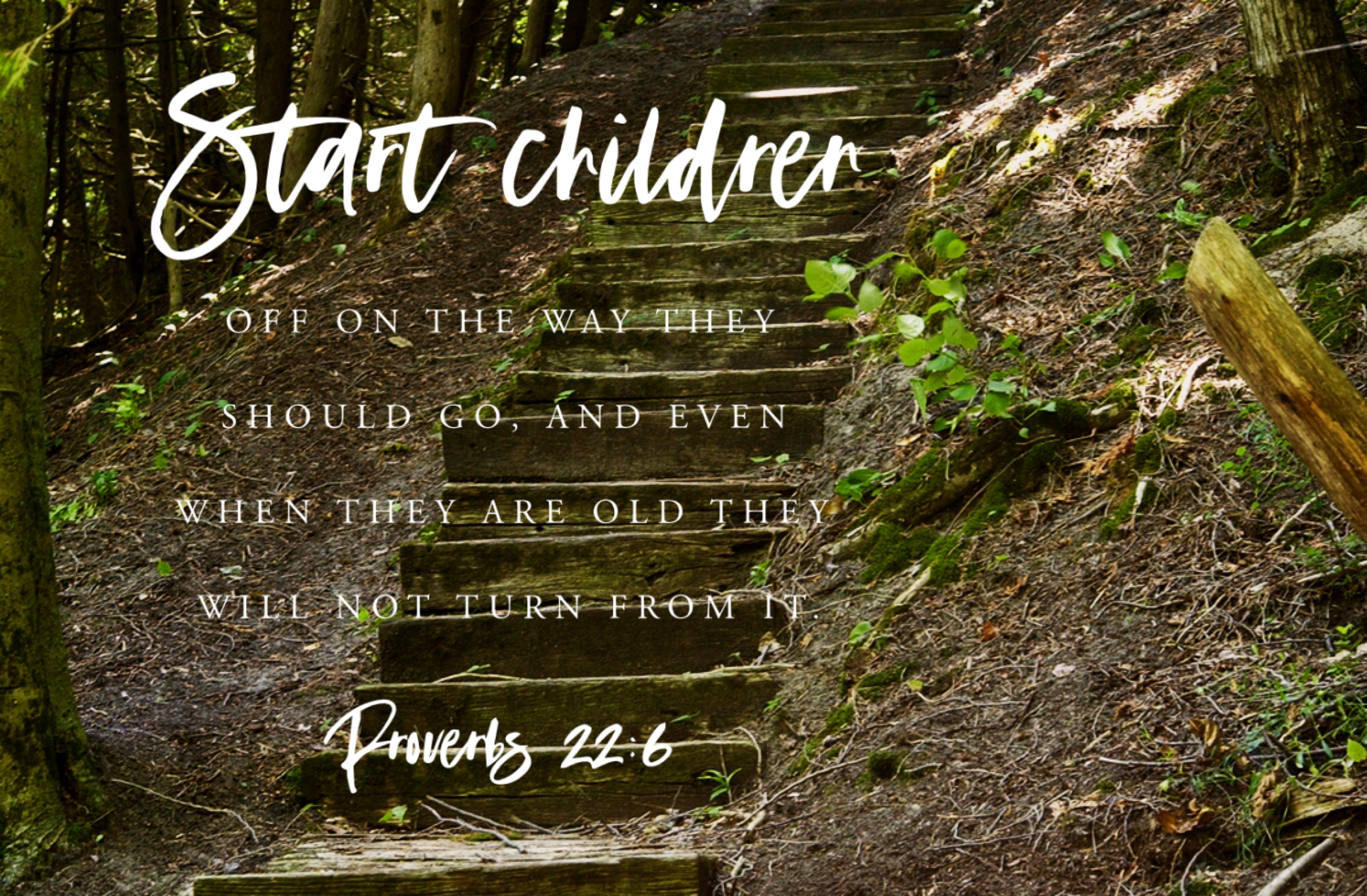
In his collection of proverbs, Solomon told us, “Start children off on the way they should go, and even when they are old they will not turn from it” (Proverbs 22:6). Jesus said there is only one sure foundation, and that is knowledge and obedience of God’s Word (Matthew 7:24-27).
The final two verses of Psalm 127 assure parents that when we commit our children to God’s hands, He blesses them and uses them as His weapons, His leaders, and His culture changers.
There is not only a weight in parenting, but there is also a wait in parenting. In the last song of ascent we studied, we learned that we have a promise two times that we will (not “might”) reap a harvest, even if we have to sow seeds in tears (Psalm 126:5-6).
In the Bible, waiting is never passive. It’s an active watching to see how God will move. We see this in the story of the prodigal son (Luke 15:11-32) where the father waited expectantly for his wayward son to return. This Dad had given his son a firm foundation at the start of his life, and then he waited in prayer until his son “came to his senses”—until he realized that all other ways of living away from God were vanity.
In the midst of her prayers for her own prodigal son, Monica shared her concerns with Ambrose, bishop of Milan, and he said, “It cannot be that the son of those tears be lost.” Monica continued to wait for her son Augustine, sowing her seeds in tears but fully expecting the song of joy that would come with the harvest.
Years later, in his autobiography called Confessions, Augustine wrote of his mother, “My mother, Your faithful servant, wept to You for me, shedding more tears for my spiritual death than others shed for the bodily death of a son. You heard her.”
Parents, as you call out to God on behalf of your children, shed those tears in the joy of the anticipated harvest, knowing that God hears you!
If you’ve missed any of the other messages in our series looking at these songs of ascent in the Book of Psalms, you can find them all here.
Listen to the podcast of this post by clicking on the player below, and you can also subscribe on Apple, Spotify, or Audible.
I love reading, and I love sharing my love of good books with others! Here is a list of the books I read and reviewed in 2022. Click on a title to be taken to that review.
“But friendship is precious; not only in the shade, but in the sunshine of life.” —Thomas Jefferson
“People are just about as happy as they make up their minds to be.” —Abraham Lincoln
“Humility is the foundation of all the other virtues hence, in the soul in which this virtue does not exist there cannot be any other virtue.” —Augustine
When you praise God, despite your surroundings, you magnify Him. And when you magnify God, you invite others to magnify Him with you!
“Manhood first and then gentleness.” —Ralph Waldo Emerson
Dan Reiland wrote, “Church leadership always carries with it seasons of success and setbacks, momentum and grind, joy and discouragement. Yet, we all do better through those seasons when we have learned the rhythms of resilience—the lifelines we need.” Check out the 6 sustaining lifelines for leaders that he shared.
The Institute for Creation Research reported, “Two separate studies claim massive tsunamis and earthquakes from an asteroid impact profoundly affected the rock record. … [Yet] these global phenomena are better explained by the global Flood described in Genesis.”
“Anger makes dull men witty, but it keeps them poor.” —Francis Bacon
Listen to the podcast of this post by clicking on the player below, and you can also subscribe on Apple, Spotify, or Audible.
Near the beginning of my interview on the Leading From Alignment podcast with Jim Wiegand and John Opalewski, I was asked to share a bit of my personal background.
I have been incredibly blessed to have grown up in a solid Christian home and in a fantastic Bible-believing church. And yet I still had to come to a point where I had to decide for myself whether I was going to put my faith in the claims of the Bible. Check this out…
Parents, God is faithful to His Word. If we as parents will teach the Scriptural truths to our children, the Holy Spirit will bring that back to their remembrance as our kids get older. We don’t have to fret about their spiritual standing, but we can stand on God’s promises.
This doesn’t remove responsibility from us. I love the story of a woman named Monica who prayed for years and years for the salvation of her son. Even when it appeared he was running as hard as he could away from God, Monica continued to pray. Eventually, her son did put his faith in Jesus and went on to have an immeasurable impact on world and church history. Monica’s son is Augustine of Hippo.
So Mom and Dad, make sure your kids hear God’s Word. Then make sure God hears your prayers for that Word to not return void. You don’t have to fret over your children when you remember that God loves them even more than you do!
Listen to the podcast of this post by clicking on the player below, and you can also subscribe on Apple, Spotify, or Audible.
God uses humans—flawed, imperfect humans—to accomplish His sovereign plan. As we yield to His sovereignty we can discover an unparalleled joy. In The Legacy Of Sovereign Joy, John Piper shows us this principle in the lives of three notable men of church history: Augustine of Hippo, Martin Luther, and John Calvin.
Although separated by 1000 years, these men are inseparably linked to the beginning of the Reformation. Both Luther and Calvin relied heavily on the writings of Augustine as they called Christians away from the unbiblical teachings and traditions, and back to the pure, freeing truths of the Bible.
These men are also linked in another way that should be quite encouraging to us. Augustine struggled with his sexual passions, Luther struggled to control his razor-sharp tongue, and Calvin used some rather worldly means to fight for biblical truths. All of them were flawed men, and yet God sovereignly used them. And through all of their struggles, the Holy Spirit brought all three of them into a place where they savored the sovereign joy that only God can give. This should give us great encouragement that God can use us too.
By themselves, John Piper’s biographies of these men are worth your time to read, but the way Pastor John intertwines their stories to show us how sovereign joy can be our mainstay as well is absolutely brilliant.
This is a weekly series with things I’m reading and pondering from Charles Spurgeon. You can read the original seed thought here, or type “Thursdays With Spurgeon” in the search box to read more entries.
The Unity Of Scripture
He will glorify Me, for He will take of what is Mine and declare it to you. All things that the Father has are Mine. Therefore I said that He will take of Mine and declare it to you. (John 16:14-15)
Let us never allow anybody to divide between the word of the apostles and the word of Christ! Our Savior has joined them together. ‘I do not pray for these alone, but also for those who will believe in Me through their word’ (John 17:20). And if any begin rejecting the apostolic word, it will be outside the number for whom Christ prays. …
Such a doctrine that we are sometimes taunted about as being not revealed by Christ but by His apostles were all revealed by Christ, every one of them! They can all be found in His teaching, but they are very much in parabolic form. It is after He has gone up into glory and has prepared a people, by His Spirit, to understand the truths of God more fully that He sends His apostles and says, ‘Go forth, and open up to those whom I have chosen out of the world the meaning of all I said.’ The meaning is all there, just as all the New Testament is in the Old! … [Jesus Christ] is the Old Testament to which the Epistles come in as a kind of New Testament, but they are all one and indivisible. They cannot be separated. …
Remember that the quickest way into a text is praying in the Holy Spirit. Pray the chapter over! I do not hesitate to say that if a chapter is read upon one’s knees, looking up at every word to Him who gave it, the meaning will come to you with infinitely more weight than by any other method of studying it. ‘He will glorify Me, for He will take of what is Mine and declare it to you.’ He will redeliver the Master’s message to you in the fullness of its meaning!
From Honey In My Mouth
Augustine wrote, “Scripture is the unus sermo Dei—the one sermon of God.”
There is one consistent message in the Bible from Genesis 1:1 through Revelation 22:21, and the Holy Spirit wants to reveal that message to us. He is our Helper that will illuminate to our lives what has already been inspired in the Scripture.
Jesus is Jehovah God from beginning to end. He is the “one sermon of God” that we can read and understand. Think about this: the same Spirit who inspired the pens of the biblical writers is the same Spirit in you who can help you understand and apply those words to your life. More than that, the Holy Spirit wants to make the Word of God clear to you.
God is glorified and you are edified when Scripture comes alive in your heart and mind.
Peter wrote this about Paul, “His letters contain some things that are hard to understand….” But if we don’t take the time to wrestle with that passage, Peter says this is what happens next: “…which ignorant and unstable people distort, as they do the other Scriptures, to their own destruction” (2 Peter 3:16). So, as Spurgeon suggests, begin your Bible reading time in prayer. Then if you come to a difficult text, don’t rush past it and don’t turn too quickly to what another human has written in a commentary, but ask the Holy Spirit to help. (I shared a 5-step process I use for these challenging passages here.)
Pray, read, pray, apply, pray. The Holy Spirit WILL help you! “Remember that the quickest way into a text is praying in the Holy Spirit.”
So Psalm 48 opens with the same praise with which Psalm 47 closed—Great is the Lord and most worthy of praise! The Hebrew word for great means massiveness! God is great beyond comprehension. He is larger than any problem. He is unique. He is uncontainable, unlimited, utterly beyond description. His glory is so bright that no sun is needed (see Revelation 21:23).
His glorious light reveals God’s beauty all around us. As C.S. Lewis noted, “I believe in God as I believe the sun has risen. Not because I can see it, but because by way of it I can see everything else.” Indeed, the psalmist reminds us that the city of our God has become “beautiful in its loftiness”(v. 2).
Look at how majestic our King is, and how majestic He makes His city, with phrases like the city of our God, the city of the Great King, and the city of the Lord Almighty.
God makes His city secure forever.
Selah—pause and consider that.
About 1200 years after this psalm was written, Augustine would write his book called The City of God in which he contrasted the City of God with the City of Man. He noted how the Romans had gods they trusted in, but the Romans had to “rescue” their gods from the invading barbarians. Rome ultimately fell to those invading barbarians, but, Augustine said, the City of God can never fall because it isn’t a tangible place. The City of God resides inside God’s people.
So notice that after the Selah the word “city” doesn’t appear anymore. Instead, we read about:
God’s temple (v. 9; the Hebrew word is heykal) means the palace of God the King
thevillages of Judah (v. 11) is translated daughters in the KJV, but it actually means “the beloved apple of My eye”
her towers (v. 12) are something that has grown up because it’s been nourished, not something built up by brick and mortar
her citadels (v. 13) are the highest and strongest places, which recalls God’s massiveness that we read in verse 1
Here’s the question for all of us to ask—Is my heart a City of God or a City of Man?
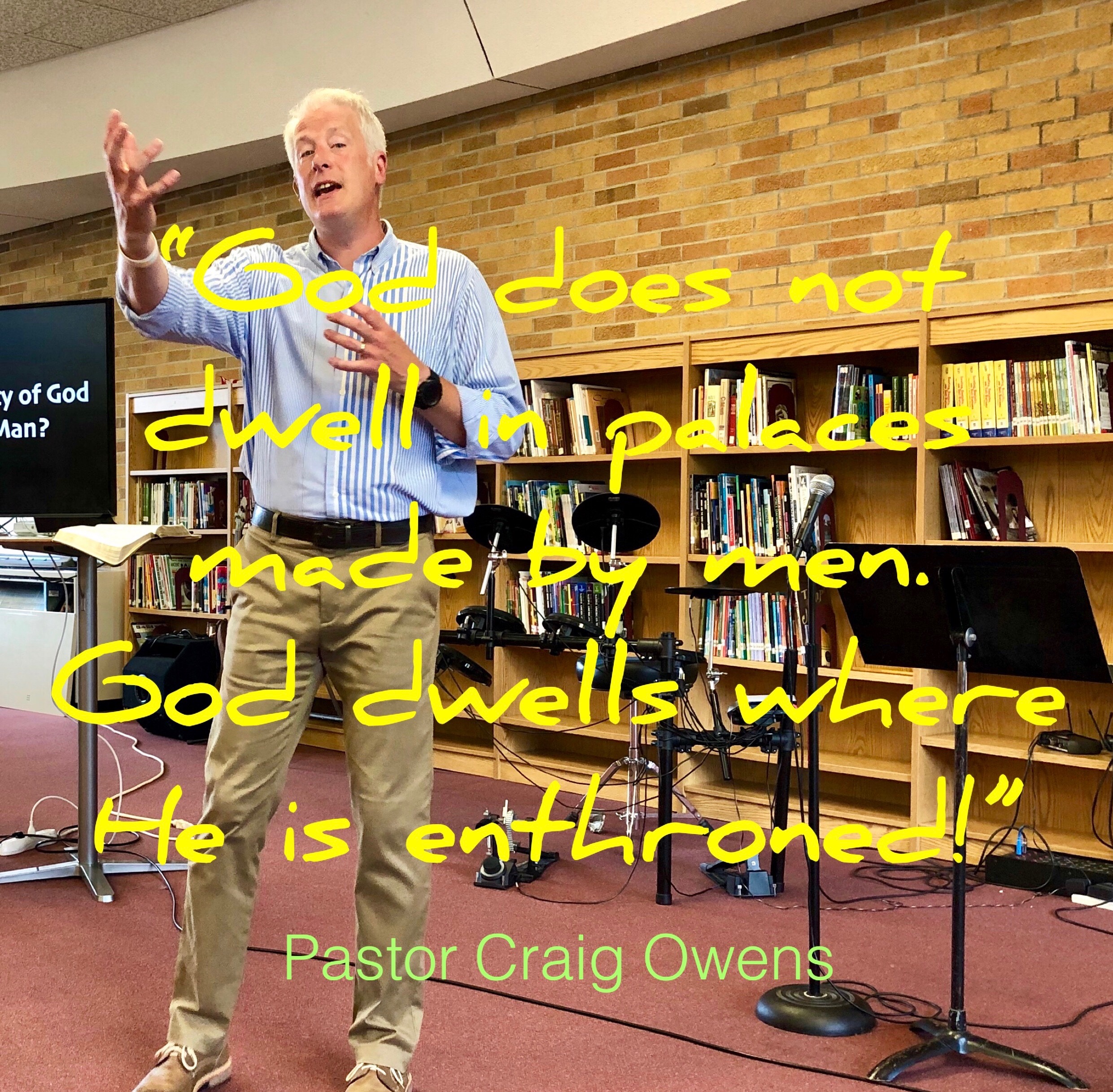
God does not dwell in palaces made by men.
God dwells where He is enthroned!
When people look at the “city” of my life, can they tell God is on the throne? The telling characteristics of a City of God are a city where…
… thoughts continually turn to my King and His unfailing love (v. 9)
… praise, rejoicing, and gladness are constantly rising to God (vv. 10, 11)
… the King is able to freely walk around His kingdom—anywhere He likes (v. 12)
… others can walk around and see what a God-enthroned life looks like (vv. 12, 13)
I’ll ask it again—Can people clearly see that God is the unrivaled King of your heart?
On what we now refer to as Palm Sunday, Jesus arrived in Jerusalem with the crowd shouting, “Hosanna” because they thought Jesus was going to set things right. In this, they were disappointed. Jesus knew that His time for reigning in Jerusalem hadn’t come yet, and Christ’s passionate journey meant He would not cut any corners!
Before Jesus left Jerusalem that Sunday evening, Mark noted that “He looked around at everything.” He didn’t respond right away to what He saw. This is very important to note because we shouldn’t think that His response on Monday was something spontaneous. No, it was planned out in specific detail.
On Monday morning, Jesus prepared to make the 2-mile trip from Bethany to Jerusalem. The Gospels note quite frequently the amount of time Jesus spent in prayer, including beginning His day in conversation with His Father (see Mark 1:35). On this morning, He must have talked with His Father about everything He had seen in Jerusalem the day before.
En route to Jerusalem, Jesus encounters a fig tree that gives every appearance of life and vitality. It looks like it’s ready to serve people, but upon closer inspection, Jesus discovers that there is no fruit on it. He curses the tree for its deceptive outward appearance. This is definite foreshadowing for what’s about to happen!
Jesus enters the temple and begins to drive out merchants, and moneychangers, and dove sellers. He roars at them, “God says this is to be a place of prayer for all nations, but you have turned it into a den of robbers!” (see Matthew 21:12-17; Mark 11:15-19; and Luke 19:45-48).
The phrases house of prayer and den of robbers are direct quotations from Isaiah and Jeremiah, respectively (Isaiah 56:3-7; Jeremiah 7:1-11), but what do they mean?
The temple had specific courts available—
The Court of the Gentiles was open to all people, foreigners included.
The Women’s Court was open to all Jews and, their “uncontaminated” wives.
The Court of Israel was limited to male Jews who were clean and purified.
The fourth court was the Holy Place limited to priests robed in their priestly vestments.
This buying and selling was undoubtedly happening in the Court of the Gentiles. As the Passover was approaching, people from all over the world were here—some purchasing animals to use as sacrifices, and some exchanging their foreign money for Israelite money for the temple tax.
There was a lot of hustle and bustle, but very little worship. This is what angered Jesus. The activity in the temple was like the fig tree He cursed—it looked like it was fruitful, but that was merely outward deception.
Were the merchants exploiting people? Perhaps. But they were certainly occupying the only space where non-Jews could worship. They were certainly becoming a distraction to any true worship activities. They were clearly becoming the main attraction.
There are two important lessons in this outburst that Jesus gives to all His disciples:
As our Christlikeness increases, our intolerance of religious showmanship should increase.
As our Christlikeness increases, our intolerance of unrighteousness should increase—both a greater hate for sin and a greater love for sinners!
“Let the zeal of the house of the Lord ever eat you up. For example: do you see a brother running [toward sin]? Stop him, warn him, be grieved for him, if the zeal of God’s house has now eaten you up. Do you see others running and wanting to drink themselves drunk? Stop whom you can, hold whom you can, frighten whom you can; win in gentleness whom you can: do not in any way sit still and do nothing.” —Augustine
Christ’s passionate journey was out of love for us. Which means He hates anything that keeps us from His Father.
If you know God’s love, be zealous about those things that keep others from coming in to know God’s love for themselves. Not angry at people, but angry at practices and “religious shows” that hinder people from knowing God’s love like you know God’s love.










 Craig T. Owens