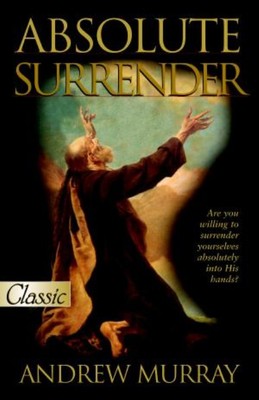
“You will find that in this passage (Romans 7:6-25) the name of the Holy Spirit does not occur once, nor does the name of Christ occur. The man is wrestling and struggling to fulfill God’s law. Instead of the Holy Spirit and of Christ, the law is mentioned nearly twenty times. In this chapter, it shows a believer doing his very best to obey the law of God with his regenerate will. Not only this; but you will find the little words, I, me, my, occur more than forty times. This is the regenerate I in its impotence seeking to obey the law without being filled with the Spirit. This is the experience of almost every saint. …
“Blessed be God when a man learns to say: ‘O wretched man that I am!’ from the depth of his heart. He is on the way to the eighth chapter of Romans [Romans 8:1]. …
“God does not work by His spirit as He works by a blind force in nature. He leads His people as reasonable, intelligent beings, and therefore when He wants to give us that Holy Spirit Whom He has promised, He brings us first to the end of self, to the conviction that though we have been striving to obey the law, we have failed. When we come to the end of that, then He shows us that in the Holy Spirit we have the power of obedience, the power of victory, and the power of real holiness.” —Andrew Murray, in Absolute Surrender
The Dawning Of Indestructible Joy is a wonderful book from John Piper to prepare your heart for celebrating Christ’s First Advent! It’s arranged as a 25-day countdown until Christmas morning. Check out my review of this book here, and then enjoy a few quotes that caught my attention.
“The coming of Jesus was a search-and-save mission. ‘The Son of Man came to seek and save the lost’ [Luke 19:10]. So Advent is a season for thinking about the mission of God to seek and to save lost people from the wrath to come. … ‘As the Father has sent Me, even so I am sending you’ (John 20:21). It’s the story of how the vertical advent of God in the mission of Jesus bends out and becomes the horizontal advent of Jesus in the mission of the church. In us.”
“If there is a longing in your heart this Advent for something that the world has not been able to satisfy, might not this longing be God’s Christmas gift preparing you to see Christ as consolation and redemption and to receive Him for who He really is?”
“Christmas is about the coming of the Son of Man who ‘came not to be served but to serve, and to give His life as a ransom for many.’ These words in Mark 10:45, as a brief expression of Christmas, are what I hope God will fix in your mind and heart this Advent. Open your heart to receive the best present imaginable: Jesus giving Himself to die for you and to serve you all the rest of eternity.”
“Take the very personal words of the Apostle Paul and make them your own. ‘The life I now live in the flesh I live by faith in the Son of God, who loved me and gave Himself for me’ (Galatians 2:20). This is how Jesus destroyed the works of the devil and rescued us from our sin. Don’t leave Christmas in the abstract. Your sin. Your conflict with the devil. Your victory. He came for this.”
“The point is that when Jesus comes, He confirms the truth of all God’s promises. He shows that God is trustworthy; He keeps His word. … Christ came to prove that God tells the truth, that God keeps His promises. Christmas means that God can be trusted.”
“It is God’s message of hope this Advent that what is good need never be lost and what is bad can be changed. The devil works to take the good and bring the bad. And Jesus came to destroy the works of the devil [1 John 3:8].”
“This is what God does again and again. He may be doing it for you this Advent season—graciously and tenderly frustrating you with life that is not centered on Christ and filling you with longings and desires that can’t find their satisfaction in what this world offers, but only in the God-man. What a Christmas gift that might be! Let all your frustrations with this world throw you onto the Word of God. It will become sweet—like walking into paradise.”
More Than A Carpenter by Josh & Sean McDowell is a wonderful resource to prepare you to share the uniqueness of Jesus Christ. Check out my book review by clicking here, and then enjoy these quotes that I especially found interesting.
“Why don’t the names of Buddha, Mohammed, or Confucius offend people the way the name of Jesus does? I think the reason is that these other religious leaders didn’t claim to be God.” —Josh McDowell
“It was reserved for Christianity to present to the world an ideal which through all the changes of eighteen centuries has inspired the hearts of men with an impassioned love; has shown itself capable of acting on an all ages, nations, temperaments, and conditions; has been not only the highest pattern of virtue, but the strongest incentive to its practice. … The simple record of these three short years of active fife has done more to regenerate and soften mankind than all the disquisitions of philosophers and all the expectations of moralists.” —William Lecky, one of Great Britain’s most noted historians and a fierce opponent of organized Christianity
“This testimony [that Jesus was God], if not true, must be downright blasphemy or madness. … Self-deception in a matter so momentous, and with an intellect in all respects so clear and so sound, is equally out of the question. How could He be an enthusiast or a mad man who never lost the even balance of His mind, who sailed serenely over all the troubles and persecutions, as the sun above the clouds, who always returned the wisest answer to tempting questions, who calmly and deliberately predicted His death on the Cross, His resurrection on the third day, the outpouring of the Holy Spirit, the founding of His church, the distraction of Jerusalem—predictions which have been literally fulfilled? A character so original, so complete, so uniformly consistent, so perfect, so human and set so high above all human greatness, can be neither a fraud nor a fiction. The poet, as has been well said, would in this case be greater than the hero. It would take more than a Jesus to invent a Jesus.” —Philip Schaff
“There exists no document from the ancient world witnessed by so excellent a set of textual and historical testimonies, and offering so superb an array of historical data on which an intelligent decision may be made. An honest [person] cannot dismiss a source of this kind. Skepticism regarding the historical credentials of Christianity is based on an irrational bias.” —Clark H. Pinnock
“The Gospels tell us Jesus’ family, including James, were embarrassed by what He was claiming to be. They didn’t believe in Him; they confronted Him. In ancient Judaism it was highly embarrassing for a rabbi’s family not to accept him. Therefore, the Gospel writers would have no motive for fabricating this skepticism if it weren’t true. Later the historian Josephus tells us that James, the brother of Jesus, who was the leader of the Jerusalem church, was stoned to death because of his belief in his brother. Why did James’ life change? Paul tells us: the resurrected Jesus appeared to him. There’s no other explanation.” —J. P. Moreland
“The resurrection takes the question ‘Is Christianity valid?’ out of the realm of philosophy and makes it a question of history.”
“I believe in the resurrection, partly because a series of facts are unaccountable without it.” —Michael Ramsey, former Archbishop of Canterbury
“The Old Testament contains sixty major messianic prophecies and approximately 270 ramifications that were fulfilled in one Person, Jesus Christ. … We find the chances of just forty-eight of these prophecies being fulfilled in one person to be only 1 in 10157. … All of the prophecies about the Messiah were made at least four hundred years before He was to appear. … This description of the manner of [Christ’s] death was written eight hundred years before the Romans used crucifixion as a method of execution.” —Josh McDowell
I am always sharing quotes from More Than A Carpenter and other interesting authors regularly on both Twitter and Tumblr. Please make sure you are following me there as well to see these quotes as soon as they are posted.
Imagine you are taking a nice autumn color tour. As you are enjoying the beautiful fall colors, you come upon a quaint town, where the speed limit through town drops to 25 mph.
As you make your way through town, enjoying the scenery, you suddenly become aware of the flashing lights of a police car behind you. Quickly glancing down at your speedometer, you notice that you are traveling at 35 mph!
The officer approaches your car, asks for your license and registration and returns to his car. At this point, there are two things that could happen.
Since you did break the law, the officer might return to your car with a traffic ticket, indicating that you were driving 10 mph over the speed limit. You may have all kinds of excuses, and even a spotless driving record, but the truth of the matter is you broke the traffic laws of that city. The ticket you received is, in fact, justice.
Now imagine the officer returns to your car and says, “You have a pretty good driving record, and I believe that you were enjoying the fall scenery, so I’m going to let you off with a warning this time.” Even though you broke the law, this police officer extended mercy to you by not giving you the penalty you deserved.
Have you ever experienced this kind of justice or mercy? Most of us probably have.
But here’s something you have probably never experienced. Imagine you are driving through the same quaint town, admiring the beauty, when you see those flashing lights in your rearview mirror. Quickly glancing down at your speedometer you see that you are traveling under the speed limit. You double-check that your seatbelt is fastened and you are obeying all of the traffic laws.
When the officer approaches your car, he says, “Do you know why I pulled you over? I pulled you over because you are following all of the traffic laws and I wanted to give you a $50 gift certificate to one of the best restaurants we have in town.”
If this ever happened to you, this would be the definition of grace: getting a blessing you didn’t deserve to receive!
Christians certainly understand justice averted, when the penalty for our sins fell on Jesus instead of on us. Christians also understand mercy, when we don’t have to pay for the sins we have committed. But have you ever stopped to consider the amazing grace God continues to pour over your life?
John describes it like this: For out of Christ’s fullness we have all received—all had a share and we were all supplied with—one grace after another and spiritual blessing upon spiritual blessing and even favor upon favor and gift heaped upon gift (John 1:16 AMP).
All of us have blessing upon blessing, favor upon favor, gift upon gift heaped onto our lives. The Apostle Paul then asks, “What am I going to do with all of this grace I’ve received?”
His answer: I’m going to make sure I pass it along to others! (see Ephesians 3:1-9)
Gordon MacDonald wrote, “The world can do almost anything as well as or better than the church. You need not be a Christian to build houses, feed the hungry, or heal the sick. There is only one thing the world cannot do. It cannot offer grace.”
So here’s my question to you: how are you handling the grace God has lavished on you? Are you even aware of His grace gifts? Are you hoarding them for yourself?
Or are you making sure that those around you are recipients of the overflow of grace from your life? In other words, are you demonstrating what the world can never show?
Christian, make sure the world sees your grace-filled life in action! This is what brings glory to God and draws others to their own personal relationship with Jesus Christ.
Some of the greatest discoveries and revelations came about because people were curious. They refused to just go along with what they had always been told, what they grew up believing, or what the conventional wisdom told them was impossible.
Archimedes had his “Eureka!” moment because he refused to believe that it was impossible to measure the volume of an irregularly-shaped object.
Isaac Newton formulated the laws of gravitation because he curiously wondered about why apples fell perpendicular and at the same velocity.
The Apostle Peter saw a vision from God with animals, but didn’t stop there. His openness helped him realize that God didn’t have “favorites.”
Far too many people live their lives cursed with low expectations. They say, “That’s all there is.” and they put a period on it.
God wants us to soar above those low expectations! He tells us things like:
Come now, let us reason together… (Isaiah 1:18).
Call to Me and I will answer you and tell you great and unsearchable things you do not know (Jeremiah 33:3).
Are you listening to this? Really listening? … The knowledge of the secrets of the kingdom of heaven has been given to you… (Matthew 13:9, 11)
But we are trapped in the curse of low expectations when we put a period on things, when we refuse to learn more, see more, hear more.
Most people—“That’s all there is.” (period)
What if we changed it up—“Is this all there is?” (question mark)
Perhaps you might get—“There is so much more!” (exclamation point)
For example, Paul uses the word “mystery” multiple times in his letter to the Ephesians. He explains that a mystery is something hidden from those who have it all figured out (the “period” people), but is revealed to those who will ask God (the “question mark” people). Only the “question mark” people get to see the “exclamation points” God has for them. Things like…
God has a plan, and it is His pleasure to reveal it to me (Ephesians 1:9-10; 2:10).
God’s revelation is fully revealed to me in His Word (3:3-5).
Faith in Jesus makes Christians co-heirs and sharers in all God’s promises (3:6).
I have access to God’s inexhaustible riches, His immense wisdom, and I may approach Him with freedom and confidence (3:8-12).
Don’t stop with “.” but go on to “?” and experience “!”
With great expectation, read God’s Word, approach His throne, dig into His riches, wrestle with the difficult things, learn more of God’s purpose for your life. He wants to give you so much more “!”
I have blogged quite a bit about the tendency of our culture to be pragmatic. That is, people determine the rightness or wrongness of something based on how it feels to them. If it feels good, or if they get something positive out of it, then it must be good; but if it feels bad, or if they don’t get anything out of it, then it must be something they need to abandon.
True love is never pragmatic. Although culture tells us it is:
“You’ll know he’s the one by how he makes you feel.”
“We’ve fallen out of love.”
“There’s just no spark there any more.”
“He’s let me down one too many times.”
“You’ve lost that lovin’ feeling, oh that lovin’ feeling….”
“We dress ‘love’ in the fantasy of evening gowns and tuxedos, with silver and candelabras. But most of the time…love comes dressed in overalls—it is practical, down-to-earth, everyday hard work. It is really thinking of the other person and doing what the other person needs and being what the other person needs when he or she needs you to be there.” —Dr. Richard Dobbins
In writing to the church at Ephesus, Paul told them he became their servant—literally this means their waiter. But not so he could get something out of it. Instead it was a love completely focused on them…
the prisoner of Jesus Christ for the sake of you (Ephesians 3:1)
this grace was given to me to preach to [you] (v. 8)
my sufferings for you, which are your glory (v. 13)
Speaking to the Ephesian leaders as he was traveling to Jerusalem, he said…I served the Lord with great humility and with tears (Acts 20:19)
I never stopped warning each of you night and day with tears (v. 31)
I have not coveted anyone’s silver or gold or clothing (v. 33)
In everything I did, I showed you that by this kind of hard work we must help the weak(v. 35)
Dear Christian, is this the kind of love you demonstrate? Do you share God’s grace with the hurting? Do you walk alongside those who are limping or about to give up? Do you stand through the storms with those on the battlefield?
It’s not what I get out of it.
Love focuses on the other person.
Love is devoted by a solemn promise.
Love doesn’t view “suffering” as something bad, but for the other person’s glory.
Love doesn’t seek recognition or rewards.
Love simply does what is important for the other person.
This coming Sunday we re-start a series at Calvary Assembly of God which we first began in 2014, and re-launched in 2015, called Sit Walk Stand: A Study In The Book Of Ephesians.
Why Ephesians? Dr. Martyn Lloyd-Jones, who preached 232 sermons on this book to his packed-out church, said, “It is very difficult to speak of Ephesians in a controlled manner because of its greatness. Many have tried to describe it. One writer has described it as the crown and climax of Pauline theology. Another has said that it is the distilled essence of the Christian religion, the most authoritative and most consummate compendium of our holy Christian faith. What language! And it is by no means exaggerated.”
It is my desire that our congregation be as biblically literate as I can encourage and resource them to be. So Tom Kaastra, a 38-year veteran pastor, is going to co-teach with me again this year as we continue our attempt to master this powerful epistle.
The name of our series—Sit Walk Stand—comes from Watchman Nee, who wrote, “Of all Paul’s epistles, it is in Ephesians that we find the highest spiritual truths concerning the Christian life. The letter abounds with spiritual riches, and yet at the same time is intensely practical.”
Whether you were with us last year or not, I posted some sermon recaps each week which will help prepare you as we re-launch this series. Click on the links below:
I recently finished a reading plan on YouVersion called Uncommen Husbands. Here are some quotes that I especially appreciated from Brian Goins’ insights.
“Paul indicates there a came a time in his life when he grew out of an immature, boyish love and embraced a more mature, and dare we say, manly love [1 Corinthians 13:11]. If we’re going to love our wives like Christ loved the church, we must let the boy die. And in marriage, that’s far easier said than done. Check out the comparisons below:
Boys retaliate quickly when hurt; manly love is patient and kind.
Boys require constant affirmation; manly love is not arrogant or rude.
Boys stew, stammer, and hold grudges when they don’t get their way; manly love does not insist on its own way; it is not irritable or resentful.
Boys try to win every argument; manly love does not rejoice at wrongdoing, but rejoices with the truth.
Boys have a short fuse; manly love bears all things.
Boys write people off when wronged; manly love believes God’s best for the relationship.
Boys lose hope after they’re hurt; manly love always hopes for reconciliation regardless of the pain.
Boys expect to be served; manly love endures all things.”
“Paul says, ‘cherish’ our bride like we cherish our own bodies. The word means, ‘bring warmth to,’ and from which we derive our words, thermal and thermostat. … When Paul tells us to love our wives as we love our own bodies, he’s encouraging us to cherish their emotional needs in the same way we cherish our own physical needs. If she’s chilly, it’s our job to warm her up. If she’s steaming, then we help lower the mercury. In other words, the call to cherish means we have to engage when we’d rather shrink back.”
“I’m not sure Paul was the most popular men’s retreat speaker. When he spoke, some fell asleep…and then fell out a window (Acts 20:9). He admitted to the church at Corinth his messages were a bit convoluted (1 Corinthians 2:3-5). Even his buddy Peter threw him under the bus for his ivory tower verbiage (2 Peter 3:15-16).
“Then there was his unfortunate use of the word nourish in Ephesians 5:28. I’m pretty sure every guy in the audience cringed a bit when Paul said to husbands, ‘nourish’ your wife. We may think of nutritious foods, but in Paul’s day, the word often referred to nursing moms. Try and get that picture out of your head.
“When my wife used her God-given equipment to nourish our children I don’t ever remember a time when I asked her, ‘Honey, when was the last time you fed the baby?’ and she responded, ‘Oh, I don’t know, it’s been a few days.’ Because instinctively a mom knows her baby’s nourishment has to be consistent, catered to their tastes, and is crucial for their survival. In the same way, Paul calls husbands to nourish their brides. Is your love consistent? I don’t know about you, but I rarely miss a meal. Unless I’m fasting (for a very short time!), about every 4-5 hours I feed the beast. It’s all too common for our wives to go months between meals: a date night, taking a walk, go on an adventure, a simple text saying, ‘are you tired? You should be because you’ve been running through my mind all day long,’ or a well thought out letter. Nourishment must be ongoing. Is your love catered to her tastes? You’re not going to catch me at the all-you-can-eat tofu bar. Unless I’m on the mission field, I generally nourish my body with stuff I like. It’s common to give love the way we want to receive love. But your love language probably doesn’t match hers. Want to know if you are catering to her ‘love’ taste buds, ask this UNCOMMEN question: ‘Honey, do you feel the depth of my love? Not do you know it, but do you feel it? If not, how can I nourish your soul?’ Do you realize your love is crucial to her survival?”
The Apostle Paul reminded the Thessalonians of how he ministered among them (“You know…” [1 Thessalonians 2:1]). This gives all of us pastors now an example of how to minister.
(1) “With the help of God we dared to tell you His gospel” (v. 2). I cannot minister out of my own strength; everything must flow from God’s strength.
(2) The message “does not spring from error or impure motives, nor are we trying to trick you” (v. 3). I must constantly allow the Holy Spirit to check my motives and check my theology.
(3) “We speak as men approved by God to be entrusted with the gospel”( v. 4a). I am merely a vessel that God chooses to use to share His gospel. This must keep me humble.
(4) “We are not trying to please men but God, Who tests our hearts” (v. 4b). I minister only for God’s approval, only for the applause of Nail-Scarred hands. “We were not looking for praise from men” (v. 6).
(5)“We were gentle among you, like a mother caring for her little children … We dealt with each of you as a father deals with his own children, encouraging, comforting and urging you to live lives worthy of God” (vv. 7, 11, 12).
(6) “We loved you so much that we were delighted to share with you not only the gospel of God but our lives as well” (v. 8). Paul didn’t just show up to preach, but he was in day-to-day interaction with the saints.
(7) “We worked night and day in order not to be a burden to anyone while we preached the gospel of God to you” (v. 9). My salary should not be too much of a burden for my congregation.
(8) “Holy, righteous and blameless we were among you” (v. 10). My life of integrity adds weight to the message that I preach (v. 5).
May all of us who are pastors live and minister like this!



 “You will find that in this passage (Romans 7:6-25) the name of the Holy Spirit does not occur once, nor does the name of Christ occur. The man is wrestling and struggling to fulfill God’s law. Instead of the Holy Spirit and of Christ, the law is mentioned nearly twenty times. In this chapter, it shows a believer doing his very best to obey the law of God with his regenerate will. Not only this; but you will find the little words, I, me, my, occur more than forty times. This is the regenerate I in its impotence seeking to obey the law without being filled with the Spirit. This is the experience of almost every saint. …