Unsafe Shepherds

Listen to the podcast of this post by clicking on the player below, and you can also subscribe on AppleSpotify, or Audible. Check out the video content in this post by clicking here. 

Gentleness is both a safe word and an unsafe word, which makes gentleness such an indispensable trait for shepherd leaders. Check out this clip from my time on the Leading from Alignment podcast. 

Here is an excerpt from the chapter that Jim Wiegand was referencing—

     I mention this fruit of gentleness specifically because I think it is one of the least understood and one of the most powerful virtues in a shepherd’s life. If you go to a modern dictionary for a definition of gentleness, you might read words like kind, moderate, calm, and tame. If you dig a little deeper into the synonyms, you will discover words like meek and mild. 

     The Greek philosophers thought and taught extensively about the virtues. For them a virtue was a healthy tension or a balanced response between two opposite extremes. Many philosophers referred to a virtue as a “golden mean” between those extremes. For instance, the virtue of generosity might be described as the golden mean between thriftiness and lavishness; courage could be the golden mean between rashness and timidity; and purity the golden mean between prudishness and immorality. 

     The gentleman or gentlewoman is not a pushover. They are strong. They know what they believe in and are passionate for the truth. They know when to fight and how to fight. So gentleness becomes the golden mean between a pacifist and a fighter. Gentleness is a lion with powerful muscles, razor-sharp claws, and a jaw strong enough to snap a bone who knows how to velvet its paws and use its nearly invincible strength as a means for good. —from Chapter 3: “A Shepherd’s Gentleness” 

Please check pick up a copy of When Sheep Bite today. 

►► Would you please prayerfully consider supporting this ministry? My Patreon supporters get behind-the-scenes access to exclusive materials. ◀︎◀︎

A Gentleman For Jesus

Listen to the podcast of this post by clicking on the player below, and you can also subscribe on AppleSpotify, or Audible. 

In some of the final words Paul wrote to his friends in Philippi, he said, “Let your gentleness be evident to all” (Philippians 4:5). 

Today, we don’t often refer to people as gentlemen or gentlewomen, but Paul suggests that saints should strive to earn this title every day. 

The Greek word means behavior that is suitable for the occasion; not someone given to extremes nor being unpredictable. Paul uses this word in his leadership qualifications to both Timothy and Titus (1 Timothy 3:3; Titus 3:2). Peter uses this word for servants in relationship to their masters (1 Peter 2:18), and James uses it to describe what godly wisdom looks and sounds like (James 3:17). 

(See all the Scriptures I use in this post here.

When Paul says that our gentleness is to be “evident to all,” he uses a word that means intimate relationships. In other words, those who are closest to us should be the most aware of our gentleness. But it also means that anyone should be able to predict quite accurately how a gentleman or gentlewoman is going to behave or respond in the situations they are in. 

Look how this phrase is rendered in other Bible translations:

  • AMPC: Let all men know and perceive and recognize your unselfishness. 
  • NLT: Let everyone see that you are considerate in all you do. 
  • KJV: Let your moderation be known unto all men. 

How do I know if I am being a gentleman for Jesus? I must look in the mirror of others’ faces. If they are wondering how I am going to respond, or if they are shocked at how I just responded, then they must not know my gentlemanliness. I cannot excuse my unpredictable or unseemly response with excuses like, “I was caught off guard,” “I was having a bad day,” or “They just don’t know me very well.” 

Being a gentleman for Jesus is totally on me. It’s up to me to allow the Holy Spirit to develop the fruit of gentleness in me; it’s not on others to excuse my poor behavior. 

Christians, I pray that we may be known as the best of gentlemen or gentlewomen wherever we go and in whatever circumstances we find ourselves. After all, Paul concludes this verse in Philippians 4:5 with a heavy reminder for us: “The Lord is near.” 

►► Would you please prayerfully consider supporting this ministry? My Patreon supporters get behind-the-scenes access to exclusive materials. ◀︎◀︎

Links & Quotes

In biblical times, the Jews looked down on the Samaritans. But not Jesus. One of His longest conversations is with a Samaritan woman. If He had a poor attitude about her, she would have felt that. Instead, she felt His love. Jesus died so that “whoever believes in Him would not die but would have eternal life.” We need to treat everyone like one of the whoever’s that Jesus died to save.

I have a lot of new video content on my YouTube channel every week. Please check it out and subscribe so you don’t miss anything.

One hundred years ago, William M. Faux called the churches in the Assemblies of God to pray more for our missionaries. “Pray, beloved, pray for missions. Are more workers needed? Yes. Praying is the secret of securing them. Are more funds needed? Yes. Prayer is the force that opens men’s hearts to give to God their resources. Is greater spirituality needed? Yes, surely. Prayer is the agency that brings greater spirituality to the entire church (Matthew 9:38). Louder than the Macedonian cry ‘Come over and help us,’ which rang out to Paul, sounds the cry today, ‘Brethren, pray for us.’ Let the Scripture warning ring in our souls—‘God forbid that I should sin against the Lord in ceasing to pray for you.’ Prayer is the greatest force that we can wield. It is the greatest talent which God has granted us. And this talent He has given to every Christian.”

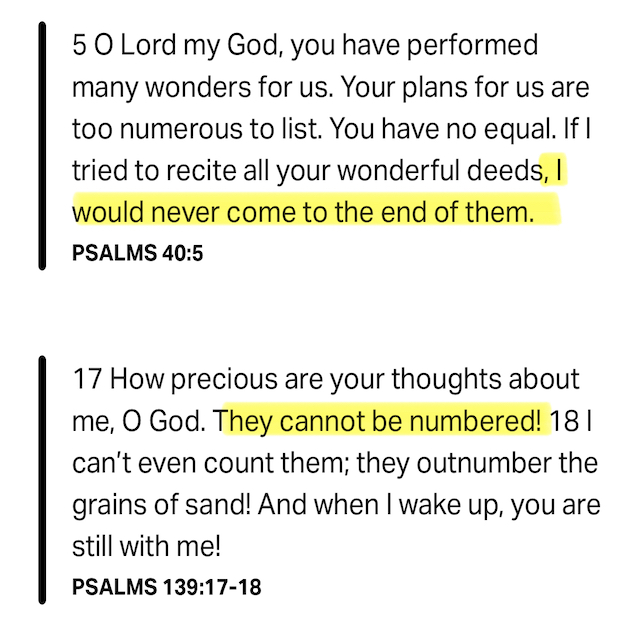
“Faith knows that every seashore on earth has less sand than God has wondrous deeds and thoughts toward us.” —Tanner Swanson

“I had always vaguely felt facts to be miracles in the sense that they are wonderful: now I began to think them miracles in the stricter sense that they were willful. I mean that they were, or might be, repeated exercises of some will. In short, I had always believed that the world involved magic: now I thought that perhaps it involved a magician. And this pointed a profound emotion always present and sub-conscious; that this world of ours has some purpose; and if there is a purpose, there is a person. I had always felt life first as a story: and if there is a story there is a story-teller.” —G.K. Chesterton 

John Piper discusses how Christian apologists can contend for the faith properly without sliding into “word fights.” 

The Difficulty In Answered Prayer

Often it is simply the answers to our prayers that cause many of the difficulties in the Christian life.

We pray for patience, and our Father sends demanding people our way who test us to the limit, ‘because…suffering produces perseverance’ (Romans 5:3). …

We pray to be unselfish, and God gives us opportunities to sacrifice by placing other people’s needs first and by laying down our lives for other believers. …

We pray to the Lord, as His apostles did, saying, ‘Increase our faith!’ (Luke 17:5). Then our money seems to take wings and fly away; our children become critically ill; an employee becomes careless, slow, and wasteful; or some other new trial comes upon us, requiring more faith than we have ever before experienced.

We pray for a Christlike life that exhibits the humility of a lamb. Then we are asked to perform some lowly task, or we are unjustly accused and given no opportunity to explain….

We pray for gentleness and quickly face a storm of temptation to be harsh and irritable. 

We pray for quietness, and suddenly every nerve is tested to its limit with tremendous tension so that we may learn that when He sends His peace, no one can disturb it.

We pray for love for others, and God sends unique suffering by sending people our way who are difficult to love and who say things that get on our nerves and tear at our heart. …

The way to peace and victory is to accept every circumstance and every trial as being straight from the hand of our loving Father.” —Lettie Cowman, in Streams in the Desert (emphasis added)

Saturday In The Proverbs—15 Ways To Defuse Tense Relationships (Proverbs 15)

[Each chapter in the Book of Proverbs contains thoughts that fit into a theme; they are not just random thoughts gathered together. In this “Saturday In The Proverbs” series, I will share a theme that I see in each chapter. But the cool thing about God’s Word is that you may see an entirely different theme. That’s great! If you do, I would love for you to share it in the comments below.]

A soft answer turns away wrath, but a harsh word stirs up anger (Proverbs 15:1).

Here’s how to defuse potentially volatile situations with other people—

  1. Speak gently (vv. 1, 28)
  2. Speak truthfully (v. 2)
  3. Remember that God is watching (vv. 3, 9, 11, 25, 26)
  4. Speak helpful words or stay silent (vv. 4, 7, 14, 23, 30)
  5. Receive correction from others (vv. 5, 12, 31, 32)
  6. Find ways to add value to other people (v. 6)
  7. Ask for God’s help (vv. 8, 29)
  8. Be gentle (v. 10) 
  9. Develop emotional intelligence (vv. 13, 15, 21)
  10. Don’t envy others (vv. 16, 17, 27)
  11. Guard against getting angry (v. 18)
  12. Remember: good relationships take work (vv. 19, 24)
  13. Use all the wisdom you have… (v. 20)
  14. …get all the wisdom that others have too (v. 22)
  15. Stay humble (v. 33)

Relationships can be one of the greatest treasures in our life, or they can be one of the biggest disappointments in our life. 

Put the ball in your court, and YOU work on making your relationships treasures! 

A Surprising Way To Relieve Stress

Paul writes some pretty straightforward words to the Christians at Philippi about how to overcome anxiety.

Just to be clear, we’re not talking about a problem-free nor a stress-free life. That’s simply not possible. Our bodies were created to deal with stress in a healthy way. But stress that is unhealthy, or unnecessarily prolonged, or not flushed properly from the body becomes anxiety. Anxiety is the culprit responsible for a whole list of bad things!

When we face a stressor, our bodies release a hormone called cortisol. The main function of this hormone is to prepare us to fight or flight. Sometimes this looks like over-engaging in problem-solving, and sometimes it looks like a complete withdrawal from life. Sometimes cortisol leads to sleeplessness and a diminished appetite, and sometimes it makes people sleepy and craving comfort food.

But the bottom line is the fight-or-flight response is very me-focused!

The strategies Paul lists for us take the focus off me and put it on God. He especially counsels us to pray to God and to praise God. Between these two healthy responses is something unexpected. He writes, “Let your gentleness be evident to all. The Lord is near.”

What in the world does gentleness have to do with relieving stress?!

First, let’s consider the motivation: The Lord is near. I think this could mean:

  1. The Lord’s name is near, as in we are called “Christians” and so we should act in a way that glorifies God.
  2. The Lord is near to help us.
  3. The Lord’s return is closing in where we will have to give an account of how we have lived our lives.

Then there is this word gentleness. This word means:

  • moderation
  • considerate of others
  • patience toward our situation and toward others
  • or as The Message says: Make it as clear as you can to all you meet that you’re on their side, working with them and not against them.

Cortisol is naturally removed from our physical bodies through rest and exercise. Anxiety is naturally removed from our emotional lives the same way—resting in God’s presence (honk!) and gently and considerately exercising a blessing for someone else.

THE BEST WAY TO DE-STRESS IS TO BLESS! 

When anxiety builds:

  1. Honk
  2. Bless
  3. Repeat

Don’t let stress win by making you self-centered. Defeat stress and anxiety by praising God and blessings others. And then make that a daily habit!

Lettie Cowman On Prayer

Lettie Cowman“Often it is simply the answers to our prayers that cause many of the difficulties in the Christian life.

“We pray for patience, and our Father sends demanding people our way who test us to the limit, ‘because…suffering produces perseverance’ (Romans 5:3). …

“We pray to be unselfish, and God gives us opportunities to sacrifice by placing other people’s needs first and by laying down our lives for other believers. …

“We pray to the Lord, as His apostles did, saying, ‘Increase our faith!’ (Luke 17:5). Then our money seems to take wings and fly away; our children become critically ill; an employee becomes careless, slow, and wasteful; or some other new trial comes upon us, requiring more faith than we have ever before experienced.

“We pray for a Christlike life that exhibits the humility of a lamb. Then we are asked to perform some lowly task, or we are unjustly accused and given no opportunity to explain….

“We pray for gentleness and quickly face a storm of temptation to be harsh and irritable.

“We pray for quietness, and suddenly every nerve is tested to its limit with tremendous tension so that we may learn that when He sends His peace, no one can disturb it.

“We pray for love for others, and God sends unique suffering by sending people our way who are difficult to love and who say things that get on our nerves and tear at our heart. …

The way to peace and victory is to accept every circumstance and every trial as being straight from the hand of our loving Father.” —Lettie Cowman

8 Ways Pastors Can Minister Like The Apostle Paul

PreachingThe Apostle Paul reminded the Thessalonians of how he ministered among them (“You know…” [1 Thessalonians 2:1]). This gives all of us pastors now an example of how to minister.

(1) “With the help of God we dared to tell you His gospel” (v. 2). I cannot minister out of my own strength; everything must flow from God’s strength.

(2) The message “does not spring from error or impure motives, nor are we trying to trick you” (v. 3). I must constantly allow the Holy Spirit to check my motives and check my theology.

(3) “We speak as men approved by God to be entrusted with the gospel”( v. 4a). I am merely a vessel that God chooses to use to share His gospel. This must keep me humble.

(4) “We are not trying to please men but God, Who tests our hearts” (v. 4b). I minister only for God’s approval, only for the applause of Nail-Scarred hands. “We were not looking for praise from men” (v. 6).

(5) “We were gentle among you, like a mother caring for her little children … We dealt with each of you as a father deals with his own children, encouraging, comforting and urging you to live lives worthy of God” (vv. 7, 11, 12).

(6) “We loved you so much that we were delighted to share with you not only the gospel of God but our lives as well” (v. 8). Paul didn’t just show up to preach, but he was in day-to-day interaction with the saints.

(7) “We worked night and day in order not to be a burden to anyone while we preached the gospel of God to you” (v. 9). My salary should not be too much of a burden for my congregation.

(8) “Holy, righteous and blameless we were among you” (v. 10). My life of integrity adds weight to the message that I preach (v. 5).

May all of us who are pastors live and minister like this!

8 Ways To Argue Correctly

8 ways to argue correctlyIf you argue your case with a neighbor… (Proverbs 25:9). Notice the first word of this proverb is “IF” which tells me I don’t have to argue. But if I do, then here are eight things to remember.

  1. Don’t betray a confidence (vv. 9, 10)
  2. Practice patience (v. 15a)
  3. Speak gently (v. 15b)
  4. Address foolishness without becoming foolish (26:4, 5)
  5. Stay out of arguments that aren’t my concern—don’t meddle (v. 17)
  6. Don’t gossip (v. 20)
  7. Tell the truth (v. 28a)
  8. Don’t flatter the other person (v. 28b)

Let’s try to keep this in mind IF an argument is unavoidable.

17 Quotes From “Winning With Principle”

Winning With PrincipleJohn Wooden won the right way: with principle and integrity. And his wins were not short-lived, but they can last a lifetime. Check out a few quotes from Winning With Principle, a collection of quotes from Coach. You can read my full book review by clicking here.

“You learn as much from those under your supervision as they do from you.”

“Truth will always stand the test of scrutiny.”

“There is no substitute for hard work. If you are looking for the easy way, the shortcut … you’ll not be developing your talents.”

“The best competition I have is against myself to become better.”

“Time spent getting even would be better spent getting ahead.”

“Success is peace of mind, which is a direct result of the self-satisfaction in knowing you did your best to become the best you are capable of becoming.”

“There is nothing stronger than gentleness.”

“You can do more good by being good than any other way.”

“If you’re not making mistakes, then you’re not doing anything. I’m positive that a doer makes mistakes.”

“Failure is not fatal, but failure to change might be.”

“Don’t measure yourself by what you have accomplished, but by what you should have accomplished with your ability.”

“Players with fight never lose a game; they just run out of time.”

“The shining trophies on our shelves can never win tomorrow’s game.”

“Always try to be better today than you were yesterday.”

“Success is never final; failure is never fatal. It’s courage that counts.”

“Things turn out the best for the people who make the best of the way things turn out.”

“Consider the rights of others before your own feelings and the feelings of others before your own rights.”