The book of Proverbs has so much timely wisdom. Many of the proverbs are presented as the opposite of what pop culture promotes. Nowhere is this more stark than chapters 10-15.
In these six chapters, nearly every verse uses the conjunction BUT to set apart God’s way from the world’s way. In fact, I counted 144 BUTs in these chapters. Clearly there is a lifestyle that God blesses, and a lifestyle that God rejects.
I would encourage you to read these proverbs for yourself, but let me give you just a taste of what I’m talking about. In chapter 10, the BUTs show us that doing things God’s way leads to:
And doing things the world’s way leads to:
Or consider the proverbs about our vocabulary from chapter 12:
Take some time to study the BUTs in these chapters, and then comment below on what you find.
“To fulfill God’s destiny for your life, you likely don’t have to do more; you have to do less. … Enjoy the Christmas season. Wrap the presents. Prepare your home in a festive way. Make memories with your family. But don’t let this Christmas pass without spending some time at Jesus’ feet. Long after everything else fades from this Christmas, worshiping Jesus is all that will truly last.” —Rick Warren
“Holidays in America have come to be regarded as entitlements. They’re all about us, seasons of diversion, distraction, self-indulgence, and time off work. Even the great religious celebrations of the national calendar—Thanksgiving, Christmas, and Easter—are regarded by most Americans as opportunities to get some good bargains and enjoy a little time for relaxation, not for spiritual reflection and renewal, but just for doing whatever we want. Sort of like the way most Christians observe the Lord’s Day.” —T.M. Moore
As we are celebrating the First Advent, J. Warner Wallace asks a great question: Why didn’t the Apostle Paul mention the virgin conception?
“I am convinced many Christians today are troubled for the same reason Asa was [2 Chronicles 16:1-9]. They have war in their souls because they have traded faith for self-reliance. But the fact is, there is no way a follower of Jesus can have faith in any other source and not be troubled.” —David Wilkerson
“People who are exercised and preoccupied with such things as how the star worked and how the Red Sea split and how the manna fell and how Jonah survived the fish and how the moon turns to blood are generally people who have what I call a mentality for the marginal. You do not see in them a deep cherishing of the great central things of the gospel—the holiness of God, the ugliness of sin, the helplessness of man, the death of Christ, justification by faith alone, the sanctifying work of the Spirit, the glory of Christ’s return and the final judgment. They always seem to be taking you down a sidetrack with a new article or book. There is little centered rejoicing.” —John Piper
“Whether one makes the observation light-heartedly or in all seriousness, one must observe that, when the male body unites for procreation with the female, the pleasure that goes along with it is understood to be in accordance with nature, but that when male joins with male, or female with female, it is outside the bounds of nature. This outrage was first done by people whose desire for pleasure was without self-control.” —Plato. This agrees with what the Bible says in Romans 1:26-27.
Lenny Esposito has some good advice for students to defend their Christian faith in the classroom.
Seth Godin has some insight on whining—“Before starting, a question: Will it help? Like holding a grudge, or like panicking, whining rarely helps. If anything, any of the three make it far less likely that you’ll make progress solving the problem that has presented itself. And, like knuckle cracking, it’s best enjoyed alone.”
[VIDEO] Bobby Conway asks Lenny Esposito how to handle the claim “The Bible has contradictions in it”—
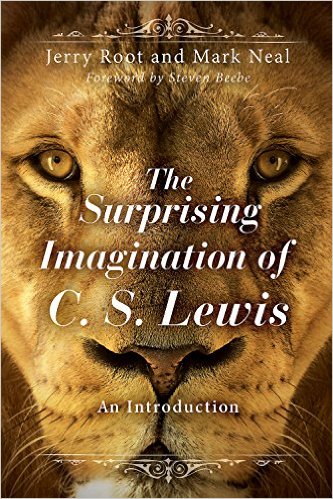
Yesterday I posted a review on an innovative book The Surprising Imagination Of C.S. Lewis. Truly this man’s literary output during his lifetime, and his works’ staying power after his lifetime, is amazing. Here are a few quotes from this prolific author.
“We may ignore, but we can nowhere evade, the presence of God. The world is crowded with Him. He walks everywhere incognito. And the incognito is not always hard to penetrate. The real labor is to remember, to attend. In fact, to come awake. Still more, to remain awake.” —C.S. Lewis
“Humanity does not pass through phases as a train passes through stations: being alive, it has the privilege of always moving yet never leaving anything behind. Whatever we have been, In some sort we are still.” —C.S. Lewis
“God saw the Cross in the creation of the first nebulae.” —C.S. Lewis
“Nothing can deceive unless it bears a plausible resemblance to reality.” —C.S. Lewis
“The real way of mending a man’s taste is not to denigrate his present favorites, but to teach him how to enjoy something better.” —C.S. Lewis
“Coming to understand anything we must reject the facts as they are for us in favor of the facts as they are.” —C.S. Lewis
“The terrible thing, the almost impossible thing, is to hand over your whole self—all your wishes and precautions—to Christ. But it is far easier than what we are all trying to do instead. For what we are trying to do is to remain what we call ‘ourselves,’ to keep personal happiness as our great aim in life, and yet at the same time be ‘good.’ We are all trying to let our mind and heart go their own way—centered on money or pleasure or ambition—and hoping, in spite of this, to behave honestly and chastely and humbly. And that is exactly what Christ warned us you could not do.” —C.S. Lewis
“The real problem of the Christian life comes where people do not usually look for it. It comes the very moment you wake up each morning. All your wishes and hopes for the day rush at you like wild animals. And the first job each morning consists simply in shoving them all back; in listening to that other Voice, taking that other point of view, letting that other larger, stronger, quieter life come flowing in. And so on, all day.” —C.S. Lewis
“‘Be ye perfect.’ I think He meant ‘The only help I will give is help to become perfect. You may want something less: but I will give you nothing less.’” —C.S. Lewis
“That is why we must not be surprised if we are in for a rough time. When a man turns to Christ and seems to be getting on pretty well (in the sense that some of his bad habits are now corrected) he often feels that it would now be natural if things went fairly smoothly. When trouble comes along—illnesses, money troubles, new kinds of temptation—he is disappointed. These things, he feels, might have been necessary to rouse him and make him repent in his bad old days; but why now? Because God is forcing him on, or up, to a higher level: putting him into situations where he will have to be very much braver, or more patient, or more loving, than he ever dreamed of being before. It seems to us all unnecessary: but that is because we have not yet had the slightest notion of the tremendous thing He means to make of us.” —C.S. Lewis
I previously posted quotes from C.S. Lewis here, here, and here.
C.S. Lewis wrote the first books I fell in love with as a kid, and he continues to be my “go to” author as an adult. One of the things which makes Lewis so widely read and appreciated is the variety of genres in which he wrote. This is the subject of an insightful book by Jerry Root and Mark Neal—The Surprising Imagination Of C.S. Lewis.
Lewis wrote satire, poetry, literary criticism, autobiography, apologetic, children’s literature, and science fiction, to name just a few of the genres. Scholars who study his works point to seventeen literary genres in which he was adept. The fact that he could write so eloquently in this many genres is amazing, but what’s even more amazing, say Root and Neal, is that he could stick to one genre, even when it would be so tempting to shift to another mid-book.
Lewis was fond of talking about the time he felt his imagination had been “baptized.” That is to say, when he was aware of the power of using imagination to open others’ minds to new worlds and ideas. Those who have read the Narnia books or the space trilogy books know how imaginative Lewis’ writing can be. But what Root and Neal point out is that this amazing imagination was on full display in all of the different genres in which Lewis wrote.
The Surprising Imagination Of C.S. Lewis would be a great pre-read the next time you are going to read something from C.S. Lewis. Each chapter in this book zeros-in on a particular Lewis book, so reading that chapter prior to reading the corresponding C.S. Lewis book will prime your mind to spot the brilliant imagination that was on display in every book he wrote.
I am an Abingdon Press book reviewer.
“The busyness of duties will knock us out of relationship to God more quickly than the devil.” —Oswald Chambers
“The moment I come into possession of something which my neighbor or my fellow man has not, I become a debtor to that fellow man! … It is to God, then, that in the first place Paul feels himself an infinite debtor in the fullest sense [Romans 1:14]. To God Himself he cannot pay this debt directly, but he can indirectly, by pouring out the God-given treasure upon others.” —Horatius Bonar
“To lose temper, and call names, is a common sign of a defeated cause. … The true Christian in the present day must never be surprised to find that he has constant trials to endure from this quarter. Sinful human nature never changes. So long as he serves the world, and walks in the broad way, little perhaps will be said against him. Once let him take up the cross and follow Christ, and there is no lie too monstrous, and no story too absurd, for some to tell against him, and for others to believe. But let him take comfort in the thought that he is only drinking the cup which his blessed Master drank before him. The lies of his enemies do him no injury in heaven, whatever they may on earth. Let him bear them patiently, and not fret, or lose his temper. When Christ was reviled, ‘He reviled not again’ (1 Peter 2:23). Let the Christian do likewise.” —J.C. Ryle
I like hearing this: Senator Ted Cruz points out how Congress can end abortion without the Supreme Court.
Rev. Tim Dilena shares a video message of how to finish well: Fighting The Reprehensible Thing.
Are you infringing on someone’s copyright? Check out this infographic from ChurchMag.
Angels play a fairly visible role in the First Advent story. As a result, we can begin to piece together some facts about angels from the biblical accounts. In my series on The Carols Of Christmas, I was looking at Angels From The Realms Of Glory, and there is information about the angels in this carol that is well-support from the Scripture.
One of the biggest lessons we need to learn from this Christmas carol, and the corresponding verses about angels, is that we aren’t just celebrating the First Advent. We are anticipating and looking forward to the Second Advent as well!
Next Sunday we will be continuing our look at the rich messages in the familiar Christmas carols. Please join me!
In the video below, we had some slight technical difficulties. But it clears up about the 5-minute mark, so hang in there!
If you have missed any of the messages in our series The Carols Of Christmas, you can find the full list by clicking here.
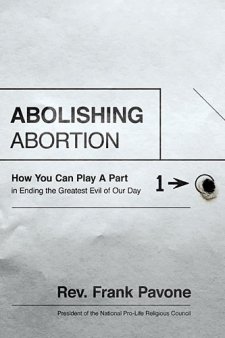
Father Frank Pavone writes persuasively and passionately about the role all of us can play in abolishing abortion throughout the world. One group that definitely needs to step to the forefront of this battle is the Church! Here are some quotes from Father Pavone specifically talking to Christians.
“People need to know that to oppose abortion does not mean to oppose those who have had one. … The Church has the perfect spiritual and psychological balance necessary for those who have been involved in an abortion. The last thing such a person needs to hear is, ‘What you did is no big deal.’ The nature of post-abortion grief is that the individual involved in the abortion has begun to realize precisely what a big deal it was. Now this person needs someone to tell her that she should not feel silly for feeling sad, that there is indeed reason for the grief in her heart, and that what her heart is telling her is true: her child was killed. A great disservice was done both to her and her child when someone convinced her that the abortion would be ‘no big deal.’ Accepting that line was a major act of denial. Healing can begin when she breaks out of denial and calls the evil what it is. … At the same time, the other line she does not need to here is, ‘You are rejected; there is no hope.’ As she realizes the evil that has occurred, she will be tempted to say this to herself. The Church, however, contradicts that despair with the clear message of forgiveness.”
“Those in the pain of abortion are not helped by silence. Some pastors refrain from preaching about abortion out of the sincere desire to not hurt women who have had abortions. Yet that silence does not interpret itself. The person grieving over abortion can infer from our silence that we do not know her pain, or that we do not care, or that there is no hope. None of this is true. With clear and compassionate messages, pastors can break through the silence that led to a woman to this disastrous choice in the first place.”
“Those who attend church regularly are statistically the most likely to be pro-life and the most likely to be pro-life activists. Within America’s Christian churches there are people enough and resources enough to end abortion, armed as the pro-life movement is with the supernatural gifts of truth and grace. It is clear that the full activation of the Church is a critical step for ending abortion. This does not primarily mean creating new structures. It simply means infusing the existing structure with greater vigor and effectiveness.”
“The pro-life movement is not primarily a response to Roe v. Wade. It is a response to Jesus Christ. His teachings not only show us why we are to be pro-life but also show us how. They give us the virtues we need to have in doing this work.”
“The Church is the only institution that has a divine guarantee that it will prevail over the culture of death. ‘The gates of hell shall not prevail against it,’ the Lord Himself said (Matthew 16:18 KJV). Now, gates do not run out on the battlefield to attack the enemy. Rather, they stand still and defend the city against the enemy attacking it. To say that the gates of hell will not prevail against the Church is to say that it is the Church that takes the offense and storms the gates of hell to win ground for Jesus Christ. Gates of hell cannot withstand the power of heaven. The gates of death fall in the presence of eternal life. Sin melts in the presence of saving grace. Falsehood collapses in the presence of living truth. These are the tools with which Christ has equipped His Church.”
“Love is found on Calvary. Love’s best symbol is not the heart but the Cross. … What Christ revealed to the world through the Cross about the meaning of love, we must also reveal through our own sacrifice for those we love.”
“Abortion is the exact opposite of love. Loves says, ‘I sacrifice myself for the good of the other person.’ Abortion says, ‘I sacrifice the other person for the good of myself.’ And isn’t it amazing that the very same words used by the culture of death to justify abortion are the words used by our Lord to proclaim life and salvation and love: ‘This is My body!’ … ‘This is My body,’ Jesus said, ‘given for you’ (see Luke 22). He did not cling to His body so that we would die but rather gave it away so that we could live. These are the words that define our mission in the world: spouse saying to spouse, parents saying to children, clergy saying to their congregation, all of us saying to our brothers and sisters, ‘This is my body, my time, my efforts, my resources, my life—given for you, that you may live!’”
I have shared other quotes from Abolishing Abortion which you can read here and here.
And be sure to check out my book review of Abolishing Abortion here.
We are always excited to portray the story of the First Advent at an annual event in Cedar Springs called “Mingle With Kris Kingle.” My thanks to all of the folks from Calvary Assembly of God who help assemble the set and portray the characters from the biblical story each year. Also glad for all of our 4-H shepherds who help us out each year.
“There are two kinds of people in life when it comes to truth: speculators and seekers. Speculators make guesses about the truth. Speculators think they know what God is like. … On the other hand, God loves those who take the time to find the truth. Seekers do four things: (1) They ask questions; (2) They study; (3) They watch what is happening around them; and (4) They do whatever it takes to find answers. They seek after Jesus with all they have.” —Rick Warren
“Often, Jesus gets shut out during Christmas. Imagine I planned a party for you and invited many people. Everyone brings lots of gifts, and the invitees trade presents with one another—and you get nothing. That’s Christmas. We give gifts to everyone but Jesus.” —Rick Warren
“When we’re thinking preserve the body, God is thinking save the soul. When we dream of a pay raise God dreams of raising the dead. We avoid pain and seek peace while God uses pain to bring peace. I’m going to live before I die, we resolve. But God instructs, Die so you can live. We love what rusts but God loves what endures. We rejoice at our successes but God rejoices at our confessions. We show our children the Nike star with the million-dollar smile and say, ‘Be like him!’ God points to the crucified Carpenter with bloody lips and a torn side and says, ‘Be like Christ!’” —Max Lucado
“Discipline is not an end in itself. It is a future-oriented activity.” —T.M. Moore
Craig Gross and Shaunti Feldhahn share 5 things women shouldn’t say if they catch their husbands looking at pornography.
Kirk Cousins tells us how he started caring about justice for oppressed people around the world, and why we should too.
Maria Gerber, a missionary in the early 1900s, was called “the angel of mercy” for the help she provided during the Armenian genocide in Turkey.