Selah

The word Selah appears nearly 70 times in the Bible, almost exclusively in the Psalms. Although it is primarily a musical term, it applies beautifully to our new summer series. 

Selah can mean…

  • a pause from the noise to reflect;
  • a preparation for an exciting accent; or 
  • a reflective time of consideration

Throughout the Psalms, Selah appears at the end of a verse, at the end of the psalm, or sometimes even mid-sentence. But each one of them is perfectly placed by the Spirit-inspired authors to get us to take a breath and deeply contemplate what we just read or sang. 

Summertime is typically a time for us to pause from our regular routine. Perhaps it’s a vacation, time with friends and family, driving around with the windows down and the music blasting, or just a quiet walk through woods or along a beach. In any case, whether we realize it or not, we’re actually doing Selah in these break-from-the-routine activities. 

Join me this Sunday as we continue our summertime look at each of the Psalms that ask us to Selah. I think you will find that this Sunday summertime pause will be both refreshing and encouraging. You can join me either in person or on Facebook Live. 

If you missed any of the messages this summer, please check them out here:

And you can find the messages from last summer’s Selah series by clicking here.

Do Not Dwell On The Past

“Forget the former things; do not dwell on the past. See, I am doing a new thing! I am a God of surprises—infinitely more creative than you can imagine. … As you journey along your life-path with Me, refuse to let the past define you or your expectations of what lies ahead. You may feel as if the road you are on is tiresome or even a dead end. That is because you’re projecting the past into the future. The roadblock you are straining to see up ahead is really just an illusion. The future is in My hands, and I can do surprising things with it! …

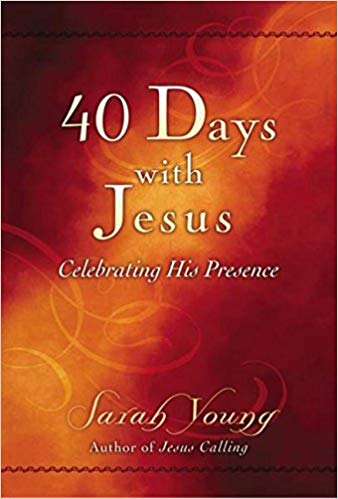
“You need My presence each moment to accomplish My purposes in your life. Sometimes you are tempted to take shortcuts, in order to reach your goal as quickly as possible. But if the shortcut requires turning your back on My peaceful Presence, you must choose the longer route. Walk with Me along paths of Peace; enjoy the journey in My Presence.” —Jesus (in Sarah Young’s 40 Days With Jesus)

Am I Getting Passing Grades?

The Apostle Paul tells us to “be transformed by the renewing of your mind” (Romans 12:2). This implies that there is an ongoing process of evaluation and renewal. This starts when I give up my way of doing things (v. 1), and then the remainder of that 12th chapter is a checklist of changes in behavior that come about because of the renewing of our minds. 

We need a regular report card on—
Seeing myself in the right light of faith
Knowing and using my God-given gifts 
Loving without hypocrisy
Avoiding evil
Promoting good
Loving others like brothers and sisters
Not fighting for my way
Being diligent in my work
Being diligent in my spiritual health
Serving God
Rejoicing even in difficulties 
Growing in patience
Praying regularly
Hospitably serving others
Blessing my enemies
Being appropriately empathetic 
Finding common ground
Remaining humble
Repaying good for evil
Not trying to get even
Being a peacemaker
Overcoming evil with good

Holy Spirit, I need Your honest evaluation. Show me my deficits, and then help me hear Your loving voice that guides me in the changes I need to make. I want Jesus to be seen in my life. Amen! 

Not How But Who

This is part 3 in our series looking at phrases that sound biblical and then asking, “Is that in the Bible?

Statement #3—This is how you should take Communion.… Is that in the Bible? Quite simply: No, it’s not. 

Every church seems to celebrate Communion with its own unique style, typically following an age-old tradition. There’s nothing wrong with traditions per se. The only thing we have to watch out for is when traditions become the focal point, instead of the thing the tradition is pointing us to. Almost as if we are celebrating the celebration (see Isaiah 1:11-14; Mark 7:1-8). 

In 1054 AD the Great Schism occurred between the Roman church (in West) and the Byzantine church (in East). One issue that led to this schism was Communion. The West used unleavened bread, saying that sin was removed. The East said that sounded like they were adopting Judaism, so they used leavened bread, saying that the “rising” symbolized new life. 

Even today there are differences and disagreements—only administered by a priest … only certain church officials can “bless” the elements … a common cup … individual cups … unfermented juice … fermented wine … unleavened wafers … pieces torn off a full loaf of bread. The Bible never says about Communion, “Do it this way.” All of these are man’s traditions. 

Passover was first instituted in Exodus 13. This is before the Law is given through Moses (Exodus 20) and before the instructions for the tabernacle are given (Exodus 25). In the first version, the sacrifice of the lamb was in individual homes, the lamb’s blood was shed on the doorposts of that home, and the family ate the lamb, unleavened bread, and bitter herbs together at home. 

After the tabernacle was operational, there was a change (Deuteronomy 16). Now the sacrifice of the lamb was in the tabernacle, the lamb’s blood was sprinkled on the altar, but the family still ate the lamb, unleavened bread, and bitter herbs together at home. 

By the time of Jesus, there were newer traditions which weren’t prescribed in the Bible that involved as many as five cups of wine, a very specific order that the meal was presented, and the singing of Psalm 113-118 (sometimes people sang all the way through Psalm 138). 

In the last supper Jesus shares with His disciples, we see some of these later elements. We read about the different cups of wine, the unleavened bread, the supper of lamb, and the singing of a hymn (Luke 22:14-20; Matthew 26:26-30; Mark 14:22-26; 1 Corinthians 11:23-26). 

I want to specifically focus on the second cup of wine Jesus used in this supper. Paul calls this cup the cup of thanksgiving and the cup of the Lord (1 Corinthians 10:16, 21). Why? Because Jesus switched cups with us! 

The Bible tells us that we have all sinned, and therefore we are supposed to drink the cup of God’s wrath—For in the hand of the Lord there is a cup of His wrath, and the wine foams and is red, well mixed; and He pours out from it, and all the wicked of the earth must drain it and drink its dregs (Psalm 75:8 AMP). 

But Jesus switched cups with us. He took the full wrath of God upon Himself, and then gave us God’s new covenant of forgiveness—“The days are coming,” declares the Lord, “when I will make a new covenant with the people of Israel and with the people of Judah. It will not be like the covenant I made with their ancestors when I took them by the hand to lead them out of Egypt, because they broke My covenant…. This is the covenant I will make with the people of Israel after that time,” declares the Lord. “I will put My law in their minds and write it on their hearts. I will be their God, and they will be My people. … For I will forgive their wickedness and will remember their sins no more.” (Jeremiah 33:31-34). 

Jesus said, “When you drink this, do this in remembrance of Me.” THIS is what we’re called remember and celebrate! 

It’s not HOW we celebrate Communion but WHO we remember when we do celebrate. 

Let’s not celebrate the celebration, but let’s celebrate the Savior who paid the price so that we could celebrate the forgiveness of our sins under God’s new covenant! 

Poetry Saturday—Give Me The Love

Give me the love that leads the way, 
The faith that nothing can dismay, 
The hope no disappointments tire, 
The passion that will burn like fire.
Let me not sink to be a clod: 
make me Thy fuel, flame of God. —Amy Carmichael

Thursdays With Spurgeon—“Follow Me”

This is a weekly series with things I’m reading and pondering from Charles Spurgeon. You can read the original seed thought here, or type “Thursdays With Spurgeon” in the search box to read more entries.

“Follow Me”

     “As Jesus passed on from there, He saw a man named Matthew sitting at the tax office. And He said to him, ‘Follow Me.’ So he arose and followed Him” [Matthew 9:9]. … I know another man, not named Matthew, but Charles, and the Lord said to him, “Follow Me,” and he also arose and followed Him. I do not know all that He saw when He looked upon me. I fear that He saw nothing in me but sin and evil and vanity, but I believe that He did say to Himself concerning me, “I see one to whom I can teach My truth, and who, when he gets ahold of it, will grip it fast and never let it go, and one who will not be afraid to speak it wherever he is.” So the Lord saw what use He could make of me. There is an adaptation in men, even while they are unconverted, that God has put into them for their future service. Luke was qualified to write his gospel because he had been a physician, and Matthew was qualified to write the particular gospel that he has left us because he had been a publican. There may be something about your habits of life, and about your constitution and your condition that will qualify you for some special niche in the church of God in the years to come. Oh, happy day, when Jesus shall look upon you and call you to follow Him! Happy day, when He did look upon some of us, and saw in us what His love meant to put there, that He might make of us vessels of mercy meet for the Master’s use! 

From The Autobiography of Charles Spurgeon

What was true of the apostle Matthew and Charles Spurgeon in past history is true of you today! 

God has plans for you. He has implanted a combination of gifts, talents, and personality in you that is unique to anyone else on this planet. He did this because He foresaw how you could be of use in fulfilling His plans for His kingdom.

Listen! Do you hear Him calling? He is saying to YOU, “Follow Me.” Will you answer that call? 

Self-Evident

“It happens that we meet together once every year, sometime about the 4th of July. … We run our memory back over the pages of history [to 1776]. We find a race of men living in that day whom we claim as our fathers and grandfathers. They were iron men. They fought for the principle that they were contending for; and we understand that by what they then did, it has followed that the degree of prosperity that we now enjoy has come to us. We hold this annual celebration to remind ourselves of all the good done, of how it was done and who did it, and how we are historically connected with it. …

“We have [among us immigrants] who are not descendants at all of these men. … If they look back through this history to trace their connection with those days by blood, they find they have none. … But when they look through that old Declaration of Independence, they find that those old men say that ‘We hold these truths to be self-evident, that all men are created equal.’ And then they feel that that moral sentiment taught in that day evidences their relation to those men, that it is the father of all moral principle in them, and that they have a right to claim it as though they were blood of the blood, and flesh of the flesh of the men who wrote that Declaration. And so they are. That is the electric cord in that Declaration that links the hearts of patriotic and liberty-loving men together, that will link those patriotic hearts as long as the love of freedom exists in the minds of men throughout the world.” —Abraham Lincoln

8 Quotes From “When Faith Fails”

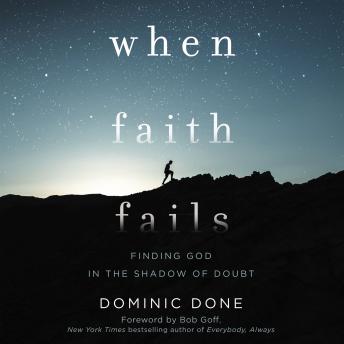
We’ve all been there: an unexpected calamity has rocked our faith, making us question what we previously believed to be true. What do we do with these times of doubt? Dominic Done has given us a helpful resource in his book When Faith Fails. Please check out my full book review by clicking here. 

“An anonymous fourteenth-century mystic once said that we find ourselves ‘in a cloud of unknowing.’ That is why we doubt. We don’t always see the sky. However, what we have to be reminded of here is that all of this was part of God’s design. He purposefully made it like this. He built limits into the system. It wasn’t an accident. He knew we would have to live with so many unknowns. And yet He chose for the human story to look this way. … When God decided to create, He could have said yes to a thousand other possibilities. But He didn’t. He chose this world. He chose you. He chose me. Limits and all. And still, He called it ‘good.’ All of this means that doubts are normal. They’re a natural consequence of living in this world.” 

“If all we care about is certainty, we lose the beauty of mystery. If all we value is explanation, we lose the joy of exploration.” 

“We need to stop vilifying those who live in the tension of conflicted faith. Doubt isn’t a malevolent demon that we need to exorcise out of our brothers and sisters with sanctimonious words. It’s part of their story. It’s part of my story. Jude 22 says, ‘Be merciful to those who doubt.’” 

“What if God made the world like this to push us to deeper faith? … Doubts aren’t just an obstacle; they’re an opportunity. Uncertainty can lead us into the beautiful mystery we call God.” 

“What’s vital to note here is that when the Bible uses the word doubt it’s different from the word unbelief (Matthew 14:31 and Hebrews 3:19). This is important because some Christians assume that doubt and unbelief are synonymous. They’re not. Doubt can lead to unbelief, just as doubt can lead to faith. But the two are not the same. Doubt says, ‘I am unsure of what is right.’ Unbelief says, ‘I don’t care about what is right.’ Doubt is searching for the light. Unbelief is choosing to gouge out your eyes. Doubt is pursuing truth, wherever it may lead. Unbelief is content with a lie. Doubt exists somewhere between belief and unbelief. Doubt is the moment of tension, which in and of itself isn’t good or bad. It’s somewhere in between. … Doubt isn’t the end of the story; it’s the suspense within it.” 

“Doubt’s greatest strength is secrecy.… But if we name our doubts and drag them into the light, we may find resolution, or we may discover the tension of authentically living in a doubt-filled faith.” 

“Abraham and Sarah doubted God’s promise (Genesis 17:17-22; 18:10-15). Gideon doubted his calling (Judges 6:36). Job doubted God’s character (Job 7:20-21). John the Baptist, whom Jesus called ‘the greatest of all the prophets,’ doubted if Jesus was the Messiah (Matthew 11:1-6). Peter doubted his faith (Mark 14:66-72). Thomas doubted the resurrection (John 20:24-29). The list goes on. Scripture doesn’t edit out the stories of those who struggled to believe. It weaves their heart-rending struggles into the narrative.” 

“If your faith is being shaken by the suffering you see, don’t be content with cheesy Christian truisms or Facebook clichés. … Lean into the chaos. Cry out to God. Talk to people who have gone through pain and have come out on the other side awash with hope. Immerse yourself in Scripture’s lament and redemption. Dare to say, ‘I will not let You go until You bless me.’” 

When Faith Fails (book review)

Have you ever had your legs knocked out from under you? Ever felt like what you used to believe in doesn’t seem real anymore? Ever been screaming out for real answers? Good! That means you are growing and maturing beyond the pat answers of the past. Dominic Done has given us a great guide book through these times of questions: When Faith Fails—Finding God in the Shadow of Doubt.

I grew up in a Christian home as a fourth-generation Christian. I was in church during my formative years almost more than I was anywhere else. But at some point I had to confront my Christian faith—I had to ask myself, “Do I believe this just because my parents and grandparents believed it? Or do I believe it because it’s really true?” 

Maybe your story is similar to mine. Or maybe you are a first-generation Christian and the storm you are navigating right now is making you wonder if you were sold on an idea that just doesn’t hold up in “the real world.” All of these things can be classified as a crisis of faith, a questioning of just what is true. 

What do you do at this time? Dominic identifies three possibilities— 

“One option is to demonize your doubt: in this narrative, doubt is labeled as the nemesis of faith, and those who doubt are judged and marginalized. … The second option is to idolize your doubt. … I can’t help but wonder if there is a third way, one that doesn’t demonize or idolize doubt but recognizes doubt for what it is: an opportunity for authentic and vibrant faith. That is why I wrote this book. I wrote this book because you need to know that your doubts aren’t a sign of spiritual collapse but of a faith that is screaming out for substance and truth.”

Dominic leads us on a journey of discovery by sharing his own personal struggles with doubt, and by helping us see doubt in a whole new light. Doubts are normal. Doubts can be healthy. Healthy?! Yes, because, as Dominic points out, “Doubts aren’t just an obstacle; they’re an opportunity. Uncertainty can lead us into the beautiful mystery we call God.” 

Whether for yourself or for your friend who may be struggling with doubt, please pick up a copy of When Faith Fails. I promise you that you will understand more clearly what doubt really is. You’ll also understand that your doubts are a normal part of your maturation process. You’ll also see that God is waiting to reveal Himself to you through your times of doubting. This is a great book!

I am a Thomas Nelson book reviewer. 

The Devil Isn’t Scared Of You

This is part 2 in our series looking at phrases that sound biblical and then asking, “Is that in the Bible? 

Statement #2—Resist the devil and he will flee from you. Is that in the Bible? Yes, those words are there, but we need some perspective. 

First of all, demons are real and they are dangerous. No, the devil and his henchmen are not behind every calamity we face. C.S. Lewis explained it well—

“There are two equal and opposite errors into which our race can fall about the devils. One is to disbelieve in their existence. The other is to believe, and to feel an excessive and unhealthy interest in them. They themselves are equally pleased by both errors and hail a materialist or a magician with the same delight.” —C.S. Lewis 

Some people think there is a struggle between Jesus and satan that has an uncertain outcome, almost like Jesus and satan are locked in an epic arm wrestling duel. But the victory is already assured—Jesus has already won (Acts 10:38; 1 Corinthians 15:26, 54-58)!  

But while we are on Earth, we are living in a battle zone. Jesus said the devil’s agenda was pretty straightforward—steal, kill, destroy. He tries to accomplish this in a number of ways: everything from lying to us, to intimidation, to misquoting Scripture. 

And that’s where we need to be aware. Yes, the words “Resist the devil and he will flee from you” are in the Bible, but they are only valid when spoken in light of the first part of the verse—“Submit yourself to God.” 

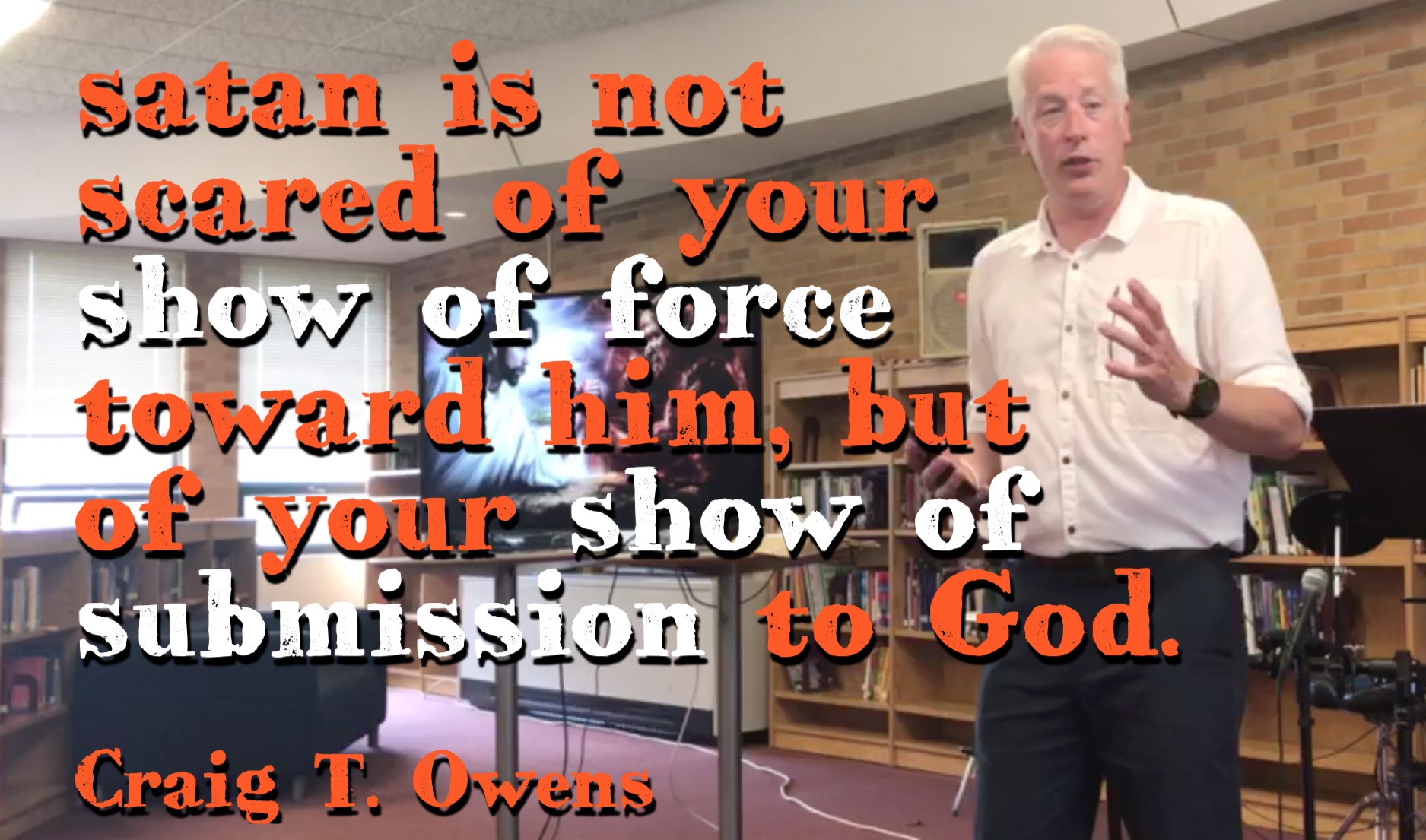
“satan is not scared of your show of force toward him, but of your show of submission to God.” —Craig T. Owens 

There were some guys who tried to invoke the name of Jesus in a spiritual battle, and they ended up running out of the house bleeding and naked (Acts 19:11-16)! 

Last time I said that God helps those who cannot help themselves. The prayer He loves to respond to is, “God, help!” If ever we face a situation that we cannot help ourselves, it’s dealing with demons. We can’t, but God can! 

So before anything else submit yourself to God. Hide under the shadow of His wings, let Him be your shield and your defender. Only then will the devil flee from you (see Psalm 91). 

Remember: the devil lies. He can even use Scripture to lie. His lie is getting you to believe you can resist him on your own. The truth is he’s not afraid of who you are, but he flees when he sees Whose you are!