Where’s God Today?

Transitions are always hard things. We are leaving the known for the unknown. Even if the known is unhealthy or painful, it’s still hard to go to the unknown. 

Why are these transitions so difficult? Perhaps it’s because I’ve learned how to cope with the known, or I’ve gotten used to this “normal” life, or even I’ve simply learned to navigate any dysfunctional areas.

But is that really living? Am I managing my life or is God? When I’m against transitions, aren’t I really saying that I’ve put God’s plan for my life in my box?

Those questions trigger even more questions in my mind: Where’s God in all of this? Why can’t He just make my known better? Why is He leading me (or maybe even pushing me) into this unknown? 

Jesus didn’t endure the unimaginable horrors of the Cross just so you could cope with life. Jesus came to bring us abundant life—not a barely-getting-by life or just a coping life!

How does He bring us into this abundant life? By leading us through transitions. And where is He in all our transitions? Closer than you think! 

Moses sang a song to conclude his sermon in Deuteronomy. In that song, he mentions God taking care of His people the way an eagle cares for its eaglets.

Adults eagles build their extremely large nests in the highest point they can find. Their nests are made of massive branches. In fact, they build some of the largest nests of all birds, and build them in the most inaccessible of places. Before their eggs are laid, the adult eagles will soften their nest with feathers pulled from their own body. From the time the eggs are laid until the eaglets leave the nest, they are never without a parent present—while one parent hunts, the other watches. 

Eaglets first test their stumpy wings by jumping around in the nest, mimicking their parents. Eventually they will start “branching”—jumping to nearby branches—and then “fledging”—taking their first short flights from the nest. All under the watchful eye of the parents. Finally, the adult eagles will “stir up” their nest by blowing away all of the comforts of their plucked feathers, encouraging the eaglets to soar. 

Moses said that this is how God cares for His children. First by shielding and guarding us, and then by stirring up our nest and encouraging us to soar! 

Much like when Jesus ascended back to Heaven. He was going to physically leave His disciples, but He knew He had adequately trained his “eaglets” to soar without Him with them in bodily form. 

But Jesus never leaves us spiritually. He said that His ascension back to heaven would allow for the Holy Spirit to be resident in each of His followers (see John 16:7-15). It is the Holy Spirit that continues to guide us, teach us, empower us, correct us, and lead us to SOAR into abundant, God-honoring, Christlike living. 

There are many, many times of transition as we soar, but He never leaves us. The Holy Spirit is our constant Counselor. God shows His love for us by caring for us. God also shows His love for us by making us uncomfortable with the status quo. 

May the times of transition cause us to rely even more on the very present help of the Holy Spirit.

Continue to follow along with me in a new series of posts looking at how the Holy Spirit helps us to soar!

Poetry Saturday—Beyond The Glittering, Starry Skies

Beyond the glittering starry skies,
Far as th’ eternal hills,
There, in those boundless worlds of light,
Our great Redeemer dwells.

Legions of angels strong and fair,
In countless armies shine,
At His right hand with golden harps,
To offer songs divine.

“Hail, Prince!” they cry, “forever hail!
Whose unexampled love
Moved Thee to quit those glorious realms,
And royalties above.”

While He did condescend on earth
To suffer rude disdain,
They cast their honors at His feet,
And waited in His train.

Through all His travels here below
They did His steps attend!
Oft gazed and wondered where at last
This scene of love would end.

They saw His heart transfixed with wounds,
His crimson sweat and gore,
They saw Him break the bars of death,
Which none e’er brake before.

They brought His chariot from above,
To bear Him to His throne,
Clapped their triumphant wings and cried,
“The glorious work is done!” —James Fanch

Thursdays With Spurgeon—Freed From Captivity And Fear

This is a weekly series with things I’m reading and pondering from Charles Spurgeon. You can read the original seed thought here, or type “Thursdays With Spurgeon” in the search box to read more entries.

Freed From Captivity And Fear

…The Lord has come from Sinai into His sanctuary. When You ascended on high, You took many captives; You received gifts from people, even from the rebellious—that You, Lord God, might dwell there. Praise be to the Lord, to God our Savior, Who daily bears our burdens. Our God is a God who saves; from the Sovereign Lord comes escape from death. Surely God will crush the heads of His enemies… (Psalm 68:17-20). 

     The Lord Jesus, by His glorious victory here below, has subdued all our adversaries, and in His going up on high, He has triumphed over them all, exhibiting them as trophies. The imagery may be illustrated by the triumph of Roman conquerors. They were known to pass along the Via Sacra and climb up to the capitol, dragging at their chariot wheels the vanquished princes with their hands bound behind their backs. Christ has vanquished all those powers that held you captive. Whatever form your spiritual slavery took, you are fully delivered from it, for the Lord Christ has made captives those whose captives you were. ‘Sin shall not have dominion over you’ (Romans 6:14). … 

     True, the flock of the Lord is too feeble to force its way. But listen, ‘The one who breaks open will come up before them; they will break out, pass through the gate, and go out by it; their king will pass before them, with the Lord at their head’ (Micah 2:13). Easily may the sheep follow where the Shepherd leads the way! We have but to follow those heavenly feet that once were pierced and none of our steps will slide! Move on, O soldiers of Jesus, for your Captain cries, ‘Follow Me!’ … 

     How often we groan because the battle does not go as we would desire it! Yet there is no reason for dismay. God is in no hurry as we are. He dwells in the leisure of eternity and is not the prey of fear as we are. … He knows what He is going to do and we may lay our heads upon His bosom and rest quietly.

From Our Lord’s Triumphant Ascension

When we follow Jesus—The Ultimate Victor—we need fear NOTHING!

Listen to our Conquering God’s promise—You will tread on the lion and the cobra; you will trample the great lion and the serpent. “Because he loves Me,” says the Lord, “I will rescue him; I will protect him, for he acknowledges My name. He will call on Me, and I will answer him; I will be with him in trouble, I will deliver him and honor him. With long life I will satisfy him and show him My salvation.” (Psalm 91:13-19) 

As I’ve said before, I don’t think it’s a stretch to say that to be a Christian and to be fearful is a sin. A fearful Christian gives God no praise, robs Him of glory, and paints God in a bad light. A happy, secure Christian knows the Lord is his strength, his comfort, his supply. A happy Christian lifts God high and invites others to know this All-Good, All-Happy King too!

Live in Christ’s victory today—and every day!

8 Quotes From “Warnings To The Churches”

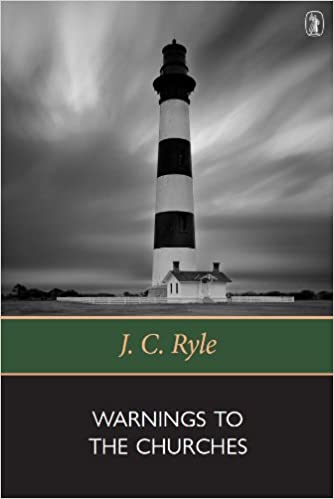
This hard-hitting, no-pulled-punches book is directed primarily at pastors and other church leaders. However, I think anyone who loves Christ and His Bride will find much to ponder in Warnings To The Churches by J.C. Ryle. You can read my full book review by clicking here. 

“Go forward, beloved brethren, and fear not the adversary. Only abide in Christ and the victory is sure. Marvel not at the hatred of the gates of hell. ‘If you were of the world, the world would love you as its own’ [John 15:19]. So long as the world is the world, and the devil is the devil, there must be warfare, and believers in Christ must be soldiers! The world hated Christ, and the world will hate true Christians as long as the earth stands. As the great reformer, [Martin] Luther, said, ‘Cain will go on murdering Abel so long as the Church is on earth.’” 

“He who cannot lie has pledged His royal word that all the powers of hell shall never overthrow His Church. It shall continue, and stand, in spite of every assault. It shall never be overcome.” 

“Weak as this true Church may appear to the eye of man, it is an anvil which has broken many a hammer in times past, and perhaps will break many more before the end. He who lays hands on it is touching the apple of God’s eye!” 

“We corrupt the Word of God most dangerously when we throw any doubt on the absolute inspiration of any part of Holy Scripture.” 

“We corrupt the Word of God when we make defective statements as doctrines. We do so when we add to the Bible the opinions of the Church or of the Church Fathers, as if they were of equal authority. We do so when we take away from the Bible for the sake of pleasing men. We do so when from a feeling of false liberality, keep back any statement which seems narrow, or harsh, or hard. We do so when we try to soften down anything that is taught about eternal punishment or the reality of hell. We do so when we bring forward doctrines in their wrong proportions.” 

“May we never care what men say of us so long as we walk in the light of God’s Word! May we strive and pray to be wholly independent of, and indifferent to, man’s opinion, so long as we please God!” 

“Chosen as believers are by God the Father, justified as they are by the blood and righteousness of Jesus Christ, sanctified as they are by the Holy Spirit, believers are still only men—they are still in the body and still in the world. They are ever near temptation. They are ever liable to misjudge, both in doctrine and in practice. Their hearts, though renewed, are very feeble; their understanding, though enlightened, is still very dim. They ought to live like those who dwell in an enemy’s land, and every day to put on the armor of God. The devil is very busy: he never slumbers or sleeps.” 

“Like the fruit of which Eve and Adam ate, at first sight it looks pleasant and good, and a thing to be desired. ‘Poison’ is not written up on it and so people are not afraid. Like counterfeit coin it is not stamped ‘bad.’ It passes for the real thing, because of the very likeness it bears to the truth. Let us be on our guard against the very small beginnings of false doctrine.” 

Warnings To The Churches (book review)

J.C. Ryle died in 1900, placing his writings two centuries before our own. And yet his Warnings To The Churches sound an alarm that is just as relevant to the Church and her leaders as if it were written last week! 

Bishop Ryle spoke and wrote with an authority that sounded much like the Old Testament prophets thundering, “Thus saith the Lord!” And at the same time, you can also hear his ardent love for Christ’s Bride as tenderly as the beloved disciple John, who called himself “the disciple whom Jesus loved.” Taken together, that means Ryle’s words are steeped in authoritative, loving Scripture. 

He pulls no punches in pointing out how even Church leaders have bought into a definition of “church” that doesn’t quite line up with the way Jesus defined it. He reminds pastors of their heavy responsibility to preach the Word of God in all its purity. Just like Jesus, Ryle warns church leaders of the “leaven of the Pharisees and Sadducees.” And he calls for loving confrontation of those leaders who have succumbed to the “leaven” just as Paul confronted Peter. 

This is a challenging book to read simply because of the gut-level honest introspection that it will require. I certainly couldn’t read through this book thinking I’ve got my act together, and I doubt few others will be able to either. If you are a church leader and you would like Ryle’s iron to sharpen your iron, Warnings To The Churches is a definite must-read for you.

Where’s God When I Fear Death?

Is death the #1 fear people have? The simple and complicated answer is: It depends. Fear of dying is a BIG fear in those that statistically are the least likely to die: the young. But fear of dying is very LOW for those on death row, the elderly, and the terminally ill.

I hope to convince you of a fourth group that shouldn’t fear death. It’s a group that all of us can be a member of: Those who understand that physical death is not the end. 

In the Garden of Eden, God planted one tree that was off-limits, and He said that the penalty for eating from this tree was death (Genesis 2:16-17). satan tried to get Adam and Eve to doubt what God said, and after they ate the fruit, it appeared satan was correct—they didn’t die. At least not physically.

But their sin did something far, far worse—it separated them from God’s presence. Now when God appeared, Adam and Eve hid in fear. In fact, Jesus even told His followers that the greatest fear wasn’t physical death but spiritual death (Luke 12:4-5). 

Jesus came to lift our hope to something beyond this physical world. He said, “God so loved the world that He sent His one and only Son, that whoever believes in Him would not die, but would have eternal life” (John 3:16). 

Famed atheist Bertrand Russell said, “I would never die for my beliefs because I might be wrong.” 

On the other hand, Jesus DID die for His beliefs and proved He was right by His resurrection! 

Friend, listen to me—We’re definitely not living our best life now. We are all terminal. Unless Jesus returns, the chances of our physical death are 1-in-1. 

But physical death is not the end! Death of the body means freedom for the soul. Jesus has defeated Death once for all! “Do not be afraid. I am the First and the Last. I am the Living One; I was dead, and now look, I am alive for ever and ever! And I hold the keys of death and Hades,” Jesus said (Revelation 1:17-18) 

Death has been swallowed up in victory. Where, O death, is your victory? Where, O death, is your sting? The sting of death is sin, and the power of sin is the law. But thanks be to God! He gives us the victory through our Lord Jesus Christ. (1 Corinthians 15:54-57) 

Invite Jesus into your life right this moment!! 

Once you have invited Jesus into your life, and your sins have been forgiven, and your destiny following your physical death is assured, this is how you should now live: 

  1. Live in joyful hope. Not optimism—that’s just the belief in what you think you can do. But hope is the belief in what you know Jesus has already done!
  1. Live free of all anxiety and the fear of death. Because nothing can separate you from God’s love and presence (Romans 8:38-39).  
  1. Live telling others about your Risen Savior. It’s the most loving thing that you could do for anyone. 

I don’t think it’s a stretch to say that to be a Christian and to be fearful of death is a sin. A fearful Christian gives God no praise, robs Him of glory, and paints God in a bad light. A happy, secure Christian knows the Lord is his strength, his comfort, his supply. A happy Christian lifts God high and invites others to know this All-Good, All-Happy God too! 

We can live this way because Jesus died to pay the penalty for your sins that separated you from God, and He was resurrected back to life to assure you that your eternal home in God’s presence is secure!

Poetry Saturday—How Few Receive With Cordial Faith

How few receive with cordial faith
the tidings which we bring?
How few have seen the arm revealed
of heav’n’s eternal King?

The Saviour comes! no outward pomp
bespeaks His presence nigh;
No earthly beauty shines in Him
to draw the carnal eye.

Fair as a beauteous tender flow’r
amidst the desert grows,
So slighted by a rebel race
the heav’nly Saviour rose.

Rejected and despised of men,
behold a Man of woe!
Grief was His close companion still
through all His life below.

Yet all the griefs He felt were ours,
ours were the woes He bore:
Pangs, not His own, His spotless soul
with bitter anguish tore.

We held Him as condemned by Heav’n,
an outcast from His God,
While for our sins He groaned, He bled,
beneath His Father’s rod.

His sacred blood hath washed our souls
from sin’s polluted stain;
His stripes have healed us, and His death
revived our souls again.

We all, like sheep, had gone astray
in ruin’s fatal road:
On Him were our transgressions laid;
He bore the mighty load.

Wronged and oppressed how meekly He
in patient silence stood!
Mute, as the peaceful harmless lamb,
when brought to shed its blood.

Who can His generation tell?
from prison see Him led!
With impious show of law condemned,
and numbered with the dead.

’Midst sinners low in dust He lay;
the rich a grave supplied:
Unspotted was His blameless life;
unstained by sin He died.

Yet God shall raise His head on high,
though thus He brought Him low;
His sacred off’ring, when complete,
shall terminate His woe.

For, saith the Lord, My pleasure then
shall prosper in His hand;
His shall a num’rous offspring be,
and still His honours stand. 

His soul, rejoicing, shall behold
the purchase of His pain;
And all the guilty whom He saved
shall bless Messiah’s reign.

He with the great shall share the spoil,
and baffle all His foes;
Though ranked with sinners, here He fell,
a conqueror He rose.

He died to bear the guilt of men,
that sin might be forgiv’n:
He lives to bless them and defend,
and plead their cause in heav’n. —William Robertson

[Reblog] What’s So Good About Good Friday?

I posted this 10 years ago on Good Friday.

Good Friday? Good for whom?

For you and me? Yes.

Good for Jesus, no. It was Bad Friday for Him, wasn’t it?

Or was it?

The writer of Hebrews says, “For the joy set before Him, Jesus endured the Cross, scorning its shame.

What joy?

It was for the joy of what was nailed to the Cross.

So what exactly was nailed to the Cross?

Isaiah records an unusual statement from God—

Comfort, comfort My people, says your God. Speak tenderly to Jerusalem, and proclaim to her that her hard service has been completed, that her sin has been paid for, that she has received from the Lord’s hand double for all her sins.

That seems unfair! We receive double(!) for our sins! Here’s a 2-minute video where I explain what this means culturally—

Only when invoices were paid-in-full did they get doubled-up.

The Bible tells us that we’ve all sinned, and that the invoice or penalty for our sin is death. We have the IOUs of sin nailed to the door of our heart where God says “You owe Me your life!” But we cannot pay this debt by ourselves.

But Jesus can. And Jesus did! Check this out—

He personally carried our sins in His body on the Cross…. (1 Peter 2:24 NLT)

Having canceled and blotted out and wiped away the handwriting of the note with its legal decrees and demands which was in force and stood against us. This He set aside and cleared completely out of our way by nailing it to His Cross. (Colossians 2:14 AMP)

That’s what is good about Good Friday. Jesus knew that taking our sins on His body, and then allowing His body to be nailed to the Cross, would double-up and nail-down our sin once and for all!

When Jesus said, “It is finished!” He was really saying, “It is paid-in-full!”

Thursdays With Spurgeon—The Assurance In Christ’s Ascension

This is a weekly series with things I’m reading and pondering from Charles Spurgeon. You can read the original seed thought here, or type “Thursdays With Spurgeon” in the search box to read more entries.

The Assurance In Christ’s Ascension

     Our Savior descended when He came to the manger of Bethlehem, and further descended when He became ‘a Man of sorrows and acquainted with grief’ (Isaiah 53:3). He descended lower still when He was obedient to death, even the death of the Cross—and further yet when His dead body was laid in the grave. … Long and dark was the descent. There were no depths of humiliation, temptation, or affliction that He did not fathom. …  

     The time came for our Lord to continue His homeward, upward journey and return to the glory from which He had come down. From the Mount of Olives, ‘while they watched, He was taken up, and a cloud received Him out of their sight’ (Acts 1:9). The rest of His upward progress we cannot describe. Imagination and faith step in and conceive of Him as rising beyond all regions known to us, far above all imaginable height. … 

     How high He ascended after He passed the pearly portal Paul cannot tell us, save that he says God ‘seated Him at His right hand in the heavenly places, far above all principality and power and might and dominion’ (Ephesians 1:20-21). He describes our Master as ‘dwelling in unapproachable light’ (1 Timothy 6:16). The Man Christ Jesus has gone back to the place from where His Godhead came! …

     We are sure that the purpose of His love is secure or He would not have returned to His rest. The love that brought Him here would have kept Him here if all things necessary for our salvation had not been finished. …

     Remember that His assent to the Father is representative. Every believer rose with Him and grasped the inheritance. When He rose up, ascending on high, He taught our feet the way. At the last His people will be caught up together with the Lord in the air, and so will they be forever with the Lord. He has made a stairway for His saints to climb to their bliss, and He has traveled it Himself to assure us that the new and living way is available for us. In His ascension He bore all His people with Him.

From Our Lord’s Triumphant Ascension

Jesus told His Father that He had completed everything He was sent to complete (John 17:4). John also says that Christ’s “It is finished” cry from the Cross also marked the completion of everything that had been prophesied about Jesus (John 19:28-30). 

Such amazing love brought Jesus to earth! And His steadfast love also made sure that He left absolutely nothing undone that was needed for our salvation! 

There’s now no reason for us to live fearful or anxious or skeptical about what is coming next. When Jesus says, “I will never leave you nor forsake you” and when He promises that He has gone to prepare a place for us to bring us to be with Him, He has demonstrated His authority to make these claims in His death, resurrection, and ascension. 

Oh my friends, live every day in that glorious assurance!

Certainty In Uncertain Times

… Perhaps the Lord will act in our behalf … The God we serve is able to save us from the furnace…but even if God does not save us… (1 Samuel 14:6 and Daniel 3:17-18).

We often remember and even hold in high regard those leaders who rise up in times of crisis or uncertainty. But I think we might be shocked if we knew exactly how scared these seemingly unflappable leaders actually were! 

The Philistines really had the Israelites on the ropes. Israel’s army was slowing melting away, as soldiers one by one were deserting and heading home. The Philistines had captured all of the sword-makers, so that there were only two swords left—one for King Saul and one for his son Jonathan. 

And to make matters even more desperate, the Philistines occupied all the strategic high ground, so that even if the Israelites were going to attempt an attack, they would have to scale the cliffs in order to do so.

For Jonathan, this situation was unbearable. So he said to his armor-bearer (keep in mind that this armor-bearer didn’t really have any armor to bear!), “Let’s go attack the Philistines.” And then he adds this line that probably didn’t instill too much confidence in anyone, “Perhaps the Lord will give us victory.” 

Perhaps?!

Many years later, when the nation of Israel was in exile in Babylon, three Jewish young men found themselves in a literal hot spot. King Nebuchadnezzar had built an enormous statue of himself and commanded that everyone bow down and worship it. Shadrach, Meshach, and Abednego had been promoted into leadership positions in the capital city of Susa, so there was no hiding in the outreaches of the countryside for them. Their disobedience to the king’s command would make them stand out to everyone. The king had ordered that anyone who disobeyed his edict would be thrown into a fiery furnace. 

Shadrach, Meshach, and Abednego were God-fearing men and knew that they could not worship any other god except Yahweh. When the king confronted their disobedience, they also responded with words that didn’t sound very confident, “God can save us, but we’re not sure if He will save us. But even if He doesn’t, we’re not going to bend our knee.” 

If?!

“Perhaps” and “if” don’t sound like very confident words, do they? 

And yet these godly leaders were totally certain in their uncertain times. They weren’t certain of the outcome, but they were certain of God’s ability to bring the ultimate victory. Even in dark times of crisis, godly leaders are certain that God is greater than their uncertain circumstances. 

A mark of a godly leader is one who has a certain confidence in God even in an uncertain crisis.

Jonathan, and Shadrach, and Meshach, and Abednego would all tell us, “Whether God was going to give us victory in the moment of crisis or not, we will remain in God’s presence! We will not compromise. We will not give in to fear. We will not disobey God. We will continue to cling to Him—rescue or not—knowing that He will be glorified in whatever way He chooses to respond.” 

These young men teach an invaluable lesson for all of us even today: Trust God no matter how uncertain the times are. 

This is part 45 in my series on godly leadership. You can check out all of my posts in this series by clicking here.