For me He left His home on high;
This is a weekly series with things I’m reading and pondering from Charles Spurgeon. You can read the original seed thought here, or type “Thursdays With Spurgeon” in the search box to read more entries.
The Joy Of Saying, “My God”
We commence then by the first thing, which is enough to startle us by its immense value. In fact, unless it had been written in God’s Word, we never could have dreamed that such a blessing could have been ours. God Himself, by the covenant, becomes the believer’s own portion and inheritance. “I will be their God” [Jeremiah 31:33]. …
Stop just one moment and think it over before we start. In the covenant of grace, God Himself conveys Himself to you and becomes yours. Understand it. God and all that is meant by that word—eternity, infinity, omnipotence, omniscience, perfect justice, infallible rectitude, and immutable love; all that is meant by God as Creator, Guardian, Preserver, Governor, Judge. All that that great word God can mean of goodness and of love, of bounty and of grace. All that this covenant gives you to be your absolute property as much as anything you can call your own: “I will be their God.” …
While He is Judge of all, He especially is their judge because He is the Judge whom they love to reverence, the Judge whom they long to approach because they know His lips will confirm that which their hearts have already felt, which is the sentence of their full acquittal through the merits of the glorious Savior. Our loving God is the Judge who will acquit our souls, and in that respect we can say He is our God whether as Sovereign, as Governor enforcing law, or as Judge punishing sin. Although God is in some sense the God of all men, yet in this matter there is something special toward His people so that they can say, “He is our God, even in those relationships.” …
Furthermore, the Christian can call God his God from the fact of his justification. A sinner can call God, God, but he must always put in an adjective and speak of God as an angry God, an incensed God, or an offended God. But the Christian can say “my God” without putting in any adjective except it be a sweet one wherewith to extol Him, so now we who were sometime afar off are made near by the blood of Christ. We who were enemies to God by wicked works are His friends, and looking up to Him, we can say “my God,” for He is my Friend, and I am His friend.
From God In The Covenant
What an incredible assurance in those two words: my God! Therefore, there is now no condemnation for those who are in Christ Jesus (Romans 8:1).
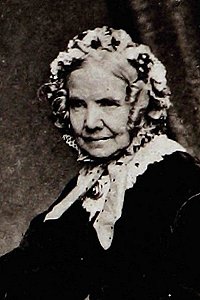
It makes me want to sing along with Fanny Crosby:
“The thoughtless, the ignorant, and the indolent, seeing only the apparent effects of things and not the things themselves, talk of luck, of fortune, and chance. Seeing a man grow rich, they say, ‘How lucky he is!’ Observing another become intellectual, they exclaim, ‘How highly favored he is!’ And noting the saintly character and wide influence of another, they remark, ‘How chance aids him at every turn!’ They do not see the trials and failures and struggles which these men have voluntarily encountered in order to gain their experience; have no knowledge of the sacrifices they have made, of the undaunted efforts they have put forth, of the faith they have exercised, that they might overcome the apparently insurmountable, and realize the Vision of their heart. They do not know the darkness and the heartaches; they only see the light and joy, and call it ‘luck.’ They do not see the long and arduous journey, but only behold the pleasant goal, and call it ‘good fortune,’ do not understand the process, but only perceive the result, and call it chance.” —James Allen, in As A Man Thinketh
I am a foreigner and stranger among you… (Genesis 23:4).
Abraham and Peter remind us that God-fearing people are foreigners; they are not citizens of Earth. Christians are respectful of the people, laws, and customs of the land in which they sojourn, but they know that this land is not their home.
Abraham wanted his son to have a wife who was of the same mindset—not attached to the place of sojourning but looking forward to Heaven. Abraham knew how an earthly–focused wife (like Lot’s wife) could distract her husband, so he sent his servant on a mission to find a heavenly-minded, godly woman for his son Isaac.
This servant was a godly leader in his own right. He was loyal and loving to Abraham’s family. Abraham gave him two simple boundaries: don’t take a wife from Canaan, and don’t take Isaac back to Mesopotamia (the land from which God had called Abraham).
Notice how this godly leader undertook his mission:
When God calls us to live in a certain way, it is fitting that He will answer our prayers that align with that way of living. This is exactly what Jesus meant when He told us to “ask for anything in My name.”
This is part 42 in my series on godly leadership. You can check out all of my posts in this series by clicking here.
But the Lord God called to the man, “Where are you?” (Genesis 3:9).
There are consequences for sin (because God is Just) and there is a remedy for sin (because God is Love).
Adam and Eve sinned.
They lost their innocence before God, they were expelled from the Garden of Eden, they would experience pain in childbirth, they would have to scratch to provide their food, they would experience relational turmoil, and most devastatingly of all, they faced the potential of being separated from God’s presence forever.
These are all just penalties for sin.
But don’t miss God’s love in this too—
There are painful consequences for sin—this is Justice.
But even in justice, never lose sight of the fact that GOD IS LOVE ❤️
My wife is a fan of the TV show (and movie) Downton Abbey, which means I have come to appreciate it as well. I think Mr. Carson, the head butler, gives us some great insight into a Christian’s prayer relationship with God.
Mr. Carson has a lot to oversee with the house, the staff, and the needs of the family members and their guests. Everything needs to be tidy and ready at all times for both important guests and the Grantham family. That means Mr. Carson has to have a schedule and routine for everything.
He doesn’t get up in the morning and sit around waiting for someone to tell him what to do—he gets up and gets to work. He’s a busy man with a lot of responsibilities. But can you imagine if Lord or Lady Grantham came to him with a request and he responded, “Not now, I’m too busy with my To Do list”? No way! He’s their servant, so he quickly responds, “Yes, my lord.”
Christians can so busy and hurried with our own “To Do list” that we miss out on what’s really important. As Rick Warren then noted, “Hurry is the death of prayer!”
The dictionary defines hurry as acting in haste, usually in a state of urgency, or feeling rushed. Notice the word “urgency” in the definition. Far too often we confuse urgent things and important things. It’s not that what we’re busy with are bad things, but perhaps we are busy with things that are keeping us blind to the important things.
Long before Mr. Carson, there was another notable servant named Abraham (Genesis 18:1-8). God showed up and Abraham wanted to be in His presence. So notice that Abraham had to run to wait to God’s presence—the narrative uses words like hurried, “quick” and ran.
Abraham was quick to get into God’s presence SO THAT he could linger in God’s presence—he stood near Them under a tree: that’s the posture of a servant-in-waiting.
In the NIV translation, the text says Abraham hurried, but almost every other translation says he ran to meet Them—this is an important distinction. Hurry speaks to things that are urgent, but run speaks to things that are important.
Stephen Covey has a great diagram that helps us identify four important quadrants in our life:
As you place items from your life on this grid, our Prayer Coach—the Holy Spirit—can help us identify the time-wasters. The key is to find time to wait in prayer. The best place to make time for Quadrant II prayer comes from Quadrant IV. As you eliminate those time-wasters, you will be able to spend health-enhancing time in prayer, worship, planning, and self-care in Quadrant II. This will also better equip you to handle the Quadrant I crises as they appear.
Ultimately, like Mr. Carson, we need to be both proactive with our schedule and responsive to the requests of our Lord. A good daily posture for all of us is “If the Lord wills” (James 4:13-17). But we have to not be so distracted with unimportant things that we can hear what God is speaking to our hearts.
Please join me next week as we continue to uncover things that could derail our regular prayer times, and then strategize a plan for dealing with them.
This is a weekly series with things I’m reading and pondering from Charles Spurgeon. You can read the original seed thought here, or type “Thursdays With Spurgeon” in the search box to read more entries.
“Got To” To “Get To”
What a glorious covenant the second covenant is! Well might it be called “a better covenant, which was established on better promises” (Hebrews 8:6). …
It is better, for it is founded upon a better principle. The old covenant was founded on the principle of merit. It was “Serve God and you will be rewarded for it. If you walk perfectly in the fear of the Lord, God will walk well toward you and all the blessings of Mount Gerizim will come upon you and you will be exceedingly blessed in this world and the world that is to come.” But that covenant fell to the ground, because, although it was just that man should be rewarded for his good works, or punished for his evil ones, yet man being sure to sin and since the fall infallibly tending toward iniquity, the covenant was not suitable for his happiness, nor could it promote his eternal welfare.
But the new covenant is not founded on works at all. It is a covenant of pure unmingled grace. You may read it from its first word to its last, and there is not a solitary syllable as to anything to be done by us. The whole covenant is a covenant, not so much between man and his Maker, as between Jehovah and man’s representative, the Lord Jesus Christ. The human side of the covenant has been already fulfilled by Jesus, and there remains nothing now but for the covenant of giving, not the covenant of requirements.
From God In The Covenant
The old covenant was—you’ve got to do this. The new covenant is—you get to do this!
The old covenant made requirements. The new covenant invites joyful participation.
The old covenant needed men to do rituals of sacrifice. The new covenant was done once for all when Jesus said, “It is finished!”
Under the new covenant, we are free to worship God and enjoy His blessings without having to complete a checklist of religious duties. Have you traded GOT TO for GET TO?
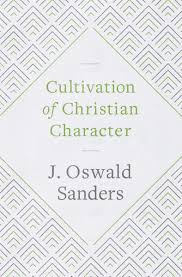
J. Oswald Sanders has given us a short but powerfully effective book for developing more Christlikeness in each and every Christian. Check out my full book review by clicking here.
“In a word, spiritual maturity is Christlikeness.”
“Christ set the standard in everything. He was never petulant, always calm; never rebellious, always obedient; never fearful, always courageous; never vacillating, always resolute; never pessimistic, always cheerful; never subtle, always sincere; never grasping, always generous; never acting from expediency, always from principle. He is the pattern of spiritual maturity.”
“So then our spiritual maturity or immaturity is seen in the manner in which we react to the changing circumstances of life. … It has to be learned. Is it not striking that it is recorded of Christ that ‘though He were a Son, yet He learned obedience by the things which He suffered; and being made perfect, He became the author of eternal salvation’ (Hebrews 5:8-9)? He alone was fully mature. The rest of us are ‘going on to maturity.’ In all of us there are some expressions of our personality in which we react immaturely instead of as mature men of God.”
“The highest manifestation of spiritual maturity is love. We are only as mature as we are mature in love.”
“God forbid that we should ever cease to love the gospel in its simplicity, but we must not be content to stay there. We must go on to appreciate increasingly the gospel in its profundity.”
“There is a place for a constructive contending for the faith. The church has degenerated sadly since Pentecostal days and the servant of the Lord has an important part to play in its revival.”
“It is possible to get to heaven without living a consecrated life, but the journey there will be barren and disappointing, since consecration is the doorway to undreamed-of joy. Neglect it, fail to seek it, and life will be greatly impoverished. Welcome it, and life becomes inexpressibly enriched.”
“When we dedicate our lives to God, He consecrate us to His service. We dedicate our lives to Him that He may work His will in us. He consecrates us to Himself that He might make us holy.”
“It has been suggested that in consecration we bring our lives to God as a blank sheet of paper with our names signed at the bottom. Confident of His love, we invite Him to fill in the details as He will.”
“It is a life separated to the glory of God. Inherent in the word ‘consecration’ is the idea of separateness. There must of necessity be separation from sin if there is to be separation to God. … The consecrated Christian hates evil, but he has a passion for the right and for the glory of God and Christ. He tests all his actions by the one standard, ‘Is this for the glory of God?’ He will do anything, suffer anything, if only God is glorified. Nothing is too costly to give to the Master.”
I’ve always enjoyed reading J. Oswald Sanders. Let me rephrase that: I enjoy the new insights on God’s Word that Sanders’ books have given me, but the confrontation of the Holy Spirit that comes while reading these books can be quite painful at times. Cultivation Of Christian Character is no exception!
In his opening words, Sanders explains the purpose of “this little volume” (as he calls it)—
“The genuine disciple of Christ earnestly desires a closer walk with God and a greater conformity to Christ. If these are absent, there is reason to doubt the genuineness of the discipleship. But many true lovers of the Lord are beset with a sense of inadequacy and failure in living the Christian life as it ought to be lived. They are very conscious with Paul that they have not already attained, neither are already perfect, but they yearn to know Christ better and to serve Him more worthily.”
There you have it in a nutshell: If you yearn to be more Christlike, and yet at the same time struggle with how far you still have to go to see the fruits of Christlikeness in your life, this is the book for you.
The chapters are short enough to read in just a few minutes. But the thought processes and the heart-searching that these short chapters will stimulate will undoubtedly take a long time to assimilate into your daily life. At least, this is the case for me.
None of J. Oswald Sanders’ books are long books, but all of his books live long inside of me. Dive into Cultivation of Christian Character with an attitude of ready submission to the Holy Spirit, and then watch the amazing fruitfulness and Christlikeness that will begin to blossom from your life.
I am a Moody Publishers book reviewer.