Inside & Outside

When God was about to deliver the Israelites out of Egypt, the last event that displayed His power is now remembered as the Passover. It was the night that anyone who followed God’s command to sacrifice a perfect lamb and apply the lamb’s blood to the doorposts of their house was spared His judgment. In other words, His judgment passed over that house.

How did an Israelite family know that God’s judgment had passed over them? Quite simply, their firstborn child was still alive the next morning.

Jesus described Himself as not only the sacrificial Lamb and the saving Blood, but He also said, “I am the Door.” When we place our faith in what Jesus did for us on the Cross, His blood is applied to our heart, we enter in His door and we are safe from God’s judgment.

But how do we know that God’s judgment has passed over us? Are there any visible signs?

Actually, God gives us two assurances that we have been saved from His judgment:

  1. The inner witness of the Holy Spirit
  2. The outward evidence of our new life in Jesus

The Apostle Paul talked about his inner turmoil when he tried to live a life he could control (note the prevalence of me, I, and my, and the absence of any mention of Jesus in Romans 7:14-24). His bottom line conclusion—O what a wretched man I am! Who will rescue me from this body of death?

But then he discovers the power of Christ: Thanks be to God—through Jesus Christ our Lord, and as a result of this he discovers…

  • there is no more condemnation
  • there is no more death
  • there is no more hostility
  • there is no more fear
  • there is now life
  • there is now freedom
  • there is now assurance of God’s love

How? By the Holy Spirit’s inner witness in his heart (see Romans 8).

With this inner witness, a new lifestyle (the outward evidence) begins to show, as Paul begins to live a brand new life. This brand new life on the inside shows on the outside. Paul says it’s a life full of love, joy, peace, patience, kindness, goodness, faithfulness, gentleness and self-control.

So here’s the new cycle for a Christian that an assurance of salvation from God’s judgment, and gives an encouragement to live a life that glorifies Jesus our Savior:

The inner witness of the Holy Spirit assures me of God’s love ➞ I want to live a life that pleases Him ➞ the Holy Spirit internally approves or corrects my outward lifestyle ➞ I continue to live outwardly in a way that is showing more fruitfulness …. and on and on and on it goes. 

All for the glory of God!

If you are a Christian, do you have that inner assurance? If you do, are you acting on it outwardly so that people can see the difference Jesus has made in your life?

New Name = New Nature

All throughout the Old Testament we find hints about Jesus. Then as the New Testament dawns, the brilliant light of Jesus makes sense of all the hints we had previously seen.

One of the way God hints at the arrival of Jesus and what He would do for mankind is found in the names of people. Hebrew names are interesting things. Sometimes they are quite literal. For instance…

    • A baby who was born at one of Israel’s lowest points was named Ichabod = God’s glory has departed.
    • A baby who was born with quite a lot of hair was named Esau = hairy baby.
    • Esau’s twin brother was hanging on to his heel when he was born, so they named him Jacob = the one who grabs the heel.

At other times God tells parents what to name their babies before they are born. These names tell a story in themselves of what is coming…

    • After a time of upheaval in Israel’s history, God directed the parents to give their son two names: Solomon (which means peace) and Jedidiah (which means beloved by God). This brought reassurance to the parents and to the country.
    • When God was about to bring a quick answer to a problem, He directed the parents to name their son Maher-Shalal-Hash-Baz, which means God will bring the reward sooner than you think.

But what is most interesting to me is when God changes someone’s name to reflect the new nature in their life.

Abram’s name meant exalted father, but God changed his name to Abraham, which means father of a multitude. His wife’s birth name was Sarai (princess) and it was changed to Sarah (a noble woman).

In these name changes, two things happened (see Genesis 17:1-15):

  1. God put His own name into theirs. God’s name means I AM. We sometimes pronounce it Yahweh, but that is only a guess since the Jews wrote His name without the vowels. That means His name was the unpronounceable YHWH, sort of a breath-sound. So Abram became Abrahaaam and Sarah became Saraaaaah. 
  2. God took the burden off them and put it on Himself. It was no longer Abram’s responsibility to become an exalted father, or Sarai’s responsibility to make herself a princess. God said, “Only with Me in you can you become who I want you to be!”

As you follow Abraham and Sarah’s descendants, you will see time and time again God reminding people: You can’t do it on your own. You must have Me in you in order to live the life I have for you!

Hoshea was born as an Israelite slave in Egypt, yet his parents gave him this name that means deliverer. Before God could use Hoshea to bring the Israelites into the Promised Land, He first changed his name to Joshua, which means God is the ultimate deliverer.

Joshua in the BC Hebrew language is the same as Jesus in the AD Greek language.

Jesus Christ is the ultimate example of being able to fully deliver people not just from physical slavery, but from the eternal consequences of sin. Man cannot save himself, but Jesus Christ can.

That’s why when you surrender to Christ and allow Him to be your Lord and Master, He puts His name in you: CHRISTian! A new name, and a brand new nature because of what it means to have Christ in you.

Check out this video where I explain the cool story behind more name changes—

Love Beyond Imagining!

God has always been revealing Himself. Sometimes it’s in His Creation, or the conscience He placed inside every human, or the prophets who remind us of God’s ways. But ultimately God revealed His fullness in the Person of Jesus.

Nancy Guthrie wrote

“God has always wanted His people to know Him—not in a generic or shallow way, but personally, as He truly is. So He revealed Himself in a progressive way, not only through His name, but also through His glorious presence that dwelt in the Temple, through the Law, and through His mighty deeds on behalf of His people. But these revelations all led up to a definitive revelation in the Person of Jesus.

One of the ways the love of Jesus was revealed to us is in the story of Ruth and Boaz. This is one of my favorite Bible stories. It’s a short story, so please check it out when you have 10 minutes to read it.

Here’s the part of the story I want to share today. Ruth is…

  • a foreigner in Israel (she has no citizenship)
  • a widowed woman (she has no legal standing)
  • without money and no way to earn money, which means she is merely in survival mode
  • so far in debt that creditors are about to foreclose on the one remaining asset she and her mother-in-law have.

Ruth meets a man named Boaz, who is…

  • a rich land owner;
  • a “man of standing,” which can mean hero
  • well respected by the city leaders
  • a popular and successful employer
  • God-fearing and above-and-beyond obedient to God’s laws

Ruth, in an unexpected twist, asks Boaz to marry her!

Boaz has nothing to gain and everything to lose by agreeing to this marriage proposal, but he does it anyway!

In the language of the day, Ruth asks Boaz to “cover me with the corner of your robe.” This becomes the picture that Jesus will ultimately fulfill.

Not only does the corner of Christ’s robe heal people physically (Matthew 9:20-22; 14:34-36), but it also signifies His willingness to take in marriage anyone who is as utterly helpless as Ruth was.

Ruth had nothing but debts; we have nothing but debts. Ruth was barely surviving unless help came; we are headed for death without Jesus.

Boaz took Ruth as she was and gave her citizenship, legal standing, and riches. He covered her shame and allowed her to stand boldly in the city square.

Jesus takes us as we are and gives us citizenship in Heaven, a legal standing before Almighty God, all of His riches, and then…

All who are victorious will be clothed in white. I will never erase their names from the Book of Life, but I will announce before My Father and His angels that THEY ARE MINE! (Revelation 3:5)

Oh, how Jesus loves us!!

Does Your Life Have A “BC/AD” Split?

Today we live in 2017 AD. But 1800 years ago the A.D. stood for “Anno Diocletiani” which means “the year of Diocletian,” a ruthless, anti-Christian Roman emperor. In 525 AD, a monk named Dionysius proposed changing the A.D. to “Anno Domini” which means “the year of our Lord,” referring to the Advent of Jesus Christ. Then to mark the dates of the calendar before Christ’s birth properly, the “B.C.” (before Christ) period was introduced.

But BC/AD is just a dating system. There is no such thing as “BC”—there has never been a time before Christ! He has always been! Throughout what we now refer to as the Old Testament (or the BC period),  Jesus is constantly revealing Himself through little hints here and there, but when He comes to earth as a Man, all the hints become a bright, blazing, unmistakable Truth!

Just like Dionysius came up with a new dating system based on the Advent of Jesus, the Israelites had a new starting point marked by the Passover (see Exodus 12:1-7). Everything from this point backward is reset and dates are now counted forward from this moment. Before this time they were slaves in Egypt; after this time they were free and called God’s special people.

The “BC” Passover had three important components:

  • A perfect lamb without any defect (Exodus 12:5)
  • The lamb is slaughtered at twilight (v. 6)
  • The blood is applied to the door (v. 7)

When Jesus came to Earth, He showed how He was all three of those elements. In the “AD” Jesus is—

In both BC and AD God declares the same message: “When I see the blood, I will pass over you.” The blood seals the deal and brings God’s forgiveness of sins, and His blessings on the life that is now completely His.

The word remember appears frequently in the BC, as in “remember what God did for you.” In the AD remember appears at a pivotal time—when Jesus shared His last supper with His followers, He told them that Communion would be a time for them to remember all that Jesus did for us as the Perfect Lamb, whose Blood is applied to the Door of our heart, so that God’s judgment could pass over us.

Do you have a Passover date? A time when the BC became AD in your life? If so, good! Keep remembering that, and don’t ever go back to being a citizen of anything but God’s Kingdom.

If not, today can be the first day of a new era for you. By faith you can apply the Blood of the Perfect Lamb to the Door of your heart, and you will no longer be a slave of “Egypt” (a picture of being utterly trapped and unable to help yourself), but a citizen of Heaven! All it takes is for you to believe that Christ’s blood purchased your freedom, so you can ask God the Father to forgive you of all your BC past, and then you can live forever in the AD with Jesus as your Savior and Master!

Check out this video where I explain this BC/AD system more, and join me next week as we learn more about how Jesus Christ bridges the BC/AD divide.

Passover And Communion

Last Sunday we began a new series called BC / AD, which is helping us discover how Jesus fulfills all of the “hints” we see of Him throughout what we now call the Old Testament. In truth, there is no such thing as “BC,” as there has never been a time before Christ. He always IS.

Yesterday, Jeff Hlavin shared with us a marvelous look at the foreshadowing of Christ’s work on Calvary in the institution of the Old Testament observance of Passover. In the “AD” period, Christians now remember what Jesus did through the observance of Communion.

Watch the video of Pastor Jeff’s message to learn more.

And if you would like to download the handout from his message, please click here → Passover and Communion

If you don’t have a home church in the Cedar Springs area, I invite you to join me on Easter Sunday as we continue to see how Jesus fulfilled in the “AD” all that was promised about Him in the “BC.” It’s going to be a fantastic morning!

Who Can Bridge The Gap Between God And Man?

Listen to the podcast of this post by clicking on the player below, and you can also subscribe on AppleSpotify, or Audible. 

Mankind was created good and upright in God’s image and given dominion over everything God had created (see Genesis 1:26-28; Psalm 8:3-8). But man was not given dominion over himself (Genesis 2:15-17).

As Oswald Chambers said, “The temptation came to him on this line—‘Disobey, and you will become as God.’ Man took dominion over himself and thereby lost his lordship over everything else. According to the Bible, the disposition of sin is my claim to my right to myself” (see Genesis 3:1-7).

“And sure enough, they then had knowledge of good and evil, but it was from the standpoint of becoming evil and remembering how good they once were” (Nancy Guthrie). Their disobedience created an unbridgeable gulf between God and man. 

There were other consequences of their sin too:

  • Consequence #1—They realized they were naked, making them ashamed of themselves and ashamed to be in God’s presence.
  • Consequence #2—They feared God and tried to hide from Him.
  • Consequence #3—They couldn’t accept responsibility for what they did because that acceptance would mean they would also be responsible for bridging the gulf, something they were utterly unable to do.
  • Consequence #4—They were completely separated from God. Now there was nothing that they could do except work, have children, raise a family, and try to make the best of things.

Even in the midst of this despair, God foreshadowed the hope that would be their salvation. First, God promised that their offspring would one day crush satan’s head. Then God sacrificed an innocent animal and used those skins to make more permanent clothes for Adam and Eve, foreshadowing what Jesus would do.

Adam must have glimpsed this ray of hope because he then named his wife Eve, which means life!

But who could bridge this chasm? Who could be a mediator between God and man? The only possible candidate would have to be Someone who was both fully God and fully Man—that is Jesus Christ!

Only Jesus can fully and eternally cover our nakedness, remove our fear and shame, and present us without sin before His Father (see Jude 24 and Romans 5:6-11).

If, as Oswald Chambers says, sin is my claim to my right to myself, then salvation is God’s right to myself because I have surrendered to the reconciling work of Jesus.

“Believers in Christ are seen by God exactly as Christ is seen by God,” wrote Ann Voskamp, because those who believe in Jesus are clothed in His righteousness!

If you haven’t surrendered yourself to God’s right to you, what’s holding you back from doing that today? If you have surrendered yourself to God, don’t ever let satan lie to you about your nakedness, shame, or unworthiness—you are “Christ’s friend, God’s child, Spirit’s home!” (Ann Voskamp).

►► Would you please prayerfully consider supporting this ministry? My Patreon supporters get behind-the-scenes access to exclusive materials. ◀︎◀︎

No Apathetic Christians Allowed!

Healthy love loves God and then serves God by loving and serving others. Quite simply—love loves.

But my question is how does love love?

Sometimes we can get a fuller definition of a word by looking at its opposite. So what’s the opposite of love? It isn’t hate because hate is actually the flip side of love. That means our hatred for anything that comes against the object of our love is just as strong as our love is.

The opposite of love is apathy.

Apathy means without pathos (or feeling). Specifically, without feeling that moves us to action. So in order for love to love, it needs pathos as its fuel.

For example. If you hear a coworker mention her frustration with construction slowing down her morning commute, apathy says, “Bummer!” and does nothing else. But love fuel by pathos says, “I found an alternate route that I can share with you.”

When a friend tells you about his frustration with trying to lose weight, apathy says, “Good luck!” Pathos love says, “Here’s the diet that worked for me” or “I’ll go to the gym with you.”

Love is fueled by pathos to: speak out, act out, and reach out.

When Peter was describing the ministry of Jesus, he said, “He went around doing good and healing all who were under the power of the devil” (Acts 10:38).

As His follower, we are supposed to feel the needs of the hurting and confused around us, and then let that pathos fuel our love to go around doing good:

  • When you hear someone asking for help, offer help.
  • When you see someone who is down, be their friend.
  • When you don’t see a neighbor for a couple of days, check on them.
  • When you meet someone looking for answers, invite them to church with you.
  • When a friend is sick, send a card, bring a meal, or mow their lawn.

These kinds of good deeds make Jesus happy (see Matthew 25:40) because it’s a tangible way to love God and then serve God by loving and serving others.

BE LIKE JESUS—GO AROUND DOING GOOD! 

There should never, ever be such a thing as an apathetic Christian!

Are You Healthy Enough To Love Serving Others?

Jesus was wholly healthy. That is to say, He was healthy in every aspect of His life—mentally, physically, spiritually and emotionally (see Luke 2:52). This is important to note because Christians are called to be healthy in all of these same areas.

The phrase Dr. Luke uses about Christ’s growth is a telling one: Jesus grew in favor with men. People liked having Jesus around. The word for favor is from the same root word where we also get grace. So Jesus was a graceful man.

What does it mean when someone is graceful? It means they are pleasant to be around … you feel safe around them, knowing they will never belittle you or put you down … their focus is on your agenda, not their own … they are a “there you are!” person, not a “here I am!” person.

Bottom line: they are filled with love for others.

Jesus was healthy in His mind, His body, His spirit and His emotions, which allowed Him to be in a unique place where He fully knew how powerful He was, yet He chose to use His power not for His own benefit, but to serve others (see John 13:1-4).

Healthy love loves God and then serves God by loving and serving others. Only a wholly healthy person can truly serve with a right attitude…

  • People with unhealthy thoughts won’t serve because they don’t know they’re supposed to serve.
  • People with unhealthy bodies can’t serve because their disease won’t let them.
  • People with unhealthy spirits shouldn’t serve because they are promoting hypocrisy.
  • People with unhealthy emotions don’t serve because their attitude gets in the way.

Jesus not only told us His loving service was an example for us (John 13:15-17), but He went on to say that our loving service would be an example for others (vv. 34-35).

Healthy love loves God and then serves God by loving and serving others.

Do you have that kind of healthy love? Are you becoming wholly healthy enough to serve?

Ask yourself these questions:

  1. What do I know that I’m not yet doing?
  2. What will it take for me to turn knowing into doing?
  3. Can people tell I am growing wholly healthier year by year?

Becoming Spiritually Fit

To me this sounds weird: Jesus grew spiritually strong. Think about that: Isn’t He already God?!

When Jesus came to Earth as a man, the writer of Hebrews says He was made like us humans in every way. So just as you and I have a spiritual health to maintain, so did Jesus while He was on earth.

Dr. Luke noticed this as well when he noted that Jesus grew mentally, physically, spiritually and emotionally. Luke notes His spiritual growth by saying Jesus “grew…in favor with God.” In other words, God was more and more pleased by what He saw developing in His Son.

Yesterday I listened to Pastor Josh Schram explain the parallels between our physical health and our spiritual health. He said that we all know what we need to do to grow physically strong—eat the right food, exercise, get proper rest, and have some way of monitoring our health.

It’s exactly the same way spiritually! We need…

…a good dietMan does not live on bread alone but on every Word that comes from the mouth of the Lord (Deuteronomy 8:3). Jesus repeated this truth when He was confronted by the devil, and lived it out every day.

…proper exercise—All the health food in the world won’t do us a bit of good if we just sit around. It’s the same with the Bible: we can read it, memorize it, and talk about it, but if we don’t exercise it we won’t get spiritually fit. Be doers of the Word, and not hearers only (James 1:22).

…the right amount of rest—We can’t be in perpetual “go” mode if we want to be healthy physically or spiritually. Jesus knew the value of rest, and frequently He would “withdraw to deserted places and pray” (Luke 5:16).

…to monitor our progress—James talks about the Word of God being a mirror for us, and Paul advises us to “examine yourselves to see whether you are in the faith” (2 Corinthians 13:5).

But here was the most important takeaway for me in Josh’s message…

Health is not just one big one-time choice. Health is small daily choices.

A good question for all of us to ask ourselves: Am I making good daily choices which will help me grow spiritually fit like Jesus.

I so enjoy sharing the teaching duties with a couple of really solid pastors-in-training in our church. They have helped me develop this series called Wholly Healthy, and have taken part in sharing messages in various aspects of this series. Please watch how Josh lays out the plan for our spiritual fitness.

Jesus—100% God And 100% Human

Listen to the podcast of this post by clicking on the player below, and you can also subscribe on AppleSpotify, or Audible.

On paper, it seems so simple: “We believe in the Deity of the Lord Jesus Christ. As God’s Son, Jesus was both human and divine.” But trying to wrap our finite human minds around the concept of the full humanity and the full deity of Jesus is challenging!

First off, Jesus was fully human. Both Matthew and Luke record details about Christ’s physical birth, and the writer of Hebrews says that Jesus was made every bit as human as us (Hebrews 2:17).

But Jesus was also fully God. John records how God became flesh in the Person of Jesus (John 1:1-2, 14), and Paul tells us how Jesus chose not to use His deity when He came to earth as a human (Philippians 2:6-8).

I know that anytime we say, “God is like…” we’ve already sold ourselves short, but I’d like to try one analogy that’s been helpful for me.

Imagine a coin that has two distinct sides. While we are looking at one side (heads), we cannot see the other side (tails) but that doesn’t mean the other side has ceased to exist. In fact, if we were able to split that coin in half, so that there was only a heads and a tails, we haven’t cut the value of the coin in half, but we’ve made the coin of no value at all! 

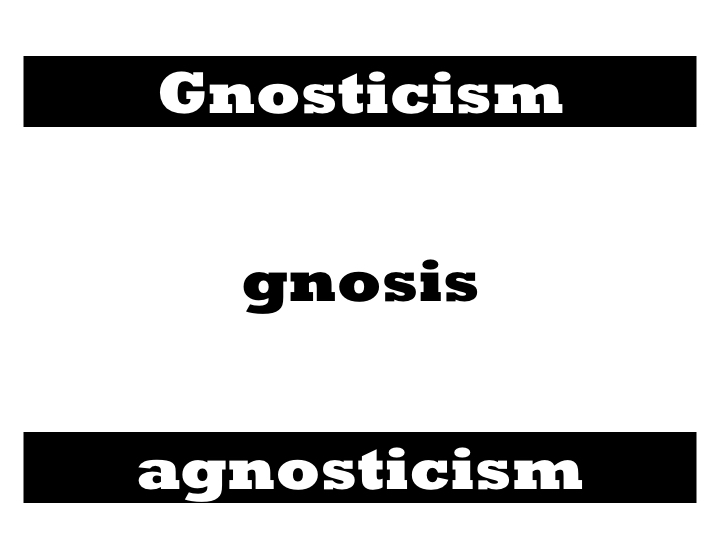
In the Greek language of the New Testament, there are a couple of words for “knowing”: one is gnosis and the other oido. Together these words combine head knowledge and heart knowledge, or knowledge by study and knowledge by experience.

C.S. Lewis captures the idea this way: “It is Christ Himself, not the Bible, who is the true Word of God. The Bible, read in the right spirit and with the guidance of good teachers, will bring us to Him.”

Just as Jesus was both God and Man, we are to use both our mind and our heart to know Him.

To focus on the “heads” side—the deity of Jesus—is to pervert gnosis into gnosticism, and deny the humanity of Jesus. To focus on the “tails” side—the humanity of Jesus—is to pervert gnosis into agnosticism, and deny the deity of Jesus. True gnosis keeps both sides in mind: Deity and humanity.

To truly know THE Word of God (Jesus) in all His humanity and in all His deity, we need to study the Word of God. We also need the help of the Holy Spirit. I like the Old English wording of this verse—Ye have an unction [charisma] from the Holy One, and ye know [gnosis] all things (1 John 2:20).

So read your Bible, but not just to read your Bible. Ask the Holy Spirit to make THE Word known to you. Live in the balance of gnosis as you get to know Jesus more deeply and personally.

(When Jesus proclaimed His “I Am” statements in the New Testament, He was tying Himself to all of the “Jehovah” titles of the Old Testament. Check out I Am Jehovah.)

This post is a part of our series studying our foundational beliefs. If you would like to read more about the first foundational beliefs we have discussed, check out this post on the inspiration of Scripture, and this post on the Trinity.

►► Would you please prayerfully consider supporting this ministry? My Patreon supporters get behind-the-scenes access to exclusive materials. ◀︎◀︎