Some people mistakenly think that the maturity of a Christian is a steady climb, and anything short of that is not God-honoring. They feel the graph has to always be moving up and to the right. In reality—if we zoom in—we will see lots of peaks and troughs that are in the climb.
For instance, we read the worship leader of Psalm 42 saying, “By day the Lord directs His love, at night His song is with me—a prayer to the God of my life,” and we think, “Yeah, that’s what I expect from a saintly psalmist!”
But let’s get the context. In the opening verses, this same worship leader talks about his profound thirst, his tears, and the taunts of his enemies. Twice in this psalm, he laments, “Why are you so downcast, O my soul? Why so disturbed within me?”
Many people have gone through what has been called “the dark night of the soul.” I doubt anyone has ever given thanks because of those dark times, but they have learned to give thanks during those dark times.
Consider David’s beautiful words in Psalm 23. He points out that the Good Shepherd leads us into green pastures AND into dark valleys, beside quiet waters AND into the presence of enemies.
But notice this: the Shepherd of our soul provides what we need in both daytime AND nighttime. He pours out blessings in the presence of our enemies, and as my grandfather wrote in the margin of his Bible next to verse 4, “Where there is shadow there must be light.”
Consider the example of Paul who wrote to the Philippians, “Rejoice in the Lord always. I will say it again: Rejoice!” (4:4). He wrote this to the church that was birthed by Paul’s miraculous deliverance from prison, while Paul and Silas were doing just that: Praying and singing hymns to God!
In The Screwtape Letters, C.S. Lewis gives us insight into how the demons view the temptation of Christians. Uncle Screwtape wrote to his nephew, “It may surprise you to learn that in God’s efforts to get permanent possession of a soul, He relies on the troughs even more than on the peaks; some of His special favorites have gone through longer and deeper troughs than anyone else. … It is during such trough periods, much more than during the peak periods, that the human is growing into the sort of creature He wants it to be. Hence the prayers offered in the state of dryness are those which please Him best.”
Don’t feel like you need to praise God FOR your troughs, but you can and should praise Him BECAUSE of His presence even in your driest, darkest trough. God is doing something in this trough time that He could accomplish in no other way. As David said, our Good Shepherd leads us in both sunlit and dark paths “for His name’s sake”—He will be glorified and you will be rewarded!
Be sure to follow along on this series Thankful In The Night.
As my friend Josh Schram led us through Psalm 66 in our Selah series, I was reminded how our worship of God—especially in our trials—can leave a godly legacy that crosses generations and continents.
There are three Selahs in this psalm. Remember that Selah is a call to pause to consider the impact of what the inspired biblical text just said to us. The Selahs in this psalm are surrounded by praise to God, as well as the impact of that praise.
Psalm 66 could be briefly outlined like this:
Notice that our praise of God—despite the circumstances we’re in—makes all of the other steps possible.
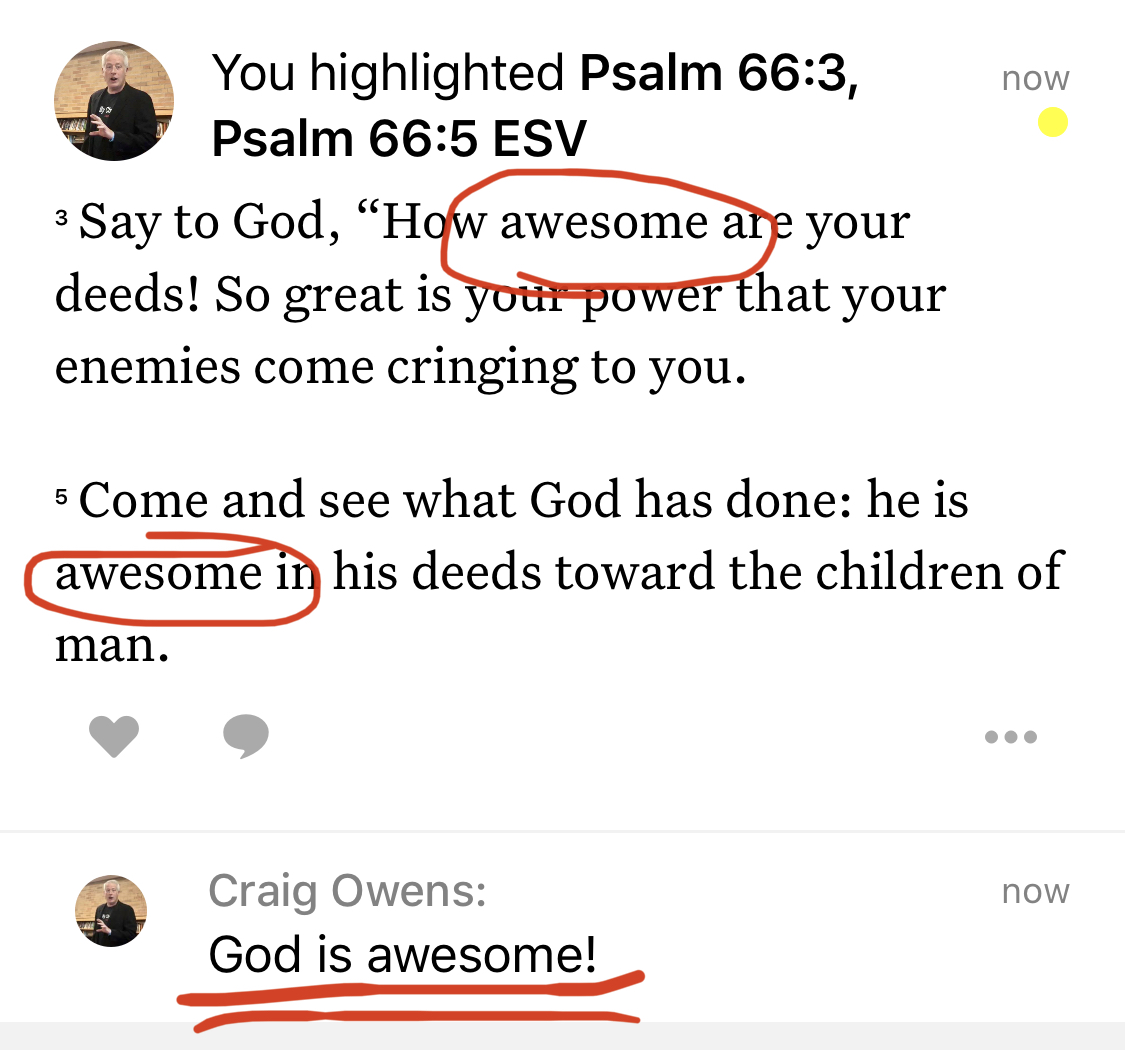
“Come and see my life of praise” (v. 3) precedes the opportunity to say, “Come and listen to my testimony” (v. 5). In other words, we live out our love for God and earn the right to speak out to others about our love for God.
Look at the same pattern in Paul and Silas:
But it’s not just this jailer. Luke wrote that the other prisoners were also listening to Paul and Silas sing about their awesome God. Through the jailer and perhaps some of these prisoners, a church was started in Philippi.
Later on, Paul would write to this church about their partnership in ministry, and he would write to the Corinthian church about the amazing missions generosity of the Philippian church (see Philippians 1:3-5; 2 Corinthians 8:1-2). That’s what I mean about leaving a godly legacy that crosses generations and continents.
God is worthy to be praised! Let others hear you saying, “God is awesome” even in the midst of your painful trials, and you, too, will earn the opportunity to say to them, “Come and listen as I tell you how awesome it is to be in a relationship with God through His Son Jesus!” You can be a part of this godly legacy in your community.
If you’ve missed any of the messages in our Selah series, you can find the full list of messages by clicking here.
My good friend Josh Schram shared a powerful message in our Selah series.
David is the anointed king, but instead of living in a palace, he’s living in a cave. From this cave, David gave us Psalm 57.
Here are some of my takeaways from Josh’s message, but I would encourage you to watch this 20-minute video for yourself
Takeaways:
If you have missed any of the messages in our Selah series, you can access all of them by clicking here.
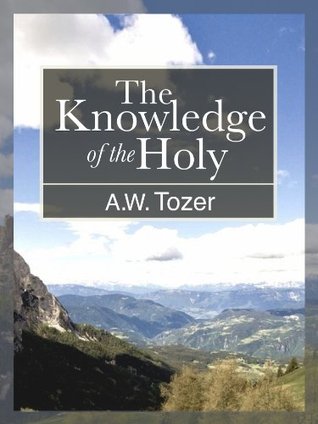
A.W. Tozer helps us think long and deep about the greatness of God, opening windows of insight that many have not contemplated previously. Check out my full book review of The Knowledge Of The Holy by clicking here.
“With our loss of the sense of Majesty has come the further loss of religious awe and consciousness of the divine presence. … The decline of the knowledge of the holy has brought on our troubles. A rediscovery of the majesty of God will go along way toward curing them.”
“What comes into our minds when we think about God is the most important thing about us.”
“The man who comes to a right belief about God is relieved of ten thousand temporal problems, for he sees at once that these have to do with matters which at the most cannot concern him for very long; but even if the multiple burdens of time may be lifted from him, the one mighty single burden of eternity begins to press down upon him with a weight more crushing then all the woes of the world piled one upon another. …
“But unless the weight of the burden is felt, the gospel can mean nothing to the man; and until he sees a vision of God high and lifted up, there will be no woe and no burden. Low views of God destroyed the gospel for all who hold them.”
“Among the sins to which the human heart is prone, hardly any other is more hateful to God than idolatry, for idolatry is at bottom a libel on His character. … The essence of idolatry is the entertainment of thoughts about God that are unworthy of Him.”
“The heaviest obligation lying upon the Christian Church today is to purify and elevate her concept of God until it is once more worthy of Him—and of her.”
“When the Spirit would acquaint us with something that lies beyond the field of our knowledge, He tells us that this thing is like something we already know, but He is always careful to phrase His description so as to save us from slavish literalism.”
“An attribute of God is whatever God has in anyway revealed as being true of Himself.”
“We might be wise to follow the insight of the enraptured heart rather than the more cautious reasonings of the theological mind.”
“If we ever think well it should be when we think of God.”
“The harmony of His being is the result not of a perfect balance of parts but of the absence of parts.… An attribute, then, is not a part of God, it is how God is…. The divine attributes are what we know to be true of God. He does not possess them as qualities; they are how God is as He reveals Himself to His creatures.”
One definition of a Christian mystic is someone who engages in deep, prayerful pondering of the nature of God, as He is revealed in the Scriptures, and then emerges from those intimate encounters to share with us what he or she has learned. I would put A.W. Tozer in this category, especially in his book The Knowledge Of The Holy—The Attributes of God: Their Meaning in the Christian Life.
Tozer himself described the Christian mystic more fully than I could in his book The Christian Book Of Mystical Verse. In that book, Tozer shared some poetic verses from some of his favorite mystical thinkers. He noted, “The hymns and poems found here are mystical in that they are God-oriented; they begin with God, embrace the worshipping soul, and return to God again.”
In The Knowledge Of The Holy, Tozer takes us on his own personal journey into the immeasurable depths of God’s greatness. Whereas many theologians tend to focus on one attribute of God at a time, Tozer has a God-given ability to help us see all of God’s attributes operating in their infinite fullness.
Even as Tozer plunges deep into the attributes of God’s self-existence, self-sufficiency, omniscience, omnipotence, omnipresence, love, mercy, justice, grace, and sovereignty, he reminds us, “Because God is immutable He always acts like Himself, and because He is a unity He never suspends one of His attributes in order to exercise another.”
This is not a book you can ready lightly or casually, or even quickly. This is a book that invites you to read slowly and reverently each of the short chapters, and then to meditate long on the immenseness of an All-Powerful, All-Loving God who wants to reveal Himself to you.
The Knowledge Of The Holy is a soul-expanding book!
Prescribed & Personal Worship
May 12, 2020 — Craig T. OwensBut you are to seek the place the Lord your God will choose from among all your tribes to put His Name there for His dwelling (Deuteronomy 12:5).
The Old Testament physical practices always point to the New Testament spiritual practices:
Go to THE place the Lord will choose (v. 26).
The exclusivity focus is on the Person not the place or the practice.
Jesus said, “Not here or in Jerusalem, but in spirit and in truth” (John 4:20-24). And He made clear that He is THE exclusive way to the Father (John 14:6).
The apostle Paul noted that the day of the week or the type of food doesn’t matter in our worship practices; THE focus on Jesus is what matters (Romans 14).
So worship of God is both prescribed and personal:
Paul went on to say in Romans 14 that we shouldn’t judge the sincerity of another person’s worship. If they are glorifying God—great! If not—they will have to stand before THE Judge.
We only have access to God through THE High Priest Jesus Christ. Let us always make sure that He is THE focus.
Share this: