10 Quotes From “The Knowledge Of The Holy”

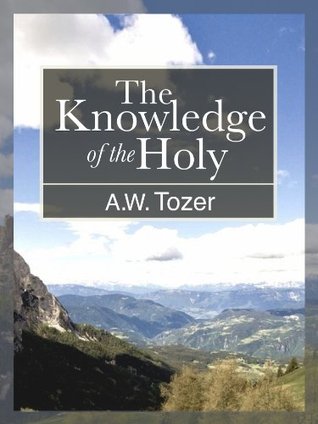
A.W. Tozer helps us think long and deep about the greatness of God, opening windows of insight that many have not contemplated previously. Check out my full book review of The Knowledge Of The Holy by clicking here. 

“With our loss of the sense of Majesty has come the further loss of religious awe and consciousness of the divine presence. … The decline of the knowledge of the holy has brought on our troubles. A rediscovery of the majesty of God will go along way toward curing them.” 

“What comes into our minds when we think about God is the most important thing about us.” 

“The man who comes to a right belief about God is relieved of ten thousand temporal problems, for he sees at once that these have to do with matters which at the most cannot concern him for very long; but even if the multiple burdens of time may be lifted from him, the one mighty single burden of eternity begins to press down upon him with a weight more crushing then all the woes of the world piled one upon another. …

“But unless the weight of the burden is felt, the gospel can mean nothing to the man; and until he sees a vision of God high and lifted up, there will be no woe and no burden. Low views of God destroyed the gospel for all who hold them.” 

“Among the sins to which the human heart is prone, hardly any other is more hateful to God than idolatry, for idolatry is at bottom a libel on His character. … The essence of idolatry is the entertainment of thoughts about God that are unworthy of Him.” 

“The heaviest obligation lying upon the Christian Church today is to purify and elevate her concept of God until it is once more worthy of Him—and of her.” 

“When the Spirit would acquaint us with something that lies beyond the field of our knowledge, He tells us that this thing is like something we already know, but He is always careful to phrase His description so as to save us from slavish literalism.” 

“An attribute of God is whatever God has in anyway revealed as being true of Himself.” 

“We might be wise to follow the insight of the enraptured heart rather than the more cautious reasonings of the theological mind.” 

“If we ever think well it should be when we think of God.” 

“The harmony of His being is the result not of a perfect balance of parts but of the absence of parts.… An attribute, then, is not a part of God, it is how God is…. The divine attributes are what we know to be true of God. He does not possess them as qualities; they are how God is as He reveals Himself to His creatures.” 
The Knowledge Of The Holy (book review)

One definition of a Christian mystic is someone who engages in deep, prayerful pondering of the nature of God, as He is revealed in the Scriptures, and then emerges from those intimate encounters to share with us what he or she has learned. I would put A.W. Tozer in this category, especially in his book The Knowledge Of The Holy—The Attributes of God: Their Meaning in the Christian Life. 

Tozer himself described the Christian mystic more fully than I could in his book The Christian Book Of Mystical Verse. In that book, Tozer shared some poetic verses from some of his favorite mystical thinkers. He noted, “The hymns and poems found here are mystical in that they are God-oriented; they begin with God, embrace the worshipping soul, and return to God again.” 

In The Knowledge Of The Holy, Tozer takes us on his own personal journey into the immeasurable depths of God’s greatness. Whereas many theologians tend to focus on one attribute of God at a time, Tozer has a God-given ability to help us see all of God’s attributes operating in their infinite fullness. 

Even as Tozer plunges deep into the attributes of God’s self-existence, self-sufficiency, omniscience, omnipotence, omnipresence, love, mercy, justice, grace, and sovereignty, he reminds us, “Because God is immutable He always acts like Himself, and because He is a unity He never suspends one of His attributes in order to exercise another.” 

This is not a book you can ready lightly or casually, or even quickly. This is a book that invites you to read slowly and reverently each of the short chapters, and then to meditate long on the immenseness of an All-Powerful, All-Loving God who wants to reveal Himself to you. 

The Knowledge Of The Holy is a soul-expanding book!

Poetry Saturday—God Is The Name My Soul Adores

God is the Name my soul adores,
The almighty Three, the eternal One;
Nature and grace, with all their powers,
Confess the Infinite unknown.

Thy voice produced the sea and spheres,
Bade the waves roar, the planets shine;
But nothing like Thyself appears
Through all these spacious works of Thine.

Still restless nature dies and grows;
From change to change the creatures run:
Thy being no succession knows,
And all Thy vast designs are one.

A glance of Thine runs through the globe,
Rules the bright worlds, and moves their frame;
Of light Thou formist Thy dazzling robe;
Thy ministers are living flame.

How shall polluted mortals dare
To sing Thy glory or Thy grace?
Beneath Thy feet we lie afar,
And see but shadows of Thy face.

Who can behold the blazing light?
Who can approach the consuming flame?
None but Thy wisdom knows Thy might
None but Thy Word can speak Thy Name. —Isaac Watts

Poetry Saturday—How Good Is The God We Adore

How good is the God we adore!
Our faithful, unchangeable Friend:
His love is as great as His pow’r
And knows neither measure nor end.

For Christ is the first and the last;
His Spirit will guide us safe home;
We’ll praise Him for all that is past
and trust Him for all that’s to come. —Joseph Hart

Poetry Saturday—Majesty Divine

Full of glory, full of wonders,
Majesty Divine! 
‘Mid Thine everlasting thunders 
How Thy lightnings shine! 
Shoreless Ocean! who shall sound Thee? 
Thine own eternity is round Thee, 
Majesty Divine!

Timeless, spaceless, single, lonely,
Yet sublimely Three, 
Thou art grandly, always, only 
God in Unity! 
Lone in grandeur, lone in glory, 
Who shall tell Thy wondrous story, 
Awful Trinity?

Speechlessly, without beginning,
Sun that never rose! 
Vast, adorable, and winning, 
Day that hath no close! 
Bliss from Thine own glory tasting, 
Everliving, everlasting, 
Life that never grows!

Thine own Self forever filling
With self-kindled flame, 
In Thyself Thou art distilling 
Unctions without name! 
Without worshipping of creatures, 
Without veiling of Thy features, 
God always the same!

In Thy praise of Self untiring
Thy perfections shine; 
Self-sufficient, self-admiring,—
Such life must be Thine;—
Glorifying Self, yet blameless
With a sanctity all shameless
It is so Divine!

‘Mid Thine uncreated morning,
Like a trembling star 
I behold creation’s dawning 
Glimmering from far; 
Nothing giving, nothing taking, 
Nothing changing, nothing breaking, 
Waiting at time’s bar!

One with life and love diurnal
See myself in Thee, 
All embalmed in love eternal, 
Floating in Thy sea: 
‘Mid Thine uncreated whiteness 
I behold Thy glory’s brightness 
Feed itself on me.

Splendors upon splendors beaming
Change and intertwine!
Glories over glories streaming
All translucent shine! 
Blessings, praises, adorations
Greet Thee from the trembling nations
Majesty Divine! —Frederick Faber

Poetry Saturday—Clinging To Thee

O Holy Savior, Friend unseen,
Since on Thine arm Thou bidst me lean,
Help me throughout life’s varying scene
   By faith to cling to Thee.

Blest with this fellowship divine,
Take what Thou wilt, I’ll ne’er repine;
E’en as the branches to the vine,
   My soul would cling to Thee.

Far from her home, fatigued, oppressed,
Here she has found her place of rest;
An exile still, yet not unblessed,
   While she can cling to Thee.

Without a murmur I dismiss
My former dreams of earthly bliss;
My joy, my consolation this,
   Each hour to cling to Thee.

What though the world unfaithful prove,
And earthly friends and joys remove;
With sure and certain hope of love,
   Still would I cling to Thee.

Oft when I seem to tread alone
Some barren waste, with thorns o’ergrown,
Thy voice of love, in gentle tone,
   Whispers “Still cling to Me.” 

Though faith and hope may oft be tried,
I ask not, need not aught beside;
How safe, how calm, how satisfied,
   The soul that clings to Thee!

They fear not satan, nor the grave—
They feel Thee near and strong to save;
Nor dread to cross e’en Jordan’s wave,
   Because they cling to Thee.

Blessed is my lot, whate’er may befall;
What can disturb me, who appall,
While as my Strength, my Rock, my All,
   Savior, I cling to Thee? —Charlotte Elliott

How Will You Respond To Jesus?

Although most nativity scenes show the wise men visiting Jesus alongside the shepherds the night He was born, in reality the Magi showed up much later. 

They came first to Israel’s capital city—Jerusalem—and went to the man who currently bore the title King of the Jews—Herod—with an odd question, “Where is He who has been born King of the Jews? We’ve come to worship Him.”

The call to come to worship the Christ has always stirred different responses in people’s hearts. But I have noticed that the responses today aren’t any different than they were over 2000 years ago at Christ’s first Advent. 

Notice these four responses in the Gospel of Matthew:

  1. King Herodwhen King Herod heard this he was disturbed.

The word disturbed means an inward commotion, someone robbed of any calmness; someone who has become restless and agitated. 

King Herod wasn’t all that different from a lot of people today who have their personal lives organized according to their own plans. They have everything figured out. They are masters of their own fate. They know how everything is supposed to work. They are god of their own world. 

But inside it’s a different story. They may not acknowledge it to anyone else, but they are uneasy. King Herod was political, not religious. He knew how to play the games with the right Jewish leaders and Roman politicians to get and keep his throne. So when he hears, “Where is He who is born KING OF THE JEWS?” you can understand why he instantly becomes so agitated! He feels like his well-ordered world and best-laid plans are about to crash in on him! 

  1. All JerusalemKing Herod…was disturbed, and all Jerusalem with him. 

The people of Jerusalem had a love-hate relationship with King Herod. If you were on his side, he could be quite generous with his gifts and favorable with his influence. But if you were against him, he could be incredibly cruel (just take a look at verse 16!). 

So when Herod got upset, you can imagine why the citizens of Jerusalem were as well. They all longed for the Messiah—the Christ—to come and set them free, but in the meantime they were trying to keep their options open. They wanted the Messiah, if they could have Him, but they didn’t want to abandon Herod yet, just in case the Messiah couldn’t follow through.  

  1. Religious leadersHerod…called together all the people’s chief priests and teachers of the law. 

Of all the people looking for the Christ, you would think the chief priests and teachers of the law would be the most excited! When Herod asked them for the birthplace of the Messiah, they immediately knew the answer, but after they delivered this information to King Herod they aren’t mentioned again in this narrative. Bethlehem was only 6 miles away, but they didn’t do a single thing! The Messiah being born in such a lowly manner didn’t fit the image they had concocted in their minds. Later on, Jesus would challenge them on this (see John 5:38-40). 

  1. MagiMagi from the east came to Jerusalem. 

Whereas the Jewish religious leaders were only 6 miles away, the Magi that came from the east might have been anywhere from 400-800 miles away. They left the comforts of their home to travel perhaps as long as 4 months. But, Oh! the journey was so worth the effort! They got to see the Christ with their very own eyes! We read that they were overjoyed, and that they bowed down and worshiped Him and opened their treasures. 

What’s your idea about Jesus? 

  • King Herod wanted a Savior that would enable him to continue to run his own life, but he didn’t want a King that would call the shots. 
  • The people of Jerusalem wanted access to God’s power, but they didn’t want to give their full allegiance to Jesus. 
  • The religious leaders wanted Jesus to fit their mold, but they didn’t want to have to change anything about their own lives. 
  • Only the Magi accepted Jesus as both Savior and King, willingly laying everything at His feet. 

What about you? What’s your idea about Jesus? He isn’t just a Baby in a manger; He’s also King and Judge and Ruler and Lord. When you hear the call to come worship Him, what will your response be? 

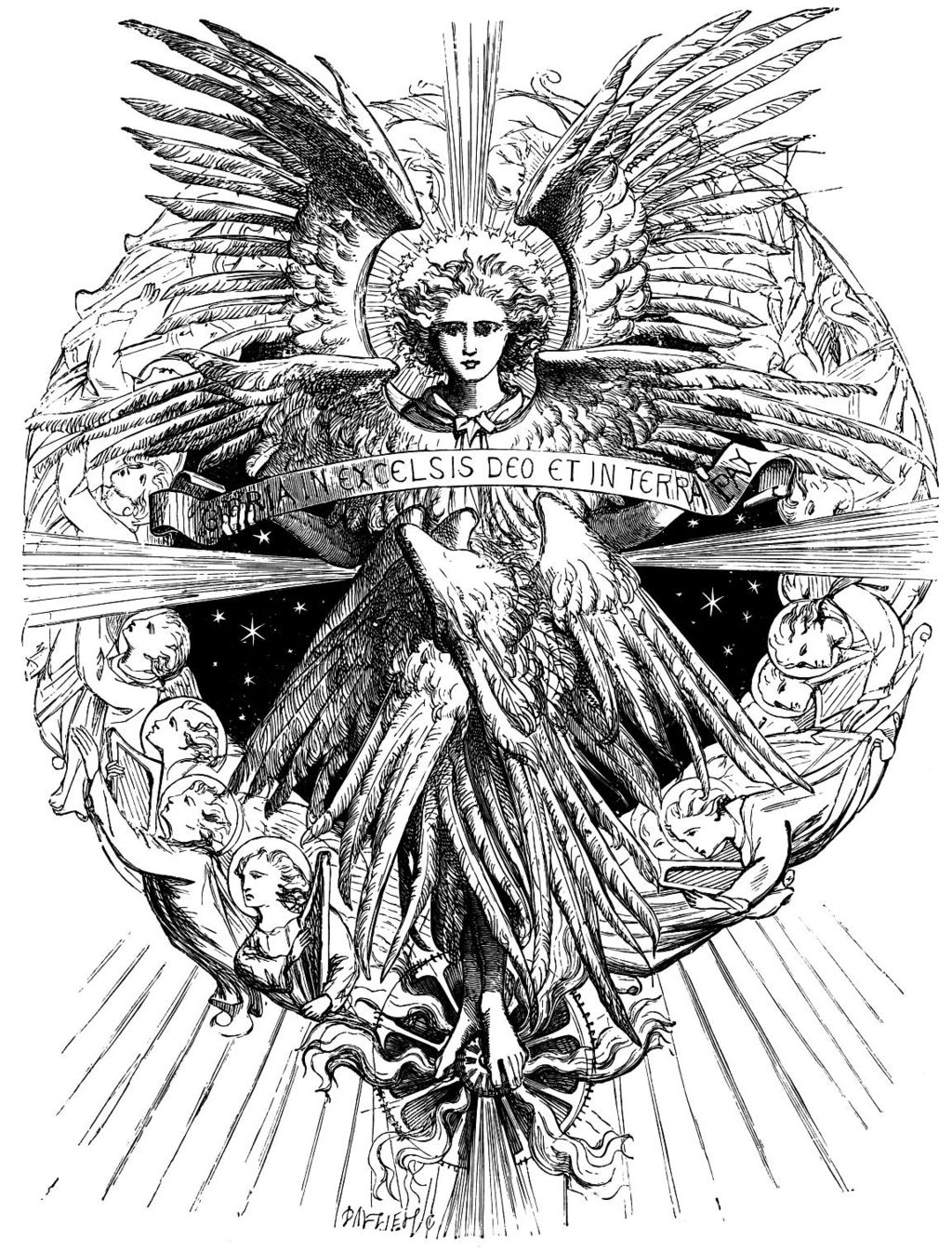
What Does “Gloria In Excelsis Deo” Mean Today?

Listen to the podcast of this post by clicking on the player below, and you can also subscribe on AppleSpotify, or Audible.

A “mondegreen” is a misunderstood word or phrase usually because it’s in a song lyric that is misunderstood. In Christmas carols, many mondegreens come from the fact that the Old English lyrics are sometimes up to 200 years old and simply aren’t the way Americans talk today. One of my favorite mondegreens comes from I Heard The Bells On Christmas Day where people say “the bell freeze up all Christians dumb” instead of “the belfries of all Christendom”! 

If this happens to 200-year-old songs written in English, can you imagine what happens to a song that is 1700 years old and was originally written in Latin?! I’m talking about the chorus from Angels We Have Heard On High which simply says, “Gloria in excelsis Deo.” 

That Latin phrase means Glory to God in the highest! The idea is that our praise of God is both excellent and increasing in its level of adoration. The Latin phrase is shorthand for a doxology that is traced back to 300 AD.

The angels aren’t the subject of this carol, but the focal point is to Whom their song is being raised—“Come to Bethlehem and see Him Whose birth the angels sing; come adore on bended knee Christ the Lord, the newborn King.

The idea of gloria in excelsis is to keep making our praise bigger and more magnificent. We are to MAGNIFY what God has done for us through the advent of Jesus.  

In Hebrew, the word gadal is usually translated as “magnify” or “glorify” in English, and it means something that is growing and becoming more powerful. David uses gadal as he not only praises God from deep within his soul but encourages others to join in his song (Psalm 34:1-3). 

In Greek, the word megalynō is also translated “magnify,” and means to make something great, make it obvious, declare it to be great, celebrate it. Mary’s song called The Magnificat begins with this word (Luke 1:46).

I cannot make God great because He is already THE GREATEST! 
I cannot make God powerful because He is already OMNIPOTENT!
But I can make His greatness and His power more obvious by celebrating Him!

Just like a magnifying glass doesn’t make an object bigger, it just helps us see it better. So, too, our praise and adoration don’t make God bigger, it just helps others see Him better.  

So I have a question to ask you—which I’ve already been asking myself:

How will you give gloria in excelsis Deo this Christmas season and beyond?

►► Would you please prayerfully consider supporting this ministry? ◀︎◀︎

If you’ve missed any of the message in this series, you can check them out by clicking here.

Poetry Saturday—Angel Hymn

Glory to You who have shown us the light.
Glory to God in the highest and on earth peace, goodwill to all people.
We praise You, we bless You, we worship You, we glorify You, we give thanks to You for Your great glory.
Lord, King, heavenly God, Father, Almighty; Lord, the only-begotten Son, Jesus Christ, and Holy Spirit.
Lord God, Lamb of God, Son of the Father who takes away the sin of the world, have mercy on us, You who take away the sins of the world. —Angel Hymn / Doxology (~300 AD)

Glory to God in the highest
and peace to His people on earth.
Lord God, heavenly King,
Almighty God and Father,
we worship You, we give You thanks,
we praise You for Your glory.
Lord Jesus Christ, only Son of the Father,
Lord God, Lamb of God,
You take away the sin of the world:
have mercy on us;
You are seated at the right hand of the Father:
receive our prayer.
For You alone are the Holy One,
You alone are the Lord,
You alone are the Most High,
Jesus Christ,
with the Holy Spirit,
in the glory of God the Father. Amen. —updated in the Book of Common Prayer (~1975)

8 Thankful Quotes

“…May we also unite in most humbly offering our prayers and supplications to the great Lord and Ruler of Nations and beseech Him—To pardon our national and other transgressions, To enable us all, whether in public or private stations, to perform our several and relative duties properly and punctually, To render our national government a blessing to all the people, by constantly being a government of wise, just, and constitutional laws, discreetly and faithfully executed and obeyed, To protect and guide all nations and to bless them with good government, peace, and concord, To promote the knowledge and practice of true religion and virtue, and the increase of science, And generally to grant unto all mankind such a degree of temporal prosperity as He alone knows to be best.” —George Washington’s Thanksgiving Proclamation in 1789 

“Let your soul lose itself in wonder, for wonder is in this way a very practical emotion. Holy wonder will lead you to grateful worship and heartfelt thanksgiving. It will cause within you godly watchfulness; you will be afraid to sin against such a love as this.” —C.H. Spurgeon 

“As flowers carry dewdrops trembling on the edge of the petals, and ready to fall at the first waft of wind or brush of bird, so the heart should carry its beaded works of thanksgiving, and, at the first breath of heavenly flavor, let down the shower perfumed with the heart’s gratitude.” —Henry Ward Beecher 

“Thanksgiving will draw our hearts toward God and keep us in fellowship with Him; it will take our attention from ourselves and give the Spirit room in our hearts.” —Andrew Murray 

“If we pray without ceasing, we shall not want matter for thanksgiving in everything. We shall see cause to give thanks for sparing and preventing, for common and uncommon, past and present, temporal and spiritual mercies. Not only for prosperous and pleasing, but also for afflicting providences, for chastisements and corrections; for God designs all for our good, though we at present see not how they tend to it.” —Matthew Henry 

“Blessed is that home which has in it an altar of sacrifice and of prayer, where daily thanksgivings ascend to heaven and where morning and night praying is done.” —E.M. Bounds 

“Not to lose myself and reader in this digression, the sum is, the unspeakable blessings which the priesthood of Christ hath obtained for us are a strong obligation for the duty of praise and thanksgiving; of which that in some measure we may discharge ourselves, He hath furnished us with sacrifices of that kind to be offered unto God.” —John Owen

“Gratitude is from the same root word as ‘grace,’ which signifies the free and boundless mercy of God. Thanksgiving is from the same root word as ‘think,’ so that to think is to thank.” —Willis P. King