Listen to the podcast of this post by clicking on the player below, and you can also subscribe on Apple, Spotify, or Audible.
►► Would you please prayerfully consider supporting this ministry? ◀︎◀︎
Listen to the podcast of this post by clicking on the player below, and you can also subscribe on Apple, Spotify, or Audible.
►► Would you please prayerfully consider supporting this ministry? ◀︎◀︎
Listen to the podcast of this post by clicking on the player below, and you can also subscribe on Apple, Spotify, or Audible.
A few years ago Mark Schultz wrote a song about someone living a go-go-go, overly-busy life and he entitled the song “Running just to catch myself.” Ever been there?
There’s a Hebrew word that shows up 70 times in the Bible (mostly in the Psalms) that, sadly, many English translations of the Bible have relegated to a footnote. That’s too bad because Selah is such a powerful word. Unless we want to live our lives “running just to catch myself,” we all need a take time to Selah. Look how some have translated this word:
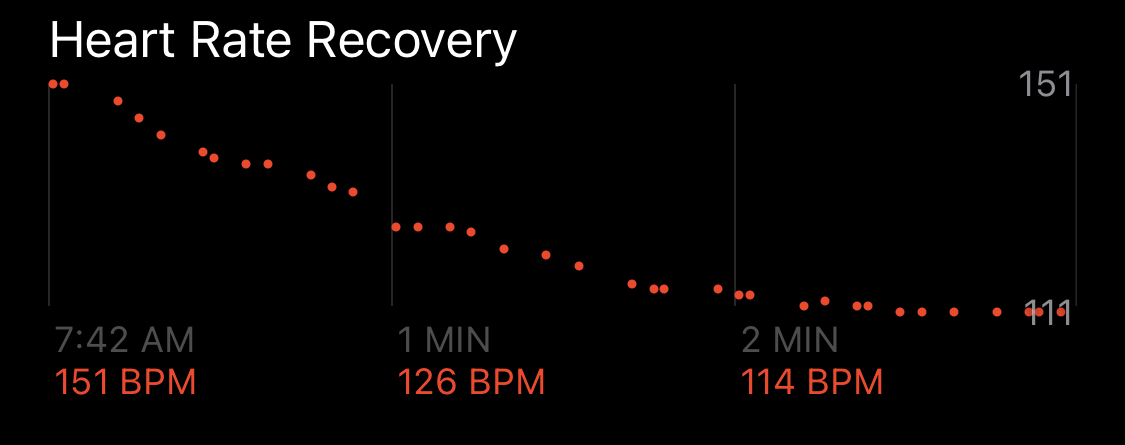
Whether it’s a planned exercise time or just something that frightens or excites us, our heart rate is designed by God to increase—this is how we prepare for fight-or-flight. Doctors say that one of the most vital statistics they now look at to gauge overall cardio health is heart rate recovery (HRR). Doctors want to see a significant increase in HRR after exercise, fright, or excitement.
A few of the factors that boost HRR:
Respond-and-recover is part of a health-building cycle. But if we’re “running just to catch myself” all the time, this time of recovery isn’t happening. Not only are we not recovering well, but we are not properly prepared for the next time our heart needs to start beating faster.
This HRR is just as vital for us emotionally and spiritually as it is physically: We cannot always be stressed or always be “on.” We need a Selah—a time to stop and consider, a time to take a sacred pause to calmly think.
This is what David teaches us in Psalm 68. Check out the “bookend verses” where he reminds us that when God arises His enemies are scattered, and that God is awesome and He gives power and strength to His people (vv. 1, 35). And look a the middle verse where David says that when God ascends in victory He gives gifts (v. 18).
This tells me two things: (1) God is sovereignly in charge (not me or anyone else), and (2) In His love, God delights to use His sovereign power to bless His children.
The question is not IF I’m going to be confronted by difficult things or difficult people, but HOW will I recover from these confrontations?
May I suggest a 3-step process to increase your spiritual HRR?
Look at David’s example in this psalm:
| Reflect | Worship |
| God defeats enemies (vv. 1-2) | Be glad, rejoice, sing (vv. 3-4) |
| God is a Father and Deliverer (vv. 5-7) | Selah (v. 7) |
| God is sovereignly in control (vv. 8-18) | Praise and Selah (v. 19) |
| God defeated Death (vv. 20-23) | Join the procession of worshippers (vv. 24-27) |
| God uses His strength to care for His people (vv. 28-31) | Sing praises and Selah (vv. 32-35) |
As you breathe deeply in this worship of recovery, think on this: “Your sigh can move the heart of Jehovah; your whisper can incline His ear to you; your prayer can stay His hand; your faith can move His arm.” —Charles Spurgeon
Our Selah pause leads to proper perspective, which allows us to recover more quickly. That, in turn, helps us to be better prepared for the next time we’re confronted by difficulties.
To check out the other lessons we’ve learned in our ongoing series called Selah, please check out the list I’ve compiled here.
►► Would you please prayerfully consider supporting this ministry? ◀︎◀︎
This is a weekly series with things I’m reading and pondering from Charles Spurgeon. You can read the original seed thought here, or type “Thursdays With Spurgeon” in the search box to read more entries.
Listen to the podcast of this post by clicking on the player below, and you can also subscribe on iTunes or Spotify.
Stop Arguing
Our religion is not based upon opinions, but upon facts. We hear persons sometimes saying, ‘Those are your views, and these are ours.’ Whatever your views may be is a small matter; what are the facts of the case? We must, after all, if we want a firm foundation, come down to matters of fact. …
Beloved friends, let us never tamper with the truth of God. I find it is as much as I can do to enjoy the comfort of the truth and to learn the spiritual lessons of God’s Word without setting up to be a critic upon it. And I find it immeasurably more profitable to my own soul to believingly adore than unbelievingly to invent objections, or even industriously to try to meet them. The meeting of objections is an endless work. When you have killed one regiment of them, there is another regiment coming on, and when you have put to the sword whole legions of doubts, doubters still swarm upon you like the frogs of Egypt! It is a poor business. It answers no practical end. It is far better to firmly believe what you profess to believe and to follow out to all the blessed consequences all of the truths of God that, in your own heart and soul, you have received of the Lord.
From If There Is No Resurrection
I have presented evidence numerous times that makes it reasonable to believe that the Bible is God’s inspired Word (check out my posts here, here, here, and here). And yet there are still people who stubbornly want to argue that the Bible is made-up stories, or that there was no such person as Jesus, or that if there were a Jesus, He was just a good man but not God Himself who was raised from the dead. These arguments are nothing new. Paul had to address them just a few years after Jesus had ascended back to heaven, so what would make us think that we would escape those doubters?
As Spurgeon says, there is so much more joy when we simply “believingly adore” the God who is revealed to us on the pages of Scripture than it is to address such flimsy arguments. So that is what I typically do. Trying to debate with someone who won’t even accept basic facts is typically an unprofitable use of my efforts because they usually aren’t open to listening to what I have to say.
Instead, I simply remember this: The one with a personal experience of a life-changing encounter with a risen Savior is never at the mercy of the critic with only a handful of arguments! So you can simply say to that argumentative critic, “I know how different my life is because Jesus is in me and I am in Him.”
Stop arguing with close-minded critics and start adoring the God who loves you!
Listen to the podcast of this post by clicking on the player below, and you can also subscribe on Apple or Spotify.
Do not be far from me, my God; come quickly, God, to help me. (Psalm 71:12)
This is the middle verse of this psalm and the heart of this psalm’s message. This verse speaks not only of God’s omnipresence and His omnipotence, but it also speaks of a lifelong, increasing awareness of His presence and power.
What a blessing to know that I have a sure Rock to which I can always go (v. 3), and a Savior whom I have had as my confidence since my youth (v. 5). This hopeful assurance causes me to praise God—the more I hope, the more I praise. As a result, my praise grows from an occasional response, to a daily practice, to a moment-by-moment lifestyle.
Listen to these words from the psalmist:
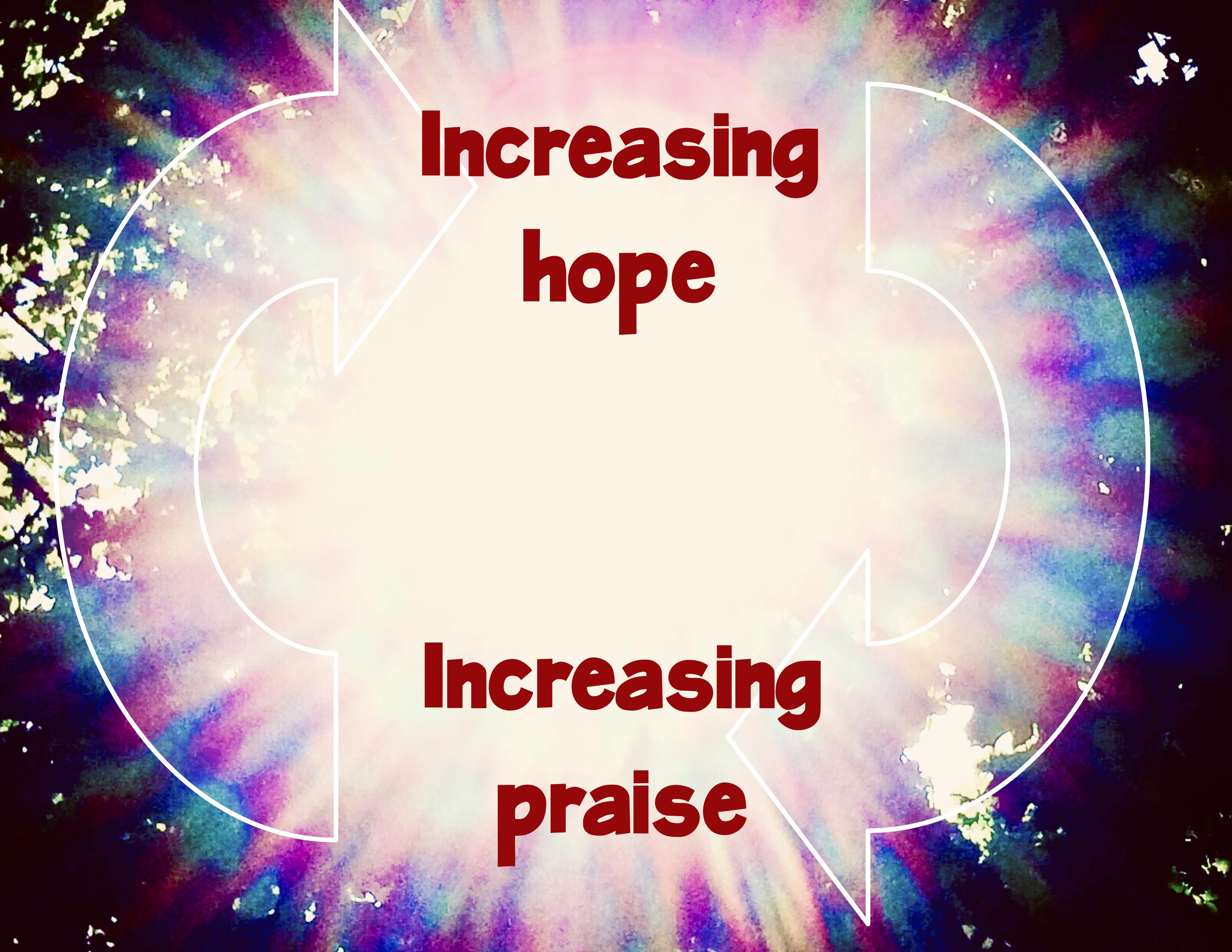
My hope fuels my praise. My praise strengthens my hope. The more I realize hope, the more I praise God, and the more I praise God, the more hope-filled I become!
My friend, there are more reasons to praise God than you can possibly count but go ahead and start counting them anyway. As the words of the old hymn remind us, “Count your blessings, name them one by one … and it will surprise you what the Lord has done.”
May our tongues be continually telling of God’s blessings, and may our praise be continually filling us with renewed hopefulness of His future blessings!
►► Would you please prayerfully consider supporting this ministry? ◀︎◀︎
Listen to the podcast of this post by clicking on the player below, and you can also subscribe on Apple or Spotify.
You who answer prayer … You answer us with awesome and righteous deeds, God our Savior…. Shout for joy to God, all the earth! (Psalm 65:2, 5; 66:1).
Psalms 65 and 66 tell of God’s awesome involvement in our lives. He is both globally involved and personally involved. He’s not too big to care for my needs, and He’s not so preoccupied with me that He is unaware of global events.
Look at the grandeur of our Creator—
And yet He is not just God of global events, but He is intimately involved with each and every person. He notices me!
The psalmist says, “Come and listen, all you who fear God; let me tell you what He has done for me.” Then he tells how God…
Oh, come and see! See how awesome God is that the earth trembles before Him. See how awesomely loving He is that He stoops to listen to me. He is indeed a global God but He is also an intimately personal God.
The more we know our God in both His majesty and His intimacy, the more we will praise Him.
►► Would you please prayerfully consider supporting this ministry? ◀︎◀︎
Listen to the podcast of this post by clicking on the player below, and you can also subscribe on Apple or Spotify.
My heart is steadfast, O God, my heart is steadfast; I will sing and make music. (Psalm 57:7)
David is on the run, hiding in a cave. The bad guys are described as lions, ravenous beasts with teeth like spears and arrows, and tongues like swords. They hotly pursue David, setting traps for him everywhere he would go. So it’s no wonder that David begins this prayer crying out to God,
Have mercy on me, O God have mercy on me, for in You my soul takes refuge. I will take refuge in the shadow of Your wings until the disaster has passed (v. 1).
As David is prone to do in many of his psalms, he inserts the word Selah, reminding both himself and his readers to pause for a moment. He records how God answers his prayer: “God sends from heaven and saves me, rebuking those who hotly pursue me” (v. 3).
But the Selah comes in the middle of the verse, almost as if David is pausing to ask, “How exactly does God save me?” In this instance, it’s not so much God rebuking the wicked as it is God blessing David. After the Selah pause he says, “God sends forth His love and His faithfulness.”
By blessing His righteous servant David, God rebukes the wicked and vindicates David by creating a longing in those wicked men to also be blessed by God.
In the New Testament we see that the arrival of Jesus was an act of God’s kindness: “Because of and through the heart of tender mercy and loving-kindness of our God, a Light from on high will dawn upon us and visit us” (Luke 1:78). And it is God’s kindness that continues to draw us to Himself: “…Are you unmindful or actually ignorant of the fact that God’s kindness is intended to lead you to repent—to change your mind and inner man to accept God’s will?” (Romans 2:4).
David foresees his enemies falling into the very traps they have set for him (v. 6). And then once again he calls for a Selah pause to consider how God has and is blessing him.
From this point on, David expresses no more thoughts about the wicked people pursuing him, but all of his words through the remainder of this psalm are worship, praise, and exaltation (vv. 7-11).
When evil people are assailing you perhaps you could pray this prayer:
O God, that my heart could be so transformed that I desire Your blessing on my life more than I look for Your judgment or retribution on the wicked! I pray that my heart would be a place of continual praise to You, and not a hotbed of anxious thoughts about wicked people. Father, may Your kindness to me be such a powerful testimony to even evildoers, that they will repent—change their mind to accept You as their God too. In Jesus’ name, I pray. Amen.
►► Would you please prayerfully consider supporting this ministry? ◀︎◀︎
Listen to the podcast of this post by clicking on the player below, and you can also subscribe on Apple or Spotify.
►► Would you please prayerfully consider supporting this ministry? ◀︎◀︎
Listen to the podcast of this post by clicking on the player below, and you can also subscribe on Apple or Spotify.
Contend, Lord, with those who contend with me; fight against those who fight against me. (Psalm 35:1).
This psalm is in a category called an imprecatory psalm, which is the theological way of saying, “Get ‘em, God!”
Does it sound unusual to your ears to pray a prayer like that? After all, aren’t we as Christians commanded to forgive those who offend us? How do we square that teaching of Jesus with these brutally honest prayers that David offers up?
Always remember that imprecatory psalms are spoken exclusively to God, not to our enemies. So when we pray these prayers, we are really turning the matter over to God. God does the contending and the vindicating—He knows best how to dispense the appropriate judgment.
David also shares with us several introspective prayers throughout the Book of Psalms, where he asks the Holy Spirit to search him. This heart-searching is interwoven in this imprecatory prayer of Psalm 35, as it should be with our prayers too.
Notice that David can only say these things with integrity because he had already allowed the Spirit to search his heart, and then he had asked forgiveness and he had repented from any sin (see Psalm 139:23-24; Matthew 5:22-24; 6:12, 14-15). David could point out with a clear conscience what his enemies were doing because David was innocent of these actions himself. Things like…
After his imprecatory prayer, David resolves to turn his eyes from the bad guys to God. He declares that worship of God will be his comfort (v. 28). What a great example for us still today!
When you are falsely, unfairly attacked, take these three actions:
Please keep these God-honoring action steps in mind the next time you are unfairly attacked.
►► Would you please prayerfully consider supporting this ministry? ◀︎◀︎
Listen to the podcast of this post by clicking on the player below, and you can also subscribe on Apple or Spotify.
►► Would you please prayerfully consider supporting this ministry? ◀︎◀︎
Listen to the podcast of this post by clicking on the player below, and you can also subscribe on Apple or Spotify.
…the Lord blesses His people with peace (Psalm 29:11).
Please forgive me for the use of so many exclamation points in this post, but it’s the only way I can even begin to come close to portraying the awesomeness of our God!
What brings peace to God’s people? David says it is the glimpse of God’s awesome power—
Count all of the ways God is awesome! Give Him praise that is equally great! Tremble at His weighty, majestic holiness! Be filled with the awe of His strength! And let this bring you peace.
Why?
Because this awesome, glorious, omnipotent, majestic, powerful, unrivaled, holy God wants to be in a relationship with you! He cares about you! He will unleash His power against any enemy that comes against you! What brings peace to your trembling soul? A glimpse of this awesome God!
►► Would you please prayerfully consider supporting this ministry? ◀︎◀︎