Biblical Worldview

Listen to the podcast of this post by clicking on the player below, and you can also subscribe on AppleSpotify, or Audible. 

The definition of salvation comes from Romans 10:9. When we believe in our heart that Jesus paid the penalty for our sins and we confess that with our mouth, we are now justified. I can now stand before God just as if I had never sinned. But the Christian life is more than merely going to heaven at some point. It’s about glorifying God and pointing others to Jesus while we’re on our way to heaven. 

(Check out all of the Scriptures in this post by clicking here.)

We are immediately justified but sanctification (or as I like to call it “saint-ification”) is an ongoing process. 

  • The sanctified life is fruitful 
  • The sanctified life is joy-filled
  • The sanctified life is a testimony to others  

Paul wrote to saints in Corinth (1 Corinthians 1:2; 2 Corinthians 1:1) but he also called them “mere human beings” in 1 Corinthians 3:1-3. Paul points out that there is a difference between viewing this life from a worldly viewpoint and a biblical viewpoint (2 Corinthians 5:16). 

A naturalistic world view is constantly shifting as new discoveries are made. A biblical worldview knows there is nothing new under the sun, that everything is addressed in Scripture. 

In order to not view this world through the lens of “mere human beings” we have to read, study, meditate on, and apply the whole counsel of God’s Word. We put it in and the Holy Spirit helps us live it out. Just like our prescription glasses won’t do a thing to correct our vision of they aren’t on our face, Scripture won’t help us navigate this world in a God-glorifying way if we haven’t put it in our heart. 

Each day before I ready my Bible I pray Psalm 119:18, which asks the Holy Spirit to open my eyes to the amazing things in Scripture. I read, I journal, and I pray over the passage that I have read. Then the Holy Spirit makes good application of that Scripture (John 14:26, 16:13; 1 John 4:6). I want to be sure to read the whole counsel of God’s Word, not just cherrypicking my favorite parts. And I always want to be going deeper (Hebrews 6:1). 

One place that we see contrasting world views—the natural worldview versus the biblical worldview—is in 2 Timothy 2:14-19. 

  • Natural worldview #1—quarreling about words 
  • Biblical worldview #1—correctly handling the Word of truth 
  • Natural worldview #2—engaging in godless chatter 
  • Biblical worldview #2—standing on the firm foundation of Scripture 

The results of a biblical worldview are amazing: 

  1. A sure foundation (Matthew 7:24-27) 
  2. The attention of others (Matthew 7:28-29) 
  3. Useful treasures to share with others (Matthew 13:52) 
  4. A strong defense against critics (Acts 6:9-10; Psalm 119:99) 

Let’s not get stuck in the “mere human being” level of a natural worldview, but let’s commit to studying our Bibles diligently so that the Holy Spirit can develop a robust biblical worldview in us. This worldview is fruitful, joyful, and enhances our testimony. 

Follow along with all the other messages in our series on B.A.S.I.C. Christianity by clicking here. 

►► Would you please prayerfully consider supporting this ministry? My Patreon supporters get behind-the-scenes access to exclusive materials. ◀︎◀︎

Links & Quotes

Put the good stuff from the Bible in your heart and mind regularly. When you do, the Holy Spirit can remind you of what you’ve studied and help you apply it to your daily situations. I have lots of new content every week, which you can check out on my YouTube channel.

“It pays to know the enemy—not least because at some time you may have the opportunity to turn him into a friend.” —Margaret Thatcher

John Stonestreet and Dr. Glenn Sunshine shared this, “The despicable and horrendous attacks by Hamas against civilians last week, including beheading children and kidnapping the elderly, seems a throwback to some distant, barbaric past of human history. We may have thought the world had long ago outgrown such barbarity, but it hasn’t. In fact, as shocking as it is, the kinds of atrocities carried out by the Hamas terrorists are the norms of warfare, at least throughout most of human history.” What changed this? Quite simply: a Christian worldview of just warfare.

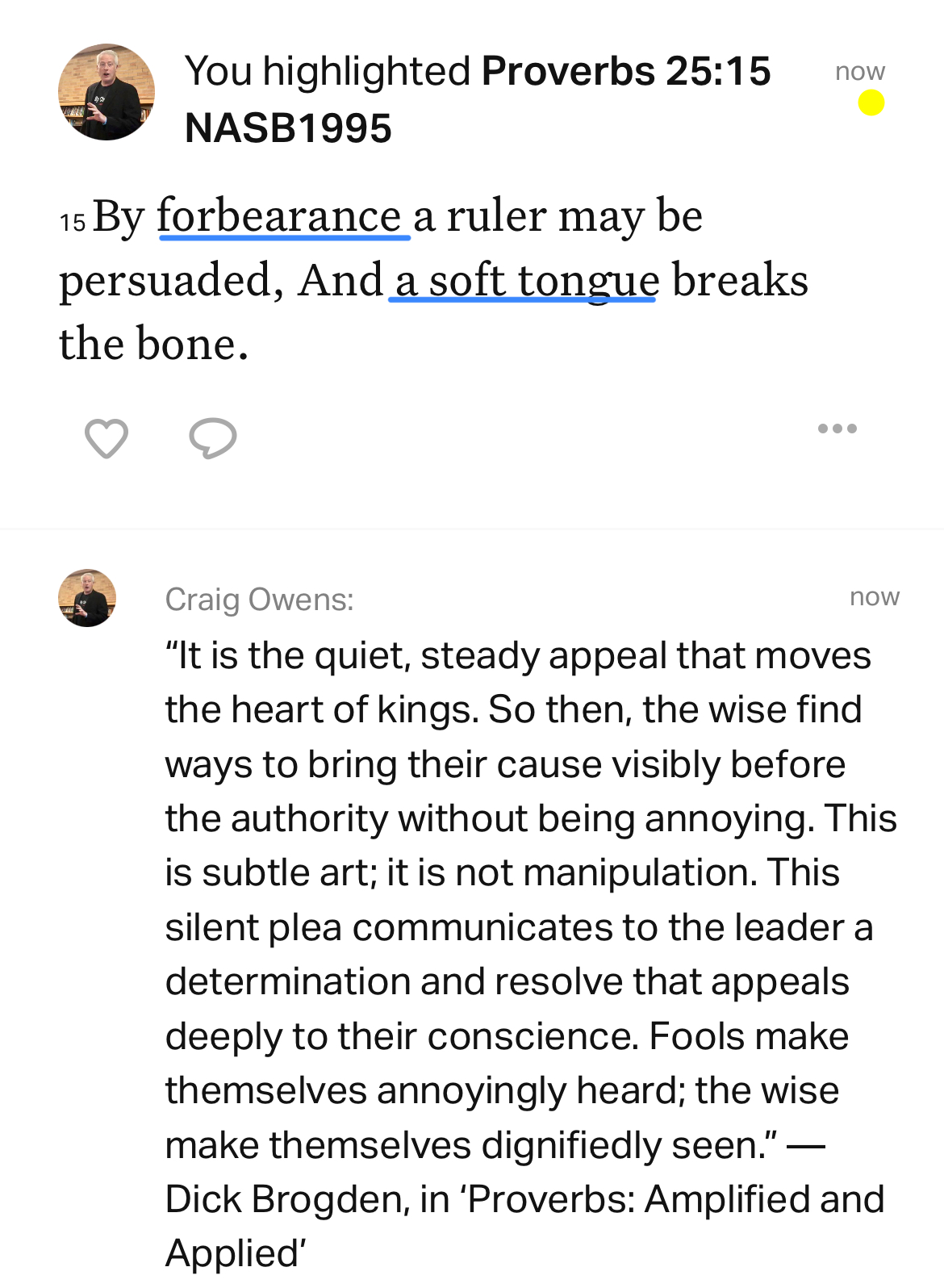
“It is the quiet, steady appeal that moves the heart of kings. So then, the wise find ways to bring their cause visibly before the authority without being annoying. This is subtle art; it is not manipulation. This silent plea communicates to the leader a determination and resolve that appeals deeply to their conscience. Fools make themselves annoyingly heard; the wise make themselves dignifiedly seen.” —Dick Brogden, in Proverbs: Amplified and Applied

Links & Quotes

I am really looking forward to a new series of sermons that I am launching this Sunday. This will be a once-per-month series for the remainder of the year and it’s simply called A Christian’s Mental Health. If you don’t have a home church in the west Michigan area, I would love for you to join me in person, but the sermons will also be posted on my YouTube channel.

T.M. Moore has an outstanding post called The Essence of the Lie. In one part, Moore writes, “Thus the lie claims to be the truth, but, at the same time, it insists that truth is personal, relative, pragmatic, and utilitarian. Truth, from this perspective, is not absolute, but dynamic, changeable rather than fixed. It is conditioned by circumstances of time and place. At the end of the day, people are the final arbiters of truth, and truth is whatever they find to be useful for their purposes. Ultimate truth is that which people impose on others by one or another kind of force, whether intellectual, political, or physical.” Check this one out!

Harvard University has been studying a group of individuals since 1938 to try to determine the main factors that contribute to a long and healthy life. The director and assistant director of this study just published an article that sums up what they have learned over all these years—“[If] we had to take all 85 years of the Harvard Study and boil it down to a single principle for living, one life investment that is supported by similar findings across a variety of other studies, it would be this: Good relationships keep us healthier and happier. Period. If you want to make one decision to ensure your own health and happiness, it should be to cultivate warm relationships of all kinds.”

“The battle for control and leadership of the world has always been waged most effectively at the idea level. An idea, whether right or wrong, that captures the minds of a nation’s youth will soon work its way into every area of society, especially in our multimedia age. Ideas determine consequences.” — The American Covenant 

“The storms of life are no longer our point of reference when [Jesus] is our focal point.” —Dutch Sheets

John Stonestreet was intrigued by a street reporter asking, “What are men good for?” There were a lot of soft, ambiguous answers given, but John quipped, “Men are good for fathering, protecting, loving, providing, leading, fighting for what’s right with their lives if need be, and obeying, in a masculine way, the creation mandate of the God who made us male and female and declared both ‘very good.’ Was that so hard?” Amen!

Dan Reiland identifies four common mistakes that will cause your church to struggle.

When leaders quit growing, they in essence have “quiet quit” on their team. If the leader’s not growing, what is the incentive for anyone else in the organization to improve themselves or work hard? Leaders quiet quit long before their teammates do! Check out the full conversation Greg Heeres and I had on avoiding quiet quitting by clicking here.

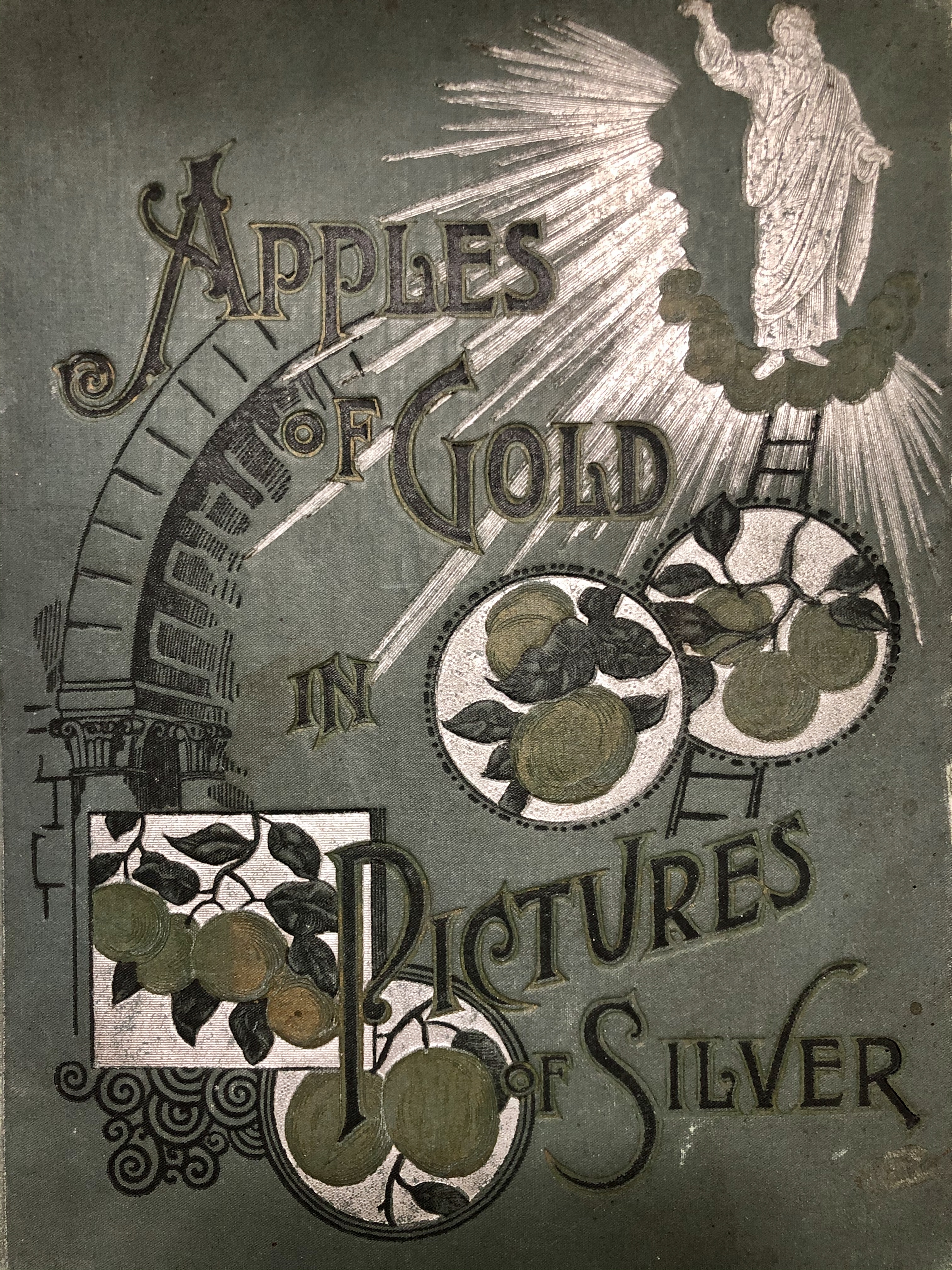
Apples Of Gold In Pictures Of Silver (book review)

The title of this book comes from the King James Version of the Bible: “A word fitly spoken is like apples of gold in pictures of silver” (Proverbs 25:11). A picturesque phrase for words that are challenging and uplifting. 

This book came to me from my Grandfather’s library. Originally published in 1889, my Grandfather had an autographed copy from 1901. The words in this book have stood the test of time. 

The first section of the book contains quotes, poems, and other life-guiding words to be read each day of the year. The subsequent sections are targeted to specific seasons of life. They are “Apples of Gold for…

  • … Children
  • … Youths 
  • … Lasses 
  • … Young Men 
  • … Young Women
  • … Early Married Life
  • … Middle-Aged 
  • … The Old
  • … Mothers 
  • … Dark Days 
  • … Bright Days” 

Each of these sections contains short stories, quotes, and poetry to both recover from a stumble and help the reader grow to new levels of maturity and success. 

I realize this book is out of print and probably unavailable to most, but there is an important principle from these types of books: Never stop learning. Find sources of wisdom that have stood the test of time, and let others’ hindsight be your foresight as you strive to keep on growing. In the case of Apples Of Gold In Pictures Of Silver, the editors approached this book from a biblical worldview, making sure that all of the counsel they printed aligned with God’s Word. 

I would encourage you to find these types of books to help you grow through life.

The Mysteries Of God

“Relinquish your demand to understand; accept the fact that many things are simply beyond your comprehension. Because I am infinite and you are finite, the limitations of your mind make it impossible for you to understand much of what happens in your life—and in the world. So it’s vital to make room for mystery in your worldview.

“You are privileged to know many things that were formally mysteries—things that had been kept hidden for ages and generations. The New Testament is full of revelations that came through My incarnation, life, death, and resurrection. You are immeasurably blessed to have this priceless knowledge!

“Nonetheless, the ways I work in your world are often mysterious to you—beyond tracing out. This presents you with a choice: to resent My ways or to bow before Me and wonder and worship.” —Jesus (in Sarah Young’s Jesus Always)

I hope you will choose wonder and worship—that’s what I’m trying to choose.

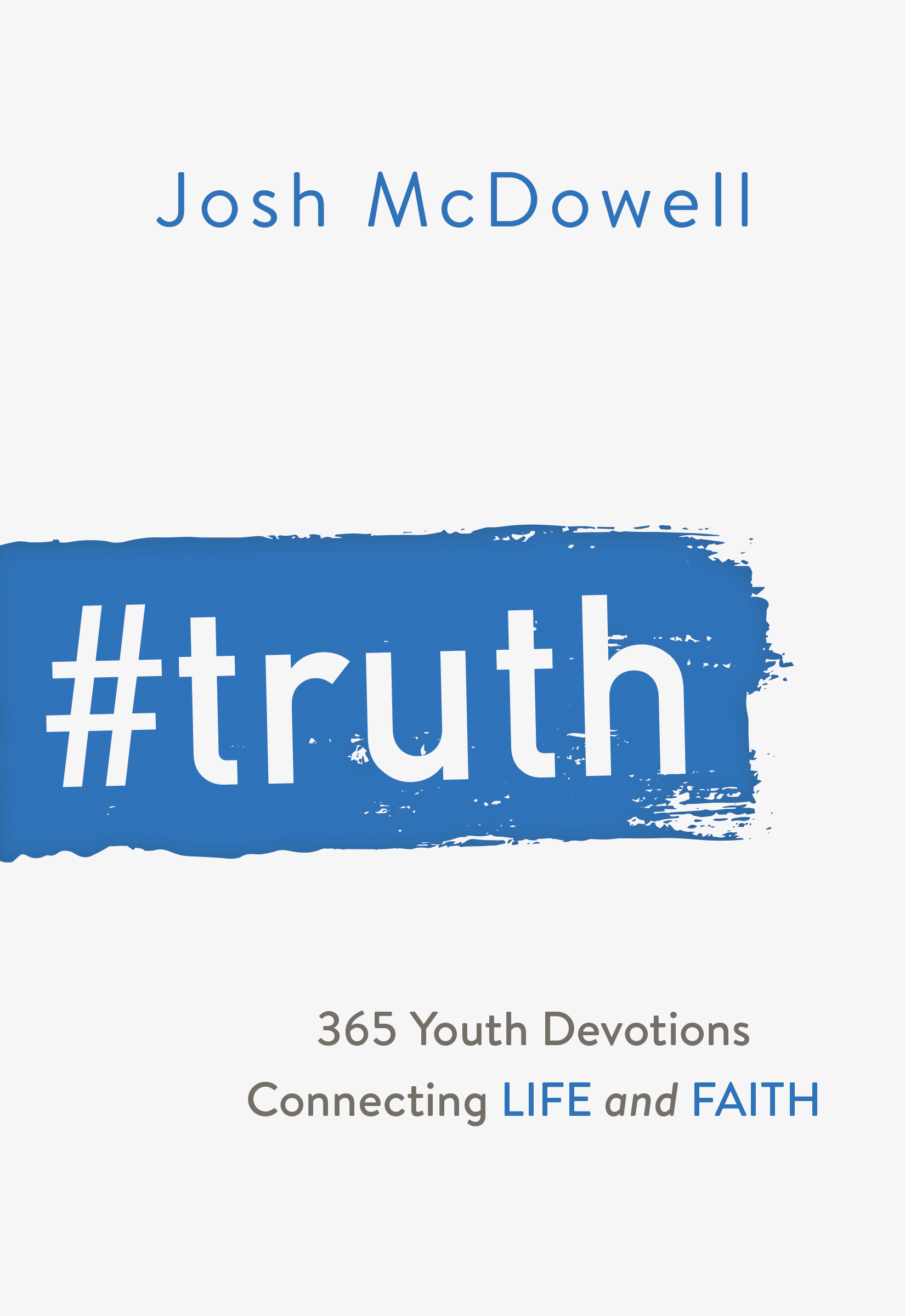
10 Quotes From “#Truth”

Josh McDowell has a book that is perfect for this generation of youth. #Truth is a 365-day devotional that brings biblical truth to bear on the issues today’s students face every day. You can check out my full book review of #Truth by clicking here. Below are a handful of quotes that caught my attention.

“All healthy relationships require a willingness to be known and have things pointed out so that all offenses can be addressed.”

“If a person is unwilling to forgive others, it’s a clear sign he or she hasn’t really experienced God’s mercy and grace. When people refuse to forgive those who wronged them, God knows that any confession of their own sins is less than genuine and sincere. How could anyone who truly experiences God’s amazing grace of forgiveness not also give mercy and grace to others?”

“Jesus died and rose again so that you could be set free from sin and death and enjoy the benefits of spiritual freedom. That freedom is not a license to live however you want to live, but to live as God meant you to live.” 

“Don’t believe the lie that you are alone and no one cares. Since Christ sees you as a member of His body, accept this as your new reality and realize that you are always wanted and very much needed.”

“Jesus too had a totally different view of this world than those around Him. … Because you have accepted Jesus as the Truth and follow Him, you too see the world differently. You see the world through a spiritual lens that makes you sort of like an alien.”

“Jesus’ Kingdom message is a whole new way to see God, yourself, life, and relationships. It is a view of the world defined by Jesus and His Word. … Loving God and making Him the first priority in your life develops a Kingdom mindset that brings everything into perspective—love God and those around you as you love yourself [Matthew 22:37-39].”

“This life is short in comparison to eternity, and God wants your thoughts to include Him and make His Kingdom a priority in your life. … Letting heaven fill your thoughts is about keeping Jesus first in your life.”

“Only those who have been made alive to God and have His Spirit can listen and understand the spiritual insights of Scripture.”

“When you read from the Bible you are reading God’s words as if He were writing them for you. … Scripture is a supernatural book that has come from God Himself.”

“Jesus felt misunderstood. He spent years telling His followers who He was and why He came to earth. ‘But they didn’t understand any of this…and they failed to grasp what He was talking about’ (Luke 18:34). Because Jesus faced misunderstanding He is able to identify with your hurt and give you the help you need when you need it.”

Can We Really Know If The Bible Is God’s Word?

inspired-scriptureHave you ever been stumped by someone’s argument against Christianity or the Bible? Has anyone ever made fun of you because the Bible sounds like a fairy tale? Over 100 years ago Oswald Chambers described how our post-Christian world was beginning to treat Christianity and the Bible on which it’s based—

“We have made ambition and competition the very essence of civilized life. No wonder there is no room for Jesus Christ, and no room for the Bible. We are all so scientifically orthodox nowadays, so materialistic and certain that rationalism is the basis of things, that we make the Bible out to be the most revolutionary, unorthodox and heretical of books.”

It’s that “rationalism” that we need to address. We need to ask scoffers and seekers alike, “What makes you so sure of your beliefs? How did you come to that conclusion?”

Every human being exercises some sort of faith—that the chair will hold them when they sit down, that their spouse will honor their marriage vows, and that their worldview is correct. We need to explore what kind of faith they (and we) have:

  • Unreasonable faith—believing in something in spite of the evidence.
  • Blind faith—believing in something without any evidence.
  • Reasonable faith—believing in something because of the evidence.

I want to show evidence that makes it reasonable to believe in the Bible.

Empirical evidence—

  1. The bibliographical test: determining whether the text of the historical record has been transmitted accurately.

Josh McDowell states, “No other work in all literature has been so carefully and accurately copied as the Old Testament.” He can make this claim because the profession of “scribe” was one of the most professional and exacting of all professions. The rigorous standards employed to prove the accuracy of a copy of a biblical manuscript was higher than for any other literature.

Most of our modern-day Bibles are based on a 1000-year-old manuscript. But after the Dead Sea scrolls were discovered, we found biblical manuscripts going back to 250 B.C. that confirmed the accuracy of the manuscripts we already had. This led Dr. Peter Flint to conclude: “The biblical Dead Sea Scrolls are up to 1,250 years older than the traditional Hebrew Bible, the Masoretic text. We have been using a one-thousand-year-old manuscript to make our Bibles. We’ve now got scrolls going back to 250 BC. … Our conclusion is simply this—the scrolls confirm the accuracy of the biblical text by 99 percent.

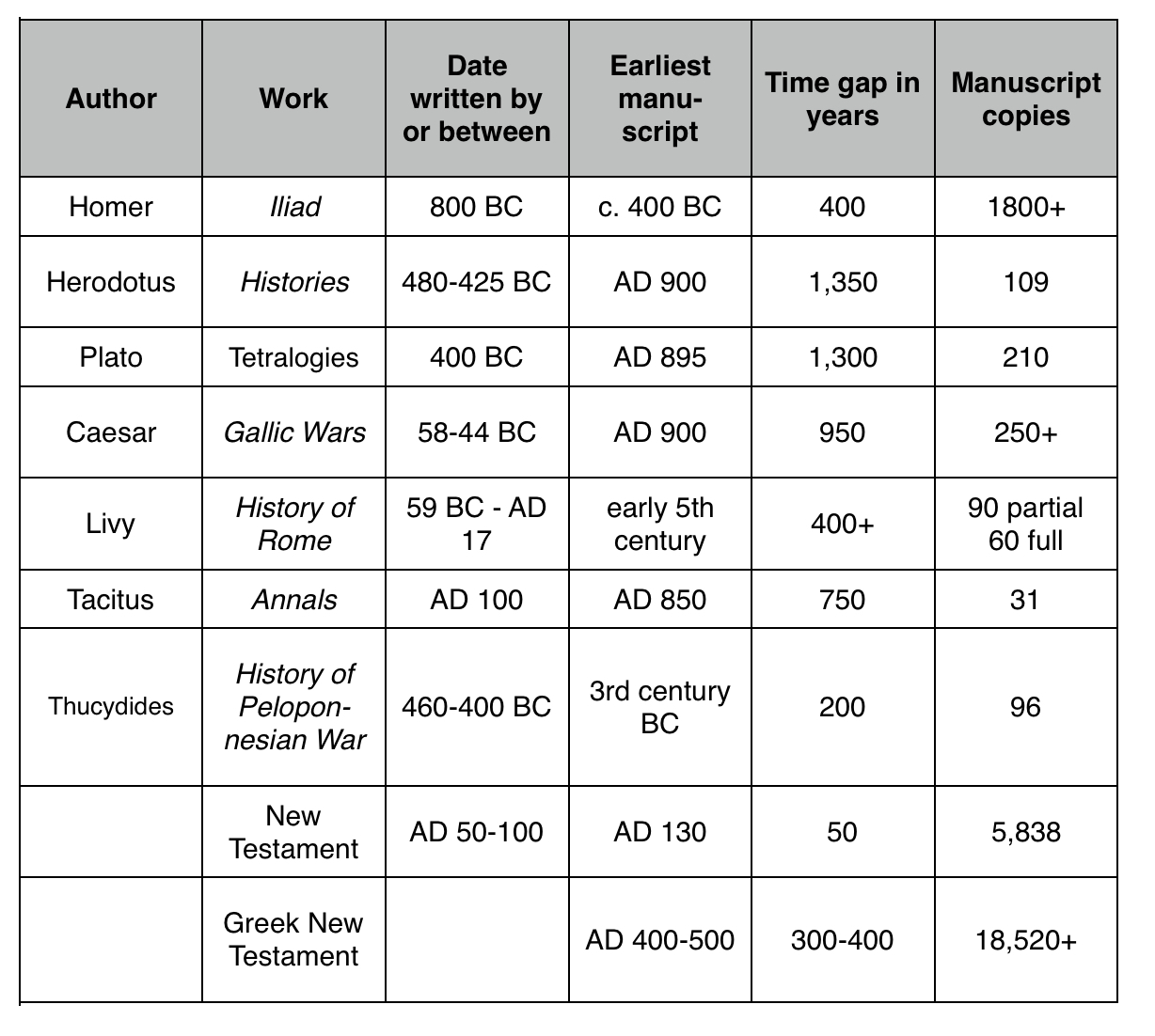
manuscript-evidenceThen regarding the New Testament, Josh McDowell says, “I believe there is more evidence for the reliability of the New Testament than for any other ten pieces of classical literature put together.” Check out this chart reproduced from McDowell’s book God-Breathed to see by comparison to other literature, how close in dating the earliest biblical manuscripts are, and how many of those manuscripts have been discovered!

2.  The external evidence test: determining whether the historical record has been verified or affirmed by data outside of itself.

Over one-fourth of the Bible is prophetic, and two-thirds of its prophesies have already been fulfilled. For example, 700 years before His birth, the city in which Jesus was to be born was identified by a man named Micah.

Time and time again archeologists discover articles that verify the claims in the Bible. This led archeologist Nelson Glueck to conclude, “It may be stated categorically that no archeological discovery has ever controverted a single biblical reference. Scores of archeological findings have been made which confirm in clear outline or in exact detail historical statements in the Bible.”

3.  The internal evidence test: determining how of the historical record stands up to the test of internal validity.

The Bible was written by 45 different authors, over a span of 1500 years, on 3 different continents, and in 3 different languages. Yet there are no contradictions!

Anecdotal evidence—

  1. Changed lives. My life is one that has been amazingly impacted by the God of the Bible, as was a man named Saul, who had a total about-face after encountering Jesus. As a result, Christianity was spread far and fast through his writings and world travels.

2.  Changed societies. Wherever the Christian faith of the Bible has been put into practice, societies improve. Leonard Sweet notes—

“Before Christianity, there were cults that practiced all sorts of human sacrifice as well as self-mutilation and self-castration. Before Christianity, the weak were despised, the poor maligned, the handicapped abandoned. Before Christianity, infanticide was rampant, slavery run-of-the-mill, and gladiatorial combat a form of entertainment. In Jesus’ day, Corinth was famous for its temple prostitutes, continuing a long-standing tradition symbolized by the Corinthian athlete Xenophon.… Aristotle…not only condoned institutionalized slavery but provided an elaborate argument in favor of it. As if that weren’t enough, Aristotle called man ‘begotten’ and woman ‘misbegotten,’ and because a woman’s reasoning was ‘without authority’ accepted no female students.

“Only Jesus and His followers known as the church insisted on the concept of human dignity and the value of every human soul. Only the church built hospitals and took care of the abandoned and disabled. Only the church celebrated charity and selflessness as the highest virtue and elevated the status of women.”

Is all of this “proof positive” that the Bible is God’s Word? No, it’s not. But I think the evidence is compelling enough that it is certainly reasonable to reach this conclusion.

Here are some great application questions from this lesson:

  1. Other than because it says so in the Bible, how do I know that it is God’s Word?
  2. How can I let the Bible “thoroughly equip” me (2 Timothy 3:14-17)?  
  3. Is my worldview pragmatic or biblical? Does it really make a difference?

The Shadow Of An Agony (book review)

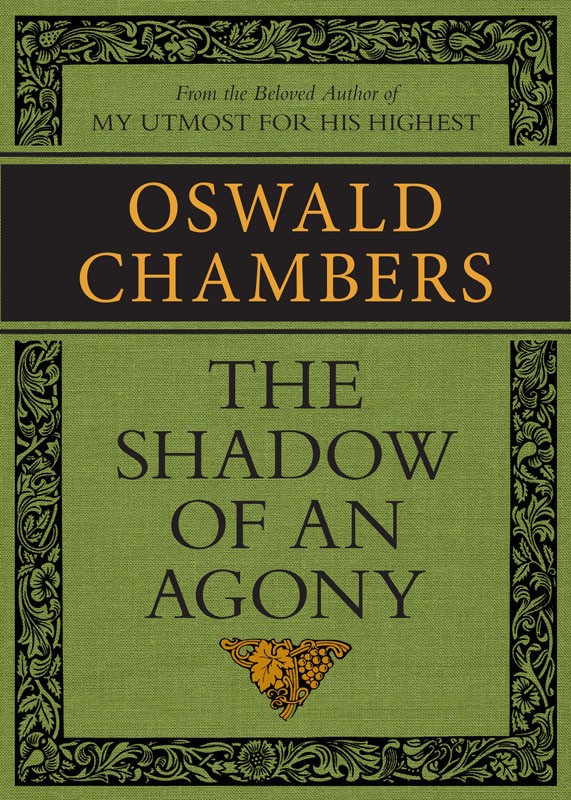
the-shadow-of-an-agonyWhat happens when all of your perfect plans, all of your neat and tidy ideas, come crashing down around you because of a tragedy? This is the topic Oswald Chambers took on in his book The Shadow Of An Agony when The Great War (or what we now call World War I) was ravaging the nations.

Many people have had their worldviews rocked because a tragedy hit them out of nowhere. What then? Do you throw out all you have believed was true? Oswald Chambers explorers this topic in depth in this book, and comes to the conclusion that these shaking events should send us back to the foundation of the Bible.

For example, Chambers says, “In the past the error of the Christian faith was that it paid no attention to a man’s actual life; it simply used human beings and made them catspaws for a religious line of things. The present error is that humanity utilizes Christianity; if Jesus Christ does not coincide with our line of things, we toss Him overboard; Humanity is on the throne. In the New Testament the point of view is God and Man in union.”

Throughout this book you will see that Jesus Christ stepped into our agony to make a way for us to go through it as more than conquerors.

In commenting on The Shadow Of An Agony, Samuel M. Zwemer said, “Oswald Chambers points out that because Jesus Christ is so like unto His brethren we can face this turmoil and stress, and stand with Him in the shadow of a great agony, undiscouraged and unafraid.”

And Pastor Walter H. Armstrong noted, “This book deals with root or rock principles. It comes, not from the surface, but ‘out of the depths.’ It is the work of a great brain and a great heart. It does not shirk the problems of life, but it looks them straight in the face. Over against the tragedy of sin and suffering it brings us to the tragedy of the Cross of Christ.”

If you are walking through a difficult time in your life, the insights Oswald Chambers shares in this book may be just the lifeline you’re looking for. This is also an excellent book to read to prepare yourself for any tragedies which may be lurking around the corner. Don’t get caught unaware, but use these faith-building thoughts to prepare you to stand firm through the trials of life.

The Beauty Of Intolerance (book review)

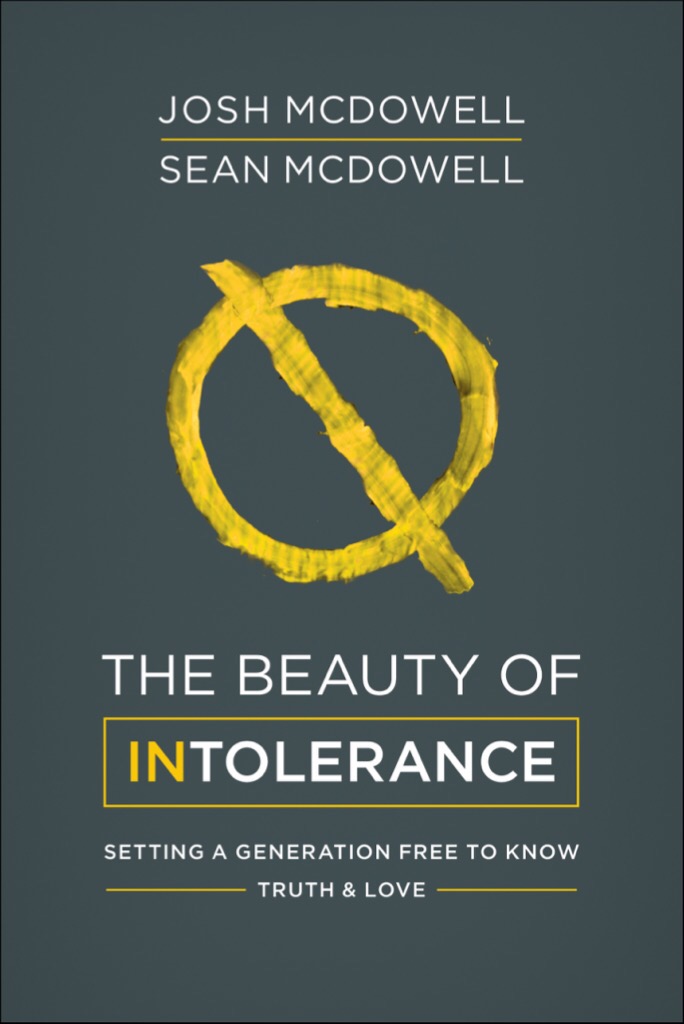
Beauty Of IntoleranceOur current culture sets tolerance as a high virtue, so those who exhibit the greatest levels of tolerance are upheld as the model for everyone else. On the other hand, intolerance is an ugly label for anyone to have. So what do you think when you hear that Josh and Sean McDowell have teamed-up to write a book called The Beauty Of Intolerance?

Many times there is a generational clash of worldviews: today’s grandparents and parents tend to hold to viewpoints which many of today’s youth find intolerant, mean, or even bigoted. Does that mean that the older generations are unenlightened, and the younger generations have seen the light? Or does it mean that the younger generations are rebelling, while the older generations are holding the line? Josh and Sean have become the “translators” between these two starkly-different worldviews.

It starts, the McDowells say, with an understanding of the word “tolerance.” It turns out that the this word has taken on a new meaning with younger generations, but that doesn’t mean that the younger generations don’t value what the older generations do. For example, consider a t-shirt that Josh McDowell designed. The front of the shirt says, “Intolerance is a beautiful idea.” But the back of the shirt clarifies this statement by reminding us:

  • Mother Teresa was intolerant of poverty.
  • Bono was intolerant of AIDS.
    Nelson Mandela was intolerant of apartheid.
  • Martin Luther King was intolerant of racism.
  • Jesus was intolerant of bigotry.

It turns out it’s not just the word “tolerance” that needs a tune-up, but also words like “respect,” “dignity,” “acceptance,” “morality” and “truth.” Fortunately for us, The Beauty Of Intolerance leads us through a modern-day understanding of all these terms.

Using true-to-life dialogue between parents and children, Josh and Sean help both generations see how intolerance really is a beautiful thing. The McDowells guide us through conversations we might encounter at home, in school, in the government, at church, and in day-to-day living. They give us the tools necessary to help everyone see that intolerance can be a beautiful thing!

For anyone who wants to speak the truth lovingly and convincingly across generational lines, The Beauty Of Intolerance is a must-read book.

I am a Shiloh Run Press book reviewer.

Links & Quotes

link quote

“Seeking the Kingdom is not an easy road; Jesus did not exaggerate when He used the term ‘violence’ to describe the progress of the Kingdom in this world. Like the Sharks and the Jets in Leonard Bernstein’s West Side Story, the citizens of the Kingdom of God are engaged in a turf war of cosmic proportions with the citizens of this world and the dark forces that shape their worldview and way of life.” —T.M. Moore

“This vain world is no friend to the principle of the work of grace. If you were of the world the world would love its own, but as you are not of the world but of a heavenly race, you may expect to be treated as an alien and foreigner, no, as a hated and detested foe. All sorts of snares and traps will be laid for you; those who sought to entangle the Master in His speech will not be more lenient towards you.” —Charles Spurgeon

“We do the work, but God works in us the doing of the works.” —Augustine

“One stumble does not define or break a person. Though you failed, God’s love does not.” Read more from Max Lucado’s post: God’s Love Never Fails.

Dr. Ben Carson has a great question for those who support abortion.

The importance of local elections: Ask not who’s running for president, ask who’s running for your local school board.

Eric Metaxas challenges us to see ourselves how God sees us: Wart Hogs and White Robes.

Parents, check this out: You can’t build heaven here.