Links & Quotes

link quote

“Only the mediocre are always at their best. If your standards are low, it is easy to meet those standards every single day, every single year. But if your standard is to be the best, there will be days when you fall short of that goal. It is okay to not win every game. The only problem would be if you allow a loss or a failure to change your standards. Keep your standards intact, keep the bar set high, and continue to try your very best every day to meet those standards. If you do that, you can always be proud of the work that you do.” —Mike Krzyzewski

“Spectacular achievements are always preceded by unspectacular preparation.” —Roger Staubach

“Christians who serve in ‘secular’ vocations are the ones who do most of the ministry and kingdom-expansion work that happens in the world. It’s the job of vocational ministers [pastors] to equip these folks so they can do their various ministries effectively.” Read more from Jon Bloom in his post Christian, Your Job Is A Ministry Job.

“One of the most important decisions we make is almost always made without thought, without discussion: ‘How big do you want this to be?’ It’s a question that always gets in the way of, ‘How good do you want this to be?’” —Seth Godin

Scientism keeps trying to find evidence to fit their theories (like this latest one to explain the absence of global warming), but few seldom recognize the genius of Our Creator. Sad…

Dr. Tim Elmore always has amazing insights into the youth mindset. Check out this article: Does A Loaded Childhood Delay Healthy Adulthood? (If you haven’t read any of Dr. Elmore’s books, please type his name in the search box, and check out the book reviews I have posted.)

[VIDEO] Check out Frank Turek’s answer to the question, “Will God send me to hell for not believing in Jesus?”—

Rise (book review)

RiseI first knew of Trip Lee as a talented musician, but I have to admit that when I first heard he had written a book I had no idea what to expect. I am happy to say that Rise blew me away!

Trip himself states that his main target audience is teenagers and those in their early- to mid-twenties. Certainly the material in Rise is age-appropriate for them, but I found it to be challenging and confronting and reaffirming for me too. Trip’s message—as the title of the book suggests—is a call for Christians to not simply “go with the cultural flow,” but rise up to let Jesus be seen in a culture desperately searching for truth.

Trip talks about attitudes, involvement in church, sharing our Christian faith with others, having a great work ethic, and so many other topics that are relevant to young people. Perhaps I felt it relevant to me as well because of my work with students. In that case, I have two recommendations for this book: (1) Give it as a gift to those in Trip’s target audience (teens and 20-somethings), and (2) Get a copy for yourself and read/study/discuss the ideas in this book with the teens and 20-year-olds to whom you gave a copy. I really believe this will pay excellent dividends!

I am a Thomas Nelson book reviewer.

Poetry Saturday—While Others Are

William Arthur WardBelieve while others are doubting.
Plan while others are playing.
Study while others are sleeping.
Decide while others are delaying.
Prepare while others are daydreaming.
Begin while others are procrastinating.
Work while others are wishing.
Save while others are wasting.
Listen while others are talking.
Smile while others are frowning.
Commend while others are criticizing.
Persist while others are quitting. William Arthur Ward

Links & Quotes

link quote

I really enjoy my work with the En Gedi Youth Center. Our annual auction was a huge success, thanks to the generous people in Cedar Springs, and a local report wrote a story about this successful event.

“Never reduce Christianity to a matter of demands and resolutions and willpower. It is a matter of what we love, what we delight in, what tastes good to us.” —John Piper

“The man who has a hope for the next world goes about his work strong, for the joy of the Lord is our strength. He goes against temptation mighty, for the hope of the next world repels the fiery darts of the adversary. He can labor without present reward, for he looks for a reward in the world to come. He can suffer rebuke, and can afford to die a slandered man, because he knows that God will avenge His own elect who cry day and night unto Him. Through the Spirit of God the hope of another world is the most potent force for the product of virtue; it is a fountain of joy; it is the very channel of usefulness.” —Charles Spurgeon

“Fast growth comes from overwhelming the smallest possible audience with a product or service that so delights that they insist that their friends and colleagues use it. And hypergrowth is a version of the same thing, except those friends and colleagues quickly become even bigger fans, and tell even more people. Often, we get sidetracked when we forget about ‘smallest possible.’ If you make the audience you’re initially serving too big, you will dilute the very thing you set out to make, avoid critical mass, and compromise the magic of what you’re building. You’ll make average stuff for average people instead of something powerful for the few. By ‘smallest possible’ I don’t mean, ‘too small.’ I mean the smallest number that eventually leads to the kernel of conversation that enables you to grow.” —Seth Godin

[VIDEO] An interesting discussion: Can postmodernists live a consistent life?…

Links & Quotes

link quote

For my pastor friends: “A growing church is a work of God. We, His servants, matter only to the extent that we are faithful in our callings.” —T.M. Moore

“Maintaining doctrinal purity is good but it is not the whole picture for a New Testament church. The apostles wanted to do much more than simply ‘hold the fort,’ as the old gospel song says. They asked God to empower them to move out and impact an entire culture.” Read more from Jim Cymbala’s post His Hand Of Love.

“Read whatever chapter of Scripture you will, and be ever so delighted with it—yet it will leave you as poor, as empty and unchanged as it found you unless it has turned you wholly and solely to the Spirit of God, and brought you into full union with and dependence upon Him.” —William Law

Pastor Chilly Chilton has an important reminder: Being Mean Is MEAN.

If you are fasting during Lent, or if you simply fast on a regular basis, this post is helpful: Kingdom Fast: Caffeine.

Very helpful: Want To Get Your Dream Job? Do These 4 Things.

Ever been here? How To Pray When You Don’t Feel Like It.

Thoughtful words from Seth Godin: Kicking And Screaming (vs. singing and dancing).

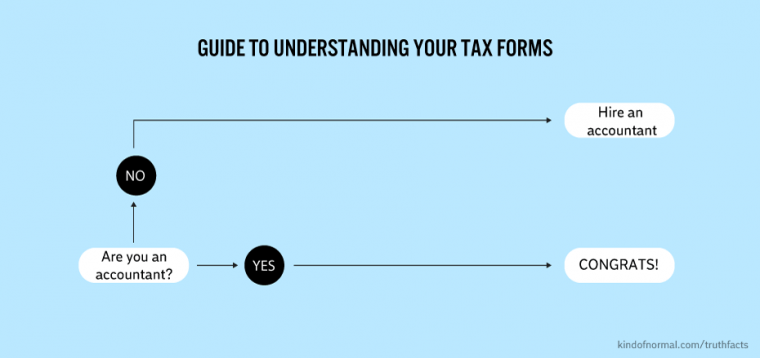
Funny, but true, from Truth Facts

Tax forms

Are You A Thief?

Don't Be A ThiefThere are different kinds of thieves. There’s the one that acknowledges, “I’m a thief. I take things that don’t belong to me. I use cunning and skill, and force if I need to.” Then there’s the one who steals quietly without ever realizing he’s stealing.

In the Ten Commandments when God says, “You shall not steal” (Exodus 20:15), guess what type of thief He’s talking about? It’s not the brazen, bold thief, but the one who may not even realize he’s stealing.

The Hebrew word for steal means move by stealth, take something secretly, or deceive someone. How can we steal?

All of these are subtle, stealthy, secretive ways of robbing someone of time, ideas, value, interest, credit, or even actual possessions!

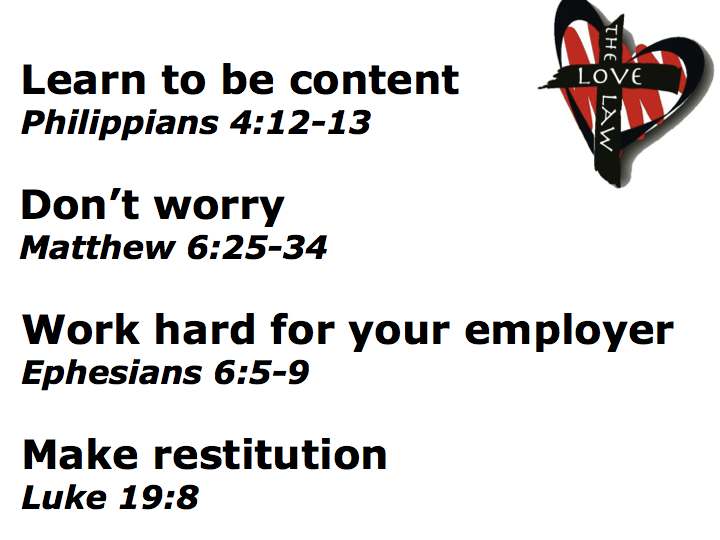
So here are 4 ways to avoid becoming an thief:

  1. Learn to be content with what you have—Philippians 4:12-13.
  2. Don’t let worry rule your life—Matthew 6:25-34.
  3. Work hard for your employer or employees—Ephesians 6:5-9.
  4. If you have stolen, make full restitution as quickly as possible—Luke 19:8.

Every one of the Ten Commandments are broken in our hearts long before they are worked out in our bodies. So listen to what the Holy Spirit is saying to you to make sure you are not a sneaky thief!

If you have missed any of the messages in our series The Love In The Law, you can find them all by clicking here.

14 Quotes About Thinking From “The Moral Foundations Of Life”

The Moral Foundations Of LifeAs I noted in my review of The Moral Foundations Of Life (you can read that review by clicking here), Oswald Chambers wanted Christians to think more deeply about their relationship with Jesus Christ, and then live differently because of their new way of thinking. Here are some of his quotes related to a Christians’ thought life.

“When we become spiritual we have to exercise the power of thinking to a greater degree than ever before. We starve our mind as Christians by not thinking.” 

“The Atonement of our Lord never contradicts human reason, it contradicts the logic of human intellect that has never partaken of regeneration.”

“Is Jesus Christ’s teaching God-breathed to me? There is an intention that seeks God’s blessings without obeying Jesus Christ’s teaching. We are apt to say with sanctimonious piety, ‘Yes, Jesus Christ’s teaching is of God’; but how do we measure up to it? Do we intend to think about it and act on it?” 

“The old idea that we cannot help evil thoughts has become so ingrained in our minds that most of us accept it as fact. But if it is true, then Paul is talking nonsense when he tells us to choose our thinking, to think only on those things that are true, and honorable, and just, and pure.” [Philippians 4:8-9; 2 Corinthians 10:5]

“We are so extraordinarily fussy that we won’t give ourselves one minute before God to think, and unless we do we shall never form the habit of abiding. We must get alone in secret and think, screw our minds down and not allow them to wool-gather.” 

“If a man lets his garden alone it very soon ceases to be a garden; and if a saint lets his mind alone it will soon become a rubbish keep for satan to make use of.”

“If we have been storing our minds with the Word of God, we are never taken unawares in new circumstances because the Holy Spirit brings back these things to our remembrance and we know what we should do; but the Holy Spirit cannot bring back to our minds what we have never troubled to put there.” 

“Think of the sweat and labor that a scientific student will expend in order to attain his end; where do we find men and women concentrating with the same intensity on spiritual realities?”

“As soon as you get down to pray you remember a letter you ought to write, or something else that needs to be done, a thousand and one little impertinences come in and claim your attention. When we suspend our own activities and get down at the foot of the Cross and meditate there, God brings His thoughts to us by the Holy Spirit and interprets them to us. … God has not the remotest opportunity of coming to some of us, our minds are packed full with our own thoughts and conceptions.” 

“The devil does not need to bother about us as long as we remain ignorant of the way God has made us and refused to discipline ourselves; inattention and our own slovenliness will soon run away with every power we have. … All we need is grit and gumption and reliance on the Holy Spirit. We must bring the same determined energy to the revelations in the God’s Book as we bring to earthly professions. Most of us leave the sweat of brain outside when we come to deal with the Bible.”

“God will not bring every thought and imagination into captivity; we have to do it, and that is the test of spiritual concentration. The inattentive, slovenly way we drift into the presence of God is an indication that we are not bothering to think about Him. … God gives us the Holy Spirit not only for holy living but for holy thinking, and we are held responsible if we do not think concentratedly along the right lines.” 

“Glean your thinking; don’t allow your mind to be a harborage for every kind of vagabond sentiment; resolutely get into the way of disciplining your impulses and stray thinking.”

“We have to transform into real thinking possession for ourselves all that the Spirit of God puts into our spirits.” 

“An undisciplined imagination will destroy reliable judgment more quickly even then sin.”

Links & Quotes

link quote

Some good reading & watching from today…

“The amount of loafing practiced by the average Christian in spiritual things would ruin a concert pianist if he allowed himself to do the same thing in the field of music. The idle puttering around that we see in church circles would end the career of a big league pitcher in one week. No scientist could solve his exacting problem if he took as little interest in it as the rank and file of Christians take in the art of being holy. The nation whose soldiers were as soft and undisciplined as the soldiers of the churches would be conquered by the first enemy that attacked it. Triumphs are not won by men in easy chairs. Success is costly.” —A.W. Tozer

Ron Edmondson shares 7 ways I protect my ministry and marriage from an affair. Good reading even for those not in the pastorate.

“Great art Thou, O Lord, and greatly to be praised; great is Thy power, and of Thy wisdom there is no end. And man, being a part of Thy creation, desires to praise Thee,—man, who bears about with him his mortality, the witness of his sin, even the witness that Thou ‘resistest the proud,’—yet man, this part of Thy creation, desires to praise Thee. Thou movest us to delight in praising Thee; for Thou hast formed us for Thyself, and our hearts are restless till they find rest in Thee.” —Augustine

[VIDEO] “Prayer is a statement about my dependence on God.” Check out this quick video from John Maxwell on prayer.

Links & Quotes

link quote

Some good reading from today…

“The book of Acts is the account of holy men and women seeking the Lord’s face. From beginning to end, it tells of how prayer moves God. Whether in the Upper Room, in prisons, in some secret house hiding from authorities, or in Simon’s house on a street called Straight— they prayed! In the morning and sometimes all night, they prayed without ceasing. Cornelius prayed always and Peter prayed on rooftops. By the seashore, in the temple, or in the desert, they called upon the Lord continually. They spent hours and days shut in with God, until they received dear, detailed guidance. And what incredible specifics God gave them.”  Read more of David Wilkerson’s post Seeking The Face Of The Lord.

Chuck Colson on the value and testimony in doing good work.

“For of Him, besides these benefits whereof we have spoken partly such as are left to the administration of nature and bestowed both upon good and bad, we have a particular bounty of His love peculiar only to the good. For although we can never yield Him sufficient thanks for our being, life, sense, and understanding of Him, yet for that He has not forsaken us when we were involved in sin, when we turned away from His contemplation, and were blinded with love of black iniquity; for that He has sent us His Word, His only Son, by whose incarnation and passion for us we might conceive how dearly God esteemed us, and by that singular sacrifice be purged from our guilt, and by the illumination of His Holy Spirit in our hearts, tread down all difficulties, and ascend to that eternal rest, and ineffable sweetness of His contemplation—what heart, how many tongues, can suffice to return sufficient thanks for this last benefit.” —Augustine

“Self-righteousness is terrible among God’s people. If we feel that we are what we ought to be, then we will remain what we are. We will not look for any change or improvement in our lives. This will quite naturally lead us to judge everyone by what we are. This is the judgment of which we must be careful. To judge others by ourselves is to create havoc in the local assembly.” —A.W. Tozer

Tim Elmore on this generation’s Nomophobia. And check out his newest book 12 Huge Mistakes Parents Can Avoid.

Read this (even if you don’t think you need to): 4 Signs You May Be Addicted To Busyness.

12 Quotes From “12 Huge Mistakes Parents Can Avoid”

12 Huge MistakesI highlighted a lot in Tim Elmore’s newest book 12 Huge Mistakes Parents Can Avoid … a lot! This is book that every parent (or grandparent) should read because it’s never too late to invest the best in our (grand)children. You can read my full book review of this must-read book by clicking here. Below are just a few of the quotes I highlighted in this book.

“I believe we have under-challenged kids with meaningful work to accomplish. We have overwhelmed them with tests, recitals, and practices, and kids report being stressed-out by these activities. But they are essentially virtual activities. Adults often don’t give significant work to students—work that is relevant to life and could actually improve the world if the kids rose to the challenge. We just don’t have many expectations of our kids today.” 

“Every parent and teacher wants to see their kids succeed in school, in sports, and in life, but making it impossible to fail isn’t the answer. Removing failure, in fact, is a terrific way to stunt maturity. … As parents, we’ve given them lots of possessions but not much perspective. As educators, we’ve given them plenty of schools but not plenty of skills. As coaches, we’ve taught them how to win games but not how to win in life. As youth workers, we provide lots of explanations but not enough experiences. As employers, we’ve mentored them in profit and loss but haven’t shown them how to profit from loss.”

“Truth be told, when kids have heard they are excellent without working hard or truly adding value to a team, the praise rings hollow to them. Our affirmation must match their performance.”  

“When people—especially young people—know they are free to try something and fail, their performance usually improves. It brings out the best in them. But if they are preoccupied with trying not to fail, they become paralyzed:

  • Failure can create resilience.
  • Failure can force us to evaluate.
  • Failure can motivate us to better performance.
  • Failure prompts creativity and discovery.
  • Failure can develop maturity.”

“Our constant caving begins to foster a constant craving in them. They want clarity. With boundaries unclear, they need more direct attention from Mom or Dad. Unwittingly, we actually breed insecurity and instability in our kids. This may sound strange, but consistency may be your best friend as a parent because it aids in your authority and in your child’s development.” 

“Removing the consequences takes one of two roads. We either excuse their behavior and remove negative outcomes, or we actually step in and pay the consequence for them. When we do this, we frequently relieve the stress. We bring immediate peace to the situation, so we get addicted to this pattern. Unfortunately, we don’t see the long-term problems we are causing. Removing the consequences from our children’s lives brings short-term tranquility but long-term trouble.”

“‘You can do anything you want.’ I recognize why we say this, but as our kids grow older, we must help them to see what we really meant. … We really meant, if they set their mind to do something, they’ll be amazed at what they can pull off. The catch is, it needs to be something with in their gift area. They cannot simply make up a dream or copy a friend’s dream and call it theirs. Dreams should be attached to strengths.” 

“We have created a world of conveniences, filled with smart phones, microwaves, Internet shopping, and online banking. The subtle message is that struggles are to be avoided. We want as much convenience as possible. In fact, we feel entitled to it. But we failed to see that when we remove the struggles from our children’s lives, we begin to render them helpless. They don’t have the opportunity to develop the life skills they’ll need later on. Further, when we step in to control their levels of struggle, they don’t learn how to be in control or under control themselves. In fact, all they learn is how to be controlled.”

“Ironically, the things young people want to avoid are necessary for them to mature authentically. Slow, hard, boring, risky, laborious… these are the very challenges that prepare me to become a good man, a good husband, a good father, a good employee, a good employer. Many life skills that once naturally developed in us now atrophy in today’s culture. So we must be far more intentional about leading our kids into opportunities to build these skills.” 

“When we affirm looks or clothing—external matters instead of internal virtues—kids values become skewed. Remember, what gets rewarded gets repeated. Without realizing it, we are reinforcing cosmetic features—usually features that are not in their control. … We should be doing just the opposite. We must affirm effort and behavior, which are in their control, instead of characteristics that are out of their control. If we do this, we begin to foster a growth mindset instead of a fixed mindset.”

“We mistake hurtful with harmful. Many times, hurting helps us. In fact, removing the hurt may be harmful. … When we hurt, we can learn important truths about ourselves and about others, truth that will be beneficial later in our lives. … We confuse disturbance with damage. We hate being disturbed. Our days are so full, we often hope and pray we won’t face any unexpected disturbances as we pursue our goals. The fact is, however, that on our way to those goals, we fall into unhealthy ruts. Interruptions force us out of those ruts. Interruptions are not damaging at all. They are the very items that save us from our tunnel vision. We need to be disturbed from time to time. Interruptions are wake-up calls that rouse us from our apathy or complacency.” 

“I know you think kids are tired of you talking about the good old days. But I’ve found most kids love hearing stories of how we adults struggled to learn the same life skills when we were young. It’s all part of growing up.”