Notes From The Global Leadership Summit

I had an amazing time last week at the Willow Creek Global Leadership Summit. Every year I came away with some many thoughts, and a brand new passion for the various leadership roles in which I get to serve.

Below are just a few of my notes that I jotted down during an intense two days.
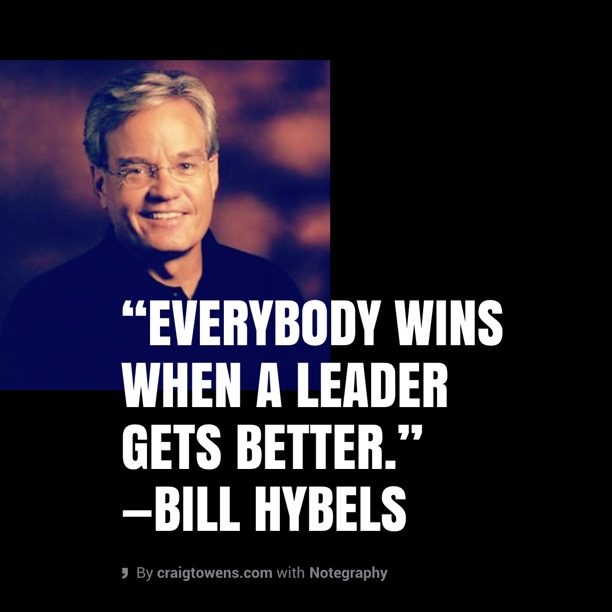
Hybels - everybody winsBill Hybels—The Lens Of Leadership

“Everybody wins when a leader gets better.”

“Armed with enough humility, leaders can learn from anyone.”

Hybels discussed four leadership lenses:

1.   Passionate leader (depicted by vibrant bright red frames)

  • They understand unbridled passion in leadership.
  • “Passion is like protein for the team.”
  • A motivated worked will outperform an unmotivated worker by 40%.
  • People are more motivated by working for a passion-filled leader than they are by compensation or perks.
  • Passion comes from a mountain-top dream, or a valley-deep frustration of current settings.

2.   People leader (cool frames, but cracked lenses)

  • An organization will only be as healthy as the top leader wants it to be.
  • This world needs more pastors of businesses, factories, medical offices, military units, etc.

3.   Performance leader (self-adjusting glasses)

  • Leaders ask: what progress should be made? how do we measure this? what doesn’t need to be measured?
  • Every worker wants to know how they are doing. For the leader, it’s cruel to hire someone and never let them know how they’re doing. Every staff member should get an update at least every six months.

4.   Legacy leader (sunglasses with a rearview mirror [cyclist])

  • Every once in awhile we need to look behind to see what legacy we’re leaving behind.
  • Leaders should reflect on this annually.
  • If my leadership assignment were to end today, what legacy would I leave?
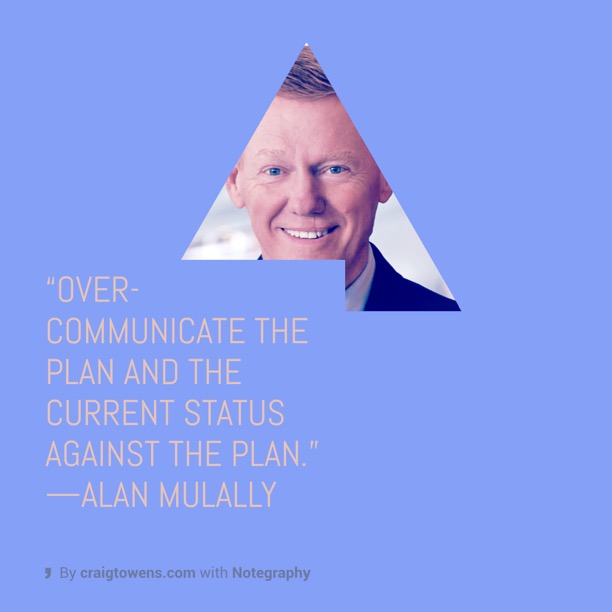
Mulally - overcommunicateAlan Mulally—CEO Boeing and Ford Motor Company

An average commercial airline has 4 million parts!

  • People first
  • Include everyone
  • Create a compelling vision
  • Present a workable strategy
  • Set clear performance goals
  • Relentless implementation
  • Share lots of data
  • “Over-communicate the plan and the current status against the plan.”
  • Instill a positive can-do attitude
  • Keep your emotional resilience
  • Have fun


Melinda Gates - hear the criesMelinda Gates—Gates Foundation

Melinda says of herself, “I am an impatient optimist. We are changing the world, but we need to change it faster.”


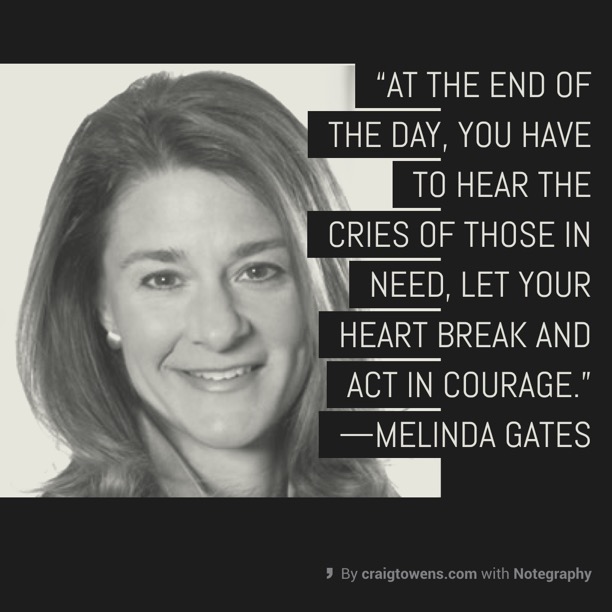
“At the end of the day, you have to hear the cries of those in need, let your heart break and act in courage.”

Jossy Chacko—Empart

“All of us have been entrusted with something. What are we doing to leverage it?”

In thinking about the parable of the talents … “To Jesus, faithfulness is not just sitting with what you have been given, but multiplying what you have been given. God’s mission is not maintaining.”

“Playing it safe is not enough for a follower of Jesus Christ.”

Three principles for expanding our leadership reach:

Jossy Chacko - faithfulness1. Enlarge your vision

  • “When people hear my vision, they should know the size of my God.”
  • “An enlarged vision should keep us driven.”
  • “Do not be confused about what people say about your vision; trust what God has said to you.”

2. Empower your people

  • “Leadership is about taking wise chances and giving people opportunities.”
  • “Your leadership reach will be determined by your empowerment choices.”
  • Three things to keep in mind: (1) Focus on building their character before empowering them; (2) Empowerment has to be through relationship; and (3) Make sure we have agreed on the right outcomes, and have the right way to measure them.

3. Embrace risk

  • Faith = risk. Without faith it is impossible to please God = without taking risks it is impossible to please God.
  • Paradigms to be changed: (1) See risk as your friend to love, not as your enemy to be feared; (2) See comfort and safety as your enemies; and (3) Increase your pain threshold.
  • “Your leadership capacity is in direct relationship to your pain threshold.”
  • “Don’t allow the fear of losing what we have to lose what God has in store for you.”
  • “By me not taking risks, who is missing out?”
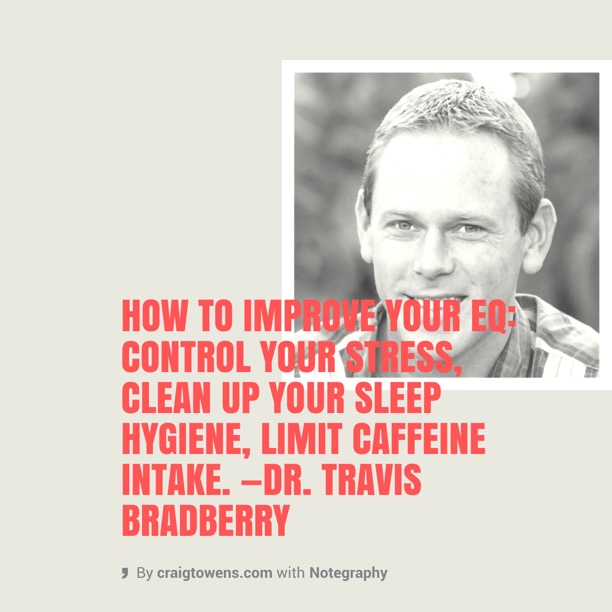
Bradberry - EQDr. Travis Bradberry—TalentSmart

All inputs into the brain travel through the limbic system first (emotional center) before the inputs travel to the frontal cortex. The EI (emotional intelligence) center is in the front of the brain, just above the left eye.

Only 36% of people are able to accurately identify their emotions as they happen.

EQ (the Emotional Quotient that measures emotional intelligence) is not IQ.

EQ can be improved all throughout life.

Four components of emotional intelligence:

 1. Self-awareness: knowing my emotions, and knowing my tendencies. I need to lean into my discomfort if I want to improve.

   2. Self-management: what I do with this increased self-awareness. This is not “stuffing” my feelings. The biggest mistake is only trying to manage negative emotions; positive emotions need to be managed too.

   3. Social awareness: focusing more on others than on myself.

   4. Relationship management: using the first three skills in concert. Seeing how my behavior is affecting the other person, and then adjusting accordingly.


How to increase my EQ:

  1. Control stress—stress under control is healthy; chronic stress is unhealthy. Gratitude reduces the stress hormone cortisol.
  2. Clean up my sleep hygiene—sleep cleans up toxic hormones in the brain. To get better sleep: (1) Don’t take any kind of sleeping pill; and (2) Reduce “blue lights” in the evening.
  3. Reduce my caffeine input—especially after noon.
Ideal team playerPatrick Lencioni—Author

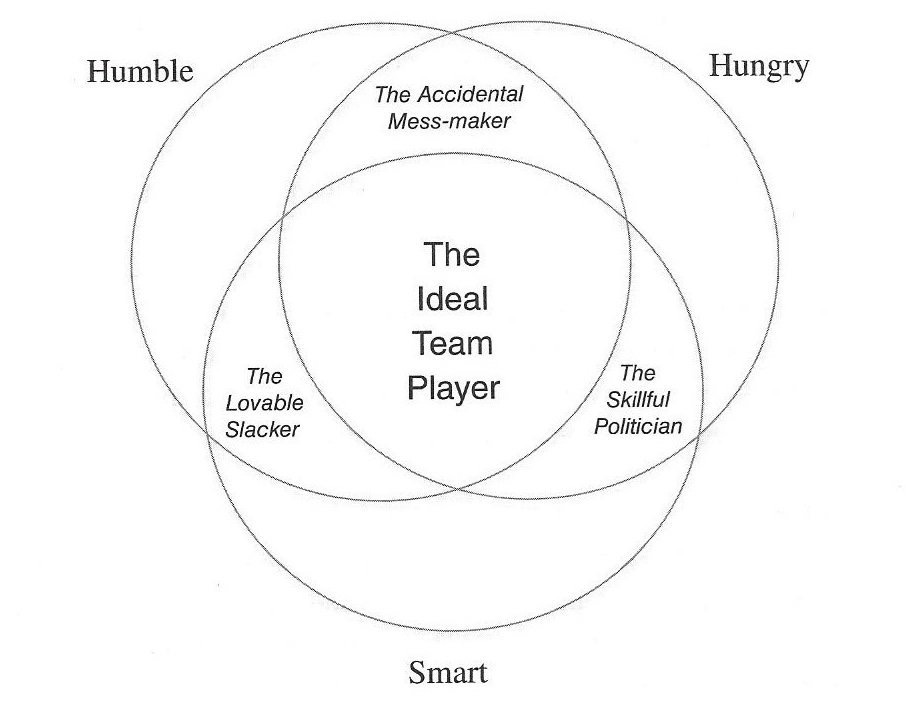
Three qualities of an ideal team player:

1.   Humble

  • Lacking self-confidence is not humility.
  • “Denying skills and downplaying abilities is not humility.”

2.   Hungry

  • Strong work ethic
  • Driving hard

3.   Smart

  • Not intellectual smarts, but people smarts = EQ

“To develop people, we have to have the courage to humbly and constantly talk to people about their ‘stuff.’”
McChesney - execution disciplinesChris McChesney—Franklin Covey

Rahm Charan asked:

  • Q: Do leaders struggle more with strategy or execution? A: Execution.
  • Q: Are leaders more educated in strategy or execution? A. Strategy.

“The hardest thing a leader will ever do is drive a strategy that changes someone’s behavior.”

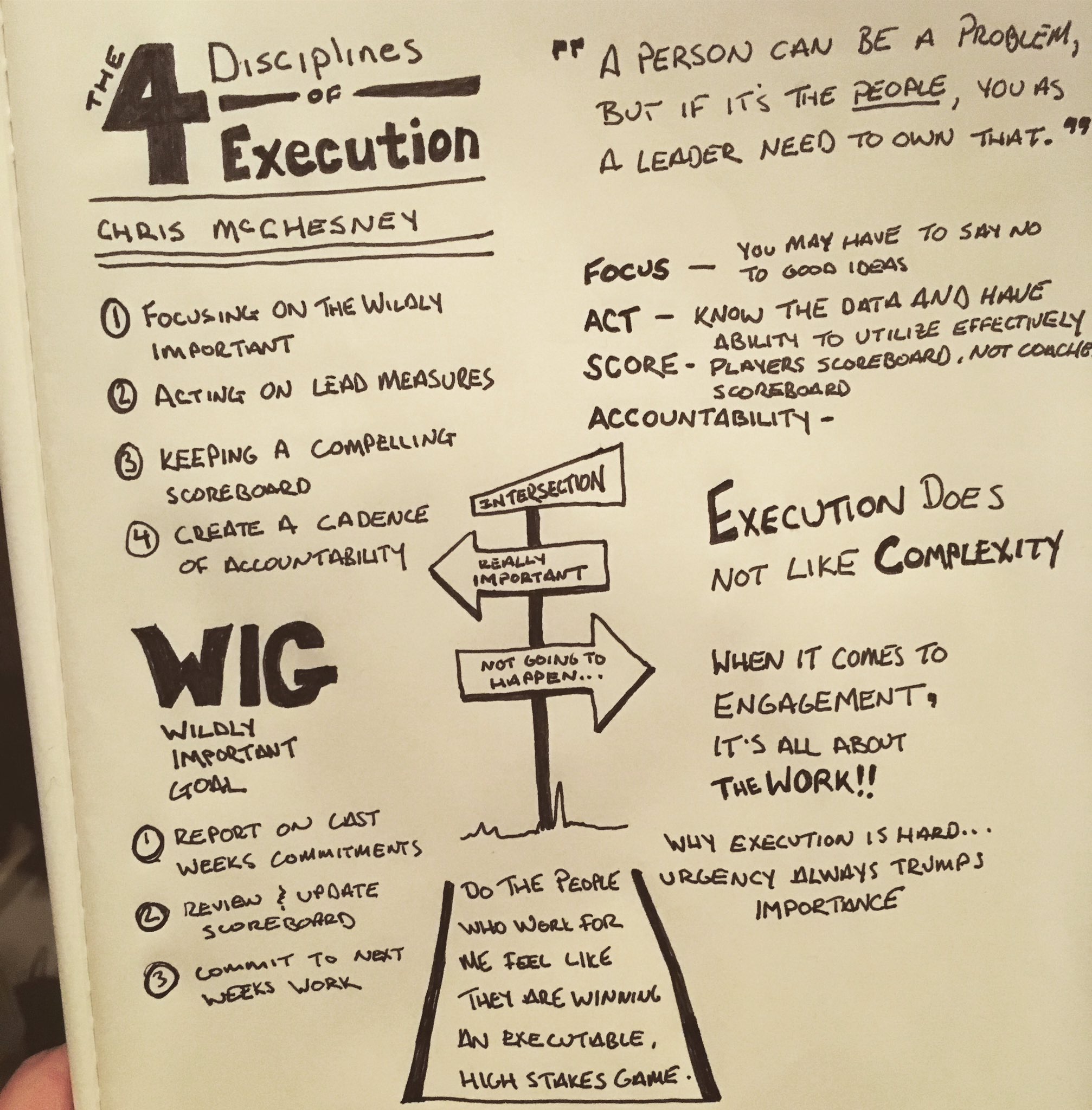
There are four disciplines for making changes in human behavior:

1.  Focus

  • “Focus on the wildly important.”
  • If a team focuses on 2-3 goals, they are likely to get them done. But if there are 4-10 goals, momentum is killed. At 11+ goals, the team is going backward.
  • We narrow the focus by coming up with a WIG: wildly important goal (this lives at the intersection of ‘really important’ and ‘not going to happen’).

2.  Leverage

  • “What are the fewest number of battles necessary to win the war?”
  • “When you want to go big, don’t think big, think narrow.”
  • One WIG per team at the same time. Everything else is in sustainment mode.
  • Make goals like this—“From x to y by when.”

3.  Engagement

  • “The biggest driver of engagement is when people feel like they’re winning.”
  • “Do the people who work for me feel like they’re playing a winnable game?”

4.  Accountability

  • Everyone needs to answer: “What are the things I do that have the biggest impact on the WIG?”
  • After sharing the scoreboard, allow people to determine what they need to do next. The people need to determine their own next moves, not the leader. The leader pulls this out of people.
Erin Meyer - contextErin Meyer—INSEAD

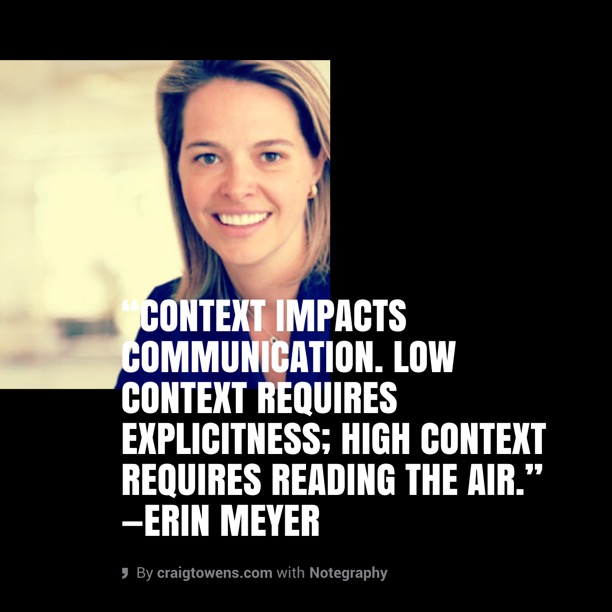
On The Culture Map communication is divided into Low vs. High Context:

  • Low = feel we don’t have the same context or relationship. We feel we need to explain things very simply and explicitly.
  • High = we assume we have a larger body of shared reference points. We feel communication is more implicit or nuanced.

Anglo-Saxon countries are typically low context.

Latin American are mid-low.

Asian countries are usually high context.

In low context we tend to nail things down in writing, where in high context we leave things more open to later interpretation.

“Context impacts communication. … We need to read both the messages ‘in the air’ as well as the explicitly stately messages.”

“In a high context culture, repeat things less, ask more questions, learn to ‘read the air.’”
 

Maxwell - 3 questionsJohn Maxwell—Author 

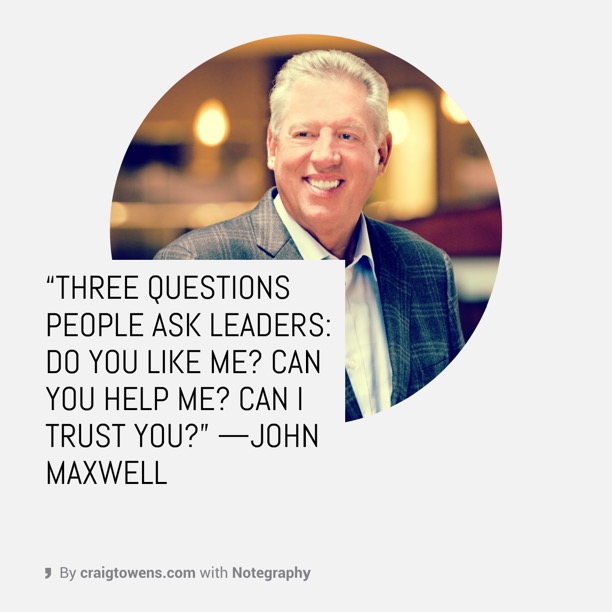
“Good leaders lift.”

“You have to find the people before you lead the people.”

“The one thing leaders have to get right—they must intentionally add value to people every day.”


Five things that intentionally adds value to people:

  1. Value people—“God values people I don’t know; He even value people I don’t like.” “Are we going to spend our lives connecting with people, or correcting them?”
  2. Think of ways to add value to people—“Intentional living is thinking upfront on how to help people.”
  3. Look for ways to add value to people.
  4. Do things that add value to people.
  5. Encourage others to add value to people.

If you attended the GLS, please share in the comments below something amazing / challenging / paradigm-busting that you learned. Let’s all keep on learning!
11 Ways To Be A Good Minister

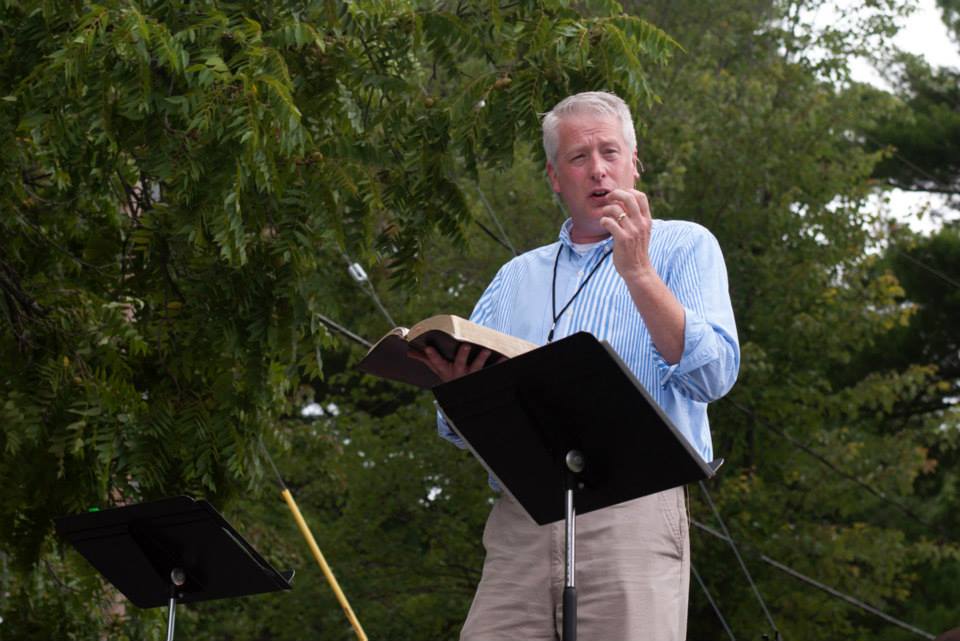
© Lori Oxford Photography

Here are 11 ways to “be a good minister of Christ Jesus” (1 Timothy 4:6)—

  1. Know the Scripture well enough to point out false doctrines (vv. 1-6a)
  2. Be a good teacher (v. 6b)
  3. Train myself to be godly (v. 7)
  4. Take care of my physical health (v. 8)
  5. Put my hope solidly in God (vv. 9, 10)
  6. Set an example worth following (vv. 11, 12)
  7. Use the Scriptures in everything I preach (v. 13)
  8. Turn my God-given gifts into strengths (v. 14)
  9. Have a good work ethic (v. 15a)
  10. Be consistently growing (v. 15b)
  11. Carefully and prayerfully evaluate my doctrine (v. 16)

Poetry Saturday—Two Things Stand

Adam Lindsay GordonQuestion not, but live and labour
   Till yon goal be won,
Helping every feeble neighbor,
   Seeking help from none;
Life is mostly froth and bubble;
   Two things stand like stone:
Kindness in another’s trouble
   Courage in our own. —Adam Lindsay Gordon

10 Ways To Pastor Like Paul

Apostle PaulI don’t think anyone who has studied the New Testament would argue that Paul was a premier pastor, evangelist and missionary. In his farewell address to the elders from Ephesus, Paul used his life as an example—“you know how I lived the whole time I was with you” (Acts 20:18).

Here are 10 things Paul demonstrated as a pastor:

  1. Great humility (v. 19)
  2. Preached the “hard messages” they needed to hear (v. 20a)
  3. Preached publicly and house to house (v. 20b)
  4. Made our Lord Jesus the central message of his sermons (v. 21)
  5. In constant contact with the Holy Spirit (vv. 22-23)
  6. Desired to finish the race and complete the task God had given him (v. 24)
  7. Lived innocently (v. 26)
  8. Always proclaimed the whole will of God, not just select topics (v. 27)
  9. Didn’t covet a luxurious lifestyle, but supplied my own needs by working as a tentmaker (vv. 33-34)
  10. Worked hard to be charitable to everyone (v. 35)

Because Paul lived like this, he had the moral authority to call these elders to live a similar lifestyle. He challenged the Ephesian pastors to:

  • Keep watch over yourselves
  • Keep watch over the flock
  • Stay in tune with the Holy Spirit’s oversight
  • Shepherd the Church
  • Remember the Church is the Bride of Christ (v. 28)
  • Be on your guard! (v. 31)

If you are a pastor, pay attention to these words!

If you love your pastor, help him or her stay true to these words!

Links & Quotes

link quote

“Those of us who are married need to ponder again and again how mysterious and wonderful it is that God grants us in marriage the privilege to image forth stupendous divine realities infinitely bigger and greater than ourselves.” —John Piper

“Have we any work to do now that we can set about at once? If we have, whatsoever our hand finds to do, let us do it. Let us not be asking for greater abilities than we have. If we can get them, let us do so; but meanwhile let us use what we have. … The best preparation for it will be, renew your dedication to Christ, be much in earnest prayer, seek the sanctifying influences of the Holy Spirit, and then go forth in your Master’s strength with this as your resolve—that as portraits of Jesus Christ it shall be said of you, ‘He went about doing good’ [Acts 10:38].” —Charles Spurgeon

“The only difference between the Christian life and any other life is the matter of where we stand as we encounter the everyday trials and difficulties of life. … Even though the circumstances of a Christian’s life change, and even become adverse and cumbersome at times, this does not alter the fact that the Christian stands in—has access to, come what may—the glory of God. Believers may, under all circumstances and in every situation, slump down into the loving arms of the Lord and find glory and strength to help them bear up with joy and peace through even the worst life can throw at them.” —T.M. Moore

“Better to ask twice than to lose your way once.” —Danish Proverb

Sad to see how abortion providers target minority communities. Two-thirds of abortions in Michigan are done in the Detroit area, where only 40 percent of the state’s population is.

Eric Metaxas has some great advice for talking to your atheist friends about the problems with Darwin’s theories.


Links & Quotes

link quote

“The question, then, isn’t, ‘when am I going to get promoted?’ No, I think the question is, ‘will I grab these openings to become someone who’s already doing work at a higher level?’” Read more from Seth Godin’s post.

“Faith is not a distant view but a warm embrace of Christ.” —John Calvin

“The honest truth is that I have seen God do more in people’s lives during ten minutes of real prayer than in ten of my sermons.” Read more of Jim Cymbala’s post The Day Jesus Got Mad.

“Success is a tale of obstacles overcome, and for every obstacle overcome, an excuse not used.” —Robert Brault

“Knowing is not enough; we must apply. Wishing is not enough; we must do.” —Goethe

“The good news of the Bible is that God is not at all disinclined to satisfy the hearts of those who hope in Him. Just the opposite: The very thing that can make us happiest is what God delights in with all His heart and with all His soul. With all His heart and with all His soul, God joins us in the pursuit of our everlasting joy because the consummation of that joy in Him redounds to the glory of His own infinite worth.” —John Piper

You may need to bookmark this: 15 Scriptures on starting over.

60+ eminent legal scholars call on elected officials to not recognize the Supreme Court’s Obergefell decision on homosexual “marriage.”

Another place to reject culture’s language is on the issue of abortion.

Jeff Jacoby has an important look at Christopher Columbus.


23 Other Quotes From “15 Invaluable Laws Of Growth”

15 Invaluable Laws of GrowthJohn Maxwell is extremely well-read! It is obviously that he uses many sources to sharpen and refine the teaching principles he shares in his books. I recently finished reading 15 Invaluable Laws Of Growth, and as usual, Dr. Maxwell shared several quotes from others which I found very highlighter-worthy. Here are a few of them…

“What great accomplishments we’d have in the world if everybody had done what they intended to do.” —Frank Clark

“A mistake is simply another way of doing things.” —Warren Bennis

“You cannot change your destination overnight, but you can change your direction overnight.” —Jim Rohn

“Can there be a more insidious word? Later, as in ‘I’ll do it later.’ Or, ‘Later, I’ll have time to write that book that’s been on my mind for the past five years.’ Or, ‘I know I need to straighten out my finances… I’ll do it later.’ ‘Later’ is one of those dream-killers, one of the countless obstacles we put up to derail our chances of success. The diet that starts ‘tomorrow,’ the job hunt that happens ‘eventually,’ the pursuit of the life dream that begins ‘someday’ combine with other self-imposed roadblocks and lock us on autopilot.’ —Jennifer Reed

“No one can produce great things who is not thoroughly sincere in dealing with himself.” —James Russell Lowell

“Probably the most honest self-made man ever was the one we heard say: ‘I got to the top the hard way—fighting my own laziness and ignorance every step of the way.’ —James Thom

“It’s impossible to consistently behave in a manner inconsistent with how we see ourselves. We can do very few things in a positive way if we feel negative about ourselves.” —Zig Ziglar

“Follow effective action with quiet reflection. From the quiet reflection will come even more effective action.” —Peter Drucker

“The wise man questions himself, the fool others.” —Henri Arnold

“The successful person has the habit of doing the things that failures don’t like to do. The successful person doesn’t like doing them either, but his dislike is subordinated to the strength of his purpose.” —E. M. Gray

“Where many people go wrong in trying to reach their goals is in constantly looking for the big hit, the homerun, the magic answer that suddenly transforms their dreams into reality. The problem is that the big hit never comes without a great deal of little hits first. Success in most things comes not from some gigantic stroke of fate, but from simple, incremental progress.” —Andrew Wood

“A bad habit never goes away by itself. It’s always an undo-it-your self project.” —Abigail Van Buren

“The great composer does not set to work because he is inspired, but becomes inspired because he is working. Beethoven, Wagner, Mozart, and Bach all settled down, day after day, to the job at hand. They didn’t waste time waiting for inspiration.” —Ernest Newman

“Do not wait for a change of environment before you act. Cause a change of environment through action. You can act upon your present environment so as to cause yourself to be transferred to a better environment.” —Wallace D. Wattles

“Whatever course you decide upon, there is always someone to tell you that you are wrong. There are always difficulties arising which tempt you to believe that your critics are right. To map out a plan of action and follow it to the end requires some of the same courage which a soldier needs. Peace has its victories, but it takes brave men to win them.” —Ralph Waldo Emerson

“Someone’s opinion of you does not have to become your reality.” —Les Brown

“If you don’t design your own life plan, chances are you’ll fall into someone else’s plan. And guess what they may have planned for you? Not much.” —Jim Rohn

“An idealist believes the short run doesn’t count. A cynic believes the long run doesn’t matter. A realist believes that what is done or left undone in the short run determines the long run.” —Sydney J. Harris

“Every problem introduces a person to himself.” —John McDonnell

“Experience isn’t really the best teacher but it sure does serve as the best excuse for not trying to do the same silly thing again.” —Frank Hughes

“You will never stub your toe standing still. The faster you go, the more chance there is of stubbing your toe, but the more chance you have of getting somewhere.” —Charles F. Kettering

“Not everything that is faced can be changed. But nothing can be changed until it is faced.” —James Baldwin

“No pain, no palm; no thorns, no throne; no gall, no glory; no cross, no crown.” —William Penn

You can read my book review of 15 Invaluable Laws Of Growth and its companion book JumpStart Your Growth by clicking here.

To read quotes from John Maxwell in 15 Invaluable Laws, click here.

P.S. And watch for more quotes coming soon!

Links & Quotes

link quote


“We are not just connected to Jesus, our Head. We are also joined to each other. The fact is, we can’t be connected to Him without also being joined to our brothers and sisters in Christ.” Read more from David Wilkerson in his post Partakers Of The Bread.

“Hard work spotlights the character of people. Some turn up their sleeves, some turn up their noses, and some don’t turn up at all.” —Sam Ewing

“Grace is an active, present, transformative, obedience-enabling power.” —John Piper

Don’t miss tonight’s meteor shower.

These are some absolutely stunning pictures from National Geographic!


17 Quotes From John Maxwell In “15 Invaluable Laws Of Growth”

15 Invaluable Laws of GrowthJohn Maxwell books almost exhaust my highlighter because of all the great content I am trying to take in! You can read my book review of 15 Invaluable Laws Of Growth by clicking here. Below is the first batch of quotes from this book.

“No one improves by accident. Personal growth doesn’t just happen on its own. And once you’re done with your formal education, you must take complete ownership of the growth process, because nobody else will do it for you.”

“I had to get started if I wanted to find the best way. It’s similar to driving on an unfamiliar road at night. Ideally, you would like to be able to see your whole route before you begin. But you see it progressively. As you move forward, a little more of the road is revealed to you. If you want to see more of the way, then get moving.”

“You discover the reasons to stay with growth only if you stick with it long enough to start reaping the benefits.”

“Preparation (growth) + attitude + opportunity + action (doing something about it) = luck”

“The greatest danger you face in this moment is the idea that you will make intentional growth a priority later.” 

“Guard your self-talk. Whether you know it or not, you have a running conversation with yourself all the time. What is the nature of yours? Do you encourage yourself? Or do you criticize yourself? If you are positive, then you helped to create a positive self-image. If you’re negative, you undermine your self-worth. … If we want to change our lives, we have to change the way we think of ourselves. If we want to change the way we think of ourselves, we need to change the way we talk to ourselves.”

“Stop comparing yourself to others. … What happens when you compare yourself to others? Usually it’s one of two things: either you perceive the other person to be far ahead of you and you feel discouraged, or you perceive yourself to be better than the other person, and you become proud. Neither of those is good for you, and neither will help you to grow. Comparing yourself to others is really just a needless distraction. The only one you should compare yourself to is you. Your mission is to become better today than you were yesterday.”

“Motivation gets you going, but discipline keeps you growing.”

“If you don’t try to create the future you want, you must endure the future you get.”

“I’ve never known anyone who said, ‘I love problems,’ but I’ve known many you have admitted that their greatest gains came in the middle of their pain.”

“Life’s difficulties do not allow us to stay the same. They move us. The question is, in which direction will we be moved: forward or backward? When we have bad experiences, do we become bitter or better? Will those experiences limit us or lead us to grow?”

“If you have ever settled for the status quo and then wondered why your life isn’t going the way you’d hoped, then you need to realize that you will only reach your potential if you have the courage to push yourself outside your comfort zone and break out of a mind-set of mediocrity. You must be willing to leave behind what feels familiar, safe, and secure. You must give up excuses and push forward. You must be willing to face the tension that comes from stretching toward your potential.”

“Where do you find the internal impetus for stretching? Measure what you’re doing against what you’re capable of. Measure yourself against yourself. … The greatest stretching seasons of life come when we do what we have never done, push ourselves harder, and reach in a way that is uncomfortable to us. That takes courage, but the good news is that it causes us to grow in ways we thought were impossible.”

“Even the bad choices can ultimately help us to change for good, because they clarify our thinking and show us ourselves.”

“When it comes to growth and success, immediate gratification is almost always the enemy of growth. We can choose to please ourselves and plateau, or we can delay our gratification and grow. It’s our choice.”

“Stop thinking ‘more work’ and start thinking ‘what works?’ Asked most people how they can increase the capacity and they’ll tell you by working more. There’s a problem with that solution. More work will not necessarily increase your capacity. More of the same usually results in more of the same, when what we actually want is better than what we have.”

“I believe it honors God when we enjoy life and live it well. That means taking risks—sometimes failing, sometimes succeeding, but always learning.” 

Ernie Johnson: A Man’s Man

Ernie JohnsonI love these types of stories that portray REAL men—great work ethic, professional, totally committed as a husband and father. Way to go, Ernie! And thanks to ESPN E:60 for such a positive story.