Today’s Moment Of Truth (book review)

Today's Moment Of TruthMost Christians will tell you they love God “with all my heart.” That’s a good start, but according to Jesus, there needs to be more. Jesus told us to love God with all our heart, soul, mind, and strength. It’s especially these last two areas that concerned Lee Strobel and Mark Mittelberg enough to put together a wonderful book: Today’s Moment Of Truth.

Strobel and Mittelberg were concerned (and rightly so) that Christians were engaging their heart and soul in their Christian witness, but not developing their mind and strength to the same extent. As a result, when someone challenges them to explain why they believe what they believe, many Christians struggle to answer convincingly.

Lee Strobel and Mark Mittelberg are both top-notch Christian apologists. They don’t just present solid evidence for the Christian faith, but they do so in a winsome, inoffensive way. And through 180 different lessons, they train all who read Today’s Moment Of Truth to do the same.

Each day you will read a quote from a notable atheist or Christian skeptic, and then be trained in solid apologetics to refute their claims. You will be given Scripture verses, proofs from all disciplines of science, and some good old fashioned common sense. This book will expend your spiritual muscles and your mental muscles. Each day’s reading will only take a couple of minutes, but you will be well-prepared for any challenges to your faith.

A must-read for all Christians!

I am a Zondervan book reviewer.

Thursdays With Oswald—Becoming A Real Saint

Oswald ChambersThis is a weekly series with things I’m reading and pondering from Oswald Chambers. You can read the original seed thought here, or type “Thursdays With Oswald” in the search box to read more entries.

Becoming A Real Saint

     The real life of the saint on this earth, and the life that is most glorifying to Jesus, is the life that steadfastly goes on through common days and common ways, with no mountain-top experiences. We read that John the Baptist “looked upon Jesus as He walked…”—not at Jesus in a prayer meeting or in a revival service, or Jesus performing miracles; he did not watch Him on the Mount of Transfiguration, he did not see Him in any great moment at all, he saw Him on an ordinary day when Jesus was walking in an ordinary common way, and he said, “Behold the Lamb of God!” That is the test of reality. …

     God’s purpose is to make us real, that is, to make us perfectly at one with all our own powers and perfectly at one with God, no longer children but understanding in our heads as well as in our hearts the meaning of the Redemption, and slowly maturing until we are a recommendation to the redeeming grace of our Lord Jesus Christ.

From The Philosophy Of Sin

Oh, how I want to be a real saint!

Not someone who only shines for Christ when I have a mountain-top experience, but one who shines brightly for Him every day, in every common setting. What an amazing thing for my life to be a recommendation to the redeeming grace of our Lord Jesus Christ!

Poetry Saturday—Pressed

Annie Johnson FlintPressed beyond measure ; yes, pressed to great length.
Pressed so intensely, beyond my own strength;
Pressed in the body and pressed in the soul,
Pressed in the mind till the dark surges roll.
Pressure from foes, and pressures from dear friends.
Pressure on pressure, till life nearly ends.

Pressed into knowing no helper but God;
Pressed into loving His staff and His rod.
Pressed into liberty where nothing clings;
Pressed into faith for impossible things.
Pressed into living my life for the Lord,

Pressed into living a Christ-life outpoured. —Annie Johnson Flint

6 Quotes From “The Fi5th Gospel”

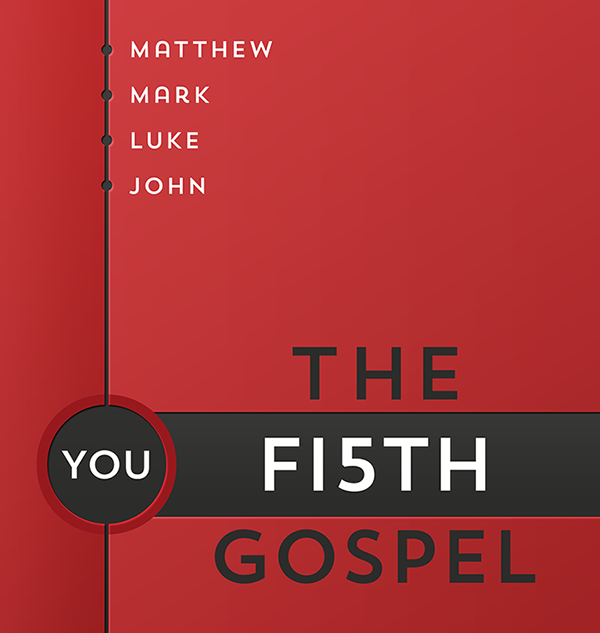
The Fi5th GospelI have been watching the One Minute Apologist videos from Bobby Conway for quite awhile, and find them very helpful. Recently I finished a reading plan in YouVersion based on Bobby’s book The Fi5th Gospel. Here are a few quotes that especially caught my attention.

“If I am the only Gospel people will ever experience are they experiencing the true Gospel?”

“At no other time in human history has God so plainly and blatantly revealed Himself than at Calvary. At no point has He so graphically uncovered His heart for mankind. It was there, on a hill outside Jerusalem, the Messiah bled for us, suffering hellish agony and sin-induced banishment, all the while enduring the brutal wrath of a holy and righteous God.”

“The exclamation point to this graphic love letter to us was the resurrection—Jesus’ conquering moment of triumph over sin, satan, and the grave. This is what Christians are all about right? It’s how we are saved. Take away the Cross and we’re no different from any other religious idea. It’s Jesus Christ, His death and resurrection. Strip away all the modern church fluff and this is what you find at the core of our faith. It’s essential. Nonnegotiable. Undeniable. It’s what makes us who we are. It’s what makes Christians ‘Christian.’ And it’s why Jesus is the answer to all of life’s deepest issues.”

“The sacrifice [God] requires isn’t death on a cross, but rather death to our pride and fear of what other might think. God just wants us to be proud of Jesus and what He has done for us. He wants us to be unashamed of His Son.”

“Though we were originally created in God’s image, God’s reflection in us was marred in the Garden of Eden when Adam and Eve sinned. And though His image wasn’t completely erased, it was defaced and tarnished. When you trusted in Christ, the Holy Spirit began a beautiful work of ‘image restoration’ in you; masterfully remaking you to more accurately reflect God’s virtue. He began sculpting, forming, and transforming your character to better display Christ to the world. You become His image-bearer, and His ongoing work in your life distinguishes you from the world. This is a lifelong process, by the way, and one God is committed to completing.”

“None of us will ever perfectly represent God’s character. As long as we’re on this earth, we’ll have imperfections. And it’s these imperfections that some unbelievers are quick (and happy) to point out and expose. But there is value in listening to what others say, of taking an honest look in the mirror, of stepping into an unbeliever’s shoes to see what they perceive about Jesus and His bride. Think of it as a spiritual awareness-building exercise.”

The Mathematical Proof For Christianity (book review)

The Mathematical Proof For ChristianityThe Mathematical Proof For Christianity by Dan Delzell is really just one part of the big picture he presents. Dan uses mathematics, archeology, textual examination, logic, and sound semantics to present a compelling case for the authenticity of Scripture, and the Deity of Jesus Christ. But Dan is quick to add, “Mathematical proof for Christianity is powerful. But without faith in Christ, all the proof in the world won’t save your soul and bring you to heaven one day.”

If you are already a Christian, this book will do much to help you “be prepared to give an answer” (1 Peter 3:15) to seekers and skeptics. But I think the greatest value of this book would be as a conversation-starter with those who are seekers and skeptics. Giving them a copy of this book to read along with you will be a great way to have a meaningful conversation about your faith in Jesus. The subtitle of this book is “along with other reasons to believe,” and Dan does give many, many reasons.

No book written by a man will convince anyone to place their faith in Jesus (only the Bible can truly do that), but The Mathematical Proof is well-grounded in Scripture to help you use it as an effective tool in sharing your faith.

Check it out!

4 Ways To Share The Good News With Everyone

Everybody EveryoneJesus told His followers that their ministry assignment was to take His message of salvation throughout the entire world. One requirement to do this, is to be able to communicate with lots of people. Actually to be able to communicate with everyone.

Be careful to do what is right in the eyes of everybody. If it is possible, as far as it depends on you, live at peace with everyone. (Romans 12:17-18)

Really? Everybody and everyone?!

Yes!

Jesus said our Helper would be the Holy Spirit. He would come to empower us to be witnesses to everyone, everybody, everywhere (Acts 1:8).

We have been learning how to communicate with others better, but noticing their communication style “accent.” Check out this post to get some more insight into this. In a nutshell…

  • Doers are action-oriented
  • Planners like to work out all the details
  • People want to make sure everyone is connected
  • Visions are imagining a better future

So if you are a Doer, and you’re trying to share the Good News about Jesus with a Planner, you can probably see a potential problem. The Doer is speaking in bullet points, but the Planner is wanting a lot more facts and figures.

This is where the Holy Spirit can help us. He has the insight that we don’t, and He can direct our words, just as He directed Christ’s words (see John 12:49-50).

Here’s how to talk their talk when you’re sharing the Good News:

(1) Doer

  • Keep it brief
  • Share more facts than stories
  • Stress now/today
  • Rely on the Gospel of Mark (action oriented)

(2) Planner

  • Tell them the who, what, where, when, why, and how
  • Be ready for lots of questions
  • Give them time to process your information
  • Rely on the Gospel of Matthew (lots of background, lots of Old Testament references to answer the who, what, where, when, why and how)

(3) People

  • Develop a friendship first
  • Share more stories than facts
  • Don’t tell them, show them your personal life
  • Rely on the Gospel of Luke (lots of personal stories about changed lives)

(4) Vision

  • Share both the facts and the stories
  • Encourage them to “Imagine what would happen …”
  • Give them time to ask questions
  • Rely on the Gospel of John (very poetic and image-rich)

You can connect with everyone, everybody, everywhere and share the Gospel with them in an effective way. Allow the Holy Spirit to give you the insight you need.

Check out how I describe this in more detail here…

12 Quotes From “The Place Of Help”

The Place Of HelpAs always, any Oswald Chambers book I read is thoroughly highlighted. There is always so much great content! On this blog, I have a weekly series called “Thursdays With Oswald” where I share quotes and thoughts from his book I’m currently reading. Be sure to check that out. Below are just a few of the quotes I noted from The Place Of Help. (By the way, you can read my review of this book by clicking here.)

“This is the age when education is placed on the very highest pinnacle. In every civilized country we are told that if we will educate the people and give them better surroundings, we shall produce better characters. Such talk and such theories stir aspirations, but they do not work out well in reality. The kingdom within must be adjusted first before education can have its true use. To educate an unregenerate man is but to increase the possibility of cultured degradation.”

“Not what the disciple says in public prayer, not what he preaches from pulpit or platform, not what he writes on paper or in letters, but what he is in his heart which God alone knows, determines God’s revelation of Himself to him. Character determines revelation (see Psalm 18:24-26).”

“Our Lord never gives private illuminations to special favorites. His way is ever twofold: the development of character, and the descent of Divine illumination through the Word of God.”

“The voice of the Lord listened to in darkness is so entrancing that the finest of earth’s voices are never afterwords mistaken for the voice of the Lord.”

“Jesus Christ distinctly stated that He came to do the will of His Father. ‘I must work the works of Him that sent Me.’ His first obedience was not to the needs of men, but to the will of God. He nowhere chose the altar of His sacrifice, God chose it for Him. He chose to make His life a willing and obedient sacrifice that His Father’s purpose might be fulfilled. … ’For we preach not ourselves, but Christ Jesus as Lord, and ourselves as your servants for Jesus’s sake,’ as Paul says in 2 Corinthians 4:5. We are the servants of men, says Paul, not primarily because their needs have arrested us, but because Jesus Christ is our Lord.” 

“If you become a necessity to a soul you have got out of God’s order, your great need as a worker is to be a friend of the Bridegroom. Your goodness and purity ought never to attract attention to itself, it ought simply to be a magnet to draw others to Jesus.”

“Suppose you talk about depending on God and how wonderful it is, and then others see that in your own immediate concerns you do not depend on Him a bit, but on your own wits, it makes them say, ‘Well, after all, it’s a big pretense, there is no Almighty Christ to depend on anywhere, it is all mere sentiment.’ The impression left is that Jesus Christ is not real to you.” 

“The highest Divine love is not only exhibited in the extreme amazement of the tragedy of Calvary, but in the laying down of the Divine life through the thirty years at Nazareth, through the three years of popularity, scandal, and hatred, and furthermore in the long pre-incarnate years (cf. Revelation 13:8).”

“The Cross is the supreme moment in Time and Eternity, and it is the concentrated essence of the very nature of the Divine love. … The Self-expenditure of God for His enemies in the life and death of our Lord Jesus Christ, becomes the great bridge over the gulf of sin whereby human love may cross over and be embraced by the Divine love, the love that never fails.” 

“Christian experience does not mean we have thought through the way God works in human lives by His grace, or that we are able to state theologically that God gives the Holy Ghost to them that ask Him—that may be Christian thinking, but it is not Christian experience. Christian experience is living through all this by the marvelous power of the Holy Ghost. The Holy Ghost working in me does not produce wonderful experiences that make people say ‘What a wonderful life that man lives’; the Holy Ghost working in me makes me a passionate, devoted, absorbed lover of the Lord Jesus Christ.”

“It is not the baptism of the Holy Ghost that changes men, but the power of the Ascended Christ coming into men’s lives by the Holy Ghost that changes men. The baptism of the Holy Ghost is the evidence of the Ascended Christ.” 

“There is only one Lover of the Lord Jesus and that is the Holy Ghost; when we receive the Holy Ghost He turns us into passionate human lovers of Jesus Christ. Then out of our lives will flow those rivers of living water that heal and bless, and we spend and suffer and endure in patience all because of One and One only.”

More quotes from this book coming soon…

You Are An Empowered Peacemaker

My new attitude“The whole world—with one minor exception—is made up of others,” says John Maxwell. The ‘one minor exception’ is that person who’s looking back at you from the mirror every morning, so if you want to be successful in life, you better learn to get along with ‘the others.’

I believe this is especially important for those who call themselves Christians. Here are three reasons why—

  1. Our interaction with other Christians is a testimony to outsiders—John 13:34-35.
  2. Our positive interaction with outsiders can draw others to Christ—Colossians 4:5.
  3. Our negative interaction with outsiders can repel others from Christ—1 Peter 2:12.

So although it can be very (sometimes very, very!) challenging, we are called to find ways to get along with others. The Apostle Paul said:

Be careful to do what is right in the eyes of everybody. If it is possible, as far as it depends on you, live at peace with everyone (Romans 12:17-18, emphasis added).

When you see the phrase “if it is possible” you may think that Paul has given us an “out.” We could say, “I tried really hard to get along with that guy, but it just hasn’t worked, so I’m off the hook!”

But consider how another translation of the Bible states this phrase: Do all that you can to live in peace with everyone.

Jesus was asked to do something that had never been done before: heal two men born blind. Jesus asked these men, “Do you believe I am able to do this?” (Matthew 9:28). The men answered an emphatic, “Yes!” On another occasion a father asked Jesus to heal his son by saying, “If You can, please help us.” Jesus said, “‘If I can? All things are possible to those who believe.” The father immediately replied, “I do believe; please help my unbelief” (Mark 9:22-24).

If you are Christian, the Spirit of Jesus lives in you. So the question Jesus asks us about our difficult relationships is, “Do you believe I am able to help you?” Or perhaps more accurately He asks us, “Will you let Me help you?”

So the part of the verse which says, “if it is possible, as far at it depends on you” is really saying, “If you really believe Jesus is stronger than this strained relationship, will you let Him do something in you to bring about peace?”

We aren’t asking Jesus to change the other person; we’re asking Him to change us. We aren’t asking someone else to get on our page, or to see the world from our perspective; we’re asking the Holy Spirit to help us get on their page, to help us see the world they way they see it.

We need to have a new attitude. And I believe that attitude comes from a prayer like this—

I have been empowered by the Spirit of Christ in me. 
It is now possible for me to live at peace with everyone. 
I can let the Holy Spirit use to me make a beautiful harmony. 
I will keep on living like this every day.

Next Sunday we will be looking at some practical techniques and more biblical insights to help us excel in getting along with all ‘the others’ that make up the world. Please join us in person or on Periscope.

4 Ways To Evaluate Biblical Evidence

Reliability of the GospelsTo be honest, if someone hasn’t heard the biblical account of the life of Jesus Christ before, it can sound quite fantastic! Jesus was born of a virgin, lived a sinless life, performed miracles no one had seen before, died a horrific martyr’s death, was raised back to life three days later, and then ascended back into heaven until He returns to Earth again.

But as fantastic as this sounds, there is still enough evidence to reasonably believe it’s all true. An unreasonable faith believes in something in spite of the evidence; a blind faith believes in something without any evidence; and reasonable faith believes in something because of the evidence.

The Bible gives us eyewitness testimony about the life of Jesus which we can matter-of-factly evaluate. 

In a modern-day court of law, eyewitness testimony is evaluated on…

  • …the determination that the witnesses were actually present.
  • …the ability to corroborate their testimony.
  • …the consistency of their testimony over time.
  • …any biases they have that would cause them to exaggerate or misrepresent their testimony.

Let’s consider the testimony of the four Gospel writers: Matthew, Mark, Luke and John.

(1) Were The Eyewitnesses Present?

  • Luke is considered a credible historian, even by modern standards. He wrote the book of Acts following the ascension of Jesus into Heaven. Because he did not mention three major events in Jewish history (the Jewish uprising, the Roman siege of Jerusalem in response to that uprising, and the Roman destruction of the temple), we can determine that Acts was written before 61 AD.
  • Luke wrote the Gospel that bears his name before he wrote Acts. The Apostle Paul referenced portions of Luke’s Gospel in letters we can date by Paul’s Roman imprisonment, which means Luke was written prior to 53-57 AD.
  • Luke uses the Gospel of Mark as one of his references, which means Mark was probably written in 45-50 AD, just 10-15 years after the events of Christ’s life.
  • Mark was closely associated with the Apostle Peter, who was most assuredly Mark’s “source” in writing his Gospel, and Peter was one of the original twelve apostles called by Jesus.
  • Matthew and John were both apostles of Jesus, living and working closely with Jesus for over three years.

(2) Is Their Testimony Corroborated?

  • Archeological finds continually demonstrate the accuracy of the people, titles, places and details the Gospel writers mention.
  • Outside—or extra-biblical—sources like Josephus (a Jewish historian who wanted to preserve the purity of Judaism), Tacitus (a Roman historian), and Mara Bar-Serapion (a Syrian historian)—all who wrote between 40-70 AD—affirm things like where Jesus lived, the miracles He performed, the manner of His death, His resurrection, and the changed lives of people who believed in Jesus Christ.
  • In addition, Paul wrote of the “five hundred of the brothers” who were also eyewitnesses to the resurrected Christ (1 Corinthians 15:3-8).

(3) Has Their Testimony Remain Unchanged Over Time?

  • The history and accuracy of the scribes had already been demonstrated in the preservation and transmission of the Old Testament over a period of 1400 years.
  • These same scribal techniques were not only used in the transmission of the New Testament, but in subsequent years the Masoretic scribes became even more meticulous in the techniques they used.
  • The “chain of custody” of evidence can be absolutely traced from the Gospel authors, to their students, and to the writings of the Church Fathers.
  • In fact into the third-century AD, the writings of the Church Fathers contain so many direct quotations from the New Testament, that we can almost completely reconstruct the New Testament from their writings.

(4) Is Their Testimony Unbiased?

  • These eyewitnesses didn’t gain anything financially by their testimony. In fact, many of them lost or gave up all their possessions to tell others about Jesus.
  • They didn’t gain political power or influence that could save their own lives. All of the original apostles (except John) died a gruesome martyrs’ death.
  • In short, they had nothing to gain by making up and reporting a false story about Jesus.

All of these points make it reasonable to believe the evidence presented in the Bible about Jesus Christ is true. Check out this video where I elaborate a little more on each of these points—

If you live in the Cedar Springs area and don’t have a home church, I would love for you to visit with us Easter Sunday morning at 10:30am. We’ll be examining the evidence for Christ’s resurrection from the dead. Click here to get more details.

“The Thing Really Happened”

I shared this quote from C.S. Lewis this morning in my message…

C.S. Lewis at his desk“Now, as a literary historian, I am perfectly convinced that whatever else the Gospels are they are not legends. I have read a great deal of legend and I am quite clear that they are not the same sort of thing. They are not artistic enough to be legends. From an imaginative point of view they are clumsy, they don’t work up to things properly. Most of the life of Jesus is totally unknown to us, as is the life of anyone else who lived at that time, and no people building up a legend would allow that to be so. Apart from bits of the Platonic dialogues, there are no conversations that I know of in ancient literature like the Fourth Gospel. There is nothing, even in modern literature, until about a hundred years ago when the realistic novel came into existence. In the story of the woman taken in adultery we are told Christ bent down and scribbled in the dust with His finger. Nothing comes of this. No one has ever based any doctrine on it. And the art of inventing little irrelevant details to make an imaginary scene more convincing is a purely modern art. Surely the only explanation of this passage is that the thing really happened. The author put it in simply because he had seen it.” ―C.S. Lewis (emphasis added)