Recovery Time

Listen to the podcast of this post by clicking on the player below, and you can also subscribe on AppleSpotify, or Audible. 

Anyone who has been verbally or emotionally attacked needs time to recover. Your self-care is absolutely essential to your personal health and the health of the people with whom you live and work. Your pain will eventually become their pain if you remain in a bruised and weakened place. 

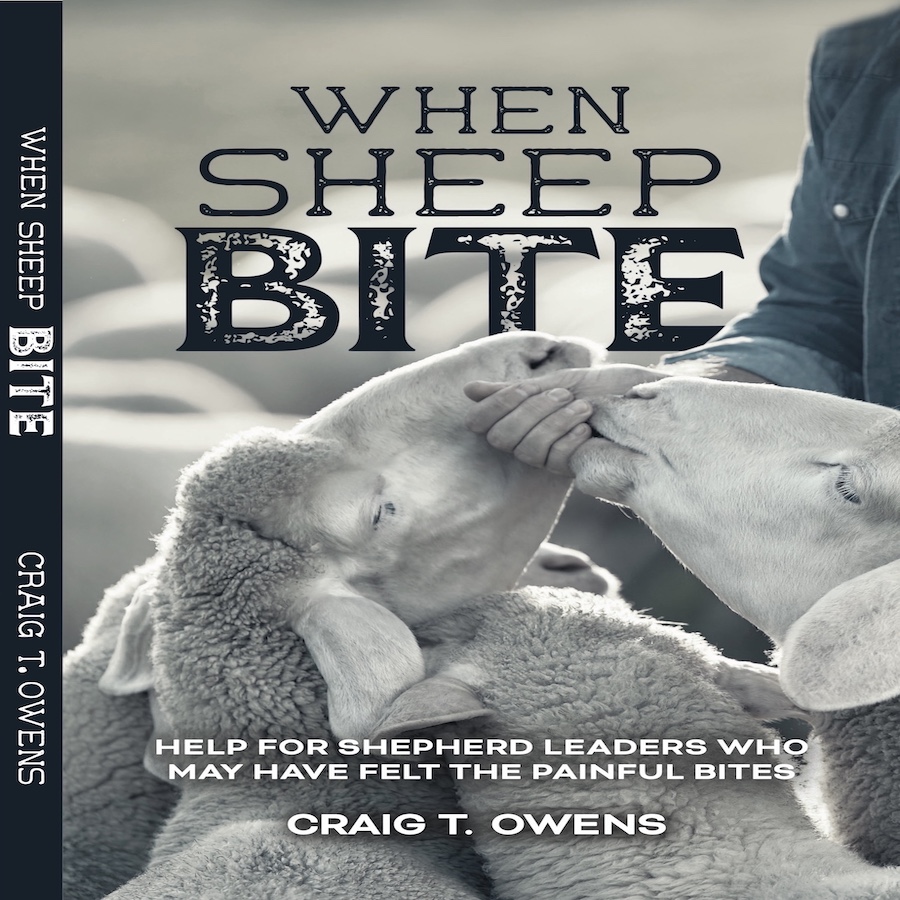
Chapter 12 in my book When Sheep Bite is entitled ‘Self-care is Not Selfish.’ In that chapter I wrote—

     When you are recovering from biting sheep, you will need to be very intentional about self-care. I said earlier that self-care is not selfish. What is selfish is self-centeredness and self-reliance. When you think, “I cannot possibly take a break right now; too many people need me—besides, how will the work get done if I step away,” you are attempting to be self-reliant. This is a natural response, but it doesn’t give us the supernatural, refreshing oxygen that comes from sabbathing with Jesus. 

     This isn’t to diminish the importance of the true Sabbath Day, and I am not saying that sabbathing can be anything you want it to be. For Jesus, it was time alone with His Father—both set times and spontaneous times. But sometimes you will need a nap (like Elijah) or a meal with a trusted friend (as the disciples had with Jesus in Mark 6:30-32). These sabbathing breaks have a singular agenda: To get you to the place physically and emotionally where you can concentrate on your prayer time. After all, it’s hard to receive refreshing from God when you cannot keep your eyes open or your thoughts from straying. 

You can check out the article I wrote for Influence magazine here, and then pick up a copy of When Sheep Bite to help your recovery time. Check out what the public ministry of Jesus teaches us about the healthy practice of sabbathing. 

I also recommend these related posts and videos about self-care: 

►► Would you please prayerfully consider supporting this ministry? My Patreon supporters get behind-the-scenes access to exclusive materials. ◀︎◀︎

Release The Hound!

Listen to the podcast of this post by clicking on the player below, and you can also subscribe on AppleSpotify, or Audible. 

My book When Sheep Bite is a manual of help for church leaders who have been hurt by the very sheep they are attempting to help. This book was birthed from a very painful chapter in my own ministry. 

But as dark as that time was, there was a ray of light that helped me to smile during the dark times and for years and years afterwards. Here is an excerpt from the chapter ‘Cry Before Your Confront’ in When Sheep Bite

     We used to have a funny saying in our family. Our puppy would be straining to get free and one of us would cry out, “Release the hound!” 

     After reading the previous chapter about imprecatory prayers, and hopefully putting that into practice, I hope you felt some relief from your anger. But when you read my reminder that David’s “Get ‘em, God!” cry was for God’s ears only, perhaps you were a little disappointed. Maybe you were hoping for someone to give you a green light to “release the hound” on those biting, kicking, and wayward sheep. 

     Wouldn’t it be so wonderful to unleash something—anything!—on those difficult sheep? As shepherds, we have so many ways we can dress up our unleashed hounds in biblical-sounding language. Maybe a righteous rebuke like the psalmist recorded: “You rebuke the arrogant, who are accursed, those who stray from Your commands” (Psalm 119:21). Or perhaps a well-timed prophetic thunderbolt like when Samuel was praying and “the Lord thundered with loud thunder against the Philistines and threw them into such a panic” (1 Samuel 7:10). Or even a strategic lightning strike from God’s throne as when the soldiers from King Ahaziah came to forcibly take Elijah to the king (2 Kings 1:11-12). 

     One of my favorite prayers is a prayer of David’s that is given added emphasis since it is recorded twice in the Scripture (2 Samuel 22 and Psalm 18)—

     In my distress I called to the Lord; I cried to my God for help. From His temple He heard my voice; my cry came before Him, into His ears. The earth trembled and quaked, and the foundations of the mountains shook; they trembled because He was angry. Smoke rose from His nostrils; consuming fire came from His mouth, burning coals blazed out of it. He parted the heavens and came down; dark clouds were under His feet. … Out of the brightness of His presence clouds advanced, with hailstones and bolts of lightning. The Lord thundered from heaven; the voice of the Most High resounded. He shot His arrows and scattered the enemy, with great bolts of lightning He routed them. (Psalm 18:6-9, 12-14) 

     Wow, how good it must have felt for David to unleash these words! And yet we still see that they were words only for God’s ears, spoken when David was alone with the Almighty God. Isn’t there something we can say or do to our obstinate sheep? Yes, there is, but there is something we need to be reminded of first. 

     After a particularly grueling day of being bitten, kicked, and attacked by the angry sheep in my pasture, I came home and announced, “Tomorrow is ‘Be Kind to Craig Owens Day!” While driving home and licking my wounds, I had determined that I needed a day off—a day to unplug from all of the madness and make sure I was taking care of myself. 

     Let me add a very important truth here. In fact, it’s so important that I’m going to print it in bold letters: Self-care is not selfish! Far too many shepherds think that taking time off to care for themselves, especially in the midst of all of the chaos, is a selfish thing to do. 

     Selfish is different. Selfishness is self-centered. Selfishness is saying, “I’m going to take care of myself and I don’t care what happens to others while I’m doing what I want to do.” Self-care is a strategic withdrawal to take care of myself so that I can return to take care of others. It is like the instructions on an airplane to put your own oxygen mask on first before you try to help a small child with their mask. If I pass out, I’m no good to anyone else. Just as Jesus “often withdrew to lonely places and prayed” (Luke 5:16), we must find times to care for ourselves so that we are strengthened to help others when we return to the fray. This concept of self-care is so vital that I have dedicated all of Chapter 12 to explaining this idea to you in more depth. 

     My family still celebrates the Be Kind to Craig Owens Day “holiday” but we mainly remember it because of something else that happened in our family. 

     On this inaugural event, I planned a day of reading, praying, walking, and recuperating. I silenced my phone and withdrew for that entire Friday. After a nice evening with my family, I decided to extend my self-care time into Saturday. My daughter and I went out to breakfast, and because we both enjoy animals so much, we decided to stop into a new pet store and play with the puppies for a while. 

     Almost instantly, both of us were captivated by a very special dog. There was something about her that drew us to her. In short order, we were on the phone with my wife and my sons asking them to join us at the pet store. We ended up walking out of the store that morning with a new addition to our family. 

     My wife later remarked that this puppy was the best irresponsible decision we ever made. Part of the reason this was true is that this puppy became my constant companion. I took her to my office with me so that I would have a source of unconditional love to offset all of the brutal attacks I was absorbing. 

     When John Bradford saw a cartful of men going off to Tyburn to be hanged for their crimes, he said to a friend, “There goes John Bradford but for the grace of God.” When I stopped to think what was different between my behavior and the behavior of these biting sheep, I realized it was only the grace of God that had kept me from descending into the same ugly behavior. That’s when I decided to name our new puppy Grace. I wanted to say that name over and over and over again. I desperately needed to be reminded of God’s grace for me. I also needed to be reminded that God wanted my biting sheep to know His grace too. 

     When we cried out, “Release the hound,” it was because Grace was straining at her leash to overwhelm someone with her love. She wanted nothing more than to show them how much she welcomed them into her presence. 

     I’ll be honest with you: When some of my biting sheep came storming into my office to berate me for something and Grace wanted to run to them with love and acceptance, I wanted to scold her and keep her back. This, I think, was the attitude of the older brother when his wayward brother returned home and was lovingly welcomed back into the fold by their father (Luke 15:11-32). But when I paused to think of God’s amazing grace that “saved a wretch like me,” I was reminded that God’s grace also wants to restore other wayward, obstinate, unreasonable sheep. 

     Our annual reminder of this event is really remembering our dog Grace’s “Gotcha Day.” It’s our annual reminder that grace is best seen in times and places that it is least expected.

If you are a church leader, please pick up a copy of When Sheep Bite to help you on your healing journey. And if I can be of assistance to you, please get in touch with me. 

►► Would you please prayerfully consider supporting this ministry? My Patreon supporters get behind-the-scenes access to exclusive materials. ◀︎◀︎

The Benefits Of The Right Kind Of Pastoral Stress

I was very honored to be asked to share these thoughts on KarlVaters.com. I was able to interview Karl about his latest book De-Sizing The Church.
(Photo by Official Presidio of Monterey | Flickr)

Jesus was “made like His brothers in every way” (Hebrews 2:17), which means He was not immune to the ravages of stress, yet He never let that stress overwhelm Him.

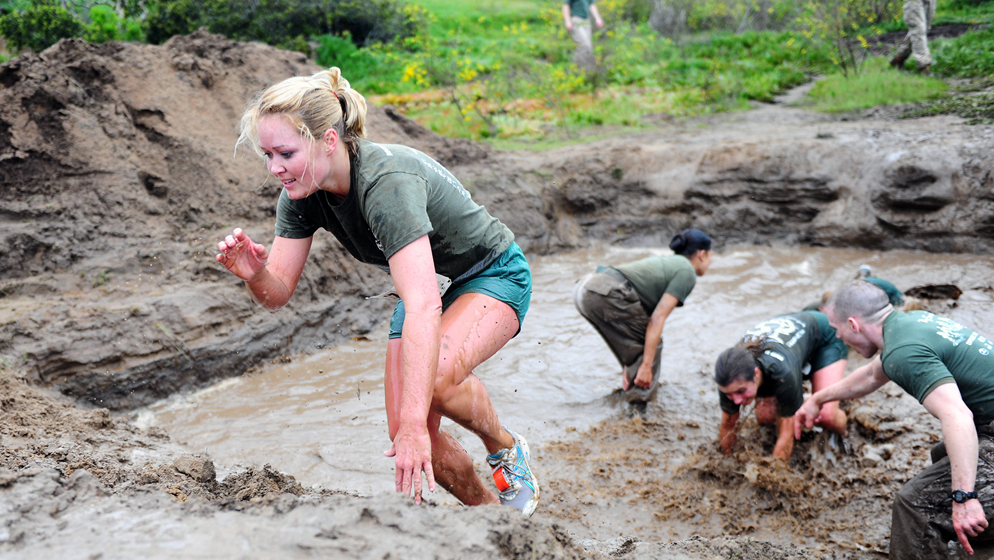
No one wants more stress. But attempting to avoid all stress can carry negative results that we seldom take into account.

In this guest article, Craig T. Owens (whom I interviewed in The Church Lobby, Episodes 43 and 82 ) writes about how managing the right type of stress (called eustress) can be a benefit, especially in positions of responsibility, like pastoring.

— Karl Vaters

As a pastor, I’m sure your life is practically stress-free. I mean, what do we have to do with our days except commune with God in our quiet study time, and then descend from the mountain to share the words God has given us? Then we can bask in the approval of our congregations as we watch them seamlessly integrate our sermons into their daily lives.

What’s that you’re saying? It’s not like that for you?

Anyone who has been a pastor for any length of time knows how demanding a job it is to be a shepherd of the flock God has placed under our care. And then frequently our shepherding work becomes even more challenging when we have to attend to the needs of obstinate sheep, or heal from the bites of angry sheep.

At times, we may dream about a more stress-free pasture.

But we actually do ourselves, our flock, and the world around us a huge disservice if we are striving for a stress-free life.

The Power To Persevere

First, I don’t think that is even possible. Adam and Eve in the perfection of the Garden of Eden faced a stressful decision. And Jesus, the Perfect Man, was constantly dealing with the stressors that pushed in on Him.

But more importantly, stress is vital for our healthy growth. Recent studies have shown that moderate levels of stress keep our brain sharp. In fact, the study went on to state that a brain that is striving for zero stress (if that’s even possible) begins to become less adept at problem solving. In our attempts to totally eliminate stress, we are actually squeezing out our ability to adapt, overcome, and soar when we face future problems.

In this case, I am talking about the healthy stress that doctors call eustress. Whenever we face a challenge, our body releases a hormone called cortisol that prepares our mind and body for action. In other words, God designed a way for us to be successful in stressful times.

Eustress is the push against the forces that would ultimately pull down our physical health, our relationships, our mental health, and a host of other things if we simply opt to “go with the flow.”

I read this in a recent article from an organization called Fight The New Drug:

“In a world that often sells ways to avoid stress, it’s crucial to remember that stress can be healthy in moderation. Stress and anxiety can trigger neural and chemical processes in your body designed to help you respond to challenges. Stress researcher Daniela Kaufer explains that ‘some amounts of stress are good to push you to the level of optimal alertness for behavioral and cognitive performance.’ Her research on stress in rats has even demonstrated that intermittent stressful events can create new brain cells in the rats that actually improve their future mental performances.”

I love how modern-day psychology validates what the Bible has already told us! The Bible makes it clear that persevering through the stressors that come against us can make us stronger, healthier, and better equipped for the next challenge. We are also fortified to help others through their times of stress (James 1:2-4; Romans 5:3-5; 2 Corinthians 1:3-5).

(Check out all of the Scriptures in this article by clicking here.)

The Greek word in the Bible translated “persevere” means keeping focused on the goal despite the struggles that it takes to get there. Jesus used this same Greek word at the conclusion of His parable of the sower: “The seed on good soil stands for those with a noble and good heart, who hear the Word, retain it, and by persevering produce a crop,” a crop that Jesus said was a hundred times more than what was sown (see Luke 8:5–15).

The Holy Spirit will push us further than we think we can go to develop the spiritual muscles and endurance we need to shepherd the sheep under our care during their trying times. He knows that persevering produces a huge crop.

Easy Roads Teach Few Lessons

I love riding my bike on the White Pine Trail by my house. My long rides have a really fun stretch where I am flying downhill! But as fun and stress-free as that part is, I’m not really building anything of lasting value. However, when I am coming back uphill and I want to quit because my legs are burning and I can hardly breathe, that becomes a valuable struggle.

I cannot build endurance by any other way than to persevere, to push myself just a little bit more each time. When I want to quit, I pedal just a few more feet. Gradually, the uphill becomes less daunting.

A friend gave me a t-shirt that I like to wear on my rides. When I put the shirt on, the blue-lettered message says, “Do It!” but as I struggle uphill and the sweat begins to pour off my body and drench my shirt, a new message emerges: “Don’t Quit!”

I have learned that easy roads teach very few valuable lessons. But persevering through the stressors not only strengthens me, but it builds an empathy for others that I would have otherwise missed.

The poet Epictetus noted this about the mighty Hercules:

“What would have become of Hercules do you think if there had been no lion, hydra, stag or boar—and no savage criminals to rid the world of? What would he have done in the absence of such challenges?

“Obviously he would have just rolled over in bed and gone back to sleep. So by snoring his life away in luxury and comfort he never would have developed into the mighty Hercules.

“And even if he had, what good would it have done him? What would have been the use of those arms, that physique, and that noble soul, without crises or conditions to stir into him action?”

—Epictetus, The Discourses

So the next time you are thinking about avoiding something that causes stress in your life, why don’t you reframe that thought. Instead, think about how you can become stronger, healthier, and more empathetic toward others because you are committed to successfully navigating that stressful situation.

Don’t ask God to get you out of that stressful situation, but ask Him to help you get something out of that stressful situation.

Eustress, Not Distress

Please notice that I have been talking about the good stress (eustress), but there is also a dangerous stress which doctors call distress. If we are trying to overcome a challenge in our own strength alone, instead of relying on God’s supernatural help, or if we are allowing stress to keep us from our healthy habits, eustress can disintegrate into distress.

The stress hormone cortisol is naturally flushed from the body in two ways: physical exercise and proper sleep. Isn’t it interesting that when we are experiencing higher than usual amounts of stress that two of the areas that seem to disappear from our lives are time for exercise and nights with solid, uninterrupted sleep?

When we allow eustress to become distress, everything suffers. Our physical health is compromised, we have an increasingly difficult time coming up with creative solutions, our patience with difficult people is strained, and we find ourselves fighting irritability.

How Jesus Did It

Earlier I mentioned the stressors that Jesus faced, but notice that we never see Him responding inappropriately, acting in an unhealthy way, or “stressed out” by the needs of the sheep around Him. Keep in mind that Jesus was “made like His brothers in every way” (Hebrews 2:17), which means He was not immune to the ravages of stress, yet He never let that stress overwhelm Him. He never even allowed eustress to cross the line into distress.

How did Jesus keep stress in balance? I see so many healthy habits in His life. For instance, I see not only the regular habit of prayer to start His day (Mark 1:35), but I see Him withdrawing for a time of prayer or even a nap when He completed a stressful time of ministry (Luke 5:16).

Jesus encouraged His disciples in this as well. The disciples were excited to tell Jesus about their latest ministry but the activity around Jesus was so hectic that they couldn’t even find time to get a bite to eat, let alone take a deep breath to recover from their ministry. “Come with Me by yourselves to a quiet place and get some rest,” Jesus told them. And then “they went away by themselves to a solitary place” (Mark 6:30-32).

To keep yourself from becoming distressed, be deliberate about maintaining your healthy habits during your times of eustress. Eat healthy, get proper exercise, get a good night’s sleep, spend extra time in your Bible study and prayer time, and schedule time with healthy friends. All of these things will help you leverage all of the benefits of eustress, making you a stronger, more consistent and empathetic leader.

Links & Quotes

When we are self-evaluating, we need to carefully guard our self-talk as well. Check out the full conversation Greg and I had on The Craig and Greg Show about a leader’s honest self-assessment. I have lots of new content every week, which you can check out on my YouTube channel.

Axis reported this in their weekly Cultural Translator newsletter. “Gallup polling data has found a huge spike in the percentage of Americans who say they get less sleep than they need. Survey results also indicate an increase in Americans’ daily stress. Why it’s news you can use: This data indicates that when you interact with anyone—in a store, on the road, at work, or in church—there’s a decent chance that particular human is feeling both exhausted and stressed out. The odds of this stress/exhaustion matrix are even higher if you are conversing with a young woman aged 18 to 29. In 2001, 42% of young women in that bracket said they get enough sleep, but that number has dropped to 27%. Younger women are also the most likely to say they experience daily stress. Stress and sleep have a symbiotic relationship, and parents should understand how both factors play a role in teens’ mental health.” I have written quite a few posts about getting enough sleep, and about taking some time for self-care.

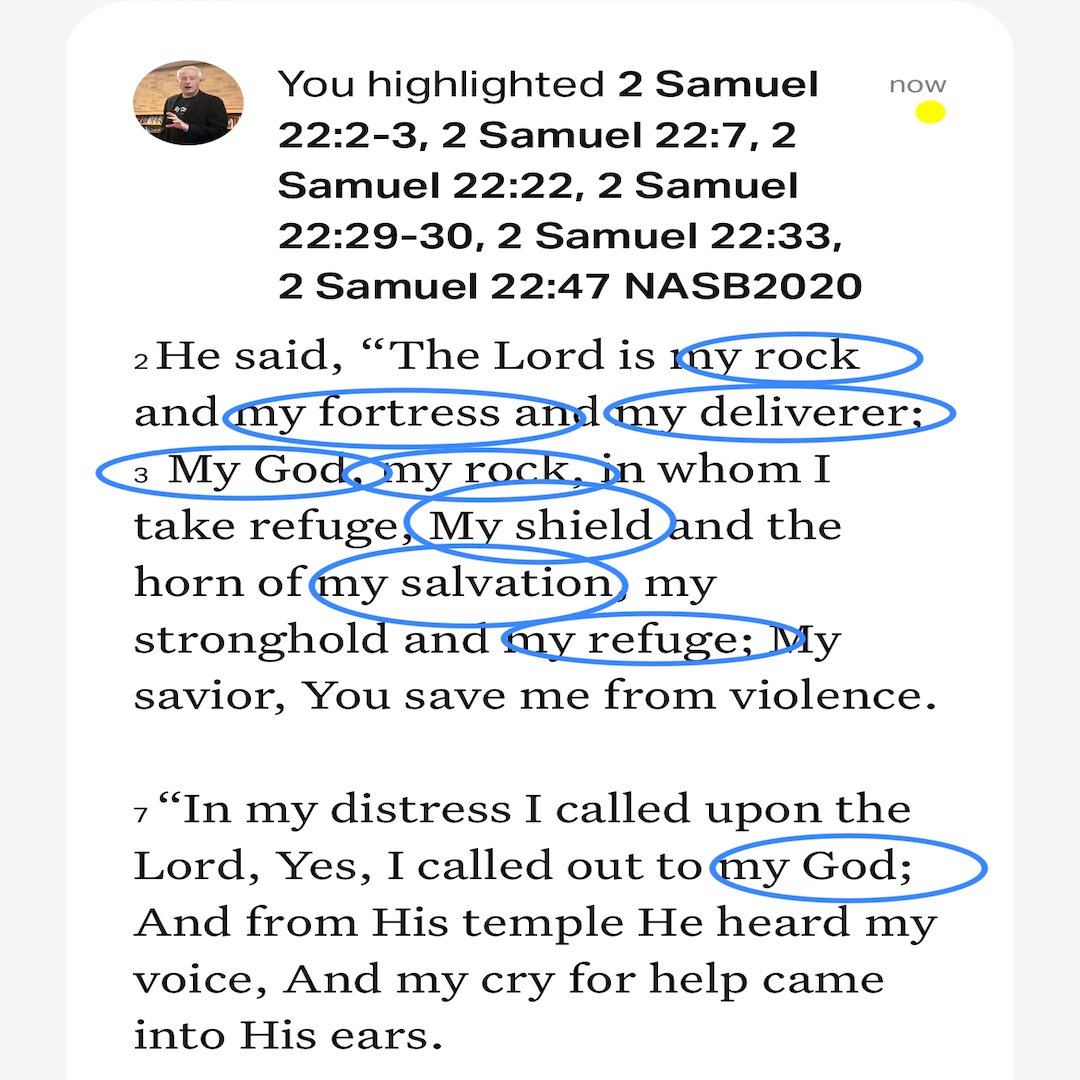
Notice how many times David shows the closeness of God by using the personal pronoun “my”—my Rock, my Fortress, my Shield, my God, and on and on❣️

“The world and its culture will not improve unless we play an active role in trying to improve it. Beginning with ourselves, we must make sure the culture we choose honors God and spreads His grace to the people around us. From there we must become informed about the state of culture, especially that which is most potent in conveying ideas and establishing practices—law, education, entertainment, social media, and pop culture in all its forms. That’s not to say we have to participate in all these; but at the least, we need to understand the times and how they shape and are shaped by various forms of culture so that we can know what we ought to do in pursuing a culture of love (1 Chronicles 12:32).” —T.M. Moore

“A man gives little if he gives much with a frown; he gives much if he gives little with a smile.” —Talmud, Ketubot

This is a very helpful interactive map of Paul’s missionary journeys. While you are on the viz.bible website, be sure to check out all of the other amazing infographics they have. I use these quite often to help me grasp the message of Scripture visually.

Links & Quotes

Our negative self-told can limit our lives. If you’re a leader, your negative self-talk is putting a life on how well and how far you can lead. Check out this full episode from The Craig And Greg Show. And be sure to check out all of my videos on my YouTube channel.

“Courage is the mastery of fear, not the absence of fear.” —Mark Twain

“A good man leaves an inheritance to his children’s children…” (Proverbs 13:22). In his excellent book Proverbs: Amplified and Applied, my cousin Dick Brogden uses our grandfather as an example of the principle in this verse: “Good has multi-generational implications. My grandfather was an incredibly generous man, and his children, grandchildren, and great-grandchildren have reaped the benefit. I am convinced that one of the reasons my family is so generously provided for is because our ancestor repeatedly gave significant financial gifts to his church, the Billy Graham Association, and missionaries around the world. Contrary to Shakespeare’s pessimism in the mouth of Mark Antony, the good that men do does indeed live after them, it is not interred with their bones.”

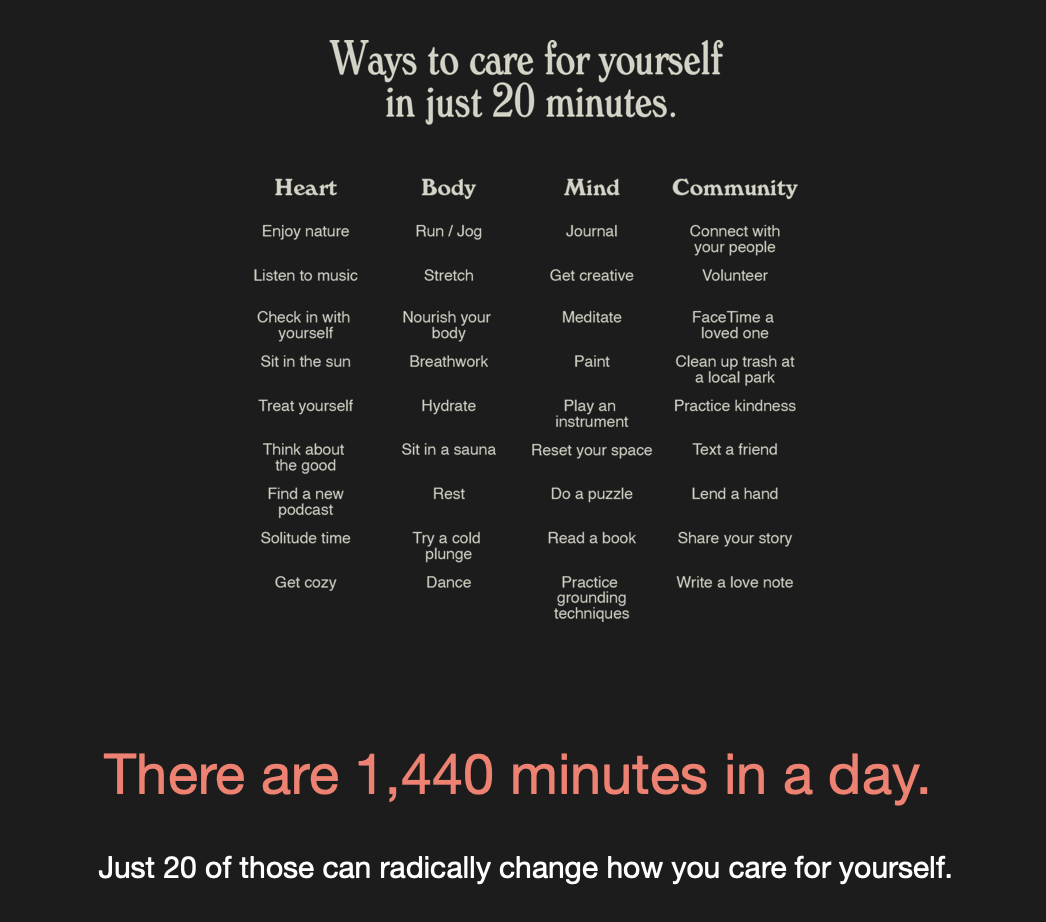
Self-care is vital. Without taking care of yourself first, how will you have any strength to take care of others? To Write Love On Her Arms has a helpful list of self-care items you can do in just 20 minutes per day.

“Knowledge follows understanding. We invert it and think that if we know facts, we are wise. In reality, it is only the wise who can rightly interpret the facts. … There is a posture of humility before God that opens the lowly to the understanding of God. This spirit of understanding becomes the filter with which we sift facts. Facts sifted by understanding lead us to accurate knowledge. Scoffers reject the reality that they need God’s help and God’s Spirit to understand facts. They foolishly think that true knowledge can be gained outside divinely enabled understanding. They have earned their PhD in ultimate idiocy.” —Dick Brogden, in ‘Proverbs: Amplified and Applied’ commenting on Proverbs 14:6

Work From Rest

Listen to the podcast of this post by clicking on the player below, and you can also subscribe on AppleSpotify, or Audible. 

When I was on the Thriving In Ministry podcast, Kyle Willis shared about a time he was at a church leadership seminar with Carey Niewhof. In an anonymous survey among the participants, more than 90 percent of these pastors and church leaders reported feelings of burnout. 

Let that sink in: 9-out-of-10 church leaders at a leadership conference were experiencing burnout. 

If church leaders are tired, they are ineffective. If church leaders are ineffective, their churches will lack vitality to remain on-mission. 

Clearly, something needs to change. 

Check out this clip from our conversation where I advocate some changes that church leaders need to make. Here are two of the biggest changes:

  1. Leaders need to learn how to work from a place of rest 
  2. Leaders need to learn how to practice self-care more consistently

In my book Shepherd Leadership, I have a section of five chapters where I talk about the example that Jesus set for us to be mentally, physically, spiritually, and emotionally healthy. I encourage you to check out this book for yourself. 

If I can be of help to you, I’d love to talk with you more. Please get in touch with me! 

►► Would you please prayerfully consider supporting this ministry? My Patreon supporters get behind-the-scenes access to exclusive materials. ◀︎◀︎

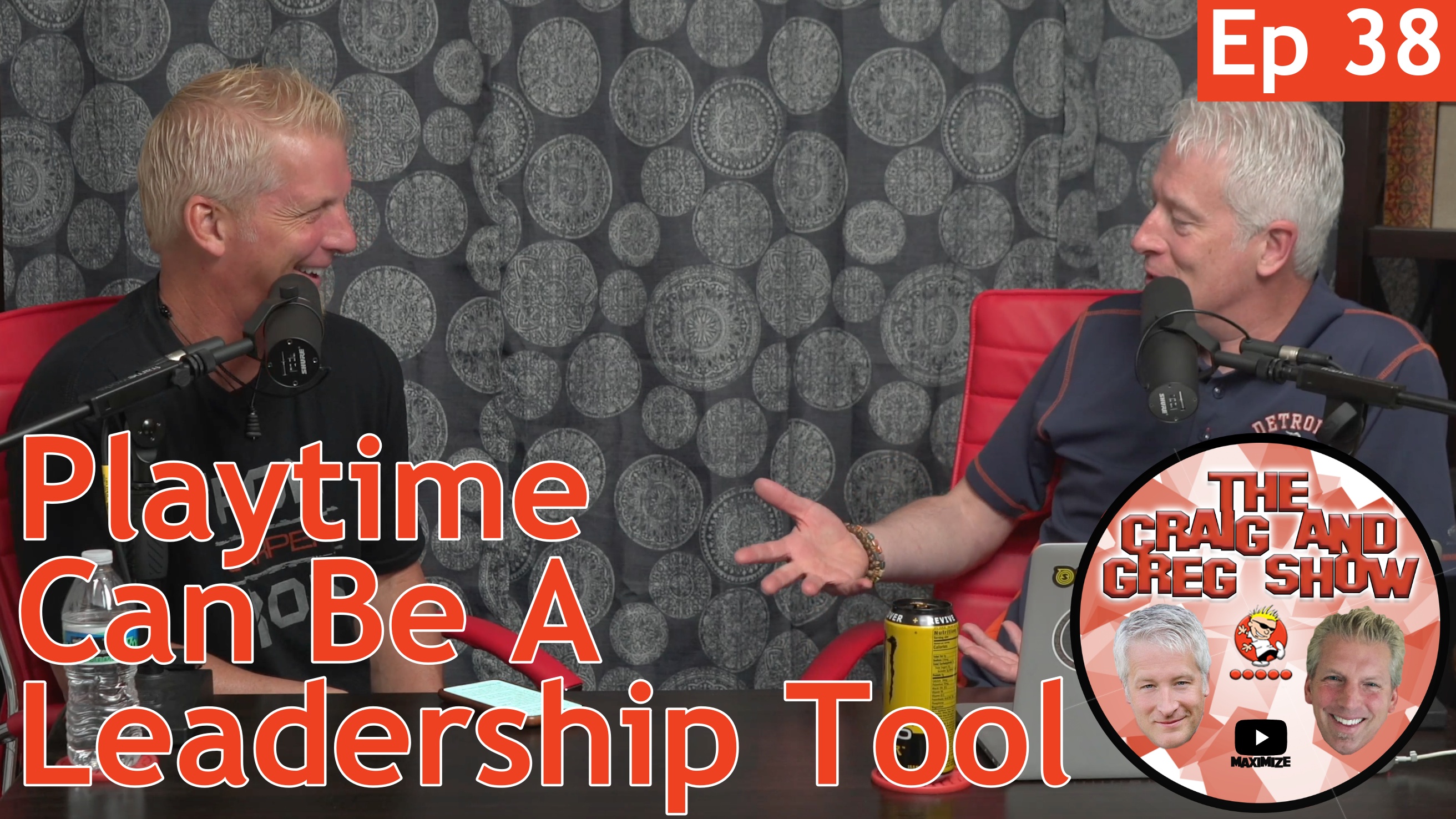
The Craig And Greg Show: Playtime Can Be A Leadership Tool

Listen to the audio-only version of this podcast by clicking on the player below, or scroll down to watch the video.

On this episode of “The Craig And Greg Show” we talk about: 

  • [0:30] Summertime is a good time to review our work vs. leisure balance
  • [1:21] I share how a leader can realize the organization needs some downtime
  • [2:51] Leaders need to recharge themselves
  • [4:13] Self-care is not selfish; self-care needs to be built into a leader’s schedule
  • [5:40] Greg reminds leaders that there isn’t an award for not taking a vacation
  • [6:46] Greg has seen the fallout from overly-tired leaders, and I share some ideas for leaders to help themselves and their teammates de-stress
  • [9:31] How do leaders build playtime into their regular work schedule?
  • [11:10] Share your ideas with us!
  • [11:34] Greg shared some playtime activities he used in his organizations
  • [12:27] Why do leaders think they have to be so serious?
  • [15:15] Some thoughts for leaders to help their teams
  • [16:51] Greg emphasizes again the importance of self-care and they guys talk about how we can help other leaders practice self-care
  • [19:03] Our coaching huddles can help you grow your leadership
  • [20:02] Is it possible to find work-life balance?

Check out this episode and subscribe on YouTube so you can watch all of the upcoming episodes. You can also listen to our podcast on Spotify and Apple.

Self-Leadership

Listen to the podcast of this post by clicking on the player below, and you can also subscribe on AppleSpotify, or Audible. 

I had a great time on the Thriving In Ministry podcast with Kyle Willis and Dace Clifton. 

Kyle asked me how I lead myself so that I can stay effective in my leadership roles. 

Effective and long-lasting leadership really does start with the leader’s self-leadership practices. I have to know myself well, so I am a big proponent of taking as many assessments as I can. These give me a window of insight into how I’m thinking and how I’m communicating. As I get to know myself better, I can get to know the sheep around me better as well. 

We all have a native way of thinking, speaking, and leading. It’s arrogant to think we can just “say it like it is” and everyone around us will immediately understand. Instead, I need to understand how my thinking and speaking “dialects” are unique to me, and that everyone on my team and every sheep in my pasture also have their own unique dialects. It’s as I get a window of insight into the way God has uniquely wired me, that I will also begin to appreciate the uniqueness of those around me. This will allow me to lovingly speak in their native dialect. 

In my book Shepherd Leadership: The Metrics That Really Matter, I discuss how leaders can create the time that is needed to get to know themselves and the flock that God has placed under their care.

I’ll be sharing more clips from this Thriving In Ministry interview soon, so please stay tuned. Shepherd Leadership: The Metrics That Really Matter is available in print or ebook, and in audiobook through either Audible or Apple.

►► Would you please prayerfully consider supporting this ministry? My Patreon supporters get behind-the-scenes access to exclusive materials. ◀︎◀︎


Recovering Mentally

Listen to the podcast of this post by clicking on the player below, and you can also subscribe on AppleSpotify, or Audible. 

I had a great time on the Thriving In Ministry podcast with Kyle Willis and Dace Clifton. 

Kyle asked me a question about how I recharge myself mentally. A key verse in the Bible for me is 2 Corinthians 10:5 where the the apostle Paul counsels us to capture our thoughts. This is extremely hard to do when we are physically or mentally drained. 

In my younger years, I used to try to “do nothing” as my recovery time. As I matured, I realized that top athletes had a different way to help their body recover, and I began to adapt those practices to my time of mental recovery. Dace also shares a very helpful tip for his mental recovery time. 

In my book Shepherd Leadership: The Metrics That Really Matter I make the case that in order for the sheep to be healthy, the shepherd has to get healthy first. The principle is simple: You cannot give to others what you do not possess yourself. I hope you will pick up a copy of my book to learn how Jesus taught us to be wholly healthy leaders.

I’ll be sharing more clips from this Thriving In Ministry interview soon, so please stay tuned. Shepherd Leadership: The Metrics That Really Matter is available in print or ebook, and in audiobook through either Audible or Apple.

►► Would you please prayerfully consider supporting this ministry? ◀︎◀︎


A Healthy On-And-Off

Listen to the podcast of this post by clicking on the player below, and you can also subscribe on AppleSpotify, or Audible. 

I had a great time on the Thriving In Ministry podcast with Kyle Willis and Dace Clifton. 

The guys asked me a question about how I keep myself healthy, and I pointed them to a principle I observed in the life of Jesus. Check out this excerpt from the chapter “A Healthy Leader’s Sabbath” in my book Shepherd Leadership: The Metrics That Really Matter

     Jesus had a human body just like ours. The demands of ministry caused stress on His body just as it does on our bodies. This is totally natural—this is the way God designed us. Our body helps us meet the demands of each day by releasing a hormone called cortisol. Cortisol helps us by managing how our body uses carbohydrates, fats, and proteins; keeping inflammation down; regulating blood pressure; controlling the sleep-wake cycle; and boosting our energy. … 

     Cortisol is naturally flushed from our bodies by a healthy on-and-off rhythm. God built this into His Creation by giving us daily rhythms of day and night, work and rest, and by providing a weekly Sabbath to rest and reflect. But as most shepherd leaders know, setting aside a consistent Sabbath day is extremely rare. Again, let’s look to Jesus: Do you see Him doing anything—or not doing anything—on the Sabbath day that He didn’t do the other days? On any day of the week, we see Him speaking in a synagogue, healing the sick, teaching crowds of people, giving instructions to His followers, correcting religious leaders, walking with friends, or stopping to eat at someone’s home.  

     Jesus had a healthy on-off rhythm: work-rest, minister-celebrate, expend-refresh. Jesus demonstrated that the Sabbath is not so much a day as it is an attitude of the heart. It’s listening to the Holy Spirit say something like, “You’ve been very busy this afternoon, so it’s time to take a nap” and then obeying that divine prompting. Resting and being refreshed—“sabbathing”—is not a luxury; it’s a necessity! That’s why, after a busy day of ministry, we see Jesus spending time in prayer, or taking a nap while crossing the lake when He didn’t have anyone to teach or heal, or finding time for a retreat with His disciples so they could rest and recuperate. 

I have five chapters in Shepherd Leadership about a leader’s overall health, and two chapters in particular where I talk about practical ways that we can create the time to practice sabbathing.

I’ll be sharing more clips from this Thriving In Ministry interview soon, so please stay tuned. Shepherd Leadership: The Metrics That Really Matter is available in print or ebook, and in audiobook through either Audible or Apple.

►► Would you please prayerfully consider supporting this ministry? ◀︎◀︎