Christ’s Advents Bring Hope

Listen to the podcast of this post by clicking on the player below, and you can also subscribe on AppleSpotify, or Audible. 

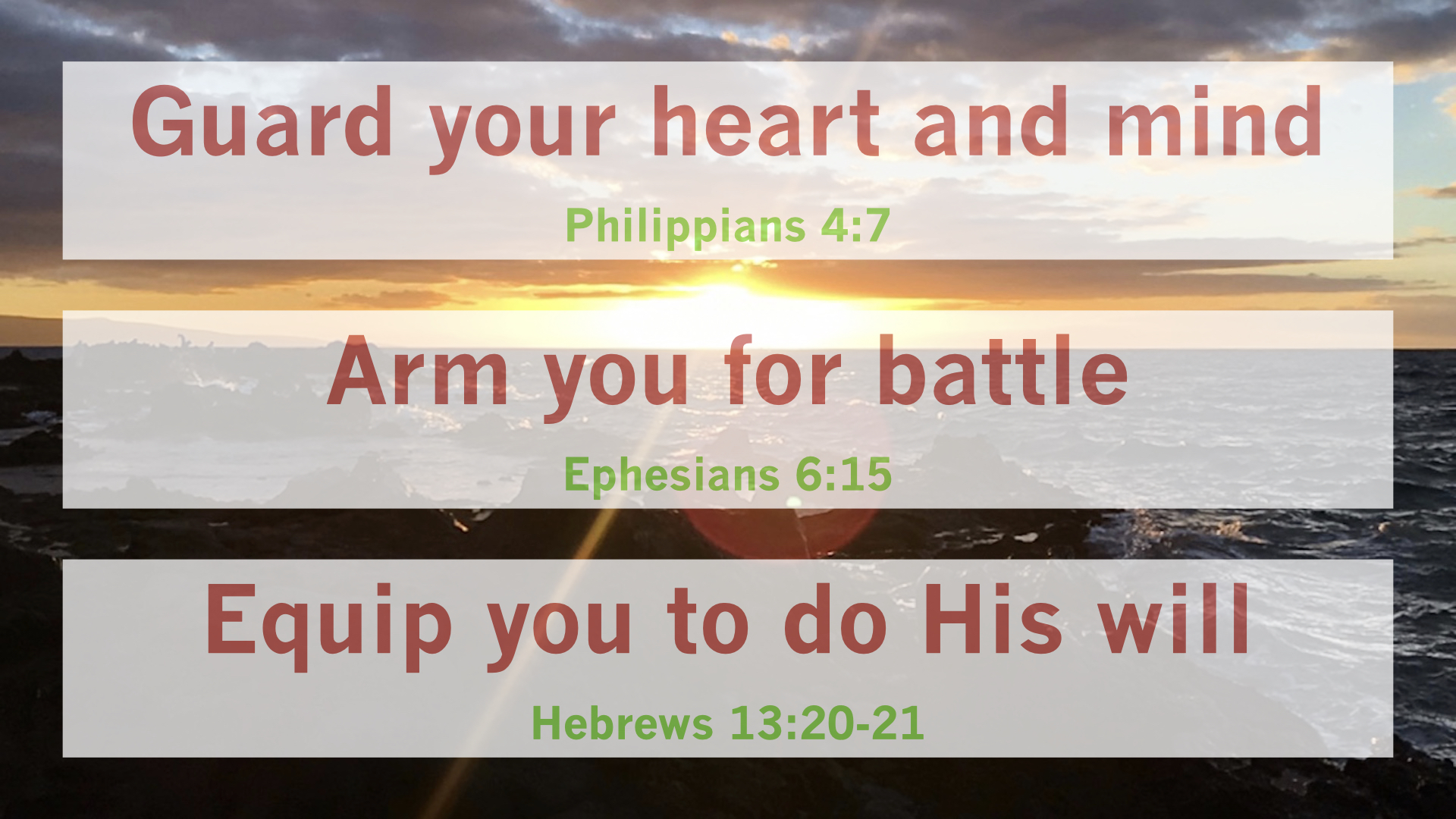
The word Advent means the appearing—something that bursts onto the scene. At this time of year we are actually thinking about TWO Advents. We look backward in gratitude to celebrate the first Advent of Jesus when He was born in a manger in Bethlehem. And then we look forward in joyful expectation to the second Advent of Jesus when He will return to earth again as King of kings. As we will in this time between the Advents, there are four qualities that we should exemplify—the first is hope. 

When the candle is lit, darkness disappears. 

Darkness is not the opposite of light, it is the absence of light. In the same way, despair or hopelessness is the absence of hope. 

Adam and Eve lived in perfection, but when they tried to do things their way—instead of obeying God’s way—their sin caused them despair. They tried to cover their nakedness, but with a hopeless covering of dying leaves. God came with a promise of full restoration, and illustrated it by covering them with the skin of a sacrificial animal (Genesis 3:7, 15, 21). 

(Check out all of the Scriptures in this post by clicking here.) 

Job knew the hopelessness of self-covering and finality of earthly life, and even David—the man after God’s own heart knew this too (Job 6:11-13, 17:13-16; 1 Chronicles 29:15). 

But Job and David both knew the hope they could have in their Redeemer (Job 19:25; Psalm 16). 

Hope in both the Old and the New Testaments means a patient waiting, anticipating with pleasure, having a confident expectation. It’s a light shining in the darkness that cannot be extinguished—it’s hope that despair cannot darken (Isaiah 9:1-2, 6-7). 

At His first Advent, Jesus appeared in our “clothing” so that He could become our sin and then clothe us in His righteousness (Hebrews 2:17; John 1:14; Romans 4:6-8; Hebrews 6:16-20). For this we look back in gratitude. 

But we don’t live today merely in gratitude for Christ’s first Advent, but we also live in confident hope of Christ’s second Advent (Acts 1:11; John 14:1-3; 2 Corinthians 5:1-8; Revelation 22:7, 12, 20).

He came into this world of sin,
Made flesh and blood His dearest kin;
He died, that He might take us in,
And keep us till He comes again. —Scott Hubbard


How do we live out this confident hope—

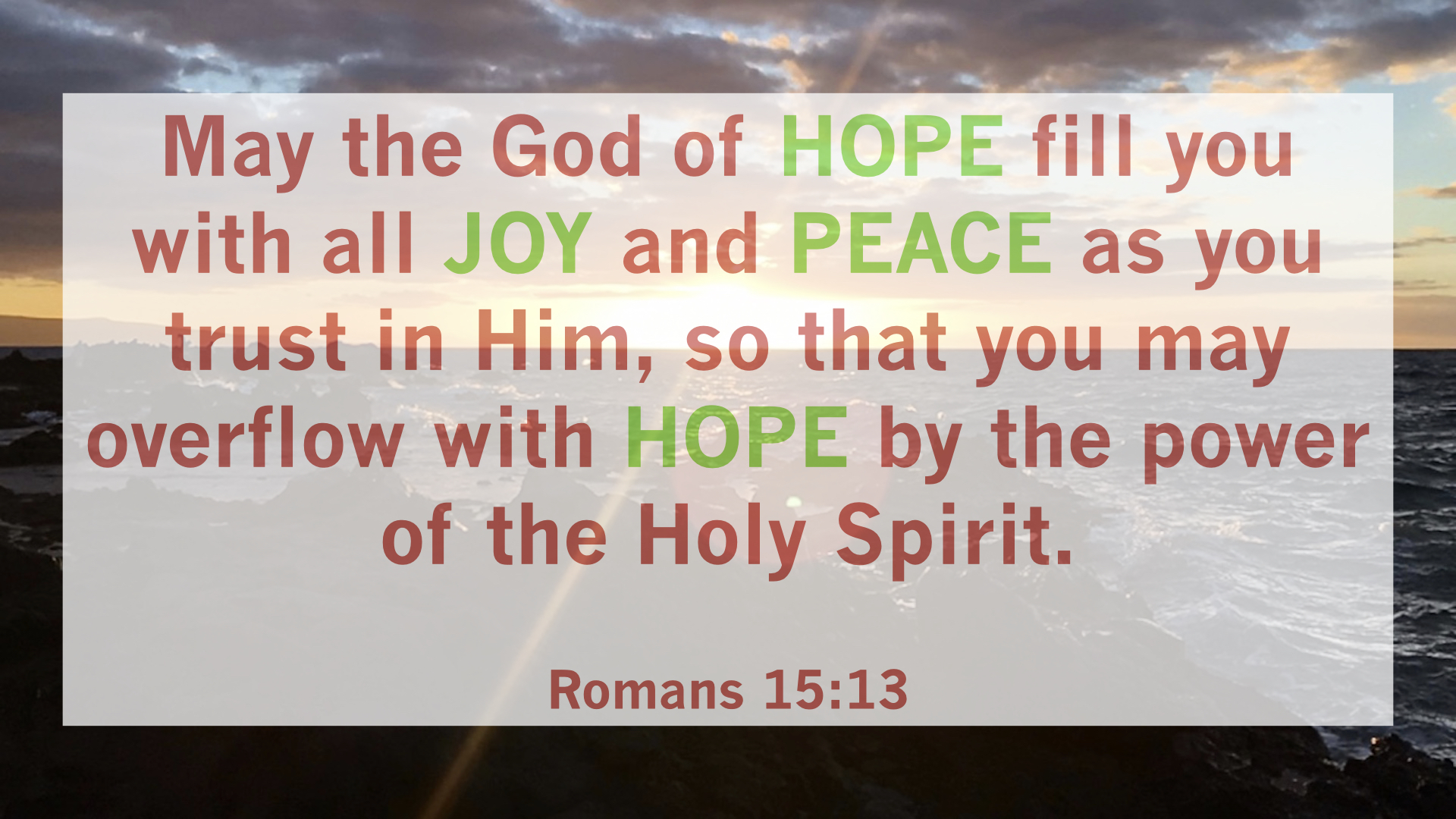
May the God of HOPE fill you with all JOY and PEACE as you trust in Him, so that you may overflow with HOPE by the power of the Holy Spirit. (Romans 15:13) 

Follow along with all four of the Advent attributes by clicking here. 

►► Would you please prayerfully consider supporting this ministry? My Patreon supporters get behind-the-scenes access to exclusive materials. ◀︎◀︎
Christ’s Advents

The word Advent means the appearing—something that bursts onto the scene. 

At this time of year we are actually thinking about TWO Advents. We look backward in gratitude to celebrate the first Advent of Jesus when He was born in a manger in Bethlehem. And then we look forward in joyful expectation to the second Advent of Jesus when He will return to earth again as King of kings. 

As Christians live in this time between the two Advents, our celebration and expectation should bring four noticeable attributes from our lives: 

  1. Hope 
  2. Peace 
  3. Joy 
  4. Love

Please join me at Calvary Assembly of God as we learn more about how the Holy Spirit empowers these four attributes in our daily lives, how this glorifies God, and how it then draws others to Jesus their Savior. 

Year-End Review (2023 Edition)

Listen to the podcast of this post by clicking on the player below, and you can also subscribe on AppleSpotify, or Audible.

The apostle Peter said he wrote two letters to the church “as reminders to stimulate you to wholesome thinking” (2 Peter 3:1). And Paul reminded his young friend Timothy to “keep reminding [your congregation] of these things” (2 Timothy 2:14). 

In the spirit of those great apostles, I have made it a practice to take time at the end of each year to look back on all that we have learned in the previous year, and then to look forward to where God may be leading Calvary Assembly of God in this upcoming year.

Clicking on each series title will take you to a list of all of the sermons in that series. 

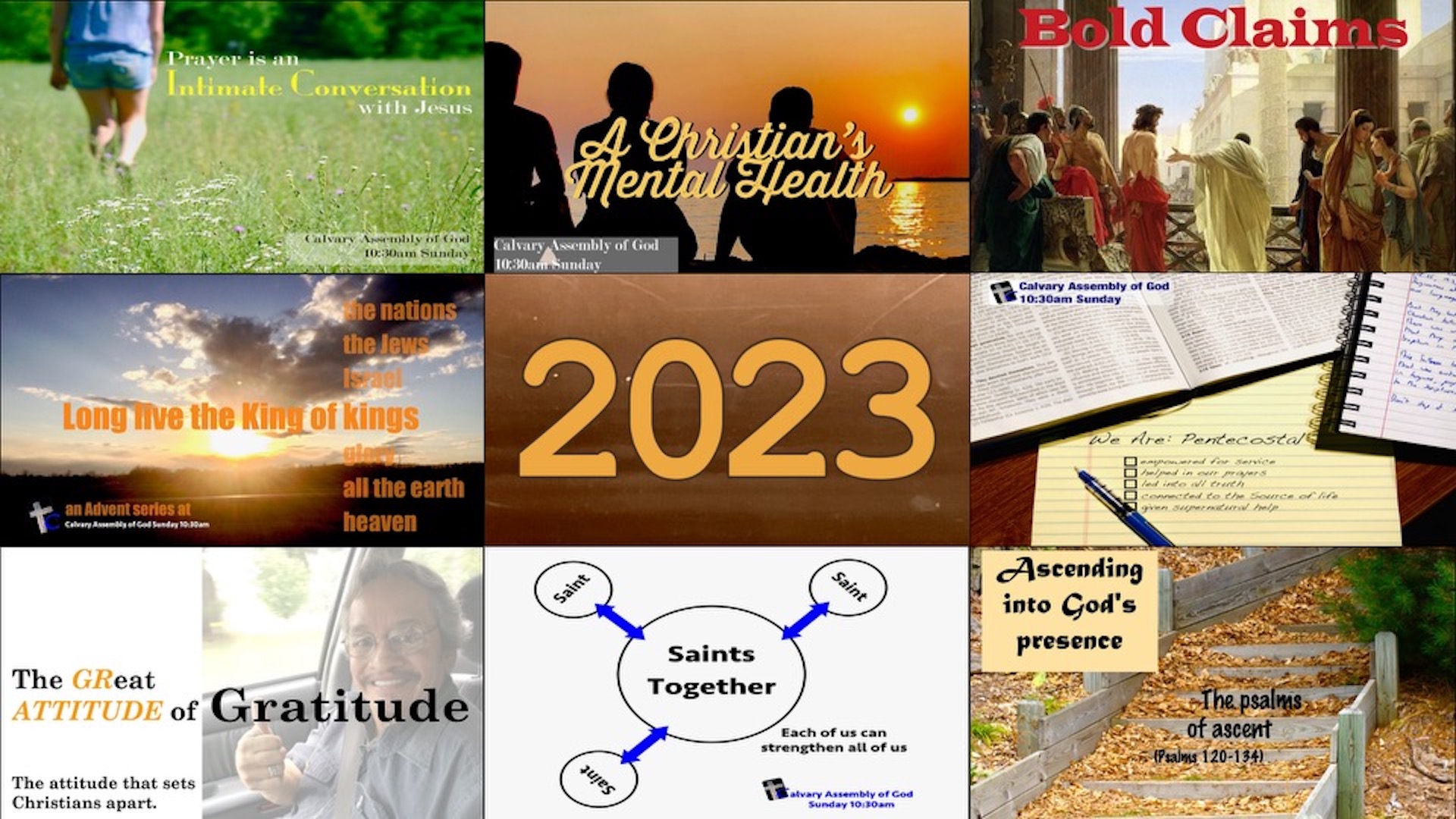
Intimate Conversation—The dictionary defines the word “intimate” with these phrases: associated in close personal relations, characterized by warm friendship, and closely personal. These words perfectly describe the relationship God wants to have with His children through prayer. Pete Briscoe said, “Prayer is an intimate conversation with the One who passionately loves you and lives in you.” The One who loves you so passionately desires to walk with you and share intimate knowledge with you. Prayer is not something formal, cold, or mechanical, but it is vibrant, warm, engaging, and life-changing.

A Christian’s Mental Health—I don’t think there is any arguing that Jesus was the healthiest individual who ever walked planet Earth. Some may want to push back with, “Of course He was because He didn’t have any problems to deal with!” But the writer of Hebrews tells us that Jesus experienced everything you and I will ever experience (Hebrews 2:17), so His deity didn’t exclude Him from the stressors that His humanity would have to face. And yet, He handled all of these things successfully. Luke the physician observed the growth of Jesus and tells us that it all began with Jesus having a robust mental health. From that foundation, everything else—physical, spiritual, relational—all could develop properly. We must learn from this example and pay careful attention to our own mental health.

Bold Claims—“That’s a pretty bold claim. Are you prepared to back that up?” I’ll bet you have heard something like that said to you, and maybe you have even said that yourself to someone else who made a big, audacious statement. After Jesus is arrested by the religious leaders—an arrest that will ultimately lead to Jesus being crucified on the Cross—there are some incredibly bold claims spoken by key people in this part of the Story. For the most part, these are claims that we don’t read earlier in any of the Gospels, but as this story is heading toward its most crucial moment, we have these audacious statements pronounced. But here’s the most important part: These bold claims weren’t just made, but they were backed up with proof as well.

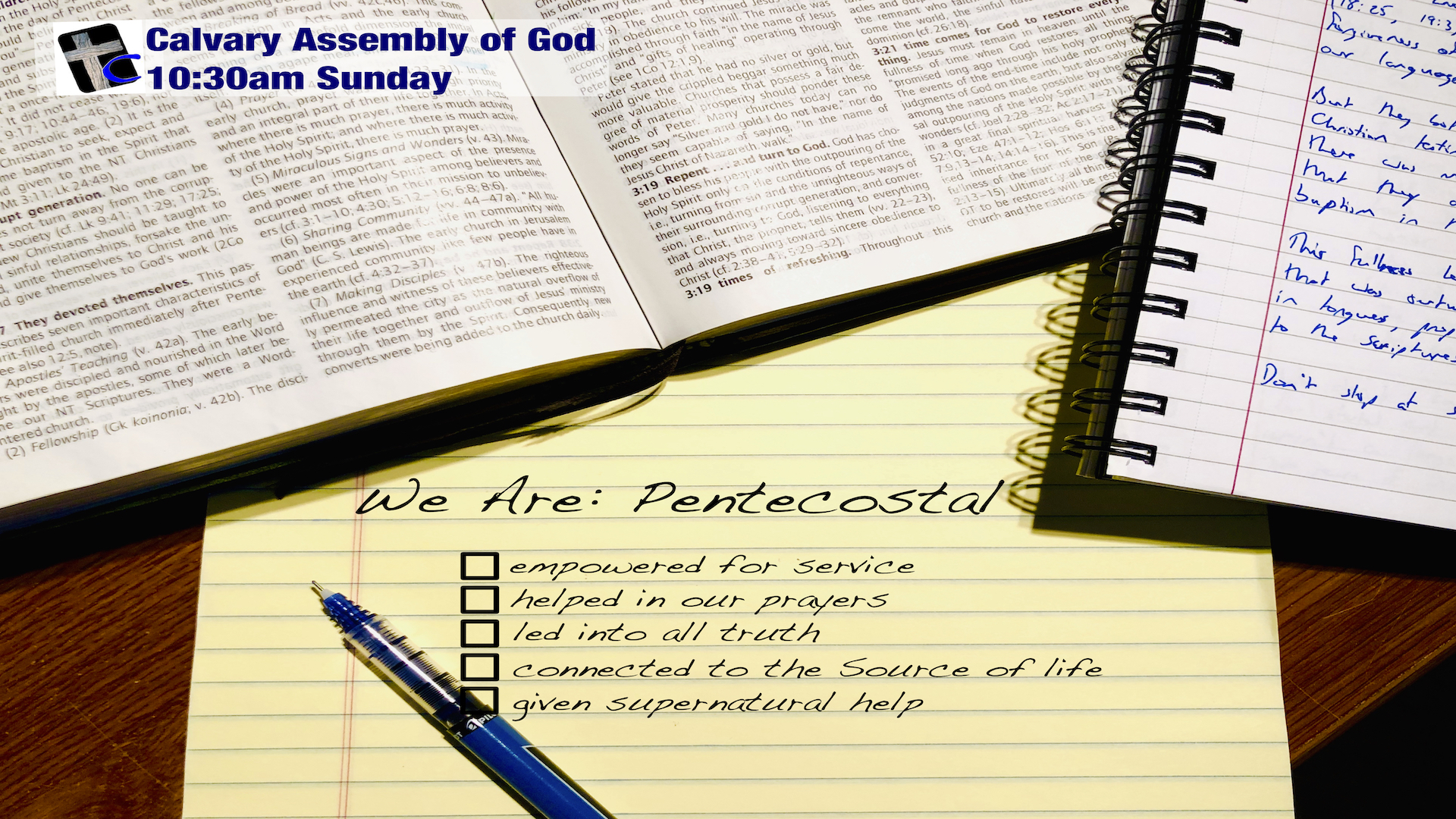
We Are: Pentecostal—Pentecost for over 1500 years was a celebration in Jerusalem that brought in Jews from all over the world. But on the Day of Pentecost that came just ten days after Jesus ascended back into heaven, the meaning of Pentecost was forever changed! Followers of Jesus—now empowered by an infilling of the Holy Spirit—began to take the good news of Jesus all over the world. These Spirit-filled Christians preached the Gospel and won converts to Christ even among hostile crowds, performed miracles and wonders, stood up to pagan priests and persecuting governmental leaders, and established a whole new way of living as Christ-followers. We, too, can be Pentecostal followers of Jesus Christ today. 

Ascending—Every year, Jews from around the world made four pilgrimages up to Jerusalem for various feasts and sacrifices. These journeys reminded them of God’s goodness as they went to the Temple to worship, and they helped refocus on God’s ways as they returned to their regular routines. Jerusalem is over 2500 feet above sea level, so the pilgrimage there was a physical workout as well as a spiritual workout. These workouts were beneficial for God’s people, preparing them to minister in their cities in the following months. The Book of Psalms contains 15 songs that these pilgrims would sing to and with each other as they traveled up to Jerusalem. These Psalms of Ascent are still instructive for Christians today.

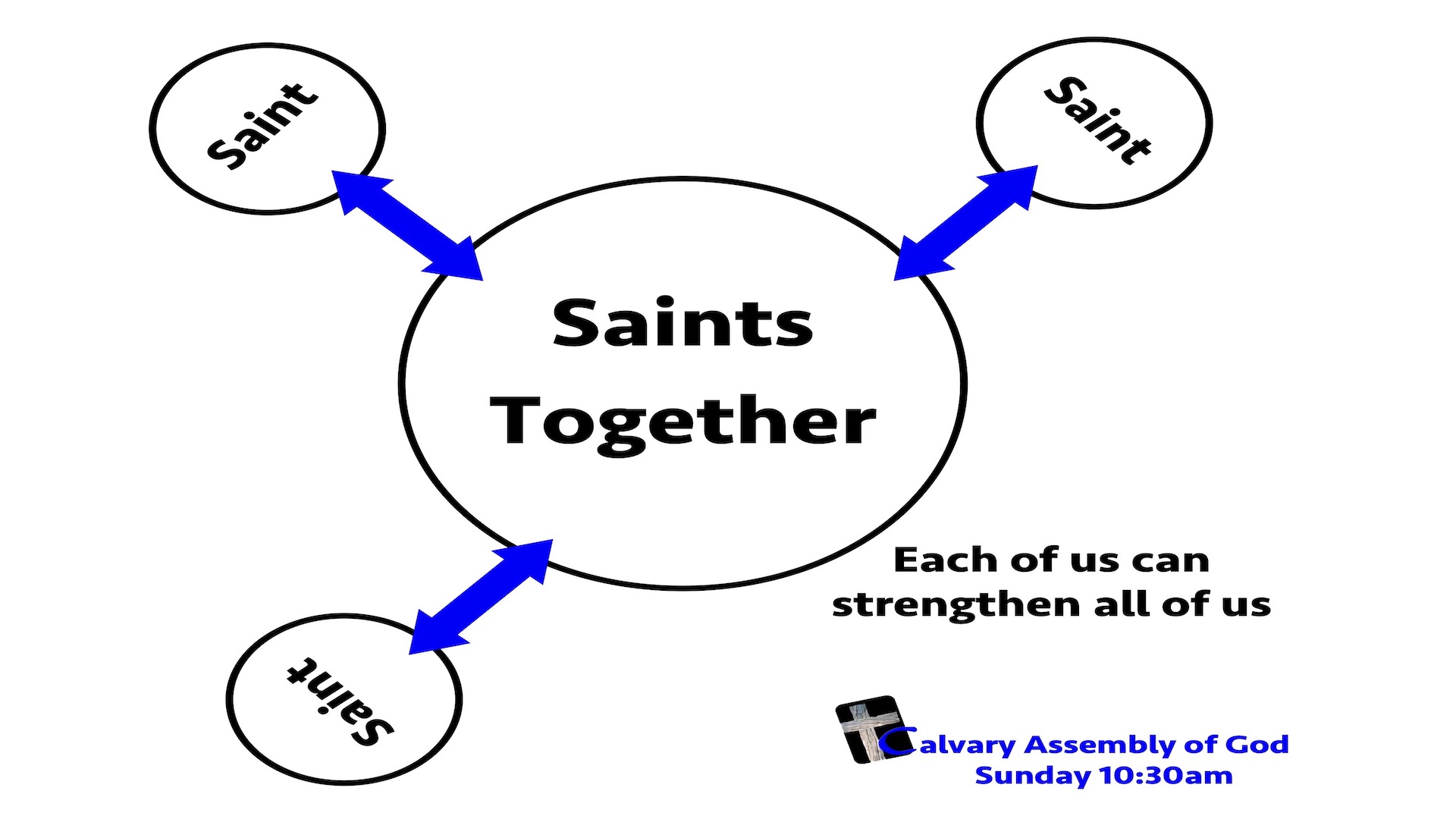
Saints Together—Throughout the New Testament the word “saints” is always in the plural form. This is a clear indication that none of us can develop into the full-fledged Christians we were meant to be on our own. We all need each other. More specifically, we all need the most mature version of each other. A key component of an individual saint’s development is the time spent alone being forged by the discipline of the Holy Spirit. Maturing saints then come together with each other to continue to strengthen and sharpen everyone in the church. Strong individual saints make a strong church, and a strong church makes strong individual saints! Let’s learn about six important spiritual disciplines that each individual saint must put into practice so that they can use their newly developed strengths to help other saints in their own development. 

The Great Attitude Of Gratitude—There’s something about gratitude that distinguishes people. Think about it: would you rather hang around with grumblers or grateful people? The gratitude of Paul and Silas certainly made them stand out from the crowd when they were in Philippi. Wrongly accused, beaten, and thrown in prison, but instead of bellyaching, they were praising God. Later on, when Paul wrote his letter to the Christians in Philippi, the theme of gratefulness permeates his letter. The distinguishing mark is actually in the title: The GReat ATTITUDE spells out GRATITUDE!

Long Live The King Of Kings—Throughout human history, whenever a king died, the people would say something like, “The king is dead. Long live the king!” They would say this because the next king ascended to the throne immediately after his predecessor died. Except when a nation had been defeated, the cry, “The king is dead” was unanswered by, “Long live the king!” Israel must have felt like this. After being defeated by Nebuchadnezzar and spending 70 years in exile, it appeared to many that the line of kings was broken. Even after retuning to their homeland, Israel continued to live under the thumb of other powerful nations. And yet, some still clung to the glimmer of the promise God had made about an eternal King sitting on Jerusalem’s throne. The First Advent of Jesus revealed to us in the Gospels reassures us that the promise of an eternal King is true. Jesus came to earth to reveal His majesty to us. The First Advent is so important because it bolsters our faith for the imminent Second Advent when Jesus will return as the King of kings! Christmas is a great time to be reminded that even now we can confidently declare, “Long live the eternal King of kings!”

2024 promises to be an exciting year! If you don’t have a home church in the northern Kent County area, I would love to have you join us! 

►► Would you please prayerfully consider supporting this ministry? My Patreon supporters get behind-the-scenes access to exclusive materials. ◀︎◀︎
Helping Skeptics See The King

Listen to the podcast of this post by clicking on the player below, and you can also subscribe on AppleSpotify, or Audible. 

I once worked with a guy that was the epitome of “all talk and no action.” After a while people just stopped listening to him or believing anything he said. But something worse is someone who says he will do something but doesn’t have the power to finish what he started. In that case, you may have believed him and not taken any steps of your own, so when he finally admits defeat, you are totally unprepared to step in to help finish the task. 

I think that comes close to the two attitudes people had prior to the First Advent of Jesus in Bethlehem. Some people thought all of God’s promises had just become “all talk and no action.” 

But after Jesus began His public ministry, His skeptics may have originally thought He was also “all talk and no action,” but when they saw how the people responded to Him, they realized He at least had the power to sway a crowd. But they certainty didn’t think He could finish what He started. 

The religious elite—the Sanhedrin—had their own plans in the works, and it appeared to them that Jesus was just going to get in the way. So they hatched a plan to have Pontius Pilate, the Roman governor, have Jesus crucified. As Jesus is hanging on the Cross, you can hear the skepticism and derision in the voices of these religious elite—

In the same way the chief priests, the teachers of the law and the elders mocked Him. “He saved others,” they said, “but He can’t save Himself! He’s the King of Israel! Let Him come down now from the Cross, and we will believe in Him. He trusts in God. Let God rescue Him now if He wants Him, for He said, ‘I am the Son of God.’” (Matthew 27:41-43)

After all, they had experienced “messiahs” before (Acts 5:35-37) so they thought this Jesus from Nazareth was just the next in a long line of pretenders. “King of Israel, indeed! Ha!” 

But when someone tells you what they are going to do, and then they actually do it, skeptics are turned into believers. We see this happen in people like Nathaniel, a whole village of Samaritans, and one of the thieves that was crucified alongside Jesus (John 1:43-51; John 4:9-42; Luke 23:39-42)

Even though Jesus told His disciples exactly what was going to happen to Him in Jerusalem—and then it did!—they were still skeptical of the claims of His resurrection until they saw it for themselves (Matthew 20:18-19; John 20:3-8). 

Just like the prophets told us how Jesus would come from a virgin and be born in Bethlehem—and then it happened!—so Jesus foretold His death and resurrection. 

There is a common theme here that turned all these skeptics into believers:

  • Philip said to Nathaniel, Come and see Jesus” 
  • The Samaritan woman said to her fellow townsfolk, “Come and see Jesus”  
  • The criminal saw and heard Jesus’ loving words when He forgave His crucifers 
  • And the doubting disciples ran to the tomb and “saw and believed” 

(See John 1:46; John 4:29; Luke 23:34; John 20:8) 

Skeptics need to see and hear for themselves that Jesus has the power to do what He says He will do. We are the ones that preach this Good News to them by the way we live. 

We have to live as good citizens of the King of kings so that people will “come and see” what a good and loving King He is. For those who are skeptical of the claims of Jesus the King, we have to live in a way that makes it real. We have to help them see the King of kings! 

Advent isn’t just a long-ago event that we fondly remember. The First Advent is proof that God has the power to keep His word. And just as we have seen the First Advent, so we will see the Second Advent. 

If you’ve missed any of the messages in this Advent series, you can check them all out here. 

►► Would you please prayerfully consider supporting this ministry? My Patreon supporters get behind-the-scenes access to exclusive materials. Like this video where I explain what the Bible means when we “examine” our lives. ◀︎◀︎

Faith Fueled By The Promise

Listen to the podcast of this post by clicking on the player below, and you can also subscribe on AppleSpotify, or Audible. 

Last week we looked at the amazing genealogy in Matthew 1 that connects Jesus to King David! 

After this genealogy, we read that an angel says to Joseph, “Joseph son of David, do not be afraid to take Mary home as your wife, because what is conceived in her is from the Holy Spirit” (Matthew 1:20). And then notice this commentary from Matthew—

All this took place to fulfill what the Lord had said through the prophet: “The virgin will conceive and give birth to a Son, and they will call Him Immanuel” (which means “God with us”). (Matthew 1:22-23)

Matthew says, “all this took place to fulfill what the Lord had said.” All what? Everything that came before that statement: the genealogy with all its exceptional items, the 70-year exile of the Jewish people, the Immaculate Conception, the fulfillment of a 700-year-old prophecy. 

I find this absolutely astounding! And so, apparently, did Joseph!  

But remember that Jesus is not only “the son of David” but He is also called a “son of Abraham.” This means that Jesus came to be more than just the King of the Jews. 

We have a cliché that says something like, “Don’t miss the forest for the trees.” By this, we mean that sometimes in the moment we only see one large tree or obstacle in front of us and we miss seeing the majesty of the whole forest. Or maybe we only see the obstacle and not the path that would take us where we need to go. 

We are living between the Advents now so you would think that we have a good “forest” perspective, but even we sometimes get bogged down in the moment, wondering what God is doing. The story of Abraham should help us to see the whole forest of God’s plan a little better. 

In Genesis 12:1-3 we read God’s promise to Abraham that all people on earth would be blessed by his obedience to God’s call. Listen to the opening words of Stephen’s sermon as he looked back on this—

The God of glory appeared to our father Abraham while he was still in Mesopotamia, before he lived in Harran. “Leave your country and your people,” God said, “and go to the land I will show you.” So he left the land of the Chaldeans and settled in Harran. After the death of his father, God sent him to this land where you are now living. (Acts 7:2-4) 

Stephen reminds us that God spoke to Abraham while he was still living in Mesopotamia. Abraham must have shared this promise with his father because in Genesis 11:31 we read that Terah takes Abraham, Sarah, and Lot with him to make this journey, but they only traveled as far as Harran. 

Why did they stop here? We’re not sure. Perhaps Terah was still grieving the death of his youngest son who had died before they left. Maybe Terah was concerned about his middle son Nahor who chose not to travel with them. Or maybe Terah was paralyzed by the magnitude of the journey still ahead of them. Whatever the reason, Terah allowed a “tree” to obscure his view of the whole “forest” of God’s plan. 

Stephen then says that Abraham continued the journey to Canaan “after the death of his father.” But if we do the math, it appears that Terah was still biologically alive when Abraham left (see Genesis 11:26, 32; 16:3, 16). 

Abraham had to trust God more than he respected his father, even to the point of considering his father as dead. 

Later on, God gave Abraham a similar test with his own son. Abraham passed this test and God repeated His promise about blessing all people through Abraham (see Genesis 22:1-18). 

In Romans 4, Paul explains that Abraham’s faith in God’s promise was rewarded, and that through our faith in Jesus we are connected to this same promise. 

Just as there was an “all this took place to fulfill what the Lord had said” about Jesus—including the faith-filled obedience of Abraham and David—God has an “all this” for your life too. 

God saw you before you were born. He had a plan for your life. He gave you gifts and talents to be used for His glory. There is not a single part—not a single experience—of your life that is accidental (Psalm 139:16; Ephesians 2:10; Romans 8:28). 

Just as He used all this for Jesus, He is using all this for your life too. Will you trust Him? 

Through David, God fulfilled the promise that Jesus would be King of the Jews. Through Abraham, God fulfilled the promise that Jesus would be King of all nations. Through Jesus, God fulfilled the promise that Jesus would be our Righteousness. 

Abraham died without seeing the promise fulfilled. But we have seen the promise fulfilled, and that should fuel our faith to trust God to fulfill the promise He has for each of us. I pray that this assurance will be renewed in your heart as you celebrate Advent this year. 

If you’ve missed any of the messages in our series called Long Live the King of Kings, you can check them all out here. 

►► Would you please prayerfully consider supporting this ministry? My Patreon supporters get behind-the-scenes access to exclusive materials. Like this video where I talk about the logic in Psalm 119. ◀︎◀︎

The Promise Of The King

Listen to the podcast of this post by clicking on the player below, and you can also subscribe on AppleSpotify, or Audible.

My podcast partner Greg and I just recorded an episode of our leadership podcast about Christmas traditions. I think there more traditions associated with this time of year than with any other event on our calendars. Traditions keep us connected to our roots, but they also help us feel like we can be in control of things. 

There has been a tradition in countries with monarchies that whenever a king died, the people would say something like, “The king is dead. Long live the king!” They would say this because the next king ascended to the throne immediately after his predecessor died. Except when a nation had been defeated, the traditional cry of, “The king is dead” was unanswered by, “Long live the king!” 

It appears at this moment that a new tradition has to be started—one where we take leadership over our own fates. 

The apostle Peter noted that people awaiting the Second Coming of Jesus would question if that event was ever going to happen. And the prophet Malachi closed the Old Testament with people saying much the same thing: “There doesn’t seem to be any advantage to following God’s laws, so maybe we should just do things our own way” (2 Peter 3:3-4; Malachi 3:13-15).

But then we turn the page to the dawn of the New Testament, and Matthew writes his Gospel about the First Advent of Jesus. He wants to show us that although the line of earthly kings in Israel may have been broken, the promised King of kings had now come to earth. 

I’m intrigued by the exceptions Matthew lists in his opening genealogy to illustrate this truth. First, as you might expect, the phrase “the father of” appears 39 times. This tells us a biological fact of life. These men didn’t know if they had fathered a son or a daughter, what their child’s contribution to the world might be, or even if their child would live faithfully to God. 

Matthew opens his genealogy by saying “the son of” twice. First, Matthew lists Jesus as the son of David—the king to whom God gave a very special promise of an eternal King coming from David’s family line. Then Matthew traces the genealogy back further to say “the son of Abraham”—the one through whom God said He would bless all nations (2 Samuel 7:11-16; Genesis 12:1-3). 

And what about the exceptional women Matthew records in this male-dominated genealogy? We have Tamar, Judah’s daughter-in-law, who tricked him into fathering a child by her; Rahab, a Canaanite prostitute who put her faith in God; Ruth, a Moabitess who left her homeland because she trusted God; Bathsheba, an adulteress who became David’s wife; and then Mary, the mother of Jesus, who was called “highly favored” of God (Luke 1:28). 

The phrase “son of” appears one more time when the angel calls Joseph by this title (Matthew 1:20). Jospeh is also called “the husband of Mary” (Matthew 1:16). 

Whereas Abraham and David were rewarded for their faithfulness to God and were told of future blessings, Joseph’s act was different. Joseph had a choice. He was told that the Child in Mary’s womb would be the Messiah. Now Jospeh had to decide: Would he choose to believe this? Would he choose to bear the shame and reproach to accept his role as father? 

We have the a similar choice today: Will we choose to believe that God has announced His plan and that He is fulfilling His plan? 

Here’s the simple truth. It appears as two statements, but it is really the same thought—

The Advent of Jesus has come. The Advent of Jesus will come. 

The First Advent of Jesus should build our anticipation for the Second Advent. His First Advent should be proof that God keeps His promise. 

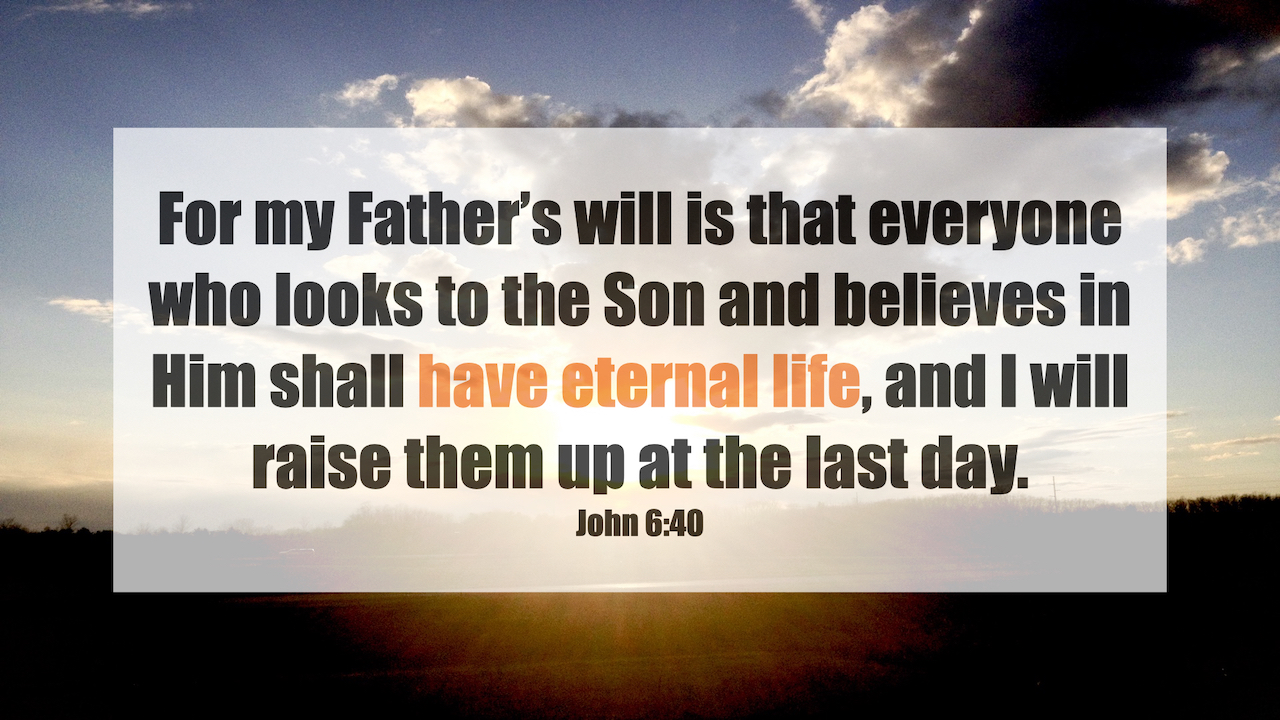
Jesus told us that believing God’s promise would bring us into God’s family. Jesus said, “For My Father’s will is that everyone who looks to the Son and believes in Him shall have eternal life, and I will raise them up at the last day” (John 6:40). 

The apostle Paul also assures us, “So in Christ Jesus you are all children of God through faith” (Galatians 3:26). 

Let’s not blindly follow the traditions of previous generations, but let us chose for ourselves to believe in God’s promised Messiah, to trust that He alone can give us eternal life, and then let us live in both celebration of His First Advent and expectation of His Second Advent. 

If you’ve missed any of the messages in our Christmas series called Long Live The King Of Kings, you can find them all by clicking here. 

►► Would you please prayerfully consider supporting this ministry? My Patreon supporters get behind-the-scenes access to exclusive materials. ◀︎◀︎

Long Live The King Of Kings

Listen to the podcast of this post by clicking on the player below, and you can also subscribe on AppleSpotify, or Audible.

Throughout human history, whenever a king died, the people would say something like, “The king is dead. Long live the king!” They would say this because the next king ascended to the throne immediately after his predecessor died. 

Except when a nation had been defeated, the cry, “The king is dead” was unanswered by, “Long live the king!” 

Israel must have felt like this. After being defeated by Nebuchadnezzar and spending 70 years in exile, it appeared to many that the line of kings was broken. Even after retuning to their homeland, Israel continued to live under the thumb of other powerful nations. 

And yet, some still clung to the glimmer of the promise God had made about an eternal King sitting on Jerusalem’s throne. 

The First Advent of Jesus revealed to us in the Gospels reassures us that the promise of an eternal King is true. Jesus came to earth to reveal His majesty to us. 

The First Advent is so important because it bolsters our faith for the imminent Second Advent when Jesus will return as the King of kings! Christmas is a great time to be reminded that even now we can confidently declare, “Long live the eternal King of kings!” 

I would like to invite you to join us for this encouraging series of messages of faith, hope, and eternal encouragement every Sunday during December. Check out any messages you may have missed:

Ready, Waiting, And Watching

Listen to the podcast of this post by clicking on the player below, and you can also subscribe on AppleSpotify, or Audible. 

Although Jesus spoke these words to His followers 2000 years ago, they are especially important to all of His followers who are awaiting His imminent return—

Be dressed ready for service and keep your lamps burning, like servants waiting for their master to return from a wedding banquet, so that when he comes and knocks they can immediately open the door for him. It will be good for those servants whose master finds them watching when he comes. Truly I tell you, he will dress himself to serve, will have them recline at the table and will come and wait on them. It will be good for those servants whose master finds them ready, even if he comes in the middle of the night or toward daybreak. But understand this: If the owner of the house had known at what hour the thief was coming, he would not have let his house be broken into. You also must be ready, because the Son of Man will come at an hour when you do not expect Him. (Luke 12:35-40) 

There are three words that stand out to me: ready, waiting, and watching. 

Ready is an adjective describing the Christian servant. Its etymology is from the noun meaning “fitness.” So the ready servant has all that he needs at hand. He is prepared for every opportunity, ready to serve and to receive whomever his Master sends him. 

Waiting is a verb that is in the present tense. That means it is something we always have to be doing. The prefix of this Greek word—like the adjective for “ready”—also means that everything that we need to serve is close by and ready to be used, and the root word is to give hospitality. So the waiting servant is waiting with a purpose: always ready to serve at a moment’s notice. 

Watching is also a present tense verb. This word means that we are giving undivided attention to the task that has been given us. 

Jesus was addressing His disciples, but these words are still for you and for me. At every moment we need to be fit to serve, with all that we need close at hand for every opportunity God sends our way.

I want to be occupied in my heavenly service until the very moment Jesus returns to earth or calls me Home. There are no off days. There is no time to waste on frivolous matters, but I need to be solely focused on only doing what matters for eternity. 

Will you join me in serving like this? We lead others to Jesus by serving those Jesus puts in our life. And as we do that, we serve our Master as well.

►► Would you please prayerfully consider supporting this ministry? My Patreon supporters get behind-the-scenes access to exclusive materials. ◀︎◀︎
Jesus In The Seven Feasts

Listen to the podcast of this post by clicking on the player below, and you can also subscribe on AppleSpotify, or Audible. 

Douglas Carmel from Rock Of Israel ministries shared an amazing overview of the seven Jewish feasts that are listed in the Book of Leviticus, and how Jesus is the fulfillment of all of these feasts. Doug was born into a Jewish family and became a Christian in his late teens, so he has firsthand knowledge of both the traditional celebrations and the Christian understanding of these feasts. 

One of the things I appreciated was Doug’s explanation that the feasts were merely a shadow of the reality—Jesus is the Reality! 

Please check out the message he shared at Calvary Assembly of God. I encourage you to visit his website to get more information on all of the ministries Rock Of Israel. 

Passover—celebrated on the 14th day of the first month 

  • Leviticus 23:4-5
  • Matthew 26:17-29; Mark 14:12-26; Luke 22:7-20
  • Jesus was crucified on the same day that the Passover lamb was being sacrificed 

Unleavened Bread—celebrated on the 15th day of the first month

  • Leviticus 23:6
  • 1 Corinthians 5:6-9

Firstfruits—celebrated on the 16th day of the first month (or the day after the Sabbath) 

  • Leviticus 23:9-14 
  • 1 Corinthians 15:12-26 

Seven Weeks—celebrated 50 days after Firstfruits 

  • Leviticus 23:15-21 
  • Also known as Pentecost 
  • Acts 2:1-41

Doug called our attention to the calendar on which these feasts appeared. Passover, Unleavened Bread, Firstfruits, and Seven Weeks all happen in the spring. All four of these feasts have already been fulfilled in the life, death, and resurrection of Jesus. 

There are no feasts in the summer months, as these are the months of field work (Leviticus 23:22). This is where we are now, which is why Jesus told us, “Ask the Lord of the harvest, therefore, to send out workers into His harvest field” (Matthew 9:38). This is the time for us to tell others about Jesus the Messiah! 

The final three feasts appear in the autumn—Trumpets, Atonement, and Tabernacles. These are feasts that are still to be fulfilled at Christ’s Second Advent. 

Trumpets—celebrated on the 1st day of the seventh month

  • Leviticus 23:23-25 
  • This is also known as Rosh Hashanah when the shofar is blown 
  • 1 Corinthians 15:51-53; 1 Thessalonians 4:15-18

Atonement—celebrated on the 10th day of the seventh month

  • Leviticus 23:26-32 
  • This is also known as Yom Kippur—the one day of the year the high priest goes into the Holy of Holies 
  • Romans 11:25-32; Matthew 23:39 

Tabernacles—celebrated on the 15th through the 21st days of the seventh month

Jesus said of Himself, “I am the Alpha and the Omega, who is, and who was, and who is to come, the Almighty” (Revelation 1:8). Jesus is THE Reality and THE Fulfillment of all of these celebrations! 

(Check out all of the Scripture verses I listed above by clicking here.) 

►► Would you please prayerfully consider supporting this ministry? My Patreon supporters get behind-the-scenes access to exclusive materials. ◀︎◀︎

Links & Quotes

God made you uniquely YOU on purpose. So you can ask Him to show you why He put you together as He did—with all of the gifts that make you YOU. Please subscribe to my YouTube channel.

In my Halley’s Study Bible, I read this commentary on Matthew 24-25—

“It is best not to be too dogmatic about the events surrounding [Christ’s] second coming. But if language is a vehicle of thought at all, it certainly takes a good deal of explaining and interpreting to make anything else out of Jesus’ words than that He Himself looked forward to His coming again as a definite historical event in which He will personally and literally appear to gather to Himself and to eternal glory those who have been redeemed by His blood.

“And it is best not to cloud the hope of His coming with too detailed a theory as to what is going to happen when He comes. Some people may be disappointed if Jesus does not follow the schedule they have mapped out for Him.”

“The future doesn’t belong to the fainthearted; it belongs to the brave.” —Ronald Reagan

“We are not called to punish the people for whom Jesus was already punished.” —Kevin Berry

Daniel B. Wallace, a New Testament professor at Dallas Theological Seminary, wrote, “If you could stack up all handwritten manuscripts of the New Testament—Greek, Syriac, Latin, Coptic, all languages—how tall would the stack be? … I have said in many lectures that it would be the equivalent of c. 4 & 1/2 Empire State Buildings stacked on top of each other. How did I come up with that number?” Check out his post to read how he calculated this astounding number. This is just another link in the chain of evidence for the historicity of the Bible.

I shared this commentary on YouVersion this week: We are made in God’s likeness. Ever since sin entered the world, man’s sinful nature is to flip this around—to make God in our likeness. Literally to say, “This is what I want God to be. I want Him to approve what I want.”

“Pure humor is the most difficult of all of comedy. Late night humor is funny because it is mean. It is relatively easy to be crude, cynical, and sarcastic. It comes naturally to our fallen natures to criticize, tease, mock, and scoff. It’s much harder to make people laugh by lifting others up.” —Dick Brogden, in his book Proverbs: Amplified and Applied, commenting on Proverbs 1:22