The Sin Of Man, The Salvation Of Jesus

Listen to the podcast of this post by clicking on the player below, and you can also subscribe on Apple or Spotify.

“Jesus is risen indeed!” This is the glorious good news that Christians around the world celebrate. 

But good news is really only good news when you fully realize how bad the bad news was. Like when the doctor comes in to tell you, “You’re going to be fine,” and you breathe a sigh of relief. And then the doctor goes on to explain what your condition was and all of the heroic efforts that were undertaken on your behalf, and you realize how close to death you actually were that your sigh of relief turns into a shout of joy! 

The resurrection of Jesus is the good news that brings us eternal life. But instead of merely breathing a sigh of relief thinking, “I shall not perish but have everlasting life,” let’s take a look at how close we were to everlasting death. 

Our fourth foundational belief says: “Man was created good and upright…. However, man by voluntary transgression fell and thereby incurred not only physical death but also spiritual death, which is separation from God.” 

Adam and Eve were given a choice: they were able not to sin and they were able to sin. God gave them dominion over everything in His creation but themselves, and He made them to be personally and intimately connected with Himself. But satan tempted them to take dominion over themselves, saying that they would become like God.

They sinned. “And sure enough, they then had knowledge of good and evil, but it was from the standpoint of becoming evil and remembering how good they once were,” said Nancy Guthrie. Because they sinned, now all of us are unable not to sin. Why? Because no one has been able to demonstrate to us how to be able not to sin. 

Their sin had consequences for them that have extended to us:

  • they felt shame at their vulnerability before God
  • they were fearful to be in God’s presence 
  • they were separated from God  
  • and they doomed all of us to live an utterly meaningless existence forever! 

But Adam and Eve’s sin didn’t send God scrambling for a remedy. Our fifth foundational truth says: “Man’s only hope of redemption is through the shed blood of Jesus Christ the Son of God.” 

Jesus turned the absolutely worst news into the most eternally, overwhelmingly good news ever! 

Jesus was made the cure for sin from before the foundation of the world. God made Jesus to be our sin (not just to carry our sins). In order for this to happen, Jesus had to become human like us. That means that Jesus, like Adam and Eve, had the same choice to sin or to not sin but He did not sin. This allowed Him to be our perfect sacrifice on the Cross. 

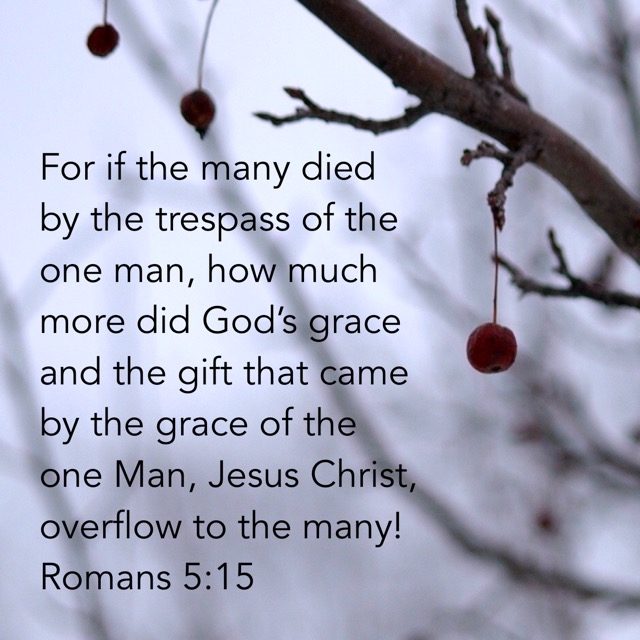
When He died on the Cross, Jesus removed the uncrossable abyss between us and God. Jesus made it possible once again for us to be able not to sin. Not only that, but Jesus covers the shame that would linger even after our sin is forgiven by clothing us in His own righteousness! 

(check out all of the biblical references for the above points by clicking here)

Sin had us doomed to not only a meaningless existence on earth, but also to an utterly meaningless existence for the eternity following death. Jesus became our sin to allow us to be reunited with God and reclothed in Christ’s righteousness. This is not just good news, it’s eternally, overwhelmingly good news! 

If you’ve missed the discussion of any of our other foundational truths, you may access the full list by clicking here.

►► Would you please prayerfully consider supporting this ministry? ◀︎◀︎

Thursdays With Spurgeon—An Important Distinction

This is a weekly series with things I’m reading and pondering from Charles Spurgeon. You can read the original seed thought here, or type “Thursdays With Spurgeon” in the search box to read more entries.

Listen to the podcast of this post by clicking on the player below, and you can also subscribe on iTunes or Spotify.

An Important Distinction

     Many had been the good works of Abram. It was a good work to leave his country and his father’s house at God’s bidding. It was a good work to separate from Lot in so noble a spirit. It was a good work to follow after the robber-kings with undaunted courage. It was a grand work to refuse to take the spoils of Sodom and to lift up his hand to God that he would not take a thread even to a shoelace. It was a holy work to give to Melchizedek tithes of all that he possessed and to worship the Most High God.

     Yet none of these are mentioned in the text, nor is there a hint given of any other sacred duties as the ground or cause, or part cause, of his justification before God. No, it is said, ‘And he believed in the Lord, and He accounted it to him for righteousness’ (Genesis 15:6). … 

     If there is salvation for the dying thief and others like him, it cannot be of debt, but of grace, seeing they have no good works! If Abram, when full of good works, is not justified by them, but by his faith, how much more we, being full of imperfections, must come to the throne of the heavenly grace and ask that we may be justified by faith that is in Christ Jesus and saved by the free mercy of God! …  

     Always distinguish between the truth of God that living faith always produces works, and the lie that faith and works cooperate to justify the soul. We are made righteous only by an act of faith in the work of Jesus Christ. That faith, if true, always produces holiness of life. But our being righteous before God is not because of our holiness in life in any degree or respect, but simply because of our faith in the divine promise [Romans 4:22-25]. 

From Justification By Faith

“I’ve been made righteous in God’s sight SO THAT I can live a holy life” is vastly different from “I’m living a holy life SO THAT I can be made righteous in God’s sight.” 

None of our good works—no matter how many we do—will ever wipe the slate clean of our sins. It’s an impossibility! That is why faith in the work of Jesus on the Cross is vital. It’s my faith in His substitutionary work that has canceled the record of my sins and made me holy before God, SO THAT now I am free to live out that holy life! 

What freedom there is in allowing our living faith to overflow into our loving deeds! Our holy living is our thankful worship to God for His precious gift of Jesus. 

►► Would you please prayerfully consider supporting this ministry? ◀︎◀︎
 

“Dear Woman”

Listen to the podcast of this post by clicking on the player below, and you can also subscribe on Apple or Spotify.

The crucifixion of Jesus lasted about six hours. This was mercifully short compared to what typically happened to crucifixion victims. It was hard enough for Jesus to get enough air just to breathe, let alone enough air to talk, so His words are few but precious! From 9:00 until about noon, He speaks three times; from noon until about 3:00, He has no recorded words; at 3:00 there are four final statements that come pretty close together. 

As Jesus speaks His final declaration before wordlessly suffering for the next three hours, let’s take a look at who was there. They were people who deeply cared about Jesus, and people about whom Jesus deeply cared: His mother, His aunt, the mother of one of His disciples, Mary Magdalene, and His beloved disciple John. 

Also notable was who wasn’t present on Golgotha: none of Christ’s siblings or other close relatives. 

This last word from Jesus before His long silence was an incredibly loving word. As the oldest of His siblings, and with His earthly father Joseph dead, Jesus had head-of-the-household responsibilities, especially the care of His mother Mary. 

When Jesus speaks to her, He says, “Dear woman.” This is a term of kindness, respect, and endearment. To both His mother and to John, there is a Greek word that is omitted in some English translations of the Bible: Behold. Since Christ’s words were at a premium, this word was Jesus saying, “Listen very closely. Pay careful attention to this important word I’m about to speak.” 

To His mother, Jesus says, “Dear woman, behold your son.” Jesus was saying, here is one on whom you can depend. And to His dear friend Jesus says, “Behold your mother.” Literally, Jesus was asking John to care for Mary as though she were his own biological mother. 

Think about the dying declarations we’ve already heard. To those who treated Him so horribly, Jesus said, Father, forgive them.” This was a word of forgiveness that required agape love. To the hardened criminal crucified next to Him, Jesus said, “Today you will be with Me in paradise.” This was a word of salvation that also required agape love. 

Agape love is only possible in a regenerated heart. It’s an utterly selfless love that Jesus described this way: “Greater love has no one than this: to lay down one’s life for one’s friends” (John 15:13). To forgive the unforgivable, to grant salvation to a lifelong criminal, takes the other-worldly agape love. We expect this from Jesus. 

But there are two other loves in this scene. When Jesus says, “Dear woman,” He is expressing this natural love of son to mother. This Greek love is labeled storgé. C.S. Lewis calls this “the most natural, emotive, and widely diffused of loves.” To His dear friend John, Jesus speaks a word of philos love. C.S. Lewis says philos is “the love between friends as close as siblings in strength and duration [and] the least natural of loves.” 

Jesus cared deeply for His mother and He deeply trusted His friend John. This tells me an important truth: Jesus doesn’t just care about spiritual things. 

In fact, there isn’t anything that you care about that Jesus doesn’t feel too: “He had to be made like [us] fully human in every way” (Hebrews 2:17). 

Sadly, I think we frequently hold on to some cares because we think they are too small or too insignificant—or maybe “unspiritual”—so we think they are unworthy of Christ’s attention. Let me say it again: There isn’t anything that you care about that Jesus doesn’t feel too! 

Jesus intercedes before the Father’s throne of grace on our behalf. He knows exactly what to ask for because He experienced all of our earthly pains Himself. Then the Father and Son send the Holy Spirit into our hearts to give us the love and strength we need (see Hebrews 4:14-16; Romans 5:5). 

When Jesus showed us His full love—storgé, philos, and agape—He made it possible for us to fulfill His command: “A new command I give you: Love one another. As I have loved you, so you must love one another. By this everyone will know that you are My disciples, if you love one another” (John 13:34-35). 

Jesus showed every kind of love so that we can live every kind of love! As we live as love-filled people, we show others the path to Christ’s love for their own love-starved hearts. 

Jesus spoke this loving declaration from the Cross to show us that His love covers any need that we have to encounter. Let me repeat it again so that you don’t forget it: There isn’t anything that you care about that Jesus doesn’t feel too!

If you’ve missed any of the other messages in our series on the dying declarations of Jesus from the Cross, you can access the full list by clicking here.

►► Would you please prayerfully consider supporting this ministry? ◀︎◀︎

“Today You Will Be With Me In Paradise”

Listen to the podcast of this post by clicking on the player below, and you can also subscribe on Apple or Spotify.

Dying declarations are powerful statements!

As Jesus was nailed to the Cross, His first dying declaration prompted such a change of heart in a hardened criminal that the criminal’s own dying declaration caused Jesus to say, “Amen!” The story is found in Luke 23:32-43.

But first, we need to ask, why were criminals crucified alongside Jesus? An obvious answer is that it fulfilled a First Testament prophecy—He poured out His life unto death, and He let Himself be regarded as a criminal and be numbered with the transgressors (Isaiah 53:12). 

How did this come about? Maybe…

  • Pilate was trying to justify his actions? 
  • the Sanhedrin had used these criminals as “evidence” that Jesus was stirring up a rebellion against the crown? 
  • a Roman centurion suggested, “Let’s kill three birds with one stone”? 

Whatever the case, they couldn’t have been very happy about this, especially since Barabbas (a fellow criminal) had just been released. They probably blamed Jesus for their awful predicament, so they naturally joined in the mockery. 

And what cruel mockery it was! 

  • the people stood watching these crucifixions and, since Luke uses the word for a sports spectator, it appears they were cheering the bloodshed they were observing
  • the Pharisees and Sadducees derided Jesus
  • the Roman soldiers continued the inhuman mockery and abuse that they had begun hours before 
  • the criminals crucified on either side of Jesus blasphemed Him 

Luke kindly records that only one criminal was hurling insults at Jesus, but Matthew and Mark make it clear that both criminals were blaspheming Jesus (Matthew 27:44; Mark 15:32). 

It appears that one criminal, although at first a blasphemer, had a change of heart. 

Perhaps it was because He heard this Jesus, who was being so horribly mistreated, ask His Father to forgive His tormentors instead of asking for retribution. The apostle Peter says that when we follow Christ’s example in this it can actually make people become ashamed of their slander against us (1 Peter 2:23; 3:14, 16). 

Or perhaps this criminal had been in the crowd earlier that week on Monday when Jesus taught about the Kingdom of God all day. If he was, he would have heard Jesus talk about the rewards for the righteous and the punishment for the wicked, and he would have heard Jesus talk about how even criminals like himself could be allowed into God’s Kingdom (Matthew 21:28-32). 

All of this was working on him until his own slander against Jesus stuck in his throat and he rebuked his companion for his blasphemy. He said, “We are guilty and deserve this death sentence. But this Man is totally innocent!” 

Then turning to Jesus, he delivers his faith-filled declaration, “LORD Jesus, remember me when You come into Your kingdom.” He called Him Lord, asked for a reward, and acknowledged that Christ’s Kingdom was not of this earth. This dying declaration was more faith-filled than even the disciples of Jesus could make, since all but one of them had fled in fear!

Jesus is so moved by this man’s declaration that His first word to him is Amen: “I tell you the truth [literally: Amen!], today you will be with Me in paradise. 

King David taught us that the sacrifice that God accepts is a broken heart, and the apostle Paul agrees by saying that it is the heart change and the confession of our mouth that brings our salvation (Psalm 51:16-17; Romans 10:4-11). 

My friend, Jesus has opened the way to Paradise for you by His death on the Cross. When our humbled hearts speak the truth about God’s Kingdom, Jesus says, “Amen!” and God welcomes us into His presence for ever and ever! Don’t wait another day, but cry out to Jesus today: tell Him that you are guilty, but you believe He has paid for your sins. He will then say the same word to your heart: “Amen! You will spend eternity in Paradise with Me!” 

If you would like to follow along as we look at all seven of the dying declarations Jesus made from the Cross, please click here. 

►► Would you please prayerfully consider supporting this ministry? ◀︎◀︎
Thursdays With Spurgeon—Mercy Finds The Loophole

This is a weekly series with things I’m reading and pondering from Charles Spurgeon. You can read the original seed thought here, or type “Thursdays With Spurgeon” in the search box to read more entries.

Listen to the podcast of this post by clicking on the player below, and you can also subscribe on iTunes or Spotify.

Mercy Finds The Loophole

And the Lord smelled a soothing aroma. Then the Lord said in His heart, “I will never again curse the ground for man’s sake, although the imagination of man’s heart is evil from his youth; nor will I again destroy every living thing as I have done.” (Genesis 8:21) 

     To begin, then, with the text, we have here a most painful fact that man’s nature is incurable. ‘The imagination of man’s heart is evil from his youth.’ You will remember, before the flood, in the fifth verse of the sixth chapter, it is written, ‘Then the Lord saw that the wickedness of man was great in the earth, and that every intent of the thoughts of his heart was only evil continually’ (Genesis 6:5). After the flood it was just the same. … 

     You might have hoped that after so terrible a judgment, when only a picked and peculiar few, that is, eight, were saved by water, that man began anew with better stock.… It is not one wit so. The same God who, after looking at men, declared that his imagination was evil before the flood, pronounces the very same verdict upon them afterward. …

     I believe that God might justly have condemned the whole race of Adam on account of Adam’s sin and their own guilt. But I do think that this was a blessed loophole through which His mercy could, as it were, come fairly to the sons of men. ‘No,’ He says, ‘I made them not distinct individuals but a race. They fell as a race; they will rise as an elect race. “For as in Adam all die, even so in Christ all shall be made alive” (1 Corinthians 15:22). And ‘For as by one man’s disobedience many were made sinners, so also by one Man’s obedience many will be made righteous” (Romans 5:19).’ … 

     I must have more than nature can give me. More than my mother gave me, more than my father gave me, and more than flesh and blood can produce under the most favorable circumstances. I must have the Spirit of God from heaven.

From Human Depravity And Divine Mercy

When Adam and Eve sinned, God wasn’t scrambling to come up with a Plan B. Jesus is described as the Lamb slain from the foundation of the world (Revelation 13:8), meaning that God had His merciful plan of redemption ready before He even created humans! 

The atoning sacrifice Jesus made on the Cross was the “loophole” that God’s mercy used to pardon our sins. We can never earn our salvation because we are still people with evil hearts. But we can put our faith in the One who took our punishment upon Himself so that His righteousness can be our righteousness. 

O what a Savior! O what mercy God has shown! O how great is His love for us! How shall we escape appropriate retribution if we neglect and refuse to pay attention to such a great salvation…? (Hebrews 2:3)

►► Would you please prayerfully consider supporting this ministry? ◀︎◀︎

 

Thursdays With Spurgeon—Security

This is a weekly series with things I’m reading and pondering from Charles Spurgeon. You can read the original seed thought here, or type “Thursdays With Spurgeon” in the search box to read more entries.

Listen to the podcast of this post by clicking on the player below, and you can also subscribe on iTunes or Spotify.

Security 

[God] alone is my rock and my salvation (Psalm 62:2).

     I do not reckon that is salvation that regenerates me and then puts me in such a position that I may fall out of the covenant and be lost. I cannot call that a bridge that only goes halfway over the stream. I cannot call that salvation that does not carry me all the way to heaven, wash me perfectly clean, and put me among the glorified who sing constant hosannas around the throne. … 

     Do I live to God a holy life? It is not I, but Christ who lives in me. Am I sanctified? I did not sanctify myself. God’s Holy Spirit sanctifies me. Am I weaned from the world? I am weaned by God’s chastisements. Do I grow in knowledge? The great Instructor teaches me.

From God Alone The Salvation Of His People


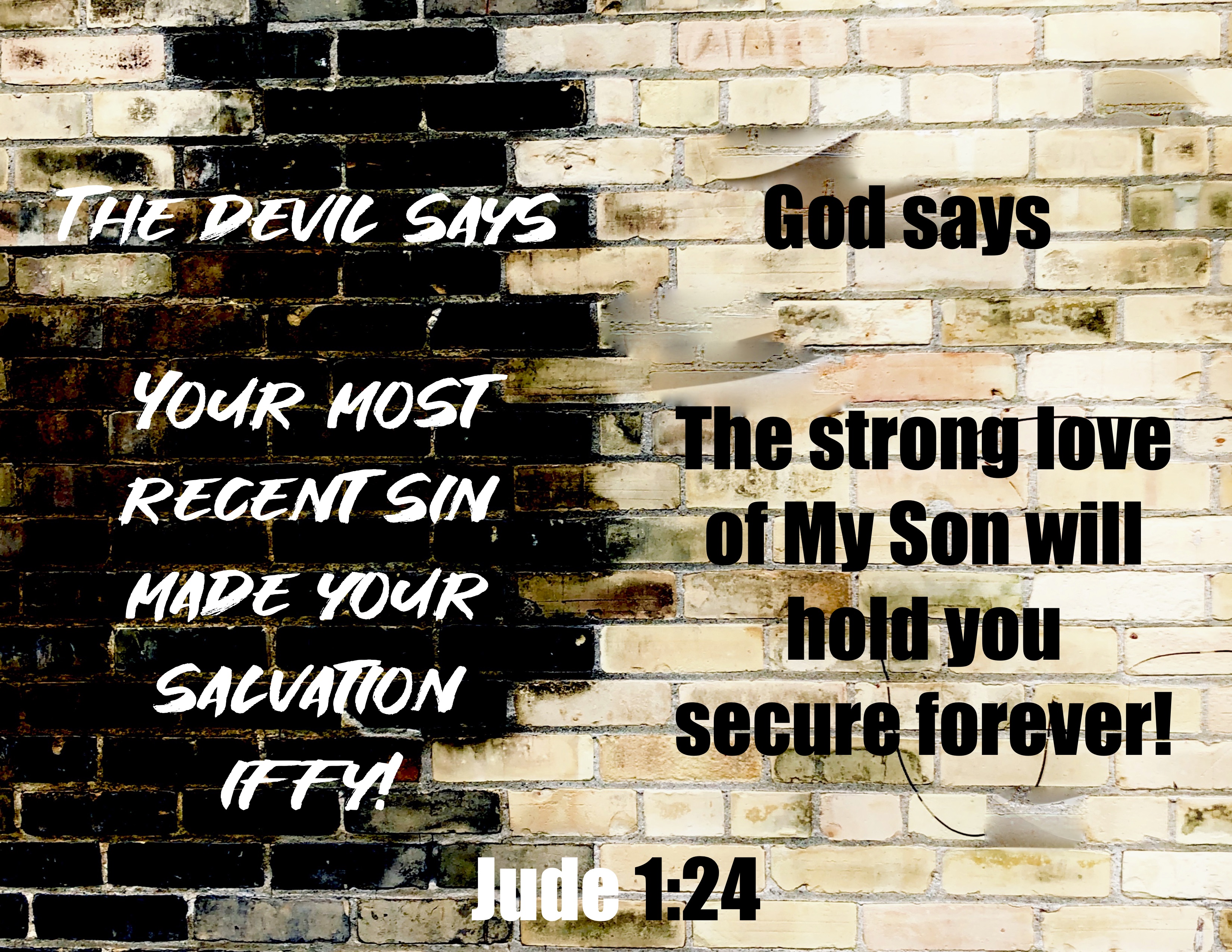
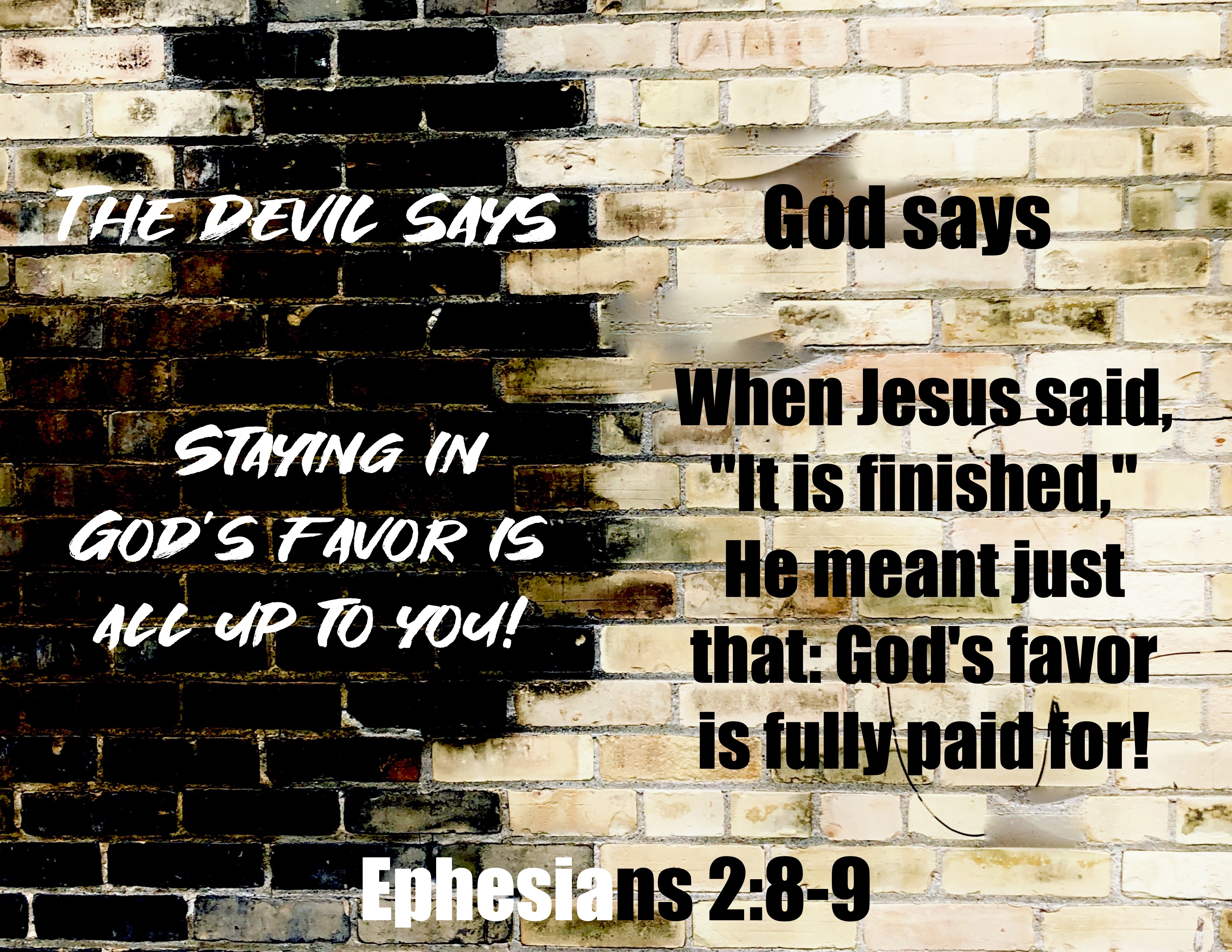
A few months ago I began designing a series of graphics under the heading, “Says who?” I took some of the lies of satan and put them side-by-side with the truth from God’s Word. 

When God is our Savior, we are secure. The devil would love to make us think that our salvation is hanging by a thread, that we have to work harder to make sure we don’t miss out, that a single sin can disqualify us from God’s favor, and a hundred other lies. But they are all just that: lies! 

We have to learn to capture each of these thoughts, and if they are thoughts that don’t align with God’s Word, then we need to confront them with the truth. I have found it very helpful to speak these truths out loud. To see some of the ways I suggested thinking differently about the devil’s lies, check out this post on reversing your thinking.

As the old hymn says, “Jesus paid it all, all to Him I owe.” You don’t have to earn your salvation or make your position secure—your salvation has been paid-in-full and you are perfectly secure! Now what you owe to Jesus is to allow Him to take you safely home. 

►► Would you please prayerfully consider supporting this ministry? ◀︎◀︎

Persistent And Insistent Prayer

Listen to the podcast of this post by clicking on the player below, and you can also subscribe on Apple or Spotify.

When I first began this series on prayer, I challenged all of us to make prayer a habit. I suggested putting up “Have I prayed about it?” Post-It Notes all over the place to get us thinking about prayer continually. 

“Have I prayed about it?” is a great start. But then I need to ask, “How long have I prayed about it?” or maybe even, “How long am I willing to pray about it?” 

Thomas Merton wrote, “What is the use of praying if at the very moment of prayer we have so little confidence in God that we are busy planning our own kind of answer to our prayer?” In other words, why do we go through the motions of praying and then strike out on our own? Or why do we pray for a little bit and then think, “Oh, perhaps God isn’t interested in this prayer”? 

In Romans 12:12, the apostle Paul challenged us to never stop praying:

  • faithful in prayer (NIV) 
  • constant in prayer (AMP) 
  • prayerful always (TLB) 
  • continuing steadfastly (NKJV) 

This verb emphasizes the –ing part. Even though this is a verb, it’s what is known as a “verbal noun”: the noun pray is the same thing as the verb praying. 

This Greek word is defined as: devoted, giving unremitting care to something, being courageous in perseverance, and staying at constant readiness. I would sum it up this way—

Prayer that is both persistent and insistent! 

When Jesus teaches us that the motive for our prayer is, “Your kingdom come, Your will be done,” He is also implying that this requires continuous—persistent and insistent—involvement. With every prayer, we are persistently and insistently advancing God’s Kingdom and God’s glory. 

One of my favorite stories in the Gospels is of a persistent and insistent mother. Her daughter was in desperate need, and she simply would not take “no” for an answer. She insistently kept asking Jesus for a miraculous touch, and Jesus finally said, “Woman, you have great faith! Your request is granted.”

I’m also moved by the insistent and persistent prayer of Nehemiah. He prayed, “Give Your servant success today by granting him favor in the presence of [King Artaxerxes].” He prayed this every day for over 4 months. The king finally noticed Nehemiah’s downcast face, asked him what was wrong, and then “because the gracious hand of my God was upon me, the king granted my requests.”  

Nehemiah kept praying for 120 days or more, believing every day God would open the door of favor. In the meantime, God was moving things into place so that when Artaxerxes finally noticed Nehemiah’s downcast face, and Nehemiah shared what was on his heart, the king granted every single request! 

Friends, don’t be timid in your prayers and don’t give up praying. P.U.S.H.—Pray Until Something Happens. Pray for God’s glory to be seen, for His kingdom to advance on earth, and for His will to be done. 

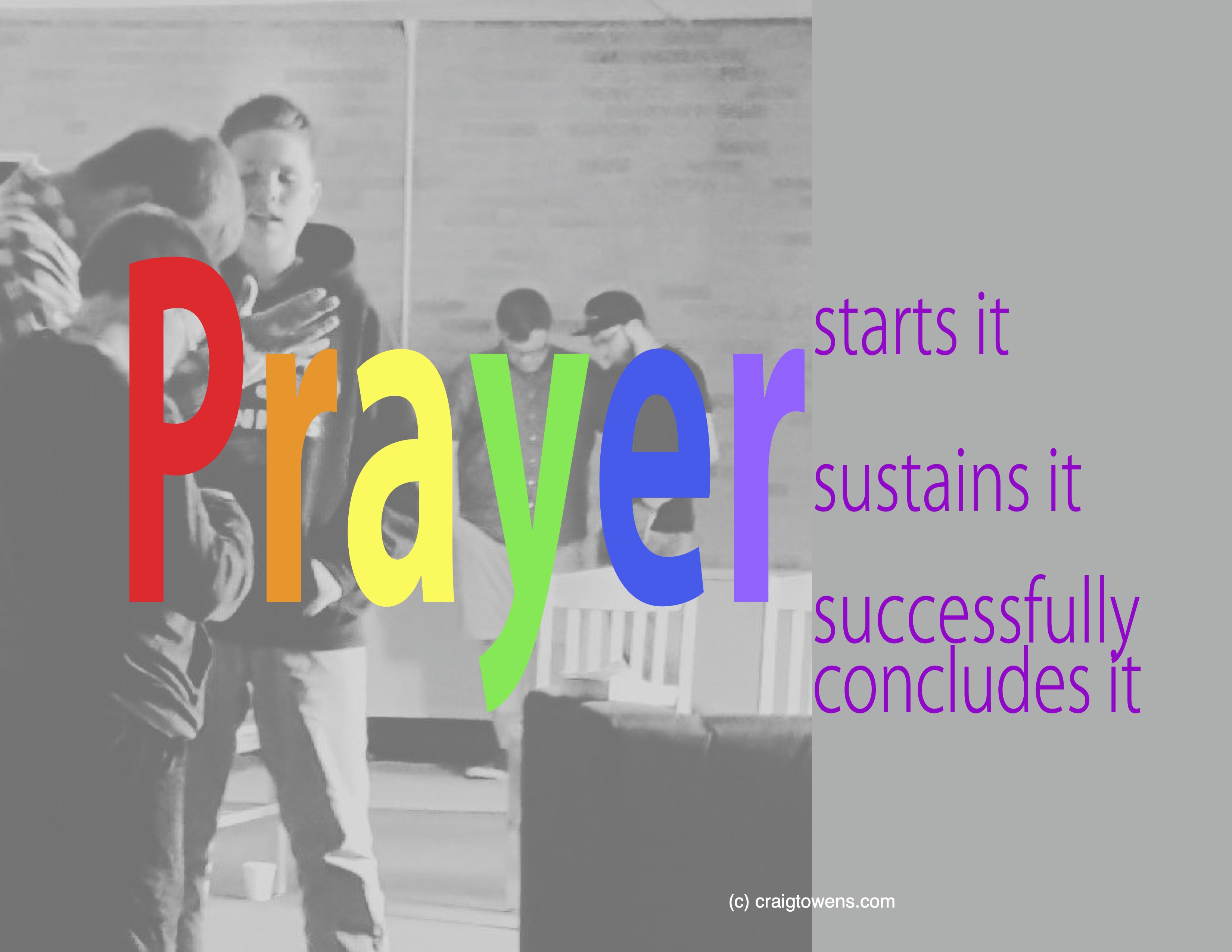
Prayer starts it, prayer sustains it, prayer successfully concludes it! 

Let me say it again: DON’T STOP PRAYING! 

If you missed any of the messages in our Be A First Responder series, you may access all of them by clicking here.

Would you please prayerfully consider supporting this ministry?

First In Forgiveness

Listen to the podcast of this post by clicking on the player below, and you can also subscribe on Apple or Spotify.

From David’s bookend prayers to Jesus making prayer the central, empowering practice of the Christian lifestyle, I hope you’re beginning to see that prayer starts it, prayer sustains it, prayer successfully concludes it! 

There is another thing both David and Jesus agree upon. They both tell us that there is one thing that can block our prayer: unconfessed, unrepented sin. 

David wrote, “If I regard iniquity in my heart, the Lord will not hear.” The Hebrew word translated “regard” means to be aware of something. David teaches us that we have to be made aware of our sin in order to confess our sin and ask forgiveness. We become aware of our sin through prayer and reading the Bible (Psalm 139:23; James 1:25; Romans 7:7-12). 

The NIV translates the same Hebrew word in Psalm 66:18 as “cherished.” After becoming aware of our sin, we have to be careful not to make excuses or justifications for it. And then the NLT translates the same word “not confessed.” After becoming aware of our sin and accepting responsibility for it, then we can confess it to God. 

In teaching us to pray, Jesus said our forgiveness of others had a direct correlation to the forgiveness we would receive from our Heavenly Father (Matthew 6:12, 14-15). Jesus further expounds this thought when He tells Peter to forgive others “seventy times seven times”; in other words: countless times. 

Think of it this way: Have you asked God’s forgiveness more than seven times? How about more than seven times for the same sin? I have! So Jesus is really asking Peter, “Do you want God to put a limit on how many times He will forgive you? If not, then don’t you put a limit on how many times you will forgive others.” 

The Amplified Bible has a great definition of forgiveness in Matthew 6:12—left, remitted, let go of the debts, and have given up resentment against. The Hebrew word David uses in Psalm 32:1 has a similar feel—lifted up, taken away, carried off. 

Our forgiven sins are forgotten sins. Every time we come to God for forgiveness, it’s like it is the first time. And Jesus says this is the same way we need to treat others. 

Let’s all strive to be first responders in confessing our own debts to God so we can be forgiven, AND then let’s also be first responders in forgiving the debts others have incurred against us. 

As I’ve said before: A mark of a maturing saint is one who is closing the gap between awareness of his sin and making his confession of that sin. 

But this is just as true: 

A mark of a maturing saint is one who is closing the gap between being injured and forgiving the offender. 

We do this again and again and again—countless times!—because that’s how often our Heavenly Father forgives us. 

Be a first responder in both asking for forgiveness and giving forgiveness.
Don’t let your debts block your prayers.
Don’t let your unreceived forgiveness weigh you down.
Don’t let your ungiven forgiveness weigh others down.

If you’ve missed any of the other messages in this series on prayer, you can find the full list by clicking here. 

Would you please prayerfully consider supporting this ministry?

God Is One, God Is Love

Listen to the podcast of this post by clicking on the player below, and you can also subscribe on Apple or Spotify.

There is a common characteristic among every human civilization: they all have had a pantheon of gods. It seems that no one god could capture all of the attributes each civilization thought were important, so they created multiple gods to help fill in the gaps. 

Onto the world scene comes the account recorded for us in the Bible of a God who creates the universe. The Hebrew word for this God is elohiym which means “a divine one.” This name is used throughout the Creation story in Genesis 1. 

Then in Genesis 2:4, a new name appears, one that is used over 6500 times in the Bible. It is the unpronounceable name YHWH: often pronounced Yahweh or substituted with the word Jehovah. In most Bible translations this name is designated by all capital letters: LORD. Yahweh or Jehovah means “the existing One.” 

The first part of our second foundational truth states, “The one true God has revealed Himself as the eternally self-existent ‘I AM,’ the Creator of heaven and earth and the Redeemer of mankind.” This Creator is uncreated: He sustains the universe without needing to be replenished Himself. He is utterly complete in Himself; hence, His name means I AM (see Exodus 3:13-15). 

The second part of this foundational truth statement says, “He has further revealed Himself as embodying the principles of relationship and association as Father, Son and Holy Spirit.” 

The I AM is One (see Deuteronomy 6:4), but He reveals Himself in three Persons—Father, Son, Spirit—that we call the Trinity (although this is not a word found in the Bible). 

Sometimes Christians have done a disservice to the I AM by making it appear He is divided. For instance, we might say, “The Father is the Creator, the Son is the Redeemer, and the Spirit is the Regenerator.” But remember that our One God is not a pantheon of gods; He is One. We see the fullness of the Trinity operating in every area. Here’s just a short sampling:  

  • The creation of the universe—Genesis 1:1; Colossians 1:15-16; Psalm 104:30 
  • The creation of man—Genesis 1:26-27 
  • A prophecy about Jesus’ advent—Isaiah 9:6 
  • The incarnation of Jesus—Luke 1:35 
  • The baptism of Jesus—Matthew 3:16-17
  • The resurrection of Jesus—Acts 2:32; John 10:18; Romans 1:4 
  • Our atonement—Hebrews 9:14 
  • A Christian’s baptism in the Holy Spirit—John 14:16 

(You can read all of these verses for yourself by clicking here.) 

A good question for us to ponder is: Why would this I AM God create humans? If He needs nothing to complete Himself or sustain Himself, why make us? 

The apostle John captures the essence of the Trinity in three words: God is love.

God created us out of an overflow of His love so that we too could enjoy the intimate, eternal pleasure of being at-onement with Him forever. God then wants our love to overflow to everyone around us, so that they will also be drawn into this at-oneness with the I AM. 

When Jesus was asked to state the greatest commandment, He first quoted from Deuteronomy 6: “Hear, O Israel: The LORD [Yahweh] our God, the LORD [Yahweh] is one.” Christ’s conclusion was for us to love this All-Loving God with all our heart, soul, mind, and strength. And then Jesus added an obvious overflow of that love: “And love your neighbor as yourself” (see Mark 12:29-31).

Love to God and from God should overflow from us to others to bring them into the One God who is love itself.  

The more we understand this love that the I AM has for us: (1) the better able we will be to love and worship Him, (2) the more we will love others out of this overflow of love, and (3) the more glory our awesome GOD will receive. Which is exactly what the apostle Paul prayed for us in Ephesians 3:14-19. 

This idea of an I AM God who reveals Himself as Father, Son, and Spirit has been described by the Latin phrase mysterium tremendum. It is indeed a mystery: not one that frightens and confuses, but one that energizes and enlivens. Pray Paul’s prayer for yourself, so that you can see more dimensions of this awesome love that God has for you! 

If you missed any parts of this series exploring our foundational belief statements, you can check out the full list by clicking here.

Thursdays With Spurgeon—God Wants To Bless You

This is a weekly series with things I’m reading and pondering from Charles Spurgeon. You can read the original seed thought here, or type “Thursdays With Spurgeon” in the search box to read more entries.

Listen to the podcast of this post by clicking on the player below, and you can also subscribe on iTunes or Spotify.

God Wants To Bless You

     It delights God to bestow His goodness. The cost was paid long ago on Calvary’s Cross, and that is over. Since the great sacrifice has been presented, God freely gives all the blessings of divine grace to us with a willingness that shows that His heart goes with them. …  

     Come along with you, you needy saint or sinner. The more you can take in, the better pleased will the Lord be with you. … The Lord desires you to open your mouth wide and He will fill it—it is easier for Him to give than for you to open your mouth. He encourages and requests you to bring large petitions with you when you come before His mercy seat. …  

     ‘How can I apprehend these blessings and make them my own?’ … ‘The natural man does not receive the things of the Spirit of God’ (1 Corinthians 2:14). The power to receive the things of God lies not in high gifts or attainments. … Do not sit down and say, ‘I am a poor stupid man and cannot be taught of God.’ Or, ‘I am a humble countryman, or a poor woman keeping house for others. I cannot know these precious things.’ It is not so. Read the words of Paul in the first chapter of this Epistle: ‘For you see your calling, brethren, that not many wise according to the flesh, not many mighty, not many noble, are called’ (1 Corinthians 1:26). The power to receive the blessings of God does not lie in talent at all, but it lies in the Spirit of God. …

     Grace is not tied to the rare gifts of genius, nor to the precious acquirements of experience, nor to the high attainments of learning. … The power to receive is still of the Holy Spirit, and the Holy Spirit does not find good in us but brings it to us.

From Grace For Grace

I truly believe that God wants to bless us more than we want to receive God’s blessings. Far too many times I encounter people who want to talk themselves out of their worthiness to receive anything from God. 

But remember this verse: Since He did not spare even His own Son but gave Him up for us all, won’t He also give us everything else? (Romans 8:32). If God the Father would give up His Son to make it possible for you to be reconciled to Him, why would He hold anything back from you. 

God’s doesn’t want to blast you, He wants to bless you!

Please, my friend, let Him bless you. His blessings aren’t because of anything you or I have done to deserve them. The definition of “grace” is an undeserved gift. God gives and He enables us to receive. Let Him pour out His blessings on you today!