I shared several videos this week while I was on vacation. If you missed any, you can check them out on my YouTube channel.
A good definition of apologetics is found in Acts 17:2-3. We need to share (1) reasons from Scripture, (2) logical explanations, and (3) verifiable evidence. I have written quite a bit on my blog on the topic of apologetics, including several book reviews of apologetics books that you may want to check out.
“The life we speak over others they will pass on. While it is true that hurting people hurt others, it is just as true that healed people heal others, blessed people bless others, loved people love others, and ‘mercied’ people mercy others—if, that is, they have any sense of gratefulness.” —Dick Brogden, in Proverbs: Amplified and Applied
“The Kingdom of God will be present within us to the extent that we maintain a clean and good conscience. The conscience is the valuing center of the soul. It holds the priorities which serve to clarify and direct both the mind and the heart for Kingdom presence. As thoughts or affections stir in the soul, the conscience reads the Law of God, which is written on the heart and settled in the mind (Romans 2:14-15), and engages the will to act in line with the vision of Christ and the counsel of His Word.” —T.M. Moore
“Value those people who tell you the truth, not just those people who tell you what you want to hear.” —Pat Summitt
Some people claim those with a biblical worldview and lifestyle are “extremists.” I think this chart (I cannot find the author to give credit on this one) explains it well.
“Life without love isn’t worth anything. Justice without love makes you hard. Intelligence without love makes you cruel. Kindness without love makes you a hypocrite. And faith without love makes you a fanatic.” —Mother Teresa
Listen to the podcast of this post by clicking on the player below, and you can also subscribe on Apple, Spotify, or Audible.
Jesus was the healthiest Person to ever walk planet Earth. When Luke, a physician, tells us about the growth of Jesus, he says first that “Jesus grew in wisdom.” (Luke 2:52). That is our indication that a healthy mind is at the foundation for every other aspect of health.
But mental health doesn’t stay in your mind—it affects every other part of your life. Likewise, all of the other parts of your life can enhance or drain your mental health. We are created as interconnected beings. For instance, it’s hard to think correctly when you’re physically tired, spiritually drained, or involved in an unhealthy relationship. It’s also true that it’s hard to make good decisions about your physical health, stay focused on God, or handle your relationships successfully if you aren’t thinking correctly.
Dear friend, I pray that you may enjoy good health and that all may go well with you, even as your soul is getting along well. (3 John 2)
Now may the God of peace make you holy in every way, and may your whole spirit and soul and body be kept blameless until our Lord Jesus Christ comes again. (1 Thessalonians 5:23 NLT)
When my laptop is disconnected from the monitors I use at our church building, the message on the screen tells me to “check your inputs.” That’s not just for inanimate technology, but for us too: To maintain good overall health, we need to check our physical, spiritual, mental, and emotional inputs.
Let’s start with the physical inputs. When we are active during the day our bodies release a stress hormone called cortisol. Stress is not a bad thing—it’s a normal thing. A body that isn’t stressed will atrophy and become susceptible to disease. Balanced, healthy stress is called eustress, and unbalanced, unhealthy stress is called distress.
Cortisol is naturally flushed from the body in two ways: exercise and sleep. Exercise is important to keep our bodies moving effectively, and sleep helps us recover and helps our brains catalogue our memories (see 1 Timothy 4:8; Psalm 3:5). To fuel our exercise and our sleep requires the energy which we get from a healthy diet.
So if you’re not thinking healthy thoughts, check your physical inputs: Am I getting the proper amount of sleep? Am I exercising regularly? Am I eating properly? Do I see a doctor for a checkup?
How about spiritual inputs? Somewhat surprisingly, our spirits are kept healthy very much along the same lines as our physical bodies—proper food, appropriate exercise, and a time of rest. Our spiritual food is God’s Word, our exercise is working out what we’ve studied in the Bible, and our rest is called sabbathing (Jeremiah 15:16; Matthew 7:24-27; James 2:17). Jesus demonstrated all of these in His life and we, too, should follow His example.
If you’re not thinking healthy thoughts, check your spiritual inputs: Am I reading the Bible regularly? Am I putting what I learn into practice? Am I sabbathing properly?
Then there our emotional inputs, or the relationships that build us and relationships that drain us. You are always going to encounter people in need, and ministering to those needs is draining (Luke 8:45-46). We also need to be alert to those antagonistic people who purposely drain us (2 Timothy 4:14-15). We can make decisions to place people in our lives who build us up and be cautious of those who drain us (Proverbs 27:3, 5-6, 9, 17).
Once again, if you’re not thinking healthy thoughts, check your emotional inputs: Do I have healthy people investing in my life? Am I sharpening the iron of others?
Finally, let’s not forget the mental inputs. Computer programmers are well aware of the acronym GIGO: garbage in, garbage out. If you don’t like the results that are coming out, check what is going in. The apostle Paul gives us an outstanding checklist in Philippians 4:8.
If your mental health isn’t as healthy as you would like it to be, perhaps you need to talk to your doctor about your physical health, or a mature spiritual friend about your spiritual health, or a Christian counselor about your emotional health. As you consult with these wise people, continue to pray for God’s help. As your Creator, He knows you better than anyone else could and He can give you the wisdom you need as you check your inputs.
This is part 5 in our series on a Christian’s mental health. If you’ve missed any of the other messages I’ve shared, you can find them all by clicking here.
Listen to the audio-only version of this podcast by clicking on the player below, or scroll down to watch the video.
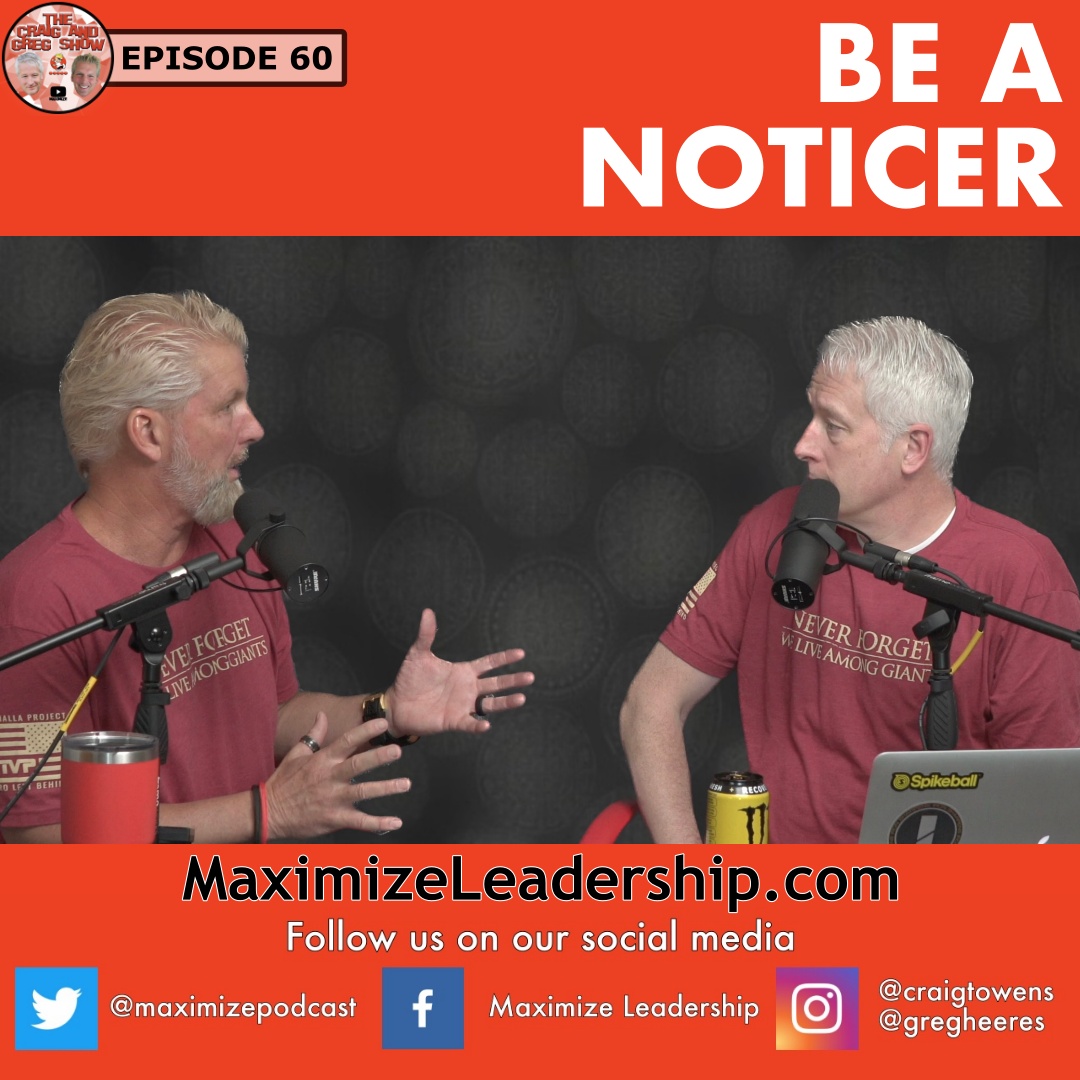
When was the last time you noticed your team? Not just on a surface level like saying hello in the hallway, but really truly paying attention to what’s going on with your team. Noticing is easy to do, but it does require you to spend time doing it. It’s impossible to see what your team is doing locked inside your office, so get out there and notice!
[0:17] Kids on the playground demonstrate an important leadership attribute.
[1:43] Leaders sometimes get too engaged in their work—how do we keep this from happening?
[3:48] People are dying to be noticed!
[6:17] What happens when we do or don’t notice the uniqueness of our teammates?
[9:54] Leaders need to know the difference between windows and mirrors.
[13:25] How our teams reciprocate for their leaders who notice them.
[14:45] There are some huge and lasting benefits when leaders create a culture of curiosity.
[17:11] Greg challenges leaders to learn a leadership lesson from Jesus.
[19:20] We need to build noticing into our weekly schedules.
[21:07] One group that all of should notice and celebrate: Our veterans and the family members of fallen vets.
Check out this episode and subscribe on YouTube so you can watch all of the upcoming episodes. You can also listen to our podcast on Spotify and Apple.
Listen to the podcast of this post by clicking on the player below, and you can also subscribe on Apple, Spotify, or Audible.
One of the teachers of the law came and heard them debating… (Mark 12:28).
The “them” in this verse are the Pharisees, the Herodians, the Sadducees, and Jesus. Mark especially loves this Greek word syzeteo, using it six times in his Gospel. Neither Matthew nor John uses this word at all. Luke uses it four times: twice in the Gospel of Luke and twice in the Book of Acts. This word appears nowhere else in the New Testament.
Syzeteo is a compound word that means a joint pursuit. Check out some of the ways this word is translated:
debating (NIV)
arguing (NASB)
disputing (AMP)
lively exchanges of questions (MSG)
reasoning together (NKJV)
The phrase “reasoning together” may sound familiar to you. It appears in the Old Testament when God says, “Come now, and let us reason together” (Isaiah 1:18). This is just one word in Hebrew (yāḵaḥ), which is defined as making something clear by demonstrating or proving.
Whether in the Old or New Testaments, this is not considered to be one-upmanship, or attempting to get the knockout punch, or trying to prove one’s superiority. It is a legitimate journey of discovery—asking good questions, truly listening to the answer (not just listening to respond or counter), and then processing the other’s words before responding. Plato defined syzeteo as seeking or examining together.
The teacher of the law noticed “that Jesus had given them a good answer.” He then asked a follow-up question. After hearing the reply from Jesus, he said, “Well said,” and reiterated Christ’s answer. To this Jesus noted “that he had answered wisely” and said to the teacher, “You are not far from the kingdom of God” (Mark 12:28-34).
The word “argue” used to mean the presenting of premises that led to a conclusion. Then the other person would perhaps challenge one of the premises to maybe show a different conclusion. These arguments or debates weren’t screaming matches and they certainly weren’t intended to be over trivial matters.
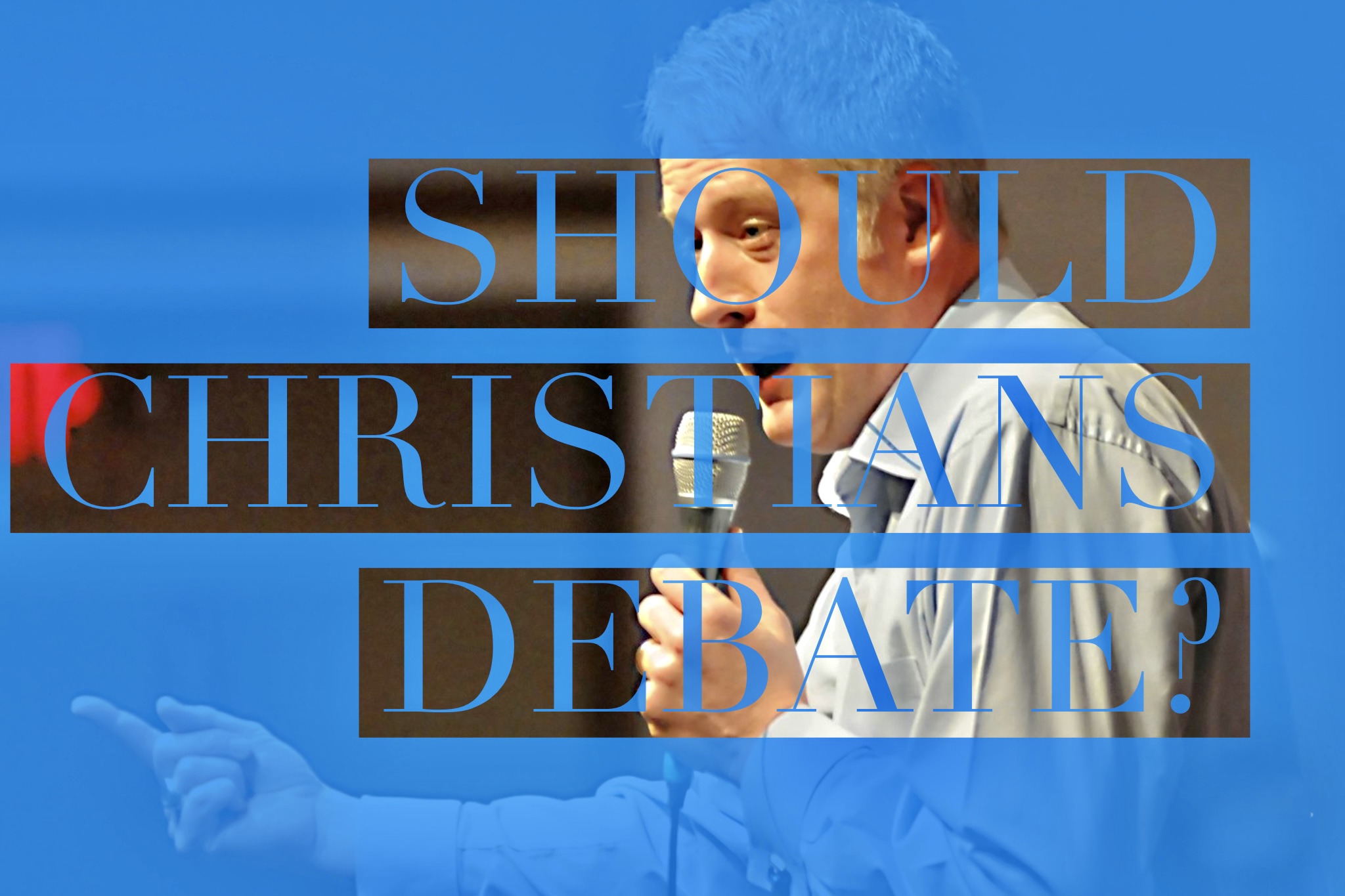
So should Christians debate? I would say yes IF all of these conditions are true:
…IF this isn’t a trivial matter which has no impact on eternity.
…IF I can ask good questions and truly listen to the other person’s answer.
…IF I can have an attitude of journeying together toward the truth found in God’s Word.
…IF I can humbly receive the truth that is spoken to me by the other person.
True Christian debating is not bantering with the other person, not attempting to score a “gotcha!” against the other person, not wanting to win an argument. The only true win comes when both parties arrive at the truth given to us in Scripture. This is true reasoning together.
Listen to the audio-only version of this podcast by clicking on the player below, or scroll down to watch the video.
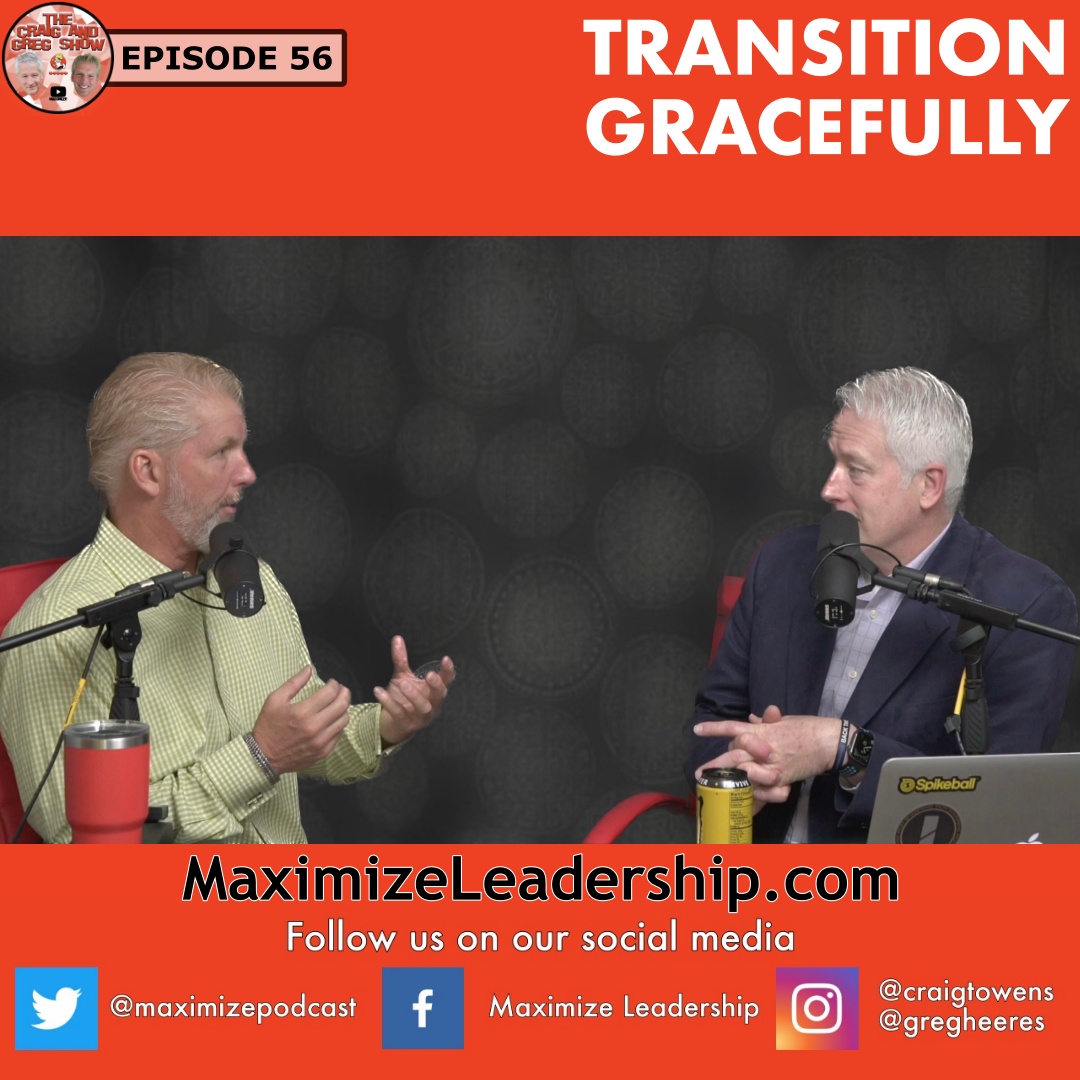
Accepting a new position is a very exciting experience! Whether it’s a promotion in your current organization or an opportunity elsewhere, it’s very tempting to want to immediately throw your full attention into the next project. In this episode, Greg and I discuss the necessity of maintaining a balance between that excitement and recognizing that the people on your team now still need your leadership. This might create more work for you in the short term, but the long-term benefits of transitioning well will be huge for you!
[0:33] Any fresh starts for leaders have to be handled thoughtfully.
[2:44] Leaders of integrity give their best effort all the way to the end.
[4:08] How can we maintain a humble attitude when we have been selected to be promoted to a new position?
[6:08] There are different things to keep in mind when moving to a new position in the same organization vs. moving to a new organization.
[8:02] Both of us share stories about friends who benefitted by leaving their old organizations well, and they identify what the true litmus test for leaving well is.
[10:14] Greg also has a negative example to share.
[11:03] How do senior leaders handle coworkers who leave poorly?
[13:06] How do we keep ourselves from being distracted by our new position while we attempt to finish well in our old position?
[16:15] How do we arrive well in our new position?
[18:35] We need to always keep in mind that we are leaving or joining a team of many—we aren’t a team of one.
[22:57] Finishing well is a compliment to the organization you are leaving, and beginning well is a compliment to the organization you are joining.
Check out this episode and subscribe on YouTube so you can watch all of the upcoming episodes. You can also listen to our podcast on Spotify and Apple.
Listen to the audio-only version of this podcast by clicking on the player below, or scroll down to watch the video.
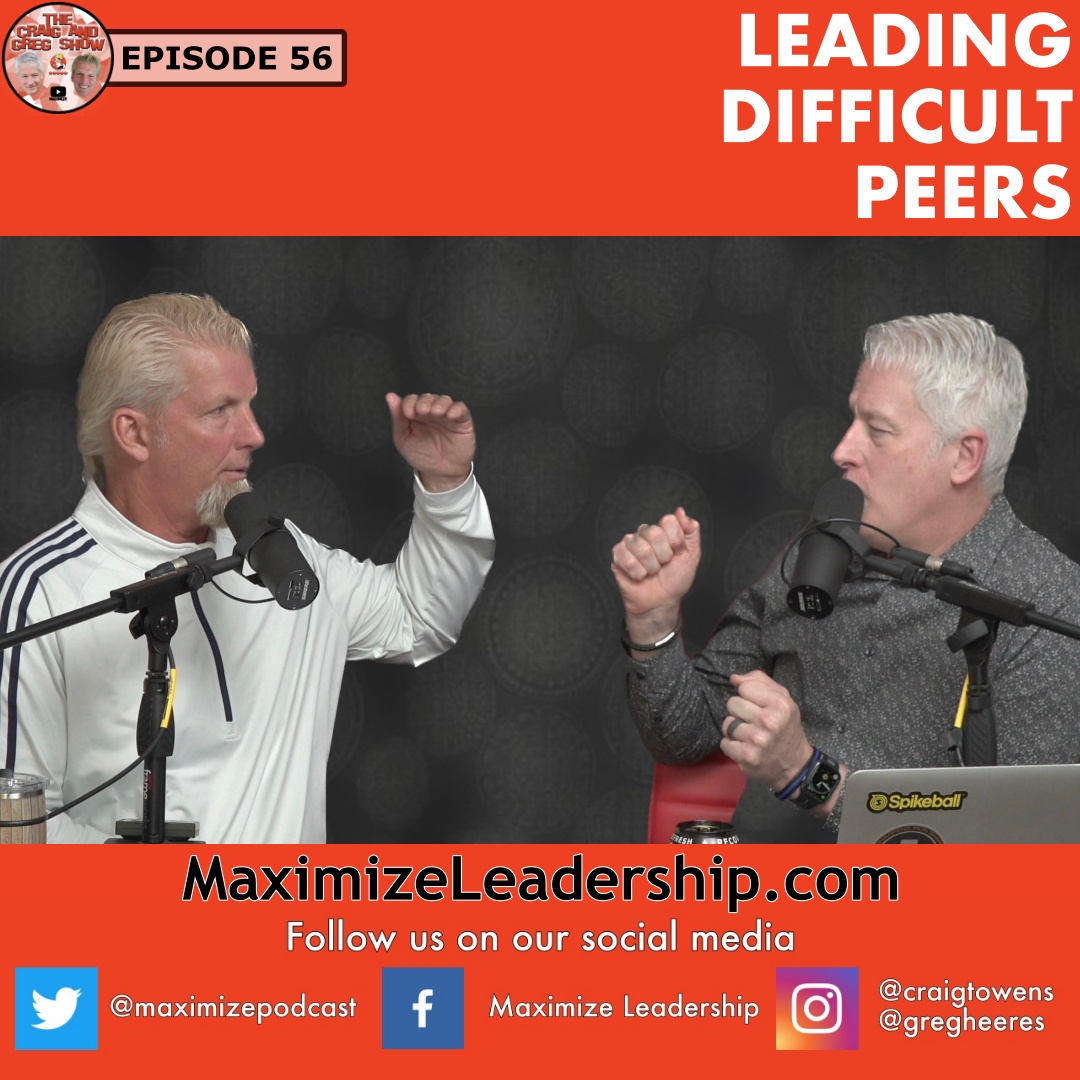
No need to call anyone out, but when I say “difficult peer” at least one person probably comes to mind right away, right? So what’s the solution: ignore them, scream, tear your hair out? Greg and I think there’s a better solution. In this episode, we walk through how we’ve dealt with difficult peers in the past and give actionable advice on how your leadership and coaching can help them improve.
[0:16] We are continuing our series about leading difficult people from wherever you are in your organization.
[1:24] Our goal as leaders should be to figure out why a particular peer is so difficult to work with.
[2:00] A warning about the least productive thing you can do when you are frustrated with a coworker.
[3:44] A great example from Jesus for those striving to be servant leaders.
[5:17] Some questions to ask ourselves to determine if our difficult teammates are coachable.
[7:31] We need to learn the best ways to communicate with our teammates.
[9:18] Where does mistrust play a role in these difficult situations?
[13:13] Leaders at every level need to learn the art of diplomacy.
[15:02] Where does defeatism come into play?
[17:03] A shepherd’s heart must be cultivated for us to lead well—especially leading difficult peers.
[18:45] “When you’re ready” is a great posture for a leader, but it must be lived out.
Check out this episode and subscribe on YouTube so you can watch all of the upcoming episodes. You can also listen to our podcast on Spotify and Apple.
Listen to the podcast of this post by clicking on the player below, and you can also subscribe on Apple, Spotify, or Audible.
I had a great time on the Thriving In Ministry podcast with Kyle Willis while his podcast partner Dace Clifton was on sabbatical.
There is a profound truth in a simple observation about how Jesus grew: “And Jesus grew in wisdom and stature, and in favor with God and man” (Luke 2:52). Jesus was healthy in all of these areas. That means He had the proper work-rest balance in each of these areas too.
We should learn from this example and find different ways to rest and recover mentally, physically, spiritually, and relationally, just as Jesus did.
I encourage you to take a listen to this part of our conversation.
How can you take a mental rest? Perhaps by reading or listening to something uplifting, or maybe simply taking time to think about what you’ve been thinking about.
For physical rest, you might take a nap, schedule a vacation, or contemplate changing something in your diet.
For spiritual rest, you could sing a worship song or quietly meditate on a passage of Scripture.
For relational rest, you could have breakfast with a good friend or go for a walk with your spouse.
And don’t forget to tap into the wisdom and expertise of others in these areas. Talk with a mental health professional about your mental health, see a doctor about your physical health, visit with a wise mentor to discuss your spiritual health, or see a counselor about your relational health. You don’t have to come up with all of the answers on your own.
I am really looking forward to a new series of sermons that I am launching this Sunday. This will be a once-per-month series for the remainder of the year and it’s simply called A Christian’s Mental Health. If you don’t have a home church in the west Michigan area, I would love for you to join me in person, but the sermons will also be posted on my YouTube channel.
T.M. Moore has an outstanding post called The Essence of the Lie. In one part, Moore writes, “Thus the lie claims to be the truth, but, at the same time, it insists that truth is personal, relative, pragmatic, and utilitarian. Truth, from this perspective, is not absolute, but dynamic, changeable rather than fixed. It is conditioned by circumstances of time and place. At the end of the day, people are the final arbiters of truth, and truth is whatever they find to be useful for their purposes. Ultimate truth is that which people impose on others by one or another kind of force, whether intellectual, political, or physical.” Check this one out!
Harvard University has been studying a group of individuals since 1938 to try to determine the main factors that contribute to a long and healthy life. The director and assistant director of this study just published an article that sums up what they have learned over all these years—“[If] we had to take all 85 years of the Harvard Study and boil it down to a single principle for living, one life investment that is supported by similar findings across a variety of other studies, it would be this: Good relationships keep us healthier and happier. Period. If you want to make one decision to ensure your own health and happiness, it should be to cultivate warm relationships of all kinds.”
“The battle for control and leadership of the world has always been waged most effectively at the idea level. An idea, whether right or wrong, that captures the minds of a nation’s youth will soon work its way into every area of society, especially in our multimedia age. Ideas determine consequences.” — The American Covenant
“The storms of life are no longer our point of reference when [Jesus] is our focal point.” —Dutch Sheets
John Stonestreet was intrigued by a street reporter asking, “What are men good for?” There were a lot of soft, ambiguous answers given, but John quipped, “Men are good for fathering, protecting, loving, providing, leading, fighting for what’s right with their lives if need be, and obeying, in a masculine way, the creation mandate of the God who made us male and female and declared both ‘very good.’ Was that so hard?” Amen!










 Craig T. Owens